Google finally did what it has avoided for nearly a decade: it put a year on smart glasses.
The confirmation that Android XR smart glasses are targeting a 2026 debut didn’t arrive with a flashy stage demo or a consumer-ready prototype. Instead, it came through careful executive language, selective previews, and a conspicuous lack of hard specs—classic Google when it wants to signal commitment without locking itself into promises it might regret.
For anyone who has followed Google Glass, Daydream, or even the long, quiet gestation of Wear OS, this announcement lands with equal parts excitement and caution. To understand what 2026 really means, you have to separate what Google explicitly confirmed from what it very deliberately left unsaid.
What Google Actually Confirmed
First, Google confirmed that Android XR is not theoretical. It is a named platform, built specifically for extended reality hardware, including smart glasses, with a commercial timeline that points to consumer availability in 2026.
🏆 #1 Best Overall
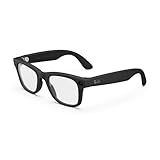
- #1 SELLING AI GLASSES - Tap into iconic style for men and women, and advanced technology with the newest generation of Ray-Ban Meta glasses. Capture photos and videos, listen to music, make hands-free calls or ask Meta AI questions on-the-go.
- UP TO 8 HOURS OF BATTERY LIFE - On a full charge, these smart AI glasses can last 2x longer than previous generations, up to 8 hours with moderate use. Plus, each pair comes with a charging case that provides up to 48 hours of charging on-the-go.
- 3K ULTRA HD: RECORD SHARP VIDEOS WITH RICH DETAIL - Capture photos and videos hands-free with an ultra-wide 12 MP camera. With improved 3K ultra HD video resolution you can record sharp, vibrant memories while staying in the moment.
- LISTEN WITH OPEN-EAR AUDIO — Listen to music and more with discreet open-ear speakers that deliver rich, quality audio without blocking out conversations or the ambient noises around you.
- ASK YOUR GLASSES ANYTHING WITH META AI - Chat with Meta AI to get suggestions, answers and reminders straight from your smart AI glasses.
This matters because Android XR is positioned as a first-class operating system, not a fork, experiment, or side project. Google has stated it will support glasses, passthrough AR devices, and mixed-reality headsets under a shared framework, aligning it structurally with how Android scaled phones, tablets, watches, TVs, and cars.
Just as importantly, Google confirmed that smart glasses—not just headsets—are a core target device. This is a direct acknowledgment that lightweight, all-day wearable eyewear is back on the roadmap, rather than being overshadowed by bulkier Vision Pro–style hardware.
The Significance of a 2026 Timeline
The year matters more than it might seem. A 2026 launch window signals that Google believes display tech, battery density, on-device AI acceleration, and thermal efficiency are finally converging to make smart glasses viable at scale.
It also places Android XR glasses squarely in the same generational window as Apple’s second- or third-gen spatial products and Meta’s rumored true AR glasses. Google is not racing to be first; it’s positioning itself to be relevant when the category matures.
Notably, Google did not say “late 2026,” “holiday 2026,” or “early access.” That ambiguity leaves room for developer kits, limited launches, or partner-led releases before a full consumer push, depending on readiness.
Project Aura: A Name Without a Definition
“Project Aura” was teased, not explained. Google confirmed the internal codename exists and is associated with Android XR smart glasses, but it stopped well short of defining whether Aura is hardware, reference design, software experience, or a co-developed partner device.
That restraint is telling. When Google wants to highlight its own hardware ambitions, it usually does so loudly, as with Pixel or Nest. By contrast, Aura feels closer to Nexus-era thinking—a platform-forward initiative designed to enable partners rather than dominate shelves.
What we do know is that Project Aura is being framed as a foundational effort. It appears to represent Google’s ideal vision for how Android XR glasses should look, behave, and integrate with AI services like Gemini, Maps, Assistant, and multimodal search.
What Google Carefully Avoided Saying
There were no specs. No field of view numbers, no display type, no mention of waveguides, microLED, battery size, or weight targets. That silence suggests the hardware is still fluid—or that Google wants to avoid the kind of early ridicule Glass faced when its limitations were easy to mock.
There was also no explicit confirmation that Google itself will sell consumer-branded smart glasses. The language consistently emphasized ecosystem, partners, and platform readiness rather than a Pixel Glass moment.
Privacy, a historical landmine for Google Glass, was also only indirectly addressed. While Google referenced “socially acceptable” design and responsible use, it did not outline camera indicators, data handling policies, or bystander protections—issues that will resurface the moment real devices appear in public.
Partners Matter More Than the Hardware Right Now
One of the quiet implications of the announcement is that Google no longer believes it can—or should—do this alone. Android XR is designed to be adopted by OEMs, eyewear brands, and silicon partners, much like Wear OS evolved after its early missteps.
Samsung’s involvement on the headset side and Qualcomm’s XR silicon roadmap loom large here, even if they weren’t front and center in this specific confirmation. For smart glasses to succeed, Google needs partners who understand optics, comfort, weight distribution, and fashion—not just software.
This is where Aura becomes strategically interesting. If it’s a reference design rather than a retail product, it could give partners a clear starting point without forcing Google into the uncomfortable position of competing with them directly.
How This Differs From Google Glass—Structurally
The most important difference isn’t aesthetics or AI—it’s maturity. Android XR is launching into an ecosystem where cloud intelligence, on-device NPUs, and cross-device continuity already exist.
Unlike Google Glass, which felt like hardware searching for a purpose, Android XR is being framed as an extension of workflows people already use: navigation, translation, notifications, contextual search, and glanceable information. The emphasis is utility first, spectacle second.
Google is also waiting until the platform can reasonably support all-day wear. Comfort, battery life measured in hours rather than minutes, and thermal constraints are clearly driving the timeline, even if Google won’t say so explicitly yet.
Why the Restraint Is the Real Signal
Paradoxically, what Google didn’t announce may be the most encouraging part. There was no overpromising, no sci-fi demo, no attempt to declare victory over Apple or Meta.
Instead, Google planted a flag in the calendar, named the platform, hinted at a guiding project, and stepped back. That suggests internal confidence—not that everything is finished, but that the pieces are finally moving in the same direction.
For seasoned wearable watchers, this feels less like a hype cycle kickoff and more like the early stages of a long, deliberate rollout. And after the history of Google’s XR false starts, that restraint may be exactly what Android XR needs to survive long enough to matter.
Android XR Explained: Google’s New Platform Strategy for Smart Glasses (and Why It’s Different This Time)
If the 2026 timing signals restraint, Android XR itself explains the strategy behind it. Google isn’t just reviving smart glasses—it’s rebuilding the foundation they run on, with lessons learned from Wear OS, Android Auto, and the slow maturation of spatial computing elsewhere.
Rather than positioning XR as a moonshot category, Android XR is being treated as a platform layer that sits naturally alongside phones, watches, tablets, and cars. That framing matters, because it shifts smart glasses from novelty hardware into an extension of Android’s existing device continuum.
A Platform First, Hardware Second
Android XR is not a single product OS in the way Google Glass’s software once was. It’s a modular platform designed to scale across multiple XR form factors, from lightweight optical smart glasses to more immersive mixed reality headsets.
This mirrors Google’s Wear OS reset a few years ago, when it stopped chasing every possible feature and focused instead on performance, battery efficiency, and developer stability. Android XR appears to be following the same playbook, but with spatial interfaces and context-aware computing at its core.
For smart glasses specifically, that means Android XR can be tuned for ultra-low power displays, limited input methods, and glanceable interactions without forcing those same constraints onto larger XR devices. The OS adapts to the hardware, not the other way around.
Designed for All-Day Wear, Not Demos
One of the quiet but critical shifts with Android XR is its prioritization of wearability as a system requirement. Google has made it clear—implicitly if not explicitly—that this platform assumes devices will be worn for hours, not minutes.
That affects everything from thermal envelopes and background process management to how notifications surface and disappear. A smart glasses OS cannot behave like a phone OS strapped to your face, and Android XR appears to acknowledge that at a foundational level.
Battery life expectations are especially telling here. Android XR is being built for devices that may rely on distributed batteries in the frame, aggressive sensor polling, and constant environmental awareness, all while remaining lightweight and balanced enough for daily comfort.
Deep Android Integration, Not a Parallel Universe
Another major difference from past Google XR efforts is how tightly Android XR is integrated with the broader Android ecosystem. This isn’t a siloed experiment—it’s an extension of services users already rely on.
Expect Android XR glasses to lean heavily on a paired smartphone for compute offloading, connectivity, and app continuity, especially in early generations. That symbiotic relationship allows the glasses themselves to stay lighter, cooler, and less visually intrusive.
Features like navigation, live translation, message triage, and contextual reminders already exist on Android phones. Android XR’s job is to surface them at the right moment, in the right place, without demanding constant attention or interaction.
Project Aura as a Reference, Not a Threat
Project Aura sits at the center of this strategy, and its role appears deliberately ambiguous. Rather than a consumer-facing Google product, Aura is best understood as a reference design that demonstrates what Android XR smart glasses should feel like when done properly.
This gives Google a way to guide the market without repeating the Pixel-versus-partners tension that once plagued Android hardware. Aura can define ergonomics, optical baselines, sensor placement, and interaction models, while leaving industrial design and branding to partners.
For companies like Samsung, Qualcomm-aligned OEMs, or eyewear specialists, that kind of blueprint lowers risk. It also shortens development cycles by providing a proven starting point instead of a blank slate.
A Smarter Bet on Developers This Time
Google’s developer strategy around Android XR also looks more pragmatic than in previous XR pushes. Instead of demanding entirely new app categories, Android XR is expected to support adapted Android apps alongside spatially aware experiences.
That lowers the barrier to entry and avoids the content drought that doomed earlier smart glasses platforms. Developers can start by extending notifications, maps, messaging, and assistant-driven workflows, then move toward richer XR interactions over time.
Crucially, Android XR aligns with tools developers already use, rather than asking them to bet on an unproven stack. For a category that lives or dies by utility, that familiarity could be decisive.
Why This Time Actually Looks Sustainable
Taken together, Android XR feels less like a grand reinvention and more like an overdue consolidation. Google is applying hard-earned lessons from Wear OS, Pixel hardware, and AI-first services to a category that finally has the silicon, displays, and consumer readiness to support it.
The platform is being paced deliberately, with hardware arriving only once the software can justify all-day wear. That patience stands in stark contrast to Google Glass’s rush to market, and it may be the clearest signal yet that Google understands what smart glasses actually need to succeed.
Android XR doesn’t promise a revolution overnight. It promises something more rare in consumer XR: a credible path to usefulness, comfort, and longevity.
Rank #2
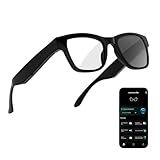
- 3-in-1 AI Glasses: Enjoy ① AI Voice Assistant (Powered by ChatGPT, Gemini & Deepseek), ② Stylish Photochromic Lenses Glasses, and ③ Bluetooth Open-Back Headphones, all in one.
- Free Talk Translation: Automatically detects and translates over 160 languages in real-time, allowing seamless work and translation without touching your phone or glasses.
- Voice, Video & Photo Translation: Supports over 98% of global languages, offering fast and accurate translations—ideal for international travel, business meetings, or cross-cultural communication.
- AI Meeting Assistant: Converts recordings from smart glasses into text and generates mind maps, making it easier to capture and organize meeting insights.
- Long Battery Life, Bluetooth 5.4 & Eye Protection: Up to 10 hours of music and 8 hours of talk time, with easy Type-C charging. Bluetooth 5.4 ensures stronger, stable connections, while photochromic lenses block UV rays and blue light, protecting your eyes in any environment.
Project Aura: What Google Is Teasing, What’s Leaked, and What the Codename Likely Signals
If Android XR is the platform story, Project Aura is the hardware whisper that gives it shape. Google has been careful not to frame Aura as a single consumer product, but rather as a reference-class initiative that hints at how Android XR smart glasses should feel, behave, and integrate into daily life.
That restraint is deliberate. Aura is less about reviving the Google Glass brand and more about signaling a reset in how Google approaches head-worn hardware—quietly, collaboratively, and with far more attention to wearability than spectacle.
What Google Has Actually Confirmed So Far
Publicly, Google has described Project Aura only in broad strokes. It is positioned as part of the Android XR effort, tied to smart glasses arriving in 2026, and closely linked to Gemini-powered experiences designed for glanceable, contextual use.
The emphasis has consistently been on all-day comfort, ambient intelligence, and hands-free interaction rather than immersive visuals. That framing alone distinguishes Aura from VR headsets and even from bulkier mixed reality devices like Apple Vision Pro.
Google executives have also hinted that Aura is meant to demonstrate baseline ergonomics and interaction models. Think optical placement, camera positioning, microphone arrays, and sensor fusion—elements that partners can adopt or adapt without inheriting a Google-branded industrial design.
What’s Leaked and What’s Inferred from the Supply Chain
Leaks around Project Aura have been sparse but telling. References in Android XR codebases and partner briefings point to lightweight waveguide-based displays rather than birdbath optics, suggesting a priority on thin lenses and conventional eyewear silhouettes.
Battery strategy appears conservative by XR standards. Instead of chasing high brightness or wide fields of view, Aura-class hardware is expected to target day-long mixed usage, likely splitting power between the frames and a small external component or neck-worn battery in early iterations.
Camera hardware is rumored to be modest but persistent. Rather than chasing high-resolution capture, the focus seems to be on always-available computer vision for context, translation, object recognition, and environmental awareness—features that align directly with Gemini’s strengths.
Why Aura Is Almost Certainly a Reference Design, Not a Product
The most important thing to understand about Project Aura is what it is not. It is almost certainly not a Pixel Glasses moment, at least not yet.
Google has learned, sometimes painfully, that competing directly with partners in a fragile category can stall adoption. By positioning Aura as a blueprint, Google can define minimum standards for comfort, latency, optics, and interaction while letting Samsung, eyewear brands, and regional OEMs handle aesthetics, fit, and retail strategy.
This mirrors Google’s more successful hardware playbooks. Nexus defined Android phones before Pixel went mainstream, and early Wear OS reference designs quietly shaped the market before Google re-entered with the Pixel Watch.
The Meaning Behind the Codename “Aura”
Codenames are rarely accidental at Google. Aura implies presence without dominance, information that surrounds you rather than demands attention.
That lines up neatly with how Android XR smart glasses are being framed: devices that sit at the periphery of your vision, offering nudges, translations, directions, and summaries instead of immersive feeds. This is a philosophy shift away from screens as destinations and toward displays as companions.
It also suggests Google wants smart glasses to feel socially acceptable and visually neutral. An aura enhances perception without announcing itself, which is exactly the problem Glass failed to solve a decade ago.
How Aura Fits Into the Broader Android XR Ecosystem
Project Aura appears designed to anchor Android XR across multiple form factors. The same spatial APIs, assistant behaviors, and notification models developed for Aura-class glasses can scale upward to mixed reality headsets or downward to audio-first wearables.
That continuity matters. Developers can target Android XR once and reach glasses, headsets, and future hybrids without rewriting core logic, which increases the odds of meaningful app support at launch.
For users already invested in Android phones, Wear OS watches, and Google services, Aura-style glasses could become the missing layer—a visual extension that complements a smartwatch rather than replaces it.
The Risks Google Is Still Quietly Managing
None of this guarantees success. Even with better optics and AI, smart glasses remain constrained by battery physics, privacy concerns, and social norms.
Google’s silence around pricing, distribution, and consumer branding suggests it knows how easily momentum can collapse if any one of those variables misfires. Aura’s role, at least initially, may be to prove feasibility and utility before Google asks consumers to buy in emotionally or financially.
In that sense, Project Aura feels less like a launchpad and more like a calibration tool. Google is tuning the category carefully, making sure Android XR glasses earn their place on your face rather than demanding it.
Hardware Expectations: Displays, Cameras, Audio, Battery Life, and Wearability Challenges
If Project Aura is meant to earn its place on your face rather than demand it, the hardware has to disappear as much as it performs. Google’s confirmation of a 2026 timeline gives it room to refine components that have historically sunk smart glasses: awkward displays, conspicuous cameras, tinny audio, and batteries that die before lunch.
What follows is less about flashy specs and more about constraint management. Android XR glasses will live or die by how well Google balances capability against comfort, discretion, and day-long usability.
Display Strategy: Peripheral, Not Dominant
All signs point toward a monocular or dual micro-display approach that prioritizes glanceable information over immersion. Expect microLED or waveguide-based optics with limited field of view, likely in the 20–30 degree range, designed to sit just outside your central vision.
This aligns with Google’s stated philosophy shift away from screens as destinations. Directions, translations, and assistant responses should appear briefly, then fade, rather than anchor your attention the way a phone or headset would.
Brightness and outdoor legibility will matter more than resolution. For glasses meant to be worn on city streets, Google needs displays that remain readable in direct sunlight without driving power consumption through the roof.
Cameras: Functional, Not Performative
Cameras are unavoidable for context-aware XR, but they remain the most socially sensitive component. Expect a modest forward-facing camera optimized for computer vision tasks like object recognition, translation, and spatial awareness, not lifestyle photography.
Resolution will likely be secondary to low-light performance and fast processing. A wide-angle sensor with aggressive on-device AI processing would allow features like visual search or scene understanding without constantly streaming data to the cloud.
Google will also need clear visual indicators for when cameras are active. Glass failed in part because people never knew when they were being recorded, and Aura-class hardware cannot afford to repeat that mistake.
Audio: Bone Conduction or Directional Open-Ear
Audio is where smart glasses can quietly shine, especially when paired with Google Assistant. Directional open-ear speakers or bone-conduction drivers are the most likely approach, keeping ears unobstructed while delivering navigation cues, summaries, and translations.
Sound quality does not need to rival true wireless earbuds, but clarity in noisy environments will be critical. Beam-forming microphones for voice input, combined with on-device noise reduction, are arguably more important than speaker fidelity.
If Google gets this right, Aura-style glasses could replace the need to constantly wear earbuds for assistant access, a subtle but meaningful shift in daily behavior.
Battery Life: The Hardest Constraint
Battery physics remains the most unforgiving limiter. Given weight and heat constraints, all-day battery life will require aggressive efficiency rather than large cells.
A realistic target is 8–12 hours of mixed use, assuming frequent idle time punctuated by short interactions. That means heavy reliance on low-power co-processors, tight integration with Android phones, and an operating system that knows when to stay quiet.
Charging will likely be via a discreet USB-C port or pogo-pin system, possibly integrated into a glasses case. Wireless charging sounds elegant but may be impractical given size and thermal limits.
Wearability: Weight, Balance, and Social Acceptability
Comfort is not just about grams; it is about balance and pressure distribution. Batteries, cameras, and compute elements must be spread across the frame to avoid front-heavy designs that fatigue the nose and ears.
Materials will matter. Expect lightweight plastics, magnesium alloys, or carbon-infused frames rather than anything that feels overtly techy. Adjustable nose pads and multiple frame sizes will be essential if Google wants these to work across different face shapes.
Just as importantly, the glasses must look normal. If Aura hardware reads as a gadget first and eyewear second, mainstream adoption stalls before software even has a chance.
Durability, Heat, and Everyday Reality
Smart glasses live in harsher conditions than phones. They face sweat, rain, temperature swings, and constant movement, all while sitting millimeters from your skin.
Thermal management will be a quiet but crucial achievement. No one will tolerate warm frames or fogging lenses, especially during navigation or outdoor use.
Water resistance, scratch-resistant lenses, and hinges rated for thousands of open-close cycles are table stakes. Android XR glasses are not accessories; they are wearables in the truest sense, expected to survive daily life without babysitting.
Rank #3

- 【AI Real-Time Translation & ChatGPT Assistant】AI glasses break language barriers instantly with AI real-time translation. The built-in ChatGPT voice assistant helps you communicate, learn, and handle travel or business conversations smoothly—ideal for conferences, overseas trips, and daily use.
- 【4K Video Recording & Photo Capture 】Smart glasses with camera let you capture your world from a first-person view with the built-in 4K camera. Take photos and record videos hands-free anytime—perfect for travel moments, vlogging, outdoor adventures, and work documentation.
- 【Bluetooth Music & Hands-Free Calls 】Camera glasses provide Bluetooth music and crystal-clear hands-free calls with an open-ear design. Stay aware of your surroundings while listening—comfortable for long wear and safer for commuting, cycling, and outdoor use.
- 【IP65 Waterproof & Long Battery Life】 Recording glasses are designed for daily wear with IP65 waterproof protection against sweat, rain, and dust. The built-in 290mAh battery provides reliable performance for workdays and travel—no anxiety when you’re on the go.
- 【Smart App Control & Object Recognition】Smart glasses connect to the companion app for easy setup, file management, and feature control. They support AI object recognition to help identify items and improve your daily efficiency—perfect for travel exploration and a smart lifestyle.
What This Means for 2026
The hardware expectations around Project Aura suggest a product defined by restraint. Success will not come from pushing specs, but from removing friction until the glasses feel as natural as checking a watch.
If Google can deliver hardware that stays comfortable, socially invisible, and reliably useful from morning to night, Android XR glasses finally have a shot at becoming a daily wearable rather than a tech demo.
AI at the Core: Gemini, On-Device Intelligence, and Contextual Computing on Your Face
If the hardware sets the ceiling for Android XR glasses, AI defines the floor. Google’s confirmation that Gemini sits at the center of the platform reframes Project Aura not as a display strapped to your face, but as a persistent, ambient assistant designed to understand what you see, hear, and need in the moment.
This is where Android XR meaningfully diverges from earlier smart glasses attempts. Instead of chasing constant visual overlays, Google is betting that intelligence, discretion, and timing matter more than raw AR spectacle.
Gemini as the Interface, Not an App
On Android XR, Gemini is expected to function as the primary interaction layer rather than a summonable feature. Voice, subtle head gestures, and glance-based cues replace traditional app grids or notification spam.
That shift matters for wearability. A glasses-first AI must respond instantly, speak concisely, and disappear when not needed, otherwise it becomes cognitive noise rather than an assistive layer.
Gemini’s strength is multimodal reasoning, which fits glasses better than phones. Understanding a scene, parsing a spoken question, and delivering context-aware guidance without forcing visual clutter is exactly the kind of problem Google has been training its models to solve.
On-Device Intelligence and the Privacy Line
For glasses to feel trustworthy, a meaningful portion of Gemini’s processing must live on the device. Google has repeatedly emphasized on-device AI across Pixel phones, and Android XR all but requires it for latency, battery life, and privacy.
Real-time translation, object recognition, navigation cues, and glanceable summaries cannot rely on constant cloud roundtrips. Even a half-second delay feels long when information is meant to augment your perception, not interrupt it.
Privacy is not optional here. Always-on cameras and microphones only work socially if users believe sensitive data is processed locally, discarded quickly, and never uploaded without intent, a lesson Google learned painfully during the Glass era.
Contextual Computing Over Visual Overload
The most important design choice Google appears to be making is restraint. Android XR glasses are unlikely to flood your field of view with panels, widgets, or persistent AR layers.
Instead, context triggers information. Navigation cues surface when you are walking, not sitting. Reminders appear when you look at a location, not at a clock. Messages summarize themselves when you are busy, not when you are idle.
This approach aligns more closely with how smartwatches succeeded. The best wearable experiences anticipate needs and stay silent otherwise, and glasses magnify that principle because your eyes are always on.
What Gemini Can Do That Phones and Watches Cannot
Phones know what you tap. Watches know how you move. Glasses know what you are looking at, and that unlocks a different category of intelligence.
Imagine identifying landmarks without raising a device, getting step-by-step instructions while keeping both hands free, or having Gemini quietly remind you of a person’s name before a conversation begins. These are subtle, high-value interactions that do not translate cleanly to wrist or pocket devices.
The challenge is accuracy. A single incorrect assumption, misidentified object, or mistimed prompt feels far more intrusive on your face than on a phone screen.
Battery Life, Thermals, and the Cost of Intelligence
AI is not free, especially in a form factor measured in millimeters. On-device inference, continuous sensor input, and display activation all compete for a battery that must last a full day to feel viable.
Google’s success will hinge on aggressive power gating. Gemini must wake only when context demands it, then disappear completely to preserve both battery life and comfort.
Heat is equally critical. Even modest thermal buildup near the temples or nose bridge will break the illusion of effortless computing faster than any missing feature.
Android XR as a Platform, Not a Gadget
Perhaps the most strategic implication of Gemini-powered glasses is platform leverage. Android XR allows Google to standardize AI-driven interactions across partners rather than shipping a single hero product.
Samsung, Qualcomm, and other hardware players can build different interpretations of smart glasses while relying on the same underlying intelligence stack. That flexibility is how Android won in phones, and it may be how XR avoids becoming another one-off experiment.
For developers, this means targeting intent, context, and outcomes instead of screens. The best Android XR apps may not look like apps at all, but like behaviors the system learns and refines over time.
Partners and Ecosystem: Samsung, Qualcomm, and the Role of Android OEMs
If Android XR is going to succeed as a platform rather than a curiosity, it cannot live or die on a single pair of glasses. Google appears to understand that lesson better in 2026 than it did a decade ago, and its partner strategy reflects a deliberate shift away from hero hardware toward an ecosystem-first rollout.
The quiet but consistent message in Google’s confirmation is that Android XR smart glasses will be plural. Multiple manufacturers, multiple form factors, and multiple price tiers are expected to coexist from the outset, with Google acting as the platform steward rather than the sole device maker.
Samsung’s Role: Hardware Discipline and Mass-Scale Execution
Samsung’s involvement is the most consequential signal in the entire Android XR announcement. Unlike smaller XR startups, Samsung brings decades of experience balancing industrial design, component sourcing, thermals, and real-world wearability at scale.
For smart glasses, that matters more than raw innovation. Comfort, weight distribution, hinge durability, and lens integration will define daily usability far more than any headline AI feature.
Samsung is also uniquely positioned to connect Android XR glasses into a broader wearable stack. Galaxy phones, Galaxy Watch, and Galaxy Ring already share sensors, accounts, and health data, and smart glasses can act as a contextual layer rather than a standalone computer.
Expect Samsung-built Android XR glasses to offload aggressively. Computer vision, spatial awareness, and Gemini prompts may originate on the glasses, but heavier processing can shift dynamically to a paired phone, much like how Wear OS watches rely on smartphones to preserve battery life and reduce heat.
This hybrid model is likely how early Android XR glasses reach all-day wearability without compromising performance. It also mirrors how Samsung has historically prioritized reliability and endurance over experimental extremes.
Qualcomm and the Silicon Reality of Smart Glasses
Behind every credible wearable platform sits a silicon roadmap that acknowledges physics. Qualcomm’s role in Android XR is not just expected, it is foundational.
Dedicated XR chipsets, optimized for low-power camera input, sensor fusion, and AI inference, are the difference between glasses that feel invisible and glasses that feel like a prototype strapped to your face. Qualcomm’s recent XR platforms are designed around precisely this challenge.
The real advantage Qualcomm brings is architectural flexibility. Android XR glasses do not need to run everything locally, and Qualcomm’s silicon supports distributed computing across glasses, phone, and cloud in a way Apple controls vertically and Google must coordinate horizontally.
Thermal headroom is especially critical. Even modest heat buildup near the temples becomes unacceptable within minutes, and Qualcomm’s experience in power gating, burst performance, and sustained efficiency is what makes Google’s ambition technically plausible rather than aspirational.
Battery life will still be the defining constraint. Early Android XR glasses will almost certainly prioritize a full day of intermittent use over continuous display-on experiences, with Qualcomm silicon enabling fast wake, fast inference, and deep sleep between moments of relevance.
Project Aura and What It Signals to OEMs
Project Aura, while still lightly detailed, appears to function as both a reference design and a signaling mechanism. It tells Android OEMs what Google believes a viable smart glasses baseline looks like in 2026.
That includes display placement, sensor configuration, audio strategy, and interaction models, but more importantly, it sets expectations around restraint. Aura is not positioned as a sci-fi visor or an always-on HUD, but as something that can pass as eyewear first and a computer second.
For OEMs, this lowers the barrier to entry. Brands do not need to invent an entirely new category; they can iterate on materials, frame styles, prescription support, and regional preferences while inheriting the Android XR intelligence layer.
This is where Android’s historical strength reappears. Just as Wear OS matured once multiple manufacturers refined fit, comfort, and battery tuning, Android XR glasses may improve rapidly once OEMs compete on ergonomics rather than platform fundamentals.
The Long Tail: Why OEM Diversity Matters More Than Launch Hardware
Google’s earlier smart glasses efforts struggled in part because they asked users to accept a single interpretation of the future. Android XR is explicitly designed to avoid that trap.
Different users will want different compromises. Some will accept thicker frames for longer battery life, others will prioritize lightness and discretion over capability. Industrial safety glasses, navigation-first commuter frames, and notification-only lifestyle glasses can all coexist on the same platform.
Rank #4
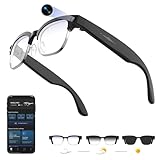
- 【8MPW Camera & 1080P Video and Audio】:These camera glasses feature an 800W camera that outputs sharp 20MP photos and smooth 1080P 30fps videos. Ultra-Clear Video + Powerful Anti-Shake tech+ Built-in dual microphones, you can capture crystal-clear video and audio together -sharply restoring details, perfect for vlogging, travel, and everyday moments
- 【Real-time AI translation Smart Glasses with Camera】:Instantly translate multiple major languages, breaking down language barriers in an instant—no phone required. Ideal for office settings, travel, academic exchanges, international conferences, watching foreign videos, and more
- 【Voice Assistant Recognition and Announcement】:Powered by industry-leading AI large models such as Doubao AI and OpenAI's GPT-4.0. AI voice wake-up lets you ask questions, recognize objects, and get answers on the go. Automatically recognizes objects, menus, landmarks, plants, and more, quickly analyzing the results and announcing them in real time. It instantly becomes your mobile encyclopedia on the go
- 【Bluetooth 5.3 Connection and Automatic Sync to Phone】:Equipped with a low-power BT5.3 chip and Wi-Fi dual transmission technology, offering ultra-low power and high-speed transmission. Captured images and videos are transferred to your phone in real time, eliminating manual export and eliminating storage worries
- 【290mAh Ultra-Long Battery Life】:Ultra-light at 42g, it's made of a durable, skin-friendly material, as light as a feather. Lenses are removable. Its simple, versatile design makes it a comfortable and comfortable wearer. 290mAh ultra-long battery life, 12 hours of music playback and 2 hours of photo or video recording, making it a perfect travel companion
For Android OEMs, this creates room to specialize. Fashion-forward brands can focus on aesthetics and materials. Ruggedized manufacturers can target enterprise and field work. Regional players can tailor glasses to local regulations and social norms around cameras and privacy.
From a platform perspective, this diversity is not fragmentation if Android XR enforces consistent behavior models, permission systems, and AI boundaries. In fact, it may be the only way smart glasses achieve mainstream legitimacy.
Why This Ecosystem Approach Changes the Odds
Taken together, Samsung’s manufacturing discipline, Qualcomm’s silicon strategy, and Google’s platform-first posture form a more credible foundation than any previous attempt at consumer smart glasses.
This is not a promise of instant success. Developer adoption, social acceptance, and battery reality will still impose limits. But Android XR’s partner ecosystem suggests Google is finally playing the long game.
Rather than asking the world to adapt to a single device, Google is building a framework that allows smart glasses to evolve gradually, learn from real usage, and earn their place alongside phones and watches instead of trying to replace them overnight.
Use Cases That Matter: Navigation, Notifications, Translation, Media, and Everyday Utility
If Android XR is going to avoid repeating Google Glass’s mistakes, it has to prove value in moments where pulling out a phone or glancing at a watch feels like friction. Google’s 2026 timeline suggests the company understands that smart glasses won’t win on novelty, but on how quietly and reliably they fit into everyday routines.
Rather than chasing fully immersive AR from day one, Android XR appears tuned for glanceable, context-aware information layered into real-world tasks. These are the use cases that actually justify a display on your face.
Navigation That Works While You’re Moving
Turn-by-turn navigation is the most obvious smart glasses use case, but also one of the hardest to get right without becoming distracting. Android XR’s advantage is access to Google Maps’ mature pedestrian, cycling, and transit data, combined with contextual awareness from the phone in your pocket.
Instead of floating 3D arrows everywhere, expect restrained cues: a subtle directional indicator at the edge of your vision, distance-to-turn updates, and haptic nudges via a connected Wear OS watch. For commuters, cyclists, and travelers navigating unfamiliar cities, this keeps eyes up and hands free in a way phones simply can’t.
Battery life will be critical here. Navigation needs to run for hours, not minutes, which is why early Android XR glasses are likely to offload GPS and heavy processing to the phone while the glasses focus on display and sensors. This division mirrors how smartwatches matured into all-day tools rather than miniature phones.
Notifications Without Notification Fatigue
Smart glasses live or die by how they handle notifications. Too much information and they become exhausting; too little and they feel redundant next to a watch.
Android XR’s system-level controls should allow granular filtering: messages from priority contacts, time-sensitive alerts, navigation prompts, and calendar reminders. Everything else stays on the phone. This mirrors how serious smartwatch users already manage notification load, but with faster access and less physical interaction.
Crucially, glasses can deliver notifications passively. A quick glance replaces a wrist raise or pocket pull, which matters in meetings, on public transport, or while carrying bags. If Google enforces strong defaults and OEMs resist the urge to overdo animations or pop-ups, this could become one of Android XR’s most quietly successful features.
Real-Time Translation and Contextual Assistance
Live translation is one area where smart glasses can do something phones and watches can’t replicate as naturally. Subtitles appearing in your field of view during a conversation remove the awkward pause of checking a screen or holding up a device.
With Google’s translation models and on-device AI improving rapidly, Android XR glasses could offer near-instant speech-to-text translation for common languages, with offline support for travel. The key will be latency and discretion. Text needs to appear fast, clearly, and without dominating your vision.
Beyond language, this opens the door to broader contextual assistance. Identifying landmarks, reading foreign menus, or summarizing signage fits the “everyday utility” brief far better than flashy AR overlays. This is where Project Aura’s rumored emphasis on lightweight, always-available AI hints at a more pragmatic vision.
Media Consumption, Reimagined for Short Bursts
Android XR smart glasses are unlikely to replace phones or tablets for long video sessions, and that’s a good thing. Their strength lies in micro-consumption: quick video replies, short clips, live sports scores, or glancing at album art and playback controls.
Audio-first experiences will matter more. With integrated speakers or bone-conduction audio, glasses can act as an extension of earbuds, surfacing track changes, navigation prompts, and call controls visually without demanding attention. For users already embedded in YouTube, YouTube Music, and Google TV ecosystems, this creates a cohesive media layer across devices.
Display quality and optics will define how far this goes. Early hardware will likely prioritize brightness, clarity, and low power draw over field of view. That tradeoff aligns with everyday wearability rather than immersive spectacle.
Everyday Utility Is the Real Killer Feature
The most compelling Android XR use cases aren’t flashy demos, but small moments that add up. Seeing a boarding gate change while walking through an airport. Glancing at a delivery confirmation while carrying groceries. Checking the weather or a to-do reminder without stopping what you’re doing.
Paired with Wear OS watches, glasses can form a two-layer system: the watch handles health tracking, haptics, and quick interactions, while glasses handle information density and context. This division of labor feels intentional, and it’s something Apple has yet to attempt at platform scale.
Comfort, weight, and materials will matter more here than raw specs. Frames that disappear on your face for eight to ten hours unlock far more value than devices that impress in a demo and stay in a drawer. Android XR’s success hinges on OEMs optimizing balance, nose pressure, heat, and durability as aggressively as they chase features.
Google’s confirmation of a 2026 launch suggests it knows these use cases only work when the hardware fades into the background. If Android XR glasses can deliver reliable navigation, sane notifications, practical translation, and low-friction daily utility, they won’t need to convince users they’re the future. They’ll simply become something you reach for every morning.
Learning from Google Glass: Privacy, Design, Social Acceptance, and the Risks Ahead
If Android XR is going to succeed as an everyday wearable, it has to confront the long shadow of Google Glass head-on. The original Glass wasn’t just early; it became a cultural cautionary tale about what happens when cutting-edge technology ignores human context.
Google’s 2026 timeline suggests the company understands that smart glasses don’t fail because of missing features, but because of friction—social, physical, and psychological. Android XR’s biggest challenge isn’t what it can do, but whether people feel comfortable wearing it, and being around others who do.
Privacy by Design, Not by Apology
Google Glass collapsed under the weight of perceived surveillance. A forward-facing camera, an always-on posture, and unclear recording indicators created an atmosphere of mistrust long before clear policies could catch up.
Android XR glasses will need privacy to be visible, not buried in settings. That means unmistakable hardware indicators for camera use, aggressive defaults around recording, and clear on-device processing for sensitive tasks like translation and visual recognition.
There’s reason to believe Google has internalized this. Its recent AI and Pixel hardware strategies emphasize on-device inference, granular permissions, and explicit user control. For glasses, that philosophy isn’t optional—it’s table stakes for social acceptance.
Design That Looks Like Eyewear, Not a Prototype
Glass looked like a science project strapped to your face, and people reacted accordingly. The asymmetrical prism, exposed electronics, and limited frame options signaled “beta tester” rather than everyday wearer.
Android XR appears positioned to reverse that mistake. Expect more traditional frame silhouettes, modular lens support, and materials that prioritize balance and comfort over visual drama. Weight distribution, hinge durability, and heat management will matter more than display resolution in the real world.
This is where partners like Samsung—or eyewear specialists Google hasn’t yet named—become critical. Smart glasses must respect the fundamentals of eyewear design: stable nose pads, pressure-free temples, and frames that remain comfortable across eight to ten hours of wear.
Social Acceptability Is a Feature, Not a Side Effect
Google Glass didn’t just make wearers uncomfortable—it made people around them uncomfortable. The device violated unwritten social rules by making it unclear when someone was paying attention, recording, or disengaged.
Android XR needs to communicate intent clearly. Subtle UI behaviors, glance-based interactions, and limited outward-facing gestures can help normalize use. The goal isn’t to disappear entirely, but to behave in ways people intuitively understand.
Audio-first interactions help here. Bone-conduction speakers or directional audio allow glasses to deliver navigation, notifications, and assistant responses without drawing visual attention. Combined with quick, glanceable visuals, this keeps interactions short and socially legible.
Why 2026 Timing Actually Matters
The delayed launch isn’t just about better hardware. It reflects a market that’s finally ready to understand smart glasses on their own terms, not as failed phones or intrusive cameras.
Consumers are now comfortable with always-on assistants, ambient computing, and wearables that quietly observe rather than interrupt. Smartwatches normalized glanceable information; earbuds normalized invisible interfaces. Android XR glasses sit at the intersection of both.
By arriving after Meta’s Ray-Ban experiments, Apple’s Vision Pro recalibration, and years of incremental UX learning, Google can position Android XR as mature, restrained, and intentionally boring in the best possible way.
The Risks Google Still Hasn’t Eliminated
Even with better design and clearer privacy cues, smart glasses remain a high-risk category. Battery life is unforgiving at this scale, and anything less than a full day of mixed use will undermine daily wearability.
There’s also the risk of feature creep. Packing too much AI, too many sensors, or too many notifications into glasses can quickly turn a subtle companion into a cognitive burden. Android XR must resist the temptation to showcase everything it can do.
Finally, there’s trust. Google is asking users to put a sensor-rich, AI-powered device on their face, tied to their Google account, location history, and media habits. Rebuilding confidence after Glass—and broader privacy controversies—will take more than good hardware.
💰 Best Value

- #1 SELLING AI GLASSES - Move effortlessly through life with Ray-Ban Meta glasses. Capture photos and videos, listen to music, make hands-free calls or ask Meta AI* questions on-the-go. Ray-Ban Meta glasses deliver a slim, comfortable fit for both men and women.
- CAPTURE WHAT YOU SEE AND HEAR HANDS-FREE - Capture exactly what you see and hear with an ultra-wide 12 MP camera and a five-mic system. Livestream it on Facebook and Instagram.
- LISTEN WITH OPEN-EAR AUDIO — Listen to music and more with discreet open-ear speakers that deliver rich, quality audio without blocking conversations or the ambient noises around you.
- GET REAL-TIME ANSWERS FROM META AI — The Meta AI* built into Ray-Ban Meta’s wearable technology helps you flow through your day. When activated, it can analyze your surroundings and provide context-rich suggestions - all from your smart AI glasses.
- CALL AND MESSAGE HANDS-FREE — Take calls, text friends or join work meetings via bluetooth straight from your glasses.
If Android XR glasses succeed, it won’t be because they are revolutionary. It will be because Google learned how to be restrained, deliberate, and human-centered in a category where overreach once set everything on fire.
How Android XR Glasses Stack Up Against Meta, Apple Vision Pro, and Emerging Rivals
Seen in the context of everything that’s come before, Android XR glasses aren’t entering a blank slate. They’re stepping into a market already segmented by radically different philosophies: Meta’s camera-first lifestyle glasses, Apple’s room-scale spatial computer, and a long tail of display-driven AR eyewear chasing niche adoption.
What makes Google’s 2026 move interesting is that Android XR appears to deliberately avoid competing head-on with any single one of them.
Meta Ray-Ban: Lifestyle First, Intelligence Second
Meta’s Ray-Ban smart glasses remain the closest real-world comparison. They look like normal eyewear, prioritize comfort, and succeed precisely because they don’t feel like tech products.
Where Meta focuses on capture and sharing—photos, short videos, livestreaming—Android XR is shaping up to be more assistive than expressive. The emphasis is on navigation, contextual prompts, notifications, and AI responses rather than social content creation.
Battery expectations highlight the difference. Ray-Bans struggle to stretch beyond a few hours of active use, while Android XR is being positioned as an all-day companion with restrained visuals and glance-based interactions designed to conserve power.
The bigger divergence is software gravity. Meta’s glasses orbit Meta platforms. Android XR glasses will sit inside Google’s broader ecosystem, pulling from Maps, Calendar, Gmail, Assistant, and third-party Android apps adapted for ambient display.
Apple Vision Pro: A Different Category Entirely
Apple Vision Pro isn’t a competitor in form, price, or intent. It’s a spatial computer meant to replace monitors and create immersive workspaces, not something you casually wear outside.
Where Vision Pro leans into ultra-high-resolution displays, eye tracking, and hand gestures, Android XR glasses are intentionally minimalist. There’s no expectation of virtual desktops, cinematic immersion, or prolonged visual sessions.
That distinction matters for comfort and social acceptance. Vision Pro’s weight, external battery, and isolation factor make it a stationary device. Android XR glasses aim to disappear into daily life, closer to a smartwatch than a headset.
If Apple eventually shrinks Vision into true glasses, that’s a future confrontation. For now, Google is choosing the lane Apple hasn’t fully committed to: lightweight, outdoor, always-available computing.
Display-Centric AR Glasses: Xreal, Vuzix, and Others
Then there’s the existing AR glasses segment led by companies like Xreal, Vuzix, Rokid, and Epson. These products focus on floating displays for media consumption, productivity mirroring, or industrial use.
Most rely on tethering to phones, PCs, or battery packs. Comfort is acceptable for short sessions, but daily wearability remains limited due to weight, heat, and visible optics.
Android XR glasses appear to reject the idea that glasses need to be portable monitors. Instead of large virtual screens, they favor small, contextual overlays designed to be glanced at and forgotten.
This is less impressive in demos, but far more sustainable for real-world use.
Emerging Minimalist Rivals: Even, Humane, and the Post-Screen Bet
A newer wave of competitors is betting against screens altogether. Even Realities’ G1 glasses use micro-LED text displays. Humane’s AI Pin removed displays entirely, relying on voice and projection.
Android XR sits between those extremes. It keeps visual output but treats it as optional and secondary, not the primary interface.
That balance may prove critical. Voice-only systems struggle in public and noisy environments, while screen-heavy designs demand attention. Android XR’s hybrid approach mirrors how smartwatches succeeded: quick looks, then back to life.
Where Project Aura Could Shift the Landscape
Project Aura, teased alongside Android XR, hints at Google’s longer-term ambition. While details remain scarce, the implication is a reference design or platform-level initiative that allows multiple hardware partners to build glasses without reinventing the stack.
If Aura becomes the Pixel of smart glasses—a tightly integrated showcase for Android XR—it could set benchmarks for comfort, optics, battery life, and privacy indicators in the same way Pixel phones shape Android expectations.
This also opens the door for Samsung, Xiaomi, Oppo, and others to experiment at different price tiers and styles, something neither Meta nor Apple currently enables.
The Strategic Advantage: Platform Over Product
Ultimately, Android XR glasses don’t need to be the best glasses to matter. They need to be the most adaptable platform.
By prioritizing ecosystem integration, developer flexibility, and socially acceptable hardware, Google is betting that smart glasses won’t win through spectacle, but through repetition. The device you wear every day doesn’t need to amaze you. It needs to quietly earn its place.
In that sense, Android XR isn’t trying to beat Meta or Apple at their own games. It’s trying to make smart glasses feel as unremarkable—and as indispensable—as checking the time on your wrist.
Why 2026 Matters: Timing, Market Readiness, and Whether Android XR Can Finally Go Mainstream
All of this context leads to the obvious question: why 2026? After more than a decade of false starts, Google is deliberately choosing a moment when the technology, the market, and user expectations are finally aligning rather than racing ahead of them.
The Hardware Curve Is Finally Catching Up
By 2026, the component math for smart glasses looks very different than it did even two years ago. Waveguide optics are thinner, micro-OLED and micro-LED displays are more power-efficient, and custom silicon can now offload vision and AI tasks without cooking your temples.
Battery density still isn’t miraculous, but it no longer needs to be. Android XR is designed around glanceable use, meaning all-day wear becomes achievable without the bulky battery packs that doomed earlier attempts like Google Glass and Magic Leap.
This is also the first cycle where comfort and industrial design can genuinely compete with normal eyewear. Lighter frames, balanced weight distribution, proper nose bridges, and prescription-ready lenses are no longer optional if Google wants repeat daily wear rather than demo-day curiosity.
AI Has Shifted the Value Proposition
What makes 2026 feel fundamentally different is not optics, but intelligence. Generative AI, on-device models, and context-aware assistants have reframed what smart glasses are actually for.
Instead of trying to replace your phone screen, Android XR can act as a situational layer. Directions when you’re moving, translation when you’re traveling, reminders when your hands are busy, and subtle notifications that don’t demand a posture change.
This is where Google’s strengths matter. Maps, Search, Assistant, and real-time vision processing are already deeply embedded in Android, and smart glasses give those services a physical anchor without forcing users into a headset mindset.
The Market Has Been Educated—Sometimes the Hard Way
Consumer expectations are also more realistic now. Meta’s Ray-Ban smart glasses normalized cameras and voice control in eyewear, even if displays remained absent, while Apple Vision Pro clarified that spatial computing and wearable computing are not the same category.
Equally important, high-profile failures like Humane’s AI Pin have shown what not to do. Consumers are no longer impressed by screenless minimalism that adds friction instead of removing it.
Android XR arrives into a market that now understands the trade-offs. People want something that augments daily life, works with their existing Android phone, and doesn’t ask them to relearn social norms in public.
Platform Momentum Matters More Than a Single Launch
A 2026 debut also gives Google time to do what it historically struggles with: consistency. Developers need stable APIs, hardware partners need reference targets, and consumers need reassurance that the platform won’t be abandoned after one generation.
If Project Aura functions as a visible, credible anchor—whether as a reference design, first-party product, or tightly guided partner effort—it could finally solve Android’s fragmentation problem in wearables. Not by eliminating choice, but by setting a clear baseline for performance, privacy indicators, and user experience.
This mirrors how Wear OS only became viable once Google and Samsung aligned on expectations. Smart glasses will require the same long-term commitment, not a single moonshot.
Can Android XR Finally Go Mainstream?
The answer depends less on spectacle and more on restraint. If Android XR glasses launch in 2026 with modest displays, reliable battery life, strong phone integration, and a clear sense of when to surface information—and when to stay silent—they have a genuine chance.
Mainstream adoption won’t come from trying to wow users every time they put them on. It will come from comfort, trust, and usefulness measured in dozens of small moments per day.
In that light, 2026 isn’t late. It may be the first time Google is actually on time, launching smart glasses when people are ready to wear them, developers are ready to build for them, and the technology is ready to disappear into everyday life rather than compete with it.