Crashes, No Sound, or Screen Glitches?
Random freezes, missing sound and display glitches usually trace back to one bad driver. Find and replace yours safely.Free scan · under a minuteWindows Errors? Fix Them Before They Spread
Repair common Windows errors and clear accumulated junk for a smoother, more stable PC - no reinstall needed.Free scan · no reinstallSome links on this page are affiliate links: if you buy through them we may earn a commission, at no extra cost to you.
Google’s Android XR glasses are a prototype concept, not a product announced for retail sale. Shown at Google I/O on May 20, 2025, the glasses combined Gemini, a camera, microphones, speakers and smartphone connectivity, with an optional in-lens display for glanceable information such as directions and translation captions. Google’s later roadmap split the idea into audio glasses and display glasses; it announced audio glasses for fall 2026, but has not announced a price or firm consumer launch date for the display version.
What Google demonstrated
The prototype looked more like everyday eyewear than a bulky XR headset. Google described a camera, microphones and speakers in the glasses, paired with a smartphone to access apps and Gemini. Some designs could also include a small display in one lens. Google has not published a complete specification sheet, so details such as weight, battery life, camera resolution and display brightness remain unknown.
In its Google I/O demonstration, Google showed Gemini responding to questions about the wearer’s surroundings, providing directions, sending messages, creating an appointment, taking photos and translating a conversation. The display was shown presenting information such as navigation cues and translation captions. These were demonstrations of intended experiences, not a guarantee that every feature will ship on every model.
What the in-lens display is—and isn’t
The display is optional: Google’s roadmap distinguishes audio glasses, which provide spoken assistance without a visual display, from display glasses, which add visual information in the wearer’s field of view. A small, glanceable display could make a turn cue or caption easier to check than spoken audio alone. Google has not disclosed its resolution, field of view, brightness or other technical limits.
#1 Best Overall
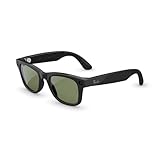
- #1 SELLING AI GLASSES - Tap into iconic style for men and women, and advanced technology with the newest generation of Ray-Ban Meta smart AI glasses. Capture photos and video recordings, listen to music, make hands-free calls or ask Meta AI questions on-the-go.
- UP TO 8 HOURS OF BATTERY LIFE - On a full charge, these smart AI glasses can last 2x longer than previous generations, up to 8 hours with moderate use. Plus, each pair comes with a charging case that provides up to 48 hours of charging on-the-go.
- 3K ULTRA HD: RECORD SHARP VIDEOS WITH RICH DETAIL — Hands-free video recording with an ultra-wide 12 MP camera in up to 3K resolution. Record clips up to 3 minutes per session. Capture sharp, vibrant memories while staying in the moment.
- LISTEN WITH OPEN-EAR AUDIO — Listen to music and more with discreet open-ear speakers that deliver rich, quality audio without blocking out conversations or the ambient noises around you.
- ASK YOUR GLASSES ANYTHING WITH META AI — Get real-time suggestions, answers, object identification, and reminders hands-free. Requires Bluetooth connection to your smartphone and the Meta AI app. Ensure your phone has internet connectivity.
That is different from a full mixed-reality headset. The glasses concept is aimed at discreet assistance while the wearer remains engaged with the real world; Google has not presented it as a replacement for a large virtual screen or an immersive headset experience.
Gemini, cameras and the phone connection
Gemini is intended to make the glasses context-aware: the camera and microphones can provide information about what the wearer sees or hears, while responses can come through audio or, on display models, visual prompts. Google described the glasses as working in tandem with a smartphone, rather than as a confirmed standalone computer. The phone connection is therefore central to the announced concept, but Google has not published final phone requirements or a complete offline-feature list.
At Google I/O 2026, Google said its future glasses would pair with Android and iOS phones. That does not establish that every feature will work identically across operating systems, devices or regions. Translation performance and other Gemini functions may also depend on supported languages, connectivity and software availability.
Do these 3 things before closing this tab:
1Repair Windows errors before they cause bigger problems2Scan for outdated or missing drivers - takes under a minute3Clear out junk files and repair common Windows errorsRank #2

- #1 SELLING AI GLASSES - Tap into iconic style for men and women, and advanced technology with the newest generation of Ray-Ban Meta smart AI glasses. Capture photos and video recordings, listen to music, make hands-free calls or ask Meta AI questions on-the-go.
- UP TO 8 HOURS OF BATTERY LIFE - On a full charge, these smart AI glasses can last 2x longer than previous generations, up to 8 hours with moderate use. Plus, each pair comes with a charging case that provides up to 48 hours of charging on-the-go.
- 3K ULTRA HD: RECORD SHARP VIDEOS WITH RICH DETAIL — Hands-free video recording with an ultra-wide 12 MP camera in up to 3K resolution. Record clips up to 3 minutes per session. Capture sharp, vibrant memories while staying in the moment.
- LISTEN WITH OPEN-EAR AUDIO — Listen to music and more with discreet open-ear speakers that deliver rich, quality audio without blocking out conversations or the ambient noises around you.
- ASK YOUR GLASSES ANYTHING WITH META AI — Get real-time suggestions, answers, object identification, and reminders hands-free. Requires Bluetooth connection to your smartphone and the Meta AI app. Ensure your phone has internet connectivity.
Google’s audio-glasses and display-glasses roadmap
Google clarified the product categories after the 2025 prototype reveal. In December 2025, it described audio glasses and display AI glasses as distinct directions. On May 19, 2026, it announced that its first audio glasses were planned for fall 2026, while continuing to describe display glasses as a separate, future category. The announcement did not provide a price or a firm consumer launch date for the display-equipped model. See Google’s December 2025 roadmap and I/O 2026 announcement.
| Category | What it offers | Public status in Google’s announcements |
|---|---|---|
| Audio glasses | Everyday eyewear with audio-based assistance; Google’s concept also includes camera and microphone capabilities. | Google announced a planned fall 2026 launch. It did not announce a price in the cited announcement. |
| Display glasses | The same broad AI-glasses idea with an in-lens display for information such as directions or captions. | No public price or firm consumer launch date in the cited announcements. |
Google’s May 2025 event was a prototype preview, with trusted testers evaluating the glasses—not a retail launch. The company has not publicly established a final product name, retail configuration or complete specification set for the display model. The dated distinction matters: the first announced 2026 glasses are audio glasses, not necessarily the display-equipped glasses shown in the prototype demonstrations.
Partners and the wider Android XR platform
Google is developing Android XR with Samsung and Qualcomm. Its eyewear announcements named Gentle Monster and Warby Parker as design partners, with Google also mentioning potential future collaboration with Kering Eyewear. In 2026, Google showed additional designs from Gentle Monster and Warby Parker and named Samsung in connection with the planned audio-glasses launch. Partnership and design announcements do not confirm that every partner will sell a display model or that the same features will appear across all frames.
Rank #3

- 【8MP HD Camera & EIS Stabilization】Osawalla smart glasses let you capture first-person photos and 1080P HD video with the built-in 8MP camera. EIS anti-shake support helps keep footage smoother during travel, outdoor activities, and daily use. Selectable clip lengths include 15s, 30s, 1 min, 3 min, 9 min, and 12 min
- 【AI Object Recognition & Real-Time Translation】These AI glasses with camera have "Hey Cyan" AI voice assistant (built-in ChatGPT model) and object recognition (recognizes objects, menus, landmarks, plants in real time). They also support 139+ language translation and voice-assisted Q&A—perfect for international travelers, students to break language barriers during travel, study and work
- 【Bluetooth Music & Phone Calls】Osawalla smart glasses connect via Bluetooth 5.4 for music playback, phone calls, and voice assistant control. The open-ear design lets you enjoy everyday listening while staying more aware of your surroundings during walks, commuting, travel, and daily use. Touch controls make it easy to adjust volume, answer calls, and manage playback
- 【Ultra-Light 40.8g (0.09lb) for All-Day Comfort & Long Battery Life】Lightweight camera glasses with TR90 frame, ABS temples, and PMMA material for zero nose pressure. IP65 waterproof design resists daily splashes. 290mAh battery supports up to 7 hours of music playback and 7 days of standby, ideal for travel and daily use
- 【Photochromic Lenses】These smart sunglasses with camera have photochromic lenses that automatically darken in sunlight for effective UV protection. Note: Lenses may darken slower in inside or winter due to weaker UV rays. If you have any questions, feel free to contact us—we are always here to provide satisfactory service
Android XR is broader than glasses. Samsung’s Project Moohan headset represents a more immersive form factor, while everyday glasses are intended to keep assistance lightweight and hands-free. Google also described Project Aura, a separate wired XR-glasses project with XREAL, as an optical see-through device with a 70-degree field of view. It is aimed at a larger, more immersive visual experience—not the same use case as discreet AI eyewear. Details are in Google’s Android XR updates.
How the concept compares with other smart glasses
Ray-Ban Meta glasses established a widely recognized camera-and-audio smart-glasses format, with Meta’s software and assistant ecosystem. Google’s concept similarly centers on wearable cameras, audio and AI, but adds the possibility of an in-lens display on some models and is built around Gemini and Android XR. The key distinction is not that every Google frame will have a screen; Google explicitly separates audio glasses from display glasses.
The comparison also has a practical availability gap. Ray-Ban Meta is an established commercial product category, while the Google display glasses discussed here remain a prototype and roadmap concept in the cited announcements. Model-specific phone compatibility, prescription options and regional features should be checked with the relevant manufacturer rather than assumed to be equivalent.
Rank #4
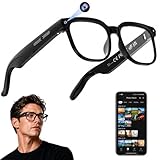
- 【AI Real-Time Translation & ChatGPT Assistant】AI glasses break language barriers instantly with AI real-time translation. The built-in ChatGPT voice assistant helps you communicate, learn, and handle travel or business conversations smoothly—ideal for conferences, overseas trips, and daily use.
- 【4K Ultra HD】 Smart glasses feature 4K resolution for clear, detailed visuals, making them suitable for travel, outdoor activities, everyday moments, and daily use.
- 【Bluetooth Music & Hands-Free Calls 】Smart glasses provide Bluetooth music and crystal-clear hands-free calls with an open-ear design. Stay aware of your surroundings while listening—comfortable for long wear and safer for commuting, cycling, and outdoor use.
- 【IP65 Waterproof & Long Battery Life】 AI glasses are designed for daily wear with IP65 waterproof protection against sweat, rain, and dust. The built-in 290mAh battery provides reliable performance for workdays and travel—no anxiety when you’re on the go.
- 【Smart App Control & Object Recognition】Smart glasses connect to the companion app for easy setup, file management, and feature control. They support AI object recognition to help identify items and improve your daily efficiency—perfect for travel exploration and a smart lifestyle.
What remains unknown—and why it matters
- Price and availability: No public price or firm consumer launch date for the display model has been announced in the cited official sources.
- Battery, weight and heat: A camera, wireless connection, speakers, AI features and display all have to fit into a small frame. Google has not published battery-life or weight figures.
- Display performance: Resolution, brightness, field of view and the precise display technology have not been established publicly.
- Prescription and fit: Eyewear-brand partnerships indicate attention to frame design, but Google has not published supported prescriptions, lens options or fitting details.
- Phone and connectivity requirements: Google has described phone pairing, but not a complete compatibility or offline-use matrix. If the phone is out of range, its battery is dead or connectivity drops, the available functions are not specified.
- Privacy controls: Cameras and microphones raise questions about recording indicators, disabling capture, data processing and retention. Google acknowledged the need to consider the privacy of both wearers and people nearby, but the prototype announcements do not establish final consumer controls.
- Feature availability: Demonstrated messaging, appointments and translation do not prove that every action will be available at launch or in every country, language, phone configuration or eyewear model.
These are not minor omissions for a device worn in public. Before buying, readers will need clear answers about when the camera or microphone is active, how bystanders can tell, where captured data is processed, and what can be disabled. Google has not supplied final answers for the display-glasses concept.
Should you wait for Google’s display glasses?
Wait for more information if your specific interest is Gemini in ordinary-looking glasses with a visual display. The 2025 demo establishes Google’s direction, not a product you can order with known specifications. If voice assistance, calls or photography are enough, compare currently available camera-and-audio glasses—but do not mistake them for Google’s display model. If your priority is a large private screen or immersive XR, a headset or wired XR glasses are different alternatives with different trade-offs, not substitutes for discreet everyday eyewear.
Also treat navigation and translation as assistive features, not infallible ones. Do not rely on visual or spoken prompts while driving, cycling in traffic or crossing roads, and expect translation quality to vary with noise, accents, language support and connectivity.
Quick Recap
Product prices and availability are accurate as of the date/time indicated and are subject to change. Any price and availability information displayed on Amazon at the time of purchase will apply.

