Quick wins for a faster PC:
Scan for outdated or missing drivers - takes under a minuteDriver Scan →Clear out junk files and repair common Windows errorsFree Scan →Some links on this page are affiliate links: if you buy through them we may earn a commission, at no extra cost to you.
Yes—AirPods Pro 2 can provide hearing assistance through Apple’s Hearing Aid feature, intended for adults 18 and older with perceived mild-to-moderate hearing loss. You’ll need compatible Apple hardware, current software and AirPods firmware, and access to the feature in your country or region. First take Apple’s Hearing Test or add a professional audiogram; simply switching on Transparency mode does not activate Hearing Aid.
What the Hearing Aid feature does—and what it doesn’t
Apple’s Hearing Aid feature uses a hearing profile from an AirPods Hearing Test or a professional audiogram to personalize amplification of environmental sound. Apple describes it as a “clinical-grade” feature for its stated adult user group, but that does not make AirPods Pro 2 suitable for every type or degree of hearing loss, or a replacement for professional care.
- Hearing Aid: Personalized amplification of environmental sound. It works in Transparency mode.
- Transparency mode: Passes outside sound through the AirPods. Transparency alone is not a personalized hearing-aid fitting.
- Media Assist: Applies hearing-test-based adjustments to supported music, video, phone calls, and FaceTime. It is separate from environmental amplification.
- Live Listen: Sends sound picked up by an iPhone or iPad microphone to compatible AirPods. You can place the device closer to a sound source, but this is not the same as Hearing Aid.
Noise Cancellation and Adaptive modes are not substitutes for Hearing Aid environmental amplification. Media Assist may adjust supported media in different listening modes, but that does not mean Hearing Aid amplification is active in them. Apple’s Hearing Aid instructions explain the feature and controls.
Do these 3 things before closing this tab:
1Repair Windows errors before they cause bigger problems2Fix the driver behind crashes, sound loss and screen glitches3Clear out junk files and repair common Windows errorsBefore you start
- AirPods Pro 2 with the latest available firmware. Other AirPods models, including AirPods Pro 1, do not meet this requirement.
- A compatible iPhone or iPad with the latest available iOS or iPadOS, with the AirPods paired and connected. Apple’s regulatory instructions list iPhone XS or later and supported iPad models; check Apple’s current compatibility guidance for the device list.
- A sufficiently charged case and earbuds, and a quiet place for the test.
- A comfortable, secure ear-tip fit. Run the Ear Tip Fit Test if it is offered.
- You must be at least 18 to use the Hearing Test and Hearing Aid feature, and the regulated feature must be available in your region.
Menu names and availability vary by region and software version. You may see “Hearing Assistance” or “Hearing Health” in AirPods settings.
#1 Best Overall

- WORLD’S BEST IN-EAR ACTIVE NOISE CANCELLATION — Removes up to 2x more unwanted noise than AirPods Pro 2* so you can stay fully immersed in the moment.*
- BREAKTHROUGH AUDIO PERFORMANCE — Experience breathtaking, three-dimensional audio with AirPods Pro 3. A new acoustic architecture delivers transformed bass, detailed clarity so you can hear every instrument, and stunningly vivid vocals.
- HEART RATE SENSING — Built-in heart rate sensing lets you track your heart rate and calories burned for up to 50 different workout types.* With iPhone, you will have access to the Move ring, step count, and the new Workout Buddy,* powered by Apple Intelligence.*
- LIVE TRANSLATION — Communicate across language barriers using Live Translation,* enabled by Apple Intelligence.*
- EXTENDED BATTERY LIFE — Get up to 8 hours of listening time with Active Noise Cancellation on a single charge. Or up to 10 hours in Transparency using the Hearing Aid feature.*
Take the AirPods Hearing Test
- Charge your AirPods and find a quiet room. Avoid conversation, intermittent noise, loud fans, and air conditioning during the test.
- Put in both AirPods Pro 2 and make sure they sit securely. Run the Ear Tip Fit Test if available.
- On the paired iPhone or iPad, open Settings > [your AirPods].
- Tap Take a Hearing Test and follow the prompts. Respond when you hear a tone.
- Review the results in the Health app. Apple says the test takes about five minutes and checks hearing at different frequencies.
The result provides a hearing profile for Apple’s feature; it is not a complete medical evaluation. If your result is unexpected, differs substantially between ears, or does not match what you experience day to day, do not rely on repeated home tests to settle the question. Ask a hearing professional for an assessment.
Use a professional audiogram instead
If a hearing professional has given you an audiogram, Apple lets you add it for setup. With AirPods connected, open Settings > [your AirPods] > Hearing Assistance or Hearing Health, then follow this path:
- Tap Set Up Hearing Assistance.
- Choose Use a Prior Test Result.
- Select a saved Hearing Test result, or tap Add Hearing Test Result and follow the instructions to enter the professional audiogram.
- Choose Set Up Hearing Aid, tap Get Started, then tap Turn On Hearing Aid.
Labels can differ slightly with software version, language, and region. Apple’s setup guide has the current flow.
Rank #2
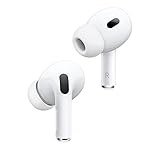
- This pre-owned product is not Apple certified, but has been professionally inspected, tested and cleaned by Amazon-qualified suppliers.
Adjust hearing support
With AirPods connected, go to Settings > [your AirPods] > Hearing Assistance (or the corresponding Hearing Health panel), then tap Adjustments. Make small changes and give yourself time to assess them.
| Setting | What it changes |
|---|---|
| Amplification | Overall gain for environmental sound. This is separate from media volume. |
| Balance | Relative loudness between the left and right AirPods. A pronounced difference between ears is a reason to seek professional advice rather than making a large adjustment on your own. |
| Tone | Shifts the sound brighter or darker. |
| Ambient Noise Reduction | Reduces some environmental noise picked up by the microphones. |
| Conversation Boost | Helps focus on a person speaking directly in front of you. It is not a universal speech-separation feature: groups, side conversations, reverberant rooms, and background music can still make speech difficult. |
For a quick adjustment on iPhone or iPad, open Control Center, touch and hold the volume control, tap the Hearing control, then tap Hearing Assistance. The device’s volume buttons adjust media volume—not Hearing Aid amplification. Apple also says compatible Mac and Apple Watch devices can control amplification. Hearing Aid settings are stored on the AirPods, so they can use the latest saved settings when your iPhone or iPad is not nearby; initial setup and some controls still require a compatible Apple device.
AirPods Pro 2 can also be configured to adjust amplification with a swipe on the stem. Apple says this works in Transparency mode when no media is playing. See Apple’s adjustment instructions for details.
Rank #3
- Active Noise Cancellation reduces unwanted background noise
- Adaptive Transparency lets outside sounds in while reducing loud environmental noise
- Personalized Spatial Audio with dynamic head tracking places sound all around you
- Multiple ear tips (XS, S, M, L)
- Touch control lets you swipe to adjust volume, press to direct media playback, answer or end calls, and press and hold to switch between listening modes
Use Media Assist for music, video, and calls
Media Assist applies hearing-profile adjustments to supported media rather than amplifying the surrounding environment. Its settings include separate adjustments for music and video and for phone and FaceTime calls. You can still control the media’s playback level with the device’s volume controls or the app. If the goal is to hear people and sounds around you, confirm that Hearing Aid is on and the AirPods are in Transparency mode.
The Tool Desk
Outbyte Driver Updater FREEScan for outdated or missing drivers - takes under a minuteDriver Scan →Outbyte PC Repair FREEClear out junk files and repair common Windows errorsFree Scan →If the feature is missing or not working
Hearing Aid or Hearing Test does not appear
- Confirm the model is AirPods Pro 2 and both earbuds are connected.
- Update the iPhone or iPad and install the latest available AirPods firmware; charge the earbuds and case.
- Confirm you are in a supported country or region and are wearing the AirPods with a suitable seal.
- Look in the AirPods settings for Hearing Assistance or Hearing Health, not only in the general Accessibility menu.
- Check the installed feature version at Settings > [your AirPods] > Hearing Assistance > About Hearing Aid. On Mac, look under System Settings > [your AirPods] > Hearing Health > About Hearing Aid.
- If the option is still absent, unpair and pair the AirPods again, then retry setup. Apple notes that feature versions and availability vary by region; its version information gives the current check.
The test is unavailable or results seem unreliable
Noise, interruptions, or a poor ear-tip seal can interfere. Retry once in a genuinely quiet setting with the AirPods positioned securely. If the result is still surprising or you have ongoing difficulty, arrange a hearing evaluation instead of treating repeated tests as a diagnosis.
Sound is too quiet, too loud, or uneven
Confirm Hearing Aid is on and Transparency mode is selected. Adjust amplification gradually; remember that the iPhone volume buttons change media volume. Check fit and the Balance setting. A strong left-right difference or persistent difficulty despite adjustments merits a professional assessment.
Rank #4

- REBUILT FOR COMFORT — AirPods 4 have been redesigned for exceptional all-day comfort and greater stability. With a refined contour, shorter stem, and quick-press controls for music or calls.
- PERSONALIZED SPATIAL AUDIO — Personalized Spatial Audio with dynamic head tracking places sound all around you, creating a theater-like listening experience for music, TV shows, movies, games, and more.*
- IMPROVED SOUND AND CALL QUALITY — AirPods 4 feature the Apple-designed H2 chip. Voice Isolation improves the quality of phone calls in loud conditions. Using advanced computational audio, it reduces background noise while isolating and clarifying the sound of your voice for whomever you’re speaking to.*
- MAGICAL EXPERIENCE — Just say “Siri” or “Hey Siri” to play a song, make a call, or check your schedule.* And with Siri Interactions, now you can respond to Siri by simply nodding your head yes or shaking your head no.* Pair AirPods 4 by simply placing them near your device and tapping Connect on your screen.* Easily share a song or show between two sets of AirPods.* An optical in-ear sensor knows to play audio only when you’re wearing AirPods and pauses when you take them off. And you can track down your AirPods and Charging Case with the Find My app.*
- LONG BATTERY LIFE — Get up to 5 hours of listening time on a single charge. And get up to 30 hours of total listening time using the case.*
You hear whistling or squealing
Feedback can be related to fit, excessive amplification, or blocked or dirty openings. Reseat the AirPods, try another ear-tip size, run the fit test, lower amplification, and clean the AirPods according to Apple’s cleaning guidance. If the sound persists, stop using the feature and contact Apple support or a hearing professional.
The sound cuts out or the earbuds run out of power
Check that both AirPods are charged, connected, and clean, and that the case is charged. Apple lists up to six hours of listening time on a charge with Active Noise Cancellation enabled and up to 30 hours with the case; actual runtime varies with settings, calls, streaming, and battery condition. Those figures are not a guarantee of continuous Hearing Aid use. Carry the case, plan charging breaks, and keep a backup option for long days or travel.
Outdated Drivers Are Slowing You Down
One free scan finds every outdated or missing driver and matches the right update for your exact hardware.Free scan · exact hardware matchWindows Errors? Fix Them Before They Spread
Repair common Windows errors and clear accumulated junk for a smoother, more stable PC - no reinstall needed.Free scan · no reinstallAre AirPods Pro 2 a sensible hearing option for you?
| Your situation | How to think about AirPods Pro 2 |
|---|---|
| Adult with perceived mild-to-moderate loss, an iPhone, and a comfortable fit | Potentially useful, especially if you want hearing support alongside music and calls. |
| Occasional help in quieter settings | May be a practical option to try, provided the feature is available where you live. |
| Severe or profound loss, or need for high-power amplification | Apple’s stated intended population does not cover this use case; consult a hearing professional about appropriate options. |
| Complex or markedly asymmetric hearing difficulty | Get a professional evaluation rather than relying on self-adjustments. |
| All-day use, custom fit, or challenging group settings are priorities | Conventional hearing aids may offer a better fit for your needs; discuss choices with a qualified provider. |
| No compatible Apple device or unsupported region | The Hearing Aid feature may not be available to set up or use. |
| Under 18 | The feature is not intended for this age group; seek pediatric hearing care. |
AirPods Pro 2 can be appealing if you already use Apple devices and want one product for hearing support, calls, and entertainment. The trade-offs are in-ear comfort, charging dependence, regional restrictions, and a feature designed for a defined user group—not every hearing profile. A conventional hearing aid may be preferable when professional fitting, long daily wear, specialized amplification, or ongoing support matters more than multifunctionality.
Best Value
- REBUILT FOR COMFORT — AirPods 4 have been redesigned for exceptional all-day comfort and greater stability. With a refined contour, shorter stem, and quick-press controls for music or calls.
- ACTIVE NOISE CANCELLATION — AirPods 4 with Active Noise Cancellation help reduce outside noise before it reaches your ears, so you can immerse yourself in what you’re listening to.*
- HEAR THE WORLD AROUND YOU — The powerful H2 chip comes to AirPods 4. Adaptive Audio seamlessly blends ANC and Transparency mode — which lets you comfortably hear and interact with the world around you exactly as it sounds — to provide the best listening experience in any environment.* And when you’re speaking with someone nearby, Conversation Awareness automatically lowers the volume of what’s playing.*
- IMPROVED SOUND AND CALL QUALITY — Voice Isolation improves the quality of calls in loud conditions. Using advanced computational audio, it reduces background noise while isolating and clarifying the sound of your voice for whomever you’re speaking to.*
- MAGICAL EXPERIENCE — Just say “Siri” or “Hey Siri” to play a song, make a call, or check your schedule.* And with Siri Interactions, now you can respond to Siri by simply nodding your head yes or shaking your head no.* Pair AirPods 4 by simply placing them near your device and tapping Connect on your screen.* Easily share a song or show between two sets of AirPods.* An optical in-ear sensor knows to play audio only when you’re wearing AirPods and pauses when you take them off. And you can track down your AirPods and Charging Case with the Find My app.*
When to seek professional care
Arrange an evaluation if hearing difficulty is substantial, worsening, one-sided, or not adequately helped by the AirPods. Sudden hearing change or hearing difficulty accompanied by other concerning symptoms should be assessed promptly by a healthcare professional. An audiologist or hearing healthcare provider can evaluate your hearing and supply an audiogram that Apple’s setup supports.
Price and regional availability
Apple’s U.S. store listed AirPods Pro 2 at $249 as of August 18, 2026; price, taxes, discounts, and availability differ elsewhere and can change. Check the Apple Store listing for current local pricing. The Hearing Aid feature is regulated and region-dependent, so a product listing or authorization in one country does not establish availability or suitability in another.
Quick Recap
Product prices and availability are accurate as of the date/time indicated and are subject to change. Any price and availability information displayed on Amazon at the time of purchase will apply.

