The Huawei Watch GT 2 sits in an unusual but still relevant corner of the smartwatch market in 2026. It is not a full app-driven smartwatch in the Apple Watch or Wear OS sense, nor is it a hardcore sports watch like a modern Garmin Forerunner. Instead, it was designed as a long-battery, health-first wearable that looks and wears like a traditional watch, and that core identity hasn’t aged as badly as you might expect.
If you’re searching for the GT 2 today, you’re likely trying to avoid daily charging, subscription-heavy ecosystems, or overcomplicated smart features you won’t actually use. This review focuses on whether the GT 2 still delivers on those fundamentals now, what compromises you need to accept in 2026, and who should skip it entirely in favor of newer Huawei models or alternatives from Garmin, Samsung, or Amazfit.
What the Huawei Watch GT 2 Actually Is
At its heart, the Watch GT 2 is a fitness-oriented smartwatch powered by Huawei’s LiteOS, not Wear OS. That choice defines everything about the experience, from its exceptional battery life to its limited third-party app support. You get notifications, health tracking, onboard GPS, and music storage, but not an open app ecosystem.
The watch launched in two main sizes, a 46mm model with a 1.39-inch AMOLED display and a smaller 42mm version with a 1.2-inch AMOLED panel. Both use stainless steel cases with a combination of brushed and polished surfaces, paired with either silicone sport straps or leather depending on the variant. Even years later, the finishing holds up well and doesn’t scream “cheap fitness tracker” on the wrist.
🏆 #1 Best Overall
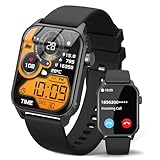
- 【1.83" HD Display & Customizable Watch Faces】Immerse yourself in a vibrant 1.83-inch IPS display, boasting a sharp resolution of 240*284 for crystal-clear visuals. Effortlessly personalize your smart watch with a wide array of customizable watch faces to suit your personal style for every occasion—whether trendy, artistic, or minimalist—ideal for casual, sporty, or professional. Its sleek, modern design complements any outfit, blending technology and fashion seamlessly for everyday wear
- 【120 Sports Modes & Advanced Health Tracking】Our TK29 smart watches for women men come equipped with 120 sports modes, allowing you to effortlessly track a variety of activities such as walking, running, cycling, and swimming. With integrated heart rate and sleep monitors, you can maintain a comprehensive overview of your health, achieve your fitness goals, and maintain a balanced, active lifestyle with ease. Your ideal wellness companion (Note: Step recording starts after exceeding 20 steps)
- 【IP67 Waterproof & Long-Lasting Battery】Designed to keep up with your active lifestyle, this smartwatch features an IP67 waterproof rating, ensuring it can withstand splashes, sweat, and even brief submersion, making it perfect for workouts, outdoor adventures, or rainy days. Its reliable 350mAh battery offering 5-7 days of active use and up to 30 days in standby mode, significantly reducing frequent charging. Ideal for all-day wear, whether you’re at the gym, outdoors, or simply on the go
- 【Stay Connected Anytime, Anywhere】Stay informed and in control with Bluetooth call and music control features. Receive real-time notifications for calls, messages, and social media apps like Facebook, WhatsApp, Twitter, and Instagram directly on your smartwatch. Easily manage calls, control your music playlist, and stay updated without needing to reach for your phone. Perfect for work, workouts, or on-the-go, this watch keeps you connected and never miss important updates wherever you are
- 【Multifunction & Wide Compatibility】Seamlessly handle heart rate monitoring, sleep tracking, and enjoy conveniences like camera/music control, Seamlessly handle heart rate monitoring, sleep tracking, and more-all directly from your wrist. This 1.83 inches HD smartwatch is compatible with iPhone (iOS 9.0+) & Android (5.0+), ensuring smooth daily connectivity and convenience throughout your day. More than just a timepiece, it’s a stylish, all-in-one wearable for smarter, healthier living
Huawei’s Kirin A1 chipset prioritizes efficiency over raw performance, which is why the GT 2 still manages roughly 10 to 14 days of battery life in light-to-moderate use. That endurance remains one of its strongest selling points in 2026, especially compared to most modern smartwatches that still need charging every one to three days.
Who the Watch GT 2 Is Still For
The GT 2 continues to make sense for buyers who want reliable health tracking and excellent battery life without caring about apps, LTE, or voice assistants. It tracks heart rate, sleep, stress, SpO2 via updates, and a wide range of activities with GPS, all while staying unobtrusive and comfortable for all-day wear. For casual runners, walkers, gym users, and general wellness tracking, it still performs consistently.
It’s also well suited to users who switch between Android and iOS or don’t want to lock themselves into a single phone ecosystem. The Huawei Health app works on both platforms, and while iOS users lose some features like quick replies, the core tracking experience remains intact. That cross-platform flexibility is something even newer watches sometimes struggle with.
Where it struggles is with power users who expect smartwatch-style interaction. There’s no app store worth speaking of, limited watch face customization compared to newer Huawei models, and no native contactless payments in most regions. If you want your watch to replace your phone for tasks beyond fitness and notifications, the GT 2 will feel restrictive very quickly.
Why It Still Comes Up in 2026
The main reason the Watch GT 2 is still discussed is value. In many markets, it’s available at a steep discount compared to its original price, often undercutting newer GT models and competing brands by a significant margin. At those prices, its build quality, AMOLED display, and battery life are hard to ignore.
It also benefits from Huawei’s conservative approach to design. The round case, slim profile, and minimal bezel don’t look dated next to current watches, and it works just as well with casual clothing as it does with workout gear. Comfort is excellent thanks to its relatively light weight and well-curved caseback, especially on the 46mm model which balances size and wearability well.
This section sets the stage for a deeper evaluation of how the Watch GT 2 performs today in areas like fitness accuracy, software limitations, long-term durability, and real-world usability. The next part breaks down the design and build quality in detail, because with a watch like this, how it feels on the wrist matters just as much as what it can track.
Design, Case Sizes, and Wearability: Classic Watch Styling with Smartwatch Practicality
Coming straight off the value discussion, the Watch GT 2’s physical design is a big reason it continues to hold attention years after launch. Huawei deliberately avoided overtly “techy” styling here, and that restraint is what allows the GT 2 to blend into everyday life far more easily than many fitness-first rivals.
It looks like a traditional wristwatch first and a smartwatch second, which for many buyers is exactly the appeal.
Traditional Round Case with Minimalist Execution
The Watch GT 2 uses a clean, circular case with slim bezels and a symmetrical layout that wouldn’t look out of place alongside entry-level mechanical watches. There’s no rotating bezel or decorative flourishes, just a smooth stainless steel case and a flat, uninterrupted glass surface.
That simplicity gives the watch a timeless quality, especially compared to older square smartwatches that now feel visually dated. Even in 2026, it doesn’t immediately signal “old tech” on the wrist.
Case Sizes: 46mm and 42mm Options
Huawei offered the GT 2 in two primary sizes, a 46mm model aimed at larger wrists and a 42mm version that’s more compact and traditionally proportioned. The 46mm variant is the more popular option and arguably the better balanced of the two, thanks to its slim profile relative to its diameter.
Despite the larger case size, it avoids the bulky, top-heavy feel common to early GPS watches. The 42mm version trades some battery life for comfort and aesthetics, making it a better fit for smaller wrists or those who prefer a more understated presence.
Thickness, Weight, and Wrist Presence
One of the GT 2’s strongest design traits is how thin it feels for a watch with built-in GPS and multi-day battery life. At just over 10mm thick, it slides under jacket cuffs easily and never feels like a slab of glass strapped to your arm.
Weight is equally well managed, particularly on the 46mm model, which distributes its mass evenly across the caseback. This balance makes a noticeable difference during long days of wear and overnight sleep tracking.
Materials and Build Quality
The stainless steel case feels solid without drifting into unnecessary heft, and the finish has held up well across years of real-world use. It doesn’t have the high-polish refinement of luxury watches, but it avoids the cheap, painted-metal feel seen on budget smartwatches.
The underside uses a smooth composite caseback with integrated sensors, contoured to sit naturally against the wrist. It’s practical rather than premium, but it contributes directly to comfort and reliable sensor contact.
Buttons and Physical Interaction
Two physical buttons sit on the right side of the case, providing predictable, tactile control without relying entirely on touch gestures. One acts as a home button, while the other is customizable, often mapped to workouts or frequently used functions.
This button layout proves especially useful during workouts or in wet conditions, where touchscreens can become frustrating. It’s a small but important detail that reinforces the GT 2’s fitness-first priorities.
Straps, Lug Width, and Customization
Huawei uses standard quick-release straps, which makes swapping bands refreshingly easy even years later. The 46mm model uses a 22mm strap, while the 42mm version uses 20mm, opening the door to countless third-party options.
The included silicone straps are comfortable and breathable enough for workouts, though they lean more functional than stylish. Pairing the watch with leather or nylon instantly shifts its character, helping it transition from gym wear to casual or office settings without effort.
All-Day Comfort and Long-Term Wearability
What ultimately elevates the Watch GT 2 is how forgettable it becomes on the wrist, in a good way. It doesn’t pinch, wobble, or demand constant adjustment, even during sleep tracking or long training sessions.
This comfort is amplified by its excellent battery life, as fewer charging interruptions mean fewer moments of taking the watch on and off. For users who want a watch they can wear continuously rather than manage constantly, the GT 2 still delivers a surprisingly refined experience.
Display Quality and Everyday Visibility: AMOLED Strengths and Limitations
That long-wearing comfort carries straight into how the Watch GT 2 presents information on the wrist. Huawei’s choice of an AMOLED panel was a clear priority decision, and even years later, it remains one of the watch’s strongest everyday features.
The screen doesn’t just look good in isolation; it complements the GT 2’s design and battery-first philosophy in a way that still makes sense today.
AMOLED Panel Quality and Resolution
The 46mm Watch GT 2 uses a 1.39-inch AMOLED display with a 454 x 454 resolution, while the 42mm version drops to a 1.2-inch, 390 x 390 panel. In both cases, pixel density is high enough that individual pixels are invisible at normal viewing distance.
Colors are saturated without looking cartoonish, and blacks are properly deep, helping analog-style watch faces look convincing rather than digital. Text remains crisp, which matters more than flashy graphics when you’re glancing at notifications or workout metrics mid-activity.
Brightness, Contrast, and Outdoor Visibility
In everyday lighting, the GT 2’s display is excellent. Indoors and in shade, contrast is strong and legibility is effortless, even with detailed watch faces or dense data screens during workouts.
Direct sunlight is where limitations begin to show. Brightness is adequate but not class-leading by modern standards, and in harsh midday sun, you may need to tilt your wrist slightly to get optimal visibility, especially with darker watch faces.
Automatic Brightness and Real-World Responsiveness
The built-in ambient light sensor adjusts brightness automatically, and for the most part, it behaves predictably. Transitions aren’t instant, but they’re smooth enough that you rarely think about them.
Touch responsiveness remains solid across the panel, with no obvious dead zones near the curved edges of the glass. That said, the physical buttons continue to be faster and more reliable during sweaty workouts or cold-weather use, reinforcing why Huawei didn’t rely on touch alone.
Always-On Display: Useful, but with Trade-Offs
Huawei offers an always-on display option, but it’s a simplified version of your selected watch face rather than a full replica. It does the job for basic time visibility, yet it lacks the elegance and customization depth seen on newer Huawei or Garmin models.
More importantly, enabling always-on display has a noticeable impact on battery life. One of the GT 2’s headline advantages is multi-day endurance, and using AOD chips away at that advantage faster than most buyers will want.
Bezels, Glass, and Overall Presentation
The AMOLED panel is framed by visible but well-disguised bezels, especially when using darker watch faces. Huawei’s UI design does a good job of masking them, helping the screen feel more expansive than it technically is.
The curved glass adds a touch of visual softness, though it’s not sapphire and can pick up scratches over time if you’re careless. For daily wear, it holds up fine, but it doesn’t have the rugged confidence of higher-end sports watches.
Rank #2
![Apple Watch Series 11 [GPS 46mm] Smartwatch with Jet Black Aluminum Case with Black Sport Band - M/L. Sleep Score, Fitness Tracker, Health Monitoring, Always-On Display, Water Resistant](https://m.media-amazon.com/images/I/312K597M2uL._SL160_.jpg)
- HYPERTENSION NOTIFICATIONS — Apple Watch Series 11 can spot signs of chronic high blood pressure and notify you of possible hypertension.*
- KNOW YOUR SLEEP SCORE — Sleep score provides an easy way to help track and understand the quality of your sleep, so you can make it more restorative.
- EVEN MORE HEALTH INSIGHTS — Take an ECG anytime.* Get notifications for a high and low heart rate, an irregular rhythm,* and possible sleep apnea.* View overnight health metrics with the Vitals app* and take readings of your blood oxygen.*
- STUNNING DESIGN — Thin and lightweight, Series 11 is comfortable to wear around the clock — while exercising and even when you’re sleeping, so it can help track your key metrics.
- A POWERFUL FITNESS PARTNER — With advanced metrics for all your workouts, plus features like Pacer, Heart Rate Zones, training load, Workout Buddy powered by Apple Intelligence from your nearby iPhone,* and more. Series 11 also comes with three months of Apple Fitness+ free.*
Watch Faces and Visual Customization
Huawei’s default watch faces are generally tasteful, leaning toward classic analog designs and fitness-focused digital layouts. They make good use of the AMOLED panel’s contrast, particularly with deep blacks and clean accent colors.
Customization beyond Huawei’s ecosystem remains limited, especially compared to Wear OS or Apple Watch. You can find variety, but power users who love endlessly tweaking complications and layouts may find the platform restrictive.
Hardware, Sensors, and Durability: What’s Inside and How Well It Holds Up
All the visual polish discussed earlier would mean little if the underlying hardware didn’t hold up in daily use. The Watch GT 2 sits firmly in the “sports watch wearing a traditional watch suit” category, and its internals reflect that balance between efficiency, durability, and just enough smart features.
Case Options, Materials, and On-Wrist Feel
Huawei offered the Watch GT 2 in two main sizes: a 46mm case aimed at larger wrists and longer battery life, and a 42mm version designed to be slimmer and lighter. Both use stainless steel for the main case, paired with curved glass up front and a reinforced polymer rear housing for sensor contact.
At around 41 grams without a strap for the 46mm model, it wears lighter than it looks. The weight distribution is well judged, avoiding the top-heavy feel that some AMOLED-equipped sports watches suffer from during long workouts.
Finishing, Bezels, and Physical Controls
The fixed bezel is subtly marked on most variants, giving the watch a classic chronograph-inspired look rather than a rugged tool-watch vibe. Finishing is clean rather than luxurious, with brushing that hides minor scuffs better than polished alternatives.
Two physical buttons sit on the right side, offering reliable navigation when touch input isn’t practical. There’s no rotating crown or bezel, but the buttons are well-spaced and firm enough to use with gloves or sweaty hands.
Straps and Long-Term Comfort
Huawei uses standard quick-release straps, 22mm on the 46mm model and 20mm on the 42mm version. This is a quiet strength, as it opens the door to an enormous aftermarket of silicone, nylon, leather, and metal options.
The included fluoroelastomer strap is soft, flexible, and breathable enough for workouts and sleep tracking. Comfort remains consistent over all-day wear, including overnight, which matters given how heavily the GT 2 leans into continuous health monitoring.
Internal Hardware and Performance Priorities
Powering the Watch GT 2 is Huawei’s Kirin A1 chipset, built for low power consumption rather than raw performance. That design choice explains the watch’s famously strong battery life and its relatively restrained app ecosystem.
There’s onboard storage for music, allowing phone-free workouts with Bluetooth headphones, and a built-in microphone and speaker for taking calls when paired to your phone. Call quality is adequate indoors, though wind and outdoor noise quickly expose the limits of the tiny speaker.
Heart Rate, Motion, and Health Sensors
The optical heart rate sensor is central to the GT 2 experience, handling continuous tracking, workout monitoring, and sleep analysis. In steady-state cardio like walking, jogging, and cycling, readings are generally consistent with chest straps and modern competitors.
During high-intensity intervals or rapid pace changes, accuracy can dip slightly, which is typical for wrist-based sensors of this generation. For most recreational athletes, the data is reliable enough to spot trends rather than chase medical-grade precision.
Sleep Tracking and Blood Oxygen Monitoring
Sleep tracking is one of the GT 2’s stronger health features, combining duration, stages, and overnight heart rate into easy-to-read summaries. It’s particularly good at detecting sleep and wake times, even for users with irregular schedules.
Blood oxygen monitoring arrived later via firmware updates in some regions and is primarily focused on sleep rather than on-demand spot checks. It’s useful for general wellness awareness, but it lacks the depth and flexibility of newer Huawei or Garmin implementations.
GPS and Outdoor Activity Tracking
The built-in GPS is a standout for the price, offering reliable route tracking without needing your phone. Lock-on times are reasonably quick, and signal stability holds up well in open environments like parks and suburban streets.
Accuracy can suffer slightly in dense urban areas or under heavy tree cover, but recorded distances and routes remain consistent enough for training logs. For runners and cyclists who want untethered tracking, the GT 2 still delivers solid fundamentals.
Water Resistance and Everyday Durability
Rated at 5 ATM, the Watch GT 2 is safe for swimming, showering, and general water exposure. Pool swim tracking works reliably, with stroke detection that’s competent if not class-leading.
The glass isn’t sapphire, so scratches are possible over time, especially if worn during manual work or outdoor activities. That said, the stainless steel case and recessed display edges do a decent job of absorbing everyday knocks without looking battered.
How Well It Holds Up Years Later
From a durability standpoint, the Watch GT 2 has aged better than many early AMOLED smartwatches. Battery degradation is slow thanks to the efficient chipset, and the physical construction doesn’t feel fragile even after extended use.
Its limitations today are less about hardware failure and more about platform evolution. The sensors and materials still do their job, but newer watches offer more advanced metrics, faster processors, and broader health insights built on similar physical foundations.
Fitness and Sports Tracking: GPS Performance, Workout Modes, and Accuracy
Where the Watch GT 2 continues to justify its reputation is in core fitness tracking, especially for users who want reliable data without micromanaging settings or carrying a phone. Huawei’s approach here is pragmatic rather than experimental, and that restraint has helped the watch age more gracefully than many early AMOLED rivals.
GPS Performance in Real-World Use
The built-in GPS remains one of the GT 2’s strongest assets, particularly at its current market price. Satellite lock typically takes under a minute outdoors, and once connected, tracking is stable enough for most running and cycling sessions.
In open areas such as parks, riverside paths, and suburban roads, recorded routes line up closely with known paths and measured distances. Pace consistency is good, which matters more for training than perfect corner accuracy.
Urban environments expose the system’s limitations, especially around tall buildings where signal bounce can soften corners or slightly shorten distances. Even then, errors tend to be repeatable rather than random, making the data usable for progress tracking over time.
Supported Workout Modes and Coverage
The Watch GT 2 supports a wide range of workout modes, including outdoor and indoor running, cycling, walking, swimming, elliptical, rowing, and several generic fitness profiles. For most users, these cover the bulk of everyday training without feeling restrictive.
Outdoor modes benefit the most from GPS and heart-rate integration, while indoor activities rely more heavily on motion sensors and time-based estimates. Calorie burn numbers are reasonable, but they are best treated as trend indicators rather than absolute values.
Strength training and circuit-style workouts are supported in a basic way, tracking time and heart rate rather than individual exercises or reps. This reflects the GT 2’s endurance-focused philosophy rather than a push toward gym analytics.
Heart Rate Accuracy and Training Reliability
Huawei’s optical heart rate sensor performs consistently well during steady-state activities like jogging, walking, and cycling. Readings track closely with chest straps during moderate efforts, which is impressive for a watch of this generation.
High-intensity intervals and rapid pace changes reveal some lag, particularly at the start of efforts or during abrupt spikes. This is common for wrist-based sensors, and while newer Huawei models improve responsiveness, the GT 2 remains reliable enough for general training guidance.
Long-term consistency is where the sensor shines. Trends in resting heart rate and average workout intensity remain stable over weeks and months, making the data genuinely useful for fitness awareness rather than novelty.
Swimming and Water-Based Tracking
With its 5 ATM water resistance, the Watch GT 2 handles pool swimming confidently. Stroke recognition works well for freestyle and breaststroke, with occasional miscounts during mixed or less consistent technique.
Length detection is generally accurate, provided push-offs are clean and pauses are minimal. Open water swimming is not supported with GPS, which limits its appeal for triathletes but aligns with the watch’s original target audience.
Accuracy vs Modern Competitors
Compared to newer Huawei watches, Garmin’s mid-range models, or Samsung’s recent Galaxy Watches, the GT 2 lacks advanced metrics like training load, recovery time, or dual-band GPS. Those omissions are noticeable if you’re deeply invested in structured training plans.
However, for casual runners, cyclists, and fitness-focused users who prioritize battery life and simplicity, the GT 2’s accuracy remains more than sufficient. The fundamentals are strong, and the data it collects is dependable rather than overwhelming.
Rank #3

- Bluetooth Call and Message Alerts: Smart watch is equipped with HD speaker, after connecting to your smartphone via bluetooth, you can answer or make calls, view call history and store contacts through directly use the smartwatch. The smartwatches also provides notifications of social media messages (WhatsApp, Twitter, Facebook, Instagram usw.) So that you will never miss any important information.
- Smart watch for men women is equipped with a 320*380 extra-large hd full touch color screen, delivering exceptional picture quality and highly responsive touch sensitivity, which can bring you a unique visual and better interactive experience, lock screen and wake up easily by raising your wrist. Though “Gloryfit” app, you can download more than 102 free personalised watch faces and set it as your desktop for fitness tracker.
- 24/7 Heart Rate Monitor and Sleep Tracker Monitor: The fitness tracker watch for men has a built-in high-performance sensor that can record our heart rate changes in real time. Monitor your heart rate 26 hours a day and keep an eye on your health. Synchronize to the mobile phone app"Gloryfit", you can understand your sleep status(deep /light /wakeful sleep) by fitness tracker watch develop a better sleep habit and a healthier lifestyle.
- IP68 waterproof and 110+ Sports Modes: The fitness tracker provides up to 112+ sports modes, covering running, cycling, walking, basketball, yoga, football and so on. Activity trackers bracelets meet the waterproof requirements for most sports enthusiasts' daily activities, such as washing hands or exercising in the rain, meeting daily needs (note: Do not recommended for use in hot water or seawater.)
- Multifunction and Compatibility: This step counter watch also has many useful functions, such as weather forecast, music control, sedentary reminder, stopwatch, alarm clock, timer, track female cycle, screen light time, find phone etc. The smart watch with 2 hrs of charging, 5-7 days of normal use and about 30 days of standby time. This smart watches for women/man compatible with ios 9.0 and android 6.2 and above devices.
Battery Impact During GPS Workouts
One of the GT 2’s quiet advantages is how efficiently it handles GPS sessions. Multi-hour outdoor activities barely dent the battery compared to Wear OS or Apple Watch alternatives from the same era.
This efficiency encourages more consistent tracking, since users don’t feel pressured to ration workouts or disable features to preserve battery. Even years later, this remains a practical advantage that directly improves real-world fitness use.
Health Features in Daily Use: Heart Rate, Sleep Tracking, Stress, and SpO2 (Post-Updates)
After seeing how efficiently the Watch GT 2 handles workouts and GPS, its always-on health tracking becomes the natural next consideration. This is where Huawei’s philosophy of low-maintenance, long-battery monitoring really defines the experience.
Rather than pushing constant prompts or dense physiological scores, the GT 2 focuses on background data collection that quietly builds a picture of your health over time. For many users, that restraint is part of the appeal.
24/7 Heart Rate Monitoring in Everyday Wear
Outside of workouts, continuous heart rate tracking is stable and unobtrusive. The watch samples frequently enough to give meaningful resting heart rate trends without causing noticeable battery drain, even with round-the-clock monitoring enabled.
In daily life, readings during desk work, walking, and light activity are consistent and believable when compared with chest straps or modern smartwatches. Sudden spikes from arm movement can happen, but they’re brief and don’t distort long-term averages.
Comfort plays a role here. The GT 2’s relatively slim case and curved lugs help keep the sensor flush against the wrist, which improves signal stability during sleep and all-day wear, especially on the 42mm version for smaller wrists.
Sleep Tracking: Simple, Long-Term Insight
Huawei’s TruSleep system remains one of the GT 2’s strongest health features. Sleep stages, including light, deep, REM, and wake periods, are clearly presented and easy to interpret without feeling clinical.
Accuracy is generally good for bedtimes, wake times, and overall duration. Stage breakdowns align closely with what you’d expect from mid-range trackers, even if they lack the deeper analytics or sleep scores found on newer Garmin or Fitbit devices.
What stands out is consistency. Because battery life easily covers a full week with sleep tracking enabled, users are far more likely to collect uninterrupted data across months, which is ultimately more valuable than hyper-detailed single-night analysis.
Stress Tracking and Breathing Guidance
Stress tracking, powered by Huawei’s TruRelax system, is available throughout the day and during rest periods. It uses heart rate variability trends rather than constant alerts, which keeps the experience calm and non-intrusive.
The results feel directionally accurate. Stress spikes during busy work periods or travel are reflected clearly, while relaxed evenings show sustained low levels without erratic jumps.
Guided breathing sessions are included and work well on the AMOLED display, though they’re basic compared to newer mindfulness-focused platforms. They’re best viewed as a gentle nudge toward recovery rather than a structured mental health tool.
SpO2 Monitoring After Firmware Updates
SpO2 tracking was added to the Watch GT 2 through later software updates, extending its relevance beyond its original launch window. Measurements are manual rather than continuous, requiring the user to remain still for a short reading.
In practice, spot checks are consistent and broadly align with fingertip pulse oximeters for healthy users at rest. It’s useful for occasional wellness checks, altitude travel, or post-illness reassurance, but it’s not designed for medical-grade monitoring.
Unlike newer Huawei watches, overnight SpO2 tracking is not always available depending on region and firmware version. That limitation reinforces the GT 2’s role as a general health companion rather than a diagnostic device.
Huawei Health App Experience and Platform Limitations
All health data funnels into the Huawei Health app, which remains clean, fast, and visually intuitive. Trends are emphasized over raw numbers, making it approachable for users who want clarity rather than data overload.
Android users get the most seamless experience, while iOS compatibility is functional but more limited, particularly around background syncing and notifications. These constraints don’t affect health accuracy but do influence convenience.
Despite those caveats, the core health features age surprisingly well. The Watch GT 2 may lack modern metrics like HRV-based readiness or adaptive recovery scores, but its health tracking remains dependable, battery-efficient, and easy to live with day after day.
Battery Life and Charging: The GT 2’s Defining Advantage Explained
All of the health tracking discussed so far feeds into what remains the Huawei Watch GT 2’s most compelling strength: battery life that fundamentally changes how the watch fits into daily routines. Where many smartwatches feel like devices you manage, the GT 2 behaves more like a traditional watch you simply wear.
This long endurance isn’t a marketing trick or a best‑case scenario. It shows up consistently in real-world use, even with health features enabled.
Real-World Battery Life, Not Lab Conditions
Huawei rated the Watch GT 2 for up to 14 days on the larger 46mm model and around 7 days on the 42mm version. In practice, those numbers are achievable with typical usage rather than stripped-down settings.
With continuous heart rate monitoring, sleep tracking, stress tracking, notifications, and several GPS workouts per week, the 46mm model commonly lands between 9 and 12 days. That’s not nursing the battery or disabling features, but simply wearing the watch as intended.
The smaller 42mm version understandably sacrifices some endurance due to its reduced battery capacity, but still manages around 5 to 7 days under similar conditions. Even that places it well ahead of most AMOLED-based smartwatches from Samsung or Apple of the same era.
Why the GT 2 Lasts So Long
The endurance advantage comes down to Huawei’s LiteOS platform and the Kirin A1 chipset, both designed with efficiency as the priority. Unlike Wear OS or watchOS, LiteOS avoids background app sprawl, constant cloud syncing, and heavy third-party processes.
There’s no app store in the conventional sense, and that limitation directly benefits battery life. The watch does fewer things, but it does them with minimal power overhead.
The AMOLED display also plays a role. While bright and sharp, it’s conservatively tuned, and Huawei avoids aggressive animations or always-on graphical elements unless explicitly enabled.
Impact of Always-On Display and GPS Use
Enabling the always-on display does shorten battery life, but not catastrophically. Expect endurance to drop by roughly 30 to 40 percent, still leaving several days of use rather than a daily charging requirement.
GPS workouts are similarly efficient. A one-hour outdoor run typically consumes around 5 to 8 percent of battery, depending on signal strength and whether music playback is involved.
This efficiency makes the GT 2 particularly appealing for users who train frequently but don’t want their watch to become a nightly charging obligation.
Charging Speed and Practicality
Charging is handled via Huawei’s proprietary magnetic charging puck, which snaps into place securely and aligns easily. It’s not USB-C directly on the puck, but the connection is stable and forgiving on a nightstand or desk.
From near empty to full takes roughly 1.5 to 2 hours. That’s not class-leading by modern fast-charging standards, but the need to charge so infrequently makes the speed less critical in day-to-day use.
A short top-up can still be meaningful. Plugging in during a shower or while getting ready can recover enough battery for several additional days.
Battery Longevity Over Time
One advantage of charging once every week or two is reduced battery wear. Long-term owners often report less noticeable degradation compared to watches that cycle daily.
After a year or more of use, most GT 2 units still retain strong endurance, assuming reasonable care and standard charging habits. This contributes to the watch’s continued relevance years after launch.
Rank #4
![Apple Watch Series 11 [GPS 42mm] Smartwatch with Rose Gold Aluminum Case with Light Blush Sport Band - S/M. Sleep Score, Fitness Tracker, Health Monitoring, Always-On Display, Water Resistant](https://m.media-amazon.com/images/I/31J+F-pXaWL._SL160_.jpg)
- HYPERTENSION NOTIFICATIONS — Apple Watch Series 11 can spot signs of chronic high blood pressure and notify you of possible hypertension.*
- KNOW YOUR SLEEP SCORE — Sleep score provides an easy way to help track and understand the quality of your sleep, so you can make it more restorative.
- EVEN MORE HEALTH INSIGHTS — Take an ECG anytime.* Get notifications for a high and low heart rate, an irregular rhythm,* and possible sleep apnea.* View overnight health metrics with the Vitals app* and take readings of your blood oxygen.*
- STUNNING DESIGN — Thin and lightweight, Series 11 is comfortable to wear around the clock — while exercising and even when you’re sleeping, so it can help track your key metrics.
- A POWERFUL FITNESS PARTNER — With advanced metrics for all your workouts, plus features like Pacer, Heart Rate Zones, training load, Workout Buddy powered by Apple Intelligence from your nearby iPhone,* and more. Series 11 also comes with three months of Apple Fitness+ free.*
It’s an underappreciated aspect of value, especially for buyers considering refurbished or discounted units today.
Comparison With Modern Competitors
Even by current standards, the Watch GT 2’s battery life remains competitive. Newer Huawei GT models extend endurance slightly and add features, but the core experience hasn’t shifted dramatically.
Against Samsung Galaxy Watch models or Apple Watch variants, the difference is stark. Those platforms offer richer apps and deeper ecosystem integration, but typically demand daily or near-daily charging.
Garmin remains the closest philosophical competitor. However, many Garmin models with comparable endurance use transflective displays rather than AMOLED, making the GT 2 one of the few watches to balance long battery life with a vibrant screen.
How Battery Life Shapes Daily Usability
The practical benefit of long battery life is mental, not just technical. You stop thinking about the charger, stop planning usage around battery anxiety, and stop compromising features to make it through the day.
Sleep tracking becomes effortless because you’re not choosing between overnight data and morning battery. Weekend trips don’t require packing an extra cable unless you’re gone for over a week.
For users coming from traditional watches or basic fitness trackers, this low-maintenance rhythm feels natural rather than restrictive.
Limitations Tied to Efficiency
It’s important to acknowledge the trade-off. The same efficiency that enables long battery life also limits extensibility, app variety, and deep smart features.
You’re not getting third-party navigation apps, voice assistants with constant listening, or background automation. The GT 2 prioritizes consistency and endurance over experimentation.
For many buyers, especially those focused on fitness tracking and everyday wearability, that compromise is not only acceptable but desirable.
Who Benefits Most From the GT 2’s Battery Approach
The Watch GT 2 suits users who want health tracking, reliable notifications, and occasional workouts without treating their watch like a mini smartphone. It’s ideal for those stepping away from daily charging cycles or upgrading from simpler bands.
It also appeals to travelers, outdoor users, and anyone who values predictability over novelty. Battery life isn’t just a spec here; it’s the defining characteristic that shapes the entire ownership experience.
In that sense, the GT 2’s endurance isn’t simply good for its age. It remains one of the clearest examples of how smartwatches can still respect the core expectations of a watch.
Software Experience and App Ecosystem: HarmonyOS Lite, Phone Compatibility, and Restrictions
That battery-first philosophy carries directly into the software. The Huawei Watch GT 2 runs a stripped-down, efficiency-focused platform often referred to as HarmonyOS Lite, designed to feel more like a refined fitness watch interface than a miniature smartphone OS.
Everything about the software favors speed, predictability, and low power draw, which explains both why it still feels smooth years later and why its limitations are impossible to ignore.
HarmonyOS Lite: Purpose-Built, Not Fully Open
On the GT 2, HarmonyOS Lite is tightly controlled and largely closed to third-party expansion. You navigate via swipe gestures and the rotating crown, moving between widgets for heart rate, weather, workouts, music controls, and activity summaries.
Animations are clean and consistent, and the AMOLED display helps mask the platform’s age. There’s no lag in daily use, even when scrolling through workout histories or notifications.
However, this is not HarmonyOS as seen on newer Huawei watches. There is no real app store, no ability to install third-party fitness tools, navigation apps, or productivity utilities, and no support for custom complications beyond watch face layouts.
Notification Handling and Daily Smart Features
Notifications are delivered reliably from your phone, and the GT 2 handles them better than many fitness-first rivals from its era. Messages are easy to read on the 1.39-inch display, and alerts arrive promptly with vibration strength that’s noticeable without being jarring.
Interaction, however, is limited. You can dismiss notifications but not reply, dictate responses, or take action directly from the watch.
This makes the GT 2 feel closer to a traditional watch with smart awareness rather than a communication device. If your expectations are shaped by Apple Watch or Galaxy Watch, this will feel restrictive; if you simply want to stay informed, it works well.
Health and Fitness Software: Where the Platform Shines
Huawei’s health software is the strongest justification for the closed ecosystem. The GT 2 offers continuous heart rate tracking, sleep analysis, stress monitoring, SpO₂ tracking (via later firmware updates), and detailed workout modes covering running, cycling, swimming, and gym activities.
Workout data presentation on the watch is clear and logically structured. During runs, metrics like pace, distance, heart rate zones, and cadence are easy to glance at, helped by the bright AMOLED panel and large text.
Post-workout analysis lives primarily in the Huawei Health app, where trends, recovery data, and weekly summaries are far more informative than what’s shown on the watch itself.
Huawei Health App: Essential, but Not Optional
The GT 2 is entirely dependent on the Huawei Health app for setup, updates, and data analysis. Without it, the watch loses much of its value.
On Android, the app is robust and generally stable, though installation now often requires sideloading Huawei Mobile Services rather than using the Google Play Store. This extra step isn’t difficult, but it does add friction for less technical users.
On iOS, Huawei Health is easier to install but more limited in system integration. Notifications work, fitness data syncs correctly, but deeper background syncing and cross-platform health sharing are more constrained than on Android.
Phone Compatibility: Android vs iPhone Reality
The Watch GT 2 technically supports both Android and iOS, but the experience is clearly optimized for Android users. Pairing is straightforward, connections are stable, and battery drain on the phone side is minimal.
iPhone users should temper expectations. There’s no integration with Apple Health beyond basic activity metrics, and certain features, like music transfer or advanced notification controls, are either limited or absent.
This isn’t a deal-breaker for casual users, but it does reinforce the GT 2’s identity as a fitness-centric wearable rather than a cross-platform smartwatch equalizer.
Music, Storage, and Offline Use
One of the GT 2’s more underrated features is onboard music storage. You can load tracks directly onto the watch and pair Bluetooth headphones for phone-free workouts.
Controls are simple but effective, and playback stability is excellent. For runners and gym users who want to leave their phone behind, this feature adds real value and still competes well with newer budget fitness watches.
Music management, again, is handled through the Huawei Health app, and file transfer is more seamless on Android than iOS.
The Cost of Efficiency: What You Can’t Do
There’s no voice assistant, no LTE option, and no background automation. You can’t install Spotify, Google Maps, Strava, or any third-party apps that many users now take for granted.
Watch face selection is decent but finite, and customization stops well short of Wear OS or watchOS levels. Even simple conveniences like calendar interaction or smart home controls are absent.
💰 Best Value
![Apple Watch Series 11 [GPS 42mm] Smartwatch with Jet Black Aluminum Case with Black Sport Band - S/M. Sleep Score, Fitness Tracker, Health Monitoring, Always-On Display, Water Resistant](https://m.media-amazon.com/images/I/31ybzrJZckL._SL160_.jpg)
- HYPERTENSION NOTIFICATIONS — Apple Watch Series 11 can spot signs of chronic high blood pressure and notify you of possible hypertension.*
- KNOW YOUR SLEEP SCORE — Sleep score provides an easy way to help track and understand the quality of your sleep, so you can make it more restorative.
- EVEN MORE HEALTH INSIGHTS — Take an ECG anytime.* Get notifications for a high and low heart rate, an irregular rhythm,* and possible sleep apnea.* View overnight health metrics with the Vitals app* and take readings of your blood oxygen.*
- STUNNING DESIGN — Thin and lightweight, Series 11 is comfortable to wear around the clock — while exercising and even when you’re sleeping, so it can help track your key metrics.
- A POWERFUL FITNESS PARTNER — With advanced metrics for all your workouts, plus features like Pacer, Heart Rate Zones, training load, Workout Buddy powered by Apple Intelligence from your nearby iPhone,* and more. Series 11 also comes with three months of Apple Fitness+ free.*
These omissions aren’t accidental. They are the price paid for multi-day battery life, stable performance, and a watch that behaves consistently rather than experimentally.
Long-Term Software Value in 2026
Viewed in today’s context, the GT 2’s software feels mature rather than outdated. It does exactly what it was designed to do, and firmware stability is excellent, even if feature growth has long plateaued.
What you won’t get are modern ecosystem perks or future-facing software expansion. What you do get is a watch that still tracks health reliably, syncs without fuss, and never surprises you with erratic behavior or sudden battery drain.
If you value longevity, predictability, and fitness fundamentals over apps and experimentation, the GT 2’s software experience remains coherent and defensible, even years after launch.
How the Huawei Watch GT 2 Compares Today: Versus Newer Huawei GT Models, Garmin, Samsung, and Amazfit
Seen in isolation, the GT 2 still feels coherent and purposeful. Placed next to modern competitors, its strengths and limits become clearer, especially around software ambition versus endurance-focused design.
This comparison matters because many buyers today are choosing between discounted older models like the GT 2 and newer watches that promise more features but often compromise on battery life or simplicity.
Versus Newer Huawei Watch GT Models (GT 3, GT 4, GT Runner)
Huawei’s newer GT watches refine rather than reinvent the GT 2’s formula. Design quality, materials, and finishing have improved slightly, with slimmer cases, brighter AMOLED panels, and more refined bezels, but the overall wearing experience remains familiar.
Health tracking has advanced more noticeably. Newer models add improved heart-rate accuracy, better sleep staging, skin temperature sensing, and in some regions ECG support, all driven by updated sensor arrays and newer HarmonyOS software.
The trade-off is that core limitations remain. App support is still tightly controlled, iOS compatibility remains basic, and the ecosystem still prioritizes Huawei Health over broader integrations. If you already accept the GT 2’s software ceiling, newer GT models feel like polish rather than liberation.
Versus Garmin (Vivoactive, Venu, Forerunner Series)
Garmin is the most direct alternative for buyers focused on fitness first. Compared to the GT 2, Garmin watches deliver deeper training metrics, better GPS reliability in challenging environments, and vastly superior data analysis through Garmin Connect.
Where the GT 2 fights back is simplicity and comfort. The Huawei is lighter on the wrist, easier to navigate, and far less demanding if you just want daily activity tracking without performance charts and recovery scores.
Battery life becomes the deciding factor. Entry-level Garmin AMOLED models struggle to match the GT 2’s endurance, while Garmin’s longer-lasting models often sacrifice display quality or cost significantly more.
Versus Samsung Galaxy Watch (Wear OS)
Samsung’s Galaxy Watch lineup offers the opposite philosophy. Wear OS brings rich app support, Google Maps, Spotify streaming, voice assistants, and tight Android integration that the GT 2 simply cannot match.
That power comes at a cost. Battery life on Galaxy Watches typically ranges from one to two days, and performance consistency can vary depending on updates and background services.
For users who want smartwatch features first and fitness second, Samsung is clearly ahead. For those who want a watch that feels calm, predictable, and lasts a week without thinking about charging, the GT 2 still holds its ground.
Versus Amazfit (GTR, GTS, Balance)
Amazfit is the brand that most directly challenges the GT 2’s value proposition. Modern Amazfit watches often match or exceed Huawei on battery life while offering broader sport modes and slightly more open app features.
Build quality and finishing, however, are where the GT 2 still feels more premium. Huawei’s case machining, button feel, and overall durability give it a more traditional watch-like presence compared to Amazfit’s lighter, more fitness-band-adjacent designs.
Software polish is a split decision. Amazfit offers more flexibility, while Huawei delivers greater stability. If reliability matters more than experimentation, the GT 2 remains competitive despite its age.
Where the GT 2 Still Makes Sense Today
The GT 2 no longer competes on innovation. It competes on restraint, battery efficiency, and a refined balance between smartwatch convenience and fitness essentials.
For buyers who want dependable health tracking, excellent battery life, offline music, and a watch that behaves the same way every day, the GT 2 still feels relevant. Its age shows most clearly when compared to ecosystem-heavy platforms, not when judged on core usability.
In today’s market, the GT 2 works best as a deliberate choice rather than a compromise. It is for users who know what they don’t want as much as what they do.
Value Verdict in 2026: Should You Still Buy the Huawei Watch GT 2?
Seen in the context of its competitors and its own limitations, the Huawei Watch GT 2 remains an exercise in intentional simplicity. It does not try to be a miniature smartphone, and that restraint is exactly why it still appeals to a specific kind of buyer in 2026.
The key question is no longer whether the GT 2 is “good enough,” but whether its calm, long-battery approach aligns with how you actually want to use a smartwatch day to day.
What the GT 2 Still Gets Right
Battery life remains the GT 2’s defining strength. Even by modern standards, getting 7 to 10 days of real-world use with continuous heart-rate tracking, sleep monitoring, and regular workouts still feels liberating compared to daily or every-other-day charging.
The hardware also ages well. The stainless steel case, clean circular design, AMOLED display, and standard 22mm strap compatibility give it more in common with traditional watches than many plastic-heavy fitness devices, and it remains comfortable for all-day and overnight wear.
Core health tracking continues to be reliable. Heart rate, sleep stages, SpO₂ spot checks, and GPS-based activity tracking are consistent enough for fitness awareness and routine training, even if they lack the advanced analytics found on newer Huawei or Garmin models.
Where Its Age Is Impossible to Ignore
Software limitations are the GT 2’s biggest drawback in 2026. App support remains extremely limited, notifications are basic and non-interactive, and there is no voice assistant, payments, or third-party app ecosystem to grow into over time.
Smartphone integration is functional rather than seamless. Android users get the best experience, while iPhone users still face restricted features and occasional syncing friction compared to Apple Watch or even newer cross-platform competitors.
Health tracking depth also stops at the essentials. There is no ECG, no skin temperature tracking, no advanced recovery metrics, and no meaningful software evolution beyond maintenance updates.
Pricing Reality and Value for Money
The GT 2 only makes sense at the right price. In 2026, it should be viewed as a value buy, not a premium smartwatch, and it shines when found at a steep discount or as new-old stock.
At a lower price point, its combination of build quality, battery life, GPS, offline music, and stable performance still outclasses many budget wearables. At anything close to its original retail price, newer Huawei GT models or competitors like Amazfit Balance and Garmin Venu Sq become smarter investments.
Who Should Still Buy the GT 2
The GT 2 is a good choice for users who want a watch that feels predictable, durable, and unobtrusive. If your priorities are long battery life, reliable fitness tracking, offline music for runs, and a design that works equally well in casual and semi-formal settings, it still delivers.
It also makes sense as a first smartwatch for someone coming from traditional watches, or as a secondary device for fitness and daily wear without the noise of constant apps and alerts.
Who Should Look Elsewhere
If you want smartwatch features first, the GT 2 will frustrate you. Anyone expecting app ecosystems, voice control, contactless payments, rich notifications, or tight platform integration should look to Apple Watch, Wear OS devices, or even Samsung’s Galaxy Watch lineup.
Serious athletes and data-driven users will also outgrow it quickly. Garmin’s ecosystem and Huawei’s own newer GT models offer far deeper training insights and long-term fitness tools.
Final Verdict
In 2026, the Huawei Watch GT 2 is no longer a headline product, but it is still a valid one. Its value lies in what it refuses to become: a distraction-heavy, battery-hungry wrist computer.
If you can buy it at the right price and accept its software ceiling, the GT 2 remains a refined, comfortable, and dependable smartwatch that quietly does its job for days at a time. For the right user, that kind of reliability is still worth paying for.