For the last year, Meta’s Ray-Ban smart glasses have occupied an awkward middle ground. They were stylish enough to pass as normal eyewear and useful enough for quick photos, calls, and music, but they still felt like a clever accessory rather than something you’d rely on all day. This update, led by live translation and deeper AI interaction, is the moment they start behaving less like a gadget and more like a wearable computer that happens to sit on your face.
What matters here isn’t a single headline feature, but how the pieces come together. Meta is pushing these glasses beyond passive capture and playback into real-time assistance: listening, interpreting, responding, and contextualizing what’s happening around you. That’s a fundamental shift in intent, one that aligns these glasses more closely with what smartwatches did when they moved from notification mirrors to health and lifestyle companions.
If you’ve ever wondered whether smart glasses would move past novelty, this update provides the clearest answer yet. It reframes who these glasses are for, how often you’d actually use them, and why they may succeed where earlier attempts at everyday AR stalled.
Live translation turns the glasses into a situational tool, not a demo
Live translation is the feature that makes the ambition of Meta’s Ray-Ban glasses instantly understandable. Instead of pulling out a phone, opening an app, and awkwardly holding it between you and another person, the glasses handle translation in the background while you maintain eye contact and natural posture. Audio is captured through the built-in microphones, processed via Meta’s AI systems, and translated speech is delivered through the discreet open-ear speakers in the temples.
🏆 #1 Best Overall
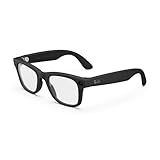
- #1 SELLING AI GLASSES - Tap into iconic style for men and women, and advanced technology with the newest generation of Ray-Ban Meta glasses. Capture photos and videos, listen to music, make hands-free calls or ask Meta AI questions on-the-go.
- UP TO 8 HOURS OF BATTERY LIFE - On a full charge, these smart AI glasses can last 2x longer than previous generations, up to 8 hours with moderate use. Plus, each pair comes with a charging case that provides up to 48 hours of charging on-the-go.
- 3K ULTRA HD: RECORD SHARP VIDEOS WITH RICH DETAIL - Capture photos and videos hands-free with an ultra-wide 12 MP camera. With improved 3K ultra HD video resolution you can record sharp, vibrant memories while staying in the moment.
- LISTEN WITH OPEN-EAR AUDIO — Listen to music and more with discreet open-ear speakers that deliver rich, quality audio without blocking out conversations or the ambient noises around you.
- ASK YOUR GLASSES ANYTHING WITH META AI - Chat with Meta AI to get suggestions, answers and reminders straight from your smart AI glasses.
This matters because it fits the reality of travel, work, and daily life. Translation isn’t something you need constantly, but when you do need it, speed and subtlety matter more than perfect accuracy. Compared to earbuds, which isolate you, or phones, which pull your attention away, glasses let translation exist alongside conversation rather than interrupting it.
From voice commands to contextual intelligence
Earlier versions of Meta’s smart glasses relied heavily on explicit voice commands. You had to know what to ask and when to ask it. With this update, the glasses move closer to contextual awareness, understanding what you’re seeing, hearing, and doing, then offering help without rigid prompts.
That’s the real AI shift. Smartwatches excel at structured tasks like workouts, timers, and notifications because they live in a predictable environment on your wrist. Glasses operate in unstructured space: streets, cafés, airports, meetings. AI is what allows them to interpret that chaos and deliver useful assistance without constant manual input.
Why this leap matters more than incremental hardware upgrades
On paper, the Ray-Ban Meta glasses haven’t radically changed physically. They’re still lightweight, comfortable for all-day wear, and convincingly Ray-Ban in terms of materials, frame balance, and lens options. Battery life remains measured in hours, not days, but charging is quick and designed around short top-ups rather than marathon endurance.
The significance of this update is that it extracts far more value from the same hardware. Instead of chasing bulkier displays or visible AR overlays, Meta is proving that software intelligence can unlock new use cases without compromising comfort or aesthetics. That’s a critical lesson for wearables that live on the face, where even a few extra grams or millimeters can ruin real-world wearability.
How this positions smart glasses against watches and earbuds
Smartwatches are unparalleled for health tracking, glanceable data, and structured interactions. Earbuds are excellent for private audio and voice assistants, but they’re socially and physically intrusive over long periods. Smart glasses now occupy a third lane: always present, socially acceptable, and context-aware without demanding attention.
Live translation highlights this difference perfectly. It’s not something most people want on their wrist or blasting into sealed earbuds. Glasses allow the experience to stay ambient, closer to how human assistance actually works. That distinction helps explain why this update isn’t just a feature drop, but a repositioning of the entire product category.
A clear signal of Meta’s AI-first wearable strategy
More than anything, this update signals Meta’s long-term direction. These glasses are no longer being positioned as camera glasses with smart extras, but as an AI interface layer for the physical world. Translation is simply the most obvious expression of that strategy because it solves a universally understood problem.
For early adopters, travelers, and anyone curious about where wearables are heading next, this matters because it shows smart glasses evolving toward sustained daily relevance. Not as replacements for phones or watches, but as companions that quietly handle tasks those devices were never well suited for in the first place.
What Live Translation Actually Does on Ray-Ban Meta Glasses (And What It Doesn’t)
Live translation is the feature that makes Meta’s broader AI ambitions instantly understandable, but it’s also the one most likely to be misunderstood. This isn’t a sci‑fi subtitles-in-your-vision moment, nor is it a universal translator that erases all friction. Instead, it’s a carefully scoped, audio-first tool designed to work within the physical and social limits of everyday glasses.
Understanding what it does well—and where it clearly stops—is key to deciding whether this is a genuinely useful travel and daily-life feature or just a clever demo.
How live translation works in practice
On the Ray-Ban Meta glasses, live translation is entirely audio-based. The glasses listen through their built-in microphones, process speech using Meta’s AI models via the paired smartphone, and then play the translated output through the open-ear speakers built into the frame arms.
There is no text displayed in your field of view. You don’t see floating captions, translated signs, or scrolling dialogue. What you get is a spoken translation, delivered a moment after the original speech, in a natural-sounding voice that feels closer to an interpreter whispering in your ear than a robotic readout.
The experience is intentionally low-interruption. You can keep eye contact, remain engaged in the conversation, and move naturally through an environment without looking down at a phone or tapping a screen. That’s the core advantage glasses bring to translation compared to phones, watches, or earbuds.
Supported scenarios: conversations, not crowds
Live translation works best in one-on-one or small-group conversations where a single person is speaking clearly. Think ordering coffee, checking into a hotel, asking for directions, or chatting with a local shop owner. These are moments where context is limited, background noise is manageable, and the social benefit of staying hands-free is huge.
It is not designed to translate overlapping conversations, public announcements, or rapid-fire group discussions. In a busy train station or crowded restaurant, the microphones can pick up too much ambient noise for reliable, continuous translation. You may still catch short phrases, but accuracy and usefulness drop quickly.
This limitation isn’t unique to Meta’s glasses—it’s a fundamental constraint of real-time speech translation without directional microphones or visual speaker identification. The glasses prioritize natural wearability over specialized hardware, and that tradeoff shows here.
Language support and accuracy expectations
At launch, Meta is focusing on a relatively small but practical set of major languages rather than trying to support everything at once. Accuracy is generally strong for clear, neutral speech and everyday vocabulary. Idioms, slang, heavy accents, and culturally specific phrasing can still trip it up.
What’s important is that this is contextual translation, not verbatim transcription. The system aims to convey meaning rather than perfectly preserve sentence structure. In most travel scenarios, that’s actually preferable, even if it occasionally smooths over nuance.
It also means you should treat the output as assistance, not authority. For legal, medical, or high-stakes conversations, this is not a substitute for a human translator or professional-grade tools.
What you hear versus what others hear
One subtle but important detail: the translated audio is only played through your glasses. The person you’re speaking with does not hear the translation unless you hand them your phone or use another feature.
This keeps the interaction socially comfortable. You’re not broadcasting synthetic voices into a shared space, and you’re not forcing others to engage with your technology. It also makes the glasses feel more like a personal aid than a disruptive gadget.
However, it also means this is a one-way assist. The glasses help you understand others, but they don’t automatically translate your speech back to them in real time. For full two-way translation, you’re still better off using a phone-based app designed for that purpose.
Latency, pacing, and conversational flow
There is a slight delay between hearing the original speech and receiving the translated audio. It’s usually short enough to feel natural, but it does require a shift in how you listen. You’re often reacting half a beat later than normal.
In casual interactions, this isn’t an issue. In fast-paced conversations, it can make things feel slightly disjointed. This is where glasses differ from earbuds: because the audio is open-ear and ambient, you can still hear tone, emotion, and cadence in the original language while waiting for translation.
That combination helps your brain fill in gaps, making the experience feel less mechanical than pure voice isolation. It’s not perfect, but it’s more human than many first-time users expect.
What live translation does not do
The most important limitation is visual. These glasses do not translate written text, menus, signs, or documents. There’s no camera-based OCR translation layered onto the world. If you want that, you’re still pulling out your phone.
They also don’t provide continuous, automatic translation all day long. You activate the feature intentionally, and it’s meant for specific moments rather than passive background use. This helps manage battery life and avoids the unsettling feeling of constant listening.
Finally, this is not offline magic. Live translation relies on the paired smartphone and cloud processing. In areas with poor connectivity, performance will degrade or fail outright. For remote travel, that’s a meaningful consideration.
Why this still matters, despite the limits
Taken on its own, live translation on Ray-Ban Meta glasses doesn’t replace existing tools. What it does is reframe how and when translation fits into daily life. Instead of stopping, unlocking a phone, opening an app, and pointing it at someone, translation becomes something that happens while you stay present.
That shift aligns perfectly with Meta’s AI-first wearable strategy. The goal isn’t maximal capability in isolation, but minimal friction in context. Glasses don’t need to do everything if they do the right things at the right moments.
For frequent travelers, multilingual cities, or even casual social situations where language barriers create hesitation, that can be enough to change behavior. You’re more likely to ask, engage, and explore when help feels invisible rather than performative.
Live translation on these glasses isn’t about showing off technology. It’s about making assistance feel human-scaled—and that distinction is what makes this update more than just another feature checkbox.
Rank #2
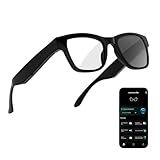
- 3-in-1 AI Glasses: Enjoy ① AI Voice Assistant (Powered by ChatGPT, Gemini & Deepseek), ② Stylish Photochromic Lenses Glasses, and ③ Bluetooth Open-Back Headphones, all in one.
- Free Talk Translation: Automatically detects and translates over 160 languages in real-time, allowing seamless work and translation without touching your phone or glasses.
- Voice, Video & Photo Translation: Supports over 98% of global languages, offering fast and accurate translations—ideal for international travel, business meetings, or cross-cultural communication.
- AI Meeting Assistant: Converts recordings from smart glasses into text and generates mind maps, making it easier to capture and organize meeting insights.
- Long Battery Life, Bluetooth 5.4 & Eye Protection: Up to 10 hours of music and 8 hours of talk time, with easy Type-C charging. Bluetooth 5.4 ensures stronger, stable connections, while photochromic lenses block UV rays and blue light, protecting your eyes in any environment.
Real-World Scenarios: Traveling, Conversations, and Everyday Friction Removal
Once you understand what live translation on Ray-Ban Meta glasses can and can’t do, the real question becomes simpler: when does this actually help in day-to-day life? The answer isn’t in staged demos or edge cases, but in the small moments where friction usually stops people from engaging at all.
These glasses don’t turn you into a walking polyglot. What they do is lower the effort required to cross a language gap just enough that you try more often.
Traveling without breaking your flow
The most obvious use case is travel, but not in the way marketing videos usually frame it. This isn’t about translating speeches or navigating complex bureaucracy. It’s about short, practical exchanges that happen dozens of times a day.
Think checking into a small hotel, asking a café server about ingredients, or confirming directions with a local who speaks limited English. With the glasses, you can activate translation, speak naturally, and hear a translated response through the open-ear speakers without pulling out your phone or holding it awkwardly between you and the other person.
That matters because travel friction is cumulative. Each time you stop, unlock your phone, open an app, and pass it back and forth, you’re reminded that you’re a visitor relying on a tool. The glasses keep your hands free, your posture normal, and your attention outward, which subtly changes how people respond to you.
Battery life plays a role here. Because translation is session-based rather than always-on, you’re not draining the glasses constantly. On a full charge, mixed use that includes translation, music, and camera snaps still fits comfortably into a full day of sightseeing, assuming your paired phone can keep up.
Conversations that feel less transactional
Where live translation becomes more interesting is in social situations that aren’t strictly functional. Casual conversations are usually where language barriers shut things down fastest.
Imagine chatting with another parent at a playground abroad, making small talk with a seatmate on a train, or responding to a neighbor in a multilingual city. These are moments where pulling out a phone feels disproportionate, almost rude, so people default to nodding and smiling instead.
With the glasses, translation can sit in the background of the interaction. You’re still making eye contact, still reading body language, still speaking in a normal cadence. The delay is there, but it’s less disruptive than watching someone stare at a screen while an app listens.
Compared to earbuds with translation features, the open-ear design makes a difference. You hear both the translated audio and the real environment, which keeps conversations grounded. It’s closer to having a quiet interpreter nearby than wearing a gadget that seals you off from the room.
Everyday friction removal at home
Live translation isn’t only for international travel. In increasingly multilingual cities, it can smooth everyday interactions that usually involve hesitation.
Think building maintenance visits, rideshare conversations, delivery issues, or brief exchanges at local shops where neither party is fully comfortable in the other’s language. These interactions don’t justify a full translation workflow, but they’re exactly where misunderstandings happen.
Because the glasses are something you’re already wearing, the mental overhead is low. You’re not deciding whether the situation is “important enough” to use tech. You just activate it, get through the moment, and move on.
This is where smart glasses start to differentiate themselves from smartwatches. Watches are excellent at glances and notifications, but sustained conversational assistance is awkward on a wrist. Glasses live at eye and ear level, which makes them better suited for communication rather than control.
Why this changes behavior, not just capability
What stands out across these scenarios is that the technology doesn’t need to be perfect to be effective. It just needs to be convenient enough that people actually use it.
By removing small points of friction—hands, screens, social awkwardness—Meta’s approach nudges users toward more interaction rather than less. You ask the question instead of skipping it. You respond instead of disengaging. You explore instead of defaulting to what feels safe.
That behavioral shift is the real signal here. Live translation on Ray-Ban Meta glasses isn’t about replacing phones, watches, or earbuds. It’s about carving out a role where AI assistance feels ambient and proportional to the moment.
In that sense, these real-world scenarios aren’t just examples of a feature working. They’re early evidence of how AI-first wearables might earn their place—not by doing everything, but by quietly making everyday life easier to navigate.
How the Tech Works: On-Device Audio, Cloud AI, and the Role of Meta’s Assistant
That sense of effortlessness described above isn’t accidental. It’s the result of a deliberately split architecture, where the glasses handle just enough locally to feel responsive, while heavier intelligence runs elsewhere.
Understanding that division—what happens on your face, what happens on your phone, and what happens in the cloud—explains both the strengths and the current limits of Meta’s approach.
Always-on audio, without feeling always-on
At the hardware level, Ray-Ban Meta glasses rely on a multi-microphone array embedded in the frame, tuned specifically for near-field voice capture. This lets the glasses prioritize the wearer’s voice while suppressing ambient noise like traffic or crowd chatter.
Audio feedback comes through open-ear directional speakers built into the temples. They don’t seal your ears like earbuds, which preserves situational awareness and makes live translation feel less intrusive during real conversations.
Crucially, basic audio processing—wake-word detection, noise reduction, and voice isolation—happens on-device. That’s why saying “Hey Meta” feels immediate, without the awkward pause that would break conversational flow.
Where the real intelligence lives: phone and cloud
Once a request moves beyond simple commands, the heavy lifting shifts off the glasses. Spoken audio is routed via Bluetooth to your paired smartphone, which acts as the primary compute and connectivity hub.
From there, Meta’s cloud-based AI models handle speech recognition, language translation, and contextual understanding. Live translation works by continuously transcribing incoming speech, translating it, and sending a synthesized or summarized response back to the glasses in near real time.
This architecture keeps the glasses lightweight and comfortable for all-day wear, but it also means features like live translation depend on a reliable phone connection and active data. Unlike a smartwatch with limited offline modes, these glasses are unapologetically cloud-first.
Latency, timing, and why it feels “good enough”
In practice, the translation pipeline introduces a slight delay—usually a beat or two behind natural speech. Meta mitigates this by favoring conversational pacing over literal word-for-word output.
Instead of interrupting constantly, the assistant tends to deliver translations in short, digestible chunks. That makes it easier to stay engaged with the person in front of you, rather than focusing on the tech.
This is one of the key behavioral differences versus phone-based translation apps. You’re not staring at text or waiting for a button press; you’re listening, reacting, and continuing the exchange with minimal cognitive overhead.
The role of Meta’s assistant as the coordinator
Meta’s assistant isn’t just a voice interface—it’s the traffic controller. It decides when to listen locally, when to escalate to the cloud, and how much information to return to you.
For live translation, it manages language detection, session persistence, and context. That’s why you don’t need to repeatedly specify languages or restart the feature mid-conversation.
The same assistant layer also connects translation to other functions, like follow-up questions, summaries, or contextual prompts. Over time, this is where Meta can expand capability without changing the hardware.
Privacy, battery life, and practical trade-offs
Because audio is continuously sampled but not continuously streamed, Meta draws a line between passive listening and active processing. Wake-word detection stays local, while cloud processing only begins after explicit activation.
Rank #3

- 【AI Real-Time Translation & ChatGPT Assistant】AI glasses break language barriers instantly with AI real-time translation. The built-in ChatGPT voice assistant helps you communicate, learn, and handle travel or business conversations smoothly—ideal for conferences, overseas trips, and daily use.
- 【4K Video Recording & Photo Capture 】Smart glasses with camera let you capture your world from a first-person view with the built-in 4K camera. Take photos and record videos hands-free anytime—perfect for travel moments, vlogging, outdoor adventures, and work documentation.
- 【Bluetooth Music & Hands-Free Calls 】Camera glasses provide Bluetooth music and crystal-clear hands-free calls with an open-ear design. Stay aware of your surroundings while listening—comfortable for long wear and safer for commuting, cycling, and outdoor use.
- 【IP65 Waterproof & Long Battery Life】 Recording glasses are designed for daily wear with IP65 waterproof protection against sweat, rain, and dust. The built-in 290mAh battery provides reliable performance for workdays and travel—no anxiety when you’re on the go.
- 【Smart App Control & Object Recognition】Smart glasses connect to the companion app for easy setup, file management, and feature control. They support AI object recognition to help identify items and improve your daily efficiency—perfect for travel exploration and a smart lifestyle.
Battery life reflects that balance. Expect a few hours of active use for features like live translation, spread across a full day of intermittent interactions. This aligns more with how people actually use conversational assistance, rather than marathon sessions.
Compared to smartwatches, which excel at low-power background tracking, smart glasses are optimized for short, high-impact moments. Translation is a prime example: demanding, brief, and valuable precisely because it doesn’t run all the time.
Why this stack suits glasses better than wrists or ears
Smartwatches can technically do translation, but their input and output constraints make sustained dialogue awkward. Earbuds handle audio well, but lack visual context and persistent assistant state.
Glasses sit at a natural midpoint. They capture what you hear, respond where you’re already listening, and stay out of your hands entirely.
That combination—on-device audio responsiveness, phone-enabled compute, and cloud AI coordination—is what turns live translation from a novelty into a usable habit. It’s not magic, but it’s finally aligned with how people actually move through the world.
Beyond Translation: The Other New AI Features Rolling Out and Why They’re Important
Live translation is the headline act, but it’s only one expression of the same assistant layer that makes these glasses feel fundamentally different from earlier smart eyewear. Once you understand that Meta is treating the glasses as an always-available sensory node—ears, camera, and context—the rest of the updates make more sense.
What’s changing isn’t just what the glasses can do, but when and why you’d actually use them during a normal day.
“Look and ask” vision queries turn the camera into contextual memory
One of the most meaningful additions is vision-based querying, where you can ask questions about what you’re looking at using the built-in camera. This isn’t augmented reality with overlays or labels floating in space; it’s audio-first interpretation layered on visual capture.
In practice, it works more like conversational recall. You glance at a storefront, menu, sign, or object, ask a question, and get a spoken answer that uses the image as context rather than forcing you to describe it verbally.
This matters because it removes friction. Smartwatches struggle here due to camera placement and framing, and phones require a conscious “take out, unlock, aim” ritual. Glasses let visual context enter the conversation naturally, the same way it does for a human companion.
Smarter reminders tied to situations, not screens
Meta is also expanding contextual reminders, which behave differently from traditional time- or location-based alerts. Instead of buzzing your wrist at a set hour, the assistant can associate reminders with what you’re doing or seeing.
For example, asking to remember something when you arrive at a place, spot a specific item, or finish a task you’re currently engaged in. The glasses become the trigger point, not the phone’s GPS alone.
This is a subtle shift, but an important one. It treats reminders as part of lived experience rather than calendar management, which aligns better with an always-worn device that doesn’t rely on visual notifications.
Hands-free messaging that finally feels natural
Voice messaging through smart glasses isn’t new, but Meta is refining how conversational and state-aware it feels. The assistant can now manage short back-and-forth interactions across supported messaging platforms without making you repeat names, apps, or intent each time.
You can dictate, review, send, and follow up using audio cues alone. There’s no screen confirmation, so clarity and pacing matter more than speed, and Meta appears to be tuning responses to sound more like dialogue than commands.
Compared to smartwatches, which still lean heavily on glanceable text, glasses prioritize flow. That makes them better suited to walking, commuting, or multitasking, where stopping to read isn’t ideal.
Audio-first summaries and follow-ups replace screen skimming
Another quiet but impactful feature is the ability to ask for summaries or explanations based on prior interactions. That might mean recapping a message thread, summarizing a piece of information you just asked about, or answering a follow-up without resetting context.
This persistent assistant state is something earbuds can’t really manage and watches handle awkwardly due to screen size. Glasses, by contrast, live entirely in the conversational lane.
The result is less cognitive overhead. You don’t have to remember exactly how you phrased something five minutes ago, because the system remembers it for you.
Camera capture becomes intentional, not reactive
Photo and video capture on Ray-Ban Meta glasses has always been about immediacy, but AI is making it more deliberate. Voice prompts can now better coordinate timing, framing intent, and follow-up actions like sharing or saving.
You’re no longer just recording moments; you’re directing the device with language. That’s a meaningful shift away from novelty clips toward practical documentation, especially for travel, events, or work scenarios where pulling out a phone breaks immersion.
Battery-wise, this still favors short bursts. Active camera use and AI processing will draw more power, so this isn’t about constant recording, but about capturing what matters with minimal friction.
Why these features point to AI-first wearables, not gadget tricks
Taken individually, none of these capabilities are revolutionary. Phones can already do most of them, and watches can approximate some. What’s different is the convergence.
By anchoring AI to audio, vision, and context rather than screens and taps, Meta is positioning smart glasses as a complement to phones, not a replacement. They excel in moments where hands are busy, attention is divided, or speed matters more than precision.
That’s the throughline connecting translation, vision queries, reminders, and messaging. They all benefit from the same assistant stack, the same battery trade-offs, and the same design philosophy. It’s less about adding features, and more about making interaction disappear just enough to feel useful.
How Ray-Ban Meta Glasses Compare to Smartwatches, Earbuds, and Phones for AI Tasks
Once you frame Ray-Ban Meta glasses as an always-available conversational interface, the comparisons shift away from specs and toward interaction style. The question isn’t which device is most powerful, but which one fits the moment when you actually need AI help.
Smart glasses, watches, earbuds, and phones all tap into similar assistant backends. What separates them is how much friction they add between intent and response.
Smartwatches: fast access, constrained expression
Smartwatches are excellent at glanceable AI tasks like setting timers, checking reminders, or confirming a quick fact. Their biggest strength is proximity; the screen is always on your wrist, and haptics make feedback discreet.
Where watches struggle is depth. Dictation-heavy tasks, live translation, or multi-step follow-ups quickly feel cramped on a 40–45mm display, and voice-only interactions can become awkward in public.
Battery life also limits ambition. Watches already juggle health sensors, always-on displays, and connectivity, so sustained AI interactions tend to be brief by necessity.
Earbuds: natural voice, zero visual context
AI earbuds excel at hands-free voice interaction, especially for calls, navigation cues, or quick translations whispered into your ear. For live translation in particular, earbuds feel intuitive because audio is both input and output.
The limitation is awareness. Without a camera or visual reference, earbuds can’t anchor AI to what you’re looking at, which rules out object identification, scene-based queries, or contextual follow-ups tied to the environment.
They’re also passive by design. Earbuds respond when prompted, but they don’t feel like an interface you actively direct or collaborate with over time.
Rank #4
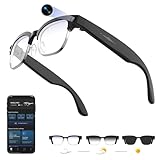
- 【8MPW Camera & 1080P Video and Audio】:These camera glasses feature an 800W camera that outputs sharp 20MP photos and smooth 1080P 30fps videos. Ultra-Clear Video + Powerful Anti-Shake tech+ Built-in dual microphones, you can capture crystal-clear video and audio together -sharply restoring details, perfect for vlogging, travel, and everyday moments
- 【Real-time AI translation Smart Glasses with Camera】:Instantly translate multiple major languages, breaking down language barriers in an instant—no phone required. Ideal for office settings, travel, academic exchanges, international conferences, watching foreign videos, and more
- 【Voice Assistant Recognition and Announcement】:Powered by industry-leading AI large models such as Doubao AI and OpenAI's GPT-4.0. AI voice wake-up lets you ask questions, recognize objects, and get answers on the go. Automatically recognizes objects, menus, landmarks, plants, and more, quickly analyzing the results and announcing them in real time. It instantly becomes your mobile encyclopedia on the go
- 【Bluetooth 5.3 Connection and Automatic Sync to Phone】:Equipped with a low-power BT5.3 chip and Wi-Fi dual transmission technology, offering ultra-low power and high-speed transmission. Captured images and videos are transferred to your phone in real time, eliminating manual export and eliminating storage worries
- 【290mAh Ultra-Long Battery Life】:Ultra-light at 42g, it's made of a durable, skin-friendly material, as light as a feather. Lenses are removable. Its simple, versatile design makes it a comfortable and comfortable wearer. 290mAh ultra-long battery life, 12 hours of music playback and 2 hours of photo or video recording, making it a perfect travel companion
Phones: unmatched power, maximum friction
Smartphones remain the most capable AI devices overall. Larger screens, better cameras, faster processors, and mature apps make them unbeatable for precision tasks, long translations, or reviewing complex outputs.
The trade-off is interruption. Pulling out a phone demands visual attention, hand use, and a break from whatever you’re doing, which makes spontaneous or frequent AI queries less appealing.
In travel or social settings, phones can also feel performative. Holding one up to translate a sign or record a moment changes how you engage with the space around you.
Where Ray-Ban Meta glasses sit differently
Ray-Ban Meta glasses occupy a narrow but important middle ground. They combine voice-first interaction with visual context, without requiring you to disengage physically or socially.
For live translation, this matters. You can listen, speak naturally, and maintain eye contact while the system tracks conversational context, something watches and phones handle less gracefully.
Battery life and output complexity still cap their role. You won’t review long transcripts or analyze dense information through glasses, but you will ask more questions because the cost of asking is so low.
Choosing the right AI interface for the moment
If your priority is control, review, and accuracy, the phone remains the anchor device. If you want quick nudges or health-aware prompts, a smartwatch still earns its place.
Ray-Ban Meta glasses make sense when AI needs to be present but invisible. They shine in motion, conversation, and situations where attention is divided, and that’s a category the other devices only partially cover.
Battery Life, Comfort, and Wearability: The Practical Limits of All-Day AI Glasses
Ray-Ban Meta glasses make a strong case for low-friction AI, but they also expose the hardest problems in wearable computing. Once you move from occasional queries to continuous features like live translation, battery life and physical comfort stop being background details and start shaping how, when, and why you actually use them.
This is where smart glasses still behave more like a companion device than a true all-day replacement for a phone or watch.
Battery life: measured in moments, not marathons
In real-world use, Ray-Ban Meta glasses deliver roughly four hours of mixed activity on a charge. That includes voice commands, short recordings, music playback, and intermittent camera use, not continuous AI processing.
Live translation pushes that envelope harder. Constant microphone use, on-device processing, and cloud round-trips drain the battery noticeably faster than casual photo capture or audio playback.
The charging case is doing most of the heavy lifting. Like wireless earbuds, the glasses rely on regular drop-in charging sessions, with the case extending total uptime across a full day but not eliminating the need to manage power intentionally.
Why live translation changes the battery equation
Translation isn’t a one-off task. It’s sustained listening, language detection, and speech synthesis happening in near real time, often in noisy environments where microphones work harder.
That means travelers relying on translation during long conversations or extended tours will feel the limits sooner than casual users snapping photos or asking quick questions. You can get through a lunch meeting or a shopping interaction comfortably, but a full day of guided travel will require recharge breaks.
This is a fundamental difference from smartwatches, where translation is typically brief and screen-based, and from phones, which have far larger batteries to absorb continuous workloads.
Comfort: impressively normal, but not invisible
At roughly 49 grams, Ray-Ban Meta glasses are heavier than standard acetate sunglasses but lighter than most AR headsets. For short sessions, they disappear quickly, especially if you’re already accustomed to thick-framed eyewear.
Over several hours, the extra weight becomes more noticeable on the bridge of the nose and behind the ears. This is less about raw mass and more about distribution, as the cameras, speakers, and batteries are packed into the temples.
Heat buildup is minimal but not nonexistent. During extended recording or translation sessions, the frames can feel warm, which isn’t uncomfortable so much as a reminder that a computer is running next to your face.
Fit, prescription lenses, and daily practicality
The Ray-Ban collaboration matters here. These look and wear like real glasses, with familiar sizing, materials, and styling that won’t draw attention in public spaces.
Prescription lens support is a major factor for all-day use. Once you rely on them for vision correction, swapping in and out throughout the day becomes less practical, which raises the stakes for battery life planning.
Unlike smartwatches, you can’t casually take them off and keep functionality on your wrist. Once they’re in the case, the AI disappears entirely.
Audio comfort and social wearability
Open-ear speakers are a comfort win. You hear translations and prompts without sealing off the world, which matters for navigation, safety, and natural conversation flow.
The trade-off is volume and privacy. In loud environments, clarity drops, and while audio leakage is modest, it’s not invisible in quiet spaces.
Compared to earbuds, glasses feel more socially acceptable for short interactions, but less immersive for long listening sessions.
The all-day illusion—and what it really means
Ray-Ban Meta glasses can last all day in aggregate, but not continuously. They’re best treated as something you dip into repeatedly rather than leave running from morning to night.
That distinction matters for expectations. These aren’t glasses you wear for eight hours of uninterrupted AI assistance; they’re glasses that make AI available whenever it’s useful, as long as you respect their physical limits.
For travelers, commuters, and conversational use cases, that balance is often good enough. For anyone expecting phone-level endurance or smartwatch-style persistence, today’s hardware still asks for compromise.
Who These Glasses Are Really For—and Who Should Still Wait
All of those constraints—finite battery, occasional warmth, and the reality that AI access vanishes the moment the glasses go back in their case—shape who actually benefits from Meta’s latest Ray-Ban update. These aren’t general-purpose replacements for phones, watches, or earbuds. They’re situational tools that happen to live on your face.
Frequent travelers and multilingual environments
If you move between languages regularly, this is the most compelling use case today. Live translation works best in short, real conversations: asking for directions, ordering food, checking into hotels, or navigating transit without pulling out your phone and breaking the interaction.
The value isn’t just speed, it’s social flow. Compared to phone-based translation apps or smartwatch prompts, having the translation spoken quietly into your ears while maintaining eye contact feels meaningfully different, and in many cases, more respectful.
That said, this is not a universal interpreter yet. It’s optimized for common travel languages, controlled speaking pace, and relatively calm environments, not fast-moving group conversations or noisy street markets.
Early adopters who already trust voice assistants
These glasses make the most sense if you’re already comfortable talking to Siri, Google Assistant, or Alexa in public. The core interaction model is still voice-first, and if that feels awkward or unreliable to you, smart glasses won’t change your mind.
💰 Best Value

- #1 SELLING AI GLASSES - Move effortlessly through life with Ray-Ban Meta glasses. Capture photos and videos, listen to music, make hands-free calls or ask Meta AI* questions on-the-go. Ray-Ban Meta glasses deliver a slim, comfortable fit for both men and women.
- CAPTURE WHAT YOU SEE AND HEAR HANDS-FREE - Capture exactly what you see and hear with an ultra-wide 12 MP camera and a five-mic system. Livestream it on Facebook and Instagram.
- LISTEN WITH OPEN-EAR AUDIO — Listen to music and more with discreet open-ear speakers that deliver rich, quality audio without blocking conversations or the ambient noises around you.
- GET REAL-TIME ANSWERS FROM META AI — The Meta AI* built into Ray-Ban Meta’s wearable technology helps you flow through your day. When activated, it can analyze your surroundings and provide context-rich suggestions - all from your smart AI glasses.
- CALL AND MESSAGE HANDS-FREE — Take calls, text friends or join work meetings via bluetooth straight from your glasses.
Compared to a smartwatch, the advantage is context. The glasses can see what you’re seeing, which unlocks translation, object recognition, and location-based prompts that a wrist device simply can’t replicate without constant manual input.
If you’re the kind of user who enjoys testing new interaction models and accepts occasional misfires as part of the experience, Ray-Ban Meta glasses feel like a meaningful step forward rather than a novelty.
People who value discretion over immersion
These are not for deep media consumption. Audio is clear for prompts, translations, and short calls, but they don’t replace earbuds for podcasts, music, or focused listening.
Where they shine is low-friction access to information without sealing yourself off from the world. For walking, commuting, or casual social settings, that open-ear approach feels more natural than either a smartwatch screen or noise-canceling headphones.
If your priority is staying present while still getting help when you need it, glasses fit that role better than almost any other wearable form factor right now.
Prescription wearers ready to commit
If you already wear glasses full-time and are willing to make these your primary pair, the experience improves dramatically. Comfort, weight balance, and everyday wearability are good enough that they can realistically replace standard frames for many users.
The trade-off is commitment. Once these become your prescription glasses, battery life planning and charging discipline matter more, because taking them off means losing both vision correction and AI functionality.
For part-time glasses wearers or people who switch between contacts and frames, that friction is worth thinking through carefully before buying.
Who should still wait
If you expect smartwatch-style persistence, this isn’t there yet. Health tracking is minimal, notifications are limited, and there’s no visual display to anchor information at a glance.
If privacy concerns dominate your buying decisions, the always-on camera—even with indicator lights and safeguards—may be a non-starter in both personal comfort and social perception.
And if you’re looking for a single device that replaces your phone, earbuds, and watch in one leap, today’s Ray-Ban Meta glasses are still an accessory, not a hub.
For everyone else, especially those intrigued by live translation as a daily convenience rather than a demo feature, these glasses feel less like a tech experiment and more like the early shape of AI-first wearables finally finding their footing.
What This Signals for the Future of AI-First Wearables and Smart Glasses
Taken together, live translation, contextual AI queries, and hands-free capture point to something bigger than a feature update. They signal a shift in how wearables are being designed—from screen-based companions to environment-aware tools that work in the background of daily life.
Meta’s Ray-Ban glasses aren’t trying to outdo smartwatches or earbuds on their own terms. Instead, they’re carving out a new category where the primary interface isn’t a display or an app, but your surroundings and your voice.
From reactive gadgets to ambient AI
Most wearables today are reactive. You glance at a smartwatch, tap a button, or actively summon a voice assistant to get something done.
What Meta is pushing toward is ambient assistance—AI that’s already listening, watching, and ready when you need it, without demanding constant interaction. Live translation is the clearest example: you don’t stop, unlock, aim, or frame anything; you simply exist in the moment and get help layered on top.
That distinction matters, because it’s how wearables move from occasional tools to daily infrastructure.
Why glasses make more sense than watches for AI-first experiences
Smartwatches excel at health metrics, notifications, and quick interactions, but they’re still anchored to a tiny screen. For AI tasks like translation, object recognition, or contextual awareness, that screen becomes a bottleneck.
Glasses sit closer to how humans naturally perceive the world. Microphones capture conversation, cameras see what you see, and open-ear audio feeds information back without cutting you off from your environment.
The Ray-Ban Meta approach leans into that advantage by keeping visuals out of the equation for now. It prioritizes comfort, battery life, and social acceptability over flashy AR overlays—and that restraint may be why these glasses feel usable rather than exhausting.
Live translation as a gateway feature, not the end goal
Live translation isn’t revolutionary on its own. Phones have done it for years, and earbuds have flirted with it in limited forms.
What’s different here is frequency. When translation is always available, hands-free, and socially subtle, it shifts from a special-use feature to something you rely on without thinking.
That same logic applies to future capabilities: remembering names, summarizing conversations, identifying places, or surfacing reminders tied to what you’re seeing. Translation isn’t the destination—it’s proof that this form factor can support genuinely helpful AI in real-world conditions.
The ecosystem play behind the hardware
These glasses only make sense because of the broader AI and software stack behind them. Meta is clearly positioning smart glasses as an extension of its AI models, not as standalone gadgets.
Battery life remains measured in hours rather than days, and functionality depends heavily on cloud processing and smartphone connectivity. But that’s the trade-off Meta seems willing to make in exchange for rapid feature evolution through software updates rather than hardware refresh cycles.
In practical terms, it means the glasses you buy today could feel meaningfully more capable a year from now—something traditional wearables rarely deliver.
Implications for competitors and the next wave of wearables
Meta’s progress raises uncomfortable questions for other players in the space. If AI-first experiences are best delivered through glasses, smartwatches risk becoming increasingly specialized rather than central.
Apple, Google, and Samsung are all exploring AI wearables, but Meta is currently the most willing to accept compromises—limited visuals, modest battery life, and accessory status—in exchange for learning how people actually live with AI on their face.
That willingness may be why Ray-Ban Meta glasses feel less like a prototype and more like a product with momentum.
A future that arrives quietly, not all at once
The most important signal here isn’t a single feature, but the tone of the product. These glasses don’t demand that you change how you live. They adapt to habits you already have—walking, talking, traveling, commuting—and layer assistance on top.
That’s how AI-first wearables will likely succeed: not by replacing phones or watches overnight, but by becoming the invisible glue between them.
If live translation feels genuinely useful rather than gimmicky, it suggests we’re finally past the demo phase. Smart glasses may not yet be essential, but with updates like this, they’re starting to justify their place in everyday life—and that’s the clearest sign yet that AI-first wearables are finding their direction.