Most wearables promise to quantify your body by counting steps, measuring heart rate, and estimating sleep, but they largely ignore the one thing many people actually want help understanding: how they feel. Moodbeam One takes aim at that gap by offering a wearable built specifically around emotional self-reporting rather than automated biometric interpretation. It’s a deliberately simple bracelet that asks you to log your mood in the moment, instead of guessing it for you.
At first glance, Moodbeam One doesn’t look like a smartwatch, fitness band, or health tracker at all, and that’s the point. There’s no screen, no notifications, no step count, and no attempt to act like a lifestyle command center. Instead, it positions itself as a behavioral tool, designed to encourage emotional awareness through quick, intentional interactions.
This section breaks down what Moodbeam One actually is, how it works, and why its stripped-back approach sets it apart from mainstream wearables. It also lays the groundwork for an honest discussion about whether mood-tracking devices can deliver meaningful insights, or whether they risk oversimplifying something deeply personal.
A bracelet designed for self-reported emotion, not inferred data
Moodbeam One is a lightweight silicone bracelet with two physical buttons, one representing a positive mood and the other a negative mood. When you press either button, the device records a timestamped emotional check-in that syncs with the Moodbeam app on your phone. There’s no attempt to label emotions as “happy,” “sad,” or “stressed,” leaving interpretation intentionally open-ended.
🏆 #1 Best Overall

- Heart Rate and Sleep Monitoring: The Fitness Tracker monitors your heart rate automatically all day, and you can select manual mode through the App. The fitness Watch also monitors your sleep at night, providing a detailed analysis of your sleep quality (deep sleep, light sleep, awake time). It is a health advisor for women men in daily life.
- Multi Sport Modes with Activity Tracking: The fitness tracker features 9 sport modes like running, walking and more. Additionally, the activity tracker records daily steps, calories burned, walking distance and active time throughout the day. You can also set a daily steps goals through the App to track your progress.
- Smart Notification Reminder: You can get SMS messages, and SNS notifications directly on your wrist including Facebook, Twitter, Gmail ect. You won't miss any important calls and message and stay updated. Please note: the smart watch can not make calls or text.
- Long Battery Life and IP68 Waterproof: This smart watch only requires 2 hours of charging and can be used for 5-7 days continuously, IP68 waterproof rating can withstand daily sweat, washing hands and rainy day, allowing you to fully enjoy your workouts.
- More Functions & Compatibility: Fitness watch comes with multiple smart functions such as stopwatch, alarm clock, breathing guide and sedentary alert, enhancing convenience to your daily routine. The tracker is compatible with iPhone Android Phones which run on iOS 8.0 or Android OS 4.0 & Bluetooth 4.0 or above. Please note that it is not compatible with tablets or computers.
This approach is a clear rejection of algorithmic mood detection, which many smartwatches now claim to offer using heart rate variability, skin temperature, or sleep patterns. Moodbeam’s philosophy is that emotions are subjective and contextual, and that self-reporting, while imperfect, is more honest than automated assumptions. The device tracks frequency and patterns over time, not emotional intensity or cause.
Physically, the bracelet is slim, flexible, and designed for all-day comfort, prioritizing wearability over premium materials or display technology. It’s water-resistant for everyday use, though not intended as a sports or swim tracker. Battery life stretches into weeks rather than days, largely because the hardware does very little beyond logging button presses.
How Moodbeam One fits into the wider wearable landscape
Unlike smartwatches or fitness trackers, Moodbeam One does not try to replace your phone or consolidate multiple health metrics into a single dashboard. It has no heart rate sensor, GPS, accelerometer, or sleep tracking, which immediately narrows its use case. This makes it less of a general-purpose wearable and more of a focused behavioral accessory.
In the context of emotion-tracking wearables, Moodbeam sits closer to journaling apps than to devices like the Apple Watch or Fitbit. The difference is friction: pressing a button is faster and more discreet than opening an app and typing how you feel. Over time, these micro-interactions are meant to build a more consistent emotional record.
This focus also explains why Moodbeam One has found traction in workplace wellbeing programs and mental health research settings. Employers and clinicians are often less interested in precise emotional labels and more interested in trends, frequency, and changes over time. Moodbeam’s aggregated data view supports that kind of analysis without claiming medical-grade insight.
Who Moodbeam One is actually for
Moodbeam One is best suited to users who already believe in the value of self-reflection but struggle to maintain consistent habits. It works particularly well for people who find traditional mood journaling too time-consuming or emotionally demanding. The bracelet lowers the barrier to participation by making emotional check-ins almost effortless.
It’s also aimed at organizations looking to understand collective wellbeing without invasive monitoring. Because the device doesn’t track location, conversations, or physiological data, it presents a less intrusive option for large-scale deployment. That said, its usefulness depends heavily on trust, transparency, and clear boundaries around data use.
For typical fitness-focused consumers, Moodbeam One may feel underwhelming or incomplete. If you expect actionable health recommendations, guided interventions, or detailed emotional analytics, this device will feel minimal to the point of frustration. Its value lies in awareness, not answers.
The promise and limits of mood-tracking wearables
Moodbeam One highlights both the potential and the constraints of emotion-focused wearables. On one hand, it encourages intentional emotional check-ins, which can improve self-awareness and reveal patterns that might otherwise go unnoticed. On the other, it relies entirely on user engagement and honesty, without any external validation.
Accuracy, in this case, isn’t about sensor precision but about behavioral consistency. Missed check-ins, habitual button pressing, or emotional oversimplification can all distort the data. Privacy is another consideration, especially when used in professional environments, even if Moodbeam emphasizes anonymization and user control.
Ultimately, Moodbeam One isn’t trying to solve mental health or diagnose emotional states. It’s a tool for noticing, not fixing, and that distinction defines both its strength and its limitations.
How Moodbeam Tracks Mood: Button-Based Emotional Logging vs Passive Sensing
Moodbeam One’s defining choice is to avoid guessing how you feel. Instead of inferring emotions from biometric signals, it asks you to tell it directly, in the moment, using two physical buttons on the bracelet. This design decision sets it apart from most modern wearables and shapes everything from accuracy to privacy.
The two-button system: deliberate, simple, and subjective
On the face of the bracelet are two large, tactile buttons: one yellow, one blue. Pressing yellow logs a positive emotional state, while blue records a negative one, with each press timestamped and stored for later review in the companion app. There are no labels like “happy,” “stressed,” or “anxious,” leaving interpretation entirely to the wearer.
This simplicity is intentional. By reducing emotions to a binary input, Moodbeam lowers the friction of emotional logging to a single, discreet action that can be done in seconds, even during a busy workday. The trade-off is nuance, as complex or mixed emotions are flattened into a positive or negative signal.
Why Moodbeam rejects passive mood detection
Most smartwatches and fitness trackers that claim mood or stress tracking rely on passive sensing. They use proxies like heart rate variability, skin temperature, sleep quality, or activity levels to estimate how stressed or calm you might be. Moodbeam deliberately avoids this approach.
The company’s stance is that physiological signals do not reliably map to emotional states. Elevated heart rate could mean stress, excitement, caffeine, or simply walking up stairs, and algorithms often struggle to separate these contexts without additional data. Moodbeam argues that self-reported emotion, despite its subjectivity, is more honest than inferred emotion presented as fact.
Accuracy as consistency, not sensor precision
In traditional wearables, accuracy is measured by how closely sensors match medical-grade equipment. With Moodbeam One, accuracy depends on how consistently and thoughtfully the user presses the buttons. A mood log is only as meaningful as the habit behind it.
This shifts responsibility from hardware to behavior. Regular check-ins can reveal patterns over days or weeks, such as recurring negative spikes during meetings or positive trends after exercise. Inconsistent use, reflexive button presses, or forgetting to log entirely can quickly undermine the value of the data.
What you gain by avoiding biometrics
By not including heart rate sensors, GPS, microphones, or motion tracking, Moodbeam One dramatically simplifies its hardware. The bracelet is lightweight, comfortable for all-day wear, and has battery life measured in days rather than hours, since it isn’t constantly sampling physiological data. Charging is infrequent, which supports long-term adherence.
This minimal sensor set also reduces privacy risk. There is no raw biometric data to misinterpret, leak, or repurpose, which makes the device easier to deploy in workplaces where trust and data sensitivity are critical. For users wary of always-on monitoring, this restraint can be a major advantage.
What you lose without passive context
The absence of passive sensing also means Moodbeam One cannot provide context-aware insights. It doesn’t know whether a negative entry followed poor sleep, a long commute, or a spike in workload. Unlike smartwatches, it won’t correlate mood with steps, workouts, or recovery metrics.
As a result, the app focuses on visualizing trends rather than explaining them. Users must do the interpretive work themselves, reflecting on what was happening around each emotional check-in. For some, this active reflection is the point; for others, it will feel like unfinished analysis.
A fundamentally different philosophy from smartwatches
Moodbeam One is not a stripped-down smartwatch; it’s a different category altogether. Where devices like the Apple Watch or Garmin aim to be comprehensive health dashboards, Moodbeam is a single-purpose tool built around intentional interaction. It prioritizes agency over automation.
This makes it ill-suited for users who expect their wearable to notice things on their behalf. But for those who value conscious emotional awareness over algorithmic interpretation, the button-based approach offers something rare in wearable tech: a system that listens only when you choose to speak.
The Hardware: Design, Wearability, Battery Life, and Everyday Practicality
That philosophy of intentional interaction carries straight through to Moodbeam One’s physical design. Instead of trying to visually signal “smart device,” the bracelet goes out of its way to look emotionally neutral, almost anonymous, which aligns with its role as a personal tool rather than a status gadget.
Design language and physical form
Moodbeam One is a slim, rectangular bracelet with softly rounded edges and no screen at all. The absence of a display isn’t just about battery savings; it removes the constant visual feedback loop that defines most wearables and keeps the focus on deliberate input rather than passive consumption.
Two physical buttons sit on the top surface, color-coded to represent positive and negative moods. They’re large enough to find by feel, with a firm, reassuring click that avoids accidental presses, which matters when emotional logging is the core interaction.
Materials, finishing, and comfort
The body is made from lightweight plastic rather than metal, keeping overall weight low and reducing the sense that you’re wearing a device. It won’t satisfy anyone looking for premium watch-like materials, but that simplicity contributes to all-day comfort, especially for users who dislike the heft of smartwatches.
The strap is soft-touch silicone, flexible enough for continuous wear and easy to clean. It’s clearly designed for long hours on the wrist, including during workdays, commutes, and sleep, without the pressure points or bulk that can discourage consistent use.
Fit, discretion, and social practicality
In real-world settings, Moodbeam One is discreet to the point of invisibility. It doesn’t light up, buzz, or demand attention, and most people won’t recognize it as a tracker at all, which is particularly important in workplace or clinical contexts.
That low-profile presence also lowers the psychological barrier to wearing it. Logging a mood can be done subtly, without pulling out a phone or interacting with a screen, making it more likely users will actually engage in the moment rather than postponing entries until later.
Battery life and charging behavior
Because Moodbeam One doesn’t run a screen or continuously sample sensors, battery life is measured in days rather than hours. In typical use, it can last several days on a single charge, reducing one of the biggest friction points in wearable ownership.
Charging is straightforward and infrequent, reinforcing the idea that this is a background companion rather than a device you have to manage daily. For long-term adherence, especially in organizational deployments, this low-maintenance power profile is a genuine advantage.
Durability and everyday resilience
Moodbeam One is built to handle everyday life rather than extreme conditions. It’s designed to cope with sweat, light splashes, and routine wear, but it’s not a rugged sports wearable meant for swimming, heavy workouts, or outdoor adventures.
That limitation reflects its intended use case. This is a bracelet for emotional check-ins during normal daily routines, not a fitness tracker competing with Garmin or Polar on durability credentials.
Compatibility and hardware-software balance
On the hardware side, compatibility concerns are minimal because the bracelet itself does very little processing. It connects to a companion app on iOS and Android, acting primarily as an input device rather than a computational platform.
This division of labor keeps the hardware simple and stable but also means the bracelet’s usefulness is tightly coupled to the app experience. If the software doesn’t resonate with a user, the hardware alone offers little standalone value.
Practical trade-offs in daily use
Living with Moodbeam One requires accepting what it deliberately doesn’t do. There are no notifications, no timekeeping, no health stats to glance at, and no feedback loop beyond knowing you’ve logged an entry.
For some users, that will feel refreshingly calm and focused. For others, especially those accustomed to multifunction wearables, the lack of immediate feedback may make the bracelet feel inert, even though that restraint is central to its design philosophy.
Rank #2

- 【Superb Visual Experience & Effortless Operation】Diving into the latest 1.58'' ultra high resolution display technology, every interaction on the fitness watch is a visual delight with vibrant colors and crisp clarity. Its always on display clock makes the time conveniently visible. Experience convenience like never before with the intuitive full touch controls and the side button, switch between apps, and customize settings with seamless precision.
- 【Comprehensive 24/7 Health Monitoring】The fitness watches for women and men packs 24/7 heart rate, 24/7 blood pressure and blood oxygen monitors. You could check those real-time health metrics anytime, anywhere on your wrist and view the data record in the App. The heart rate monitor watch also tracks different sleep stages for light and deep sleep,and the time when you wake up, helps you to get a better understanding of your sleep quality.
- 【120+ exercise modes & All-Day Activity Tracking】There are more than 120 exercise modes available in the activity trackers and smartwatches, covering almost all daily sports activities you can imagine, gives you new ways to train and advanced metrics for more information about your workout performance. The all-day activity tracking feature monitors your steps, distance, and calories burned all the day, so you can see how much progress you've made towards your fitness goals.
- 【Messages & Incoming Calls Notification】With this smart watch fitness trackers for iPhone and android phones, you can receive notifications for incoming calls and read messages directly from your wrist without taking out your phone. Never miss a beat, stay in touch with loved ones, and stay informed of important updates wherever you are.
- 【Essential Assistant for Daily Life】The fitness watches for women and men provide you with more features including drinking water and sedentary reminder, women's menstrual period reminder, breath training, real-time weather display, remote camera shooting, music control,timer, stopwatch, finding phone, alarm clock, making it a considerate life assistant. With the GPS connectivity, you could get a map of your workout route in the app for outdoor activity by connecting to your phone GPS.
The Moodbeam App Experience: Data Visualisation, Insights, and Ease of Use
If the bracelet is deliberately quiet, the app is where Moodbeam One finds its voice. This is where those simple button presses turn into patterns, context, and—ideally—understanding over time rather than momentary feedback.
A deliberately simple visual language
The Moodbeam app leans heavily into clarity over complexity. Mood entries appear as colour-coded markers mapped across days, weeks, and months, making it easy to spot emotional trends without decoding charts full of physiological metrics.
Rather than presenting mood as a numerical score, the app preserves the binary nature of the input. This avoids false precision and reinforces the idea that Moodbeam is about reflection, not diagnosis.
Timeline-based mood tracking
At its core, the app functions as a chronological mood diary. Each press of the positive or negative button becomes a timestamped data point, creating a visual emotional timeline that users can scroll through with minimal friction.
This timeline view is particularly effective for users who want to understand how their mood shifts across a working day, a project cycle, or a recurring routine. It supports pattern recognition without pushing interpretations onto the user.
Context and optional annotations
To add depth beyond button presses, the app allows users to layer in context. Notes, tags, or activity markers can be added manually, helping explain why certain emotional patterns appear.
This is where Moodbeam begins to resemble a lightweight journaling tool rather than a passive tracker. The value here depends entirely on user engagement, but for reflective users, these annotations can turn abstract colour blocks into actionable insight.
Insights without algorithmic overreach
Unlike many wellness platforms, Moodbeam avoids aggressive algorithmic interpretation. There are no automated claims about stress levels, burnout risk, or mental health states inferred from the data.
Instead, insights are framed as gentle observations: frequency of positive versus negative inputs, changes over time, and correlations with tagged activities. This restraint reduces the risk of misinterpretation but may feel underwhelming to users expecting AI-driven guidance.
Designed for individual reflection and organisational use
The app experience differs slightly depending on whether Moodbeam One is used independently or as part of a workplace wellbeing programme. Individual users focus on personal trends, while organisational deployments often involve aggregated, anonymised dashboards.
From an app design perspective, this dual role is handled cleanly. Employees retain control over their individual data, while organisations see only high-level trends, a crucial distinction for trust and adoption in professional environments.
Ease of use and learning curve
The app’s interface is intentionally sparse, with few menus and minimal configuration required. Most users can understand the core workflow within minutes, which aligns with the bracelet’s low-effort philosophy.
There’s also very little ongoing maintenance. No daily goals to manage, no reminders competing for attention, and no pressure to “close rings” or hit streaks, which may appeal to users fatigued by conventional wellness apps.
Compatibility, syncing, and reliability
On both iOS and Android, syncing is generally unobtrusive. Because the bracelet transmits only simple input data, Bluetooth reliability is less of a concern than with sensor-heavy wearables.
That said, the app is essential infrastructure. Without regular syncing and engagement, the bracelet becomes a passive accessory, reinforcing how dependent the overall experience is on software quality rather than hardware capability.
Privacy posture and emotional data sensitivity
Mood data is inherently personal, and the app reflects an awareness of that sensitivity. The absence of biometric inference and the reliance on explicit user input reduce the risk of opaque data processing.
Still, users must be comfortable storing emotional data digitally. Moodbeam’s app makes this feel less invasive than health platforms that infer mood from heart rate or sleep, but it does not eliminate privacy considerations entirely.
Where the app may fall short
For users accustomed to rich analytics, the app can feel almost too restrained. There are no predictive models, no adaptive coaching, and no integration with broader health ecosystems like Apple Health or Google Fit.
This limitation is philosophical rather than technical. Moodbeam prioritises emotional self-awareness over behavioural optimisation, a choice that will resonate strongly with some users and leave others wanting more tangible output from their data.
How Moodbeam One Differs From Smartwatches and Fitness Trackers
Seen in the context of mainstream wearables, Moodbeam One almost feels like a deliberate rejection of the smartwatch playbook. Where devices from Apple, Garmin, Fitbit, or Samsung aim to be comprehensive dashboards of the body, Moodbeam narrows its focus to a single, subjective question: how do you feel right now?
That difference shapes everything from the hardware design to the software philosophy, and it explains why comparisons with traditional fitness trackers can be misleading.
No sensors, no inference, no physiological guessing
The most fundamental difference is that Moodbeam One does not measure your body at all. There’s no heart rate sensor, no accelerometer-driven activity tracking, no sleep staging, and no attempt to infer emotional state from physiological proxies.
Smartwatches increasingly promise mood or stress insights by analysing heart rate variability, skin temperature, or sleep disruption. Moodbeam takes the opposite stance, treating mood as something only the wearer can define, not something an algorithm should deduce.
This avoids the false precision that can come with biometric-based mood scores. It also means Moodbeam cannot tell you how stressed you are; it can only record when you choose to say you feel stressed, happy, anxious, or somewhere in between.
Interaction-first hardware instead of passive tracking
Most fitness trackers work best when you forget they’re there. Moodbeam One requires intentional interaction, using its two physical buttons to log a positive or negative feeling in the moment.
There is no screen, no notifications, and no data displayed on the wrist. The bracelet exists purely as an input device, closer in spirit to a physical journal shortcut than a miniature computer.
This makes real-world wearability different. It’s lighter, visually simpler, and less intrusive than most smartwatches, but it also provides nothing unless the wearer actively engages with it throughout the day.
A bracelet, not a watch replacement
Physically, Moodbeam One is designed to sit alongside a watch rather than replace it. The form factor is closer to a slim silicone or elastomer bracelet than a wristwatch, with a flexible strap and minimal hardware presence.
There’s no case thickness to accommodate displays or sensors, and no concern about dial legibility or UI density. Comfort over long wear is prioritised, particularly for users who may already wear a mechanical watch, smartwatch, or fitness tracker on the other wrist.
This positioning matters. Moodbeam is not competing for wrist dominance in the way smartwatches do, but it does ask for an additional commitment of wrist space.
Battery life measured in weeks, not days
Without a display or power-hungry sensors, Moodbeam One operates on a very different energy profile. Battery life stretches into weeks rather than days, and charging becomes an infrequent maintenance task rather than a nightly routine.
For users fatigued by managing yet another device that needs regular charging, this can be a genuine advantage. It also reinforces the idea that Moodbeam is meant to fade into the background until you consciously need it.
The trade-off is that there is no always-on feedback loop. You don’t glance at Moodbeam for reassurance, progress, or prompts; the value is entirely deferred to the app.
Software as reflection, not optimisation
Fitness trackers are built around optimisation. They encourage more steps, better sleep, higher VO2 max, or improved recovery scores, often through nudges, goals, and comparative metrics.
Moodbeam’s software does none of this. It reflects patterns back to you without judgement or prescription, showing how often positive or negative inputs appear across days, weeks, or working hours.
This makes it fundamentally different in tone. There is no sense of failure, streak-breaking, or underperformance, but there is also no coaching or guidance on what to do with the data once you see it.
Designed for awareness, not performance
Smartwatches and fitness trackers are performance-oriented, even when framed as wellness tools. They implicitly assume that more data leads to better outcomes through behaviour change.
Moodbeam assumes awareness itself is valuable. The act of pausing to register a feeling becomes part of the intervention, particularly in workplace wellbeing contexts where emotional check-ins are often abstract or retrospective.
For some users, this moment-to-moment self-reporting can deepen emotional literacy. For others, it may feel insufficient without actionable next steps.
Rank #3
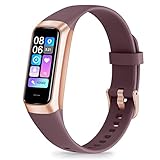
- 24/7 Heart Rate Monitor :This blood pressure watch supports real-time dynamic heart rate, blood oxygen, blood pressure ,Sleep Tracking,temperature monitoring so you can know more about your physical condition
- 1.10 inch AMOLED HD Touch screen: The Stopwatch pairs flawlessly with the Skin-friendly fitness straps, while its 1.10 inch AMOLED HD Touch Color Screen design and multitude of invigorating watch faces blow you away any moment
- 25 Sport Modes Activity Tracker: you can select any number of sports modes in the app as your exclusive sports mode to record your sports data.can record all daily health data such as steps, distance, and calorie consumption in the App "Keep Health"
- 5 ATM Waterproof activity & fitness trackers :step counter for walking Designed according to waterproof and dustproof standard, you can wear it when washing hands, taking bath, swimming, diving or getting caught in the rain will not damage your watches
- Multiple Convenient Functions :This smart band has multiple functions such as remote photography, mobile search, drinking water reminder, sedentary reminder, menstrual reminder cycle, real-time weather display, etc
Limited ecosystem integration by choice
Unlike mainstream wearables, Moodbeam One does not plug into broader health ecosystems like Apple Health, Google Fit, or corporate wellness dashboards in a deeply integrated way. Mood data remains largely siloed within its own app environment.
This keeps emotional data separated from step counts, sleep scores, and medical metrics, which may feel safer and more intentional. It also limits cross-analysis, making it impossible to correlate mood directly with exercise, sleep, or physiological stress within the platform.
Again, this is a philosophical distinction rather than a technical limitation, and it underscores how differently Moodbeam defines the purpose of a wearable.
A different answer to what a wearable is for
At a glance, Moodbeam One looks like it belongs in the same category as fitness trackers and smartwatches. In practice, it answers a different question entirely.
Where traditional wearables ask how much you moved, how well you slept, or how hard your heart worked, Moodbeam asks whether you felt good or bad, and trusts you to know the difference.
That makes it less versatile, less data-rich, and less impressive on a spec sheet. It also makes it more honest about the limits of technology when it comes to understanding human emotion.
Who Moodbeam One Is Really For: Individuals, Workplaces, and Wellbeing Programs
Moodbeam’s deliberate narrowness means it will resonate strongly with some users and fall flat for others. Understanding who benefits most requires separating personal self-tracking from organisational wellbeing, and recognising where emotion logging makes sense without turning into surveillance or busywork.
Individuals seeking emotional awareness, not optimisation
Moodbeam One works best for people who are already reflective and curious about their emotional patterns but don’t want another screen shouting metrics at them. The bracelet is lightweight, discreet, and designed for all-day wear, with a soft-touch strap and a form factor closer to a minimalist activity band than a smartwatch.
There is no display, no notifications, and no need to interact with it beyond pressing a button, which reduces friction and decision fatigue. Battery life stretches comfortably into multiple days, and compatibility is smartphone-based rather than platform-dependent, making it equally usable on iOS and Android without ecosystem lock-in.
For journaling-minded users, people exploring mindfulness, or those working through therapy or coaching, Moodbeam can act as a quiet prompt to check in with themselves. It does not interpret emotions, but it can reveal patterns over time that might otherwise go unnoticed.
People who feel overwhelmed by traditional wearables
Moodbeam is particularly well-suited to users who have bounced off smartwatches and fitness trackers. If heart rate graphs, sleep scores, and constant reminders feel stressful or guilt-inducing, Moodbeam’s simplicity can feel like relief rather than compromise.
There is no performance framing, no streaks to break, and no sense that you are failing the device by having a bad day. Emotional neutrality is built into the experience, which makes it easier to sustain over longer periods than many wellness tools.
That same simplicity, however, means users looking for guidance, coaching, or actionable insights may quickly feel underserved. Moodbeam observes; it does not intervene.
Workplaces focused on culture rather than compliance
Moodbeam’s strongest use case has always been organisational rather than individual. In workplace settings, it functions less as a personal wellness gadget and more as an emotional pulse-check across teams.
Employees can log how they feel during the day without explaining why, and aggregated, anonymised data can highlight trends without exposing individuals. This can be valuable in environments where stress, morale, or burnout are difficult to measure honestly through surveys or performance metrics.
Crucially, Moodbeam works best in cultures built on trust. If employees fear that mood data could be used punitively or interpreted out of context, engagement will collapse, regardless of how privacy is technically implemented.
Wellbeing programs that value participation over precision
For corporate wellbeing initiatives, healthcare providers, or educational settings, Moodbeam offers a low-barrier way to introduce emotional check-ins without requiring clinical assessments or biometric data. It avoids medicalisation, which makes it easier to deploy at scale and less intimidating for participants.
The hardware’s durability and comfort support continuous wear, and the software experience is intentionally simple, reducing training and support overhead. Data remains focused on trends rather than individual diagnoses, aligning better with preventative wellbeing than reactive care.
That said, Moodbeam is not a substitute for mental health services or evidence-based interventions. It can highlight when something is off, but it cannot explain why or what should happen next.
Who Moodbeam One is not for
Moodbeam is a poor fit for users who want emotional insights derived from physiology, AI-driven analysis, or deep correlations with sleep, exercise, and stress metrics. Those expectations are better served by advanced smartwatches, even if their interpretations of mood are indirect and imperfect.
It is also not ideal for people who want visible feedback, gamification, or a sense of progress tied to improvement. Moodbeam offers reflection, not reinforcement.
In many ways, Moodbeam One asks users and organisations to be honest about what they actually want from a wearable. If the goal is awareness and conversation rather than optimisation and control, it fits remarkably well; if not, its limitations become immediately apparent.
The Science and Limits of Mood Tracking: Accuracy, Bias, and Emotional Complexity
Understanding where Moodbeam One fits requires stepping back from product features and looking at the broader science of mood tracking itself. This is an area where expectations often outrun evidence, and where simplicity can be both a strength and a constraint.
Moodbeam’s design choices deliberately avoid claiming scientific precision. Instead, they expose the unresolved challenges at the heart of emotional measurement, many of which even advanced smartwatches and research-grade systems have yet to solve.
Why mood is harder to measure than steps or sleep
Unlike heart rate or movement, mood is not a directly observable physiological signal. It is a subjective mental state shaped by context, personality, culture, memory, and expectations, all of which can shift moment to moment.
Even in clinical psychology, mood is typically assessed through self-report questionnaires rather than objective measurement. That alone sets a hard ceiling on accuracy for any consumer wearable claiming to “detect” how someone feels.
Moodbeam accepts this limitation explicitly. Instead of inferring mood from proxies like heart rate variability, skin temperature, or sleep disruption, it asks users to self-report their emotional state in the moment.
Self-reporting: honest reflection or flawed data?
Self-reporting has a mixed reputation in data science, but it remains the gold standard in mood research when handled carefully. Asking someone how they feel avoids speculative interpretation and removes algorithmic guesswork.
However, self-reported mood is still vulnerable to bias. Users may underreport negative feelings, especially in workplace contexts, or default to habitual responses without deep reflection.
Moodbeam’s two-button system reduces friction, but that same simplicity flattens emotional nuance. A complex mix of anxiety, fatigue, and motivation may be compressed into a single press, losing granularity in exchange for consistency.
Context matters more than the data point
A mood input without context is inherently ambiguous. A “negative” entry could reflect workload stress, personal issues, physical discomfort from poor sleep, or even dissatisfaction with the bracelet itself.
Because Moodbeam does not collect location, activity, or biometric data, it cannot algorithmically infer why mood changes occur. This avoids privacy concerns, but it shifts interpretive responsibility onto users, managers, or wellbeing teams.
In practice, the value emerges not from individual data points, but from patterns over time. Repeated dips during certain days, shifts after organisational changes, or long-term trend improvements carry more meaning than isolated moments.
Accuracy versus honesty: a trade-off by design
Many modern smartwatches promise emotional insights by correlating physiological signals with stress or recovery states. While useful, these systems often blur the line between physical arousal and emotional experience.
Moodbeam’s refusal to infer emotion can feel unsophisticated compared to AI-driven wearables. Yet it arguably produces a different kind of accuracy: not physiological precision, but emotional honesty.
This approach works best when users trust that their inputs will not be judged, scored, or used against them. Without that trust, the data becomes performative rather than reflective, regardless of how elegant the hardware or software may be.
Emotional complexity resists optimisation
A key limitation of mood-tracking wearables is the assumption that emotions should be optimised in the same way as fitness metrics. Steps can go up, resting heart rate can go down, but mood does not follow linear improvement curves.
Moodbeam avoids progress rings, targets, or streaks, which reduces pressure but also removes reinforcement. For some users, this supports healthier reflection; for others, it undermines long-term engagement.
The bracelet’s lightweight build and unobtrusive design make it easy to wear continuously, but emotional engagement depends far more on organisational culture or personal motivation than on comfort, battery life, or materials.
Rank #4

- Bluetooth Call and Message Alerts: Smart watch is equipped with HD speaker, after connecting to your smartphone via bluetooth, you can answer or make calls, view call history and store contacts through directly use the smartwatch. The smartwatches also provides notifications of social media messages (WhatsApp, Twitter, Facebook, Instagram usw.) So that you will never miss any important information.
- Smart watch for men women is equipped with a 320*380 extra-large hd full touch color screen, delivering exceptional picture quality and highly responsive touch sensitivity, which can bring you a unique visual and better interactive experience, lock screen and wake up easily by raising your wrist. Though “Gloryfit” app, you can download more than 102 free personalised watch faces and set it as your desktop for fitness tracker.
- 24/7 Heart Rate Monitor and Sleep Tracker Monitor: The fitness tracker watch for men has a built-in high-performance sensor that can record our heart rate changes in real time. Monitor your heart rate 26 hours a day and keep an eye on your health. Synchronize to the mobile phone app"Gloryfit", you can understand your sleep status(deep /light /wakeful sleep) by fitness tracker watch develop a better sleep habit and a healthier lifestyle.
- IP68 waterproof and 110+ Sports Modes: The fitness tracker provides up to 112+ sports modes, covering running, cycling, walking, basketball, yoga, football and so on. Activity trackers bracelets meet the waterproof requirements for most sports enthusiasts' daily activities, such as washing hands or exercising in the rain, meeting daily needs (note: Do not recommended for use in hot water or seawater.)
- Multifunction and Compatibility: This step counter watch also has many useful functions, such as weather forecast, music control, sedentary reminder, stopwatch, alarm clock, timer, track female cycle, screen light time, find phone etc. The smart watch with 2 hrs of charging, 5-7 days of normal use and about 30 days of standby time. This smart watches for women/man compatible with ios 9.0 and android 6.2 and above devices.
Bias at the individual and group level
At an individual level, mood data reflects who chooses to participate and how honestly they engage. At a group level, it reflects whose emotions are considered safe to express.
In workplace deployments, power dynamics can subtly shape results. Senior staff may feel freer to report negative moods than junior employees, or vice versa, skewing aggregate insights.
Moodbeam’s aggregated reporting helps reduce personal exposure, but it cannot eliminate social bias. Any interpretation of the data must account for who is represented, who is silent, and why.
What mood-tracking wearables can and cannot claim
Moodbeam One does not diagnose, predict mental health conditions, or replace professional support. Its data lacks the resolution, validation, and clinical framing required for medical use.
What it can do is surface emotional patterns that might otherwise go unnoticed or unspoken. That makes it a tool for awareness and conversation, not explanation or intervention.
Seen through this lens, Moodbeam’s scientific restraint is not a weakness but a boundary. It highlights the limits of current mood-tracking technology while offering a pragmatic, human-centred way to engage with emotional data without pretending to solve emotional complexity.
Privacy, Ethics, and Trust: What Happens to Your Emotional Data?
Once a wearable moves beyond steps and sleep into emotions, the conversation inevitably shifts from usefulness to trust. Mood data is not just another biometric; it is deeply contextual, socially sensitive, and easily misinterpreted when removed from the person who recorded it.
Moodbeam One’s deliberately simple hardware and input method help reduce accidental data capture, but they do not eliminate the ethical weight of what is being collected. Understanding how that data is stored, shared, and framed is central to deciding whether this kind of wearable belongs on your wrist at all.
What Moodbeam actually records (and what it doesn’t)
Unlike most smartwatches, Moodbeam One does not infer mood from physiological signals like heart rate variability, skin temperature, or movement patterns. The bracelet only records intentional button presses, each tagged with a timestamp and a binary positive or negative state.
This design choice limits data richness but strengthens consent. Nothing is logged unless the wearer actively chooses to log it, which avoids the creepiness factor associated with passive emotional inference.
It also means there is no hidden emotional profiling happening in the background. Battery life benefits from this restraint too, as the bracelet can last weeks rather than days, reinforcing its role as a lightweight, low-surveillance device rather than a sensor-heavy tracker.
Data ownership and control
Moodbeam positions users, not organisations, as the primary owners of individual mood data. In workplace deployments, employers typically see aggregated trends rather than identifiable emotional timelines tied to specific employees.
That aggregation is crucial, but it is not a magic shield. Small teams, infrequent usage, or uneven participation can still make patterns feel traceable, even if names are technically removed.
For individual users outside the workplace, the risk profile is lower, but not nonexistent. Any cloud-connected service introduces questions about long-term storage, third-party access, and what happens if the company’s business model or ownership changes.
Workplace wellbeing versus workplace surveillance
Moodbeam One is often framed as a wellbeing tool for organisations, and this is where ethical tension is highest. Emotional data, even when anonymised, can subtly shift expectations about how employees should feel at work.
If leadership treats mood trends as diagnostic or performance-related, trust erodes quickly. A dip in collective mood can reflect external pressures, personal circumstances, or survey fatigue, not organisational failure or individual disengagement.
The bracelet itself cannot enforce ethical use. That responsibility sits squarely with policy, communication, and culture, areas where technology frequently outpaces governance.
Consent, pressure, and the illusion of choice
Mood tracking is voluntary in theory, but social dynamics complicate that in practice. When a company invests in a mood-tracking system, opting out can feel like opting out of team participation.
Moodbeam’s minimalist design reduces friction, which is good for adoption but can also blur the line between willing participation and quiet compliance. Pressing a button takes seconds; resisting expectations can take much more effort.
Ethical deployment depends less on the bracelet’s materials, comfort, or durability, and more on whether users feel genuinely safe not to engage without explanation or consequence.
Security, longevity, and data after the wrist
Another underexplored question is what happens to emotional data over time. Moodbeam One is comfortable and durable enough for long-term wear, but emotional histories can outlast jobs, teams, or even companies.
If a user stops wearing the bracelet, changes employers, or deletes their account, clarity around data deletion and retention becomes critical. Emotional data does not age like step counts; its meaning can change as personal context changes.
Trust in mood-tracking wearables is therefore cumulative. It is built not just through encryption and policies, but through consistent restraint, transparency, and a clear understanding that some data, once collected, cannot be emotionally neutral again.
The broader ethical question mood wearables raise
Moodbeam One exposes a larger issue facing the wearable industry: just because we can track something does not mean we should always do so. Emotional states resist standardisation, benchmarking, and optimisation in ways that fitness metrics do not.
By limiting its scope, Moodbeam avoids some of the worst pitfalls of emotional surveillance. At the same time, it asks users to trust that simplicity will be respected as the platform evolves.
Whether that trust is justified depends less on the bracelet itself and more on how carefully emotional data is treated once it leaves the wrist.
Does Mood Tracking Actually Help? Long-Term Engagement and Real-World Value
After ethics, security, and intent, the most practical question remains whether mood tracking delivers lasting value once the novelty fades. Moodbeam One is deliberately simple, but simplicity alone does not guarantee sustained engagement or meaningful insight.
To understand its real-world usefulness, it helps to separate emotional awareness from emotional improvement. Moodbeam is not a therapy device, a diagnostic tool, or a coaching system; it is a prompt for reflection, nothing more and nothing less.
Awareness versus outcomes
In the short term, manual mood logging often increases self-awareness. Pressing a button forces a pause, however brief, and that interruption can help users notice patterns they might otherwise ignore.
Over weeks or months, the benefit depends on whether those patterns lead to action. Without guidance, interpretation tools, or contextual coaching, many users plateau at recognition without knowing what to change next.
Moodbeam’s software deliberately avoids prescriptive advice, which reduces risk but also limits transformation. For users already reflective or working with a therapist or coach, this restraint can be a strength rather than a weakness.
Why engagement drops off for many users
Mood tracking sits in a different psychological category from steps or heart rate. Physical metrics reward progress with clear feedback loops, while emotional data often highlights complexity, ambiguity, or discomfort.
As a result, long-term engagement tends to skew toward people who actively want introspection rather than passive wellness tracking. For others, repeatedly logging negative moods without structured follow-up can feel demotivating.
Moodbeam One’s excellent comfort, light weight, and unobtrusive bracelet design remove physical barriers to wear, but they cannot remove emotional friction. That friction is often what determines whether the device stays on the wrist after the first few months.
The workplace versus personal use divide
In organisational settings, Moodbeam’s value proposition changes. Aggregated mood trends can help leaders identify stress points, workload imbalances, or cultural issues that surveys miss.
However, this value exists at a collective level, not necessarily at an individual one. Employees may benefit indirectly, even if personal engagement with the device remains minimal.
For individual consumers using Moodbeam privately, the lack of external accountability can cut both ways. There is freedom from oversight, but also less reinforcement to continue logging once curiosity wanes.
Accuracy, honesty, and emotional granularity
Moodbeam’s two-button system trades emotional nuance for clarity. This reduces cognitive load and avoids over-analysis, but it also compresses complex feelings into a binary choice.
Over time, some users report becoming more honest precisely because the system is blunt. Others find it too reductive to capture mixed or evolving emotional states, leading to disengagement.
💰 Best Value
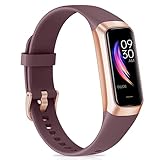
- 【All-day Health Monitor】The fitness tracker watch will automatically track your real-time heart rate, blood pressure and blood oxygen throughout the day to help you better understand your health. Equipped with a high-performance chipset, the fitness tracker automatically analyzes your overall sleep quality (deep/light/wake time) at night and gives you a nightly sleep score in the app to help you adjust your lifestyle and make you healthier.
- 【Smart Notification Remider】 With Bluetooth connection to your phone, it can support incoming calls/text alerts/APP message notifications (WhatsApp/Facebook/Instagram etc.), you will never miss your important messages. With the fitness watch, you can also perform sedentary reminder, water reminder, alarm clock, stopwatch, remote control photo, find devices, etc. to make your life healthier and smarter.
- 【25 Sports Modes】 Fitness tracker supports 25 professional sports modes, you can choose any number of sports modes as your exclusive sports modes in the app, such as walking, running, swimming, yoga, etc. and track your steps, heart rate, distance and calories to help you stay motivated, accomplish your sports goals, record your sports data, and make your sports more scientific.
- 【Long Battery Life】The fitness watch uses magnetic fast charging to provide a better battery life experience. It takes 1-2 hours to fully charge and can be used for up to 7 days of regular use and 15 days of standby. Compatible mobile phone system: android5.0 (inclusive) and IOS9.0 (inclusive) or above.
- 【1.1" AMOLED Touch Color Screen】AMOLED HD touch color screen is designed with clear and bright display, providing you with high quality touch and visual experience. This smartwatch includes a large number of original dials and supports custom dials.
Unlike biometric mood inference systems found in some smartwatches, Moodbeam avoids questionable assumptions about emotional accuracy. The data is honest in the sense that it reflects what the user chose to report at that moment.
Where Moodbeam can genuinely add value
Mood tracking tends to work best as a supporting tool rather than a standalone solution. When paired with journaling, therapy, coaching, or organisational change initiatives, Moodbeam can provide lightweight emotional timestamps that anchor deeper conversations.
Its long battery life, durable construction, and minimal software friction make it suitable for continuous wear without becoming a distraction. That reliability matters when emotional data is meant to reflect everyday life rather than moments of intentional tracking.
For users seeking quantification, optimisation, or automated insight, Moodbeam will feel limited. For those seeking awareness without judgment or gamification, its restraint may be exactly the point.
The long-term value question
Mood tracking does not scale in value the same way fitness tracking does. It does not naturally reward streaks, milestones, or performance gains.
Instead, its usefulness fluctuates with life context. During periods of stress, change, or reflection, Moodbeam can feel relevant and grounding; during calmer phases, it may fade quietly into the background.
That uneven value curve is not a failure of the device, but a reflection of what emotional data represents. Moodbeam One works best when users accept that mood tracking is a tool to be picked up and put down, not a permanent metric to optimise.
Moodbeam One in Context: What It Says About the Future of Emotional Wearables
Taken as a whole, Moodbeam One feels less like a gadget trying to predict you, and more like a quiet experiment in how little technology is actually needed to make emotional data useful. That framing matters, because it places Moodbeam in sharp contrast with where much of the wearable industry has been heading.
To understand its significance, it helps to zoom out and look at the broader trajectory of emotional and mental health tracking in wearables.
From biometric inference to intentional input
Most mainstream wearables approach mood indirectly. Smartwatches and fitness bands collect heart rate variability, sleep stages, skin temperature, and activity levels, then translate those signals into stress scores, readiness metrics, or recovery insights.
That model is attractive because it promises effort-free insight. It also carries a fundamental weakness: physiological stress is not the same thing as emotional state. A raised heart rate might reflect anxiety, excitement, caffeine, illness, or a brisk walk, and algorithms struggle to resolve that ambiguity without context.
Moodbeam rejects inference entirely. It does not attempt to decode emotion from biology, nor does it claim clinical accuracy. Instead, it asks the user to self-report in real time, accepting subjectivity as a feature rather than a flaw.
This choice positions Moodbeam as part of a countertrend in emotional wearables, one that prioritises intentionality over automation. The data may be simpler, but it is also cleaner, because it reflects a conscious moment of reflection rather than an algorithmic guess.
A different answer to the accuracy problem
Emotional accuracy has become a growing point of tension in digital health. As wearables increasingly present stress and mood insights with scientific-looking charts, users often assume a level of precision that the data cannot truly support.
Moodbeam avoids this pitfall by narrowing its claims. A green press does not mean “you were objectively happy,” and a red press does not mean “you were clinically distressed.” It means you chose that input at that moment.
In that sense, Moodbeam’s data is arguably more honest than many biometric dashboards. It does not blur correlation and causation, and it does not disguise uncertainty behind polished visualisations.
The trade-off is obvious. The device cannot surface hidden patterns on its own, and it cannot alert you to emotional states you did not consciously notice. But it also avoids the quiet erosion of trust that can occur when wearables feel confident about things they cannot truly know.
Privacy, data ownership, and emotional safety
Emotional data is categorically different from step counts or heart rate trends. It carries social, professional, and psychological weight, especially in workplace settings where Moodbeam has found some of its strongest traction.
Moodbeam’s simplicity extends to its data philosophy. There is no continuous biometric stream, no ambient sensing, and no passive emotional surveillance. What exists is what the user chose to log.
For organisations, this creates clearer ethical boundaries. Aggregated mood trends can inform conversations about workload, culture, or change without exposing individual physiological data. For individuals, it reduces the sense of being constantly analysed by their own device.
This approach does not eliminate privacy concerns, but it narrows them. As emotional wearables become more capable, the industry will increasingly need to decide whether more data actually leads to better outcomes, or simply higher risk.
Moodbeam implicitly argues for restraint.
Why Moodbeam does not look like a smartwatch
From a hardware perspective, Moodbeam’s bracelet-like form is not just a design choice, but a statement of intent. There is no display, no notifications, no app-first experience pulling attention to the wrist.
Comfort and wearability are prioritised over interaction. The lightweight body, soft-touch materials, and long battery life make it easy to forget you are wearing it, which aligns with its role as a background tool rather than a focal point.
This stands in contrast to smartwatches, which are designed to be engaged with dozens or hundreds of times per day. Moodbeam’s value depends on the opposite behaviour: brief, deliberate interaction followed by disengagement.
In that sense, it resembles a watch that tells only one thing, but tells it reliably. It is not trying to be a platform.
The engagement paradox of mood tracking
Mood tracking faces a structural challenge that fitness tracking does not. There is no natural upward trajectory, no equivalent of lifting heavier or running faster.
Moodbeam’s future relevance, and that of emotional wearables more broadly, depends on whether users and organisations can accept cyclical engagement. Periods of intense use may be followed by long stretches of inactivity, without that pattern being treated as failure.
This is where Moodbeam’s low-friction design helps. Because it does not demand daily streaks or constant attention, it can fade into the background without creating guilt. When it becomes useful again, it is still there, charged, and familiar.
That model may ultimately prove more sustainable than wearables that attempt to gamify emotional wellbeing into something it is not.
Who Moodbeam points the future toward
Moodbeam One is not a prototype for all emotional wearables, but it does signal a possible future path. One where devices act as prompts rather than judges, and where emotional data supports reflection instead of optimisation.
For individuals seeking self-awareness, therapists looking for lightweight tools, or organisations aiming to understand emotional climate without invasive monitoring, this approach has clear appeal.
For users who want rich analytics, predictive insights, or integration with broader health ecosystems, it will feel deliberately incomplete.
That divide is likely to widen. Emotional wearables may split into two camps: those that attempt to measure emotion as a physiological phenomenon, and those that treat it as a subjective experience worth recording on its own terms.
What Moodbeam ultimately represents
Moodbeam One does not prove that mood tracking is universally valuable. Instead, it clarifies the conditions under which it can be.
Its restrained hardware, minimal software, and intentional interaction model suggest that the future of emotional wearables may depend less on better sensors, and more on better boundaries.
By choosing simplicity over sophistication, Moodbeam exposes both the promise and the limits of emotional self-tracking. It shows that mood data can be meaningful without being exhaustive, useful without being predictive, and supportive without being prescriptive.
For a category often tempted to overreach, that may be its most important contribution.