The $96 million figure attached to the Pentagon’s wearable contract is eye-catching, but focusing on the dollar amount alone misses why this award has become a fault line for the entire health-wearables industry. This isn’t about unit sales or a one-off procurement win; it’s about which platform the US Department of Defense believes can sit at the intersection of physiology, readiness, and national security without becoming a liability.
For readers who already understand Whoop and Oura as consumer-facing health trackers, the real story is how this contract reframes both companies as enterprise-grade data infrastructure providers. The Pentagon isn’t buying rings or bands for their aesthetics, battery life, or comfort alone; it’s effectively endorsing an operating model for collecting, analyzing, and governing human performance data at scale.
What follows explains why this contract reshapes competitive dynamics well beyond defense, why Whoop continues to push back against Oura’s apparent lead, and why the outcome matters for anyone watching the future of regulated health data, enterprise wearables, and subscription-driven biometric platforms.
It’s Not a Hardware Deal, It’s a Data Systems Bet
At its core, the Pentagon contract is a vote on data architecture, not industrial design. The DoD already knows how to buy ruggedized hardware; what it cannot afford is a biometric system that produces unreliable insights, fragmented dashboards, or opaque algorithms under operational stress.
🏆 #1 Best Overall
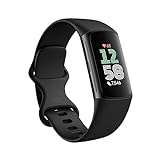
- Find your way seamlessly during runs or rides with turn-by-turn directions from Google Maps on Fitbit Charge 6[7, 8]; and when you need a snack break on the go, just tap to pay with Google Wallet[8, 9]
Oura’s win signals confidence in its ability to turn passive, long-term physiological signals like sleep stages, resting heart rate, HRV, and temperature deviation into consistent readiness indicators across large populations. Whoop’s challenge hinges on arguing that its continuous strain and recovery model, built for athletes and tactical users, better reflects real-world load and resilience under variable conditions.
In this context, ring versus wrist is almost secondary. The Pentagon is choosing which data philosophy scales under pressure.
Why Validation From the DoD Changes Commercial Perception
Defense adoption carries a level of implied validation that no consumer review cycle can replicate. If a platform is trusted to handle sensitive physiological data from active-duty personnel, it gains instant credibility with hospitals, insurers, elite sports organizations, and regulated enterprises.
This matters because both Oura and Whoop are subscription-first businesses. The Pentagon contract isn’t just revenue; it’s a reference customer that de-risks enterprise conversations globally and shortens sales cycles in adjacent sectors like occupational health and first responders.
Whoop’s aggressive response reflects an understanding that losing this narrative battle could lock Oura into a default “serious use” position for years, regardless of consumer feature parity.
Security, Privacy, and Data Sovereignty Are the Real Differentiators
The Pentagon’s requirements go far beyond encrypted Bluetooth and secure cloud storage. Data residency, access controls, auditability, and algorithmic transparency all become non-negotiable when biometric data intersects with deployment readiness and force health protection.
Oura has emphasized its separation between personal identity and physiological data, along with enterprise-level controls layered on top of its consumer platform. Whoop, by contrast, has leaned on its history with military units, professional sports teams, and its closed-loop subscription model to argue for tighter operational control.
This dispute highlights a broader industry tension: consumer wearables were never designed for sovereign data environments, yet defense and government buyers increasingly want to repurpose them rather than commission bespoke systems.
Why $96m Undersells the Contract’s Strategic Value
Even if the full $96 million is never realized, the long-term value lies in platform entrenchment. Once a wearable system is integrated into training protocols, health monitoring workflows, and longitudinal datasets, switching costs become enormous.
That lock-in potential is what Whoop is fighting against. If Oura becomes embedded at the DoD level, it gains years of population-scale data that can refine its models in ways consumer-only rivals cannot easily replicate.
For Whoop, challenging the contract isn’t just about revenue recovery; it’s about preventing a data advantage that could permanently tilt the competitive landscape.
What This Signals for the Future of Enterprise Wearables
The Pentagon’s involvement accelerates a shift already underway: consumer-grade wearables are being evaluated as enterprise infrastructure. Battery life, comfort, and form factor still matter, but they are table stakes rather than differentiators.
Instead, platforms will compete on how well they translate raw biometrics into actionable, defensible insights while meeting regulatory and ethical constraints. This pushes companies like Whoop and Oura closer to healthcare-adjacent roles, even as they continue selling lifestyle products to consumers.
The outcome of this challenge will influence not just defense procurement, but how far consumer wearables can move upstream into regulated, mission-critical environments without losing their mass-market appeal.
Oura’s Strategic Win: How a Sleep Ring Became a Defense-Grade Health Platform
Seen in that light, Oura’s Pentagon contract is less a surprise breakthrough than the culmination of a long, deliberately quiet repositioning. The company did not win by turning its ring into a ruggedized military device, but by proving that its consumer-grade hardware could anchor a compliant, scalable health intelligence platform without changing the form factor that made it viable in the first place.
Where Whoop emphasizes performance optimization under strain, Oura has framed readiness as a population health problem. That framing aligns neatly with how modern defense organizations increasingly think about force readiness, attrition risk, and long-term human performance.
From Nightstand Gadget to Longitudinal Health Sensor
Oura’s core advantage starts with how and when it collects data. A ring worn 24/7, particularly during sleep, captures long-duration, low-noise physiological signals that wrist-based wearables often struggle with due to movement artifacts and intermittent wear.
The ring’s hardware has remained intentionally understated: lightweight titanium construction, no screen, no haptics competing for attention, and battery life that comfortably stretches to four to seven days depending on ring size. For military users, that translates to fewer charging cycles, higher compliance, and less behavioral friction compared to devices that demand daily interaction.
More importantly, Oura’s algorithms were built around longitudinal baselines rather than real-time coaching. That design choice, originally made for consumer wellness, maps well to defense use cases where trend deviation matters more than moment-to-moment feedback.
Why Sleep Became the Trojan Horse
Sleep tracking was once dismissed as a “soft” metric, but Oura has spent years tying sleep quality to injury risk, cognitive performance, immune response, and recovery latency. In institutional settings, those correlations become operationally relevant rather than lifestyle curiosities.
For the Department of Defense, sleep is one of the few health variables that can be passively measured across large populations without interfering with duty. Oura’s ability to surface aggregate readiness indicators without exposing individual-level data too broadly is central to why it passed procurement scrutiny.
This is also where the ring form factor matters. Unlike watches or straps, rings are permitted in environments where wrist wearables are restricted, and they avoid signaling or distraction concerns in sensitive settings.
Enterprise Software, Not Consumer Apps, Won the Deal
The contract’s real substance sits above the hardware layer. Oura has invested heavily in enterprise dashboards, cohort analysis tools, and role-based access controls that let organizations see trends without violating internal privacy boundaries.
Crucially, Oura did not attempt to sell the Pentagon a modified consumer app. Instead, it presented a parallel enterprise environment that sits on the same data foundation but operates under different governance rules, retention policies, and access permissions.
That separation matters in sovereign data contexts. Defense buyers are less concerned with feature velocity and more focused on auditability, data residency, and the ability to wall off sensitive populations from broader commercial datasets.
Security and Compliance as Competitive Features
Oura’s experience operating under GDPR, supporting research institutions, and partnering with public health bodies during COVID quietly built a compliance résumé that translates well to defense procurement. Encryption standards, anonymization workflows, and documented data-handling processes become selling points rather than afterthoughts.
Unlike Whoop’s tightly controlled subscription ecosystem, Oura’s model allows for clearer segmentation between consumer, research, and enterprise deployments. That flexibility reduces perceived vendor lock-in risk, even as it deepens platform dependence over time.
From the Pentagon’s perspective, Oura looks less like a lifestyle brand and more like a health data infrastructure provider that happens to ship a consumer product.
A Consumer Device That Doesn’t Look Like One
There is also a cultural dimension to Oura’s win. The ring does not announce itself as a piece of technology, which lowers resistance among users who may be skeptical of constant monitoring.
Comfort, sizing options, and understated finishing are not trivial details at scale. A device that disappears into daily life generates cleaner data than one users remove during discomfort, inconvenience, or fatigue.
That design philosophy, often praised in consumer reviews, becomes a strategic advantage in institutional rollouts where adoption failure is a real risk.
Why This Puts Pressure on Whoop
Oura’s success reframes the competitive question. It suggests that defense buyers are not necessarily looking for the most intense performance analytics, but for systems that can operate quietly, securely, and persistently across years.
Whoop’s challenge, then, is not just to argue that its metrics are superior, but that its platform can offer the same level of governance flexibility without diluting its closed-loop model. The Pentagon contract raises the bar for what “enterprise-ready” really means in wearable health.
In that sense, Oura’s strategic win is not about rings versus straps. It is about proving that a consumer wearable, designed for comfort and habit rather than command-and-control, can still meet the demands of a defense-grade health platform when the software and data architecture are built with that outcome in mind.
Whoop’s Counteroffensive: Enterprise Health, Military Readiness, and the Subscription Advantage
If Oura’s Pentagon win reframes wearables as quiet infrastructure, Whoop’s response has been to lean into the opposite identity: a system designed for continuous performance management under stress. Rather than retreating toward consumer wellness, Whoop has doubled down on enterprise health, elite readiness, and long-duration behavioral data as its competitive wedge.
This is not a defensive pivot. It is a bet that defense, public safety, and large institutions will ultimately want more intervention, not less, from their wearables.
From Locker Rooms to Command Structures
Whoop’s enterprise narrative has long been shaped by its penetration into professional sports, tactical units, and occupational health pilots. The company has worked with military branches, special operations-adjacent programs, and first responders in readiness and fatigue-management contexts, even if few of those deployments have been as publicly visible as Oura’s Pentagon contract.
Those environments value Whoop’s core promise: turning raw physiological signals into prescriptive guidance around strain, recovery, and sleep debt. Unlike rings that prioritize passive collection, Whoop’s software is designed to influence behavior daily, sometimes intrusively, by flagging risk before performance degrades.
Rank #2

- Inspire 3 is the tracker that helps you find your energy, do what you love and feel your best. All you have to do is wear it.Operating temperature: 0° to 40°C
- Move more: Daily Readiness Score(1), Active Zone Minutes, all-day activity tracking and 24/7 heart rate, 20+ exercise modes, automatic exercise tracking and reminders to move
- Stress less: always-on wellness tracking, daily Stress Management Score, mindfulness sessions, relax breathing sessions, irregular heart rhythm notifications(2), SpO2(3), menstrual health tracking, resting heart rate and high/low heart rate notifications
- Sleep better: automatic sleep tracking, personalized Sleep Profile(1), daily detailed Sleep Score, smart wake vibrating alarm, sleep mode
- Comfortably connected day and night: calls, texts & smartphone app notifications(4), color touchscreen with customizable clock faces, super lightweight and water resistant to 50 meters, up to 10 day battery life(5)
That posture aligns well with training commands and operational planners who see wearables not as personal wellness tools, but as early-warning systems for burnout, injury risk, and readiness decline.
Hardware Built for Abuse, Not Discretion
Whoop’s strap-based hardware reflects that philosophy. The current generation device is lightweight, screenless, and designed to be worn 24/7, including during training, sleep, and showers, with swappable textile and elastomer bands that prioritize durability over subtlety.
Battery life is typically quoted in days rather than weeks, but the external battery pack allows on-body charging without removing the device, a small but meaningful detail for uninterrupted data continuity. In operational or institutional contexts, that continuity matters more than elegance.
Comfort is subjective, and Whoop’s wrist-centric form factor remains more obtrusive than a ring. But for users accustomed to watches, uniforms, or mandated equipment, the trade-off is often acceptable, especially when the device is positioned as part of a performance system rather than a personal accessory.
The Subscription Model as a Strategic Asset
Where Oura’s enterprise appeal rests on deployment flexibility, Whoop’s strength lies in its subscription-first economics. Hardware is effectively a conduit; the real product is ongoing access to analytics, coaching logic, and longitudinal insights that compound over time.
For institutions, this creates a predictable per-user cost structure that bundles software updates, algorithm improvements, and support without renegotiating hardware refresh cycles. It also keeps Whoop in an active service relationship with enterprise customers, rather than a one-time vendor.
That same model, however, raises familiar questions around lock-in. Whoop controls the full stack, from sensors to scoring models, which simplifies governance but limits modularity. In a defense procurement environment increasingly sensitive to exit strategies and data portability, this is both a strength and a vulnerability.
Data Control, Security, and the Readiness Use Case
Whoop has invested heavily in positioning itself as an enterprise-capable health data platform, emphasizing encryption, access controls, and compliance frameworks suitable for institutional buyers. While specifics of government-grade certifications are rarely disclosed publicly, the company’s messaging increasingly mirrors that of B2B health technology vendors rather than consumer fitness brands.
Crucially, Whoop’s analytics are optimized for trend detection across groups. Commanders, coaches, or health officers can view anonymized or aggregated readiness metrics to identify systemic risk without exposing individual medical details, at least in theory.
That group-level insight is exactly what makes Whoop attractive to military readiness planners, and exactly what makes privacy advocates cautious. The tension between individual consent and organizational oversight is not a bug in Whoop’s model; it is the core design challenge it is attempting to solve.
Why Whoop Still Has a Path Into Defense
The Pentagon’s Oura contract does not close the door on Whoop. If anything, it clarifies the segmentation of demand within defense and government health.
Oura fits long-term population monitoring, baseline health tracking, and low-friction adoption. Whoop fits performance cycles, high-risk training environments, and scenarios where leadership wants actionable insight rather than silent observation.
As defense agencies increasingly treat physiological readiness as a strategic variable, it is plausible that both models coexist. One monitors the system. The other attempts to steer it.
For Whoop, the counteroffensive is less about replicating Oura’s win and more about redefining what success looks like. In that framing, the subscription advantage is not just a business model, but a claim that readiness itself is not a device you issue once, but a service you manage continuously.
Hardware Philosophy Clash: Ring vs Strap in a Combat, Training, and Deployment Context
The strategic divide between Oura and Whoop becomes most tangible at the hardware level. Rings and straps encode very different assumptions about how, when, and why the body should be measured, and those assumptions matter far more in military settings than in civilian wellness.
In defense procurement, hardware is not just an interface. It is a risk surface, a compliance problem, and a daily-wear object that must survive environments most consumer devices are never designed to encounter.
Oura Ring: Passive, Persistent, and Low-Visibility
Oura’s ring-first philosophy prioritizes minimal intrusion. A titanium or coated ring with no screen, no alerts, and no visible “tech” signal is easier to integrate into uniform standards and less likely to interfere with operational discipline.
From a wearability standpoint, the ring’s 4–7 day battery life, sealed construction, and automatic data capture favor long-term baseline monitoring. It excels at sleep, resting heart rate, HRV trends, and temperature deviation, metrics that gain value over weeks rather than hours.
In deployment contexts, that persistence matters. A ring can be worn during sleep, downtime, and even certain duty hours without demanding interaction, which aligns with the Pentagon’s interest in population-level health surveillance rather than moment-to-moment performance coaching.
However, rings are not neutral objects in combat or training. Finger injuries, swelling, glove compatibility, and safety restrictions around jewelry all create edge cases, particularly in infantry, aviation, and mechanical roles where rings are traditionally discouraged or outright banned.
Whoop Strap: Designed for Load, Motion, and Stress
Whoop’s strap-based architecture reflects its origins in elite sports and tactical training. Worn on the wrist, bicep, or integrated into apparel, the device is built to tolerate constant motion, sweat, impact, and strain.
The strap’s strength is not subtlety but continuity under stress. Whoop captures high-frequency heart rate data, strain scores, and recovery metrics designed to respond to training load, not just observe it.
In military training pipelines, that makes Whoop inherently more actionable. Drill instructors, special operations units, or performance staff can correlate physiological load with specific exercises, environmental stressors, or sleep deprivation cycles in near real time.
The trade-off is visibility and friction. A strap is harder to hide, easier to remove, and more likely to conflict with uniform standards or mission-specific gear, especially in deployed environments where wrist real estate is already contested by watches, GPS units, or comms equipment.
Durability, Repairability, and Failure Modes
Defense buyers think in terms of failure modes, not marketing specs. Rings fail by cracking, deforming, or becoming unsafe under force, while straps fail by breaking clasps, tearing bands, or losing sensors due to impact.
Oura’s ring is monolithic and sealed, which limits repair but reduces points of ingress for water or dust. If it fails, it is replaced, not fixed, a model that scales well for large populations but poorly for specialized units with unique sizing or supply constraints.
Whoop’s modular straps and replaceable bands offer more flexibility in fit and placement. That modularity also introduces more components that can wear out, get lost, or require logistical support, a nontrivial consideration in forward deployments.
Charging, Power, and Operational Interruptions
Power management is another philosophical fault line. Oura’s longer battery life reduces charging frequency, which matters when access to power is intermittent or tightly controlled.
Whoop counters with its slide-on battery pack, allowing continuous wear without device removal. In theory, that supports uninterrupted data streams during multi-day training exercises or operations.
In practice, both approaches introduce friction. Rings require full removal for charging, while Whoop’s external battery adds another object to track, issue, and potentially lose, complicating inventory management at scale.
What Hardware Choice Signals About Intent
The Pentagon’s preference for a ring in this contract signals a bias toward passive monitoring over intervention. Oura’s hardware aligns with a model where health data is collected quietly, analyzed centrally, and acted on at an organizational level.
Whoop’s strap, by contrast, assumes the user or their supervisor will engage with the data regularly. That assumption fits high-performance units and training environments, but it can clash with broader force-wide deployments where compliance and consistency matter more than optimization.
This is not a question of which device is better. It is a question of which philosophy maps cleanly onto a military institution that must balance readiness, safety, privacy, and scale, all while operating in environments where even small hardware decisions carry strategic weight.
Data, Security, and Trust: FedRAMP, Privacy Posture, and the Politics of Biometric Ownership
Hardware decisions set the tone, but data governance determines whether a wearable can realistically operate inside the Department of Defense. Once biometrics are collected at scale, questions of cloud infrastructure, access control, and long-term ownership move from fine print to strategic risk.
This is where the Whoop–Oura rivalry becomes less about form factor and more about institutional trust.
FedRAMP as a Gatekeeper, Not a Checkbox
FedRAMP authorization is not simply a security badge; it is a prerequisite for handling sensitive government data in cloud environments. It dictates where data can live, who can touch it, how it is audited, and how incidents are reported.
Oura entered the Pentagon contract with a cloud posture aligned to these requirements, including tightly scoped data environments and clear separation between consumer and government datasets. That groundwork matters, because retrofitting FedRAMP compliance is expensive, slow, and deeply invasive to a company’s existing infrastructure.
Whoop has publicly emphasized its investments in security and enterprise readiness, but FedRAMP alignment is a different order of magnitude than SOC 2 or ISO certifications common in consumer tech. It forces architectural decisions that can conflict with rapid iteration, consumer analytics pipelines, and data-driven product development.
Rank #3

- 【BUILT-IN GPS SMART WATCH – GO FURTHER, FREER, SMARTER】No phone? No problem. This fitness watch for women, featuring the latest 2025 technology, includes an advanced professional-grade GPS chip that precisely tracks every route, distance, pace (real-time & average), and calorie burned—completely phone-free. Whether you're chasing new personal records or exploring off the beaten path, your full journey is automatically mapped and synced in the app. Train smarter. Move with purpose. Own your progress. Own your journey.
- 【BLUETOOTH 5.3 CALLS & SMART NOTIFICATIONS】Stay effortlessly connected with this smart watch for men and women, featuring dual Bluetooth modes (BT 3.0 + BLE 5.3) and a premium microphone for crystal-clear calls right from your wrist—perfect for driving, workouts, or busy days. Receive instant alerts for calls, texts, and popular social apps like WhatsApp and Facebook. Just raise your wrist to view notifications and never miss an important moment.
- 【100+ SPORT MODES & IP68 WATERPROOF & DUSTPROOF】This sport watch is a versatile activity and fitness tracker with 100+ modes including running, cycling, yoga, and more. It features quick-access buttons and automatic running/cycling detection to start workouts instantly. Accurately track heart rate, calories, distance, pace, and more. Set daily goals on your fitness tracker watch and stay motivated with achievement badges. With IP68 waterproof and dustproof rating, it resists rain and sweat for any challenge. Not suitable for showering, swimming, or sauna.
- 【24/7 HEALTH ASSISTANT & SMART REMINDERS】This health watch continuously monitors heart rate, blood oxygen, and stress levels for comprehensive wellness tracking. Sleep monitoring includes deep, light, REM sleep, and naps to give you a full picture of your rest. Stay on track with smart reminders for sedentary breaks, hydration, medication, and hand washing. Women can also monitor menstrual health. Includes guided breathing exercises to help you relax. Your ultimate health watch with event reminders for a healthier life.
- 【ULTRA HD DISPLAY, LIGHTWEIGHT & CUSTOMIZABLE DIALS】This stylish wrist watch features a 1.27-inch (32mm) 360×360 ultra HD color display with a 1.69-inch (43mm) dial, offering vivid details and responsive touch. Its minimalist design fits both business and casual looks. Switch freely among built-in designer dials or create your own DIY watch face using photos, colors, and styles to showcase your unique personality. Perfect as a cool digital watch and fashion wrist watch.
Consumer DNA vs Government Expectations
Both companies were born in the consumer wellness market, but they evolved differently. Oura’s ring was designed to fade into the background, with insights surfaced through aggregate trends and longitudinal analysis.
That approach aligns with government use cases where individual-level data may be secondary to population-level signals like readiness, fatigue risk, or recovery trends across units.
Whoop, by contrast, built its platform around continuous user engagement. Daily strain scores, recovery prompts, and behavioral nudges are central to its value proposition. That model excels in athletic and training environments but raises questions in a military context about over-collection, over-interpretation, and the pressure to act on data that may not be operationally relevant.
Who Owns the Data When the User Is Not the Customer?
The Pentagon contract reframes a core question in wearable tech: who owns biometric data when the individual is wearing the device, but the institution is paying for it?
Oura’s government-facing posture leans toward institutional control with strict access boundaries. Data flows upward to authorized administrators, with guardrails designed to limit secondary use and commercial crossover.
Whoop’s consumer roots complicate that equation. Its subscription model depends on extracting long-term value from individual data, even if anonymized or aggregated. Translating that model into a defense context requires convincing policymakers that government data will never become fuel for consumer product optimization.
This is not a theoretical concern. In defense procurement, the perception of future risk can be as disqualifying as present-day noncompliance.
Privacy Optics and Internal Politics
Beyond technical controls, privacy optics matter inside the military itself. Service members are acutely sensitive to how health data might be used in evaluations, promotions, or medical profiling.
A passive ring that collects sleep and recovery metrics without constant prompts can feel less intrusive than a wrist-based system that demands daily engagement. Even if the underlying data is similar, perception shapes adoption and compliance.
For Pentagon stakeholders, choosing Oura signals restraint: collect what is necessary, analyze centrally, and avoid creating a culture where wearable data feels like surveillance.
Why Whoop Still Poses a Credible Threat
Despite Oura’s current advantage, Whoop’s challenge is not speculative. Its platform offers richer real-time data streams, flexible placement options, and a proven track record in elite performance environments.
If the Department of Defense shifts from passive monitoring toward performance optimization, injury prevention, or unit-level training analytics, Whoop’s architecture becomes more attractive. That future would likely require parallel investments in FedRAMP-compliant infrastructure and clearer data ownership boundaries.
The battle, then, is not about which device is more accurate. It is about which company can convince the Pentagon that its data philosophy aligns with military values of control, accountability, and long-term risk management.
In that context, the $96 million contract is less a finish line than a signal. It reveals what the Department of Defense currently prioritizes in biometric technology, and where challengers like Whoop must adapt if they want a seat at the table.
From Recovery Scores to Force Readiness: How Each Platform Translates Physiology into Actionable Signals
If privacy optics determine whether a wearable is politically acceptable, signal translation determines whether it is operationally useful. The Pentagon is not buying sleep scores for curiosity; it is buying systems that can turn raw physiology into decisions about readiness, risk, and resource allocation without undermining trust.
This is where Oura and Whoop diverge most sharply. They do not just collect different data at different cadences; they embody fundamentally different philosophies about how human performance should be interpreted and acted upon at scale.
Oura: Aggregation First, Interpretation Later
Oura’s platform is built around low-frequency, high-confidence signals. Its core metrics—sleep staging, resting heart rate, heart rate variability, respiratory rate, and temperature deviation—are captured primarily during sleep, when motion artifacts are minimal and data quality is highest.
That design choice has downstream implications. Oura’s readiness score is not intended to drive minute-by-minute decisions, but to establish a baseline trend that flags deviation from normal physiological patterns.
In a defense context, this maps cleanly to population-level monitoring. Commanders and medical staff can look for early warning signs of overtraining, illness, or chronic fatigue across units without needing continuous behavioral inputs from individuals.
The ring’s physical form reinforces that model. Lightweight titanium construction, no screen, and multi-day battery life—often four to seven days depending on usage—mean compliance is high and cognitive burden is low. There is nothing to check, tap, or respond to, which reduces the sense that the device is actively judging performance.
Oura’s software experience mirrors this restraint. Insights are delivered as summaries, trends, and deviations, not prescriptive instructions. For the Pentagon, that allows interpretation to remain within existing medical and command structures rather than being outsourced to a vendor’s algorithmic recommendations.
Whoop: Continuous Load, Continuous Feedback
Whoop approaches physiology as a dynamic system that must be measured continuously to be understood meaningfully. Its strap captures heart rate, HRV, strain, and recovery metrics 24/7, including during training, work, and sleep.
The result is a far denser data stream. Whoop’s recovery score is explicitly designed to influence daily behavior, telling users how hard to train, when to rest, and how accumulated strain is affecting readiness.
This real-time feedback loop is why Whoop has thrived in elite sports, special operations training, and high-performance corporate environments. It excels when the goal is optimization rather than observation.
Hardware flexibility supports that use case. The sensor can be worn on the wrist, bicep, or integrated into apparel, improving comfort and durability during physical activity. Battery life is effectively continuous thanks to its slide-on charging pack, though this also reinforces the expectation of constant wear and engagement.
In a military setting, this creates both opportunity and friction. Whoop can theoretically identify injury risk earlier, tailor training loads at the unit level, and surface correlations between workload and performance outcomes. But it also requires a cultural shift toward accepting algorithm-driven guidance as part of daily operations.
From Individual Wellness to Institutional Readiness
The Pentagon’s challenge is not collecting data, but deciding how directly that data should shape command decisions. Oura’s model supports centralized analysis with limited behavioral intervention, aligning with existing medical surveillance frameworks.
Whoop’s model pushes toward decentralized, actionable feedback, where individuals and units adjust behavior in near real time based on physiological signals. That is powerful, but it raises questions about accountability when algorithmic recommendations conflict with mission demands.
There is also a governance dimension. Aggregated, sleep-centric data is easier to firewall from performance evaluations, while continuous strain and recovery metrics can blur the line between health monitoring and performance assessment.
For policymakers, that distinction matters as much as accuracy. A system that can do more is not necessarily a system that should do more, especially in hierarchical organizations where data can carry unintended consequences.
Why Signal Philosophy Shapes Contract Outcomes
The $96 million contract reflects a preference for conservative signal translation over aggressive optimization. Oura’s platform minimizes the risk that biometric data becomes an informal proxy for discipline, resilience, or commitment.
Whoop’s continued challenge suggests the conversation is not settled. As the military explores injury prevention, human performance modernization, and data-driven training, the appeal of richer, continuous signals will grow.
Whether Whoop can bridge that gap depends less on sensor accuracy than on its willingness to adapt its signal philosophy to institutional realities. In defense procurement, how data is turned into action can matter more than the data itself.
Procurement Reality Check: How Pentagon Contracts Are Won, Renewed, and Lost
The philosophical fit between a platform and military culture may explain why Oura won the initial award, but philosophy alone never secures or sustains a Pentagon contract. Defense procurement is governed by a rigid, process-heavy ecosystem where technical merit, risk mitigation, and institutional trust often outweigh innovation speed or feature breadth.
Understanding how those contracts actually function is essential to assessing whether Whoop’s challenge is symbolic pressure or a credible path to displacement.
The Award Is the Beginning, Not the End
Pentagon contracts, particularly in emerging domains like digital health, are rarely “winner-takes-all” in perpetuity. The $96 million figure attached to Oura reflects ceiling value across multiple years, options, and expansion clauses rather than guaranteed spend.
Most wearable and software contracts are structured as Indefinite Delivery, Indefinite Quantity agreements, allowing the Department of Defense to scale usage up or down based on performance, compliance, and evolving mission needs. Renewal decisions are continuous, not episodic.
That structure leaves room for challengers. A rival platform does not need to fully displace the incumbent to siphon scope, pilots, or parallel deployments.
Rank #4

- 24H Accurate Heart Rate Monitoring: Go beyond basic tracking. Our watch automatically monitors your heart rate, blood oxygen (SpO2), and sleep patterns throughout the day and night. Gain deep insights into your body's trends and make informed decisions for a healthier lifestyle.
- Practical Sports Modes & Smart Activity Tracking: From running and swimming to yoga and hiking, track a wide range of activities with precision. It automatically records your steps, distance, calories burned, and duration, helping you analyze your performance and crush your fitness goals.
- 1-Week Battery Life & All-Day Wear: Say goodbye to daily charging. With an incredible up to 7-10 days of battery life on a single charge, you can wear it day and night for uninterrupted sleep tracking and worry-free travel. Stay connected to your data without the hassle.
- Comfortable to Wear & IP68 Waterproof: The lightweight, skin-friendly band is crafted for all-day comfort, even while you sleep. With IP68 waterproof, it withstands rain, sweat, It is not suitable for swimming or showering.
- Ease of Use and Personalized Insights via Powerful App: The display is bright and easy to read, even outdoors. Unlock the full potential of your watch. Sync with our dedicated app to view detailed health reports, customize watch faces, set sedentary reminders, and manage your preferences with ease.
Compliance, Not Capability, Is the First Gate
For consumer wearable companies, the hardest part of Pentagon work is not sensor accuracy or battery life, but compliance with federal security frameworks. Data handling must align with standards like FedRAMP, IL2/IL4 hosting requirements, and strict access control policies that exceed typical consumer privacy expectations.
Oura’s relatively narrow data model, focused on sleep timing, temperature deviation, and basic readiness scores, simplifies compliance. Less data, fewer streams, and slower update cycles reduce attack surface and governance complexity.
Whoop’s always-on model, with second-by-second heart rate sampling, strain calculations, and behavioral tagging, is inherently more complex to secure and justify. That does not make it nonviable, but it raises the bar for audits, documentation, and legal assurance.
Past Performance Is Procurement Currency
In defense contracting, past performance often outweighs future promise. Vendors are evaluated on how predictably they deliver, not how ambitious their roadmap appears.
Oura benefited from early pilots, academic partnerships, and a track record of working with government-adjacent health institutions before the large-scale award. That history lowers perceived execution risk, even if the product itself evolves slowly.
Whoop’s challenge is not technological credibility, but institutional familiarity. Without a comparable history of sustained, compliant government deployments, it must prove reliability incrementally through pilots, subcontracts, or specialized units.
Why Renewals Favor Stability Over Optimization
Once deployed at scale, wearables become infrastructure. Training materials, data pipelines, medical interpretations, and command-level reporting frameworks are built around a specific signal set.
Switching platforms introduces friction that procurement officers are incentivized to avoid unless there is a clear operational deficiency. Incremental gains in insight rarely justify wholesale change.
This favors Oura’s conservative evolution. As long as the platform continues to meet baseline requirements without creating controversy, renewals are easier to defend than replacements.
Where Contracts Are Actually Lost
Defense contracts are rarely lost because a competitor is “better.” They are lost because the incumbent creates risk.
That risk can be technical, such as data breaches or system instability. It can be political, such as concerns about surveillance creep or misuse of health data in personnel decisions. Or it can be cultural, when commanders perceive a system as intrusive or distracting.
Whoop’s opportunity lies here. If military priorities shift toward injury prevention, overtraining mitigation, or real-time fatigue management, the limitations of sleep-only models may become harder to justify.
The Parallel Track Strategy
More likely than outright replacement is parallel adoption. The Pentagon often tests competing systems side by side, assigning them to different branches, units, or use cases.
Oura fits preventative health monitoring and longitudinal readiness studies. Whoop fits high-tempo training environments, special operations, or rehabilitation programs where continuous feedback has clear value.
This is where Whoop’s challenge becomes tangible. Winning a portion of the ecosystem is often enough to establish permanence.
What This Signals for the Wearables Industry
The Oura-Whoop contest highlights a broader reality: consumer-grade wearables are now being evaluated as quasi-defense infrastructure. That elevates expectations around durability, software stability, data sovereignty, and long-term vendor accountability.
Battery life, comfort, and form factor still matter. Rings are easier to mandate at scale than wrist devices, especially in environments where gloves, weapons, or uniforms interfere with wearability.
But procurement decisions hinge less on hardware elegance than on how safely data flows through the institution.
The Uncomfortable Truth for Challengers
For Whoop, challenging Oura is not about proving superior physiology. It is about proving restraint.
Defense buyers are wary of systems that can do too much, too fast, without clear governance boundaries. A platform that optimizes performance must also demonstrate when not to intervene.
Until that balance is convincingly struck, Oura’s conservative posture remains an asset, not a limitation, in the slow-moving world of Pentagon procurement.
What This Battle Signals for Defense, First Responders, and Government Health Programs
The tension between performance optimization and institutional restraint does not stop at the Pentagon. It ripples outward to every public-sector organization now considering whether consumer-grade wearables can responsibly inform workforce health at scale.
What Oura and Whoop are really contesting is not a single contract, but the operating model for how bodies become data inside government systems.
From Readiness to Risk Management
Defense agencies are increasingly reframing “readiness” away from raw output and toward risk reduction. Musculoskeletal injuries, sleep deprivation, burnout, and long-term disability claims carry enormous downstream costs that dwarf the price of wearables.
In that context, Oura’s success reflects a bias toward passive risk identification rather than active behavioral steering. Sleep trends, recovery baselines, and longitudinal health markers fit neatly into actuarial thinking without pressuring commanders to intervene in real time.
Whoop’s model, by contrast, aligns more closely with unit-level optimization. Strain scores, recovery prompts, and day-to-day feedback can meaningfully reduce overtraining and injury, but they also introduce questions about responsibility when data suggests someone should stand down and they do not.
First Responders: A Different Operational Reality
Firefighters, law enforcement, and emergency medical personnel operate under constraints that look less like military hierarchy and more like municipal liability management. Here, the appeal of continuous monitoring is stronger, not weaker.
Heat exposure, cardiovascular stress, and fatigue-related errors are measurable contributors to line-of-duty incidents. A platform like Whoop, with high-frequency heart rate sampling, strain accumulation, and multi-day recovery modeling, offers actionable insight during training cycles and extended deployments.
Yet the same concerns apply. Unions, city councils, and insurers will scrutinize how data is stored, who can access it, and whether insights are used to protect workers or quietly assess performance risk.
Public Health Programs and the Case for Standardization
Government-backed health initiatives prioritize comparability and population-level insight over individual optimization. Oura’s ring-based form factor, multi-day battery life, and low-interaction usage scale more cleanly across thousands of participants without altering daily behavior.
This is where procurement logic favors minimalism. A device that requires little training, survives daily wear, and integrates into anonymized dashboards is easier to justify politically and administratively.
Whoop’s subscription-driven model and more intensive software experience demand a stronger narrative around return on investment. The upside is clearer outcomes; the hurdle is governance, especially when programs span multiple agencies or jurisdictions.
Data Sovereignty Becomes the Deciding Factor
Across defense, emergency services, and public health, hardware differences are secondary to data pathways. Where is information processed, how long is it retained, and can the vendor credibly separate commercial product evolution from government deployments?
Oura’s conservative pace and narrower feature set make those questions easier to answer. Whoop’s challenge is not technical capability, but institutional trust in how rapidly that capability evolves.
This battle signals a future where wearables are judged less like gadgets and more like infrastructure. Winning requires not just better sensors or insights, but a willingness to operate inside the slower, more cautious logic of government systems.
Collateral Impact on Consumers: Will Military-Grade Features Trickle Down?
The downstream question, inevitably, is whether a $96 million defense contract reshapes the experience for everyday users or simply funds a parallel, locked-down product tier. History suggests the answer sits somewhere in between, with consumer-facing benefits arriving slowly and selectively rather than as headline-grabbing upgrades.
Both Oura and Whoop already straddle consumer wellness and institutional use. The Pentagon contract accelerates that dual-track reality, forcing each company to decide how much of its most advanced work can realistically migrate back into a subscription product worn by civilians at home, at work, and in the gym.
Algorithms First, Not Hardware
If military-driven innovation reaches consumers, it is far more likely to appear in software than in sensors. Neither Oura’s ring nor Whoop’s strap is suddenly gaining classified hardware; the photoplethysmography, skin temperature, and accelerometer stacks are already close to the ceiling of what consumer-grade wearables can deliver comfortably and affordably.
💰 Best Value

- 【Superb Visual Experience & Effortless Operation】Diving into the latest 1.58'' ultra high resolution display technology, every interaction on the fitness watch is a visual delight with vibrant colors and crisp clarity. Its always on display clock makes the time conveniently visible. Experience convenience like never before with the intuitive full touch controls and the side button, switch between apps, and customize settings with seamless precision.
- 【Comprehensive 24/7 Health Monitoring】The fitness watches for women and men packs 24/7 heart rate, 24/7 blood pressure and blood oxygen monitors. You could check those real-time health metrics anytime, anywhere on your wrist and view the data record in the App. The heart rate monitor watch also tracks different sleep stages for light and deep sleep,and the time when you wake up, helps you to get a better understanding of your sleep quality.
- 【120+ exercise modes & All-Day Activity Tracking】There are more than 120 exercise modes available in the activity trackers and smartwatches, covering almost all daily sports activities you can imagine, gives you new ways to train and advanced metrics for more information about your workout performance. The all-day activity tracking feature monitors your steps, distance, and calories burned all the day, so you can see how much progress you've made towards your fitness goals.
- 【Messages & Incoming Calls Notification】With this smart watch fitness trackers for iPhone and android phones, you can receive notifications for incoming calls and read messages directly from your wrist without taking out your phone. Never miss a beat, stay in touch with loved ones, and stay informed of important updates wherever you are.
- 【Essential Assistant for Daily Life】The fitness watches for women and men provide you with more features including drinking water and sedentary reminder, women's menstrual period reminder, breath training, real-time weather display, remote camera shooting, music control,timer, stopwatch, finding phone, alarm clock, making it a considerate life assistant. With the GPS connectivity, you could get a map of your workout route in the app for outdoor activity by connecting to your phone GPS.
The real gains come from modeling. Fatigue detection tuned for extended operations, stress-response profiles built from high-adrenaline environments, and recovery algorithms that account for sleep deprivation over multiple days are all refinements that can be abstracted away from their original context.
For consumers, that could translate into more nuanced readiness scores, better differentiation between acute stress and cumulative burnout, and training guidance that is less optimistic when life interferes with ideal recovery patterns.
Battery Life, Comfort, and the Tyranny of Daily Wear
Military and government deployments reinforce one unglamorous truth: devices only work if people keep them on. Oura’s multi-day battery life, lightweight titanium shell, and ring-based comfort align neatly with this requirement, and that philosophy already benefits consumers who want passive tracking without constant charging or interaction.
Whoop’s challenge, and opportunity, lies in closing that gap without compromising its higher sampling rates and continuous strain tracking. Incremental improvements in battery efficiency, strap materials, and thermal comfort are more plausible consumer spillovers than radical new metrics.
If defense-funded R&D pushes Whoop toward longer wear cycles and fewer charging interruptions, that would materially improve daily usability for athletes and non-athletes alike, especially those already skeptical of another device demanding weekly attention.
Enterprise-Grade Privacy as a Consumer Feature
One of the least visible but most consequential trickle-down effects may be in data governance. Government clients demand strict separation of identities, auditable access controls, and clearly defined data retention policies, none of which are optional in defense environments.
As these systems mature, consumer users could benefit from clearer controls over data sharing, more transparent explanations of algorithmic decisions, and stronger guarantees around how biometric data is stored and processed. That is not altruism; it is operational necessity bleeding into the commercial product.
For privacy-conscious buyers, especially in healthcare-adjacent professions, enterprise-grade safeguards may become a differentiator as important as battery life or sleep accuracy.
What Will Not Trickle Down
It is equally important to be clear about what consumers should not expect. Real-time operational monitoring, command-level dashboards, and population-level risk scoring are unlikely to surface in consumer apps in any recognizable form.
Those tools depend on centralized oversight and context that does not exist, and should not exist, in personal wellness products. Attempts to repurpose them wholesale would raise immediate ethical and regulatory concerns.
Instead, consumers will see abstraction: simplified insights derived from more sophisticated internal systems, stripped of surveillance logic and reframed as personal guidance rather than institutional oversight.
A Subtle, Slower Kind of Progress
The Pentagon contract matters to consumers not because it promises dramatic new features, but because it forces both companies to harden their platforms. Reliability, consistency across large populations, and resistance to edge cases become priorities when failure has real consequences.
Over time, that kind of rigor tends to elevate the baseline. The improvements are quieter, harder to market, and slower to arrive, but they often matter more in daily use than flashy new metrics.
For consumers choosing between Oura and Whoop, the real signal is not which company wins the contract, but how each adapts its product philosophy when wellness wearables are treated less like lifestyle accessories and more like critical infrastructure.
The Long Game: Whoop vs Oura and the Future of Enterprise Wearable Health
What the Pentagon contract ultimately exposes is not a one-off procurement fight, but a deeper philosophical split about what enterprise wearable health is supposed to become. Oura and Whoop are no longer just consumer brands with different form factors; they are converging on a future where biometric data is treated as operational infrastructure.
That shift reframes the rivalry. Winning or losing a single $96m contract matters, but how each company builds toward repeatable, defensible enterprise deployments matters far more.
Two Enterprise Visions, Two Starting Points
Oura’s strength has always been its positioning as a passive, always-on health sensor. The ring’s titanium construction, low-profile design, and multi-day battery life make it unusually well suited for environments where compliance and comfort matter more than interaction.
From an enterprise perspective, that matters. Rings do not interfere with uniforms, weapon handling, gloves, or wrist-based equipment, and the lack of screens reduces both distraction and data leakage risk. Oura’s Pentagon win reflects that pragmatism as much as its sleep science.
Whoop approaches the same problem from the opposite direction. Its fabric band, modular sensor core, and screenless design still prioritize continuous wear, but the platform is fundamentally interactive. Strain, recovery, and coaching are designed to drive behavioral change, not just collect baseline data.
In consumer terms, that is a philosophical difference. In enterprise terms, it becomes a question of agency: is the wearable a silent diagnostic layer, or an active performance-management tool?
Why Whoop Keeps Pushing Back
Whoop’s continued challenge to Oura’s Pentagon deal is not simply about revenue. It is about precedent. Government contracts tend to cascade, shaping procurement standards across defense, first responders, and federally funded healthcare systems.
Whoop has spent years aligning itself with professional sports leagues, military pilot programs, and tactical communities. Those deployments emphasize readiness, fatigue management, and performance degradation under stress, areas where Whoop’s longitudinal strain and recovery models arguably have more operational relevance.
The company’s argument, implicitly, is that enterprise health is not just about detecting problems, but about preventing them through actionable feedback loops. That framing matters if future contracts evolve from monitoring to intervention.
Data Architecture as the Real Battleground
Underneath the hardware, the real competition is happening in data governance. Defense customers care less about sleep scores and more about where data lives, who can access it, and how it can be audited.
Oura’s model has leaned toward aggregation and population-level insights, with clear boundaries between individual identity and institutional oversight. That structure aligns cleanly with large organizations that want trend analysis without operational micromanagement.
Whoop’s system, by contrast, is built around individual baselines and continuous recalibration. That creates richer personal insights, but also raises harder questions about data ownership, consent, and the line between support and surveillance when scaled beyond sports teams.
The Pentagon contract forces both companies to formalize answers to those questions. Encryption standards, role-based access, data retention policies, and auditability stop being marketing claims and start becoming contractual obligations.
Hardware Still Matters More Than It Seems
It is tempting to frame this battle as software-first, but the physical realities of wearables still shape enterprise adoption. Oura’s ring excels at overnight metrics, resting heart rate, HRV, and temperature trends, but is less informative during high-movement, high-impact activity.
Whoop’s wrist-based sensor, with tighter skin contact and higher sampling during exertion, captures cardiovascular load and recovery dynamics more effectively during active duty. Its trade-off is wearability in constrained environments and dependence on frequent charging, even with its clever battery pack system.
Enterprise buyers notice these details. Comfort over 12-hour shifts, durability under sweat and abrasion, and sensor reliability during real-world use often outweigh marginal gains in algorithmic sophistication.
What This Signals for the Next Decade
The Oura-Whoop rivalry signals that enterprise wearable health is no longer experimental. Defense, healthcare, and industrial sectors are treating biometric data as a legitimate input into readiness, safety, and workforce sustainability.
That has consequences for consumers. Subscription models, once controversial, become easier to justify when they fund security hardening and regulatory compliance. Software updates become slower but more reliable. Metrics become less flashy, but more defensible.
Most importantly, it blurs the line between wellness and infrastructure. When wearables are designed to withstand government scrutiny, consumer products inherit some of that discipline, whether users notice it or not.
The Contract Is Temporary, the Direction Is Not
Regardless of how Whoop’s challenge plays out, the larger trajectory is clear. Both companies are betting that the future of wearables lies beyond step counts and sleep scores, in systems that can be trusted by institutions where failure has real consequences.
For buyers watching from the sidelines, the lesson is not to root for a winner, but to understand what kind of future each platform is building toward. Oura is optimizing for unobtrusive monitoring at scale. Whoop is optimizing for performance optimization through continuous feedback.
The Pentagon contract is just one battlefield in that long game. The real outcome will be decided over years, as enterprise expectations quietly reshape what health wearables are, and what we expect them to do in everyday life.