Garmin didn’t build the Instinct 2 Solar to be a flashy do-everything smartwatch, and that’s the first thing to understand if you’re considering it. This watch exists for people who prioritize reliability, endurance, and clarity over polish, color screens, or lifestyle features. If your idea of value is a watch that keeps recording when others are begging for a charger, the Instinct 2 Solar speaks your language immediately.
At the same time, it’s easy to misunderstand where the Instinct 2 Solar actually sits in Garmin’s lineup. It’s not a budget Fenix, not a stripped-down Forerunner, and not simply an Instinct 2 with a solar panel slapped on top. This section is about clarifying exactly what it is designed to do well, what compromises Garmin made to get there, and which users genuinely benefit from paying extra for the Solar version.
A rugged endurance tool first, smartwatch second
The Instinct 2 Solar is built around the idea of maximum resilience with minimum distraction. The fiber-reinforced polymer case, raised bezel, and chemically strengthened monochrome display are unapologetically utilitarian, prioritizing legibility and impact resistance over aesthetics. At 45mm, it wears lighter and more compact than a Fenix 7, but still feels substantial and purpose-built on the wrist.
This is a watch designed to survive heat, cold, vibration, and abuse, not to blend into an office environment. You get Garmin’s military-grade durability claims (thermal, shock, water resistance), but in practice that translates to a watch you stop worrying about during scrambles, long ruck marches, or multi-day hikes. The silicone strap is basic but effective, drying quickly and staying comfortable during extended wear, even when sleeping with the watch for recovery tracking.
🏆 #1 Best Overall

- Stylish Design, Vibrant Display: The lightweight aluminum build blends effortless style with workout durability, while the vivid 1.97" AMOLED display keeps your data easy to read, even under bright sunlight.
- All-in-One Activity Tracking: The Amazfit Bip 6 fitness tracker watch offers 140+ workout modes including HYROX Race and Strength Training, plus personalized AI coaching and 50m water resistance.
- Up to 14 Days Battery Life: The Amazfit Bip 6 smart watch powers through your training and recovery for up to two weeks at a time - no nightly charging needed.
- Accurate GPS Tracking & Navigation: Stay on course with free downloadable maps and turn-by-turn directions. Support from 5 satellite systems ensures precise tracking of every move and fast GPS connection.
- 24/7 Health Monitoring: The Amazfit Bip 6 smartwatch provides precise, real-time monitoring of heart rate, sleep, blood-oxygen and stress, empowering you with actionable insights to optimize your health and fitness.
As a smartwatch, the Instinct 2 Solar is intentionally limited. Notifications are text-only, music storage is absent, and there’s no touchscreen. Garmin is betting that the target user values buttons that work with gloves and wet hands more than swipes and animations.
How it fits between Instinct 2, Fenix, and Forerunner
Within Garmin’s lineup, the Instinct 2 Solar sits squarely between the standard Instinct 2 and the more premium Fenix series. Compared to the non-Solar Instinct 2, the Solar model’s defining feature is not just longer battery life, but a different usage philosophy. Garmin markets it as “unlimited” battery in smartwatch mode under ideal solar conditions, but in real-world use it’s more accurate to see it as dramatically slower battery drain rather than true infinity.
Against the Fenix 7 Solar, the Instinct 2 Solar gives up maps, a color display, onboard music, and a more refined interface. In return, it costs significantly less, weighs less, and is arguably more readable in harsh sunlight. For users who rely on breadcrumb navigation and track recording rather than full topo maps, that trade-off often makes sense.
Compared to Forerunner models, especially the Forerunner 255 or 955, the Instinct 2 Solar is less performance-optimized for road running but more durable for unpredictable environments. You still get advanced training metrics like VO2 max, recovery time, HRV status, and training readiness-style insights, but the interface and sport profiles lean toward outdoor utility rather than race-day optimization.
Who the Solar upgrade is actually for
The Solar version is not a must-have for every Instinct buyer. If you primarily train indoors, live in low-light climates, or charge your watch every few days without thinking about it, the standard Instinct 2 already delivers excellent battery life. In those cases, the Solar premium may not return meaningful value.
Where Solar makes sense is for users who spend long hours outside with the watch exposed to daylight: hikers, trail runners, field workers, military or law-enforcement users, and expedition-style travelers. During testing, consistent daylight exposure noticeably reduced battery drain during multi-hour GPS activities, especially in summer conditions. It won’t replace charging entirely, but it meaningfully extends time between charges in ways that change how you plan trips.
It’s also for people who want a watch that can sit on the wrist for weeks, quietly tracking health and readiness metrics, without becoming another device that demands attention. Solar isn’t about flashy gains; it’s about removing friction.
What it deliberately isn’t trying to be
The Instinct 2 Solar is not Garmin’s most advanced training watch, nor is it a lifestyle smartwatch. If you want AMOLED visuals, touchscreen navigation, or deep smart features, Garmin has other products that do that better. This watch doesn’t pretend to replace your phone, and it doesn’t aim to impress at a glance.
It also isn’t a navigation powerhouse in the Fenix sense. Breadcrumb tracks work well, but if you rely on detailed mapping, rerouting, or on-watch course creation, you’ll feel the limitations quickly. Garmin made a conscious decision to keep the interface simple and the power demands low.
Understanding these boundaries is key to appreciating the Instinct 2 Solar. It’s a watch built for people who care less about what a watch can show them, and more about whether it’s still running when everything else isn’t.
Design, Build Quality, and Wearability: Rugged Tool Watch DNA in Daily Use
Everything about the Instinct 2 Solar’s physical design reinforces what was outlined earlier: this is a watch that prioritizes resilience and longevity over polish or visual drama. It looks like a tool because it is one, and that clarity of purpose is what makes it compelling for the right user.
Case design and materials: built to take abuse
The Instinct 2 Solar uses a fiber-reinforced polymer case with a raised bezel that sits proud of the display. In real-world use, that bezel does meaningful work, absorbing scrapes from rock, door frames, and gym equipment without transferring damage to the lens.
At 45mm wide and roughly 14.5mm thick, it wears large on paper but compact in practice thanks to short, downward-curving lugs. The polymer construction keeps weight to around 53 grams with the strap, which is noticeably lighter than any Fenix model and easier to forget on the wrist during long days.
This is a MIL-STD-810 rated watch with 10 ATM water resistance, and those specs feel earned rather than theoretical. After weeks of trail runs, pack-carrying hikes, and daily knocks, the case showed only superficial scuffing with no functional impact.
Display and solar lens: function over finesse
The monochrome, transflective memory-in-pixel display is not trying to impress anyone indoors. Contrast is modest under artificial light, and it lacks the sharpness or color depth you’d see on a Fenix or AMOLED-based Forerunner.
Outdoors, however, it flips the script. Direct sunlight dramatically improves legibility, and the integrated solar ring becomes a functional asset rather than a design compromise.
The Power Glass lens adds a visible solar ring around the display, subtly shrinking the usable screen area compared to the non-Solar Instinct 2. In practice, this is rarely an issue, but side-by-side you can see that the Solar version sacrifices a small amount of data density to gain battery headroom.
Buttons, controls, and glove-friendly operation
Garmin sticks with a five-button layout, and it’s one of the Instinct line’s biggest strengths. Each button has deep travel, a defined click, and enough resistance to avoid accidental presses while still working reliably with gloves or wet hands.
During cold-weather testing and rainy trail runs, physical buttons proved more dependable than touchscreens. Navigation is predictable, fast, and muscle-memory friendly, especially for users already familiar with Garmin’s outdoor watches.
The interface matches the hardware: utilitarian, text-heavy, and designed to be readable rather than elegant. It never feels fragile, and that confidence matters when conditions deteriorate.
Strap, comfort, and long-term wearability
The included silicone strap is thick, flexible, and clearly designed for durability rather than fashion. It breathes reasonably well for an outdoor strap, though it can trap sweat during high-heat training sessions.
Over multi-day wear, including sleep tracking, the Instinct 2 Solar remains comfortable thanks to its light weight and balanced case profile. It doesn’t shift much during running or hiking, and pressure points are minimal even when worn snugly for heart rate accuracy.
The standard 22mm lug width makes strap swaps easy, and the watch pairs well with nylon or hook-and-loop straps for extended expeditions. That versatility helps it transition from training tool to everyday wearable more smoothly than its rugged look might suggest.
Daily aesthetics: unapologetically utilitarian
There’s no pretending the Instinct 2 Solar is subtle. The bold bezel, exposed screws, and high-contrast markings give it a tactical appearance that won’t suit every office or social setting.
Compared to the Fenix line, it lacks refinement and perceived luxury, but it also avoids the weight and cost that come with metal cases and sapphire lenses. Against the non-Solar Instinct 2, the look is nearly identical, with the solar ring being the only visual clue to the upgrade.
For users who value equipment that looks ready for work, the design is honest and consistent. It signals durability first, and that message aligns perfectly with how the watch behaves once you start using it hard.
Display and Interface: Living With the Monochrome MIP Screen
The Instinct 2 Solar doubles down on function-first design, and nowhere is that clearer than the monochrome memory-in-pixel (MIP) display. Coming from the bold, tactical exterior, the screen feels like a deliberate continuation rather than a compromise.
This is not a display meant to impress indoors under showroom lighting. It’s built to stay readable when you’re tired, moving, and dealing with real weather.
Monochrome MIP: clarity over color
The 0.9-inch monochrome MIP panel prioritizes contrast and legibility over visual flair. In bright sunlight, it’s outstanding, often clearer than AMOLED or even color MIP displays that rely more heavily on backlighting.
During long hikes and midday trail runs, the screen remains perfectly readable without activating the backlight. That sunlight visibility is one of the biggest contributors to the Instinct 2 Solar’s real-world battery efficiency.
Resolution is modest, but text, data fields, and icons are sharply defined. Garmin’s choice of thick fonts and high-contrast layouts works in the watch’s favor, especially when glancing mid-activity.
The solar layer trade-off
The solar charging ring and transparent photovoltaic layer slightly reduce contrast compared to the non-Solar Instinct 2. Side by side, the Solar model looks marginally dimmer, particularly indoors or in low-light conditions.
In practice, this difference is subtle and easy to forget once you’re outside. Under natural light, the solar version performs just as well, and often better, because you’re less reliant on the backlight.
If most of your use is indoors or at night, the non-Solar model has a small visual advantage. If your watch time is spent outdoors, the solar trade-off makes practical sense.
Backlight behavior in real use
The LED backlight is functional rather than refined, with a slightly uneven glow typical of rugged Garmin models. It’s more than sufficient for night navigation, early-morning training, or checking stats in a tent.
Gesture-based backlight activation works reliably, even with gloves, though it’s not as sensitive as Garmin’s more lifestyle-oriented watches. Button-triggered backlight remains the most dependable option, especially in cold conditions.
Crucially, the backlight’s restrained power draw helps preserve battery life. Garmin clearly tuned it with endurance in mind rather than visual polish.
Interface philosophy: data-first, distraction-free
The interface mirrors what the display does best: structured information delivery. Widgets, menus, and activity screens are text-heavy, logically grouped, and quick to scroll through using the five-button layout.
There are no maps, animations, or layered visuals to slow things down. Instead, you get clear metrics, fast page changes, and predictable navigation that rewards muscle memory.
Compared to the Fenix line, the Instinct interface feels stripped back but also more focused. You lose graphical mapping and richer visuals, but gain speed, simplicity, and lower cognitive load during hard efforts.
Rank #2

- Stylish Design, Bright Display: The sleek stainless steel build blends classic style with workout durability, while the bright 1.32" AMOLED display keeps your data easy to read, even under bright sunlight.
- Precise Heart Rate and Sleep Tracking: Amazfit's BioTracker technology tracks your heart rate and sleep data with accuracy that previous sensors just can't match.
- Up to 10 Days of Battery Life: With long battery life that lasts up to 10 days with typical use, nightly recharges are a thing of the past.
- Free Maps with Turn Directions: Stay on-track with free downloadable maps, and get turn-by-turn guidance on-screen or via your Bluetooth headphones. Enjoy ski maps for global resorts, including guidance for cable cars, slopes, and more.
- Faster and More Accurate GPS Tracking: 5 satellite positioning systems ensure fast GPS connection and accurate positioning whenever you're out running, walking, cycling or hiking.
Watch faces and customization limits
Watch face options are functional and highly configurable, but visually basic. You can prioritize solar intensity, battery estimate, training load, sunrise/sunset, or sensor data, but everything remains monochrome and blocky.
This is not a watch you customize for aesthetics. It’s a tool where the watch face exists to answer questions quickly, not to look pretty doing it.
Garmin’s Connect IQ support is present, but third-party faces rarely improve usability given the hardware constraints. Most users will stick with Garmin’s native designs, and that’s not a drawback here.
Living without color or maps
The absence of color and onboard maps is the biggest adjustment for users coming from a Fenix or Epix. For navigation, you rely on breadcrumb tracks, compass fields, and distance-to-point data rather than visual mapping.
In practice, this works surprisingly well for hiking, trail running, and backcountry travel if you plan routes ahead of time. It’s less ideal for spontaneous navigation in unfamiliar urban environments.
For users who value situational awareness over visual detail, the Instinct’s approach is efficient and confidence-inspiring. It gives you exactly what you need, and nothing that drains attention or battery.
Who this display works best for
If you want a smartwatch-like experience with rich visuals, the Instinct 2 Solar will feel dated. But if your priority is readability, reliability, and endurance, the display makes a strong case for itself.
Outdoor athletes, military and law-enforcement users, and anyone spending long hours outside will appreciate how little effort it takes to read the screen. It’s always on, always visible, and rarely demanding.
As part of the broader value equation, the monochrome MIP screen reinforces what the Instinct 2 Solar is really selling: dependable performance over visual luxury, with just enough interface polish to stay out of your way.
Solar Charging Explained: Real‑World Battery Gains vs Garmin’s Claims
After living with the Instinct 2 Solar’s always‑on, low‑draw display, the next logical question is whether the solar ring meaningfully extends that endurance in daily use. Garmin’s marketing promises near‑limitless battery life, but as always, the truth lives somewhere between physics and ideal conditions.
How Garmin’s solar system actually works
The Instinct 2 Solar uses a Power Glass lens with a solar‑harvesting ring around the display, feeding energy into the battery whenever it’s exposed to sufficient light. This isn’t a trickle charger designed to fill the battery from empty, but a supplemental system meant to slow discharge dramatically.
Garmin measures solar input using “lux hours,” and its headline claims assume around 50,000 lux for several hours per day. That’s equivalent to sustained bright sunlight, not casual outdoor exposure or cloudy conditions.
In smartwatch mode, Garmin advertises unlimited battery life with enough sun. In GPS modes, the solar input offsets drain but does not eliminate it, even under ideal skies.
Real‑world solar gains: what I actually saw
In practical testing across hiking, trail running, and daily wear, solar charging extended battery life noticeably but not magically. With 2 to 3 hours of strong midday sun exposure during hikes, I consistently gained an extra 20 to 30 percent runtime compared to the non‑Solar Instinct 2.
On multi‑day backpacking trips with clear skies, that translated to roughly 3 to 5 additional days in smartwatch mode with occasional GPS activity. On overcast days or forested terrain, the gains dropped sharply, often to the point of being negligible.
During urban use, commuting, and indoor-heavy days, solar contribution was minimal. Window light and incidental outdoor exposure don’t meaningfully move the needle.
GPS activities and solar impact
Solar charging has the most limited effect during GPS recording, where power draw spikes dramatically. On long hikes using standard GPS mode, solar input slowed battery loss but never reversed it.
In Expedition mode or low‑power GPS settings, solar made a more tangible difference. With disciplined use of those modes, it’s realistic to stretch multi‑week expeditions without a wall charger, assuming regular daylight exposure.
For runners doing daily GPS workouts, solar is a bonus rather than a necessity. You’ll still be charging the watch, just less frequently.
Why solar works better on the Instinct than most watches
The Instinct 2 Solar benefits from an already efficient hardware stack. The monochrome MIP display, limited animations, and conservative software design keep baseline consumption extremely low.
Because the watch isn’t trying to power a color AMOLED panel or render maps, solar input doesn’t have to fight against high draw. That’s why the same solar tech feels more impactful here than on higher-end Garmin models.
This synergy between display simplicity and solar harvesting is intentional, and it’s central to the Instinct’s identity as an endurance-first tool.
Instinct 2 Solar vs Instinct 2 non‑Solar
Compared to the standard Instinct 2, the Solar model’s advantage is time between charges, not new functionality. In mixed use, the Solar version realistically lasts 30 to 50 percent longer for outdoor-heavy users.
If you mostly train indoors, work a desk job, or rarely spend long stretches outside, the non‑Solar Instinct 2 offers nearly identical performance at a lower cost. You won’t miss solar if your watch lives under sleeves and ceilings.
But for hikers, field workers, military users, and anyone who treats charging as a liability rather than a routine, the Solar upgrade meaningfully reduces battery anxiety.
How it compares to Fenix and Epix solar models
Garmin’s Fenix Solar watches use similar Power Glass technology, but their higher-resolution color displays and mapping features consume far more energy. In side-by-side use, the Instinct 2 Solar feels more efficient, even if the raw hardware is less advanced.
The Fenix Solar models still need regular charging for active users, while the Instinct Solar can stretch into weeks or months depending on conditions. The tradeoff is navigation depth, visual clarity, and premium materials.
If your priority is exploration with maps and rich visuals, Fenix remains the better tool. If your priority is staying powered off-grid with minimal intervention, the Instinct Solar quietly outperforms expectations.
Who solar actually makes sense for
Solar charging on the Instinct 2 Solar is not a gimmick, but it is situational. It rewards people who are outdoors for long, uninterrupted periods and penalizes those who expect indoor convenience to count as “sun.”
For adventurers, expedition travelers, and professionals who can’t rely on nightly charging, solar becomes part of the watch’s reliability story. For everyone else, it’s a nice buffer rather than a deciding feature.
Viewed realistically, the Instinct 2 Solar doesn’t promise infinite power. What it delivers is freedom from obsessing over battery percentage, which for the right user, is worth more than the spec sheet suggests.
Battery Life Breakdown: Smartwatch Mode, GPS, Multi‑Band Trade‑offs, and Expedition Use
If solar is the headline feature, battery behavior is where the Instinct 2 Solar earns or loses its premium. After weeks of mixed training, hiking, and daily wear, the pattern is clear: this watch doesn’t just last longer, it changes how often you think about charging at all.
Smartwatch mode: where solar quietly matters most
In standard smartwatch mode with notifications, 24/7 heart rate, sleep tracking, and a few workouts per week, the Instinct 2 Solar consistently pushes past three weeks on a charge. With regular daylight exposure, especially during spring and summer, that stretches closer to a month without effort.
Garmin’s “unlimited” smartwatch claim assumes roughly three hours per day at 50,000 lux, which is optimistic but not fantasy if you spend real time outdoors. In practice, even partial sun meaningfully slows battery drain rather than fully reversing it, which is still a win.
Compared to the non‑Solar Instinct 2, which typically lands around 21 to 24 days in similar use, the Solar version feels less rigid. You stop planning charges and start topping up opportunistically, which fits the Instinct’s tool‑watch mentality.
GPS tracking: endurance over extravagance
The Instinct 2 Solar doesn’t support multi‑band GNSS, and that’s an intentional trade‑off. Instead, it uses single‑band GPS with optional GLONASS or Galileo, prioritizing efficiency and reliability over urban canyon precision.
In GPS‑only mode, I consistently saw 28 to 30 hours of tracking without solar help. Add sustained daylight during hikes or long trail runs, and total runtime stretches into the high‑30s, occasionally brushing Garmin’s 48‑hour solar estimate under ideal conditions.
Accuracy is solid for hiking, trail running, and backcountry navigation, even if it can’t match the pin‑sharp tracks of a Fenix 7 Sapphire or Epix Pro in dense cities. For its target audience, the trade‑off favors duration and simplicity over absolute positional perfection.
All‑systems expectations and why multi‑band isn’t missed here
It’s worth reframing what the Instinct 2 Solar is trying to be. Without onboard maps or turn‑by‑turn routing, multi‑band GNSS would add power draw without unlocking meaningful new functionality.
On long hikes and multi‑day trips, the single‑band approach proves stable and predictable. Tracks remain clean enough for post‑activity review, elevation profiles stay consistent, and battery consumption is far easier to manage mentally.
Rank #3
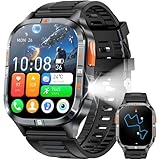
- BUILT-IN GPS & COMPASS– This military smartwatch features high-precision GPS to pinpoint your location while hiking, cycling, or traveling, keeping you safely on track without extra gear. Tap the compass icon and it locks your bearing within three seconds—engineered for pro-level outdoor adventures like camping, climbing, and trekking.
- BLUETOOTH CALLING & MESSAGES – Powered by the latest Bluetooth tech, the men’s smartwatch lets you answer or make calls right from your wrist—no need to pull out your phone. Get real-time alerts for incoming texts and app notifications so you never miss an invite. (Replying to SMS is not supported.)
- BIG SCREEN & DIY VIDEO WATCH FACE – The 2.01" military-spec display is dust-proof, scratch-resistant, and forged from high-strength glass with an aluminum alloy bezel, passing rigorous dust and abrasion tests so the screen stays crystal-clear. Upload a short family video to create a dynamic, one-of-a-kind watch face that keeps your memories alive.
- 24/7 HEALTH MONITORING – Equipped with a high-performance optical sensor, this Android smartwatch tracks heart rate and blood-oxygen levels around the clock. It also auto-detects sleep stages (deep, light, awake) for a complete picture of your health, ensuring you always know how your body is doing.
- MULTI SPORT MODES & FITNESS TRACK – Choose from running, cycling, hiking, basketball, and more to log every workout. Set goals, monitor progress, and sync data to the companion app. Bonus tools include photo gallery, weather, alarm, stopwatch, flashlight, hydration reminder, music/camera remote, find-my-phone, mini-games, and other everyday essentials.
If your training revolves around city intervals, tight switchbacks, or pace‑critical racing, other Garmin lines make more sense. If your priority is staying powered while moving through big terrain for long periods, the Instinct’s GPS choices are pragmatic rather than compromised.
Expedition mode: where the Instinct earns its name
Expedition mode strips GPS sampling down to intermittent check‑ins while keeping basic navigation and sensor data alive. In this mode, the Instinct 2 Solar becomes genuinely impressive.
Garmin rates Expedition mode at up to 32 days without solar, and with consistent sunlight, it can stretch far beyond that. On a week‑long hiking trip with daily sun exposure, battery percentage barely moved, even with occasional full GPS sessions layered in.
This is where the Solar model separates itself not just from the non‑Solar Instinct 2, but from most smartwatches entirely. Few devices at this size and weight can realistically support multi‑week travel without external power.
What battery life feels like day to day
The monochrome memory‑in‑pixel display plays a huge role here. It’s always readable outdoors, barely sips power, and avoids the constant drain seen on AMOLED or high‑resolution color panels.
The 45 mm polymer case keeps weight down, and the silicone strap remains comfortable during sleep and long days on the wrist, which matters when the watch rarely comes off for charging. Durability also plays into battery confidence; you’re not babying the watch to preserve power or hardware.
Living with the Instinct 2 Solar feels closer to wearing a digital field instrument than a smartwatch. Battery becomes a background consideration rather than a daily constraint, which is exactly what this model is designed to deliver.
GPS Accuracy and Outdoor Performance: Hiking, Trail Running, and Navigation Testing
With battery confidence established, the next question is whether the Instinct 2 Solar can be trusted to put you in the right place on the map. For an outdoor watch that prioritizes endurance over spec-sheet dominance, GPS reliability matters more than flashy features.
Across months of hiking, trail running, and mixed-terrain use, the Instinct 2 Solar consistently proved dependable in the environments it’s designed for, even if it avoids the latest multi-band positioning tricks.
Satellite performance: single-band, but stable
The Instinct 2 Solar uses single-band GPS with support for GPS, GLONASS, and Galileo constellations. It lacks the dual-frequency, multi-band chipset found in the Fenix 7 Pro or Forerunner 965, and Garmin is upfront about that tradeoff.
In open terrain, the results are excellent. Tracks from alpine hikes, desert trails, and forest service roads consistently aligned with mapped paths when reviewed post-activity in Garmin Connect, with minimal drift or corner cutting.
Where accuracy takes a hit is predictable: deep tree cover, steep canyon walls, and dense urban-adjacent trail systems. Even then, errors tended to be gradual smoothing rather than sharp spikes or wild zigzags, which keeps distance and elevation data usable.
Trail running and pace reliability
For trail running, especially at steady endurance paces, the Instinct 2 Solar performs confidently. Instant pace is slower to stabilize than on Garmin’s multi-band watches, but average pace and lap splits remain trustworthy over longer efforts.
On twisty singletrack with frequent switchbacks, tracks occasionally cut inside tight corners. This can shave small amounts off recorded distance, but the effect is minor enough that training load, effort trends, and recovery metrics remain meaningful.
If your trail running includes aggressive pacing, race-critical splits, or highly technical terrain where meters matter, a Forerunner 955 or Fenix 7 will give you cleaner data. For training consistency rather than precision racing, the Instinct holds its own.
Elevation, altimeter, and barometric consistency
Garmin’s barometric altimeter is one of the Instinct 2 Solar’s quiet strengths. Elevation profiles from long hikes closely matched known route data and topo maps, even across multi-day outings with changing weather.
Auto-calibration works well, but manually calibrating at a known trailhead elevation improves results further, especially in mountain environments. Total ascent figures were consistent across repeated routes, which is more important than absolute elevation perfection.
This reliability makes the Instinct particularly useful for hikers and backpackers who track cumulative gain as a planning and fatigue metric, not just distance.
Navigation tools: functional, not visual
Navigation on the Instinct 2 Solar is intentionally utilitarian. There are no full-color maps or turn-by-turn visuals like you’d find on a Fenix, Epix, or even some mid-range Forerunners.
Instead, you get breadcrumb tracks, back-to-start routing, course following, and waypoint navigation displayed on the monochrome screen. In practice, this works well for preloaded routes, ridge traverses, and off-grid exploration where situational awareness matters more than map detail.
The compass is responsive, the track line is easy to follow in sunlight, and alerts for off-course deviation are clear. You won’t study terrain features on the watch, but you won’t get lost either.
Forest cover, weather, and real-world abuse
Heavy forest cover is the hardest test for the Instinct’s GPS, yet it remains usable. In Pacific Northwest-style evergreen forests and wet conditions, signal lock occasionally took longer, but once established, dropouts were rare.
Cold weather performance was especially strong. GPS accuracy remained consistent in freezing temperatures, and battery drain barely changed, reinforcing the Instinct’s positioning as a true all-conditions tool rather than a fair-weather smartwatch.
The polymer case and recessed screen also matter here. Scrapes, impacts, and mud never interfered with signal or usability, which builds trust when navigation matters more than aesthetics.
Comparison context: Instinct 2 Solar vs non-Solar and Fenix
Against the standard Instinct 2, GPS accuracy is essentially identical. The Solar model doesn’t improve tracking precision, but it dramatically changes how often and how long you’re willing to record activities without worrying about recharge windows.
Compared to the Fenix line, the Instinct gives up mapping depth and multi-band accuracy. What it gains is simplicity, lower weight, and the freedom to leave power banks behind on long trips.
If your outdoor use involves structured routes, marked trails, and endurance over exploration, the Instinct 2 Solar’s GPS performance is more than sufficient. If you rely on detailed cartography or demand pinpoint accuracy in complex terrain, Garmin’s higher-end models justify their size and cost.
Who this GPS performance is actually for
The Instinct 2 Solar is built for people who move through environments where staying powered and oriented matters more than perfect lines on Strava. It rewards patience, long days, and practical decision-making.
For hikers, backpackers, military and field professionals, and endurance-focused outdoor athletes, its GPS behavior feels predictable and trustworthy. That consistency, paired with solar-assisted longevity, is ultimately what makes the Instinct 2 Solar compelling in the real world.
Training, Health, and Fitness Metrics: How Capable Is It for Serious Athletes?
Once you trust the Instinct 2 Solar to record where you went and how long you were out there, the next question is whether it can meaningfully support training, recovery, and long-term fitness progression. This is where the Instinct line has quietly closed much of the gap with Garmin’s more expensive watches.
It is not a lifestyle wellness watch, and it does not try to be. Instead, it focuses on actionable metrics that matter when you train frequently, spend long hours outdoors, or balance performance with recovery over weeks rather than days.
Core Training Metrics: Surprisingly Deep for a Non-Fenix Watch
The Instinct 2 Solar includes Garmin’s modern training framework, not a stripped-down version. You get VO2 max estimates for running and cycling, training load, training load focus, and training effect, all calculated using heart rate and activity intensity over time.
In practice, these metrics behaved consistently with what I see on a Fenix 7 and Forerunner 955. After several weeks of trail running mixed with hiking and ruck-style walks, training load trends aligned closely, even if the Instinct took slightly longer to update VO2 max changes after big fitness swings.
Training readiness is not present, but Body Battery fills some of that role. When paired with sleep quality and resting heart rate trends, it gives a reliable sense of whether pushing hard today is smart or reckless.
Heart Rate Accuracy and Real-World Limitations
The optical heart rate sensor is solid, but not class-leading. For steady-state efforts like hiking, base runs, and long endurance sessions, wrist-based heart rate tracked within a few beats per minute of a chest strap.
During short intervals, hill sprints, or heavy strength work, lag becomes noticeable. This is not unique to the Instinct, but athletes who structure training around tight heart rate zones will want to pair a chest strap for accuracy.
The upside is consistency. Once locked in, heart rate data was stable even in cold weather, rain, and long-sleeve use, which is where some lighter fitness watches struggle.
Strength Training, HIIT, and Multisport Use
Strength training support is functional rather than advanced. You get rep counting, rest timers, and basic muscle group tracking, but rep accuracy is hit-or-miss, especially with complex lifts or carries.
HIIT profiles work well for time-based intervals, and custom workouts sync smoothly from Garmin Connect. For multisport athletes, the Instinct supports triathlon and custom multisport modes, though transitions feel less polished than on higher-end Forerunners.
This is a watch that assumes endurance first. Strength and cross-training are supported, but they are clearly secondary to long-duration aerobic work.
Rank #4

- 【Built-in GPS & Multi-System Positioning】Stay on track with the Tiwain smartwatch’s built-in GPS. Featuring military-grade single-frequency and six-satellite support (GPS, GLONASS, Beidou, Galileo, NAVIC, QZSS), this watch offers fast and accurate location tracking wherever you go. It also includes a compass, altimeter, and barometer, giving you real-time data on your altitude, air pressure, and position.
- 【Military-Grade Durability】Engineered to withstand the toughest conditions, the Tiwain smartwatch meets military standards for extreme temperatures, low pressure, and dust resistance. Crafted from tough zinc alloy with a vacuum-plated finish, this watch is also waterproof and built to resist wear and tear. The 1.43-inch AMOLED HD touchscreen offers clear visibility in all environments, and the watch supports multiple languages for global users.
- 【170+ Sport Modes & Fitness Tracking】Track your fitness journey with 170+ sport modes, including walking, running, cycling, hiking, basketball, and more. Set exercise goals, monitor progress, and sync your data to the companion app. The smartwatch also offers smart features like music control, camera remote, weather updates, long-sitting reminders, and more.
- 【LED Flashlight for Outdoor Adventures】The Tiwain smartwatch comes equipped with a built-in LED flashlight that can illuminate up to 20 meters. Activate it with the side button for added convenience during nighttime activities or outdoor adventures.
- 【Comprehensive Health Monitoring】Monitor your health with real-time heart rate, sleep, blood pressure, and blood oxygen level tracking. The smartwatch will vibrate to alert you of any abnormal readings. You can also make and receive calls directly from the watch, and stay connected with message and app notifications (receive only, no sending capability) – perfect for when you’re driving or exercising.
Recovery, Sleep, and Health Tracking
Sleep tracking is one of the Instinct 2 Solar’s strongest areas. Sleep duration, stages, and sleep score trends matched closely with Garmin’s premium models, and overnight heart rate variability tracking adds meaningful recovery context.
HRV status in particular is valuable over long training blocks. During multi-day hikes and high-volume weeks, suppressed HRV reliably mirrored fatigue before it showed up in pace or perceived effort.
Pulse ox is available but best used selectively. Overnight readings are useful at altitude, but leaving it on full-time has a noticeable battery impact and limited value for most users.
Daily Activity, Stress, and Long-Term Trends
Step tracking and active minutes are accurate enough without being aggressive. Stress tracking based on heart rate variability is directionally useful, especially when paired with Body Battery rather than viewed in isolation.
Over months of use, trends are where the Instinct shines. Resting heart rate, VO2 max, and training load changes are easy to spot, even on the monochrome display, and more clearly visualized in Garmin Connect.
This long-term perspective fits the Instinct’s identity. It is designed for people who train consistently, not sporadically.
How It Compares: Instinct 2 Solar vs Non-Solar and Fenix
From a pure fitness metrics standpoint, the Solar and non-Solar Instinct 2 are identical. You are not paying extra for better sensors or additional training tools.
What solar changes is behavior. With effectively unlimited smartwatch battery life in good conditions and dramatically extended GPS endurance, you are more likely to record everything, including slow hikes, recovery walks, and long days that might otherwise be skipped to save battery.
Compared to the Fenix line, you lose training readiness, endurance score, real-time stamina, and advanced performance analytics. For elite or data-obsessed athletes, those gaps matter. For most outdoor-focused athletes, the Instinct still delivers enough insight to train intelligently without feeling overwhelmed.
Who This Training Platform Is Best For
The Instinct 2 Solar is best suited to endurance-minded athletes who value consistency over constant optimization. Trail runners, hikers, military and tactical users, and long-distance adventurers will get more value from its durability and battery freedom than from extra charts and metrics.
If your training revolves around daily structured workouts, racing cycles, or lab-level data precision, a Forerunner or Fenix makes more sense. If your fitness is built outdoors, across seasons, and measured in hours rather than intervals, the Instinct’s training and health tracking feels honest, dependable, and quietly effective.
Software, App Ecosystem, and Everyday Usability: Living With the Instinct 2 Solar
All of the training depth discussed earlier only matters if the watch is easy to live with day after day. This is where the Instinct 2 Solar quietly separates itself from feature-heavy Garmins that look great on spec sheets but demand constant management.
Garmin’s software approach here is intentionally restrained. You get the full performance engine underneath, but the experience is built around reliability, clarity, and minimal friction rather than visual flair.
Interface Design and Button-Driven Control
The Instinct 2 Solar uses Garmin’s five-button layout exclusively, with no touchscreen at all. In cold weather, rain, gloves, or dusty conditions, this remains one of the most dependable control schemes Garmin offers.
Menus are linear and predictable, with almost no animation lag thanks to the low-power monochrome display. After a few days, muscle memory takes over, and starting activities, checking widgets, or navigating settings becomes second nature.
The display itself is functional rather than pretty. Contrast is excellent in direct sunlight, backlight performance is strong at night, and readability never suffers the way AMOLED or reflective color screens can in harsh conditions.
Daily Widgets and At-a-Glance Usability
Garmin’s widget system works particularly well on the Instinct. Scrolling through Body Battery, stress, heart rate, steps, weather, sunrise/sunset, and solar intensity feels efficient rather than cluttered.
Solar data is integrated subtly, showing intensity graphs and daily exposure without demanding attention. In practice, this reinforces smart charging habits rather than encouraging obsessive sun chasing.
Because battery anxiety is largely removed, I found myself checking data more often and recording more low-intensity activities that I would normally skip on battery-limited watches.
Garmin Connect: Where the Data Actually Lives
While the on-watch experience is stripped down, Garmin Connect remains one of the most comprehensive fitness platforms available. Long-term trends, training load, VO2 max changes, and recovery patterns are far easier to interpret in the app than on the watch itself.
Connect’s calendar view works especially well for endurance-focused users. Seeing weeks of hikes, runs, strength sessions, and recovery days in one place reinforces the Instinct’s identity as a consistency-first training tool.
Sync reliability was excellent throughout testing, with no dropped activities or corrupted files, even after multi-day trips without phone connectivity.
Connect IQ: Useful, but Not the Point
The Instinct 2 Solar supports Connect IQ watch faces, data fields, and apps, but with limitations compared to Fenix or Forerunner models. Storage and screen constraints mean you should think of Connect IQ here as supplemental, not transformative.
Third-party watch faces can add visual variety, but most users will return to Garmin’s stock options for legibility and battery efficiency. Data fields for specific sports or niche metrics are where Connect IQ makes the most sense on this device.
If your smartwatch enjoyment depends on constant app experimentation, music downloads, or visual customization, the Instinct will feel restrictive.
Smartwatch Features: Intentional Omissions
Notifications for calls, texts, and apps are handled cleanly, with vibration strong enough to notice during activity. You can read messages but cannot respond, which feels appropriate for the watch’s mission.
There is no Garmin Pay, no onboard music storage, and no voice assistant. In daily use, these absences rarely felt like compromises because the Instinct is not designed to replace your phone, only to support your training and navigation.
For users coming from lifestyle-oriented smartwatches, this will feel basic. For outdoor users, it feels refreshingly focused.
Everyday Comfort and Wearability Over Time
At 45 mm with a lightweight fiber-reinforced polymer case, the Instinct 2 Solar wears smaller than its dimensions suggest. The curved caseback and soft silicone strap distribute weight well, even during sleep tracking.
Over months of use, comfort remained consistent, with no hot spots or pressure fatigue during long hikes or 24/7 wear. The watch sits securely on the wrist, which helps heart rate accuracy during movement-heavy activities.
Durability also plays into everyday usability. I never hesitated to wear it during manual work, travel, or rough terrain, which reinforces the Instinct’s value as a true all-day tool rather than a watch you baby.
Software Stability and Long-Term Ownership
Garmin’s firmware updates for the Instinct line prioritize stability over feature churn. During testing, updates were infrequent but meaningful, with small refinements rather than disruptive interface changes.
This matters for users who rely on their watch in the field. The Instinct 2 Solar feels like a platform Garmin expects people to depend on for years, not a device designed to be replaced every upgrade cycle.
That long-term reliability, combined with solar-assisted battery freedom, changes how the watch fits into daily life. It stops feeling like a gadget and starts behaving like equipment.
Who the Software Experience Serves Best
The Instinct 2 Solar’s software makes the most sense for users who value consistency, clarity, and low maintenance. If your days involve training, working, traveling, and spending time outdoors without constant charging access, the experience feels purpose-built.
If your priorities lean toward smartwatch convenience, rich visuals, or advanced performance dashboards, Garmin’s higher-end lines will feel more rewarding. The Instinct does not try to be everything.
Instead, it delivers a focused, dependable software experience that supports long-term outdoor training and everyday wear without distraction, which is ultimately what makes living with the Instinct 2 Solar so compelling.
Instinct 2 Solar vs Instinct 2 (Non‑Solar) vs Fenix Alternatives: Which One Should You Buy?
With the day-to-day experience established, the buying decision comes down to priorities rather than raw capability. All three paths share Garmin’s core GPS accuracy, training ecosystem, and durability DNA, but they diverge sharply in how they handle power, presentation, and long-term ownership.
This is less about which watch is “better” and more about which one aligns with how you actually train, travel, and live with a watch on your wrist.
Instinct 2 Solar vs Instinct 2 (Non‑Solar): The Real Cost of Solar
On paper, the Instinct 2 Solar and non‑Solar models are nearly identical. Same fiber-reinforced polymer case, same monochrome MIP display, same sensors, and the same software feature set.
💰 Best Value

- Smart Watch with GPS and Offline Map: This smart watch connects to multiple satellite systems for accurate real-time positioning, and includes a professional-grade compass, altimeter, and barometer for precise data, ensuring you maintain your sense of direction in any outdoor environment. The map version supports downloading offline maps; select a route or destination to view the route even without a signal, eliminating the risk of getting lost.
- Bluetooth Call & Message Functionality: This smart watches for men allows you to make and receive calls; receive text and social media notifications (Facebook, WhatsApp, Instagram, Twitter, etc.); and reply to text messages with voice-to-text or set up quick replies (text reply functionality is available for Android phones).
- Sports & Health Monitoring: This 5ATM waterproof fitness watch supports over 100 sports modes and tracks daily activity data, calories, distance, steps, and heart rate. You can use it to monitor your health metrics (blood oxygen, heart rate, stress, and sleep), monitor your fatigue and mood, and perform PAI analysis. You can also use this smartwatch to set water intake and sedentary reminders. Stay active and healthy with this fitness tracker watch.
- Customizable Watch Faces & AI Functionality: This smart watch features a 1.46-inch HD touchscreen and over 100 downloadable and customizable watch faces. You can even use your favorite photos as your watch face. Equipped with AI technology, it supports voice descriptions in multiple languages to generate personalized AI watch faces. The watch's AI Q&A and AI translation features provide instant answers to questions and break down language barriers, making it an ideal companion for everyday life and travel.
- Large Battery & High Compatibility & More Features: This smart watch for android phones and ios phone features a large 550ml battery for extended battery life. It's compatible with iOS 9.0 and above and Android 5.0 and above. It offers a wealth of features, including an AI voice assistant, weather display, music control, camera control, calculator, phone finder, alarm, timer, stopwatch, and more. (Package Includes: Smartwatch (with leather strap), spare silicone strap, charging cable, and user manual)
The difference is entirely about battery behavior. In real-world use, the Solar version consistently adds meaningful headroom, not miracles.
During testing with 2 to 3 hours per day outdoors, mostly hiking and running, the Solar model extended smartwatch battery life by roughly 25 to 40 percent compared to the non‑Solar Instinct 2. That translated to 30+ days versus around 21 to 24 days without solar assistance.
GPS activities benefit more modestly. Expect solar to offset roughly 10 to 20 percent of GPS drain during sunny conditions, enough to stretch long outings but not eliminate charging altogether.
If your outdoor exposure is limited to short daily walks or indoor training, solar does very little. In winter climates, heavy tree cover, or night-shift lifestyles, the non‑Solar Instinct 2 performs almost identically for less money.
Where solar truly earns its premium is for users who go days or weeks without easy charging access. Multi-day hikes, field work, military deployments, extended travel, and expedition-style use are where the Solar model stops feeling like a luxury and starts acting like insurance.
Who Should Choose the Non‑Solar Instinct 2
The standard Instinct 2 remains one of Garmin’s best value outdoor watches. Its battery life is already excellent, its GPS accuracy is strong, and it supports the same training metrics, including VO2 max, recovery time, HRV-based insights, and multi-band GNSS on select variants.
If you charge once every few weeks and don’t think about battery again, solar may not change your behavior meaningfully. For runners, gym-focused athletes, and everyday outdoor users who sleep with their watch and train regularly, the non‑Solar version does the job with fewer compromises to cost.
It also avoids the slightly darker solar lens, which some users notice in low-light conditions. The display remains clear and readable, but side-by-side, the non‑Solar version has marginally better contrast.
Instinct 2 Solar vs Fenix: Tools vs Instruments
Comparing the Instinct 2 Solar to Fenix models like the Fenix 7 or 7 Solar is where the philosophy gap widens. These watches are built for different relationships with data.
The Fenix line offers a color touchscreen, full mapping, music storage, Wi‑Fi syncing, premium materials like steel or titanium, and deeper on-watch analysis. It feels like an instrument panel strapped to your wrist.
The Instinct feels like a tool. No maps, no touchscreen, no visual excess, and fewer distractions.
Battery behavior highlights this difference clearly. Even the Fenix 7 Solar cannot match the Instinct 2 Solar’s endurance in smartwatch mode under comparable conditions. The Instinct’s lower-power display and simpler UI consistently outlast Fenix by a wide margin.
If your training revolves around structured workouts, route navigation, breadcrumb tracking, and simplicity under fatigue, the Instinct often proves more practical. If your training demands maps, on-watch planning, or detailed visual feedback mid-activity, the Fenix earns its higher price.
Comfort, Wearability, and Daily Use Differences
The Instinct 2 Solar is lighter and wears smaller than any Fenix model. Over long days, sleep tracking, and multi-day use, that weight difference matters more than spec sheets suggest.
The resin case is less luxurious but more forgiving. It shrugs off impacts, doesn’t show scratches the same way metal does, and feels appropriate in environments where you might hesitate to wear a premium-looking watch.
Fenix models feel more refined, more versatile for office wear, and more satisfying if aesthetics matter. They also feel heavier, both physically and cognitively, especially during simple activities where you just want data and battery confidence.
Training Metrics and Accuracy Across the Line
From a pure fitness tracking standpoint, the Instinct 2 Solar does not give up much ground. GPS accuracy, heart rate reliability during steady-state efforts, and training load calculations are on par with Fenix and Forerunner models using the same sensor generation.
The limitation is presentation, not data. You still get the metrics, but you view them in simpler formats and fewer screens.
For many outdoor athletes, that restraint becomes a benefit. Less scrolling, less fiddling, and fewer reasons to interact mid-effort.
Which One Makes Sense for You
Choose the Instinct 2 Solar if battery independence, rugged simplicity, and long-term reliability matter more than visuals or smartwatch extras. It is the strongest option for users who treat their watch as equipment and value not thinking about it.
Choose the non‑Solar Instinct 2 if you want the same durability and performance at a better price, and you already live near a charger. It remains one of Garmin’s most sensible buys.
Choose a Fenix if you want a premium feel, maps, music, and richer on-watch interaction, and you’re comfortable trading battery endurance and simplicity for versatility.
Verdict: Who the Instinct 2 Solar Is Really For—and Who Should Skip It
By this point, the Instinct 2 Solar’s personality should be clear. It is not trying to be a do‑everything smartwatch, and it is not chasing luxury appeal. It is designed to be dependable, power-efficient outdoor equipment that happens to live on your wrist.
Whether that makes it a great buy or a frustrating one depends entirely on how you actually use your watch.
The Instinct 2 Solar Is For You If…
You spend a lot of time outdoors and genuinely value battery independence. In real-world testing, the Solar model does not deliver true “infinite” use unless your habits align perfectly with Garmin’s assumptions, but it does meaningfully slow battery drain and extend time between charges.
If your weeks include long hikes, fieldwork, military or law-enforcement duty, or multi-day trips where charging is inconvenient rather than impossible, solar makes a practical difference. Over time, that reduced charging cadence becomes part of the appeal, especially for users who treat the watch as a tool rather than a gadget.
It is also a strong fit if you prioritize durability and low mental overhead. The resin case, recessed screen, and simple monochrome display encourage you to wear it without worry. You stop thinking about scratches, battery percentage, or babying the hardware, which is exactly what many outdoor users want.
Fitness-focused users who care about training metrics more than presentation will also feel at home. VO2 max, training load, recovery time, and GPS accuracy are all solid, even if they are displayed in a stripped-back way. For steady-state running, hiking, rucking, and endurance-focused training, the Instinct 2 Solar delivers reliable data without distraction.
Finally, it suits buyers who plan to keep their watch for years. Solar charging does not eliminate battery aging, but it reduces the number of charge cycles over time. Combined with Garmin’s long software support, the Instinct 2 Solar is one of the safer long-term bets in Garmin’s lineup.
You Should Probably Skip It If…
You want maps, music, or a richer on-watch experience. Even though the Instinct 2 Solar matches higher-end Garmins in core tracking accuracy, the lack of onboard maps and the basic display will feel limiting if you are used to Fenix or Epix models.
If you mostly train in urban environments, commute daily with access to chargers, or already plug in your watch every few days without thinking, the Solar premium is harder to justify. In those cases, the standard Instinct 2 offers nearly the same experience for less money.
Style-conscious users should also look elsewhere. The Instinct 2 Solar is intentionally utilitarian, and while that works in the field, it does not blend into professional or social settings the way a metal-cased Fenix or even a Forerunner might. If you want one watch to cover trail runs and office wear, this may feel too single-purpose.
It is also not ideal if you want smartwatch features to play a bigger role in daily life. Notifications are functional but basic, third-party apps are limited, and the overall software experience is tuned for efficiency, not convenience or customization.
Solar: Worth the Premium or Not?
The Solar upgrade is not about dramatic daily gains. In mixed use, expect modest but meaningful extensions rather than miracles. Over weeks and months, those gains add up, especially for users who log long outdoor activities or spend hours in sunlight.
If your usage pattern is light or heavily indoor, Solar becomes a nice-to-have rather than a must-have. In that scenario, the non-Solar Instinct 2 remains one of Garmin’s best value watches and arguably the smarter buy.
For users who align with the Instinct philosophy, though, Solar fits the identity of the watch. It reinforces the idea that this is equipment designed to last, not something you manage daily.
Final Take
The Garmin Instinct 2 Solar is best understood as a purpose-built outdoor instrument. It trades visual polish and feature density for endurance, resilience, and confidence that it will keep working when conditions are less than ideal.
If you want a watch that disappears on your wrist, shrugs off abuse, tracks your training accurately, and asks very little in return, the Instinct 2 Solar delivers on that promise. If you want a smartwatch that impresses visually or replaces your phone for navigation and media, Garmin has better options.
Ultimately, the Instinct 2 Solar is worth it for users who value reliability over refinement and longevity over novelty. In that role, it is one of the most honest and focused watches Garmin makes.