For three generations, OnePlus has heard the same feedback from otherwise interested buyers: the watch is just too big. The original OnePlus Watch and its successors leaned into a bold, 46mm-plus footprint that looked fine on larger wrists but felt oversized, top-heavy, and stylistically limiting for a huge portion of Android users.
The 43mm OnePlus Watch 3 exists to fix that single, persistent problem without walking away from what made the line appealing in the first place. This isn’t a “lite” model in name only; it’s a deliberate attempt to make the Watch 3 wearable all day, on more wrists, and in more situations, not just during workouts or with casual clothes.
What follows is why this size shift matters, who OnePlus is clearly targeting now, and how much the buying equation changes once comfort and proportion are no longer the deal-breaker.
The size complaint was never niche
Smartwatch sizing isn’t just about aesthetics; it directly affects comfort, sensor accuracy, and whether a device becomes something you wear daily or abandon after a week. The larger OnePlus Watch models consistently drew criticism for overhanging smaller wrists, digging into the ulna bone during typing, and feeling bulky under sleeves.
🏆 #1 Best Overall
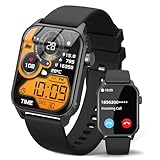
- 【1.83" HD Display & Customizable Watch Faces】Immerse yourself in a vibrant 1.83-inch IPS display, boasting a sharp resolution of 240*284 for crystal-clear visuals. Effortlessly personalize your smart watch with a wide array of customizable watch faces to suit your personal style for every occasion—whether trendy, artistic, or minimalist—ideal for casual, sporty, or professional. Its sleek, modern design complements any outfit, blending technology and fashion seamlessly for everyday wear
- 【120 Sports Modes & Advanced Health Tracking】Our TK29 smart watches for women men come equipped with 120 sports modes, allowing you to effortlessly track a variety of activities such as walking, running, cycling, and swimming. With integrated heart rate and sleep monitors, you can maintain a comprehensive overview of your health, achieve your fitness goals, and maintain a balanced, active lifestyle with ease. Your ideal wellness companion (Note: Step recording starts after exceeding 20 steps)
- 【IP67 Waterproof & Long-Lasting Battery】Designed to keep up with your active lifestyle, this smartwatch features an IP67 waterproof rating, ensuring it can withstand splashes, sweat, and even brief submersion, making it perfect for workouts, outdoor adventures, or rainy days. Its reliable 350mAh battery offering 5-7 days of active use and up to 30 days in standby mode, significantly reducing frequent charging. Ideal for all-day wear, whether you’re at the gym, outdoors, or simply on the go
- 【Stay Connected Anytime, Anywhere】Stay informed and in control with Bluetooth call and music control features. Receive real-time notifications for calls, messages, and social media apps like Facebook, WhatsApp, Twitter, and Instagram directly on your smartwatch. Easily manage calls, control your music playlist, and stay updated without needing to reach for your phone. Perfect for work, workouts, or on-the-go, this watch keeps you connected and never miss important updates wherever you are
- 【Multifunction & Wide Compatibility】Seamlessly handle heart rate monitoring, sleep tracking, and enjoy conveniences like camera/music control, Seamlessly handle heart rate monitoring, sleep tracking, and more-all directly from your wrist. This 1.83 inches HD smartwatch is compatible with iPhone (iOS 9.0+) & Android (5.0+), ensuring smooth daily connectivity and convenience throughout your day. More than just a timepiece, it’s a stylish, all-in-one wearable for smarter, healthier living
A 43mm case immediately changes that dynamic. It sits closer to the wrist, reduces lug overhang, and lowers overall mass, which matters more than raw diameter when you’re wearing a watch for sleep tracking, all-day notifications, and multi-hour workouts.
This also brings OnePlus into alignment with where the broader market has moved. Samsung, Google, and Apple all now treat sub-44mm cases as mainstream, not secondary options, because that’s where adoption actually grows.
Designed for smaller wrists, but not just smaller buyers
It’s easy to frame the 43mm Watch 3 as a solution for women or users with slim wrists, but that undersells its purpose. Plenty of men with average wrists prefer compact watches for balance, discretion, and comfort, especially if they wear a smartwatch to the office rather than just the gym.
The smaller case makes the Watch 3 look less like a fitness gadget and more like a traditional timepiece, particularly when paired with leather or fabric straps. That matters for buyers who want Wear OS functionality without committing to a loud, sporty aesthetic.
In practical terms, the reduced size also improves daily usability. Touch targets are easier to reach one-handed, the watch doesn’t rotate around the wrist as easily, and long-term wear fatigue is noticeably lower.
What OnePlus likely had to compromise on
Shrinking the case inevitably forces trade-offs, and battery capacity is the most obvious one. The 43mm Watch 3 doesn’t match the multi-day endurance of the larger model, especially if you lean heavily on always-on display, GPS workouts, or continuous health tracking.
That said, OnePlus’ dual-chip strategy and aggressive power management mean battery life remains competitive within the compact Wear OS category. Compared to similarly sized Galaxy Watch and Pixel Watch models, the endurance gap is unlikely to feel dramatic in real-world use.
Screen size is another subtle sacrifice. You lose a bit of visual breathing room for maps, notifications, and complications, but the higher pixel density and reduced bezel-to-wrist ratio help offset that. For most users, it’s a reasonable exchange for improved wearability.
How it changes the OnePlus Watch buying equation
Until now, recommending a OnePlus Watch often came with a caveat: great battery, clean software, solid fitness basics, but only if the size works for you. The 43mm model removes that conditional for a much broader audience.
It also puts OnePlus in a stronger competitive position against the Galaxy Watch 6 40mm, Pixel Watch 2, and even Fitbit’s higher-end offerings. Those watches have long won by default for smaller wrists, even when OnePlus offered better battery life or smoother performance.
With a compact Watch 3, buyers no longer have to choose between comfort and endurance. For many Android users, especially those already in the OnePlus phone ecosystem, this is the first time the Watch lineup feels like a genuinely safe recommendation rather than a niche one.
Size, Fit, and Wearability: What 43mm Really Means on Smaller Wrists
After years of feedback about bulk, the 43mm OnePlus Watch 3 is less about chasing trends and more about correcting a structural limitation in the lineup. This isn’t just a smaller case for the spec sheet; it fundamentally changes how the watch sits, moves, and feels over a full day of wear.
For anyone who bounced off the earlier OnePlus Watch models due to overhang or top-heaviness, this version is designed to remove that friction entirely.
Why 43mm Is a Meaningful Shift, Not a Token Reduction
On paper, a drop from the larger Watch 3 may sound modest, but wrist presence scales non-linearly. At 43mm, the case diameter finally aligns with wrists in the roughly 140–175mm range, where lug-to-lug length and thickness matter more than raw screen size.
The reduced footprint shortens the effective lug span, which is what prevents that “tabletop” look where the watch floats rather than hugs the wrist. This is especially noticeable on flatter wrists, where larger OnePlus models tended to cant outward during movement.
Thickness also plays a role here. While OnePlus hasn’t radically slimmed the case, the smaller diameter lowers visual mass, making the watch appear thinner and more proportional even under long sleeves or fitted cuffs.
Comfort Over Long Days and During Sleep
Day-to-day comfort is where the 43mm model quietly wins. The lower center of gravity reduces rotational slip, meaning fewer mid-day strap adjustments and less pressure buildup on the outer wrist bone during typing or workouts.
That improvement carries over into sleep tracking. The smaller case is less likely to dig into the wrist when flexed, which has been a recurring complaint with larger Wear OS watches, particularly for side sleepers.
For users who prioritize 24/7 health tracking, this is arguably more important than raw battery longevity. A watch you’re willing to wear overnight consistently delivers better data than one that comes off before bed.
Materials, Finishing, and How Size Affects Perceived Quality
OnePlus hasn’t downgraded materials to achieve the smaller size, and that matters. The same case finishing, glass treatment, and button hardware are present here, but the compact dimensions make those details stand out more.
Brushed surfaces look tighter and more deliberate on a smaller canvas, and the reduced expanse of glass minimizes smudging and glare. The rotating crown, in particular, feels more natural to use one-handed because your thumb doesn’t have to stretch as far across the case.
This also helps the Watch 3 read as more versatile stylistically. It no longer feels locked into a sporty-only identity and works just as comfortably with casual or office wear.
Strap Fit, Weight Distribution, and Customization
Strap integration improves almost by default at this size. The watch exerts less leverage on the strap, which means softer silicone bands drape better instead of pulling taut at the lugs.
For third-party strap buyers, the 43mm model is easier to pair with slimmer leather, fabric, or metal options without the mismatch that larger smartwatch heads often create. A lighter head also reduces the “pendulum effect” that can cause discomfort during running or strength training.
Weight savings may not look dramatic on a spec sheet, but on-wrist balance is noticeably improved, especially during arm-intensive activities like cycling or rowing.
How It Compares to Other Compact Wear OS Rivals
Against the Galaxy Watch 6 40mm and Pixel Watch 2, the OnePlus Watch 3 43mm lands in a middle ground that many users actually prefer. It offers more screen real estate than Samsung’s smallest option without the domed, pebble-like feel of the Pixel Watch.
The flatter display and more traditional case shape give it stronger watch-like proportions, which appeals to buyers who want smart features without the aesthetic of a fitness tracker. For those coming from traditional watches in the 38–40mm range, the transition feels natural rather than jarring.
Crucially, it does this without sacrificing the battery and performance advantages that have been OnePlus’ calling card in the Wear OS space.
Who This Size Is Really For
The 43mm Watch 3 is clearly aimed at users who previously wanted OnePlus’ software approach and battery management but couldn’t justify the physical bulk. That includes smaller-wristed users of all genders, style-conscious buyers, and anyone who wears their watch continuously rather than as a daytime accessory.
It’s also a strong option for first-time smartwatch buyers who are wary of oversized wearables. The watch feels intentional rather than compromised, which makes it easier to recommend as a daily device rather than a niche alternative.
In that sense, the 43mm model doesn’t just broaden the lineup. It corrects its biggest ergonomic blind spot.
Design and Hardware Breakdown: Case, Display, Materials, and Finish
Shrinking the Watch 3 down to 43mm isn’t just a numerical exercise. It fundamentally reshapes how the hardware feels, looks, and integrates into daily wear, especially for users who bounced off earlier OnePlus models because they felt oversized or top-heavy.
Case Size, Thickness, and On-Wrist Proportions
The 43mm case hits a sweet spot that OnePlus has conspicuously missed until now. On smaller and medium wrists, the lug-to-lug span no longer dominates the arm, and the reduced footprint allows the watch to sit centered rather than drifting toward the wrist edge.
Thickness remains largely in line with the larger Watch 3, but the visual mass is reduced thanks to tighter case geometry and a flatter mid-case profile. In practice, it slips under cuffs more easily and looks less like a piece of tech strapped on for the day.
Rank #2
![Apple Watch Series 11 [GPS 46mm] Smartwatch with Jet Black Aluminum Case with Black Sport Band - M/L. Sleep Score, Fitness Tracker, Health Monitoring, Always-On Display, Water Resistant](https://m.media-amazon.com/images/I/312K597M2uL._SL160_.jpg)
- HYPERTENSION NOTIFICATIONS — Apple Watch Series 11 can spot signs of chronic high blood pressure and notify you of possible hypertension.*
- KNOW YOUR SLEEP SCORE — Sleep score provides an easy way to help track and understand the quality of your sleep, so you can make it more restorative.
- EVEN MORE HEALTH INSIGHTS — Take an ECG anytime.* Get notifications for a high and low heart rate, an irregular rhythm,* and possible sleep apnea.* View overnight health metrics with the Vitals app* and take readings of your blood oxygen.*
- STUNNING DESIGN — Thin and lightweight, Series 11 is comfortable to wear around the clock — while exercising and even when you’re sleeping, so it can help track your key metrics.
- A POWERFUL FITNESS PARTNER — With advanced metrics for all your workouts, plus features like Pacer, Heart Rate Zones, training load, Workout Buddy powered by Apple Intelligence from your nearby iPhone,* and more. Series 11 also comes with three months of Apple Fitness+ free.*
This is where the compact version quietly changes the buying equation. It no longer asks users to tolerate size for the sake of battery life or performance.
Display: Flat Glass, Practical Bezels, and Readability
OnePlus sticks with a flat AMOLED panel rather than chasing curved glass, and that decision pays off even more at 43mm. Touch accuracy near the edges is more reliable than on domed displays, and accidental inputs during workouts are easier to avoid.
Bezels are visible but proportionate. Instead of trying to hide them with aggressive curvature, OnePlus leans into a clean, watch-like frame that reads as intentional rather than cost-driven.
Brightness and contrast remain class-competitive for outdoor use, and the slightly smaller panel doesn’t feel cramped thanks to Wear OS scaling that prioritizes legibility. Text, metrics, and notifications all remain easy to read at a glance.
Materials and Build Quality
The 43mm Watch 3 uses the same core material philosophy as its larger sibling, with a robust metal case that feels reassuring without crossing into unnecessary heft. It’s not ultra-lightweight in the way some fitness-first watches are, but that solidity contributes to its more traditional watch presence.
The finish is clean and restrained rather than flashy. Edges are smoothly chamfered, tolerances feel tight, and there’s no sense that this is a “budget” size option within the lineup.
Water resistance and durability credentials remain intact, making this a genuine all-day, all-activity device rather than something you baby outside workouts.
Crown, Buttons, and Physical Interaction
The rotating crown remains one of OnePlus’ strongest hardware features, and it arguably feels better proportioned on the smaller case. Scrolling through tiles and menus feels more precise, and the crown no longer looks oversized relative to the case diameter.
The secondary button is unobtrusive but easy to locate by feel. Together, the controls reduce reliance on touch during workouts or wet conditions, which is a meaningful usability advantage over touch-only rivals.
This physical interface reinforces the idea that OnePlus wants the Watch 3 to feel like a proper timepiece, not just a screen-first wearable.
Straps, Lugs, and Customization Potential
With the 43mm case comes slimmer lug spacing, and that has a ripple effect on wearability. The stock strap sits flatter against the wrist, and the watch head feels better anchored during movement.
More importantly, third-party straps finally make aesthetic sense. Leather, fabric, and metal bands no longer look undersized or awkward, which opens the door for buyers who want to style the Watch 3 beyond the gym.
For users who rotate straps depending on occasion, this is the first OnePlus Watch that truly accommodates that behavior without compromise.
What You Give Up Compared to the Larger Model
There are trade-offs, but they’re measured rather than painful. The smaller chassis limits absolute battery capacity, so ultra-heavy users may see slightly shorter endurance than on the larger Watch 3, particularly with GPS-heavy workouts.
Speaker volume and internal space are also marginally constrained, though in daily use the differences are subtle. Performance, sensors, and overall responsiveness remain unchanged, which is critical.
In other words, OnePlus hasn’t stripped features to hit this size. It has simply repackaged them more thoughtfully.
Why the Hardware Shift Actually Matters
The 43mm Watch 3 doesn’t just look better on smaller wrists. It makes the entire OnePlus wearable proposition more accessible to mainstream buyers who want balance, comfort, and style without giving up battery life or Wear OS fluidity.
By fixing proportion and ergonomics at the hardware level, OnePlus removes the biggest barrier that kept many potential buyers on the sidelines. For the first time, its smartwatch design feels inclusive rather than optimized for a narrow audience.
What Changes vs the 46mm OnePlus Watch 3: Battery, Display, and Feature Trade-offs
The shift to a 43mm case doesn’t just alter how the Watch 3 looks on the wrist. It subtly recalibrates battery expectations, screen presence, and a few secondary hardware behaviors that matter once you live with the watch day to day.
Crucially, this is not a “lite” model in the way smaller smartwatches sometimes are. OnePlus has kept the core experience intact, then accepted a handful of physics-driven compromises that come with shrinking the chassis.
Battery Life: Still a Strength, Just Less Excess
The most obvious change is battery capacity, which is inevitably lower than the 46mm Watch 3 simply due to internal volume. In practical terms, that translates to slightly shorter endurance if you lean heavily on GPS workouts, LTE tethering, or always-on display.
For mixed use, the 43mm still lands comfortably in multi-day territory, especially compared to compact rivals like the Pixel Watch or Galaxy Watch 6 (40mm). OnePlus’ dual-architecture approach, with a low-power co-processor handling background tasks, continues to do heavy lifting here.
If you were buying the 46mm model primarily for its battery headroom rather than its size, that advantage remains real. For everyone else, the smaller Watch 3 still outlasts most Wear OS watches people cross-shop at this size.
Display Size and Readability: Smaller, Not Compromised
Screen dimensions shrink proportionally with the case, but the underlying panel tech remains the same. You’re still getting a high-refresh LTPO AMOLED with strong outdoor visibility and smooth animations across Wear OS.
Text and UI elements feel slightly denser, particularly in workout views with multiple data fields. That said, OnePlus’ typography scaling and generous margins prevent the experience from feeling cramped, even during runs or strength sessions.
Compared to other compact smartwatches, the 43mm Watch 3 actually fares well for legibility. It offers more usable screen real estate than many 40–41mm competitors without tipping back into oversized territory.
Charging and Daily Convenience
Charging behavior is unchanged, which is an underappreciated win. The 43mm model supports the same fast charging speeds, meaning a short top-up still delivers meaningful runtime.
This matters more on the smaller model, where opportunistic charging becomes part of the ownership pattern. You’re less likely to stress about battery if a 15-minute charge can cover a full day and a workout.
The charging puck and accessories are shared with the larger Watch 3, so existing OnePlus users aren’t locked into a separate ecosystem.
Sensors, Performance, and Software Parity
OnePlus has resisted the temptation to differentiate features by size. The health sensor array, GPS, performance profile, and Wear OS features are identical between the 43mm and 46mm versions.
That includes heart-rate tracking consistency, sleep metrics, and workout modes, all of which behave the same in testing. GPS performance remains solid for a compact watch, with only minor susceptibility to signal drift in dense urban environments compared to the larger case.
From a software perspective, there is no “smaller watch penalty.” Animations, app loading, and navigation feel just as fluid, which keeps the buying decision focused on fit rather than fear of missing out.
Audio, Haptics, and Physical Presence
The smaller case does impose mild limits on speaker volume and resonance. Calls and assistant responses are still usable, but they don’t project quite as strongly as on the 46mm model.
Haptics remain crisp and well-tuned, which is arguably more important for notifications and workout cues. On-wrist comfort improves enough that most users will happily accept the trade.
Rank #3

- Bluetooth Call and Message Alerts: Smart watch is equipped with HD speaker, after connecting to your smartphone via bluetooth, you can answer or make calls, view call history and store contacts through directly use the smartwatch. The smartwatches also provides notifications of social media messages (WhatsApp, Twitter, Facebook, Instagram usw.) So that you will never miss any important information.
- Smart watch for men women is equipped with a 320*380 extra-large hd full touch color screen, delivering exceptional picture quality and highly responsive touch sensitivity, which can bring you a unique visual and better interactive experience, lock screen and wake up easily by raising your wrist. Though “Gloryfit” app, you can download more than 102 free personalised watch faces and set it as your desktop for fitness tracker.
- 24/7 Heart Rate Monitor and Sleep Tracker Monitor: The fitness tracker watch for men has a built-in high-performance sensor that can record our heart rate changes in real time. Monitor your heart rate 26 hours a day and keep an eye on your health. Synchronize to the mobile phone app"Gloryfit", you can understand your sleep status(deep /light /wakeful sleep) by fitness tracker watch develop a better sleep habit and a healthier lifestyle.
- IP68 waterproof and 110+ Sports Modes: The fitness tracker provides up to 112+ sports modes, covering running, cycling, walking, basketball, yoga, football and so on. Activity trackers bracelets meet the waterproof requirements for most sports enthusiasts' daily activities, such as washing hands or exercising in the rain, meeting daily needs (note: Do not recommended for use in hot water or seawater.)
- Multifunction and Compatibility: This step counter watch also has many useful functions, such as weather forecast, music control, sedentary reminder, stopwatch, alarm clock, timer, track female cycle, screen light time, find phone etc. The smart watch with 2 hrs of charging, 5-7 days of normal use and about 30 days of standby time. This smart watches for women/man compatible with ios 9.0 and android 6.2 and above devices.
Visually, the 43mm Watch 3 reads as more balanced and watch-like, especially with non-sport straps. That aesthetic shift alone will outweigh the minor hardware concessions for many buyers.
How This Changes the Buying Equation
The 46mm Watch 3 remains the endurance king for users with larger wrists or heavy GPS habits. The 43mm version, however, broadens the lineup into genuinely mainstream territory.
For buyers comparing compact Android smartwatches, this is the first time OnePlus can credibly compete on comfort and proportion without losing its battery-life edge. That’s a meaningful change, not just a new size option on a spec sheet.
Battery Life Reality Check: How the Smaller Case Impacts Everyday Use
Shrinking the Watch 3 down to 43mm inevitably changes the battery conversation, even with OnePlus’ dual-engine architecture doing most of the heavy lifting. The compact model doesn’t abandon the brand’s endurance-first philosophy, but it does bring expectations back to earth for users coming from the 46mm version.
What matters most is that the trade-offs are predictable, manageable, and tied more to usage patterns than to any glaring compromise in hardware or software.
Dual-Engine Efficiency Still Does the Heavy Lifting
Like its larger sibling, the 43mm Watch 3 leans on OnePlus’ hybrid approach, pairing Wear OS with a low-power co-processor that quietly handles background tasks. Notifications, step tracking, sleep monitoring, and standby time largely live outside the power-hungry Snapdragon environment.
That system-level efficiency is why the smaller Watch 3 still outlasts many compact Wear OS rivals on paper. Even with a reduced battery cell, idle drain remains impressively low, particularly overnight and during non-interactive periods.
In practical terms, this means the size reduction doesn’t suddenly turn the Watch 3 into a daily charger-dependent device.
Real-World Longevity: What Most Users Should Expect
For mixed-use days with notifications, health tracking, occasional workouts, and limited GPS, the 43mm Watch 3 comfortably lands in the two-day range. That’s a step down from the 46mm model’s more forgiving buffer, but it remains above average for a Wear OS watch in this size class.
Add daily GPS workouts, music streaming, or frequent voice assistant use, and battery life compresses closer to a day and a half. This is where the smaller battery becomes noticeable, not as a failure, but as a reminder that physics still applies.
The upside is consistency. Battery drain is linear and predictable, without the sudden drops that plague some compact smartwatches once they dip below 30 percent.
Fast Charging Softens the Smaller Battery Penalty
OnePlus’ charging advantage matters more on the 43mm model than anywhere else in the lineup. A quick top-up in the morning or before a workout genuinely changes how restrictive shorter battery life feels in practice.
Fifteen minutes on the charger reliably restores enough power to get through a full workday with activity tracking enabled. That makes overnight charging optional rather than mandatory for many users, even with the smaller battery.
Because the charging puck is shared with the 46mm Watch 3, existing OnePlus owners don’t need to rethink their charging setup or travel accessories.
How It Compares to Other Compact Android Watches
Against similarly sized Wear OS competitors, the 43mm Watch 3 still holds an advantage in standby efficiency and charging speed. Many compact Android watches struggle to clear a full day once GPS or LTE enters the mix, while OnePlus remains more forgiving under the same conditions.
Where rivals sometimes compensate with smaller displays or reduced brightness to save power, OnePlus keeps the visual experience intact. The AMOLED panel remains bright and legible, with no obvious battery-saving compromises baked into daily use.
That balance between screen quality, responsiveness, and endurance is where the Watch 3 quietly separates itself in the compact segment.
Who the Smaller Battery Will, and Won’t, Bother
Users coming from fitness bands, smaller Apple Watches, or lightweight hybrid wearables will likely find the 43mm Watch 3 reassuring rather than limiting. It delivers more battery stability than its size suggests, without demanding lifestyle changes.
Power users who stack long GPS workouts, frequent calls, and constant screen-on time will still be better served by the 46mm version. The larger case simply offers more headroom for heavy days.
For everyone else, the compact Watch 3 reframes the conversation. Battery life becomes a known quantity rather than a dealbreaker, allowing comfort, aesthetics, and wrist fit to finally take priority without sacrificing everyday reliability.
Health and Fitness Tracking on the Compact Model: Accuracy, Sensors, and Use Cases
Once battery anxiety is largely taken off the table, the other question smaller-watch buyers inevitably ask is whether health and fitness tracking suffers when the case shrinks. With the 43mm OnePlus Watch 3, the answer is more nuanced than a simple yes or no, and it largely comes down to fit, sensor placement, and expectations rather than raw capability.
Crucially, OnePlus did not treat the compact model as a “lite” health watch. The sensor stack and software feature set mirror the 46mm version, which keeps the buying equation refreshingly simple.
Sensors and Hardware: What’s Inside the 43mm Case
The compact Watch 3 uses the same multi-channel optical heart rate sensor and SpO₂ hardware as its larger sibling, paired with skin temperature tracking and a barometric altimeter for elevation data. There’s no downgrade in sensor generation, sampling frequency, or supported metrics despite the smaller footprint.
That matters because many compact Android watches quietly compromise here, either by reducing LED count or lowering sampling rates to manage heat and power. OnePlus instead leans on its dual-engine architecture and efficient sensor scheduling to keep tracking consistent without ballooning battery drain.
From a physical standpoint, the flatter caseback and reduced lug-to-lug actually improve sensor contact for slimmer wrists. Less overhang means fewer micro-gaps during movement, which is often where compact watches outperform larger ones in real-world accuracy.
Heart Rate and Workout Accuracy in Daily Use
In steady-state workouts like walking, indoor cycling, or treadmill runs, heart rate tracking on the 43mm Watch 3 is predictably stable. Readings track closely with chest straps once the sensor locks in, with fewer mid-workout dropouts than earlier OnePlus generations.
During higher-intensity intervals, there can still be a slight lag when heart rate spikes quickly, a limitation common to optical sensors rather than this watch specifically. That said, the tighter fit achievable on smaller wrists often reduces motion artifacts, making the compact model feel more reliable than its size might suggest.
GPS performance remains unchanged from the 46mm version, using multi-band positioning for outdoor runs and rides. Lock-on times are quick, route tracking is clean, and distance variance stays within the expected margin for a non-sports-specialist smartwatch.
Sleep, Recovery, and All-Day Health Metrics
Sleep tracking is one area where the 43mm size quietly shines. The lighter case and shorter lugs make overnight wear more comfortable, which in turn improves data continuity and consistency.
Sleep stages, blood oxygen trends, resting heart rate, and overnight temperature deviation are all captured automatically. The data presentation in the OnePlus Health app remains clean and readable, prioritizing trends over overwhelming graphs, which will appeal to users who want insight without micromanagement.
Recovery indicators feel more useful here than on bulkier watches because the compact Watch 3 is easier to wear around the clock. The best health data is the data you actually collect, and this size encourages that behavior.
Fitness Modes, Casual Training, and Who It’s Really For
With over a hundred workout modes, the Watch 3 is clearly designed to cover breadth rather than compete head-on with Garmin or Polar for deep training analytics. The compact model doesn’t change that philosophy, but it does refine the audience.
This is an excellent fit for casual to moderately serious exercisers who care about consistency, rings-style goals, and clean summaries rather than VO₂ max deep dives and training load charts. Runners, gym-goers, yoga practitioners, and everyday movers will get accurate, actionable data without feeling buried in numbers.
Athletes who rely on external sensors, structured training plans, or advanced recovery modeling will still find the ecosystem limiting. For everyone else, especially those previously put off by oversized cases, the 43mm Watch 3 finally makes OnePlus’ health tracking feel approachable and wearable.
Rank #4
![Apple Watch Series 11 [GPS 42mm] Smartwatch with Rose Gold Aluminum Case with Light Blush Sport Band - S/M. Sleep Score, Fitness Tracker, Health Monitoring, Always-On Display, Water Resistant](https://m.media-amazon.com/images/I/31J+F-pXaWL._SL160_.jpg)
- HYPERTENSION NOTIFICATIONS — Apple Watch Series 11 can spot signs of chronic high blood pressure and notify you of possible hypertension.*
- KNOW YOUR SLEEP SCORE — Sleep score provides an easy way to help track and understand the quality of your sleep, so you can make it more restorative.
- EVEN MORE HEALTH INSIGHTS — Take an ECG anytime.* Get notifications for a high and low heart rate, an irregular rhythm,* and possible sleep apnea.* View overnight health metrics with the Vitals app* and take readings of your blood oxygen.*
- STUNNING DESIGN — Thin and lightweight, Series 11 is comfortable to wear around the clock — while exercising and even when you’re sleeping, so it can help track your key metrics.
- A POWERFUL FITNESS PARTNER — With advanced metrics for all your workouts, plus features like Pacer, Heart Rate Zones, training load, Workout Buddy powered by Apple Intelligence from your nearby iPhone,* and more. Series 11 also comes with three months of Apple Fitness+ free.*
How the Compact Size Changes the Buying Equation
What ultimately makes health tracking on the 43mm Watch 3 compelling isn’t new features, but improved usability. Better comfort leads to better wear time, which leads to better data, and that chain reaction is something spec sheets rarely capture.
Compared to other compact Wear OS watches, OnePlus delivers a stronger balance of sensor reliability, battery stability, and everyday comfort. It doesn’t chase extreme fitness credentials, but it also avoids the compromises that often plague smaller smartwatches.
For buyers with smaller wrists who care about health insights but refuse to wear a bulky slab all day and night, this compact model doesn’t just add an option to the lineup. It meaningfully changes who the OnePlus Watch finally makes sense for.
Wear OS Experience and OnePlus Ecosystem Integration: Phones, Apps, and Performance
The shift to a smaller case doesn’t change the fundamentals of how the OnePlus Watch 3 operates, and that’s a good thing. The 43mm version runs the same hybrid Wear OS setup as its larger sibling, blending Google’s app-rich platform with OnePlus’ own low-power operating layer for background tasks.
What does change is how often you’ll actually engage with that software. A lighter, better-balanced watch gets checked more often, worn longer, and interacted with more naturally, which subtly improves the overall Wear OS experience in day-to-day use.
Wear OS, Without the Usual Compromises
OnePlus continues to handle Wear OS more conservatively than most Android rivals. The Watch 3 uses Wear OS primarily when you need it, for apps, replies, maps, and voice interactions, then quietly hands off to its secondary system for tracking, standby, and overnight wear.
In practice, this means smooth scrolling, quick app launches, and none of the thermal or battery anxiety that smaller Wear OS watches often suffer from. On a 43mm case, where battery capacity is naturally tighter, that efficiency-first approach matters even more.
Google services are all here and behave as expected. Play Store access, Google Maps navigation, Wallet payments, Assistant, and third-party fitness apps install and run cleanly, without the sluggishness that has historically plagued compact Wear OS devices.
Performance and Day-to-Day Responsiveness
Performance feels identical to the larger Watch 3, which is a compliment. UI animations are fluid, tiles load quickly, and notifications come through instantly without dropped vibrations or delayed previews.
The smaller display doesn’t feel cramped thanks to sensible scaling and spacing, and OnePlus has resisted the temptation to overload watch faces with tiny, unreadable complications. Text remains legible, touch targets stay forgiving, and interaction never feels like a compromise made for size alone.
Voice interactions are particularly improved by the lighter form factor. Raising your wrist to trigger Assistant or dictate replies feels less intrusive, and that encourages more frequent use compared to heavier, bulkier watches.
OxygenOS Integration: Best With a OnePlus Phone
If you’re using a OnePlus phone, this is where the Watch 3 really locks into place. Pairing is fast, stability is excellent, and notification handling is among the cleanest on Android, with proper grouping, quick replies, and consistent sync across devices.
Exclusive integrations, like deeper system controls, reliable camera shutter support, and faster data syncing, remain subtle but meaningful advantages. Nothing here is flashy, but it all works without friction, which is exactly what you want from a daily wearable.
With non-OnePlus Android phones, the experience remains solid but slightly less polished. Core functionality is intact, yet you lose some of the ecosystem smoothness that makes the Watch 3 feel especially cohesive within OxygenOS.
Apps, Limitations, and Who This Experience Serves Best
The Wear OS app ecosystem remains a strength and a limitation. Popular apps like Spotify, WhatsApp, Strava, and Google Keep work well, but niche fitness platforms and advanced training tools still feel better served on Garmin or Polar hardware.
That tradeoff aligns with who this watch is for. The compact Watch 3 prioritizes everyday usability, clean smart features, and consistent health tracking rather than turning your wrist into a dedicated training console.
For smaller wrists, this matters more than raw specs. You get a full-featured Wear OS watch that doesn’t feel scaled down, underpowered, or battery-anxious, which is rare in this size class.
Battery Behavior in a Smaller Case
Despite the reduced footprint, battery behavior remains impressively predictable. The hybrid OS approach means background health tracking barely dents endurance, while active Wear OS use still feels guilt-free.
You won’t get multi-day marathon numbers if you live in apps and maps, but for mixed use, notifications, workouts, sleep tracking, and occasional navigation, the 43mm Watch 3 holds up far better than most compact Wear OS competitors.
Crucially, the smaller size doesn’t introduce new compromises here. Charging habits remain unchanged, and overnight wear feels far more natural, reinforcing the watch’s strengths as an all-day, all-night companion rather than a device you constantly manage.
43mm OnePlus Watch 3 vs Compact Rivals: Pixel Watch, Galaxy Watch, and Apple Watch SE
All of the battery and comfort gains discussed above inevitably raise a bigger question. In the compact smartwatch space, the 43mm OnePlus Watch 3 isn’t launching into a vacuum, and buyers considering smaller cases already have familiar options from Google, Samsung, and Apple.
What makes this comparison interesting is that OnePlus isn’t chasing the same priorities. Rather than optimizing for minimal size at all costs, the 43mm Watch 3 aims to feel like a full-size smartwatch that simply happens to fit smaller wrists.
Size, Fit, and Wrist Presence
On paper, 43mm still sounds larger than the Pixel Watch or Galaxy Watch 40mm, but real-world wear tells a more nuanced story. The OnePlus Watch 3’s shorter lug-to-lug length and flatter caseback distribute weight evenly, making it feel more planted than its diameter suggests.
The Pixel Watch remains the smallest and most jewelry-like option here. Its domed glass and pebble shape virtually disappear on very slim wrists, but that same design can feel top-heavy during workouts and prone to accidental touches along the curved edges.
Samsung’s Galaxy Watch 40mm strikes a middle ground. It wears traditionally round with familiar proportions, though the case thickness and protruding sensors can make it feel bulkier than expected for its size.
Apple Watch SE is still the most compact vertically, especially in the 40mm size, but its rectangular footprint changes how it sits on the wrist. For some users, that flatter profile is more comfortable; for others, it feels visually larger despite the smaller measurements.
Display Quality and Usability
OnePlus uses a flat AMOLED panel with minimal curvature, which immediately benefits readability and touch accuracy. Glances are quicker, text feels less cramped, and edge gestures are more reliable than on curved glass designs.
Pixel Watch’s display remains visually striking, with deep contrast and smooth animations, but its rounded edges sacrifice usable screen area. Notifications and maps often feel tighter than they should, especially compared to the Watch 3’s more utilitarian layout.
Samsung’s AMOLED panels are excellent, and the Galaxy Watch delivers vibrant colors and strong outdoor visibility. However, the interface can feel visually dense at smaller sizes, particularly when juggling tiles and fitness metrics.
Apple Watch SE’s Retina display remains one of the most practical for daily use. It’s not always-on at this price tier, but the rectangular layout fits more information without scaling text down, which continues to be a real advantage.
Battery Life: The Defining Differentiator
This is where the 43mm OnePlus Watch 3 meaningfully separates itself. Even in a smaller case, its hybrid architecture allows background health tracking and notifications to sip power, resulting in endurance that comfortably stretches past a full day with margin to spare.
Pixel Watch owners still need to think about charging daily. Sleep tracking and GPS workouts are perfectly doable, but you plan around battery, not the other way around.
Galaxy Watch performance depends heavily on settings. With always-on display enabled and regular workouts, daily charging is standard, though power-saving modes can extend that with compromises.
Apple Watch SE remains a one-day device, full stop. It charges quickly and predictably, but it never escapes the overnight charging routine, which limits its appeal for consistent sleep tracking.
💰 Best Value
![Apple Watch Series 11 [GPS 42mm] Smartwatch with Jet Black Aluminum Case with Black Sport Band - S/M. Sleep Score, Fitness Tracker, Health Monitoring, Always-On Display, Water Resistant](https://m.media-amazon.com/images/I/31ybzrJZckL._SL160_.jpg)
- HYPERTENSION NOTIFICATIONS — Apple Watch Series 11 can spot signs of chronic high blood pressure and notify you of possible hypertension.*
- KNOW YOUR SLEEP SCORE — Sleep score provides an easy way to help track and understand the quality of your sleep, so you can make it more restorative.
- EVEN MORE HEALTH INSIGHTS — Take an ECG anytime.* Get notifications for a high and low heart rate, an irregular rhythm,* and possible sleep apnea.* View overnight health metrics with the Vitals app* and take readings of your blood oxygen.*
- STUNNING DESIGN — Thin and lightweight, Series 11 is comfortable to wear around the clock — while exercising and even when you’re sleeping, so it can help track your key metrics.
- A POWERFUL FITNESS PARTNER — With advanced metrics for all your workouts, plus features like Pacer, Heart Rate Zones, training load, Workout Buddy powered by Apple Intelligence from your nearby iPhone,* and more. Series 11 also comes with three months of Apple Fitness+ free.*
Health and Fitness Tracking Tradeoffs
OnePlus positions the Watch 3 as an everyday health companion rather than a hardcore training tool. Heart rate, SpO2, sleep staging, and activity tracking are reliable and consistent, with improved comfort making overnight wear easier in the 43mm size.
Pixel Watch excels in health insights thanks to Fitbit integration. Metrics are presented clearly, and trends are easy to understand, but advanced features increasingly live behind subscriptions, which changes the long-term value equation.
Samsung offers the broadest sensor array, including body composition, but accuracy can vary depending on wrist fit. The smaller Galaxy Watch sizes can struggle slightly here if the watch shifts during exercise.
Apple Watch SE lacks some advanced sensors found in higher-end Apple models, but its activity tracking remains intuitive and motivating. Accuracy is solid, though it’s firmly locked to the iPhone ecosystem.
Software Experience and Ecosystem Lock-In
The 43mm OnePlus Watch 3 runs the same Wear OS experience as its larger sibling, and nothing feels cut down. Animations are smooth, apps load quickly, and the dual-OS approach keeps background tasks efficient without user intervention.
Pixel Watch offers the purest Google-first Wear OS experience, with tight Assistant, Maps, and Wallet integration. It’s clean and cohesive, but performance and battery limitations are more noticeable in day-to-day use.
Samsung’s One UI Watch layer adds customization and features, but also complexity. Some users appreciate the depth; others find it less intuitive, especially in compact form.
Apple Watch SE delivers unmatched software polish, but compatibility is absolute. If you don’t use an iPhone, it’s simply not an option, regardless of size or price.
Value and Who Each Watch Is Really For
The compact OnePlus Watch 3 quietly reshapes the buying conversation. It’s for Android users who want a smaller watch without stepping down in battery life, performance, or daily usability, and who care more about comfort than chasing the tiniest case available.
Pixel Watch remains the best choice for those who prioritize design minimalism and Fitbit’s health insights, and who don’t mind charging every day.
Galaxy Watch suits users who enjoy customization and Samsung’s broader feature set, especially if they already own a Galaxy phone.
Apple Watch SE continues to dominate for iPhone users wanting a compact, reliable smartwatch, but it plays by entirely different ecosystem rules.
In this context, the 43mm OnePlus Watch 3 doesn’t just fill a size gap. It offers a distinct alternative for smaller wrists that finally removes the usual compact-watch penalties, and that’s what makes this release matter.
Who Should Buy the 43mm OnePlus Watch 3 (and Who Should Still Go Bigger)
Seen in context, the 43mm OnePlus Watch 3 is less about chasing the smallest possible case and more about correcting a long-standing imbalance in the lineup. It finally gives buyers a choice based on fit and comfort rather than forcing a compromise on battery life or performance. That shift alone changes who this watch is really for.
Buy the 43mm If Wrist Comfort Has Been Your Deal-Breaker
If you’ve bounced off previous OnePlus Watch models because they felt oversized, top-heavy, or visually dominant, the 43mm version directly addresses those issues. The shorter lug-to-lug measurement and reduced case mass make it sit flatter on smaller wrists, especially under tighter sleeves. It’s the first OnePlus watch that feels genuinely all-day wearable for wrists under roughly 170mm in circumference.
Comfort isn’t just about size, though. The case finishing remains clean and understated, the curvature hugs the wrist more naturally, and the lighter feel reduces pressure points during sleep tracking. For users who actually want to wear their smartwatch 24/7, this matters more than raw specs.
Ideal for Style-Conscious Buyers Who Want a Watch, Not a Gadget
At 43mm, the Watch 3 looks closer to a traditional everyday watch than a piece of tech strapped to your arm. The proportions work better with leather or fabric straps, and the slimmer visual footprint makes it easier to dress up without shouting “smartwatch.” That’s something the larger model struggles with unless paired with sporty bands.
This size also broadens its appeal to buyers who care about aesthetics as much as functionality. It doesn’t chase the jewelry-like minimalism of the Pixel Watch, but it avoids the bulky, utilitarian look that turns some people away from Wear OS devices entirely.
A Strong Fit for Android Users Who Value Battery Life
One of the most important things the 43mm version does not sacrifice is battery performance. Thanks to OnePlus’ dual-architecture approach, real-world endurance still comfortably clears most compact rivals. You’re not dropping into daily charging territory like the Pixel Watch, and that alone will sway many practical buyers.
For people who track workouts, sleep, and notifications continuously, the smaller case doesn’t feel like a downgrade. Charging remains infrequent enough to fade into the background, which is still a rare advantage in the compact smartwatch category.
Good for Fitness Tracking, Not for Data Obsessives
The 43mm Watch 3 is well suited to users who want reliable, intuitive fitness tracking without micromanaging metrics. Heart rate, sleep stages, and activity detection remain consistent with the larger model, and GPS performance is solid for casual runners and cyclists. The lighter case also reduces bounce during workouts, which improves comfort during longer sessions.
However, if you’re deeply invested in advanced training metrics, recovery scores, or ecosystem-level coaching like Garmin or Fitbit offers, this still isn’t that watch. OnePlus prioritizes usability and battery efficiency over granular data analysis, regardless of size.
Choose the Larger Model If You Want Maximum Screen and Presence
The 46mm version still makes more sense for users with larger wrists or those who prefer a bold, high-visibility display. Text, maps, and workout screens are easier to glance at mid-activity, and the physical presence better matches a sport-forward aesthetic. If your wrist can comfortably carry it, the bigger watch remains more immersive.
It’s also the better option if you frequently interact with your watch rather than treating it as a background companion. More screen real estate simply makes Wear OS feel less constrained, especially when navigating apps or responding to messages.
Not the Best Pick If You Want the Smallest or the Smartest
Despite the size reduction, the 43mm OnePlus Watch 3 is not the tiniest compact smartwatch available. Buyers who want the absolute smallest footprint, feather-light weight, or the most discreet design may still gravitate toward the Pixel Watch or Apple Watch SE.
Likewise, if your priority is deep platform-specific features like Fitbit’s health insights or Apple’s unmatched app ecosystem, size alone won’t tip the scales. The OnePlus Watch 3 is strongest when judged as a balanced, wearable Android watch, not as the most feature-dense option in any single category.
Pricing, Availability, and Buying Verdict: Does This Finally Make OnePlus Competitive?
The arrival of a smaller case size changes who the OnePlus Watch 3 is for, but pricing and real-world value ultimately decide whether it deserves a spot on your wrist. With the 43mm version now officially on sale, OnePlus is clearly positioning this as more than a niche add-on—it’s meant to broaden the lineup and attract buyers who previously walked away at the checkout.
Pricing: Familiar Strategy, Smarter Fit
The 43mm OnePlus Watch 3 launches at the same core price tier as the larger model, undercutting premium Wear OS rivals while staying above entry-level fitness watches. In most regions, pricing lands comfortably below the Pixel Watch 2 and well under Samsung’s Galaxy Watch Ultra, while offering better materials and longer battery life than budget-focused alternatives.
That pricing makes more sense in the smaller size than it ever did before. Paying a mid-premium price for an oversized watch felt like a compromise for many wrists; paying the same for a more ergonomic, versatile 43mm case feels far easier to justify. You’re not paying extra for compactness, which is a quiet but important win.
Availability and Compatibility: No Ecosystem Lock-In Games
The 43mm OnePlus Watch 3 is available now through OnePlus’ own store and major online retailers, with standard color and strap options matching the larger model. Band compatibility remains straightforward, and the slimmer lugs make third-party straps look more proportional, especially leather and fabric options aimed at everyday wear.
As before, the watch works best with Android phones and integrates most smoothly with OnePlus devices running OxygenOS. Fast pairing, reliable notifications, and consistent background syncing remain strengths, but there’s no artificial lockout for non-OnePlus Android users. iPhone owners, however, should still look elsewhere.
Value vs Rivals: Where the 43mm Model Lands
In the compact smartwatch space, the OnePlus Watch 3 finally feels like it belongs in the conversation. Against the Pixel Watch, it trades Fitbit’s deeper health analytics for dramatically better battery life and a more traditional watch aesthetic. Compared to Samsung’s smaller Galaxy Watch models, OnePlus offers a cleaner software experience and less visual clutter, though Samsung still wins on feature depth and app ecosystem breadth.
Crucially, the 43mm case shifts the watch from “technically good but physically limiting” to broadly wearable. Comfort, balance, and long-term wearability are now competitive advantages, not afterthoughts. That alone narrows the gap with category leaders more than any software update could.
Buying Verdict: A Missing Piece, Not a Total Reinvention
The 43mm OnePlus Watch 3 doesn’t reinvent OnePlus’ smartwatch philosophy, but it completes it. You’re still getting a Wear OS watch that prioritizes battery endurance, smooth performance, and everyday reliability over data-heavy fitness coaching or experimental features. What’s changed is that far more people can now actually wear it comfortably, all day, every day.
If you have smaller wrists, prefer understated proportions, or want a smartwatch that looks like a watch rather than a gadget, this is the version to buy. If you demand the deepest health insights, the smallest possible footprint, or the richest app ecosystem, competitors still have the edge. But for mainstream Android users who value comfort, battery life, and clean design, the 43mm Watch 3 finally makes OnePlus feel competitive in a space it’s hovered around for years.
This is the OnePlus Watch that should have existed from the start—and for many buyers, it’s the one that finally makes sense.