Outdated Drivers Are Slowing You Down
One free scan finds every outdated or missing driver and matches the right update for your exact hardware.Free scan · exact hardware matchWindows Errors? Fix Them Before They Spread
Repair common Windows errors and clear accumulated junk for a smoother, more stable PC - no reinstall needed.Free scan · no reinstallSome links on this page are affiliate links: if you buy through them we may earn a commission, at no extra cost to you.
AirPods can contribute to hearing damage if they play sound too loudly, for too long, or too often. There is no universally safe volume percentage: aim for an average headphone level below 80 dB where possible, keep playback as quiet as you can while hearing clearly, and use your iPhone or iPad’s exposure tools and volume limit. The World Health Organization (WHO) treats 80 dB for up to 40 hours a week as an adult reference—not a guarantee of zero risk. WHO safe-listening guidance
Can AirPods damage your hearing?
Yes. AirPods are not inherently harmful, but any headphones can expose your ears to damaging sound. The relevant risk is acoustic energy reaching the ear—not Bluetooth or the AirPods brand. Harm can build gradually and may first show up as trouble understanding speech in noisy places; a single extremely loud exposure can also cause injury. CDC overview of noise-induced hearing loss
Risk depends on sound level, listening duration, how often exposure happens, and individual susceptibility. Age, existing hearing damage, medical conditions, and noise from work, concerts, traffic, or tools all affect a person’s overall exposure.
How loud is too loud, and how long can you listen?
Decibels are logarithmic: a small numerical increase represents a substantial increase in sound energy. Exposure time therefore falls quickly as loudness rises. WHO’s personal-listening guidance gives the following approximate weekly allowances. They are exposure references, not guarantees that listening below a listed level is risk-free.
#1 Best Overall

- REBUILT FOR COMFORT — AirPods 4 have been redesigned for exceptional all-day comfort and greater stability. With a refined contour, shorter stem, and quick-press controls for music or calls.
- PERSONALIZED SPATIAL AUDIO — Personalized Spatial Audio with dynamic head tracking places sound all around you, creating a theater-like listening experience for music, TV shows, movies, games, and more.*
- IMPROVED SOUND AND CALL QUALITY — AirPods 4 feature the Apple-designed H2 chip. Voice Isolation improves the quality of phone calls in loud conditions. Using advanced computational audio, it reduces background noise while isolating and clarifying the sound of your voice for whomever you’re speaking to.*
- MAGICAL EXPERIENCE — Just say “Siri” or “Hey Siri” to play a song, make a call, or check your schedule.* And with Siri Interactions, now you can respond to Siri by simply nodding your head yes or shaking your head no.* Pair AirPods 4 by simply placing them near your device and tapping Connect on your screen.* Easily share a song or show between two sets of AirPods.* An optical in-ear sensor knows to play audio only when you’re wearing AirPods and pauses when you take them off. And you can track down your AirPods and Charging Case with the Find My app.*
- LONG BATTERY LIFE — Get up to 5 hours of listening time on a single charge. And get up to 30 hours of total listening time using the case.*
| Average sound level | Approximate weekly listening allowance |
|---|---|
| 80 dB | 40 hours |
| 85 dB | 12 hours 30 minutes |
| 90 dB | 4 hours |
| 95 dB | 1 hour 15 minutes |
| 100 dB | 20 minutes |
| 105 dB | 8 minutes |
| 110 dB | 2.5 minutes |
| 120 dB | 12 seconds |
| 130 dB | Less than 1 second |
WHO’s safe-listening Q&A is the source for these approximate listening allowances. WHO also specifies a child mode of 75 dB for 40 hours per week in its device standard; this is a child reference, not an adult target. WHO device standard
These figures use a weekly exposure framework. NIOSH’s occupational guidance uses a different reference: 85 dBA for an eight-hour workday, with recommended exposure time halved for every 3 dB increase. That is an occupational exposure framework, not a universal recreational-listening limit. NIDCD says sound at or below about 70 dBA is generally safe, while noting that susceptibility varies. The figures serve different purposes rather than offering competing guarantees. NIOSH noise guidance · NIDCD hearing-protector guidance
Is 60% AirPods volume safe?
Not necessarily. WHO recommends keeping a device at no more than roughly 60% of maximum when a sound-level reading is unavailable, but that is a practical starting point, not a decibel measurement or safety guarantee. The same slider position can produce different sound levels depending on the iPhone, AirPods model, recording, equalization, fit, and listening environment.
Rank #2
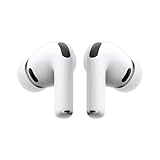
- WORLD’S BEST IN-EAR ACTIVE NOISE CANCELLATION — Removes up to 2x more unwanted noise than AirPods Pro 2* so you can stay fully immersed in the moment.*
- BREAKTHROUGH AUDIO PERFORMANCE — Experience breathtaking, three-dimensional audio with AirPods Pro 3. A new acoustic architecture delivers transformed bass, detailed clarity so you can hear every instrument, and stunningly vivid vocals.
- HEART RATE SENSING — Built-in heart rate sensing lets you track your heart rate and calories burned for up to 50 different workout types.* With iPhone, you will have access to the Move ring, step count, and the new Workout Buddy,* powered by Apple Intelligence.*
- LIVE TRANSLATION — Communicate across language barriers using Live Translation,* enabled by Apple Intelligence.*
- EXTENDED BATTERY LIFE — Get up to 8 hours of listening time with Active Noise Cancellation on a single charge. Or up to 10 hours in Transparency using the Hearing Aid feature.*
- Recordings are mastered at different levels, so two tracks at the same slider setting may not sound equally loud.
- A loose or poor seal can make audio seem unclear and prompt you to raise the volume.
- A subway, gym, or busy street can tempt you to turn up sound that would seem loud in a quiet room.
- Noise cancellation, transparency, and other listening modes change how much outside sound you hear, but do not make a high media level harmless.
When available, a headphone audio-level estimate is more informative than the volume slider alone. WHO’s 60% advice and exposure-monitoring recommendation are explained in its safe-listening guidance.
How to check headphone exposure on iPhone or iPad
- Connect your AirPods and start listening.
- Open Control Center. If the Hearing control is not there, add it using your device’s Control Center editing options.
- Open the Hearing control and view the headphone audio-level meter while audio is playing.
- If readings are repeatedly in the loud range, lower the volume or shorten the session. Review headphone-audio history in the Health app where available.
Compatible AirPods, EarPods, and many other wired or wireless headphones can provide estimated headphone levels to Apple devices. Availability and labels depend on device and software. Apple’s iPad guide also describes analyzing headphone audio and reducing sound above a selected maximum. Apple headphone audio-level features
Do not confuse headphone exposure with environmental noise. The headphone reading estimates sound delivered by compatible headphones; an Apple Watch Noise app or a sound-level-meter app measures sound around you. An environmental reading is not an exact in-ear measurement. The CDC/NIOSH Sound Level Meter app is an iOS option for estimating surrounding sound, not a substitute for a headphone dosimeter or calibrated workplace measurement. NIOSH noise guidance and app information
Rank #3
- REBUILT FOR COMFORT — AirPods 4 have been redesigned for exceptional all-day comfort and greater stability. With a refined contour, shorter stem, and quick-press controls for music or calls.
- ACTIVE NOISE CANCELLATION — AirPods 4 with Active Noise Cancellation help reduce outside noise before it reaches your ears, so you can immerse yourself in what you’re listening to.*
- HEAR THE WORLD AROUND YOU — The powerful H2 chip comes to AirPods 4. Adaptive Audio seamlessly blends ANC and Transparency mode — which lets you comfortably hear and interact with the world around you exactly as it sounds — to provide the best listening experience in any environment.* And when you’re speaking with someone nearby, Conversation Awareness automatically lowers the volume of what’s playing.*
- IMPROVED SOUND AND CALL QUALITY — Voice Isolation improves the quality of calls in loud conditions. Using advanced computational audio, it reduces background noise while isolating and clarifying the sound of your voice for whomever you’re speaking to.*
- MAGICAL EXPERIENCE — Just say “Siri” or “Hey Siri” to play a song, make a call, or check your schedule.* And with Siri Interactions, now you can respond to Siri by simply nodding your head yes or shaking your head no.* Pair AirPods 4 by simply placing them near your device and tapping Connect on your screen.* Easily share a song or show between two sets of AirPods.* An optical in-ear sensor knows to play audio only when you’re wearing AirPods and pauses when you take them off. And you can track down your AirPods and Charging Case with the Find My app.*
If no headphone reading appears
- Confirm the AirPods are connected and audio is playing.
- Check that the Hearing control is available in Control Center and that your device and headphone combination supports the feature.
- If your AirPods still do not report a level, use the Reduce Loud Audio control and rely on a conservative volume rather than treating an environmental meter reading as an in-ear value.
How to set a maximum headphone volume
- On iPhone or iPad, open Settings > Sounds & Haptics > Headphone Safety.
- Turn on Reduce Loud Audio.
- Choose the maximum headphone level you want the device to allow.
Apple says the device reduces sound above the selected level. For a child’s or managed device, Screen Time restrictions can prevent a family member from changing the loud-audio limit. Menu labels and availability may vary by operating-system version, device, region, and language. Apple instructions for headphone audio features
Can noise cancellation and a good fit help?
They can help indirectly. Well-fitted earbuds and active noise cancellation may reduce the urge to raise media volume to compete with traffic, transit, or other background noise. If a seal is uncomfortable, do not force it; try a different fit or use a different listening approach. AirPods Pro users can check fit with the offered Ear Tip Fit Test or acoustic-seal test.
ANC is not automatically certified hearing protection. In noisy surroundings, lower the media volume once outside noise is reduced, take breaks in quieter places, and move away from machinery, loudspeakers, or traffic when possible. On public transport or outdoors, keep enough awareness to hear announcements, vehicles, and warnings. If the environment itself is hazardous, use appropriate certified earplugs or earmuffs instead of relying on AirPods.
Rank #4
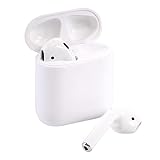
- Automatically on, automatically connected
- Easy setup for all your Apple devices
- Quick access to Siri by saying “Hey Siri”
- Double-tap to play or skip forward
- New Apple H1 headphone chip delivers faster wireless connection to your devices
What AirPods Pro Hearing Protection does—and does not do
Apple’s Hearing Protection feature is available on AirPods Pro 2 and AirPods Pro 3 with compatible Apple devices and current software and firmware, subject to regional availability. It is designed to reduce exposure to loud environmental noise across supported listening modes, and a proper fit is required. Follow the setup prompts on your device; Apple’s current guide places the feature under the connected AirPods settings. Apple Hearing Protection setup and details
The feature is not a blanket guarantee against injury or a replacement for hearing protection selected for a hazardous environment. Apple says it is not intended for impulse sounds such as gunfire, fireworks, or jackhammers, sustained sounds above 110 dBA, or some workplace situations. It may not operate when the AirPods are out of battery, when listening mode is set to Off, or when Loud Sound Reduction is disabled in Transparency or Adaptive modes. Check current controls on your device; Apple documents Loud Sound Reduction settings under Accessibility for AirPods. Apple Loud Sound Reduction details
What’s actually slowing this PC down?
Pick the symptom - the matching free tool is one click away.
In applicable countries or regions, Apple documents an EN 352 Protection option for AirPods Pro 3 that limits maximum media sound to 82 dBA. This option depends on regional support and setup; it does not remove Apple’s stated exclusions for hazardous noise. Apple EN 352 Protection information
Best Value

- Active Noise Cancellation blocks outside noise, so you can immerse yourself in music
- Transparency mode for hearing and interacting with the world around you
- Spatial audio with dynamic head tracking places sound all around you
- Adaptive EQ automatically tunes music to your ears
- Three sizes of soft, tapered silicone tips for a customizable fit
Other AirPods features that can support quieter listening
- Conversation Awareness: On supported models, it can lower media volume when you begin speaking; it is a convenience feature, not an exposure limit.
- Headphone-level monitoring and Reduce Loud Audio: These help you notice exposure and cap output on a supported Apple device.
- Hearing Test and Hearing Aid features: AirPods Pro 2 and AirPods Pro 3 offer these features in supported regions and configurations. They are intended for specific users, are not universal diagnostic tools, and do not replace professional evaluation when symptoms or concerns arise. Apple Hearing Test and Hearing Aid details · Apple Hearing Aid feature requirements
A practical safe-listening routine
- Start at a low level—WHO’s roughly 60% maximum suggestion is a starting point, not proof of safety.
- Use the headphone-level meter when available, and aim for average personal-listening exposure below 80 dB where possible.
- Turn on Reduce Loud Audio and choose a maximum that suits your needs.
- Use a good fit or ANC to avoid raising the volume to overpower background noise, then reduce media volume in quieter settings.
- Take quiet breaks and count listening alongside noise from work, travel, concerts, and hobbies; a break does not erase an earlier loud exposure.
- Do not use AirPods as protection for firearms, fireworks, heavy machinery, construction, or other hazardous noise.
- Stop listening and seek advice if you notice persistent symptoms or a sudden change in hearing.
For children, set a stricter limit and use parental controls where available; WHO’s child reference is 75 dB for 40 hours weekly. For remote work, gaming, or long commutes, remember that many moderate sessions can add up, and sudden game or alert peaks can matter even when average volume seems reasonable.
When to get hearing care
Lower exposure and arrange a hearing evaluation if you have persistent or recurring ringing, muffled hearing after listening, difficulty hearing high-pitched sounds, trouble understanding speech on a phone or in restaurants, ear pain or pressure, or dizziness. Tinnitus or hearing difficulty should not be dismissed as ordinary ear fatigue. WHO warning signs
Sudden hearing loss—especially in one ear—needs prompt medical attention rather than an AirPods test or a wait-and-see approach. If you have existing hearing loss, ear disease, or hearing aids, ask a qualified hearing professional how to manage headphone use; AirPods hearing features and prescription hearing aids are not interchangeable.
Quick Recap
Product prices and availability are accurate as of the date/time indicated and are subject to change. Any price and availability information displayed on Amazon at the time of purchase will apply.

