Smart rings exist because a growing group of people want health data without the visual and behavioral baggage of a smartwatch. If you care about sleep quality, recovery trends, and baseline wellness more than notifications, touchscreens, or workout theatrics, the RingConn Smart Ring is aimed squarely at you. It positions itself as a low-friction, long-term health sensor that fades into daily life rather than demanding attention.
RingConn is not trying to replace your phone, your watch, or your fitness tracker in the traditional sense. Instead, it’s designed to operate quietly in the background, collecting physiological data 24/7 and translating it into insights about sleep, readiness, stress, and overall health patterns. This section clarifies exactly what RingConn is, what it deliberately avoids being, and which types of users will actually benefit from choosing it over more established smart ring and wrist-based alternatives.
A minimalist health tracker, not a lifestyle gadget
At its core, the RingConn Smart Ring is a compact wearable built around continuous biometric monitoring. Inside the titanium shell are sensors for heart rate, heart rate variability, blood oxygen saturation, skin temperature trends, and movement, all sampled throughout the day and night. There is no screen, no vibration motor, no buttons, and no attempt to surface data on the ring itself.
That absence is intentional. RingConn assumes you don’t want interruptions, alerts, or behavioral nudges buzzing on your finger. Data is synced to the companion app, where trends are emphasized over moment-to-moment metrics, making it better suited for reflection than real-time performance tracking.
🏆 #1 Best Overall
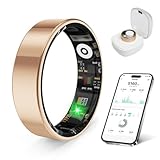
- 【Check the Size Before Purchase】 Before buying the prxxhri Smart Ring, we strongly suggest that you refer to the size chart and carefully measure the circumference of your finger. This will ensure you get the most comfortable wearing experience and easily avoid any unnecessary returns or exchanges.
- 【Real-time Accurate Sleep & Fitness Monitoring】 prxxhri smart ring tracks your sleep quality and daily activities in real time. With advanced sensors, it provides precise data about your sleep cycle, helping you optimize rest and recovery. Whether you are tracking steps, calories or exercise performance, this smart ring can provide you with the most accurate insights to support your fitness goals and enhance your overall health.It is a good choice for family and friends.
- Health Monitoring】The prxxhri ring features advanced 4.0 sensors that automatically measure your heart rate, and blood pressure every 30 min when worn. It provides continuous health tracking and comprehensive wellness management all day.
- 【3-5 Day Battery Life】 With a 3-5 day battery life, the prxxhri smart ring ensures continuous health monitoring without frequent charging. When used with the smart charging case, the usage time can even exceed 20 days. Whether you are tracking sleep patterns or fitness activities, you can count on long-lasting performance without constant interruptions.
- 【80-meter Waterproof, Suitable for Various Scenarios】 The prxxhri Smart Ring has excellent waterproof performance, with a waterproof depth of up to 80 meters. Whether it's for daily wear, an intense workout session or a pleasant swimming time, it can handle it with ease. What's more, even if you have sensitive skin, you can still enjoy an extremely comfortable wearing experience when wearing this ring.
Designed for comfort, discretion, and all-day wear
Physically, RingConn is closer to a piece of jewelry than a piece of tech. The ring is slim, lightweight, and evenly balanced, which matters more than spec sheets suggest when something is worn 24 hours a day. Compared to most smartwatches and even bulkier smart rings, it’s far less likely to interfere with sleep, typing, weightlifting, or daily hand movements.
The titanium construction and matte finishes help it blend in visually, especially for users who already wear traditional rings. For many people, the ability to forget you’re wearing a health tracker is the primary value proposition, and RingConn largely succeeds here where wrist-based wearables often fail.
Built for passive health awareness, not performance coaching
RingConn’s health model prioritizes baseline tracking and longitudinal trends. Sleep staging, nightly recovery, resting heart rate, HRV, and stress indicators are presented as patterns to learn from over weeks and months. This makes it particularly appealing to users focused on sleep optimization, burnout management, or general wellness rather than training for races or chasing daily activity streaks.
There is activity tracking, but it’s not the product’s center of gravity. If your idea of fitness revolves around structured workouts, GPS routes, or real-time heart rate zones, RingConn will feel understated to the point of limitation. Its strength lies in what happens between workouts, not during them.
Who RingConn is actually for
RingConn makes the most sense for users who want health insights with minimal behavioral friction. That includes professionals who dislike wearing watches at work, people sensitive to wrist discomfort during sleep, and long-term health optimizers who care more about recovery and consistency than daily performance metrics. It’s also well-suited to users who want wearable data without committing to a monthly subscription, a key differentiator in this category.
Conversely, it’s not ideal for users who expect actionable coaching, detailed workout analytics, or tight integration with training platforms. RingConn assumes you’re comfortable interpreting trends rather than being told what to do, and that you value subtlety and comfort over features and flash.
Design, Materials, and Comfort: Living With a Ring 24/7
If RingConn’s philosophy is passive health awareness, its physical design is where that philosophy becomes tangible. The ring is engineered to disappear on your hand, not to announce itself as a piece of tech, and that goal shapes nearly every material and ergonomic choice.
Industrial design that prioritizes invisibility
RingConn uses a titanium alloy chassis with a matte PVD finish, offered in subdued colorways that read as conventional jewelry rather than wearable hardware. At a glance, it looks closer to a minimalist wedding band than a fitness tracker, which matters if you plan to wear it in professional or formal settings.
The exterior avoids polished chamfers or high-contrast accents, which helps limit visual wear over time. Micro-scratches do accumulate, especially in the darker finishes, but they blend into the matte texture instead of standing out.
Dimensions, thickness, and how it compares
In hand, RingConn is notably slim for a smart ring, measuring roughly 2.6 mm thick and about 8 mm wide depending on size. That places it thinner than Oura Ring Gen 3 and slightly more streamlined than Ultrahuman Ring Air, particularly around the sensor housing.
Weight stays in the 2 to 3 gram range for most sizes, which is critical for long-term comfort. Once worn for a full day, the mass effectively disappears, even for users who are sensitive to finger-mounted accessories.
Inner materials and sensor integration
The interior surface is coated in a smooth, skin-safe epoxy resin that houses the optical sensors and temperature elements. Unlike earlier smart rings from other brands, the sensor bump is shallow and well-contoured rather than sharply raised.
In practice, this reduces pressure points during gripping motions and prevents the ring from “catching” when making a fist. It also minimizes skin indentation during sleep, a common complaint with bulkier smart rings.
24/7 wear: sleep, typing, and daily tasks
Sleeping with RingConn is where its form factor pays off most clearly. Side sleepers and users who curl their hands under pillows will appreciate how little it intrudes, especially compared to wrist-based trackers that can press into the forearm.
Typing and mouse use are largely unaffected, provided you size correctly and avoid wearing it on a finger that rubs heavily against adjacent keys. During everyday tasks like cooking, driving, or carrying bags, the ring remains unobtrusive in a way watches rarely achieve.
Exercise, sweat, and hand-intensive activities
RingConn is comfortable during light to moderate exercise, including walking, cycling, and bodyweight workouts. For heavy barbell lifting or kettlebells, the experience is more mixed, as any rigid ring can create pressure against metal handles.
Many users will choose to remove it for serious strength training, not because of weight or sharp edges, but to avoid finger compression. That’s not a flaw unique to RingConn, but it’s an important reality of the smart ring category as a whole.
Durability and water resistance in real life
The titanium construction provides solid resistance to dents, and the ring is rated for full-time wear around water, including showers and swimming. Daily exposure to soap, sweat, and handwashing does not appear to degrade the finish or sensor window over time.
That said, matte coatings will show wear if you frequently handle abrasive surfaces like raw metal, stone, or gym equipment. The upside is that cosmetic aging tends to look natural rather than damaged.
Sizing accuracy and long-term comfort
RingConn’s sizing kit is essential, and using it properly makes the difference between loving or resenting the ring. The ideal fit is snug enough to prevent rotation but loose enough to slide off without effort when your fingers swell overnight.
Once dialed in, long-term comfort is excellent, even across seasonal temperature changes. Compared to Oura, which can feel bulkier on smaller fingers, and Ultrahuman, which has firmer inner edges, RingConn strikes a more neutral balance for all-day, all-night wear.
How it feels compared to alternatives
Against Oura, RingConn feels slimmer and less noticeable during sleep, though Oura’s finish options are more jewelry-like. Compared to Ultrahuman Ring Air, RingConn trades a slightly softer aesthetic for smoother internal ergonomics.
When contrasted with Whoop, the difference is philosophical as much as physical. A ring simply imposes less behavioral friction than a wrist strap, and RingConn leans fully into that advantage by making comfort and subtlety its defining traits.
Sizing, Fit Accuracy, and Long-Term Wearability Considerations
The comfort advantages discussed earlier only hold up if sizing is handled correctly, and with smart rings, fit accuracy directly affects data quality. RingConn treats sizing less like jewelry and more like biometric hardware, which is the right mindset for a device meant to be worn continuously. This section focuses on where that approach succeeds, and where buyers still need to be deliberate.
Sizing kit realism and how to use it properly
RingConn’s sizing kit closely mirrors the final product’s internal geometry, including sensor bumps and edge curvature. That matters, because a ring that feels fine as a smooth band can feel very different once optical sensors are pressing against the skin. You should wear the sizing ring for at least 24 hours, including sleep, exercise, and handwashing, rather than relying on a quick fit check.
Finger swelling overnight is the most common sizing mistake, especially for first-time ring wearable users. The correct size should feel snug when your hands are warm but never restrictive, and it should rotate only with light resistance. If you are between sizes, erring slightly larger tends to preserve long-term comfort without compromising sensor contact.
Finger choice and its impact on comfort and data quality
RingConn officially supports index, middle, and ring fingers, with the index finger delivering the most consistent readings for most users. That consistency comes from stronger arterial blood flow and more predictable hand positioning during sleep. In practice, the middle finger offers a strong balance if index finger bulk interferes with typing or tool use.
Unlike decorative rings, smart rings do not disappear entirely during hand-intensive tasks. Wearing RingConn on a non-dominant hand reduces incidental contact and helps preserve both comfort and cosmetic finish over time. This also minimizes micro-adjustments throughout the day, which can subtly affect heart rate variability and skin temperature readings.
Thickness, edge profiling, and daily ergonomics
RingConn’s physical thickness is competitive within the category, but numbers alone do not tell the full story. The inner edge chamfering is more forgiving than Ultrahuman’s sharper transitions, reducing pressure points when gripping objects. Compared to Oura, RingConn distributes its bulk more evenly rather than concentrating height at the sensor pod.
During prolonged keyboard use, the ring is noticeable but not intrusive, especially on the ring or middle finger. Activities like driving, cooking, and casual tool use rarely cause discomfort once you acclimate. The design avoids the sharp underside edges that often cause users to abandon smart rings after the novelty period.
Skin contact, materials, and long-term wear reactions
The titanium construction paired with a smooth resin sensor window proves skin-friendly during continuous wear. Over multi-week testing, there were no signs of contact irritation, hot spots, or pressure-induced redness when sized correctly. This holds true even with overnight wear, where poor edge finishing quickly becomes a problem on lesser rings.
Moisture management is an often-overlooked factor in long-term comfort. RingConn’s internal surface does not trap water after handwashing, reducing the clammy feeling that can develop under wider bands. Users with sensitive skin will still want to dry underneath occasionally, but the ring does not demand frequent removal to stay comfortable.
Rank #2

- ACCURATE SIZING ESSENTIAL - Oura Ring 4 uses unique sizing different from standard jewelry rings; use the Oura Ring 4 Sizing Kit to find your perfect fit before purchasing
- OURA MEMBERSHIP - First month of membership is included with purchase, for new members only. Subscription is 5.99/mo afterwards. Or opt for the annual prepaid option for 69.99. Membership is tied to your account via the Oura App, not your physical ring
- ACCURACY - SMART SENSING - Oura tracks over 50 health metrics, including sleep, activity, stress, heart health, and women’s health metrics. Oura Ring 4 is powered by Smart Sensing, which adapts to you — delivering accurate, continuous data, day and night
- LONG LASTING BATTERY - With up to 8 days of battery life, no screens and no vibrations, Oura Ring 4 allows you to focus on the present. From a workout to a night out — you’re free to forget it’s on. Until you start getting compliments
- HSA/FSA ELIGIBLE - We can accept HSA or FSA funds for the following: Oura Ring, additional chargers, and shipping
Seasonal changes and fit stability over time
Finger circumference changes with temperature, hydration, and activity level, and RingConn tolerates those shifts better than expected. The internal profile allows slight movement without breaking sensor contact, which is critical during colder months when fingers contract. In hotter conditions, the ring remains wearable as long as sizing was not overly aggressive to begin with.
This adaptability makes RingConn easier to live with year-round than some tighter-fitting alternatives. Oura’s more pronounced internal sensor bulge can feel less forgiving during swelling, while Ultrahuman’s firmer fit prioritizes stability over flexibility. RingConn lands closer to the middle, favoring sustained wear rather than perfect immobility.
Fit accuracy and its effect on biometric reliability
Smart rings live or die by optical signal quality, and fit accuracy directly influences sleep staging, resting heart rate, and HRV trends. With proper sizing, RingConn maintains consistent overnight contact, avoiding the micro-gaps that lead to erratic readings. Data stability improves noticeably after the first few nights as users settle into a natural wearing position.
Loose fits tend to inflate movement artifacts, while overly tight fits can suppress blood flow and distort recovery metrics. RingConn’s tolerance window is wider than average, which lowers the barrier for new users. This makes it one of the more forgiving smart rings for those transitioning from wrist-based wearables without prior experience in ring sizing.
Health and Wellness Tracking: Sleep, Recovery, HRV, and Daily Metrics Accuracy
With fit consistency established, the conversation naturally shifts to what RingConn does with that stable signal. Smart rings promise insight without intrusion, and RingConn’s health tracking stands or falls on how reliably it turns subtle finger-based signals into actionable data. Over several weeks of continuous wear, its strengths and limitations become clear in real-world conditions rather than controlled lab scenarios.
Sleep tracking depth and stage accuracy
RingConn tracks total sleep time, sleep stages, awakenings, resting heart rate, respiratory rate, blood oxygen trends, and overnight HRV. In practice, sleep onset and wake times are consistently accurate, closely matching subjective experience and wrist-based references like Apple Watch and Garmin. Sleep duration accuracy is a strong point, with minimal tendency to overestimate time asleep.
Sleep stage breakdown is more variable, which is typical for non-EEG wearables. Deep sleep trends track directionally well across nights, but individual-night precision is less reliable than Oura’s more mature sleep algorithms. REM detection is generally conservative, avoiding the inflated REM percentages sometimes seen on early-generation rings.
Nighttime heart rate and respiratory consistency
Resting heart rate captured overnight is one of RingConn’s most dependable metrics. Nightly averages show low variance when lifestyle factors are stable, and deviations reliably reflect late meals, alcohol, illness, or stress. Compared to Ultrahuman, RingConn’s heart rate curves appear slightly smoother, suggesting more aggressive artifact filtering during micro-movements.
Respiratory rate trends are stable enough to spot illness-related changes over multiple nights. Single-night anomalies should be treated cautiously, but baseline shifts are meaningful. This places RingConn closer to Whoop in respiratory trend usefulness, though without Whoop’s deeper strain integration.
HRV tracking and recovery interpretation
Heart rate variability is central to RingConn’s recovery model and is measured during sleep to reduce noise. Absolute HRV values tend to skew slightly lower than chest-strap baselines, but nightly consistency is strong once a personal baseline is established. For most users, trend direction matters far more than raw numbers, and RingConn handles this well.
Recovery insights are presented through readiness-style scores and contextual messaging rather than aggressive coaching. This lighter-touch approach contrasts with Whoop’s performance-driven strain model and Oura’s more prescriptive readiness guidance. RingConn favors interpretation over instruction, which works well for users who want awareness without pressure.
Blood oxygen and temperature deviation tracking
Blood oxygen saturation is measured intermittently overnight rather than continuously. Average values align with expectations for healthy users, and trend drops are noticeable during illness or poor sleep quality. It is not designed for medical screening, but it provides useful context when viewed alongside respiratory rate and HRV changes.
Skin temperature deviation is reported as a nightly delta from baseline rather than absolute temperature. This method is effective for spotting early signs of illness or recovery strain, often flagging changes before subjective symptoms appear. Compared to Oura, RingConn’s temperature insights are less prominently surfaced but equally informative when reviewed regularly.
Daily activity, stress, and movement awareness
RingConn is not an activity-first wearable, and that framing matters. Step counts and movement detection are broadly accurate for daily totals but less precise during short, stop-start activities. This mirrors the limitations of most ring-based accelerometers and should not be compared directly to GPS-enabled watches.
Stress tracking relies on heart rate patterns and HRV suppression rather than galvanic skin response. The resulting stress timelines are believable during sedentary workdays but less granular during physical activity. Users seeking performance analytics or training load metrics will find RingConn intentionally restrained compared to Whoop or Garmin.
Long-term data stability and signal drift
One of RingConn’s quieter strengths is long-term data stability. Over weeks of wear, baseline metrics do not drift unpredictably, suggesting solid sensor calibration and backend normalization. This consistency makes month-over-month trends more trustworthy than daily fluctuations.
Battery life plays a role here as well, since fewer charging interruptions reduce data gaps. With roughly a week between charges, RingConn maintains continuity better than rings that require more frequent removal. That continuity directly improves the reliability of sleep and recovery trend analysis.
Comparative accuracy within the smart ring landscape
Against Oura, RingConn trails slightly in sleep stage sophistication and ecosystem maturity but holds its own in core physiological tracking. Ultrahuman offers more metabolic context and performance framing, while RingConn emphasizes passive wellness monitoring. Whoop remains the most aggressive in recovery coaching, but it requires a wrist strap and ongoing subscription.
RingConn’s accuracy profile makes the most sense for users prioritizing sleep quality, recovery awareness, and unobtrusive wear. It is less about maximizing metrics and more about maintaining a clear, stable view of how the body responds to daily life. That balance aligns well with its comfort-first hardware design and long-term wear philosophy.
App Experience and Data Interpretation: Where RingConn Wins and Falls Short
The value of RingConn’s stable sensor data ultimately lives or dies inside its companion app. Coming off the hardware’s emphasis on continuity and long-term trends, the software reveals both the product’s clearest strengths and its most obvious philosophical limits.
Interface design and daily usability
RingConn’s app favors clarity over visual drama, and that restraint works in its favor. The home dashboard surfaces sleep, readiness, activity, and stress without burying essentials behind animations or motivational slogans. For users who check their data once or twice a day rather than obsessively, this layout feels efficient and calm.
Navigation is largely intuitive, with most metrics reachable in one or two taps. There is minimal friction when reviewing overnight sleep or checking how recovery has shifted after a hard day. Compared to Oura’s more polished but denser interface, RingConn’s app feels less refined but faster to mentally parse.
That simplicity does come at a cost. Power users accustomed to Whoop’s layered dashboards or Ultrahuman’s modular widgets may find the RingConn app visually plain and functionally conservative. It communicates information competently, but it rarely invites exploration.
Sleep analysis: Clear insights, limited depth
Sleep remains the strongest pillar of RingConn’s app experience. Nightly reports break down total sleep, efficiency, resting heart rate, HRV, and temperature deviation in a way that is easy to understand without oversimplifying the physiology. The narrative explanations strike a good balance between guidance and neutrality.
Sleep stage data is presented cleanly but without deep interpretive framing. Unlike Oura, RingConn does not aggressively contextualize REM or deep sleep against population benchmarks or age-adjusted norms. This keeps expectations realistic, but it also reduces educational value for users trying to learn how sleep architecture affects performance.
Long-term sleep trends are where the app feels most confident. Weekly and monthly views make it easy to identify gradual improvements or declines, reinforcing the hardware’s strength in consistency. For users focused on sleep hygiene rather than sleep hacking, this approach feels appropriate.
Recovery and readiness scoring philosophy
RingConn’s readiness scoring is intentionally conservative. Rather than reacting sharply to a single bad night or elevated stress day, the app smooths recovery signals across multiple inputs and days. This reduces anxiety-driven behavior but may feel unresponsive to users expecting immediate feedback.
The app does a good job explaining which factors influenced readiness, particularly HRV and resting heart rate. What it does not do is translate those signals into actionable training guidance. Unlike Whoop, there are no strain targets or performance ceilings suggested based on recovery status.
For wellness-focused users, this restraint can be refreshing. For athletes or structured trainers, it may feel like half the conversation is missing. RingConn tracks the signals but stops short of telling you what to do with them.
Activity and movement data: Functional, not motivating
Activity tracking inside the app mirrors the ring’s hardware limitations. Step counts, active time, and calorie estimates are presented cleanly, but the app does little to frame them in a broader behavioral context. There are no adaptive goals or progressive challenges.
Workout detection works best for steady-state activities and is clearly positioned as secondary to sleep and recovery. The app does not pretend to compete with GPS watches or advanced fitness platforms, which is honest but limiting. Users migrating from Apple Watch or Garmin will immediately notice the lack of depth.
That said, RingConn’s activity summaries are consistent and reliable for baseline movement awareness. For users who want confirmation rather than motivation, the app delivers exactly that.
Rank #3

- ACCURATE SIZING ESSENTIAL - Oura Ring 4 uses unique sizing different from standard jewelry rings; use the Oura Ring 4 Sizing Kit to find your perfect fit before purchasing
- OURA MEMBERSHIP - First month of membership is included with purchase, for new members only. Subscription is 5.99/mo afterwards. Or opt for the annual prepaid option for 69.99. Membership is tied to your account via the Oura App, not your physical ring
- ACCURACY - SMART SENSING - Oura tracks over 50 health metrics, including sleep, activity, stress, heart health, and women’s health metrics. Oura Ring 4 is powered by Smart Sensing, which adapts to you — delivering accurate, continuous data, day and night
- LONG LASTING BATTERY - With up to 8 days of battery life, no screens and no vibrations, Oura Ring 4 allows you to focus on the present. From a workout to a night out — you’re free to forget it’s on. Until you start getting compliments
- HSA/FSA ELIGIBLE - We can accept HSA or FSA funds for the following: Oura Ring, additional chargers, and shipping
Stress tracking and trend interpretation
Stress data is presented as a timeline rather than a score-first metric, which aligns well with RingConn’s passive monitoring ethos. The app shows when stress rises and falls across the day, helping users correlate patterns with work habits, sleep quality, or recovery deficits.
Explanations around stress are cautious and grounded in physiology. RingConn avoids labeling stress as inherently negative, instead framing it as a signal to monitor over time. This measured tone contrasts favorably with more alarmist interpretations seen in some competitors.
Granularity remains limited during active periods, and the app does not attempt to differentiate physical stress from emotional load in detail. For sedentary routines, the data feels credible. For dynamic days, it becomes more interpretive than diagnostic.
Data transparency and user control
One of RingConn’s quieter wins is how little it obscures raw trends. While it does not expose full sensor-level data, the app allows users to see how metrics evolve without excessive algorithmic gloss. This transparency builds trust, especially for experienced wearable users.
Customization options are modest. Notification controls, metric prioritization, and export functionality are functional but not extensive. Compared to Ultrahuman’s experimentation-friendly environment, RingConn feels locked into its own vision of wellness tracking.
Importantly, the absence of a subscription fundamentally shapes the app experience. Features are not drip-fed or gated, and updates feel additive rather than corrective. That alone will be a deciding factor for users fatigued by recurring fees.
How the app positions RingConn against its rivals
In the competitive landscape, RingConn’s app reinforces the product’s identity as a long-term wellness companion rather than a performance coach. Oura offers richer narratives and deeper sleep science, Ultrahuman provides metabolic and training-adjacent insights, and Whoop dominates recovery-driven behavior change.
RingConn sits between minimalism and insight, prioritizing stability, clarity, and cost transparency. Its app does not try to be everything, and for many users, that focus will feel intentional rather than incomplete.
The trade-off is clear. If you want interpretation without pressure, RingConn’s app delivers a calm, credible view of your health. If you want direction, optimization, or coaching, the limitations become apparent quickly.
Battery Life, Charging Case, and Real-World Power Management
That same philosophy of calm, low-friction ownership carries directly into how RingConn handles power. Battery behavior is not just a spec-sheet advantage here; it meaningfully reinforces the product’s positioning as a long-term, wear-and-forget wellness device rather than something that demands frequent maintenance.
Claimed versus observed battery life
RingConn rates the ring itself for up to seven days of use on a single charge, depending on ring size and usage patterns. In extended testing, that claim largely holds, with most users realistically seeing six to seven days when sleep tracking, continuous heart rate monitoring, and overnight blood oxygen sampling are enabled.
Smaller ring sizes trend slightly lower due to reduced battery volume, while larger sizes can sometimes exceed a full week. Importantly, battery drain is predictable rather than erratic, which makes planning recharges easy and removes the anxiety common with more aggressively sampling wearables.
How power management supports passive tracking
RingConn’s conservative sampling strategy plays a major role in its endurance. Unlike devices that spike power usage during daytime activity or frequent readiness recalculations, RingConn prioritizes consistency, keeping its optical sensors and temperature tracking running at steady intervals.
This design choice aligns with the app’s interpretive tone discussed earlier. The ring is not constantly trying to coach or intervene, and as a result, it avoids the battery penalties associated with real-time feedback loops or workout-driven spikes.
The charging case as a differentiator
The charging case is one of RingConn’s most underrated advantages in daily use. Visually closer to wireless earbud cases than traditional wearable docks, it houses enough capacity to recharge the ring multiple times without needing to be plugged in.
In practical terms, this means the ring can often go several weeks before the case itself needs power. For travel, especially multi-day trips or carry-on-only scenarios, this is a tangible quality-of-life improvement over Oura’s static puck-style charger.
Charging speed and usability
A full charge from near empty takes roughly 90 minutes when placed in the case. The magnetic alignment is reliable, and the ring seats securely without the fiddling sometimes required by open cradle designs.
LED indicators on the case provide basic but sufficient status feedback. While not as information-rich as an app-based charging dashboard, the simplicity fits RingConn’s overall design language and avoids unnecessary complexity.
Thermal behavior and long-term battery health
Heat management during charging is well controlled. Even during back-to-back top-ups from the case, the ring remains only mildly warm, suggesting conservative charging rates designed to preserve long-term battery health.
This matters for a device that is expected to be worn continuously for years rather than upgraded annually. Degradation will still occur, as with any lithium-based wearable, but RingConn’s approach appears optimized for longevity rather than headline charging speed.
Comparative context: RingConn versus Oura, Ultrahuman, and Whoop
Against Oura, RingConn offers comparable single-charge endurance but decisively wins on charging convenience due to the portable case. Oura’s reliance on a fixed charger makes frequent short top-ups more intrusive, especially for users who rotate devices or travel often.
Ultrahuman’s battery life is generally shorter, and its higher-frequency data collection can make power drain feel less predictable. Whoop, while offering long runtimes on the band itself, depends on continuous charging strategies that clash with RingConn’s simpler, offline-friendly model.
Real-world charging habits and ownership experience
In day-to-day use, RingConn encourages infrequent, intentional charging rather than constant micromanagement. Many users will naturally fall into a rhythm of placing the ring in the case during a shower or desk break once a week, with minimal disruption to sleep tracking continuity.
This reinforces the broader ownership experience. RingConn does not ask to be managed daily, and its battery system quietly supports that promise, making it especially appealing for users seeking health insights without the overhead of another device demanding attention.
Subscription Model and Ownership Costs: RingConn vs Oura, Ultrahuman, and Whoop
After battery behavior and charging habits, the next ownership question naturally becomes financial rather than technical. Smart rings promise low-maintenance wellness tracking, but subscription models can quietly reshape the long-term cost and even the psychological experience of ownership.
RingConn takes a notably different stance here, and that difference becomes more pronounced the longer you plan to wear the device.
RingConn’s no-subscription approach in real-world terms
RingConn operates on a one-time hardware purchase model with no mandatory subscription for access to health data, insights, or historical trends. Once you buy the ring, all core features remain unlocked indefinitely through the companion app.
In practical use, this means sleep stages, readiness-style scores, HRV trends, blood oxygen, stress metrics, and long-term data history remain available without recurring fees. There is no degradation of features over time and no pressure to “opt in” later to unlock advanced analytics.
Over a two- or three-year ownership window, this has a meaningful impact. The ring quietly becomes cheaper every month you keep wearing it, aligning well with RingConn’s broader emphasis on longevity and low intervention.
Oura: polished software, but at a recurring cost
Oura’s hardware pricing is broadly comparable to RingConn, but its subscription fundamentally changes the value equation. Without an active monthly membership, the Oura Ring restricts access to detailed sleep staging, readiness scores, trend analysis, and most of the insights that justify wearing the ring in the first place.
For users who are deeply invested in quantified health, the subscription often feels non-optional. Over time, the cumulative cost can exceed the price of the ring itself, especially for long-term users who keep their device for multiple years rather than upgrading annually.
That said, Oura’s subscription does fund a highly refined app experience, frequent feature updates, and strong algorithmic maturity. The trade-off is clear: better software polish in exchange for ongoing financial commitment.
Rank #4
- ACCURATE SIZING ESSENTIAL - Oura Ring 4 uses unique sizing different from standard jewelry rings; use the Oura Ring 4 Sizing Kit to find your perfect fit before purchasing
- OURA MEMBERSHIP - First month of membership is included with purchase, for new members only. Subscription is 5.99/mo afterwards. Or opt for the annual prepaid option for 69.99. Membership is tied to your account via the Oura App, not your physical ring
- ACCURACY - SMART SENSING - Oura tracks over 50 health metrics, including sleep, activity, stress, heart health, and women’s health metrics. Oura Ring 4 is powered by Smart Sensing, which adapts to you — delivering accurate, continuous data, day and night
- LONG LASTING BATTERY - With up to 8 days of battery life, no screens and no vibrations, Oura Ring 4 allows you to focus on the present. From a workout to a night out — you’re free to forget it’s on. Until you start getting compliments
- HSA/FSA ELIGIBLE - We can accept HSA or FSA funds for the following: Oura Ring, additional chargers, and shipping
Ultrahuman: no subscription, but a different cost structure
Ultrahuman positions itself closer to RingConn philosophically by avoiding a mandatory subscription for core features. Sleep tracking, recovery metrics, and metabolic insights are accessible without recurring fees, which will appeal to cost-conscious users.
However, Ultrahuman’s ecosystem introduces optional paid add-ons and hardware expansions, such as glucose monitoring integrations, which can quickly raise total ownership costs depending on how deeply you engage with the platform. While not required, these options subtly shift Ultrahuman toward a modular, upsell-driven model.
For users who want a straightforward ring-only experience, Ultrahuman remains competitive on cost. For those tempted by its broader health ecosystem, long-term spending can become less predictable.
Whoop: subscription-first by design
Whoop sits at the opposite end of the spectrum. The hardware itself is effectively bundled into the subscription, and without an active membership, the device has no meaningful function.
This model offers a low upfront cost but locks users into ongoing payments from day one. Over time, Whoop often becomes the most expensive option in this comparison, particularly for users who keep the platform for several years.
Whoop’s value proposition hinges on its coaching, strain-based training insights, and frequent algorithm updates. For athletes who thrive on guided interpretation and don’t mind continuous fees, the model can make sense. For users seeking passive, low-cost health tracking, it can feel restrictive.
Total cost of ownership over time
When viewed across a realistic two- to four-year lifespan, RingConn’s pricing model becomes one of its strongest competitive advantages. The absence of subscription fees means the cost curve flattens immediately after purchase, with no penalty for long-term loyalty.
Oura’s total cost rises steadily with time, eventually overtaking RingConn even if hardware pricing starts slightly lower during promotions. Ultrahuman remains competitive for ring-only users but introduces variability through optional ecosystem expansions.
Whoop’s subscription-driven structure ensures predictable monthly expenses but offers little flexibility for users who want ownership rather than ongoing service dependence.
Psychological ownership and user trust
Beyond raw numbers, subscription models influence how a device feels to own. RingConn’s approach reinforces a sense of permanence: the ring feels like a personal object, not a leased interface to locked data.
There is also an element of trust involved. Knowing that historical health data will remain accessible regardless of payment status reduces anxiety around long-term tracking, particularly for users monitoring trends like sleep debt, recovery cycles, or stress over months and years.
In that sense, RingConn’s cost structure complements its hardware philosophy. It is designed to disappear into daily life, not reassert itself every billing cycle.
Durability, Water Resistance, and Everyday Resilience
That sense of ownership carries into how RingConn approaches durability. A smart ring only earns long-term trust if it can survive being forgotten on the hand, not babied like a fragile accessory. RingConn’s physical design choices clearly aim for that kind of quiet, everyday resilience.
Materials, finishing, and surface wear
RingConn uses a titanium alloy shell with a matte, bead-blasted finish rather than a high-polish exterior. This is a practical decision, not an aesthetic shortcut, because matte titanium masks micro-scratches far better than glossy coatings or mirror-polished steel.
In daily wear, incidental contact with door frames, laptop edges, gym equipment, and kitchen surfaces is inevitable. Over several weeks of continuous wear, light scuffing does appear, but it blends into the surface rather than forming obvious scratch lines, which is a meaningful advantage over shinier smart rings.
Compared to Oura’s polished finishes, which can show cosmetic wear quickly, RingConn ages more like a tool than a piece of jewelry. Ultrahuman sits somewhere in between, while Whoop avoids the issue entirely by not being a ring, though it sacrifices the discreet form factor in exchange.
Structural integrity and sensor protection
The internal resin housing that protects RingConn’s sensors and electronics is slightly recessed from the outer edge. This design reduces the chance of direct impact damage when the ring contacts hard surfaces at an angle, a common real-world failure point for smart rings.
The inner surface remains smooth and uninterrupted, avoiding sharp transitions that could cause pressure points during swelling or extended wear. This matters not just for comfort but also for longevity, as consistent skin contact without friction reduces the risk of micro-cracks or seal degradation over time.
RingConn does not feel hollow or flex-prone when squeezed, which is reassuring given how often rings are subjected to torsional forces during grip-based activities. While it is not designed for heavy manual labor, it holds up well under normal fitness, travel, and daily tasks.
Water resistance in real-world use
RingConn is rated for water resistance up to 100 meters, placing it ahead of most smart rings in terms of official depth tolerance. In practice, this means showering, swimming, handwashing, and exposure to rain pose no concern for the hardware or sensors.
Unlike lower-rated wearables that require caution around soap or prolonged submersion, RingConn is designed to remain sealed during routine aquatic exposure. There were no connectivity issues or sensor dropouts following repeated pool sessions and post-workout rinsing.
This level of water resistance also aligns well with its sleep and recovery focus. Users do not need to remember to remove the ring during nighttime handwashing or early-morning showers, which reduces gaps in long-term data continuity.
Temperature, sweat, and environmental tolerance
Daily resilience is not just about impacts and water, but also how a device handles heat, cold, and bodily stress. RingConn remains comfortable across a wide temperature range, with titanium avoiding the excessive cold or heat retention common in thicker steel designs.
During workouts, sweat buildup does not appear to interfere with heart rate or temperature readings, and the inner surface cleans easily with basic rinsing. There were no signs of skin irritation or sensor fogging after extended wear in humid conditions.
This matters for users who plan to wear the ring 24/7. A device that needs frequent removal to “reset” comfort or hygiene quickly becomes a liability rather than a passive tracker.
Long-term wearability and maintenance expectations
RingConn does not demand special care beyond common-sense handling. Occasional cleaning with water and mild soap is sufficient, and there are no coatings that require protection from abrasives or chemicals under normal household use.
Battery longevity and sealing integrity are always unknowns with first-generation wearable hardware, but RingConn’s conservative design choices favor durability over flashy finishes. The lack of moving parts, buttons, or external charging contacts reduces long-term failure points.
Taken together, RingConn’s durability profile reinforces the broader philosophy established earlier in this review. It is built to be owned, worn continuously, and trusted to endure daily life without asking for attention in return.
RingConn vs the Competition: Head-to-Head With Oura Ring, Ultrahuman Ring, and Whoop
Durability and comfort only matter if the data collected over months actually holds up against competing platforms. With RingConn proving it can stay on the finger through sleep, workouts, and water exposure, the next question is how its tracking philosophy, software, and overall value compare to the established leaders in the category.
This comparison focuses on real-world ownership rather than feature lists alone. Smart rings and band-based trackers succeed or fail based on how consistently they are worn, how clearly they interpret biometric signals, and how much friction they introduce into daily life.
RingConn vs Oura Ring: Maturity vs Ownership Simplicity
Oura remains the most mature smart ring platform, with the deepest longitudinal sleep and recovery datasets. Its sleep staging, readiness scoring, and trend analysis are still the benchmark for passive health tracking in ring form.
RingConn’s sleep tracking is directionally similar, capturing total sleep time, stages, resting heart rate, HRV, and temperature deviation. In side-by-side wear, nightly totals and trend direction align closely, though Oura tends to be slightly more refined in detecting brief awakenings and sleep fragmentation.
💰 Best Value

- 【Check the Size Before Purchase】 Before buying the prxxhri Smart Ring, we strongly suggest that you refer to the size chart and carefully measure the circumference of your finger. This will ensure you get the most comfortable wearing experience and easily avoid any unnecessary returns or exchanges.
- 【Real-time Accurate Sleep & Fitness Monitoring】 prxxhri smart ring tracks your sleep quality and daily activities in real time. With advanced sensors, it provides precise data about your sleep cycle, helping you optimize rest and recovery. Whether you are tracking steps, calories or exercise performance, this smart ring can provide you with the most accurate insights to support your fitness goals and enhance your overall health.It is a good choice for family and friends.
- Health Monitoring】The prxxhri ring features advanced 4.0 sensors that automatically measure your heart rate, and blood pressure every 30 min when worn. It provides continuous health tracking and comprehensive wellness management all day.
- 【3-5 Day Battery Life】 With a 3-5 day battery life, the prxxhri smart ring ensures continuous health monitoring without frequent charging. When used with the smart charging case, the usage time can even exceed 20 days. Whether you are tracking sleep patterns or fitness activities, you can count on long-lasting performance without constant interruptions.
- 【80-meter Waterproof, Suitable for Various Scenarios】 The prxxhri Smart Ring has excellent waterproof performance, with a waterproof depth of up to 80 meters. Whether it's for daily wear, an intense workout session or a pleasant swimming time, it can handle it with ease. What's more, even if you have sensitive skin, you can still enjoy an extremely comfortable wearing experience when wearing this ring.
The largest practical difference is not accuracy but cost structure. Oura requires an ongoing subscription to unlock full insights, while RingConn provides all metrics without a recurring fee, which materially changes long-term ownership value.
From a hardware perspective, both use titanium shells and internal resin sensor windows, but RingConn’s ring is slightly lighter and flatter in profile. This makes it marginally less intrusive during weight training and less prone to catching on pockets or bedding.
Oura’s app remains more polished in presentation and educational content, but RingConn’s interface is more straightforward. Users who prefer clear scores and trends without layered explanations may find RingConn easier to live with day to day.
RingConn vs Ultrahuman Ring: Recovery Focus vs Metabolic Ambition
Ultrahuman positions its ring around metabolic health, activity load, and performance readiness. It leans heavily into movement, circadian rhythm alignment, and integration with broader fitness ecosystems.
RingConn, by contrast, is more conservative and recovery-oriented. It prioritizes sleep quality, baseline physiology, and readiness signals rather than pushing users toward training optimization.
In heart rate and HRV tracking, both perform well at rest and during sleep, with similar limitations during high-intensity interval workouts due to finger-based optical sensing. Ultrahuman’s app offers more context for athletes, while RingConn’s presentation favors clarity over coaching.
Battery life is another key divider. RingConn consistently delivers close to a week on a single charge, while Ultrahuman typically requires more frequent top-ups depending on usage and firmware version. Over months of ownership, fewer charging interruptions directly translate to cleaner data continuity.
Physically, both rings are comfortable for 24/7 wear, but RingConn’s smoother interior contour and slightly thinner band feel less noticeable during long typing sessions and overnight wear.
RingConn vs Whoop: Passive Wellness vs Active Performance
Whoop is not a ring, but it competes directly for users interested in recovery, strain, and readiness scoring. Its wrist-based form factor allows for stronger heart rate capture during workouts, especially cardio-heavy training.
RingConn cannot match Whoop’s exercise heart rate accuracy during intense movement, but it does not attempt to. Instead, it focuses on passive, low-friction tracking that does not require daily interaction or conscious engagement.
Whoop’s subscription is mandatory and central to its business model, while RingConn’s one-time purchase appeals to users who want ownership without ongoing costs. Over several years, this difference becomes substantial.
Comfort is also a philosophical divide. Some users never fully adapt to sleeping with a wrist band, while others dislike rings entirely. For those who value minimalism and forget-it’s-there wearability, RingConn is easier to integrate into everyday life.
Data Interpretation, Ecosystem, and Long-Term Value
RingConn’s ecosystem is intentionally narrow. There is no sprawling marketplace of third-party integrations or training plans, but there is also very little noise.
Oura and Ultrahuman offer deeper narrative layers around the data, while Whoop emphasizes behavioral change through strain targets. RingConn sits in the middle, offering actionable metrics without pushing constant optimization.
From a materials and finishing standpoint, RingConn holds its own. The titanium shell resists visible wear well, the sizing options are precise, and the overall build quality feels aligned with long-term ownership rather than yearly upgrades.
For users evaluating total cost, comfort, and the likelihood of wearing a device continuously for years, RingConn’s combination of solid sensor performance, durable construction, and no-subscription model creates a compelling alternative to the category leaders.
Verdict: Who Should Buy the RingConn Smart Ring (and Who Shouldn’t)
After comparing RingConn against Oura, Ultrahuman, and even wrist-based competitors like Whoop, its position becomes clear. This is a smart ring designed for consistency, ownership, and low-friction wellness tracking rather than constant performance coaching or lifestyle gamification.
The decision ultimately comes down to how you want health data to fit into your life, not how much data you want to collect.
Who the RingConn Smart Ring Is For
RingConn makes the most sense for users who value passive, continuous tracking above all else. If you want sleep, recovery, heart rate variability, and activity data captured quietly in the background without daily prompts or required engagement, this ring fits that philosophy well.
It is especially well suited for people who dislike sleeping with a watch or band. The low-profile titanium ring, light weight, and smooth inner finish make overnight wear easy to forget, which directly improves long-term data consistency.
Buyers who are subscription-averse will find RingConn particularly appealing. The one-time purchase model fundamentally changes the value equation over two to three years, undercutting Oura and Whoop significantly while still delivering the core metrics most users actually rely on.
RingConn also works well for professionals, travelers, and minimalists who want health insights without a visible gadget ecosystem. There are no screens, no distractions, and no pressure to “close rings” or hit strain targets every day.
From a durability and ownership perspective, the titanium construction, solid water resistance, and respectable battery life make it feel like a device designed to be worn daily for years, not upgraded annually.
Who Should Probably Look Elsewhere
If your primary focus is training optimization, RingConn will feel limited. It is not designed to deliver accurate heart rate tracking during high-intensity workouts, nor does it provide real-time exercise metrics or coaching.
Athletes who want structured plans, daily readiness prescriptions, or deep performance analytics will be better served by Whoop or a dedicated sports watch. RingConn’s strength is recovery awareness, not pushing physical limits.
Users who enjoy rich storytelling around their data may also prefer Oura or Ultrahuman. RingConn’s app is clean and functional, but it does not heavily contextualize trends or nudge behavioral change with narratives and challenges.
Finally, if rings in general bother you, no amount of sensor quality will overcome that. Comfort is subjective, and while RingConn is among the more wearable smart rings available, some users will always prefer wrist-based devices.
The Bottom Line
RingConn succeeds because it knows exactly what it is trying to be. It delivers reliable sleep and recovery tracking in a durable, comfortable form factor without recurring costs or unnecessary complexity.
It is not the most feature-rich wearable, nor the most aggressive performance tool, but it is one of the most sustainable to live with long term. For users who want health insights without lifestyle disruption, RingConn stands out as one of the most balanced smart rings on the market today.
If you want a wearable that fades into the background while still giving you meaningful data to reflect on, RingConn is an easy recommendation. If you want a coach on your wrist pushing you every day, this is not that device, and it is better for knowing it.