Do these 3 things before closing this tab:
1Scan for outdated or missing drivers - takes under a minute2Repair Windows errors before they cause bigger problems3Fix the driver behind crashes, sound loss and screen glitchesSome links on this page are affiliate links: if you buy through them we may earn a commission, at no extra cost to you.
Seiko’s Active Matrix EPD watch made a digital display look less like a calculator and more like a designed surface. Introduced in 2010 in the Brightz line, it paired a high-resolution electrophoretic display with solar charging and radio-controlled timekeeping. It was a real production watch—not a current relaunch or a smartwatch—and its strongest appeal today is as a distinctive piece of display and watchmaking history.
A digital watch designed around its display
The first Active Matrix EPD Brightz models were the stainless-steel SDGA001, champagne-gold-colored SDGA002 and black-coated SDGA003. Each used Seiko’s caliber S770. Seiko showed a prototype at Baselworld in March 2010, announced the Japanese models on September 7, and planned their release for December 3 that year. Seiko described the technology as the world’s first solar, radio-controlled digital watch with an active-matrix electrophoretic display—a claim about this combination and implementation, not the first electronic-paper watch of any kind. Seiko’s launch announcement gives the original specifications.
| # | Preview | Product | Price | |
|---|---|---|---|---|
| 1 |

|
SEIKO Rotocall Alarm Chronograph Quartz Digital Watch SMGG17P1 | $392.70 | Buy on Amazon |
| 2 |
|
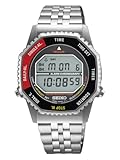
SEIKO Rotocall Alarm Chronograph Quartz Digital Watch SMGG19P1 | $392.70 | Buy on Amazon |
| 3 |
|
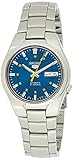
SEIKO Men's SNK615 Automatic Stainless Steel Watch | $156.45 | Buy on Amazon |
| 4 |

|
Seiko Soler Interval Timer SVAJ101 f (Stylish Silver) | $99.99 | Buy on Amazon |
The cases measured approximately 45.5 by 46 mm and were 9.5 mm thick, with an anti-reflective-coated sapphire crystal and a stated 10-bar water-resistance rating. Those are substantial dimensions, but the watch was not trying to disappear beneath a cuff: its broad, graphic screen was the design. Original Japanese prices were ¥94,500 for the SDGA001 and ¥105,000 for the SDGA002 and SDGA003, tax included at the time. These are historical launch prices, not guides to what a used example should cost now.
Free tools Windows power users keep installed
One-click scans. No signup required.
The watch’s styling makes the title’s “back in style” idea plausible, with an important limit: it made digital timekeeping feel expressive and enthusiast-oriented, not fashionable for the whole market. The Brightz was a high-tech design object as much as a timekeeper. It did not trigger a mass return to digital watches.
#1 Best Overall
From Seiko’s 2006 EPD watch to Active Matrix
Seiko had already introduced an EPD watch in 2006. Both generations used electrophoretic display principles, but the 2010 Active Matrix model was a significant step beyond a display built around a limited set of preset segments. Seiko’s heritage overview distinguishes the earlier E-Ink watch from the later active-matrix development.
| Earlier EPD approach | 2010 Active Matrix EPD |
|---|---|
| Preset display segments shaped the available characters. | A matrix of individually controlled pixels allowed more flexible characters and graphics. |
| More fixed display forms. | Multiple time layouts, text and graphical arrangements. |
| Demonstrated electronic-paper legibility in a watch. | Made the screen a more adaptable interface, rather than a fixed set of digit outlines. |
Think of the distinction as the difference between filling in a stencil and drawing on a grid of tiny dots. The active matrix let Seiko change the composition and style of information on the screen. It did not mean owners could install apps or create arbitrary software: “programmable” here describes the display’s control and built-in layouts.
What the electronic-paper screen is—and how it behaves
EPD means electrophoretic display. In simplified terms, tiny capsules contain charged black and white particles suspended in fluid. An electric field moves particles toward the visible surface to form an image. A transistor layer controls the display areas, enabling the active matrix. Seiko materials describe a roughly 300-dpi display and four shades of gray, with a broad viewing angle of about 180 degrees. Published descriptions differ on the pixel count—some give 72,000 and others 80,000—so it is safer to describe it as a display with tens of thousands of pixels than to treat one figure as definitive. Seiko’s technical material is available in this 2010 EPD press document.
Crashes, No Sound, or Screen Glitches?
Random freezes, missing sound and display glitches usually trace back to one bad driver. Find and replace yours safely.Free scan · under a minutePC Slower Than It Used to Be?
A free scan shows the junk files, broken settings and background clutter dragging Windows down - then fixes them in one click.Free scan · Windows 10 & 11Rank #2
- Silver
- 20mm
- 37mm
- Black
“E-Ink” is a familiar shorthand, but EPD is the more precise term for the technology documented here. The evidence does not establish that the watch used a particular commercial E Ink Corporation panel. Its screen has the paper-like, high-contrast character associated with electronic paper, rather than the luminous look of OLED or the segmented appearance of an ordinary LCD. It has no conventional LCD backlight, so it is best appreciated in ambient light.
There is a trade-off: the screen changes more slowly than LCD, LED or OLED displays. A transition is visible, and the S770 manual advises waiting for a change to finish before pressing another control. Static images consume little display power, but updating the image takes energy. The screen’s measured, paper-like behavior is part of its identity, not a sign that it is trying to mimic an instant-refresh modern digital watch.
What the S770 does
The S770 is a standalone solar quartz watch with radio control, not a smartwatch. Its manual documents time displays with selectable styles, calendar information, world time for 32 cities or regions, and three alarms, which can be set as one-time or daily alarms. It also supports radio reception from standard-time transmitters in Japan, Germany, the United Kingdom and the United States; Japan has two listed transmitters. The official S770 manual is the best reference for operating modes and reception details.
Rank #3
- Precise 21 Jewel Japanese Automatic movement
- Hardlex crystal; Brushed and polished stainless steel case and bracelet
- Day function in english and spanish; Date function
- Blue dial with silver tone hands and hour markers; yellow sweeping second hand; Luminous; Exhibition case back
- Water-resistant to 99 feet (30 M)
When it receives a supported time signal, the watch can correct itself against the transmitted standard. The launch-era claim that the reference atomic clock is accurate to about one second in 30 million years describes the signal’s time standard, not a guarantee that every watch component maintains that accuracy in every circumstance. Reception depends on region, time of day, buildings and interference. Outside a supported reception area, the watch still works as a quartz watch, but it may not synchronize automatically.
The Tool Desk
Outbyte Driver Updater FREEScan for outdated or missing drivers - takes under a minuteDriver Scan →Outbyte PC Repair FREEClear out junk files and repair common Windows errorsFree Scan →Solar charging powers a rechargeable secondary battery rather than a conventional disposable coin cell. Launch materials gave up to about nine months of operation on a full charge without further light. Treat that as an original rated maximum, not an expectation for a fifteen-year-old used example: rechargeable-cell condition and use matter. The manual also cautions against charging in excessive heat.
The watch’s broad, grayscale display could present information in a way fixed LCD segments could not. That is the meaningful connection between its technology and its style: Seiko could make the time display itself part of the design without adding the smartphone functions that define many contemporary wearables. There are no apps, notifications, Bluetooth, touchscreen controls or health tracking.
Rank #4
- Weight: 2.1 oz (61
- Thickness: 0.9 inches (22 mm)
- Stopwatch function: Double stage display (lap / split / total time / running lap time), up to 300 single memory (can be called while measuring), running lap (current measurement) time can be displayed, lap / split number of times display (up to 999
- Solar charging function: After fully charged, the battery lasts approximately 24 months without being exposed to light
- Double Repeat Timer Function: Two subtraction timers (2 time settings) can be set repeatedly in 10 seconds or more 1 second increments up to 99 hours, 59 minutes, 59 seconds. Notifies you with different time-up alerts
Limits that matter in ownership
- Refresh speed: Screen changes are slower than on conventional digital displays. Low temperatures can slow them further.
- Temperature behavior: The manual warns that below approximately −5°C the display may show a warning or blank condition until warmed, and that above approximately 50°C it may go blank while exposed to excessive heat. Return it to a normal temperature and allow time before assuming the display is damaged.
- Periodic screen action: The particles periodically reverse in the time display as a programmed measure intended to maintain display quality. This behavior is documented in the manual.
- Display aging: Seiko warns that EPD contrast and readability can deteriorate over long-term use. It recommends contacting a retailer about display replacement, at the owner’s cost. A faded or uneven screen is therefore a more consequential concern than a routine battery change.
- Water resistance: The original rating does not certify a 2010 watch today. Seals, buttons and case condition age; have it pressure-tested before swimming or other significant water exposure.
These are not reasons to dismiss the watch. They explain why it feels different from an everyday LCD digital watch and why condition matters so much when buying one.
Buying a Brightz EPD in 2026
The S770 Brightz is a discontinued historical model, not a current mainstream Seiko retail offering. Later related Active Matrix EPD models used the S771 caliber, so do not assume that every Seiko electronic-paper watch is an original S770. Seiko announced additional Brightz EPD models in 2013; see its later model announcement. Confirm the reference and caliber on the specific watch before applying S770 instructions or service information to it.
A U.S. buyer should account for the service path before paying a collector’s premium. Seiko’s U.S. service information identifies S770 and S771 as movements that must be sent to Japan for service estimates, rather than handled through local movement service. It cites an estimated five-to-eight-week lead time after estimate approval and notes shipping and customs charges. This does not prove that every repair is impossible, nor does it guarantee that a particular panel or part is available; ask Seiko about the specific fault and model. The current route is described on the Seiko Service Center U.S. page.
Before buying, use this checklist:
- Confirm identity. Check the caseback reference and caliber. The original trio is SDGA001, SDGA002 and SDGA003 with S770; later related models may differ.
- Inspect the display carefully. Cycle through every style and check for even contrast, ghost images, permanent marks, missing graphics and incomplete transitions. A screen that looks weak in ordinary indoor light deserves particular caution.
- Test controls and functions. Try each button and mode, allow transitions to finish, and check the alarms. Ask the seller to demonstrate normal operation rather than relying on a photograph of one screen.
- Ask about charging history and reserve. A watch that starts under light has not necessarily proved that its rechargeable battery retains useful capacity. Check the power-reserve indication and ask about time in storage.
- Test radio reception appropriately. A failed synchronization attempt can reflect location or interference, not necessarily a failed receiver. Test in a supported region and environment if possible.
- Inspect the case, crystal and finish. Look for damage to the anti-reflective coating, worn black coating or plating, and bracelet wear. Do not rely on the original water-resistance rating without a current pressure test.
- Ask for records. A manual, box, warranty card or service history can help establish identity and clarify how the controls and display should behave. Seiko still lists an official instruction portal.
It makes sense for someone who values unusual display engineering, enthusiast quartz watches and a large graphic design—and who accepts slow screen changes and potentially complicated service. It is a poor fit for someone seeking an inexpensive daily beater, instant response, easy local repairs or smartwatch features. Do not value a used example from its original retail price or rarity alone; leave room in the budget for uncertain battery, service and display costs.
Why it still feels distinctive
The Active Matrix EPD Brightz did not bring digital watches back for everyone. It showed something narrower but more compelling: a digital watch could be a considered design object, with its display treated as a flexible visual surface rather than a set of fixed number segments. Solar power and radio control made it a complete, independent timepiece; electronic paper gave it a look and rhythm unlike the screens that would later dominate wrists. Its appeal today is as much the engineering idea as the watch itself—and the same screen that makes it special is the part a buyer should inspect most carefully.
Quick Recap
Product prices and availability are accurate as of the date/time indicated and are subject to change. Any price and availability information displayed on Amazon at the time of purchase will apply.

