Some links on this page are affiliate links: if you buy through them we may earn a commission, at no extra cost to you.
Verdict: Sony’s WF-1000XM6 redesign is closer to genius than disaster—but only if its shape suits your ears. The buds are narrower, easier to grip and intended to sit more securely than the WF-1000XM5. The trade-offs are a taller, more angular case, foam-style tips that need more care, and a fit that some listeners may find pressuring or uncertain. At $329.99 in the U.S., this is a design to audition, not assume will fit everyone.
What changed from the WF-1000XM5?
The WF-1000XM6 is a shipping product, announced by Sony on February 12, 2026; U.S. availability began in February. Sony’s U.S. listed price is $329.99, though promotions may change. The redesign is more than a cosmetic refresh: Sony made the earbuds about 11% slimmer in width, changed their surface and added a small ridge intended to make them easier to handle. The case has a different shape, too.
| Design detail | WF-1000XM6 | What it means in practice |
|---|---|---|
| Earbud shape | About 11% narrower in width; rounded, geometric body | May feel less intrusive against the outer ear, but slimmer does not mean smaller in every dimension. |
| Weight | About 6.5 g per earbud, including medium tips | Slightly heavier than the XM5’s roughly 5.9 g, according to Tom’s Guide. |
| Surface and grip | More matte finish and a small ridge | Designed to be easier to hold and remove than the XM5’s glossier shell. |
| Ear tips | Sony hybrid foam-style Noise Isolation Earbud Tips; four reported sizes: XS, S, M and L | Can help with seal and passive isolation, but may feel more plugged and take more care to clean than silicone. |
| Charging case | Taller and more angular than the XM5 case | The edges can help with grip and opening, but the case may be less comfortable in a tight pocket. |
| Internal design | Larger antenna and newer noise-cancelling hardware | Relevant to wireless performance and ANC, though those benefits are not proof that the shell will fit every ear. |
Sony’s published specifications put the case at about 2.43 × 1.62 × 1.04 inches and 1.66 ounces. Sony says the new case is easier to open one-handed and the earbuds easier to pick up. That may be a useful grip improvement, but it does not make the case more compact: reviewers describe it as taller and more angular than the XM5’s rounded case. Tom’s Guide found the shape less comfortable to hold despite its modest weight; Android Central noted that its fine texture helps resist fingerprints and slipping.
Quick wins for a faster PC:
Repair Windows errors before they cause bigger problemsFix Now →Scan for outdated or missing drivers - takes under a minuteDriver Scan →The case for “genius”: grip, fit and a better seal
A narrower shell can reduce contact with the outer ear, while the revised body and ridge give you more purchase when inserting or removing the bud. Those are sensible responses to everyday frustrations—not just styling flourishes. But “11% slimmer” refers to width. It is not a promise that the XM6 will feel smaller, lighter or more comfortable overall: each bud is a little heavier than the XM5, and people’s conchas and ear canals vary.
#1 Best Overall
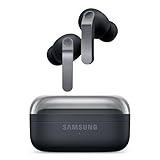
- EXCEPTIONAL AUDIO: Catch details like never before. Designed with a High-Res Audio¹ 24-bit hi-fi codec, the latest Galaxy earbuds maintain the integrity of your favorite audio over Bluetooth.
- TWO-WAY SPEAKER: Enjoy every audio experience to the fullest with two speakers in both Buds, including a tweeter for rich highs and a woofer for deep, full lows.
- HD VOICE: Enjoy clear phone calls with Galaxy Buds4 Pro and Galaxy S26 Series² —they work together to deliver crisp and clear conversations.
- ANC 2.0: Wherever you go, Adaptive Active Noise Cancellation 2.0³ intelligently adapts in real time to provide stronger, smoother noise cancellation wherever you go.
- OPTIMIZED COMFORT: Enjoy that just-right fit, with an improved, ear-hugging design and changeable ear tips.
Fit matters especially because it affects both comfort and sound. A correctly seated tip creates a seal that blocks some sound passively and gives active noise cancellation a better starting point. If a tip is loose, the bass can thin out and ANC may seem weak; if the body presses on your ear, no software setting can fix that physical mismatch. Sony’s Sound Connect app (formerly Sony Headphones Connect) includes a fit or air-pressure check to help assess the seal. Use it as a check, not a guarantee of long-term comfort.
Sony combines the redesigned enclosure with its QN3e noise-cancelling processor, Multi Noise Sensor technology, Integrated Processor V2 and Adaptive NC Optimizer. Sony says QN3e is three times faster than the XM5’s QN2e and claims up to 25% better noise reduction than the XM5, particularly for midrange and higher-frequency sounds. That 25% figure is Sony’s claim, not a universal result for every listener: ANC varies with fit, frequency, ear anatomy, settings and test method. Independent reviewers describe very strong cancellation, but a comparison is only meaningful if both earbuds seal well in the listener’s ears. TechRadar’s launch coverage attributes the improvement figure to Sony; What Hi-Fi? also reports strong ANC while noting that fit confidence varies among testers.
The larger antenna is reported to be about 1.5 times the size of the XM5’s. What Hi-Fi found the Bluetooth connection stable in crowded airports and train stations. Keep three kinds of “stability” separate: the shell staying put is mechanical stability; the seal remaining intact while you walk or chew is acoustic stability; and an uninterrupted Bluetooth link is wireless stability. An improvement in one does not guarantee improvement in the other two.
The case for “disaster”: fit is personal, and the case is divisive
Independent impressions are positive overall, but not unanimous about fit. What Hi-Fi reports that some testers felt less confident about the XM6 seal than with Bose and Technics alternatives, even though the reviewer eventually achieved a good fit with the app’s fit test. That is a reminder that Sony’s ergonomic intention is not universal proof of comfort.
Try the XM6 carefully if you have small ears, dislike pressure in the ear canal, prefer a shallow AirPods-style fit, or have struggled to get a seal with in-ear buds. Foam-style tips may feel too occlusive for some people. The included size range reportedly tops out at large, without an extra-large option, so listeners who need a larger tip may have trouble getting a reliable seal. Some people also need different tip sizes for the left and right ear; that is normal, not a sign that you are fitting them incorrectly.
Rank #2

- THE BEST NOISE CANCELLATION: Experience powerful, adaptive noise cancelling that keeps distractions out and your music front and center.
- LONG BATTERY LIFE AND CONVENIENT CHARGING: Stay powered up with up to 24 hours of total playback
- Bundle includes both Axiom CPS program and WF1000XM6/S
- Care includes additional 27-month Device Plan, managed by CPS.
The case is the clearest design regression for some buyers. Its angular form may make it easier to grip and open, and it remains lightweight, but its taller profile can feel awkward in tight jeans pockets. Runners may prefer a smaller case—or plan to leave it somewhere safe. The case is not presented as water resistant, even though the earbuds carry an IPX4 rating. Keep the case away from rain and sweat, and dry the earbuds and tips before putting them back to charge.
Foam-style tips: isolation with a maintenance cost
Sony’s hybrid foam-style tips are part of the fit and isolation story, not a universally superior substitute for silicone. When the size and insertion are right, they can conform to the ear canal and help with passive noise isolation. But foam-style material can be more difficult to clean than conventional silicone, and the sensation may feel too plugged or pressurised to listeners who prefer a lighter seal. Android Central notes the cleaning trade-off; Tom’s Guide recommends trying the available sizes and using the fit checker.
Use the supplied sizes to find a comfortable seal, and follow Sony’s care guidance. Wipe and dry the earbuds before returning them to the case, especially after exercise. Do not force a tip deep into the ear, and do not assume that a tight or uncomfortable fit is necessary for good ANC.
How to test the fit before deciding
- Try all four included sizes. Test each ear independently; your ears may need different sizes.
- Run the Sound Connect fit check. Use the result to catch a poor seal, but also judge comfort yourself.
- Insert gently with a slight twist. Do not force the bud deeply into the canal.
- Wear them for 30–60 minutes. A fit that feels fine for five minutes may become uncomfortable over a longer session.
- Walk, chew and speak. Check whether the buds stay put and whether the seal or sound changes.
- Return them if the shell causes persistent pressure. A different tip can address a seal problem; it cannot change the shape of the housing. Buy from a seller whose return policy gives you time to test them.
If ANC sounds weak, bass disappears or the left and right sides sound uneven, check the tip size and insertion first. Also look for debris or earwax. A poor seal can undermine both isolation and sound, making the earbuds seem worse than they are—and making comparisons with another model misleading.
Independent reader supportYour contribution helps us test, update, and keep practical guides available for everyone.What you get for the $329.99 price
The physical redesign is only one part of the premium package. Sony lists Bluetooth 5.3, multipoint for two devices, and support for SBC, AAC, LDAC and LC3. LDAC requires a compatible source and the appropriate app setting. Other features include DSEE Extreme upscaling, Ambient Sound mode, Quick Attention and app controls; TechRadar reports a 10-band EQ and personalization functions. Call processing uses two microphones and a bone-conduction sensor on each side, with AI beamforming and background-noise reduction. These are useful capabilities, but they do not prove that the new physical shape succeeds for a particular buyer.
Rank #3

- 2026 Bluetooth 5.4 Technology : The wireless earbuds use the bluetooth 5.4 chipset. There is a faster and more stable signal transmission and has successfully achieved low latency without interruption. With a range of up to 15 m, whether you are at home, in the office, or on the road, you don't have to worry about disconnection of the bluetooth earbuds. Automatic pairing & compatible with multiple devices.
- More Outstanding ENC Noise Reduction: Powered by dual 14.2 mm low-distortion composite dynamic drivers and a built-in high-resolution decoder, these wireless headphones deliver immersive, high-fidelity sound with AAC and SBC support.Advanced ENC call noise cancellation ensures crystal-clear voice quality, even in noisy environments—bringing you a truly elevated audio experience with the A90 noise-cancelling earbuds.
- LED Power Display & Easy Touch Control: The smart LED display keeps you informed of the remaining battery of both the charging case and wireless earphones, giving you full control over your listening time wherever you go. Simply tap the earbuds wireless bluetooth to control music playback, manage calls, or wake your voice assistant—hands-free convenience, no phone needed.
- 36 Hours Playtime & Faster Charging: Enjoy 6–8 hours of uninterrupted listening on one charge, with up to 36 hours of total battery life when used with the charging case. The Type-C fast charging design delivers safer, more efficient power, keeping your noise cancelling headphones ready whenever you need them.
- Ergonomic & IP7 Waterproof: Thanks to an ultra-light nano coating, these true wireless earbuds are IP7 waterproof and dustproof—perfect for workouts or outdoor adventures. The ergonomic in-ear design and soft silicone tips provide a secure, comfortable fit while keeping outside noise out, letting you immerse yourself fully in your music.
The earbuds are rated IPX4, meaning splash resistance—not waterproofing. That rating applies to the earbuds, not the charging case. The case supports USB and wireless charging.
What’s actually slowing this PC down?
Pick the symptom - the matching free tool is one click away.
Sony rates the battery at up to eight hours of music playback with ANC on and up to 12 hours with ANC off, with up to 24 hours total using the case. The listed communication time with ANC on is about five hours. These are maximum manufacturer figures; codec, volume, calls, settings and conditions affect actual runtime. Sony’s U.S. product page specifically notes that performance varies with use and environment. Eight hours with ANC is competitive but not class-leading, and it remains the same quoted ANC runtime as the XM5. If your main reason to upgrade is longer listening between charges, the XM6 is not the obvious answer. What Hi-Fi cites a ten-hour ANC claim for the Technics EAH-AZ100.
Who should buy the XM6—and who should audition first?
- Consider it if you prioritize ANC, sound customization and features. LDAC, DSEE Extreme, multipoint and Sony’s app controls make the XM6 a capable premium option, particularly if you use compatible Android devices.
- Consider it if you liked the XM5 tips but wanted a different shell. The narrower body and grip ridge may address handling or fit issues, though the case shape and slightly greater earbud weight are worth weighing.
- Audition it first if you have small or pressure-sensitive ears. The shell may still press on the outer ear, and the foam-style tips will not suit every listener.
- Look elsewhere if case size is your priority. The XM5 may suit people who prefer its rounded case or existing fit, especially if it is discounted; check current local pricing rather than relying on old sale figures.
- Compare Bose or Technics if fit or battery matters more than Sony’s ecosystem. Bose QuietComfort Ultra Earbuds (second generation) offer a different fit approach and are a serious ANC rival. The Technics EAH-AZ100 has a longer quoted ANC runtime. Neither will necessarily fit you better: try them if possible.
- Apple users should compare with AirPods Pro on ecosystem grounds. AirPods Pro may be more convenient for Apple-specific features and a compact case; Sony offers LDAC and deeper sound customization. They are not interchangeable choices for every phone.
- Fitness users should plan around the case. The earbuds are IPX4-rated, but the case is not rated as water resistant. If you leave the case behind, Sony says the earbuds can be turned off through the app while outside it.
For the underlying numbers, see Sony’s specification page. Features that require Sound Connect or firmware updates add some app dependence; buyers who prefer to avoid app-based setup should factor that into ownership.
Final verdict: genius engineering, conditional ergonomics
Sony has made purposeful changes to the earbuds: less width, a more tactile finish, a removal ridge, and revised hardware aimed at ANC and connectivity. The case goes in a more divisive direction, and the fit remains personal. The WF-1000XM6 is a strong choice if it seals comfortably in your ears and you value ANC and Sony’s controls; at $329.99, it is a risky blind buy for anyone sensitive to fit, foam tips or bulky-feeling cases.
Quick Recap
Product prices and availability are accurate as of the date/time indicated and are subject to change. Any price and availability information displayed on Amazon at the time of purchase will apply.
Recommended Free Tools

