A decade ago, reading brain activity sounded like lab equipment, gel electrodes, and a neuroscience degree. Today it’s showing up in sleep scores, focus apps, meditation wearables, and increasingly, on devices that already live on your wrist. Brain-sensing wearables didn’t suddenly get popular because the brain became easier to understand, but because everything around it finally did.
This surge isn’t just about curiosity or biohacking bravado. It’s the collision of better sensors, cheaper processing, machine learning that can work with noisy biological data, and a consumer audience already trained to trust wearables with their heart rate, sleep, and stress. Once people accepted that a watch could infer recovery or readiness, the jump to “what’s my brain doing?” became inevitable.
What’s changed most is where brain sensing fits into daily life. Instead of being framed as medical diagnostics, these devices promise practical, low-stakes insights: when you’re mentally fatigued, how deeply you slept, whether a breathing exercise actually calmed your nervous system, or how consistent your focus is across the day. That reframing is exactly why watches and mainstream wearables are getting involved.
Consumer neurotech finally found the right problems to solve
Early consumer EEG devices tried to sell mind control, productivity superpowers, or cinematic brain-computer interfaces. Most failed because decoding intent or thought content from a handful of dry electrodes is wildly unrealistic outside a lab. The current generation is more grounded, focusing on state rather than thoughts.
🏆 #1 Best Overall

- Track and Understand Your Meditation State: The smart headband captures brain signals with built-in EEG sensors, delivering real-time analysis of your brainwaves and meditation performance. Each session lets you save, share, or export raw EEG data for deeper review
- Real-Time Visual and Auditory Feedback: Our method merges closed-eye meditation with dynamic open-eye sessions, offering immediate feedback to enhance focus and calmness. The better your meditation state, the clearer and more vivid the images and sounds become
- Rich Meditation Experience: The built-in Meditation Tracker works with your favorite meditation apps, while the Group Meditation feature lets you practice with family and friends—both monitor brainwaves in real time and deliver session reports
- No Extra Subscription Fees: All features are included. Enjoy unlimited access to guided and unguided practices, plus all reports. Just wear the headband, connect to the SereniBrain app via Bluetooth, and meditate effortlessly for up to 8 hours on a single charge
- Enjoy Seamless Meditation: Say goodbye to disconnects that interrupt your peace! Our advanced sensors and larger electrodes provide reliable signal processing, while the adjustable design enhances contact with your skin for stable connectivity
Mental states like relaxation, alertness, drowsiness, or cognitive load are statistically detectable, even with imperfect signals. When combined with heart rate variability, motion, breathing patterns, and context, brain data becomes more useful than impressive. Watches already excel at this kind of sensor fusion, which makes them a natural home for brain-adjacent insights.
Sensor technology got smaller, cheaper, and good enough
Modern brain-sensing wearables rarely look like traditional EEG caps. Dry electrodes, conductive fabrics, ear-based sensors, and even forehead-integrated designs have reduced setup friction to seconds instead of minutes. The signal quality isn’t clinical, but it’s consistent enough for trend tracking.
At the same time, low-power processors and on-device machine learning mean raw signals don’t always need to leave the device. That matters for battery life, privacy, and real-world usability. If a smartwatch can already run optical heart rate, SpO2, skin temperature, and GPS without becoming unwearable, adding lightweight neural inference becomes feasible.
Watches already own the daily-wear problem
The biggest challenge in neurotechnology isn’t accuracy, it’s compliance. Devices that are uncomfortable, fragile, or socially awkward simply don’t get worn long enough to generate meaningful data. Smartwatches solved that problem years ago.
A well-designed watch spreads weight across the wrist, survives sweat and showers, lasts days between charges, and fits seamlessly into routines. When brain-related metrics piggyback on hardware people already trust and wear 16 hours a day, the data becomes longitudinal instead of novelty-driven. That’s where insight starts to matter.
Stress and sleep pulled brain sensing into the mainstream
The fastest adoption of brain-aware wearables hasn’t come from productivity tools, but from stress and sleep tracking. Both are deeply neurological, yet poorly captured by movement and heart rate alone. Adding even coarse brain-derived signals helps explain why someone feels exhausted despite “enough” sleep, or wired despite low physical strain.
This is why many watches are inching toward nervous system metrics rather than raw EEG readouts. They translate neural activity into understandable scores, trends, or coaching prompts instead of waveforms. For most consumers, that translation is the product.
Software, not hardware, is doing the heavy lifting
No consumer watch is secretly turning into a medical EEG. The real progress is in interpretation layers that learn your baseline over weeks and months. Relative change matters far more than absolute values when dealing with brain data.
Watches are uniquely positioned here because they already track context: time of day, activity, sleep debt, caffeine use, training load, and recovery. Brain-sensing features become more meaningful when they’re embedded in that ecosystem rather than standing alone. A standalone headband can tell you how relaxed you are; a watch can tell you why.
The line between wellness and neuroscience is intentionally blurry
It’s not an accident that most brain-sensing wearables avoid diagnostic language. Regulatory barriers are high, expectations are even higher, and misuse risk is real. By framing brain data as wellness, focus, or mindfulness support, companies can iterate faster while staying honest about limitations.
Watches already operate comfortably in this space. They infer stress without diagnosing anxiety, sleep quality without diagnosing insomnia, and readiness without prescribing rest. Brain-related features follow the same playbook, adding depth without crossing into medical claims.
Why this moment feels sudden, but isn’t
Behind the scenes, consumer neurotech has been quietly maturing for years. Academic research validated which neural signals are robust enough for daily life, hardware engineers learned where signal quality and comfort can coexist, and consumers became fluent in probabilistic health data. The pieces just took time to align.
Now that they have, watches are becoming the central hub. Not because they can read your mind, but because they’re the best platform we have for turning messy biological signals into something you can actually use tomorrow morning.
The Basics of Brain Signals: What Consumer EEG Can—and Cannot—Actually Read
To understand what today’s brain-sensing wearables are actually doing, you have to zoom out from the marketing and down into the physics. Consumer EEG doesn’t read thoughts, memories, or intentions in any literal sense. It measures faint electrical patterns on the scalp and uses statistics, context, and probability to turn those patterns into something actionable.
That distinction matters, because most confusion around neuro-wearables comes from assuming they work like brain scans in a lab or hospital. They don’t, and they’re not trying to.
What EEG is really measuring on your head
Electroencephalography, or EEG, detects tiny voltage fluctuations caused by groups of neurons firing together. These signals are strongest when large populations of neurons synchronize their activity, which is why EEG excels at measuring overall brain states rather than fine-grained mental content.
Consumer devices use dry electrodes pressed gently against the scalp, often integrated into a headband, ear clip, or, in a few experimental cases, the frame of a wearable you already own. This prioritizes comfort, daily wearability, and battery life over raw signal fidelity, which is why you’ll never see 64-channel arrays or conductive gels outside clinical settings.
What you get instead is a clean-enough signal to track patterns over time. Think trends, not snapshots.
Brain waves are categories, not switches
Most consumer EEG platforms talk about brain waves: delta, theta, alpha, beta, and sometimes gamma. These aren’t distinct modes your brain flips between; they’re frequency bands that tend to dominate during certain conditions.
Delta activity becomes prominent during deep sleep. Theta shows up during drowsiness, early sleep stages, and some forms of meditation. Alpha is associated with relaxed wakefulness, especially when your eyes are closed, while beta increases during active thinking, problem-solving, or stress.
What matters is proportion and change. A rise in alpha relative to your own baseline may indicate relaxation, but it doesn’t mean you’ve entered a universal “calm state” that looks the same for everyone.
Why consumer EEG works better for states than for thoughts
EEG has excellent temporal resolution, meaning it tracks changes in milliseconds. What it lacks is spatial precision, especially with the limited electrode placement used in consumer wearables.
That makes it very good at detecting global states like alertness, fatigue, or mental workload. It’s much worse at pinpointing where in the brain something is happening or what specific idea you’re thinking about.
This is why credible consumer neurotech focuses on focus quality, relaxation, sleep depth, or cognitive fatigue instead of claims about creativity, intelligence, or emotional truth. The former are statistically defensible; the latter drift into science fiction.
What algorithms add that raw signals cannot
On their own, EEG signals are noisy, individual, and frustratingly ambiguous. Two people can show very different patterns while feeling the same way, and the same person can vary wildly across days.
This is where software earns its keep. Modern consumer systems rely on machine learning models that adapt to your personal baseline, filtering out muscle movement, eye blinks, and environmental interference. Over time, the system learns what “focused” or “rested” looks like for you, not for an averaged dataset.
In practice, this means early readings are often less useful. The value compounds after weeks of consistent wear, which mirrors how watches improved heart rate variability and sleep staging long before those metrics felt trustworthy.
What consumer EEG cannot do, by design
There are hard limits that no firmware update will fix. Consumer EEG cannot diagnose neurological conditions, detect specific disorders, or replace clinical testing. It cannot reliably interpret complex emotions, moral intent, or subconscious desires.
It also struggles in motion. Walking, chewing, talking, or even adjusting a strap introduces electrical noise that can overwhelm brain signals, which is why most meaningful readings happen during stillness, sleep, or guided sessions.
If a product promises mind reading, instant cognitive upgrades, or medical insight without professional oversight, that’s not ambitious engineering. That’s a red flag.
Why “good enough” brain data is still valuable
Despite those limits, consumer EEG fills a useful gap. It offers a window into mental states that were previously invisible outside research labs, even if that window is fogged and imperfect.
When combined with context from a watch—sleep duration, training load, stress trends, time of day, and recovery metrics—EEG-derived insights become more practical. You’re no longer asking “what is my brain doing?” but “how does my mental state change when I train harder, sleep less, or drink coffee late?”
That shift from absolute truth to pattern recognition is the quiet strength of consumer neurotechnology. It doesn’t promise certainty. It offers feedback you can learn from, as long as you understand what’s actually being measured—and what never will be.
From Raw Waves to Insights: How Neuroscience Wearables Process Brain Data
Once you accept that consumer EEG is about patterns rather than diagnoses, the next question is how messy electrical signals from the scalp turn into something you can actually use. This transformation is less about flashy neuroscience and more about signal processing discipline, careful assumptions, and patient software design.
What follows is the journey your brain data takes, from microvolts at the skin to a focus score on your wrist or phone.
Step one: Capturing extremely weak signals
Consumer neuroscience wearables typically rely on dry or semi-dry EEG electrodes embedded in headbands, earbuds, caps, or occasionally watch-adjacent accessories. These electrodes detect voltage changes in the range of 1–100 microvolts, which is orders of magnitude weaker than muscle or heart signals.
Because dry electrodes trade comfort and convenience for signal fidelity, placement matters more than precision. Most devices target frontal or temporal regions because they’re accessible, hair-light, and useful for sleep, attention, and fatigue tracking rather than deep cognitive mapping.
Amplification and analog-to-digital conversion
Before any software gets involved, the raw signal is amplified and digitized by onboard electronics. This stage is critical, because poor amplification can permanently bury useful brain activity under noise.
To preserve battery life and keep devices slim, consumer wearables use lower sampling rates and fewer channels than lab systems. That design choice limits spatial detail but keeps the device wearable overnight, during meditation, or across a workday without feeling like medical equipment.
Filtering out what the brain isn’t doing
Most of what EEG electrodes detect is not brain activity. Eye blinks, jaw tension, neck movement, electrical interference, and even strap pressure all produce stronger signals than neurons firing.
Wearables apply a series of digital filters to isolate frequency bands commonly associated with brain rhythms, such as delta, theta, alpha, beta, and sometimes gamma. Motion sensors, accelerometers, and impedance checks help the software decide when to downweight or discard contaminated data instead of pretending it’s meaningful.
From waves to features that algorithms can read
Raw waveforms aren’t very useful on their own, so the system extracts features from the signal. These include power within specific frequency bands, ratios between bands, variability over time, and how stable or fragmented the signal appears.
Think of this as converting audio into a music profile rather than storing every vibration of the speaker. You lose detail, but you gain something computable, comparable, and battery-efficient enough to analyze continuously.
Personal baselines and adaptive models
This is where consumer neurotech quietly improved over the past few years. Instead of comparing you to a population average, most credible devices build a rolling baseline from your own data.
Machine learning models look for consistent patterns that correlate with your reported focus sessions, sleep stages, breathing exercises, or recovery days. Over time, the system becomes less interested in absolute values and more sensitive to deviations from your personal norm.
Context fusion with other wearable sensors
EEG alone rarely tells a complete story, which is why modern neuroscience wearables increasingly lean on sensor fusion. Heart rate variability, skin temperature, respiration, motion, and time-of-day data provide context that brain signals lack.
Rank #2

- Works great on its own — access core EEG-powered feedback and session tracking right out of the box; optional Premium subscription adds AI Coach, deeper brain insights, and access to 500+ meditations.
- Personal Meditation Coach — Meet MUSE 2, a smart headband that helps you understand your brain and live a more relaxed, present life. Begin improving your overall brain health and mental wellbeing by harnessing the calming power of meditation.
- Wearable Neurofeedback — To begin, put on the headband and position it so the sensors are in contact with your skin. Next, connect to Bluetooth through the MUSE app, select your meditation experience, take a deep breath, and begin to relax.
- Tune Into Your Body — After each session, you are provided with a calm score. Track your progress to improve your meditation practice overtime and develop an understanding of your internal cues to learn how to relax, build energy and optimize performance.
- Safe, Trusted and Certified — MUSE is backed by research from prestigious institutions and is used by neuroscience researchers around the world. Our SmartSense EEG sensors are award winning and our company is built on credibility and trust.
This is where watches and neuro wearables start to overlap in philosophy. A dip in focus means more when paired with poor sleep, elevated stress, or heavy training load, turning vague mental states into actionable patterns.
Turning analysis into feedback you can feel
Once the system detects a meaningful state, it has to decide how, or whether, to intervene. Some devices simply log trends for later review, while others offer real-time neurofeedback through sound, visuals, or haptics.
The most conservative designs nudge behavior rather than attempt control. A tone that changes when your attention drifts or a vibration when relaxation deepens teaches self-regulation without claiming to steer your brain directly.
What about stimulation and “active” neurotech?
A smaller subset of consumer devices pair sensing with stimulation, such as transcranial electrical stimulation or auditory entrainment. These systems apply gentle currents or rhythms intended to influence brain activity, not just observe it.
The evidence here is mixed and highly protocol-dependent, which is why credible products keep intensity low, session-based, and optional. If a wearable treats stimulation like a daily productivity hack rather than a carefully constrained tool, caution is warranted.
Software experience, battery life, and daily wearability
All of this processing has to happen within tight power and comfort limits. Continuous EEG drains batteries quickly, so many devices restrict full-resolution recording to sleep, guided sessions, or short daytime windows.
Comfort and materials matter as much as algorithms. Lightweight frames, breathable fabrics, and stable yet gentle contact often determine whether data quality improves over weeks or collapses after the novelty wears off.
Data ownership and privacy at the processing layer
Brain data feels personal because it is, even when it’s imprecise. How and where signals are processed matters, especially when machine learning models improve by aggregating user data.
Reputable companies disclose whether analysis happens on-device, in the cloud, or both, and whether anonymized data is used to refine models. Transparency here isn’t a bonus feature; it’s part of the product’s real-world value proposition.
Understanding this processing pipeline reframes what neuroscience wearables actually offer. They are not mind readers or diagnostic tools, but layered systems that translate weak biological signals into patterns you can observe, learn from, and occasionally act on.
Neurofeedback, Stimulation, and Passive Tracking: The Three Core Device Categories Explained
Once you understand how weak and context-dependent brain signals are, the current consumer landscape becomes easier to navigate. Most neuroscience wearables fall into one of three functional categories, defined less by form factor and more by what they actually do with the signal after it’s captured.
These categories are not marketing labels. They reflect fundamentally different assumptions about user agency, risk, battery demands, and how much trust you’re placing in the device’s interpretation of your brain activity.
Neurofeedback: Learning to self-regulate with real-time cues
Neurofeedback devices sense brain-related signals and immediately reflect something back to you, usually through sound, visuals, or subtle haptics. The core idea is operant conditioning: when your brain drifts toward a target state, the feedback becomes smoother, quieter, or more pleasant.
In consumer wearables, this typically targets attention, calm, or sleep onset rather than clinical outcomes. EEG headbands for focus sessions or sleep wind-downs, and even some earbuds using auditory neurofeedback, fall into this category.
What makes neurofeedback relatively defensible is that the device isn’t claiming to change your brain for you. It’s giving you a mirror, however imperfect, and letting your nervous system do the adaptation over repeated sessions.
From a usability standpoint, these devices are often session-based to preserve battery life and signal quality. Expect guided modes, limited background tracking, and a strong reliance on companion apps that explain trends rather than raw data.
Stimulation-based wearables: Influencing activity, not just observing it
Stimulation devices go a step further by actively delivering energy to the nervous system, most commonly via transcranial electrical stimulation or rhythmic sensory input. This might involve low-level currents across the scalp or precisely timed audio patterns designed to encourage certain neural rhythms.
In consumer products, stimulation is intentionally constrained. Intensities are low, sessions are time-limited, and most reputable brands position stimulation as optional rather than always-on.
The scientific literature here is highly variable, with outcomes depending on electrode placement, timing, individual brain differences, and task context. That’s why credible consumer devices emphasize consistency and safety over dramatic claims.
From a wearability perspective, stimulation hardware often adds bulk, rigidity, or tighter fit requirements to maintain electrode contact. Comfort, materials, and head geometry matter more here than in passive sensing, especially for repeat use.
Passive tracking: Long-term patterns over moment-to-moment control
Passive brain-related tracking focuses on collecting data with minimal user intervention. Instead of guiding or nudging your brain in real time, these devices look for trends across nights, days, or weeks.
Sleep-focused headbands, smart rings inferring neurological load through heart rate variability, and earbuds analyzing overnight brain-adjacent signals often fall into this category. The emphasis is on correlation, not immediate feedback.
This approach is often the most wearable-friendly. Lightweight materials, soft fabrics, and extended battery life take priority, since data quality depends on whether you’ll actually wear the device consistently.
The trade-off is immediacy. Passive systems rarely tell you what your brain is doing right now, but they can be useful for spotting patterns related to sleep depth, recovery, or cognitive fatigue over time.
Why these categories matter when choosing a device
Each category implies a different relationship between you and the technology. Neurofeedback assumes learning, stimulation assumes intervention, and passive tracking assumes observation.
They also differ in risk tolerance and expectations. A device that only reflects data back to you carries fewer downsides than one that claims to actively enhance cognition, especially outside controlled conditions.
Battery life, software polish, and comfort tend to scale inversely with ambition. The more a device tries to do in real time, the more compromises it usually makes in daily wearability.
Understanding which category a product truly belongs to helps cut through vague claims. It reframes the question from “Can this make me smarter or calmer?” to “Is this a tool I can realistically use, trust, and learn from over months, not days?”
Form Factor Matters: Headbands, Earbuds, Rings, and Why Your Wrist Is (Usually) the Wrong Place
Once you understand what category a neuroscience wearable truly falls into, the next constraint becomes physical rather than conceptual. The brain is not evenly accessible from the body, and where a device sits determines what signals it can plausibly capture.
This is where marketing often diverges from biology. A beautifully designed wearable can still be fundamentally limited if it’s sampling from the wrong place, with the wrong materials, or without stable contact.
Why proximity to the brain still rules everything
Most consumer brain-sensing devices rely, directly or indirectly, on electroencephalography. EEG signals are tiny, measured in microvolts, and degrade rapidly with distance, hair, movement, and poor skin contact.
That’s why nearly every credible non-invasive EEG system, from research labs to consumer products, clusters around the scalp, forehead, or ear canal. These areas offer relatively thin bone, less muscle interference, and predictable anatomy.
Move too far away, and you’re no longer measuring brain activity. You’re inferring it indirectly through proxies like heart rate variability, respiration, or motion, which can be useful but are fundamentally different signals.
Headbands: The most direct path, with trade-offs
Headbands remain the most straightforward way to capture EEG outside a lab. They place electrodes across the forehead or temples, targeting frontal brain regions associated with attention, working memory, and executive control.
From a signal-quality standpoint, this is still the gold standard for consumer neurotech. Stable electrode contact, predictable placement, and short signal paths make real-time feedback and neurofeedback possible.
The downside is wearability. Even lightweight headbands introduce pressure points, hair interference, and aesthetic friction, which limits how often people actually use them outside focused sessions.
Battery life is typically modest, often measured in single-digit hours rather than days. Materials matter enormously here, with soft-touch plastics, fabric bands, and replaceable electrode pads making the difference between a device you tolerate and one you abandon.
Earbuds and ear-EEG: A quiet sweet spot for passive use
Ear-based sensing has gained momentum because the ear canal offers a surprisingly stable window into brain-adjacent signals. Electrodes placed in or around the ear can pick up EEG-like activity with less motion artifact than the forehead.
This form factor shines for overnight or long-duration use. Earbuds already fit into daily routines, and when designed well, they can remain comfortable across sleep positions and extended wear.
Signal fidelity is typically lower than a dedicated headband, especially for complex neurofeedback. But for sleep staging, relaxation tracking, or long-term pattern analysis, ear-based systems often strike the best balance between data quality and compliance.
Battery life here tends to be better than headbands, especially when paired with a charging case. The real differentiator becomes fit, since ear geometry varies wildly and poor fit degrades both comfort and data integrity.
Rings: Neurological insight by inference, not measurement
Smart rings sit far from the brain, but they earn their place by focusing on what they can measure extremely well. High-quality photoplethysmography, skin temperature, and motion sensors allow rings to track recovery, sleep regularity, and autonomic balance with impressive consistency.
What they cannot do is measure brain activity directly. Any claims about focus, cognitive load, or mental readiness are derived from indirect correlations, primarily through heart rate variability and sleep architecture.
That doesn’t make them useless for brain-related insights. It just means their strength lies in longitudinal patterns rather than moment-to-moment mental states.
From a wearability perspective, rings excel. Multi-day battery life, minimal intrusion, durable materials, and near-forgettable comfort make them ideal for people who value consistency over immediacy.
Why the wrist struggles with brain sensing
The wrist is the most familiar location in wearables, but it’s also one of the worst places to attempt anything resembling brain measurement. There is simply too much distance, muscle activity, and signal contamination.
Rank #3

- Deep Sleep Boost – Newest feature designed to detect slow-wave sleep and sustain it longer for a more continuous deep sleep, supporting better physical and mental recovery. It complements the Sleep Assist feature that helps you fall asleep faster.
- Longer Focus, Less Stress, More Calm – Muse S Athena is a smart brain-sensing headband designed to help you better understand your brain so you can improve focus, calm your busy mind, and develop a stronger mental fitness foundation.
- Ready to use immediately — get advanced EEG + fNIRS tracking for sleep, focus, and recovery; optional Premium subscription adds AI Coach, deeper brain insights, and access to 500+ meditations.
- Wearable EEG and fNIRS Biofeedback — Put on the soft, adjustable headband and position the sensors to make skin contact. Connect to the Muse app via Bluetooth, select a meditation, sleep or brain training experience, and begin to focus, relax or unwind.
- Safe & Trusted — Built on years of scientific validation, Muse is trusted by neuroscientists, researchers and wellness professionals. Our award-winning SmartSense EEG sensors combined with new fNIRS technology brings the most advanced Muse experience yet.
Smartwatches can be excellent at tracking cardiovascular and movement data. They can even support stress estimation through HRV trends, especially when worn consistently.
What they cannot do, despite suggestive dashboards or language, is sense neural activity. Any “brain” metric presented on a watch is an abstraction layered on top of non-neural signals.
This doesn’t diminish the value of wrist-based wearables. It just means their role in neuroscience is contextual rather than direct, complementing rather than replacing head- or ear-based systems.
Comfort, materials, and real-world compliance
Across all form factors, the same rule applies: data quality collapses if the device isn’t worn consistently. Neuroscience wearables are especially sensitive to fit, pressure, and material choice because signal integrity depends on stable contact.
Soft polymers, breathable fabrics, and skin-friendly coatings are not cosmetic details. They directly influence electrode impedance, motion artifacts, and long-term usability.
Unlike a mechanical watch, where finishing and case geometry affect comfort but not function, neurotech wearables blur that line. Comfort is function.
Choosing the right form factor for your goal
If your interest is real-time focus training or neurofeedback, headbands remain the most honest option. They demand more from you but give the clearest window into what your brain is doing in the moment.
If your priority is sleep, recovery, or low-effort tracking, earbuds and rings often make more sense. They trade immediacy for consistency, which is often the smarter long-term choice.
And if a product promises brain sensing from the wrist, skepticism is healthy. In neuroscience wearables, where you place the sensor often matters more than how advanced the software claims to be.
Real-World Use Cases: Focus, Meditation, Sleep, Stress, and Cognitive Training—What Works Today
Once you understand where sensors can and cannot reliably read neural signals, the conversation shifts from possibility to practicality. The real question is not whether consumer neurotech can “read your brain,” but where it delivers repeatable value without overstating its reach.
Some use cases are already surprisingly mature. Others remain closer to guided self-experimentation than objective measurement, even when the apps look polished and scientific.
Focus and attention training: Where EEG still earns its keep
Focus training is the clearest win for head-based EEG wearables today. Devices like Muse, Emotiv, and select newer headbands use frontal EEG channels to estimate attention-related patterns, then translate those into real-time feedback.
This feedback is not reading thoughts or productivity directly. Instead, it tracks shifts in signal features correlated with sustained attention, such as reduced low-frequency noise and more stable engagement patterns during a task.
In practice, users see benefits when they treat focus scores as training signals, not performance grades. Over weeks of consistent use, some people learn to recognize when their mental state drifts, much like learning posture through biofeedback.
Comfort and fit matter enormously here. Lightweight headbands with flexible electrodes tend to outperform rigid designs, even if they look less futuristic, because stable skin contact beats raw channel count in real-world conditions.
Meditation and mindfulness: Feedback as a training wheel
Meditation is where consumer neurotech is most honest about its limitations and strengths. EEG-based meditation feedback does not detect enlightenment, calm, or insight; it detects relative shifts toward more regular, less reactive brain activity.
For beginners, this can be powerful. Seeing immediate feedback helps demystify meditation and anchors attention to the process rather than the outcome.
For experienced meditators, the value often diminishes over time. Once internal awareness improves, external feedback can become redundant or even distracting.
From a usability standpoint, meditation-focused headbands succeed when they are quick to put on, light enough for 10–20 minute sessions, and paired with software that emphasizes trends rather than moment-to-moment scoring.
Sleep tracking: EEG-lite versus consistency
Sleep is the most misunderstood use case in consumer neurotech. True sleep staging requires EEG, but full scalp coverage is impractical for nightly use outside clinical settings.
Consumer sleep headbands and EEG-enabled earbuds attempt a compromise. They capture limited brain signals, combine them with motion and heart rate data, and infer sleep stages with moderate accuracy.
For most users, the value lies less in perfect staging and more in longitudinal insight. Changes in sleep onset latency, awakenings, and consistency over time are often more actionable than precise REM percentages.
Here, comfort and battery life dominate everything else. Devices that are slightly less accurate but comfortable enough to wear every night often outperform more advanced systems that end up in a drawer.
Stress and emotional regulation: Indirect but useful
Stress is not a brainwave. It is a physiological and psychological state reflected across multiple systems, including heart rate variability, breathing patterns, muscle tension, and, to a lesser extent, EEG.
Neuroscience wearables approach stress indirectly by combining neural and non-neural signals. EEG may pick up heightened arousal or irregular patterns, while HRV and respiration data provide stronger markers.
The most effective systems frame stress feedback as guidance, not diagnosis. They prompt breathing exercises, posture changes, or short recovery breaks based on trends rather than isolated spikes.
This is where wrist-based wearables still play a strong supporting role. While they do not sense the brain, their continuous cardiovascular tracking complements head-based neurotech in a broader stress-management toolkit.
Cognitive training and “brain games”: Where expectations need calibration
Cognitive training is the most commercially tempting and scientifically contentious category. Many products promise sharper memory, faster thinking, or long-term brain improvement through EEG-guided exercises.
In reality, most benefits are task-specific. Users often improve at the trained activities, but evidence for broad intelligence gains remains limited.
EEG adds value when it adapts task difficulty based on engagement rather than performance alone. This can reduce frustration and help maintain an optimal challenge level, which is useful for motivation and habit formation.
As with mechanical watches boasting exotic complications, complexity does not guarantee utility. Simple, well-calibrated training systems used consistently tend to outperform feature-heavy platforms abandoned after a week.
What separates credible tools from experimental gadgets
Across all these use cases, the most reliable products share common traits. They are transparent about what they measure, conservative in their claims, and focused on trends rather than absolute scores.
Battery life, software stability, and cross-platform compatibility matter just as much as sensor specs. A device that needs daily charging or frequent recalibration quickly loses real-world value.
Finally, privacy deserves scrutiny. Brain-derived data is deeply personal, even when abstracted, and reputable companies clearly explain how data is stored, processed, and shared.
In today’s market, neuroscience wearables work best as training aids and self-awareness tools. When used with realistic expectations, they can meaningfully support focus, meditation, sleep hygiene, and stress regulation without pretending to replace clinical neuroscience.
Consumer vs Medical Neurotech: Accuracy, Regulation, and Why Clinical Claims Don’t Translate
The limitations discussed so far make more sense once you understand a fundamental divide in neurotechnology. Consumer brain wearables and medical neurotech may use similar words and sometimes similar sensors, but they operate in entirely different scientific, regulatory, and practical worlds.
This gap explains why marketing language often borrows from clinical neuroscience, even when the underlying data quality and intended use are miles apart.
Signal quality: The difference between “detecting” and “diagnosing”
Medical EEG systems are designed to capture faint neural signals with extreme precision. They typically use 16 to 256 electrodes, conductive gel or saline, shielded cabling, and controlled environments to minimize electrical noise.
Consumer neuro wearables usually rely on one to eight dry electrodes, placed for comfort and speed rather than optimal signal coverage. This makes them good at detecting broad patterns like relaxation, engagement, or sleep stages, but not fine-grained neural events.
Think of it like wrist-based heart rate versus a clinical ECG. Both track the same organ, but only one is precise enough for diagnosis.
Context matters: Labs remove noise that real life adds back
Clinical neurotech assumes a cooperative user sitting still in a quiet setting. Movement, facial muscle activity, jaw tension, and even eye blinks are treated as artifacts to be eliminated.
Consumer devices must function while you’re breathing deeply, adjusting posture, or wearing glasses. The software compensates with filtering and probabilistic models, which improves usability but reduces certainty.
This is why consumer EEG focuses on trends over time rather than moment-to-moment accuracy. It’s measuring states, not pinpointing causes.
Regulation: Wellness tools vs medical devices
Medical neurotechnology is regulated as a diagnostic or therapeutic device. In the US, this means FDA clearance or approval; in Europe, CE marking under medical device regulations.
Consumer neuro wearables are typically classified as wellness products. They are allowed to support relaxation, focus, sleep hygiene, or meditation, but not to diagnose ADHD, anxiety disorders, epilepsy, or depression.
When a consumer device references clinical research, it usually means the underlying concept has been studied, not that the product itself delivers clinical-grade outcomes.
Rank #4
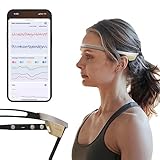
- VISUALIZE YOUR MEDITATION PERFORMANCE. Supported by the biosensing technology, see how your brain and body are working when you are doing meditation. Real-time brainwaves, heart rate, HRV, relaxation, attention and pressure level tell you whether you are getting into meditation states.
- SCIENTIFICALLY VALIDATED LESSONS of various topics in the app help you gain the basic techniques and accompany you to make progress every day (subscribers have access to all). More lessons are on the way. Veterans may enjoy the unguided mode.
- A DETAILED BIODATA REPORT displaying your performance of every minute reminding you when you get into the meditation state and during which period you are doing great. Compare your performance with the last seven times to see your improvement.
- SUPER LIGHT, COMFORTABLE & PORTABLE. 29g in weight. Easy to take it with you anywhere, whether you are at home, in the office or commuting.
- FREE TO DOWNLOAD THE APP on the App Store or Google Play. Bluetooth connection. Once fully charged, the headband lasts about 8 hours to meditate and 50 days on standby mode.
Why “clinically validated” rarely means what you think
Many consumer neurotech companies cite peer-reviewed studies to bolster credibility. Often, those studies used lab-grade EEG systems, trained technicians, and tightly controlled protocols.
Translating those findings to a lightweight headband with dry sensors and automated setup is not straightforward. The physics of signal capture and the variability of real-world use change the outcome.
A product can be inspired by clinical science without reproducing clinical results, and this distinction is frequently blurred in marketing copy.
Neurofeedback vs neurotherapy: Same roots, different expectations
Clinical neurofeedback is delivered by trained practitioners who tailor protocols to an individual’s brain patterns over dozens of supervised sessions. Adjustments are made continuously based on response and side effects.
Consumer neurofeedback systems use generalized models designed to be safe and broadly applicable. They trade personalization for scalability and ease of use.
This doesn’t make them useless, but it does mean they are better suited for self-regulation practice than targeted intervention.
Electrical and sensory stimulation: Safety first, strength second
Some consumer devices include tACS, tDCS, or sensory entrainment through light and sound. In medical settings, these techniques are applied with carefully calibrated intensities and strict exclusion criteria.
Consumer versions operate at much lower power levels and are constrained by conservative safety limits. The effects tend to be subtle, cumulative, and highly individual.
If a device promises dramatic cognitive changes from mild stimulation, skepticism is warranted.
Accuracy vs consistency: What consumer neurotech actually optimizes for
Medical devices aim for absolute accuracy because decisions depend on it. Consumer wearables aim for consistency, so trends over days or weeks become meaningful.
If your focus score drops every afternoon or your relaxation metrics improve after meditation, that pattern can still be useful even if the absolute numbers aren’t clinically precise.
This is similar to how smartwatches track sleep stages. The value lies in direction and habit feedback, not perfect staging.
Why medical claims don’t translate to daily wearability
Clinical neurotech prioritizes data quality over comfort. Head caps, wired amplifiers, gel cleanup, and session scheduling are acceptable trade-offs in a medical context.
Consumer wearables must balance signal fidelity with comfort, battery life, portability, and ease of use. Lightweight materials, flexible bands, and all-day wearability inevitably constrain performance.
Just as a mechanical chronometer behaves differently on a test bench than on the wrist, neurotechnology behaves differently in the wild.
What this means for buyers evaluating brain wearables
The most credible consumer neurotech products avoid medical language altogether. They frame themselves as tools for awareness, training, and habit support rather than solutions to neurological problems.
Look for companies that publish validation data specific to their device, explain limitations openly, and design software around long-term use rather than impressive first-session demos.
Understanding where consumer neurotech stops is not a drawback. It’s what allows these devices to be used safely, realistically, and with expectations grounded in how the brain actually behaves outside the lab.
Credible Products vs Experimental Hype: Current Devices Worth Knowing About
Once you understand why consumer neurotech optimizes for consistency, comfort, and long-term patterns, it becomes easier to separate genuinely useful products from glossy demos chasing attention.
The most credible devices today share a few traits. They use conservative claims, publish at least some validation data, prioritize daily wearability, and design their software around training or awareness rather than “unlocking” the brain.
EEG headbands that have earned real-world credibility
Muse remains the reference point for consumer EEG, not because it’s the most powerful, but because it is the most honest about its limits. Devices like the Muse 2 and Muse S use a small number of dry EEG sensors placed on the forehead and behind the ears, trading spatial detail for comfort and repeatability.
In daily use, Muse works best as a guided neurofeedback tool. The app translates brainwave trends into simple feedback for meditation, focus sessions, and sleep wind-down, and the value comes from habit reinforcement rather than precise brain-state decoding.
Comfort and materials matter here. Muse’s lightweight plastic frame and fabric band are designed for short sessions rather than all-day wear, with battery life typically lasting several days of brief use rather than continuous monitoring.
Emotiv: prosumer-grade EEG for serious tinkerers
Emotiv occupies a different tier entirely. Headsets like the EPOC X and INSIGHT offer more EEG channels than most consumer devices, making them attractive to developers, researchers, and quantified-self users willing to trade convenience for richer data.
These devices can stream raw EEG, integrate with third-party software, and support more complex analyses. That flexibility comes with trade-offs: setup takes longer, sensor placement matters more, and comfort over extended sessions is less forgiving than minimalist headbands.
For most consumers, Emotiv is overkill. For those who want transparency, raw data access, and the ability to experiment beyond polished wellness apps, it’s one of the few platforms that justifies its learning curve.
Neurofeedback headphones and the push toward invisibility
Neurable’s EEG-enabled headphones, developed in partnership with Master & Dynamic, represent an important design shift. By embedding EEG sensors into over-ear headphones, they aim to make brain sensing feel incidental rather than ceremonial.
The neurotechnology here is intentionally subtle. Focus and attention metrics are inferred during listening sessions, and feedback is designed to stay in the background rather than interrupting the experience.
Battery life, audio quality, and comfort are competitive with premium headphones, which matters more than raw EEG fidelity for most users. This category prioritizes adoption over precision, and that’s not necessarily a flaw.
Sleep-focused EEG: a category that peaked early
The Dreem Headband demonstrated what consumer sleep EEG could look like when engineered aggressively. With multiple electrodes and sophisticated algorithms, it delivered some of the most detailed non-clinical sleep data ever offered to consumers.
It also illustrated the economic reality of neurotech. The product was discontinued despite strong performance, largely due to cost, support complexity, and a limited mass market.
Today, no mainstream consumer EEG sleep device fully replaces Dreem. Most sleep wearables now infer brain states indirectly through motion, heart rate, and respiration, which is less precise but far more scalable.
Stimulation devices: where skepticism matters most
Electrical and sensory stimulation products sit on the edge between wellness and medical intervention. Devices claiming to use tDCS, tACS, or cranial nerve stimulation for mood or cognition deserve particular scrutiny.
Some companies, like Flow Neuroscience in Europe, operate under medical frameworks for specific conditions such as depression. These are not lifestyle wearables, and they are not designed for casual optimization.
Consumer-focused stimulation products that promise dramatic gains in focus, creativity, or intelligence without clear protocols or published data should be approached cautiously. The science of stimulation is real, but the margins between benefit, neutrality, and discomfort are narrow.
Open-source and experimental platforms: powerful but unfinished
Platforms like OpenBCI’s Galea headset show where neurotechnology could go rather than where it’s ready to live today. With modular sensors, VR integration, and access to raw biosignals, they are tools for experimentation, not consumer solutions.
Comfort, setup time, and reliability are secondary concerns in this space. These systems are best understood as laboratories you can wear, not products you casually integrate into daily routines.
For readers comfortable with soldering irons, SDKs, and imperfect ergonomics, they offer unmatched freedom. For everyone else, they highlight why polish and restraint matter in consumer neurotech.
Devices that signal hype through design, not science
The fastest way to spot hype is language. Products that claim to “rewire your brain,” “unlock unused potential,” or deliver guaranteed cognitive upgrades are ignoring decades of neuroscience caution.
Another red flag is opacity. If a company won’t explain where sensors are placed, what signals are measured, or how metrics are derived, the device is likely prioritizing mystique over utility.
Credible products tend to undersell themselves. They talk about training, feedback, and gradual improvement, and they design experiences that still make sense when expectations are modest.
What’s actually worth knowing about right now
As of today, EEG-based wearables are best treated as awareness tools, not performance engines. They can help users notice patterns, reinforce habits, and engage more intentionally with focus, relaxation, or sleep routines.
The most valuable devices are the ones you’ll actually use consistently. Comfort, battery life, app design, and honest framing matter more than sensor count or marketing ambition.
In neuroscience wearables, restraint is not a weakness. It’s the clearest signal that a product understands both the brain it’s measuring and the human wearing it.
Battery Life, Comfort, Apps, and Data Ownership: Practical Buying Considerations
Once you accept the limits of what today’s brain-sensing wearables can realistically offer, the buying decision becomes far more practical. These devices live or die not on neuroscience ambition, but on whether they fit into daily life without friction.
The difference between a device that gathers insight and one that gathers dust is usually mundane. Battery habits, comfort during long sessions, software polish, and trust in how your data is handled matter more than any headline feature.
💰 Best Value

- Deep Sleep Boost – Newest feature designed to detect slow-wave sleep and sustain it longer for a more continuous deep sleep, supporting better physical and mental recovery. It complements the Sleep Assist feature that helps you fall asleep faster.
- Longer Focus, Less Stress, More Calm – Muse S Athena is a smart brain-sensing headband designed to help you better understand your brain so you can improve focus, calm your busy mind, and develop a stronger mental fitness foundation.
- Ready to use immediately — get advanced EEG + fNIRS tracking for sleep, focus, and recovery; optional Premium subscription adds AI Coach, deeper brain insights, and access to 500+ meditations.
- Wearable EEG and fNIRS Biofeedback — Put on the soft, adjustable headband and position the sensors to make skin contact. Connect to the Muse app via Bluetooth, select a meditation, sleep or brain training experience, and begin to focus, relax or unwind.
- Safe & Trusted — Built on years of scientific validation, Muse is trusted by neuroscientists, researchers and wellness professionals. Our award-winning SmartSense EEG sensors combined with new fNIRS technology brings the most advanced Muse experience yet.
Battery life: EEG is power-hungry by nature
Brain-sensing wearables typically consume more power than step counters or optical heart-rate sensors. EEG amplifiers need stable sampling, low noise, and continuous signal processing, which explains why many headbands last only one to three nights or a handful of daytime sessions per charge.
Sleep-focused devices often stretch to three to seven nights by aggressively limiting features outside overnight use. Focus and meditation headbands, especially those streaming real-time data, may need charging every one or two days.
This has real consequences for consistency. If charging feels as frequent as a smartwatch with heavy GPS use, adherence drops fast, especially for sleep tracking where forgetting a charge means losing an entire night of data.
Comfort and fit: neuroscience meets human anatomy
EEG requires skin contact, which immediately puts comfort under pressure. Dry electrodes are more convenient than gel, but they rely on spring tension or pressure points that can become noticeable during long sessions or side sleeping.
Headband width, curvature, and material choice matter as much as sensor count. Lightweight polymers, soft-touch silicone, and fabric wraps tend to disappear faster than rigid plastic frames, even if they house fewer sensors.
Fit is also deeply individual. A device that feels secure on one head shape may slide or pinch on another, and unlike watches, there is little adjustability beyond strap tension. Real-world wearability beats lab-perfect signal quality every time.
Apps and software: where neuroscience becomes usable
The app is the device for most users. Raw EEG is meaningless without thoughtful translation, and the best platforms focus on clarity rather than cleverness.
Credible apps explain what a metric represents, how stable it is, and what can realistically influence it. They avoid single-number “brain scores” without context and instead show trends, session comparisons, or simple state changes over time.
Compatibility also matters. iOS support is nearly universal, Android support less so, and desktop dashboards are rare outside experimental platforms. Cloud sync, offline use, and export options quietly separate polished consumer products from prototypes.
Neurofeedback and guidance: automation versus agency
Many consumer devices promise neurofeedback, but the implementation varies widely. Some offer passive soundscapes that shift with detected brain states, while others provide structured training sessions with clear goals and duration.
The most usable systems let the wearer stay in control. Adjustable session lengths, manual tagging, and the ability to disable feedback entirely help users learn what the data means instead of blindly chasing algorithmic cues.
Fully automated experiences can feel impressive at first, but they risk becoming opaque. When the system changes behavior without explanation, trust erodes, especially for users trying to build awareness rather than outsource it.
Durability and daily wear realities
Unlike watches, most neuroscience wearables are not designed for all-day use. Sweat resistance varies, water protection is often minimal, and hair products or skin oils can interfere with sensors over time.
Build quality still matters. Charging contacts, fabric coverings, and hinge points see repeated stress, and replacement cycles tend to be shorter than for smartwatches with hardened glass and sealed cases.
If a device is positioned as a nightly companion or daily training tool, it should tolerate routine handling without feeling fragile. Otherwise, the mental overhead of “being careful” becomes another barrier to consistency.
Data ownership and privacy: the quiet deal-breaker
Brain data is intimate, even when it’s noisy and non-diagnostic. How companies store, process, and monetize that data deserves more scrutiny than most marketing encourages.
Look for clear statements about data ownership, local versus cloud processing, and whether anonymized data is used for research or product improvement. Vague language around “improving our services” without opt-outs is a warning sign.
Export access matters too. Devices that allow raw or semi-processed data downloads signal confidence and transparency, while locked ecosystems often prioritize retention over user agency.
Value is about use, not potential
Pricing across neuroscience wearables ranges from smartwatch-adjacent to experimental-lab expensive. Higher cost does not automatically mean better insight, especially if comfort, battery life, or software fall short.
The most honest value question is simple: will this fit into your routine three months from now? Devices that respect attention, explain themselves clearly, and stay out of the way tend to earn that longevity.
In this category, practicality is not boring. It’s the difference between exploring your brain and merely owning a device that claims to.
Is Neuroscience Wearable Tech Worth Adopting Now—or Waiting Five Years?
After weighing durability, privacy, and real-world value, the natural question becomes one of timing. Neuroscience wearables clearly work in a limited, consumer-appropriate sense, but they do not yet work effortlessly, invisibly, or universally.
The answer is not a simple yes or no. It depends on what you expect the technology to deliver today versus what you are willing to wait for as sensing hardware, signal processing, and software maturity improve.
What neuroscience wearables can realistically deliver right now
Today’s consumer brain-sensing devices are best understood as awareness tools, not performance engines. EEG headbands and ear-worn sensors can reliably capture changes in brain rhythms associated with relaxation, mental effort, and sleep stages, even if the data is coarse and context-dependent.
Used consistently, they can help you notice patterns: how caffeine shifts your baseline, how stress shows up before you feel it, or how long it actually takes your brain to settle at night. That feedback loop is the real product, not the headline metric.
Neurofeedback features are also more credible than they were five years ago. Simple closed-loop systems that respond to sustained attention or relaxation can nudge behavior, especially for meditation training or wind-down routines, as long as expectations stay grounded.
Where the technology still falls short
Signal quality remains the core bottleneck. Consumer EEG relies on dry or semi-dry electrodes, minimal sensor counts, and imperfect contact through hair and skin, which limits spatial resolution and increases noise.
As a result, most devices infer mental states probabilistically rather than measuring them directly. When an app labels a session as “deep focus” or “calm,” it is mapping your signal to population-level models, not reading your thoughts or diagnosing your brain.
Hardware ergonomics are another constraint. Headbands, ear clips, and sleep-focused designs are improving, but comfort, fit consistency, and long-term wearability still lag behind wrist-based wearables with sealed cases, standardized straps, and proven materials.
The software gap matters more than the sensors
Raw brain data is meaningless without interpretation, and this is where many neuroscience wearables either succeed or fail. The strongest platforms explain uncertainty clearly, show trends over time, and avoid overconfident claims about cognitive states.
Weaker ecosystems hide complexity behind glossy scores and streaks that feel authoritative but lack context. When the software does not teach you how to read your own data, it encourages dependence rather than understanding.
This is also where future gains are most likely. Advances in on-device processing, personalization, and multimodal fusion with heart rate, motion, and sleep data will likely deliver more value than dramatic breakthroughs in EEG hardware alone.
Who should consider adopting now
Early adopters who enjoy self-experimentation and can tolerate ambiguity are the best fit today. If you already track sleep, training load, or stress and want another lens rather than a definitive answer, neuroscience wearables can add depth.
They are also well suited to structured practices like meditation, breathwork, or pre-sleep routines, where relative change matters more than absolute accuracy. In these contexts, even noisy signals can reinforce consistency and awareness.
Comfort and routine fit should guide your choice more than sensor specs. A device you can wear nightly or several times a week, with acceptable battery life and friction-free syncing, will outperform a more advanced one that lives in a drawer.
Who is better off waiting
If you are looking for clear cognitive enhancement, diagnostic insight, or medical-grade reliability, waiting is the wiser move. Consumer neurotech is not yet positioned to replace clinical tools or deliver guaranteed improvements in focus, mood, or memory.
Those who dislike subscription models, opaque algorithms, or frequent hardware refresh cycles may also find the current market frustrating. The category is still discovering sustainable business models, and that uncertainty often shows up in software decisions.
Waiting five years likely means better comfort, longer battery life, tighter integration with mainstream wearables, and more transparent data practices as regulation and consumer expectations mature.
The five-year outlook: evolution, not a revolution
Neuroscience wearables are unlikely to undergo a sudden leap akin to the first heart rate sensors in smartwatches. Progress will be incremental: better electrodes, smarter personalization, and more honest framing of what the data can and cannot say.
The most meaningful change may be invisibility. Brain sensing that moves into earbuds, sleep headbands that feel like fabric rather than hardware, and software that adapts quietly in the background will reduce friction and increase consistency.
Crucially, the conversation will shift from “what is my brain doing right now?” to “how does my brain change over weeks and months?” That longer horizon aligns better with how neural adaptation actually works.
So, adopt or wait?
Adopt now if you are curious, patient, and motivated by insight rather than certainty. The best neuroscience wearables today reward users who treat them as learning tools and accept their limits.
Wait if you want polished simplicity, clear outcomes, and minimal cognitive overhead. The category is promising, but it is still early, and restraint can be just as rational as enthusiasm.
Either way, neuroscience wearables are no longer science fiction. They are imperfect instruments pointed at the most complex system we have, and used thoughtfully, they can already teach you something valuable about how your mind responds to the life you give it.