Most consumer brain-sensing wearables use electrodes near the scalp to record EEG, then software interprets patterns in those signals. They do not directly reveal thoughts, emotions, or diagnoses. What a device can tell you depends on its sensor placement, signal quality, processing, validation, and intended use.
Wearable EEG comes in several forms, including head-worn systems, patches, in-ear or headphone devices, and emerging glasses-integrated designs. These systems serve different consumer, research, and clinical needs; a polished app score alone does not establish that a measurement is accurate or medically useful.
What does a wearable EEG measure?
Electroencephalography (EEG) uses electrodes to record electrical potential differences associated with brain activity. A wearable system may include electrodes, an amplifier, wireless transmission, other sensors, and software. The app’s displayed label is an interpretation of recorded signals—not a direct observation of a thought, emotion, ability, or diagnosis.
Wearable neurotechnology can also measure physiological signals other than EEG. For example, pulse or movement sensors can add context, but those measurements are not brain activity and do not, by themselves, validate an EEG interpretation.
Recommended Free Tools
#1 Best Overall
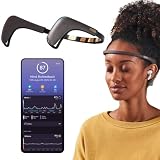
- Works great on its own — access core EEG-powered feedback and session tracking right out of the box; optional Premium subscription adds AI Coach, deeper brain insights, and access to 500+ meditations.
- Personal Meditation Coach — Meet MUSE 2, a smart headband that helps you understand your brain and live a more relaxed, present life. Begin improving your overall brain health and mental wellbeing by harnessing the calming power of meditation.
- Wearable Neurofeedback — To begin, put on the headband and position it so the sensors are in contact with your skin. Next, connect to Bluetooth through the MUSE app, select your meditation experience, take a deep breath, and begin to relax.
- Tune Into Your Body — After each session, you are provided with a calm score. Track your progress to improve your meditation practice overtime and develop an understanding of your internal cues to learn how to relax, build energy and optimize performance.
- Safe, Trusted and Certified — MUSE is backed by research from prestigious institutions and is used by neuroscience researchers around the world. Our SmartSense EEG sensors are award winning and our company is built on credibility and trust.
Can a wearable really read your brain?
A wearable EEG device can record some electrical activity at the scalp, but it cannot read a person’s thoughts. Software may identify patterns or provide feedback, yet the meaning of a score depends on the signal, the algorithm, and evidence for that specific device and use.
Movement, sensor placement, electrode configuration, processing, and the conditions in which data is collected can all affect signal quality. More sensors or a more sophisticated-looking app do not automatically make a result clinically reliable.
Forms of wearable EEG
A 2026 review groups smart wearable EEG systems into four broad forms. These are category-level descriptions, not guarantees about every product.
| Form | Potential strengths | Considerations |
|---|---|---|
| Head-worn systems | Can provide broader signal coverage for applications such as sleep staging, human-machine interaction, and epilepsy monitoring. | Coverage, fit, electrode setup, movement, and validation vary by device and intended use. |
| Patches or tattoos | May support comfortable, longer-term monitoring, including in sleep-related settings. | Performance and appropriate use depend on the specific sensors and validation. |
| In-ear or headphone-based systems | Use nontraditional electrode locations and may be comfortable for some applications. | Signal coverage and suitability depend on the design and target measurement. |
| Glasses-integrated systems | Offer an emerging, unobtrusive option for daytime use. | They are an evolving category; do not assume a particular level of validation or coverage. |
Wearable EEG and brain-computer interfaces are used in research and are being explored for clinical and home monitoring. Potential for real-world data collection comes with methodological, interpretive, and ethical challenges.
Crashes, No Sound, or Screen Glitches?
Random freezes, missing sound and display glitches usually trace back to one bad driver. Find and replace yours safely.Free scan · under a minutePC Slower Than It Used to Be?
A free scan shows the junk files, broken settings and background clutter dragging Windows down - then fixes them in one click.Free scan · Windows 10 & 11Rank #2

- Real-Time EEG Neurofeedback Headband for Brainwave Monitoring: Monitor your brain activity in real time using advanced EEG sensors. Track key brainwave patterns such as alpha, beta and theta waves to understand how your brain responds during meditation, focus sessions, relaxation and sleep preparation.
- Smart App with Guided Meditation & Brain Training – No Subscription Fees: The companion app offers guided meditation and neurofeedback exercises with real-time brainwave feedback. As your mind calms and focus sharpens, visuals and sound become clearer, helping you practice mindfulness, enhance focus, improve sleep, and train mental control.
- Track Your Brain Training Progress: The app records your sessions and brainwave data, letting you monitor meditation duration, focus levels, and training history. Download your data freely to track progress and understand your brain performance.
- Train Focus and Calmness with Real-Time Neurofeedback: Turn brain activity into meaningful feedback that guides your mind toward deeper calm and concentration. Neurofeedback training helps make meditation more effective while strengthening awareness, focus and relaxation.
- Soft Hydrogel Sensors for Better Comfort & Signal Stability: Flexible hydrogel skin-contact sensors adapt naturally to your forehead, improving comfort and maintaining stable signal transmission. The low-impedance hydrogel interface enhances EEG signal quality for more reliable brainwave analysis.
How accurate are brain-sensing wearables?
There is no single accuracy level that applies to every wearable EEG device or purpose. Devices differ in electrode configuration, signal quality, processing, and validation against reference methods such as polysomnography. Motion and everyday environments can make portable recordings harder to interpret than supervised recordings.
When comparing systems, treat channels, sampling rate, resolution, battery life, and cost as selection dimensions rather than a simple quality ranking. Consumer choices may prioritize convenience and price; research systems may need raw EEG access and more channels; clinical suitability depends on the intended use and appropriate authorization.
A 2026 study record describes an evaluation of BrainLink Pro, NeuroNicle FX2, MindWave Mobile 2, and Muse 2 against a DSI-24 research-grade system. The available record does not establish which performed better, so it should not be used to rank those devices.
What can wearable EEG be used for?
Wearable EEG is used in research and explored in home and clinical monitoring. The form factor and intended application affect what a system can capture and how its data should be interpreted. A consumer app score should not be treated as an independent diagnosis of epilepsy, a sleep disorder, ADHD, anxiety, or another condition.
The Tool Desk
Outbyte PC Repair FREERepair Windows errors before they cause bigger problemsFix Now →Outbyte Driver Updater FREEScan for outdated or missing drivers - takes under a minuteDriver Scan →Rank #3
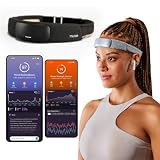
- Deep Sleep Boost – Newest feature designed to detect slow-wave sleep and sustain it longer for a more continuous deep sleep, supporting better physical and mental recovery. It complements the Sleep Assist feature that helps you fall asleep faster.
- Longer Focus, Less Stress, More Calm – Muse S Athena is a smart brain-sensing headband designed to help you better understand your brain so you can improve focus, calm your busy mind, and develop a stronger mental fitness foundation.
- Ready to use immediately — get advanced EEG + fNIRS tracking for sleep, focus, and recovery; optional Premium subscription adds AI Coach, deeper brain insights, and access to 500+ meditations.
- Wearable EEG and fNIRS Biofeedback — Put on the soft, adjustable headband and position the sensors to make skin contact. Connect to the Muse app via Bluetooth, select a meditation, sleep or brain training experience, and begin to focus, relax or unwind.
- Safe & Trusted — Built on years of scientific validation, Muse is trusted by neuroscientists, researchers and wellness professionals. Our award-winning SmartSense EEG sensors combined with new fNIRS technology brings the most advanced Muse experience yet.
Other wearable sensors may supply physiological context, but context is not proof that a software interpretation is correct. A measurement, a score derived from it, and evidence that acting on the score improves health are separate things.
Consumer, research, and clinical systems are not interchangeable
| System type | Typical priorities | What to verify |
|---|---|---|
| Consumer | Convenience, ease of setup, and price may be central. | What is measured, how scores are derived, and whether evidence supports the specific claim. |
| Research | Researchers may prioritize raw EEG access, channel capacity, sampling, and compatibility with analysis tools. | Data export, technical specifications, and suitability for the study protocol. |
| Clinical | Clinical systems are used for specific medical purposes. | Authorization and validation for the exact device, intended use, indication, and location. |
The FDA describes neurological devices as supporting diagnosis, prevention, or treatment across a range of conditions. That general context is not an endorsement of consumer wellness products. FDA’s list of sensor-based digital health devices covers a subset of devices meeting its stated scope; the agency says the list is not comprehensive. Regulatory status is specific to the device and its intended use, and terms such as cleared, approved, and authorized should not be treated as interchangeable.
How to choose an EEG headband or other system
- Define the intended use. Decide whether you want wellness feedback, research data collection, clinical monitoring, or a device authorized for a specific indication.
- Check sensor site and coverage. Review where electrodes sit, how many channels are used, and whether the form factor fits the activity.
- Look for evidence on the exact device and claim. Check the reference method, target population, and device version; general research on EEG is not product validation.
- Assess setup and comfort. Consider electrode preparation, fit, hair compatibility, wear duration, and whether you can collect reliable data yourself.
- Review data access and handling. Find out what recordings and derived scores are stored, shared, exportable, or deletable.
- Compare practical specifications. Check battery life, sampling and resolution specifications, support, software compatibility, and total cost.
An EEG headband is a real product category, but no current model ranking, price, stock status, warranty, or affiliate listing is established here. Choose based on your use and the evidence available for that specific system rather than an unqualified “best” label.
Independent reader supportYour contribution helps us test, update, and keep practical guides available for everyone.Privacy and ethics
Neural and associated physiological data raise privacy and ethics questions, and products may handle recordings differently. Do not assume all apps process or store data in the same way. Check the product’s own disclosures about storage, sharing, export, deletion, and other data practices before using it.
What’s actually slowing this PC down?
Pick the symptom - the matching free tool is one click away.
Rank #4

- Deep Sleep Boost – Newest feature designed to detect slow-wave sleep and sustain it longer for a more continuous deep sleep, supporting better physical and mental recovery. It complements the Sleep Assist feature that helps you fall asleep faster.
- Longer Focus, Less Stress, More Calm – Muse S Athena is a smart brain-sensing headband designed to help you better understand your brain so you can improve focus, calm your busy mind, and develop a stronger mental fitness foundation.
- Ready to use immediately — get advanced EEG + fNIRS tracking for sleep, focus, and recovery; optional Premium subscription adds AI Coach, deeper brain insights, and access to 500+ meditations.
- Wearable EEG and fNIRS Biofeedback — Put on the soft, adjustable headband and position the sensors to make skin contact. Connect to the Muse app via Bluetooth, select a meditation, sleep or brain training experience, and begin to focus, relax or unwind.
- Safe & Trusted — Built on years of scientific validation, Muse is trusted by neuroscientists, researchers and wellness professionals. Our award-winning SmartSense EEG sensors combined with new fNIRS technology brings the most advanced Muse experience yet.
FAQ
Can an EEG headband tell what I am thinking?
No. It records electrical potential differences associated with brain activity. Software may interpret patterns, but this is not direct access to thoughts.
Can a brain wearable diagnose a condition?
Do not treat a consumer app score as a diagnosis. A medical claim requires appropriate evidence and authorization for the exact device and intended use.
Are brain-sensing wearables accurate?
Accuracy and validation vary by device, sensor configuration, processing, use, and recording conditions. Check evidence for the specific device and claim, including the reference method used.
What should I compare when choosing an EEG system?
Compare intended use, sensor location and coverage, raw-data access, validation, fit and setup, data practices, battery life, technical specifications, support, and total cost.
Quick Recap
Product prices and availability are accurate as of the date/time indicated and are subject to change. Any price and availability information displayed on Amazon at the time of purchase will apply.