Do these 3 things before closing this tab:
1Repair Windows errors before they cause bigger problems2Scan for outdated or missing drivers - takes under a minute3Clear out junk files and repair common Windows errorsSome links on this page are affiliate links: if you buy through them we may earn a commission, at no extra cost to you.
Wearables are changing healthcare by turning occasional measurements into a stream of information from everyday life. Smartwatches, rings, patches, glucose sensors, connected cuffs and scales can reveal trends between appointments, support remote patient monitoring and extend care into the home. They do not, however, replace clinical examination, laboratory testing or medical judgment.
The practical model is straightforward: sensor → connected platform → meaningful trend or alert → human review → intervention. The quality of every link in that chain—not the number of metrics on a device—determines whether wearable data improves care.
What counts as a healthcare wearable?
“Wearable” covers several very different products. A consumer wellness tracker may estimate steps, sleep, heart rate, skin temperature or recovery. Those features can support self-awareness and research, but a wellness score is not automatically a medical measurement.
What’s actually slowing this PC down?
Pick the symptom - the matching free tool is one click away.
Medical wearables have a defined intended use and, in the United States, may have FDA clearance, authorization or approval for that use. The FDA’s sensor-based digital-health list includes watches, rings, patches, bands and connected monitoring systems. Regulatory status applies to the specified feature—not every number or “insight” the product displays.
#1 Best Overall

- FALL DETECTION & SOS ALERTS - Detects sudden falls and can send SOS alerts to preset contacts, helping caregivers respond when a senior may not be able to press the button.
- REAL-TIME GPS & GEO-FENCE - Check location in the app and set safe zones around home or familiar places. Get alerts if the wearer leaves a selected area.
- 4G VIDEO CALL & TWO-WAY CONTACT - Stay connected by video, voice or messages. A data-only SIM includes 1 year of data; voice calls require your own compatible SIM.
- WELLNESS & ACTIVITY DATA - View heart rate, blood pressure reference, sleep, steps and sedentary reminders in the app to support daily care and routine check-ins.
- SENIOR-FRIENDLY DAILY WEAR - Large touchscreen, simple interface, IP67 waterproof build and magnetic charging help make everyday use easier for seniors and caregivers.
A third category is the provider-managed system: a connected blood-pressure cuff, scale, pulse oximeter, glucose sensor, ECG patch or multi-sensor platform that sends readings to a care team. HHS describes remote patient monitoring (RPM) as sharing measurements from home so clinicians can manage a condition.
How data becomes care
- Collection: Optical waveforms, electrical cardiac signals, motion, temperature or glucose chemistry are sensed.
- Processing: Device software converts raw signals into readings, estimates or possible events.
- Transmission: A phone, hub, Wi-Fi or cellular connection sends information to an app or platform.
- Normalization: Cloud software organizes timestamps, trends, wear time and device information.
- Clinical review: A dashboard or EHR integration presents prioritized data to authorized staff.
- Escalation: A protocol determines whether to message the patient, arrange a visit, adjust treatment or direct urgent care.
- Documentation: The response and follow-up become part of the medical record.
A sensor without a review process is just a data generator. Successful programs define who watches the data, how often, what thresholds mean and who responds outside office hours.
Reading, trend, alert and diagnosis are different
- Reading: A measurement or estimate, such as heart rate.
- Trend: A pattern across days or weeks, often more useful than one value.
- Alert: An algorithmic indication that a threshold or pattern may deserve attention.
- Screening result: A signal that further evaluation could be appropriate.
- Diagnosis: A clinical conclusion based on history, examination, validated testing and professional judgment.
For example, an irregular-rhythm notification may justify an ECG and medical assessment. It does not, by itself, establish atrial fibrillation or another diagnosis.
Where wearables are changing patient care
Heart rhythm and cardiovascular monitoring
ECG-capable watches and ambulatory patches can capture intermittent rhythm events that may not occur during an office visit. Repeated irregular readings can prompt confirmatory testing. Heart-rate, activity, respiratory and weight trends may also help a team notice deterioration after discharge or in heart failure. A wearable cannot rule out a cardiac emergency, and a normal reading should never override chest pain, fainting or severe breathlessness.
Hypertension
Connected cuffs can transmit repeated blood-pressure measurements for medication decisions and home monitoring. For this purpose, a validated upper-arm cuff may be more appropriate than a watch-based estimate. RPM requires an eligible medical device, digital transmission and treatment management; simply owning a connected device is not the same as receiving an RPM service. CMS requirements and payer rules change, so coverage must be verified.
Diabetes and glucose management
Continuous glucose monitors show glucose patterns, time in range and responses to meals or medication. They can support treatment decisions when prescribed and used as directed. Eligibility, prescription status, sensor life and insurance coverage vary by country and product. General wellness users should not assume that a glucose sensor is necessary or that its data provides a complete picture of health.
Heart failure and post-discharge care
Daily weight, activity, heart rate and respiratory changes may provide an early warning of fluid retention or declining function. Similar systems can support recovery after surgery, emergency-department discharge, hospitalization, cancer treatment or acute infection. The benefit depends on a defined threshold and a clinician who can act quickly—not merely on collecting more measurements.
Respiratory and sleep conditions
Oxygen saturation, respiratory rate, movement and sleep signals can support evaluation of sleep-disordered breathing or chronic lung disease. Consumer sleep stages are estimates and should not be treated as a sleep-laboratory diagnosis. Low oxygen readings can be affected by motion, cold hands, poor contact, skin characteristics and device limitations.
Rehabilitation, mobility and neurological disease
Accelerometers and other sensors can track gait, tremor, activity and recovery after injury or surgery. Parkinson’s research, stroke rehabilitation and physical-therapy programs may use these measures to supplement examinations. They are most valuable when linked to a clinical goal, such as adjusting therapy or identifying a loss of mobility.
Rank #2

- WIFI APP Caregiver Wireless Pager :This Wi-Fi pager is designed to address your concerns about the well-being of elderly, disabled, or ill family members while you’re away from home. If they press the button or the watch, the pager will sound a loud alarm. (receiver requires plugging into an outlet) At the same time, you’ll receive a notification on your mobile app.
- Share App Notifications:You can set up shared alerts in the app. If a family member presses the button, an emergency notification will be sent to the shared user’s phone, ensuring you never miss a message.
- Customize button sounds to help you react quickly:You can set the button’s ringtone (choose from 20 options) and adjust the volume (5 levels) in the mobile app. This way, when a family member presses the button, you’ll know immediately where the call is coming from.
- App notifications + phone notifications:This Wi-Fi calling system allows you to receive app messages and notifications, so you can stay informed no matter where you are or what time it is. However, to ensure you don’t miss any messages when you’re offline, you can upgrade to phone and text message notifications, which will allow you to receive messages even without an internet connection.
- Buy once, enjoy lifetime service:If you have any questions about quality or usage, please feel free to contact us on Amazon—we’re always here to help.
Women’s health and pregnancy-related care
Temperature, heart rate and activity trends may support fertility awareness or remote observation in selected programs. Algorithms and regulatory indications differ widely, so consumer predictions should not be presented as definitive reproductive or pregnancy diagnoses. Pregnancy-related symptoms require appropriate clinical care regardless of a wearable result.
Research and decentralized trials
Passive activity, sleep and physiological data can provide more frequent real-world outcomes than periodic questionnaires. Researchers must still account for missing data, changing firmware, replacement devices, variable wear time and selection bias. A continuous stream is not automatically a valid endpoint.
What’s actually slowing this PC down?
Pick the symptom - the matching free tool is one click away.
What benefits are realistic today?
When the device and workflow fit the problem, wearables can provide:
- Earlier recognition of a changing condition between visits.
- More informed conversations about medication, activity and symptoms.
- Home-based recovery and hospital-at-home support.
- Fewer routine in-person measurements for some patients.
- Greater patient participation in managing a condition.
- Longitudinal information that a single clinic reading cannot provide.
- More objective outcome data for research.
These are plausible benefits, not universal promises. A 2025 scoping review found only six randomized controlled trials among 80 wearable studies (8%), with major variation in devices, populations and outcomes. Evidence of improved clinical outcomes remains limited across many applications; the review is available in PLOS Digital Health.
Consumer versus medical wearables
| Category | Consumer wellness wearable | Medical or RPM wearable |
|---|---|---|
| Primary purpose | Fitness, lifestyle and self-awareness | Monitoring a defined medical condition |
| Recipient | Usually the wearer and an app | Patient plus an assigned care team |
| Regulation | May have no medical authorization | Specific regulated intended use may apply |
| Workflow | Usually no clinical response process | Review, triage and escalation are defined |
| Evidence | Metric- and product-specific | Validation is tied to the intended use |
| Payment | Usually self-paid | May fit payer rules within a clinical service |
| Main risks | Misinterpretation and false reassurance | Alert burden, integration, privacy and staffing failures |
The infrastructure problem
Healthcare organizations must solve EHR integration, alert triage, staffing, onboarding, connectivity, device replacement, cybersecurity and reimbursement. Data without context—timestamp, sensor type, wear time, calibration, algorithm version and patient symptoms—can be difficult to interpret.
More alerts can create anxiety, unnecessary testing and clinician fatigue. Risk-adjusted thresholds, trend summaries and human review are safer than alerting on every deviation. Programs also need contingency plans for dead batteries, poor contact, lost phones and patients who stop wearing the device.
Medicare RPM is a service, not a retail purchase. CMS requires an FDA-defined medical device that digitally uploads data, along with treatment management. The Office of Inspector General reported Medicare RPM payments exceeding $500 million in 2024, while also examining billing oversight; see the HHS OIG report.
Equity, privacy and security
Cost, smartphone ownership, broadband, language, disability, digital literacy and trust can determine who benefits. A wearable-first model may widen disparities if people without reliable connectivity receive less attention.
Health, location, sleep and behavior data create a continuous privacy trail. Review consent, third-party sharing, export and deletion controls, encryption and account security. A device used in a provider’s HIPAA-covered program may have different protections from a consumer wellness app; legal coverage depends on the product and use case.
Rank #3
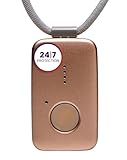
- Small Device, Big Backup: MGMini is a discreet medical alert necklace that supports your independence at home and on the go. Wear the device your way with the included lanyards or belt clip, for steady protection that fits your lifestyle. Hourly location updates and step counting features are available to view on our online portal or app.
- Press. Speak. Get Help: Press the emergency button to connect with Medical Guardian’s 24/7 monitoring team through the device’s two-way speaker. One of our trained, U.S. based operators will contact EMS, family, or friends to get you the exact type of help you need.
- Activate Before First Use: 24/7 emergency monitoring services must be activated online or by phone prior to device use. For a limited time, get 1 free month of 24/7 monitoring. After trial, service is $43.95/month. Cancel anytime. During activation, consider extra protection with our optional fall detection add-on for an additional $10/month.
- A Trusted Name in Care: Founded on one man's mission to protect his grandmother and trusted by over 630,000 members, Medical Guardian supports older adults and their care partners with connected safety solutions designed for independence and peace of mind.
- Industry-Leading Battery Life: Enjoy 3 days of protection on a single charge, plus a fast 4-hour recharge. Battery life may vary based on network connection and cellular signal strength. Note: only one device can be active per member at a time.
How to evaluate a wearable
- Define the goal: wellness, screening, diagnosis support, chronic-disease management, rehabilitation or research?
- Check the intended use: What exactly is measured, and is it directly measured or algorithmically estimated?
- Assess validation: Was performance tested against a clinical reference in people like the intended users?
- Confirm regulatory scope: Record the precise cleared, authorized or approved feature and geography.
- Map the workflow: Who receives the data, how often is it reviewed and what happens after an alert?
- Calculate total cost: Include hardware, subscription, cellular service, replacement parts and provider fees.
- Test usability: Consider charging, comfort, accessibility, connectivity and whether the patient will wear it consistently.
- Review interoperability and privacy: Check EHR compatibility, data export, retention and sharing policies.
Consumer products and clinical alternatives
For broad iPhone-based activity and health tracking, Apple lists the Apple Watch Series 11 from $399, SE 3 from $249 and Ultra 3 from $799 in its January 2026 announcement; cited models require an iPhone 11 or later with iOS 26 or later. Features have separate hardware, software and geographic requirements.
Crashes, No Sound, or Screen Glitches?
Random freezes, missing sound and display glitches usually trace back to one bad driver. Find and replace yours safely.Free scan · under a minuteWindows Errors? Fix Them Before They Spread
Repair common Windows errors and clear accumulated junk for a smoother, more stable PC - no reinstall needed.Free scan · no reinstallOura’s low-profile ring focuses on sleep, temperature and recovery and lists U.S. membership at $5.99 monthly or $69.99 annually, while WHOOP lists annual One, Peak and Life plans at $199, $239 and $359 respectively. These are consumer analytics services, not substitutes for prescribed monitoring.
For a blood-pressure goal, a validated connected cuff may be a better choice than a smartwatch. For clinically appropriate glucose monitoring, systems such as FreeStyle Libre and Dexcom are condition-specific options. Connected scales and pulse oximeters can be useful in provider-managed programs, but a device without a reviewing care team is not automatically RPM.
What the next five years may bring
Likely directions include smaller and more comfortable sensors, multimodal measurements, stronger EHR integration, more home-based care, expanded real-world evidence and AI-assisted alert triage. AI may summarize trends or prioritize risk, but model drift, bias, explainability and accountability remain unresolved. Regulatory scrutiny and disputes over data ownership, subscriptions and access are likely to increase.
NIH describes the potential of long-term wearable sensing for vital signs and other measures, while a 2026 health-system study documented consumer wearable data entering an EHR for 843 patients—evidence of adoption in one setting, not proof that one brand is clinically superior. See NIH’s wearable-sensor overview and the Frontiers study.
Do these 3 things before closing this tab:
1Repair Windows errors before they cause bigger problems2Fix the driver behind crashes, sound loss and screen glitches3Clear out junk files and repair common Windows errorsSafe use for patients
- Treat consumer readings as information, not a diagnosis.
- Ask what the device is validated to measure and under which conditions.
- Share repeated trends, symptoms and context with a clinician rather than relying on one isolated value.
- Confirm concerning results with an appropriate clinical test.
- Never delay urgent care because a wearable reports a normal result.
- Ask whether a named provider will actually review transmitted data.
- Check privacy settings, subscriptions, insurance and replacement costs before enrolling.
Frequently Asked Questions
Can a smartwatch diagnose a medical condition?
Some regulated features can detect or screen for patterns that warrant evaluation, but a smartwatch result is not a diagnosis. Confirmation requires appropriate clinical testing and professional judgment.
Does buying a wearable enroll me in remote patient monitoring?
No. RPM generally requires an eligible medical device, digital transmission, a provider-managed service and treatment management. Coverage and billing rules vary by payer.
Are consumer wellness metrics clinically accurate?
Accuracy is metric-, device-, population- and condition-specific. Motion, fit, skin contact, software and algorithms can affect results, and wellness features may have no medical authorization.
What should I do if a wearable gives an alarming result?
Consider symptoms first. Follow the device’s medical instructions, contact an appropriate clinician for confirmation, and seek urgent care for emergency symptoms regardless of any wearable reading.
The Bottom Line
Wearables are most valuable when reliable sensing, validated algorithms, interoperable data and a staffed clinical response process work together. The future of wearable medicine is not a device replacing a doctor; it is better information reaching the right care team early enough to act.
Quick Recap
Product prices and availability are accurate as of the date/time indicated and are subject to change. Any price and availability information displayed on Amazon at the time of purchase will apply.

