Touchscreens and tiny buttons are starting to feel like a bottleneck, especially as we ask more of our watches, phones, and laptops throughout the day. Glancing, tapping, and swiping worked when smartwatches were glorified notification mirrors, but they strain the moment you want eyes-free control or faster, more fluid interaction. Mudra Link enters this moment with a bold premise: your hand itself can become the controller.
Rather than replacing your smartwatch, Mudra Link is a companion wristband designed to sit alongside it, typically worn on the same wrist as an Apple Watch. Its purpose is not to display information, but to quietly read subtle muscle and nerve activity in your wrist and translate that into precise, customizable gestures. The promise is simple but ambitious: control your devices without touching them, speaking to them, or even looking at them.
What Mudra Link actually is
Mudra Link is a lightweight, slim wristband built around electromyography-style sensing, detecting tiny electrical signals generated when you move your fingers or tense specific muscles. These signals are far more granular than what motion sensors or accelerometers can capture, allowing the band to distinguish between gestures that look identical from the outside. A thumb press, a finger tap, or a slight pinch can all register as separate commands.
Physically, it feels closer to a minimalist fitness band than a chunky smart wearable. The materials prioritize comfort and continuous wear, with a soft-touch strap and a low-profile sensor housing designed to sit snugly against the inner wrist. Battery life is measured in days rather than hours, making it realistic to wear daily without constant charging anxiety.
🏆 #1 Best Overall
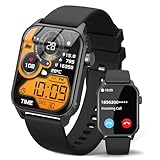
- 【1.83" HD Display & Customizable Watch Faces】Immerse yourself in a vibrant 1.83-inch IPS display, boasting a sharp resolution of 240*284 for crystal-clear visuals. Effortlessly personalize your smart watch with a wide array of customizable watch faces to suit your personal style for every occasion—whether trendy, artistic, or minimalist—ideal for casual, sporty, or professional. Its sleek, modern design complements any outfit, blending technology and fashion seamlessly for everyday wear
- 【120 Sports Modes & Advanced Health Tracking】Our TK29 smart watches for women men come equipped with 120 sports modes, allowing you to effortlessly track a variety of activities such as walking, running, cycling, and swimming. With integrated heart rate and sleep monitors, you can maintain a comprehensive overview of your health, achieve your fitness goals, and maintain a balanced, active lifestyle with ease. Your ideal wellness companion (Note: Step recording starts after exceeding 20 steps)
- 【IP67 Waterproof & Long-Lasting Battery】Designed to keep up with your active lifestyle, this smartwatch features an IP67 waterproof rating, ensuring it can withstand splashes, sweat, and even brief submersion, making it perfect for workouts, outdoor adventures, or rainy days. Its reliable 350mAh battery offering 5-7 days of active use and up to 30 days in standby mode, significantly reducing frequent charging. Ideal for all-day wear, whether you’re at the gym, outdoors, or simply on the go
- 【Stay Connected Anytime, Anywhere】Stay informed and in control with Bluetooth call and music control features. Receive real-time notifications for calls, messages, and social media apps like Facebook, WhatsApp, Twitter, and Instagram directly on your smartwatch. Easily manage calls, control your music playlist, and stay updated without needing to reach for your phone. Perfect for work, workouts, or on-the-go, this watch keeps you connected and never miss important updates wherever you are
- 【Multifunction & Wide Compatibility】Seamlessly handle heart rate monitoring, sleep tracking, and enjoy conveniences like camera/music control, Seamlessly handle heart rate monitoring, sleep tracking, and more-all directly from your wrist. This 1.83 inches HD smartwatch is compatible with iPhone (iOS 9.0+) & Android (5.0+), ensuring smooth daily connectivity and convenience throughout your day. More than just a timepiece, it’s a stylish, all-in-one wearable for smarter, healthier living
How neural gesture control works in practice
Unlike camera-based hand tracking or radar systems, Mudra Link doesn’t need line-of-sight or exaggerated movements. It reads neuromuscular intent directly, which means gestures can be small, discreet, and usable in public without looking performative. This is a critical distinction for real-world usability, especially in professional or accessibility-focused scenarios.
Setup involves a short calibration process in the companion app, where the band learns how your specific muscle signals map to gestures. From there, actions can be assigned to commands like play and pause, scrolling, clicking, or triggering shortcuts. Over time, the system adapts to your muscle patterns, improving reliability rather than forcing you to learn rigid, predefined gestures.
Devices, platforms, and ecosystem fit
Mudra Link is positioned most strongly as an Apple Watch companion, extending watchOS control without crowding the watch’s already limited screen space. It also connects to iPhones, iPads, Macs, and select third-party devices via Bluetooth, functioning as a universal input layer rather than a single-device remote. This cross-device flexibility is one of its strongest arguments for productivity-focused users.
The software experience emphasizes customization, letting users create different gesture profiles depending on context, such as work, media consumption, or presentations. Importantly, it doesn’t try to replace existing input methods outright. Touch, voice, and physical controls still exist, but Mudra Link adds a parallel, hands-on input channel that can be faster in the right moments.
Why gesture control matters right now
Wearables are hitting a ceiling where screens can’t get much larger and voice control isn’t always appropriate or reliable. Gesture-based input offers a way forward that feels more human, more immediate, and less intrusive, especially as devices become more ambient and always-on. Mudra Link taps into this shift by focusing on intent rather than motion, reducing friction between thought and action.
The bigger question isn’t whether gesture control is possible, but whether it’s worth wearing something extra to get it. Mudra Link’s answer hinges on whether its accuracy, comfort, and integration genuinely save time and mental effort compared to tapping a watch or pulling out a phone. That tension between futuristic potential and everyday practicality defines everything about this device, and it sets the stage for evaluating whether it’s a breakthrough tool or a specialized accessory for the right kind of user.
How Mudra Link Actually Works: Neural Signals, Finger Movements, and HCI Science
At a practical level, Mudra Link works because your body leaks intention before your fingers ever touch a screen. Long before a tap, swipe, or click happens, your nervous system sends electrical signals to the muscles in your forearm and hand. Mudra Link’s core insight is that those signals are consistent, readable, and fast enough to be used as an input method.
It’s not reading your mind, it’s reading your muscles
Despite the “neural” framing, Mudra Link isn’t a brain–computer interface in the sci‑fi sense. It uses surface electromyography sensors embedded in the wristband to detect electrical activity generated when muscles contract. These signals are strongest and most distinct in the forearm, where finger movements originate.
Each finger produces a unique activation pattern across multiple muscles, even for very small motions like a pinch or a tap-in-the-air. Mudra Link samples these patterns at high frequency, turning analog muscle activity into digital signal data it can analyze in real time.
Why finger gestures beat arm waving
Most gesture control systems rely on cameras or inertial sensors, which means exaggerated movements and clear lines of sight. Mudra Link flips that model by focusing on micro-gestures: subtle finger taps, pinches, and holds that can happen with your hand resting naturally. This dramatically reduces fatigue and makes the interaction socially acceptable in public settings.
From an HCI perspective, this matters because smaller gestures map more closely to user intent. You’re not performing for a sensor; you’re executing a command with minimal cognitive and physical overhead.
Signal processing, not raw motion
The raw EMG data Mudra Link captures is noisy and varies from person to person. To make it usable, the wristband relies on onboard preprocessing and machine learning models that classify patterns rather than absolute values. This is why setup involves calibration and why accuracy improves over time.
As you use the device, the system refines its understanding of how your muscles behave under different conditions, such as fatigue, temperature changes, or strap tightness. The result is interaction that becomes more reliable with daily wear, rather than degrading as conditions drift.
Latency and why it feels instant
One of the underrated advantages of EMG-based input is speed. Muscle activation occurs tens of milliseconds before visible movement, which means Mudra Link can register intent faster than touch-based input. In practice, this translates to near-instant response when scrolling, advancing slides, or triggering shortcuts.
Because the processing pipeline is lightweight, most interactions happen without noticeable lag, even when controlling multiple devices. This immediacy is what makes the experience feel less like issuing commands and more like extending your hand into the interface itself.
Context-aware gestures and cognitive load
Mudra Link’s software layer plays a crucial role in keeping gesture control usable rather than overwhelming. Instead of mapping dozens of gestures globally, it encourages context-specific profiles tied to apps, devices, or activities. This aligns with well-established HCI principles around reducing memory burden and mode errors.
For example, the same pinch gesture can mean play/pause in a media profile and click in a productivity profile, without forcing the user to consciously switch mental models. The system prioritizes consistency within a context rather than universality across all scenarios.
Why wrist placement matters
Positioning the device at the wrist isn’t just about comfort or aesthetics. The wrist sits at a convergence point where multiple finger-controlling muscles pass close to the surface, making it an ideal sensing location. This allows Mudra Link to remain relatively slim and lightweight while still capturing rich signal data.
In daily wear, this also means the band behaves more like a traditional watch accessory than a medical sensor. Comfort, strap material, and fit directly influence signal quality, which is why Mudra Link favors a snug but not restrictive fit for consistent performance.
Accessibility and unintended benefits
An important side effect of this approach is accessibility. Users with limited fine motor control or difficulty interacting with touchscreens can often produce reliable muscle signals even if precise touch input is challenging. Gesture-based EMG control can bypass some of the friction inherent in small screens and physical buttons.
This isn’t positioned as a medical device, but the HCI implications are significant. By separating intent from physical contact, Mudra Link opens up interaction pathways that traditional wearables struggle to support.
Where the science still shows its limits
EMG-based gesture control isn’t magic, and Mudra Link doesn’t escape the trade-offs. Signal accuracy can drop if the band shifts, if the user is sweating heavily, or if gestures are performed inconsistently. There’s also a learning curve, not in memorizing gestures, but in trusting subtle movements to be recognized.
From a usability standpoint, this keeps Mudra Link firmly in the “augmentative” category rather than a full replacement for touch or voice. The technology is mature enough to be useful, but still sensitive enough that it rewards deliberate use over casual, sloppy interaction.
Design, Wearability, and Daily Comfort: Living With a Second Wrist Device
Once you accept the idea that EMG-based gesture control lives or dies by consistent skin contact, the physical design of Mudra Link stops being a secondary concern and becomes central to the experience. This isn’t a gadget you occasionally put on for demos. It’s a device you either wear for hours at a time or you don’t get much value out of at all.
That framing matters, because Mudra Link is almost always worn alongside an existing smartwatch rather than replacing it. For most users, especially those already invested in the Apple Watch ecosystem, this becomes a question of balance, comfort, and visual restraint more than raw specs.
Industrial design: intentionally understated
Mudra Link avoids the trap of trying to look futuristic. The main sensor module is slim, gently curved, and visually closer to a minimalist fitness band than a piece of experimental hardware. There’s no screen, no flashy lighting, and no overt branding competing for attention.
The housing sits flush against the wrist without sharp edges, which helps prevent pressure points during long sessions at a desk. It’s lightweight enough that, after the first hour, it largely disappears from conscious awareness, which is exactly what a background input device should aim for.
From a finishing perspective, this is more consumer electronics than horology. The materials feel durable and thoughtfully chosen, but not luxurious. That’s appropriate given its role as an invisible interface layer rather than a statement accessory.
Strap, fit, and the importance of consistent contact
Fit is not optional with Mudra Link. Because EMG sensors rely on stable contact with specific muscle groups, the band needs to be worn snugly, though not tightly, just above the wrist bone.
The supplied strap material is flexible and skin-friendly, with enough adjustability to accommodate different wrist sizes without creating hotspots. In practice, it feels closer to a sport band than a leather strap, prioritizing stability over fashion.
This has two implications for daily wear. First, users who prefer loose bracelets or oversized watch fits may need to recalibrate their expectations. Second, once properly adjusted, the band stays put remarkably well, even during typing, light exercise, or commuting.
Two devices, one pair of wrists
Most people will wear Mudra Link on the opposite wrist from their smartwatch. This reduces interference and keeps the gesture-sensing hand free from the added bulk of a display and crown.
With an Apple Watch on one wrist and Mudra Link on the other, the overall experience feels more balanced than expected. Each device has a clearly defined role: the watch for glanceable information and touch interaction, the band for background input.
Rank #2
![Apple Watch Series 11 [GPS 46mm] Smartwatch with Jet Black Aluminum Case with Black Sport Band - M/L. Sleep Score, Fitness Tracker, Health Monitoring, Always-On Display, Water Resistant](https://m.media-amazon.com/images/I/312K597M2uL._SL160_.jpg)
- HYPERTENSION NOTIFICATIONS — Apple Watch Series 11 can spot signs of chronic high blood pressure and notify you of possible hypertension.*
- KNOW YOUR SLEEP SCORE — Sleep score provides an easy way to help track and understand the quality of your sleep, so you can make it more restorative.
- EVEN MORE HEALTH INSIGHTS — Take an ECG anytime.* Get notifications for a high and low heart rate, an irregular rhythm,* and possible sleep apnea.* View overnight health metrics with the Vitals app* and take readings of your blood oxygen.*
- STUNNING DESIGN — Thin and lightweight, Series 11 is comfortable to wear around the clock — while exercising and even when you’re sleeping, so it can help track your key metrics.
- A POWERFUL FITNESS PARTNER — With advanced metrics for all your workouts, plus features like Pacer, Heart Rate Zones, training load, Workout Buddy powered by Apple Intelligence from your nearby iPhone,* and more. Series 11 also comes with three months of Apple Fitness+ free.*
There is, however, an adjustment period. Wearing devices on both wrists can initially feel excessive, especially for users accustomed to a single watch. Over time, the asymmetry fades, but this is a real psychological hurdle for minimalists.
Comfort over long sessions
Extended wear is where Mudra Link quietly succeeds. During full workdays that involve typing, mouse use, and occasional gestural input, the band does not noticeably impede movement.
There’s no pinching during wrist flexion, and the low-profile design prevents it from catching on sleeves or desk edges. Heat buildup is minimal, though like most wrist-worn electronics, it’s more noticeable in warmer environments.
Sweat can affect both comfort and signal quality, but the band handles this better than expected. Occasional readjustment restores contact, and the material dries quickly compared to fabric-based straps.
Battery life and charging realities
Mudra Link is designed to be an all-day companion rather than a multi-week wearable. Battery life typically covers a full workday with room to spare, depending on gesture frequency and connection stability.
Charging is straightforward and doesn’t require removing the strap entirely, which reduces friction in daily routines. That said, this is another device to remember to charge, and users already juggling phone, watch, and earbuds may feel the cognitive load.
There’s no always-on display draining power, which helps. When not actively used for gestures, the device settles into a low-power state without needing manual intervention.
Durability and real-world resilience
Mudra Link feels built for daily life, not extreme conditions. It handles incidental bumps, desk contact, and bag straps without complaint.
It’s not positioned as a rugged outdoor device, and that’s fine. This is a productivity and interaction tool first, not an adventure wearable. Light moisture exposure is manageable, but it’s clearly not intended for swimming or heavy workouts.
For most users, this aligns with how the device is actually used: at desks, on commutes, and in controlled environments where subtle gestures make sense.
Aesthetic compatibility with watches
For watch enthusiasts, especially those who care about case proportions and strap choices, Mudra Link’s visual restraint is a relief. It doesn’t compete with a mechanical watch or a premium smartwatch for attention.
When paired with an Apple Watch Ultra or a stainless steel Series model, the band fades into the background rather than clashing. With traditional watches, it reads more like a fitness accessory than a second timepiece, which helps maintain visual hierarchy.
This isn’t a fashion-forward wearable, but it’s respectful of the wrist as a personal and expressive space.
The psychological weight of a second input layer
Perhaps the most interesting aspect of living with Mudra Link isn’t physical comfort, but cognitive comfort. Wearing a device that listens for intent rather than explicit commands subtly changes how you think about interaction.
At first, users may feel self-conscious about micro-gestures, even when they’re nearly invisible to others. Over time, this fades as gestures become habitual and situational rather than performative.
If that mental shift happens, the hardware disappears into the workflow. If it doesn’t, no amount of ergonomic design will make the band feel necessary.
In that sense, Mudra Link’s wearability success depends as much on user mindset as materials and dimensions. The hardware does its part by staying out of the way, but the decision to keep it on your wrist every day remains a personal one.
Setup, Calibration, and Learning Curve: From First Pairing to Muscle Memory
If Mudra Link succeeds or fails for a given user, it usually happens here. The hardware can disappear on the wrist, but the software onboarding determines whether gesture control feels intuitive or like an ongoing experiment.
This is where the earlier psychological discussion becomes practical. Turning unconscious muscle signals into reliable input requires structure, patience, and a willingness to retrain habits built around screens and buttons.
First pairing: surprisingly conventional
Initial setup is refreshingly ordinary for something that markets neural input. Mudra Link pairs over Bluetooth using a companion app on iOS, Android, macOS, or Windows, with Apple Watch users routing control through their iPhone rather than pairing directly to watchOS.
The pairing process takes under two minutes and behaves like any modern wearable, with firmware checks, permission prompts, and a quick connectivity test. There’s no sense of experimental fragility here, which immediately lowers anxiety for less adventurous users.
Once paired, the band shows up as a persistent input device rather than a session-based controller. That distinction matters because Mudra Link is designed to live in the background, not be consciously “activated” every time you want to use it.
Calibration: teaching the band your hand, not your gestures
Calibration is where Mudra Link diverges from camera-based or accelerometer-driven gesture systems. Instead of learning exaggerated motions, you’re teaching the band how your specific muscles behave when performing minimal actions.
The app walks you through a short sequence of finger pinches, thumb presses, and holds, typically lasting three to five minutes. You’re instructed to keep movements small, consistent, and relaxed, which reinforces the idea that this is about muscle intent, not visible motion.
What’s notable is that calibration feels more like fitting a watch bracelet than configuring software. Strap tension, wrist placement, and bone structure all subtly affect signal quality, and the app actively flags poor fit before you blame recognition errors on the system itself.
Gesture mapping and ecosystem logic
Once calibrated, gestures are mapped to actions at the system level. Common defaults include pinch-to-click, double pinch for back, and hold gestures for scrolling or media control, with profiles that adapt depending on whether you’re controlling a phone, tablet, computer, or smart TV.
For Apple users, the integration feels especially coherent. macOS and iPadOS treat Mudra Link as a hybrid of keyboard shortcut layer and assistive input device, which means it works across native apps without per-app configuration.
Windows and Android support is broader than expected, though less elegant. Power users can build complex macros, while casual users may stick to basic navigation and media control to avoid cognitive overload.
The first week: friction, false positives, and recalibration
The initial learning period is not frictionless. Early use often involves accidental triggers, missed gestures, and the occasional moment of wondering whether the band or your hand made the mistake.
This is where Mudra Link demands honesty from the user. Recalibration is normal, and minor strap adjustments can dramatically improve reliability, much like resizing a metal bracelet changes how a watch wears throughout the day.
By day three or four, error rates typically drop as muscle memory adapts. The system isn’t just learning you; you’re subconsciously learning how little effort is actually required to register intent.
Muscle memory replaces muscle movement
The real transition happens when gestures stop feeling like gestures at all. Instead of thinking “pinch to click,” the action becomes closer to deciding to click, with the physical motion fading into the background.
This is where Mudra Link starts to differentiate itself from touchscreens, mice, and even trackpads. Input feels pre-physical, occurring at the threshold between intention and movement rather than after motion is fully expressed.
Rank #3

- Bluetooth Call and Message Alerts: Smart watch is equipped with HD speaker, after connecting to your smartphone via bluetooth, you can answer or make calls, view call history and store contacts through directly use the smartwatch. The smartwatches also provides notifications of social media messages (WhatsApp, Twitter, Facebook, Instagram usw.) So that you will never miss any important information.
- Smart watch for men women is equipped with a 320*380 extra-large hd full touch color screen, delivering exceptional picture quality and highly responsive touch sensitivity, which can bring you a unique visual and better interactive experience, lock screen and wake up easily by raising your wrist. Though “Gloryfit” app, you can download more than 102 free personalised watch faces and set it as your desktop for fitness tracker.
- 24/7 Heart Rate Monitor and Sleep Tracker Monitor: The fitness tracker watch for men has a built-in high-performance sensor that can record our heart rate changes in real time. Monitor your heart rate 26 hours a day and keep an eye on your health. Synchronize to the mobile phone app"Gloryfit", you can understand your sleep status(deep /light /wakeful sleep) by fitness tracker watch develop a better sleep habit and a healthier lifestyle.
- IP68 waterproof and 110+ Sports Modes: The fitness tracker provides up to 112+ sports modes, covering running, cycling, walking, basketball, yoga, football and so on. Activity trackers bracelets meet the waterproof requirements for most sports enthusiasts' daily activities, such as washing hands or exercising in the rain, meeting daily needs (note: Do not recommended for use in hot water or seawater.)
- Multifunction and Compatibility: This step counter watch also has many useful functions, such as weather forecast, music control, sedentary reminder, stopwatch, alarm clock, timer, track female cycle, screen light time, find phone etc. The smart watch with 2 hrs of charging, 5-7 days of normal use and about 30 days of standby time. This smart watches for women/man compatible with ios 9.0 and android 6.2 and above devices.
For productivity workflows, this can reduce micro-friction in tasks like scrolling through documents, pausing media, or navigating presentations. For accessibility users, the reduction in required movement can be far more significant.
Long-term adaptability and fatigue considerations
Over extended use, Mudra Link proves less fatiguing than motion-based gesture systems. Because movements remain small and localized, there’s minimal wrist strain, even during long desk sessions.
Battery life also plays into the learning curve. With several days of use per charge, users aren’t forced into inconsistent habits due to frequent downtime, which helps gestures solidify into routine behavior.
That said, this is not a set-it-and-forget-it experience. Periodic recalibration may be needed if you change how tightly you wear the band, switch wrists, or pair it with different devices regularly.
Who adapts fastest, and who may struggle
Users already comfortable with keyboard shortcuts, accessibility tools, or multi-device workflows adapt quickest. They tend to think in abstractions of intent and action, which aligns well with Mudra Link’s mental model.
Those expecting instant, magical control without behavioral adjustment may be disappointed. Mudra Link doesn’t eliminate learning curves; it relocates them from fingers on glass to muscles under skin.
Viewed through that lens, setup and calibration aren’t hurdles but filters. If you’re willing to invest a few days in building muscle memory, the payoff can feel genuinely futuristic. If not, Mudra Link may remain an impressive but underused accessory on your wrist.
Device Compatibility and Ecosystem Support: Apple Watch, iPhone, Mac, and Beyond
All that careful calibration and muscle-memory training only pays off if Mudra Link can follow you across the devices you actually use. This is where ecosystem support stops being a spec-sheet detail and becomes a make-or-break factor for daily relevance.
Mudra Link positions itself not as a standalone controller, but as an input layer that sits quietly alongside your existing hardware. How well it integrates depends heavily on which ecosystem you live in, and the experience varies meaningfully between Apple, desktop platforms, and everything else orbiting the modern workspace.
Apple Watch pairing and wrist coexistence
For Apple Watch owners, Mudra Link’s design philosophy immediately makes sense. The band is intended to be worn on the same wrist as your watch, sitting slightly higher up the forearm, where muscle signals are cleaner and less distorted by wrist articulation.
Physically, this stacked-wear approach works better than expected. The band is lightweight, flexible, and unobtrusive enough that it doesn’t interfere with the Apple Watch’s sensors, Digital Crown access, or haptic feedback during normal use.
From a system perspective, Mudra Link does not replace Apple Watch interactions. Instead, it complements them, offloading certain inputs like scrolling, media control, or presentation navigation, while leaving glanceable interactions and notifications on the watch itself.
iPhone integration and real-world control scenarios
On iPhone, Mudra Link functions as a gesture-based remote input rather than a full touchscreen replacement. Core actions like scrolling feeds, pausing playback, triggering camera shutters, or advancing slides are where it feels most natural.
The companion app allows gesture mapping at a system level, with additional customization for supported apps. This keeps the experience consistent, even as you move between different iOS environments.
Latency is low enough that gestures feel intentional rather than delayed, which is crucial when input is based on micro-movements rather than visible motion. That responsiveness is what allows Mudra Link to feel like an extension of intent instead of a novelty controller.
Mac support and productivity workflows
Mudra Link’s most compelling ecosystem play is arguably on macOS. When paired with a Mac, the band effectively becomes a supplemental input device, sitting somewhere between keyboard shortcuts and a trackpad.
Scrolling long documents, switching tabs, controlling media timelines, or advancing through presentations can all be handled without lifting your hands from a resting position. For users already fluent in keyboard-driven workflows, this reduces context switching rather than adding to it.
In multi-display setups or presentation environments, Mudra Link shines as a discreet control method. Subtle finger movements replace exaggerated gestures or fumbling for peripherals, which matters more than it sounds in professional settings.
Cross-device continuity and Bluetooth behavior
Mudra Link connects via Bluetooth and supports quick switching between paired devices, though this is not as seamless as Apple’s native Continuity features. Switching from iPhone to Mac typically requires a brief confirmation rather than happening invisibly in the background.
In practice, this adds a small but noticeable friction point for users who bounce between devices dozens of times a day. It’s not a deal-breaker, but it does remind you that Mudra Link is an accessory operating alongside, not inside, the ecosystem.
Connection stability during testing is solid, with no frequent dropouts, even in crowded wireless environments. Once paired, the band maintains a reliable link, which is essential when input precision depends on trust.
Beyond Apple: Windows, Android, and mixed ecosystems
Mudra Link is not locked to Apple hardware, and it does support Windows and Android devices with varying degrees of functionality. On Windows, it behaves much like it does on macOS, offering scroll, click, and media controls that integrate well into desktop workflows.
Android support is more fragmented, largely due to the platform’s diversity and permission models. Core gesture functions work, but app-level customization and consistency depend heavily on device manufacturer and OS version.
For users in mixed-device environments, Mudra Link’s value proposition shifts. It becomes a universal input layer rather than an Apple-centric accessory, which is appealing, but also exposes the limits of cross-platform polish.
Ecosystem maturity and long-term support considerations
Mudra Link’s software ecosystem feels functional rather than lavish. The companion apps are utilitarian, focused on calibration, gesture mapping, and device management rather than visual flourish.
Firmware updates have steadily improved gesture recognition and battery efficiency, suggesting active development rather than abandonware risk. Still, this is a smaller ecosystem compared to first-party wearables, and long-term support depends on Mudra’s ability to keep pace with OS-level changes.
For Apple Watch users in particular, the question isn’t whether Mudra Link works, but whether it earns its place alongside deeply integrated native tools. In its current form, it does best when treated as a specialized input enhancer, not a universal control solution.
Compatibility as a filter, not a promise
Mudra Link’s device support is broad enough to be compelling, but narrow enough to demand intentional use. It rewards users who build workflows around it rather than expecting it to adapt invisibly to every device in their orbit.
If your daily stack includes an Apple Watch, iPhone, and Mac, Mudra Link fits naturally, even if it never fully disappears into the background. In more fragmented ecosystems, it remains usable, but its futuristic appeal depends heavily on how much friction you’re willing to tolerate in exchange for novel input control.
Real-World Use Cases: Productivity, Media Control, AR/VR, and Accessibility
Once compatibility and ecosystem limits are understood, Mudra Link makes the most sense when evaluated through specific, repeatable scenarios rather than abstract promise. Its strength lies in reducing micro-friction—those moments where reaching, tapping, or shifting attention breaks flow. When used intentionally, it becomes less of a novelty and more of a silent co-processor for your hands.
Productivity: Micro-Actions Without Context Switching
In productivity workflows, Mudra Link excels at replacing low-value interactions rather than complex ones. Subtle finger pinches or thumb rolls can trigger common actions like switching browser tabs, scrolling documents, advancing slides, or toggling macOS Mission Control.
Paired with an Apple Watch on one wrist and Mudra Link on the other, the setup feels surprisingly balanced. The watch handles notifications and glanceable data, while Mudra Link manages invisible inputs, letting your hands stay on a keyboard, trackpad, or even in mid-air during presentations.
This is especially effective for knowledge workers who live in split-screen environments. The ability to scroll a long document or nudge a timeline in Final Cut without lifting your hand reduces cognitive overhead more than it saves time, which is where its real productivity value emerges.
Rank #4
![Apple Watch Series 11 [GPS 42mm] Smartwatch with Rose Gold Aluminum Case with Light Blush Sport Band - S/M. Sleep Score, Fitness Tracker, Health Monitoring, Always-On Display, Water Resistant](https://m.media-amazon.com/images/I/31J+F-pXaWL._SL160_.jpg)
- HYPERTENSION NOTIFICATIONS — Apple Watch Series 11 can spot signs of chronic high blood pressure and notify you of possible hypertension.*
- KNOW YOUR SLEEP SCORE — Sleep score provides an easy way to help track and understand the quality of your sleep, so you can make it more restorative.
- EVEN MORE HEALTH INSIGHTS — Take an ECG anytime.* Get notifications for a high and low heart rate, an irregular rhythm,* and possible sleep apnea.* View overnight health metrics with the Vitals app* and take readings of your blood oxygen.*
- STUNNING DESIGN — Thin and lightweight, Series 11 is comfortable to wear around the clock — while exercising and even when you’re sleeping, so it can help track your key metrics.
- A POWERFUL FITNESS PARTNER — With advanced metrics for all your workouts, plus features like Pacer, Heart Rate Zones, training load, Workout Buddy powered by Apple Intelligence from your nearby iPhone,* and more. Series 11 also comes with three months of Apple Fitness+ free.*
Media Control: Quiet, Discreet, and Surprisingly Habit-Forming
Media control is where Mudra Link feels immediately intuitive. Volume adjustments, play/pause, and track skipping map cleanly to natural finger movements, making it useful in environments where touching a screen or watch would feel awkward or disruptive.
For Apple TV, iPad, or Mac media playback, gestures quickly become muscle memory. A slight inward pinch to pause or a finger roll to adjust volume feels less like issuing a command and more like shaping the experience in real time.
Battery life supports this always-on behavior better than expected. With conservative gesture polling, Mudra Link can last several days of intermittent use, making it viable as a passive controller rather than something you need to consciously manage alongside your smartwatch charging routine.
AR and VR: Input Without Controllers
In AR and VR contexts, Mudra Link hints at a more radical future. Traditional controllers still dominate for precision, but Mudra’s neural sensing offers a lightweight alternative for navigation, selection, and system-level controls.
When paired with compatible headsets or AR-enabled devices, gestures can replace menu clicks, confirmation taps, or directional input. This reduces reliance on handheld controllers and keeps interactions closer to natural hand movement, which is particularly valuable in mixed reality environments.
There are limitations. Gesture latency and recognition accuracy are not yet at the level required for fast-paced gaming, but for spatial computing interfaces, training simulations, or enterprise AR, Mudra Link feels less like a workaround and more like an early blueprint.
Accessibility: A Quiet Strength, Not a Side Feature
Accessibility is where Mudra Link’s design philosophy feels most justified. For users with limited fine motor control, repetitive strain injuries, or difficulty interacting with touchscreens, neural-based gesture input offers an alternative that does not rely on precise taps or sustained pressure.
Custom gesture mapping allows users to tailor movements to what feels comfortable rather than what looks natural. Small, low-effort muscle activations can replace complex multi-touch gestures, which is something few mainstream wearables currently address well.
Comfort matters here, and Mudra Link’s lightweight build and soft-touch strap help it disappear during long sessions. It lacks the premium finishing of a traditional watch or bracelet, but its utilitarian design prioritizes wearability over visual statement, which aligns with its most impactful use cases.
When It Enhances Interaction—and When It Doesn’t
Mudra Link meaningfully improves interaction when tasks are repetitive, context-sensitive, or benefit from hands-free input. It is less compelling for tasks that already feel frictionless on a touchscreen or when haptic feedback is essential for confidence.
For early adopters, accessibility-focused users, and productivity optimizers, it represents a genuine step toward more ambient computing. For everyone else, it remains an experimental layer—useful, forward-looking, but dependent on intentional setup and a willingness to adapt habits to unlock its full potential.
Accuracy, Latency, and Reliability: How It Compares to Touch, Voice, and Buttons
After understanding where Mudra Link fits conceptually, the real question becomes whether it can keep up with the input methods we already trust. Accuracy, responsiveness, and consistency are the difference between a futuristic convenience and something that quietly slows you down over a long day.
Gesture Accuracy: Strong With Intent, Weaker With Ambiguity
Mudra Link’s neural sensing excels when gestures are deliberate and well-defined. Once trained, simple actions like pinching, tapping fingers together, or rotating the wrist register with a high success rate in controlled conditions, particularly when the arm is relatively still.
Accuracy drops when gestures become too similar or when the hand is moving unpredictably, such as during walking or multitasking. This is where a physical button or touchscreen still wins, as they rely on discrete contact rather than interpretation of muscle signals.
Latency: Faster Than Voice, Slower Than Touch
In practical use, Mudra Link’s input latency sits in an interesting middle ground. It feels noticeably faster than voice assistants, which introduce processing delays and require verbal confirmation, but it does not quite match the immediacy of a capacitive touchscreen or mechanical button press.
The delay is subtle rather than disruptive, measured in fractions of a second, but it becomes more apparent during rapid, consecutive inputs. For scrolling, media control, or confirmation actions, it feels responsive; for high-speed interaction, it can feel slightly behind your intent.
Reliability Over Time: Learning Curve Meets Muscle Memory
Reliability improves as users adapt their movements to what the system recognizes best. Much like learning to type efficiently on a new keyboard layout, Mudra Link rewards consistency rather than spontaneity.
Environmental factors play a smaller role than expected, since neural sensing is not dependent on cameras or microphones. However, changes in strap position, wrist rotation, or muscle tension can affect recognition until the system recalibrates or the user subconsciously adjusts.
Compared to Touchscreens: Precision vs. Freedom
Touch input remains the gold standard for precision. Selecting small UI elements, navigating dense menus, or performing complex gestures is still faster and more accurate on a screen, especially on devices like the Apple Watch where UI is tightly optimized for touch.
Mudra Link’s advantage is freedom rather than accuracy. When your hands are occupied, gloved, or away from the screen, gesture input feels enabling in a way touch simply cannot match.
Compared to Physical Buttons: Consistency vs. Flexibility
Physical buttons offer unmatched reliability and tactile confirmation. They work the same way every time, regardless of context, and require no learning or calibration.
Mudra Link trades that certainty for adaptability. A single gesture can be remapped across apps, devices, or workflows, something buttons cannot do without adding complexity or hardware bulk.
Compared to Voice Control: Privacy and Context Awareness
Voice remains powerful for complex commands but suffers in noisy environments, shared spaces, or situations where speaking aloud feels intrusive. Mudra Link sidesteps these limitations by keeping input silent and localized to the user’s body.
That said, voice still wins for expressive or multi-step commands. Gesture control is better suited to quick, binary actions rather than conversational interaction.
Consistency Across Devices and Ecosystems
On supported platforms, particularly Apple Watch and connected Apple devices, performance feels cohesive rather than fragmented. Gestures map predictably across contexts, and the companion software maintains stable connections without frequent dropouts.
Battery life does impose practical limits, as longer sessions increase the likelihood of fatigue or recognition drift. Still, for daily bursts of interaction, Mudra Link remains dependable enough to feel like an input option rather than a novelty.
Where It Lands Overall
Mudra Link does not outperform touch, buttons, or voice across the board, and it is not trying to. Its strength lies in offering a fourth input modality that fills gaps left by the others, particularly when speed is less critical than accessibility, discretion, or hands-free control.
For users willing to accept slightly higher latency in exchange for flexibility and reduced physical strain, its accuracy and reliability are good enough to integrate into real workflows. For those expecting instant, flawless response in every scenario, traditional inputs remain the safer choice.
Battery Life, Charging, and Long-Term Practicality
All of that adaptability only matters if the device is ready when you need it, and this is where Mudra Link feels more like a specialized tool than a passive wearable. Unlike a smartwatch that you expect to forget about on your wrist, Mudra Link asks for a bit of battery awareness in exchange for its neural-style input.
Real-World Battery Life
In typical mixed use, short gesture bursts spread across the day, Mudra Link comfortably lasts a full working day and often pushes into a second. Continuous or intensive sessions, such as extended presentations or accessibility-driven control, drain it noticeably faster.
The wristband is not constantly sampling at full power, but gesture recognition does demand more energy than step tracking or background sensors on a watch. Compared to an Apple Watch, battery life feels closer to a first-generation accessory than a mature all-day wearable, which is important to set expectations early.
Charging Method and Convenience
Charging is handled via a proprietary magnetic connector rather than USB-C or Qi, and it snaps into place securely with little alignment fuss. A full top-up takes roughly an hour, which fits neatly into a morning routine but makes spontaneous top-ups less forgiving if you forget.
There is no meaningful fast-charge buffer for quick five-minute boosts, so charging discipline matters. If you are used to the casual charging habits of modern smartwatches, Mudra Link feels slightly less forgiving.
💰 Best Value
![Apple Watch Series 11 [GPS 42mm] Smartwatch with Jet Black Aluminum Case with Black Sport Band - S/M. Sleep Score, Fitness Tracker, Health Monitoring, Always-On Display, Water Resistant](https://m.media-amazon.com/images/I/31ybzrJZckL._SL160_.jpg)
- HYPERTENSION NOTIFICATIONS — Apple Watch Series 11 can spot signs of chronic high blood pressure and notify you of possible hypertension.*
- KNOW YOUR SLEEP SCORE — Sleep score provides an easy way to help track and understand the quality of your sleep, so you can make it more restorative.
- EVEN MORE HEALTH INSIGHTS — Take an ECG anytime.* Get notifications for a high and low heart rate, an irregular rhythm,* and possible sleep apnea.* View overnight health metrics with the Vitals app* and take readings of your blood oxygen.*
- STUNNING DESIGN — Thin and lightweight, Series 11 is comfortable to wear around the clock — while exercising and even when you’re sleeping, so it can help track your key metrics.
- A POWERFUL FITNESS PARTNER — With advanced metrics for all your workouts, plus features like Pacer, Heart Rate Zones, training load, Workout Buddy powered by Apple Intelligence from your nearby iPhone,* and more. Series 11 also comes with three months of Apple Fitness+ free.*
Battery Management and Software Transparency
Battery status is clearly surfaced in the companion app, with accurate percentage reporting and low-battery warnings that arrive early enough to avoid surprise shutdowns. When battery levels dip, the system prioritizes connection stability over gesture sensitivity rather than degrading accuracy unpredictably.
This conservative behavior reinforces trust over time. You are more likely to notice that gestures stop registering entirely than experience erratic misfires, which is the right failure mode for an input device.
Comfort, Wear, and Long-Term Use
At roughly the footprint of a slim fitness band, Mudra Link remains comfortable over long sessions, but it is not something most users will wear 24/7. The materials feel durable and skin-friendly, though extended daily wear highlights its role as a task-oriented accessory rather than a lifestyle device.
Battery-related weight distribution is well managed, and there is no top-heavy sensation during wrist rotation. Over weeks of use, the more noticeable factor is not discomfort, but the mental overhead of remembering to charge yet another device.
Durability and Ownership Reality
The wristband is built to withstand daily movement, sweat, and minor knocks, but it does not invite the same carefree treatment as a sports watch. There is no official water resistance rating that encourages swimming or shower use, reinforcing its identity as a control interface rather than a rugged wearable.
Long-term practicality ultimately depends on how often Mudra Link replaces friction in your day. If it becomes your go-to for controlling media, presentations, or accessibility workflows, charging it feels justified. If it remains an occasional novelty, its battery demands quickly outweigh its benefits.
Mudra Link’s battery life does not disqualify it, but it defines its role. This is a wearable you consciously reach for, not one you forget you are wearing, and that distinction shapes whether it earns a permanent place alongside your smartwatch or lives in a drawer between demos.
Who Mudra Link Is Really For: Early Adopters, Power Users, and Accessibility Needs
All of the above constraints—battery awareness, intentional wear, and mental overhead—naturally narrow the audience. Mudra Link is not trying to replace your smartwatch or become an invisible background device. It is aimed squarely at people who are willing to adapt their habits in exchange for new input capabilities that simply do not exist elsewhere.
Early Adopters Who Enjoy Learning New Input Paradigms
If you are the kind of user who enjoyed the early days of touchscreens, trackpads, or voice assistants before they were refined, Mudra Link will feel familiar in spirit. It introduces a new interaction language based on finger micro-movements and neural signals, and that language takes time to internalize.
Gestures are not immediately obvious in the way tapping a screen is. You learn them through repetition, muscle memory, and feedback from the software, much like learning keyboard shortcuts or mastering a trackball.
For early adopters, this learning curve is part of the appeal. Mudra Link rewards curiosity and experimentation, especially as you refine gesture sensitivity and remap controls to fit your own workflows rather than relying on defaults.
Power Users Embedded in the Apple and Multi-Device Ecosystem
Mudra Link makes the most sense when it can reduce friction across multiple devices rather than acting as a single-purpose remote. Apple Watch users who already rely on gestures, shortcuts, and automation will find its design philosophy aligns closely with their habits.
Controlling media playback, advancing slides, adjusting volume, or triggering actions without touching a screen becomes genuinely useful when your hands are occupied or your attention is elsewhere. In those scenarios, Mudra Link feels less like a novelty and more like an extension of your existing input stack.
This is especially true for users juggling Macs, iPads, and iPhones throughout the day. When gesture control replaces repeated reach-and-tap interactions, the cumulative time and attention savings become noticeable, even if each individual action only saves a second or two.
Professionals Who Value Discreet, Low-Disruption Control
There is a subtle but important category of users who benefit from interaction without overt gestures or visible device use. Presenters, musicians, video editors, and anyone working in live environments can use Mudra Link to control software without breaking posture or eye contact.
Because gestures rely on small finger movements rather than broad arm motions, control feels private rather than performative. This makes Mudra Link more viable in meetings, studios, and public-facing roles where exaggerated gestures would feel awkward or distracting.
In these contexts, the wristband’s comfort and lightweight construction matter more than all-day wear. It is something you put on with intent, use for a defined task, and remove once that task is complete.
Accessibility Use Cases Where Touch and Voice Fall Short
Perhaps the most compelling long-term value of Mudra Link lies in accessibility. For users with limited dexterity, repetitive strain injuries, or conditions that make touchscreens unreliable, gesture-based control offers an alternative path to interaction.
Unlike voice assistants, Mudra Link does not require speech, quiet environments, or linguistic precision. Unlike physical buttons, it does not demand fine motor control or sustained pressure.
The ability to map simple, low-effort finger movements to complex actions can significantly reduce cognitive and physical load. While it is not a universal solution, it opens a door that most mainstream wearables still leave closed.
Who It Is Not For
Mudra Link is a poor fit for users who expect wearables to disappear into the background. If charging another device feels burdensome or learning new interaction patterns sounds exhausting, this wristband will frustrate more than empower.
It is also not designed to replace touch, buttons, or voice across the board. Mudra Link works best as a complementary input method, not a universal one.
Understanding that distinction is key. When approached as a specialized tool for specific users and scenarios, Mudra Link feels like a glimpse into the future of human–computer interaction. When treated as a general-purpose wearable, its limitations become impossible to ignore.
Verdict: A Genuine Leap in Wearable Input or a Clever Niche Experiment?
So where does Mudra Link ultimately land, once the novelty fades and daily habits take over? The answer sits somewhere between meaningful breakthrough and deliberately specialized tool, depending on how and why you plan to use it.
A Real Advancement in How Wearables Read Intent
From an HCI perspective, Mudra Link is unquestionably doing something new. Its ability to translate subtle finger movements and neuromuscular signals into reliable input represents a step beyond touchscreens, buttons, and even motion-based gesture systems that rely on cameras or exaggerated movements.
Unlike air-gesture experiments that feel imprecise or socially awkward, Mudra Link’s interactions stay close to the body and grounded in muscle intent. That makes control feel deliberate and controlled rather than performative, which is critical if gesture-based input is ever going to scale beyond demos and prototypes.
Not a Smartwatch Replacement, but a Powerful Companion
Mudra Link does not replace your smartwatch, phone, or laptop input methods, and it does not try to. Instead, it slots in as an auxiliary layer, most effective when touch or voice becomes inconvenient, fatiguing, or impossible.
For Apple Watch users in particular, it feels like an external input module rather than a competing wearable. Worn alongside a watch, it expands what wrist-based computing can do without demanding a larger display, more buttons, or additional on-device complexity.
Daily Practicality Depends on Intentional Use
Battery life, charging cadence, and the need to consciously put it on mean Mudra Link works best in sessions rather than all-day wear. Comfort is good, materials feel considered, and the lightweight design avoids wrist fatigue, but this is not a device you forget you are wearing.
That limitation is not a flaw so much as a design truth. Mudra Link delivers the most value when used with purpose, whether that is a focused work block, creative session, accessibility need, or immersive computing scenario.
The Ecosystem Question Still Matters
Compatibility remains both a strength and a constraint. Support for major platforms and customizable mappings gives it flexibility, but it still relies heavily on software integration and user setup to shine.
This is not plug-and-play magic. Users willing to invest time in configuring gestures, refining sensitivity, and aligning it with their workflows will be rewarded far more than those expecting instant transformation.
So, Leap or Niche?
Mudra Link is a genuine leap in wearable input technology, but not a universal one. It meaningfully advances how machines can understand human intent, yet it does so in a way that favors specific users, scenarios, and mindsets.
For early adopters, accessibility-focused users, and productivity enthusiasts willing to rethink how they interact with devices, it feels quietly revolutionary. For everyone else, it remains a fascinating glimpse of where wearables could go next, waiting for the ecosystem, software, and cultural habits to catch up.
In that sense, Mudra Link succeeds not by replacing what already works, but by proving that there is still unexplored territory on the wrist. And that alone makes it one of the more important wearable experiments of the moment.