Free tools Windows power users keep installed
One-click scans. No signup required.
Some links on this page are affiliate links: if you buy through them we may earn a commission, at no extra cost to you.
The honest answer: Jony Ive and Sam Altman are building an unreleased AI-first consumer device—or possibly a family of devices—for OpenAI. The project is intended to create a new way to interact with artificial intelligence, but OpenAI has not disclosed whether the final product will be a phone companion, desktop device, home product, wearable, or something else entirely.
It is therefore too early to call it an iPhone replacement, smart speaker, pendant, pin, pair of glasses, or earbuds. The most defensible description is an AI-native personal-computing device: hardware designed around OpenAI’s models rather than around conventional apps, screens, keyboards, and operating-system menus.
What has actually been announced
OpenAI and Ive’s design firm, LoveFrom, said they had been collaborating quietly for about two years before publicly announcing their hardware relationship. Their early concepts developed into physical designs, after which Ive founded io Products with Scott Cannon, former Apple design leader Evans Hankey, and Tang Tan.
OpenAI later acquired the engineering and product team behind io in a deal valued at approximately $6.5 billion. The merger officially took place on July 9, 2025, according to OpenAI’s announcement. LoveFrom remained independent and took on broad design and creative responsibilities rather than becoming a standard OpenAI department. OpenAI’s announcement describes the ambition as creating products and interfaces that move beyond traditional computing.
#1 Best Overall

- HD Camera & EIS Stabilization: These smart glasses with camera feature an 8MP HD lens that captures smooth 30fps videos and supports high-resolution photos. Combined with multi-frame noise reduction and an upgraded video stabilization algorithm, your video glasses footage will be steadier and smoother. Perfect for vlogging, travel, cycling, outdoor sports, fishing, parent-child moments, and more.
- Real-Time AI Translation & Voice Assistant: Built-in ChatGPT and DeepSeek AI models provide instant translation across 164 mainstream languages—no phone needed. Also supports voice wake-up, object recognition, smart dialogue, and Q&A, making these your go-to AI glasses with camera for travel, meetings, and study.
- Open Acoustics & Clear Calls: Open-ear Hi-Fi sound design allows ambient awareness while delivering immersive music. Dual-mic ENC noise cancellation ensures crystal-clear calls even while cycling, running, or commuting. Ideal for both camera glasses for men and camera glasses for women.
- Long Battery Life & Wireless Sync: Enjoy up to 8 hours of music playback and 60 minutes of continuous video recording glasses per session. With smart glasses with camera and bluetooth connectivity, enjoy instant WiFi/Bluetooth 5.4 backup and easy manual transfer to your phone album.
- Versatile Design & Durable Protection: Interchangeable lenses let you switch between fashionable sunglasses with camera and clear business glasses, suitable for daily wear by both men and women. Rated IP65 water-resistant against sweat and splashes—great for running, cycling, hiking, and other outdoor activities (not suitable for swimming or submersion).
The team is not simply developing an industrial-design concept or a ChatGPT accessory. It includes specialists in hardware, software, manufacturing, product development, physics, science, and research. That points to a serious attempt to create a consumer hardware business and give OpenAI more control over the way people use its models.
What is still unknown
OpenAI has not confirmed the product’s final shape or even its category. There is no public name, price, operating system, retail page, preorder, firm shipping date, or explanation of whether there will be one device or a broader product family.
Specifically, OpenAI has not confirmed whether the device:
Do these 3 things before closing this tab:
1Fix the driver behind crashes, sound loss and screen glitches2Repair Windows errors before they cause bigger problems3Scan for outdated or missing drivers - takes under a minute- will be handheld, desktop-based, home-based, mobile, or wearable;
- will include a display, camera, or augmented-reality features;
- will be voice-first or screenless;
- will work independently or require a smartphone;
- will connect to glasses, earbuds, a phone, or a home hub;
- will run mainly on the device or through the cloud; or
- will replace an existing product rather than add another gadget.
That distinction matters because much of the online discussion has treated possible form factors as established facts. They are not.
What the available evidence rules out
Court filings discussed by TechCrunch reportedly described an early prototype as neither an in-ear device nor a wearable. The prototype was not finalized and, at the time of the filing, was reportedly at least a year from being offered for sale.
This does not prove that the eventual product cannot be wearable. Hardware projects change form during development. It does mean that articles presenting glasses, earbuds, a pendant, or a pin as the confirmed answer are going beyond the evidence.
Rank #2

- 【8MP HD Camera & 4K Ultra HD】Experience authentic first-person perspectives with an upgraded 8MP ultra HD camera. 4K resolution delivers clear, detailed imagery, while multi-frame noise reduction and advanced anti-shake technology help enhance image clarity for travel, cycling, outdoor sports, family gatherings and everyday adventures.
- 【AI Voice Assistant & Intelligent Object Recognition】Powered by the advanced ChatGPT model, the AI assistant supports real-time Q&A, daily planning and intelligent recommendations. These smart glasses also feature AI object recognition, which can instantly identify landmarks, plants, animals and everyday items, making them an ideal smart companion for travel, shopping, learning and exploring the world.
- 【139 Languages Real-Time AI Translation】Break down language barriers effortlessly with AI translation across 139 languages. Ideal for international travel, business communication, academic exchanges and cross-border socializing, these smart glasses help make multilingual conversations more natural, convenient and efficient.
- 【Open-Ear Hi-Fi Audio & Dual-Mic ENC Noise Cancellation】Enjoy immersive premium sound while staying fully aware of your surroundings with our open-ear headphone design. These bluetooth smart glasses are built with advanced dual-microphone ENC noise reduction technology, which effectively suppresses wind and ambient noise, ensuring crystal-clear hands-free calls and stable music playback even in noisy outdoor, cycling and commuting scenarios.
- 【Photochromic Lenses, Suitable for Any Scenes】Designed for all-day comfortable wear, AI glasses feature an ultra-lightweight frame and integrated photochromic lenses. The lenses automatically darken in sunlight for UV protection and return to a clear state indoors. A built-in 290mAh battery delivers long-lasting power for full-day use, fitting perfectly with all scenes of daily life, work and outdoor adventures.
Altman has also reportedly said the project would not be a smartphone. “iPhone killer” is therefore best understood as a description of the strategic stakes, not as OpenAI’s official product specification. The device could eventually reduce the smartphone’s importance without being a phone replacement at launch.
The likely product thesis: an AI-native computer
The strongest interpretation is that OpenAI wants to build a new computing interface in which the AI model is the primary way users access information and perform tasks.
On a conventional computer, a user chooses an app, navigates menus, enters information, and manually moves data between services. An AI-native device could instead let the user express an intention in natural language, interpret the relevant context, retrieve information, and—if granted permission—complete actions.
In practice, that could mean asking the system to summarize a conversation, find a document, organize a schedule, draft a message, or coordinate information across services. These are reasonable implications of the company’s stated direction, not confirmed features of the unreleased hardware.
The device may also be designed to understand more of a person’s context: surroundings, conversations, calendar, files, preferences, or ongoing tasks. That could make an assistant more useful, but it would also create difficult questions about recording, consent, data retention, and mistakes involving other people.
OpenAI’s language about moving beyond traditional products and interfaces supports the idea of reducing dependence on conventional screens. It does not establish that the product will be screenless. A display could remain useful for confirmation, navigation, privacy, and reviewing an AI’s proposed actions.
Rank #3
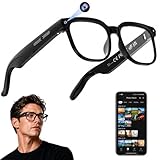
- 【AI Real-Time Translation & ChatGPT Assistant】AI glasses break language barriers instantly with AI real-time translation. The built-in ChatGPT voice assistant helps you communicate, learn, and handle travel or business conversations smoothly—ideal for conferences, overseas trips, and daily use.
- 【4K Ultra HD】 Smart glasses feature 4K resolution for clear, detailed visuals, making them suitable for travel, outdoor activities, everyday moments, and daily use.
- 【Bluetooth Music & Hands-Free Calls 】Smart glasses provide Bluetooth music and crystal-clear hands-free calls with an open-ear design. Stay aware of your surroundings while listening—comfortable for long wear and safer for commuting, cycling, and outdoor use.
- 【IP65 Waterproof & Long Battery Life】 AI glasses are designed for daily wear with IP65 waterproof protection against sweat, rain, and dust. The built-in 290mAh battery provides reliable performance for workdays and travel—no anxiety when you’re on the go.
- 【Smart App Control & Object Recognition】Smart glasses connect to the companion app for easy setup, file management, and feature control. They support AI object recognition to help identify items and improve your daily efficiency—perfect for travel exploration and a smart lifestyle.
Why OpenAI wants to make hardware
Distribution independence
OpenAI currently reaches most consumers through products it does not control: smartphones, web browsers, and operating systems. A dedicated device would give it a direct relationship with users and greater influence over the interface through which its models are used.
That creates an obvious strategic tension. OpenAI depends on Apple and Google ecosystems for distribution while potentially trying to establish a new layer of personal computing that challenges their control.
A better interface for agents
As AI systems become more capable of searching, writing, planning, navigating software, and taking actions, the app grid may become less central. A dedicated product could be designed around intent rather than app selection.
Free tools Windows power users keep installed
One-click scans. No signup required.
That is an inference from OpenAI’s public ambition, not a promise that this device will autonomously book travel, buy products, send messages, or manage every digital task. The more autonomy a device has, the more important permission controls and confirmation flows become.
Turning a model into a product
OpenAI is best known for software and models. Hardware could turn ChatGPT from an application users deliberately open into a persistent product they carry, place in a room, or interact with throughout the day.
A device might also support hardware sales, subscriptions, enterprise services, or increased use of OpenAI’s models. OpenAI has not announced the business model, and the economics are challenging: every cloud-based interaction can involve inference, connectivity, support, and privacy costs.
Rank #4

- #1 SELLING AI GLASSES - Tap into iconic style for men and women, and advanced technology with the newest generation of Ray-Ban Meta smart AI glasses. Capture photos and video recordings, listen to music, make hands-free calls or ask Meta AI questions on-the-go.
- UP TO 8 HOURS OF BATTERY LIFE - On a full charge, these smart AI glasses can last 2x longer than previous generations, up to 8 hours with moderate use. Plus, each pair comes with a charging case that provides up to 48 hours of charging on-the-go.
- 3K ULTRA HD: RECORD SHARP VIDEOS WITH RICH DETAIL — Hands-free video recording with an ultra-wide 12 MP camera in up to 3K resolution. Record clips up to 3 minutes per session. Capture sharp, vibrant memories while staying in the moment.
- LISTEN WITH OPEN-EAR AUDIO — Listen to music and more with discreet open-ear speakers that deliver rich, quality audio without blocking out conversations or the ambient noises around you.
- ASK YOUR GLASSES ANYTHING WITH META AI — Get real-time suggestions, answers, object identification, and reminders hands-free. Requires Bluetooth connection to your smartphone and the Meta AI app. Ensure your phone has internet connectivity.
Why Jony Ive matters—and why his involvement is not enough
Ive’s importance is not simply that he designed famous Apple products. His value is his experience turning complex technology into products with a simple mental model, a distinctive physical identity, controlled interaction patterns, manufacturing discipline, and broad consumer appeal.
What’s actually slowing this PC down?
Pick the symptom - the matching free tool is one click away.
That expertise could be especially important for AI hardware. The challenge is not only making a model capable; it is deciding how the product should request attention, communicate uncertainty, handle interruptions, use audio and sensors, and fit into ordinary life.
But industrial design cannot solve the hardest problems alone. The product will also need reliable models, low latency, strong speech and multimodal performance, acceptable battery life, wireless connectivity, privacy controls, manufacturing scale, and a convincing price. It must provide a reason to use it instead of an existing phone.
Altman brings OpenAI’s models, capital, research organization, strategic ambition, and software ecosystem. His central bet appears to be that future AI systems will make today’s interfaces feel outdated. The hardware still has to prove that the AI is accurate and useful enough to justify adding another object to people’s lives.
Independent reader supportYour contribution helps us test, update, and keep practical guides available for everyone.The Humane and Rabbit warning
The earlier generation of dedicated AI devices—particularly Humane’s Ai Pin and Rabbit’s R1—illustrates the central risk. A product can produce an impressive demonstration yet fail to become a useful daily tool if it does not do enough that a phone cannot already do.
Voice interaction by itself is not a product strategy. A successful device must be faster, more private, more ambient, less distracting, more capable, or more socially acceptable than the alternatives. It must also work outside controlled demonstrations: on noisy streets, in meetings, cars, kitchens, schools, and offices.
Best Value
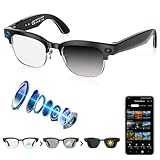
- 【4K Camera with EIS Stabilization】Smart glasses with camera feature a built-in 4K camera with EIS stabilization for clearer and steadier image performance during sports, cycling, travel, outdoor activities, and everyday use.
- 【Open-Ear Speakers & Clear Bluetooth Calling】Camera glasses feature built-in open-ear speakers for music and clear Bluetooth calls while helping you stay aware of your surroundings. Noise-reduction microphones provide clearer voice pickup and a comfortable listening experience for everyday use.
- 【AI Real-Time Translation & Voice Assistant】AI glasses support real-time translation in 139+ languages to make communication easier across different languages. The built-in AI voice assistant helps you access information and interact more efficiently—ideal for work, study, travel, and daily use.
- 【Photochromic Lenses & Lightweight Comfort】Smart sunglasses with camera feature photochromic lenses that respond to changing sunlight conditions for comfortable indoor and outdoor use while helping reduce UV exposure. The lightweight 35g frame provides a comfortable fit for extended everyday wear.
- 【IP66 Water Resistance & 290mAh Battery】AI sunglasses with camera feature IP66 water resistance for added protection against sweat, rain, and dust during active daily use. The built-in 290mAh battery provides convenient power for travel, outdoor activities, work, and everyday use.
OpenAI’s resources and Ive’s design experience do not guarantee success. They may improve the odds of making an attractive product, but reliability, battery life, network dependence, and repeated daily usefulness will determine whether the concept survives.
The biggest technical and practical obstacles
- Latency: Cloud-dependent voice interaction can feel frustrating when responses pause or interruptions are mishandled.
- Battery life: Microphones, cameras, radios, displays, and constant connectivity are difficult to fit into a small device without frequent charging.
- Network dependence: A product that relies on the internet may be unreliable in transit, rural areas, basements, airplanes, or congested networks.
- Model errors: A confident but incorrect answer is more dangerous when the system sees personal surroundings or can take actions.
- Social acceptance: People may not want to speak to a device in public or wear a camera around colleagues and strangers.
- Privacy: The more context the system collects, the more useful it may become—and the more intrusive it may feel.
- The extra-gadget problem: If the product still requires a phone for connectivity, identity, payments, and apps, its value must justify carrying one more device.
- Price and operating cost: Premium hardware may be expensive to manufacture, while cloud AI may make every interaction costly to operate.
Legal, branding, and platform risks
Apple reportedly sued OpenAI in July 2026, alleging trade-secret theft connected to OpenAI’s consumer hardware effort and the hiring of former Apple employees. Those are allegations, not established facts. The Associated Press reported on the lawsuit, while Axios reported that the dispute could slow the hardware project.
The litigation is particularly significant because the hardware effort was a central reason for the io acquisition. It could affect hiring, product development, secrecy, and timing, although its ultimate impact remains uncertain.
There has also been a trademark dispute involving “io” and “IYO” and audio-technology company iyO. OpenAI reportedly decided not to use those names for its AI hardware. The future product should therefore not be described as “the io device” as if that were its confirmed commercial name. Wired reported on the branding dispute.
When could it arrive?
Reports have suggested that OpenAI could show a first product during 2026, but no firm reveal or shipping date has been publicly established. As of the latest information in this dossier, the project remains active, unreleased, and officially under-specified. A reported target for a reveal should not be mistaken for a guaranteed retail launch.
What to watch for when it is revealed
The form factor will be less important than the answers to these questions:
- Does it work independently, or does it require a smartphone?
- What can it do that a phone, app, or existing assistant cannot do as well?
- Does it require a ChatGPT subscription?
- How quickly does it respond in real-world conditions?
- What happens when there is no internet connection?
- Does it include a camera, and how is recording communicated to bystanders?
- What personal context does it collect, and where is that data processed?
- Can users inspect, export, and delete their stored context?
- Can it take actions, or does it only answer questions?
- What safeguards prevent accidental messages, purchases, or other irreversible actions?
- Is it socially acceptable to use in public?
- Does it replace an existing tool or merely add another gadget?
So, what are Jony Ive and Sam Altman building?
They are building an attempt to move AI from an application into a more persistent computing environment. The confirmed project is an AI-first consumer hardware effort backed by OpenAI and shaped by Ive and LoveFrom—not a publicly specified phone, speaker, wearable, glasses product, or other named gadget.
Recommended Free Tools
Until OpenAI reveals the form factor and demonstrates a shipping product, any more precise description should be treated as reporting, inference, or speculation. The important question is not whether the device looks like an iPhone, speaker, pendant, or pair of glasses. It is whether OpenAI can create an interface that is genuinely more useful, trustworthy, and natural than the devices people already own.
Quick Recap
Product prices and availability are accurate as of the date/time indicated and are subject to change. Any price and availability information displayed on Amazon at the time of purchase will apply.

