Free tools Windows power users keep installed
One-click scans. No signup required.
Some links on this page are affiliate links: if you buy through them we may earn a commission, at no extra cost to you.
OMEGA’s Olympic timekeeping is not powered by one stopwatch—or by the brand’s consumer watches. It is a venue-wide measurement system operated through OMEGA Timing, combining precision timers, electronic starts, pressure sensors, touchpads, photocells, photofinish cameras, sport-specific data systems, computer vision and specialist officials.
At the Milano Cortina 2026 Winter Olympics, OMEGA said its operation covered 116 events across eight sports, using approximately 300 timekeepers and 130 tonnes of equipment. The system produced the measurements and data used for times, ranks, scores, distances, statistics, venue displays and broadcasts.
OMEGA’s Olympic role is a measurement system, not a sponsored clock
OMEGA first served as an Olympic Official Timekeeper at Los Angeles 1932. The company has supplied Olympic timing at numerous Games since then, and its current partnership is expected to continue through Brisbane 2032. Its role has expanded from recording elapsed time to supplying much of the technical infrastructure behind official results.
That infrastructure helps competitions:
- start races and synchronize the start signal;
- measure elapsed time;
- detect false starts;
- identify finish order;
- measure speed, distance and movement;
- record scores, rankings and statistics;
- send live information to officials, broadcasters, scoreboards and spectators.
The equipment varies substantially by sport. Swimming, athletics, speed skating, alpine skiing, curling and figure skating do not use one standardized “Olympic timer.” Each requires its own definition of a legal start, finish, score or performance.
#1 Best Overall

- Omega Seamaster Automatic Black Dial Men's Watch 210.32.42.20.01.001
The basic chain is:
Start signal → start detection → elapsed-time measurement → finish detection → sensor or photofinish confirmation → rules validation → official result → scoreboard and broadcast data.
OMEGA supplies much of the measurement and data infrastructure in that chain. Officials, judges, referees, juries and governing-body rules remain responsible for interpreting the evidence and confirming official outcomes.
The Quantum Timer: high-resolution electronic timing
At the center of OMEGA’s timing technology is the Quantum Timer. OMEGA describes it as offering 1-microsecond resolution, meaning it can distinguish intervals as small as one-millionth of a second. The company also states that its error is less than approximately one second in ten million seconds.
Recommended Free Tools
That does not mean every Olympic result is displayed or officially adjudicated to one-millionth of a second. Resolution is not the same as the published precision of every result. A sport may publish times to seconds, tenths, hundredths or thousandths according to its rules. The final result also depends on the start detector, finish detector, data processing, calibration, validation and applicable competition regulations.
In other words, the Quantum Timer is one highly precise component in a larger measurement chain. It does not independently decide whether a start was legal, which body part crossed a finish line first or how a judged performance should be scored.
How Olympic races start
The electronic starting pistol
OMEGA’s electronic starting pistol replaces the traditional firearm-style starting signal with a synchronized electronic system. It is not simply a silent prop.
When activated, the system:
- produces a visible flash;
- sends the start command to the timing system;
- feeds the sound through speakers positioned near the athletes or lanes.
This arrangement reduces the unfairness caused by the speed of sound. If one starter’s report came from a distant position, athletes farther away could hear it slightly later than those closer to the source. Distributing the sound locally helps competitors receive the audible signal at effectively the same time, while the timing system receives the synchronized start command.
The Tool Desk
Outbyte Driver Updater FREEFix the driver behind crashes, sound loss and screen glitchesFind Drivers →Outbyte PC Repair FREERepair Windows errors before they cause bigger problemsFix Now →The technology is designed to improve synchronization; it does not eliminate the need for the starter’s procedure, officials or the sport’s rules.
Athletics starting blocks and false starts
In track events, OMEGA starting blocks contain sensors that measure pressure applied to the footrests. OMEGA says the system samples the load 4,000 times per second, allowing it to measure an athlete’s reaction after the start signal.
Rank #2

- Model 212.30.44.52.01.001
Under the applicable World Athletics rule for races using this system, a reaction time below 100 milliseconds is treated as a false start. The distinction matters:
- the starter manages the visual and procedural start;
- the blocks electronically measure pressure and reaction;
- the governing body’s rules determine how that measurement becomes a false-start decision.
The block sensor therefore supplies evidence. It does not replace the competition’s officials or rulebook.
How close finishes are decided
Photocells: fast detection at a defined point
Photocells detect when an athlete, vehicle or other object breaks a beam at a specified location. OMEGA says its modern units integrate four photocells to detect more body patterns and provide an immediate finish-time signal.
Photocells are useful for rapid detection, timing input, confirmation and redundancy. They are not a universal replacement for photofinish technology. When competitors finish almost together, a beam interruption alone may not provide the detailed visual evidence required to establish exact order.
Scan’O’Vision ULTIMATE: a specialized photofinish camera
The Scan’O’Vision ULTIMATE is a line-scan photofinish camera. OMEGA says it can record up to 40,000 digital images per second, and identified it as a first-time addition to its Winter Olympic operation at Milano Cortina 2026.
A line-scan photofinish camera does not take 40,000 ordinary full-frame photographs of an entire race scene every second. Instead, it records what crosses a narrow finish-line plane over time. The resulting image is a stretched temporal record: the finish line stays fixed while successive competitors appear as they cross it. Officials can analyze that record to establish who reached the line first.
What’s actually slowing this PC down?
Pick the symptom - the matching free tool is one click away.
This is especially important when two competitors’ displayed times appear identical. The photofinish image can provide the evidence needed to separate them, subject to the sport’s rules and officials’ review.
Ordinary broadcast video is generally not the primary finish instrument because its camera angle, frame rate, perspective and synchronization may not be designed for precise finish-line adjudication. Photofinish equipment is purpose-built for that task.
How swimming is timed
Starting blocks and touchpads
Swimming uses a distinct timing architecture. The system combines starting blocks, false-start detection, lane-specific timing, pressure-sensitive touchpads, Quantum aquatic timing and backup video.
Rank #3
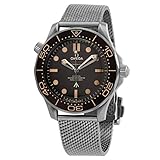
- Model 210.90.42.20.01.001
At the end of each lane, a swimmer stops the timing system by touching a wall-mounted pad. OMEGA states that its touchpads are designed to activate at approximately 1.5 to 2.5 kilograms of pressure. OMEGA introduced Olympic swimming touchpads at the 1968 Mexico City Games.
The touchpad gives each lane an electronic finish interface rather than relying on a human operator to stop a stopwatch. The system must respond to a legal, deliberate touch while resisting incidental water movement or unsuitable contact. Starting blocks provide the corresponding start-side information and can help detect reactions associated with false starts.
A touchpad is not necessarily the only evidence considered in every dispute. Other timing inputs, high-speed video and officials’ review can be used when a finish, turn or possible rule violation requires examination.
Backup and underwater video
World Aquatics identifies high-speed backup video cameras among the systems associated with OMEGA aquatic timing. Video can support review of touches, turns, technique, contact and possible rule violations.
It is best understood as a backup and adjudication layer rather than the first-line timing instrument. The primary result may come from the start and touchpad system, while video provides resilience if a sensor result is questioned or a rules issue requires visual confirmation.
Quick wins for a faster PC:
Scan for outdated or missing drivers - takes under a minuteDriver Scan →Repair Windows errors before they cause bigger problemsFix Now →Fix the driver behind crashes, sound loss and screen glitchesFind Drivers →The Swimming Light Show
OMEGA’s Swimming Light Show is a spectator-facing display rather than a primary timing device. Lights mounted near the starting blocks immediately indicate the top three finishers:
- one large light for first place;
- two medium lights for second place;
- three smaller lights for third place.
It translates the competition data into an instantly readable visual result for people in the venue.
Timing Winter Olympic sports
Milano Cortina 2026 illustrates why there is no single piece of equipment that can be called “the Olympic timer.” OMEGA reported using Quantum Timers, electronic starting pistols, starting gates, photocells, motion sensors, positioning systems and the Scan’O’Vision ULTIMATE photofinish camera across the Winter Games.
Timed course events may use starting gates, timing beams and finish detection at defined points. Skating races require systems capable of resolving close finishes, while other events need equipment adapted to distance, speed, rankings or course conditions. Judged sports require scoring and data systems in addition to any movement measurement.
Rank #4

- Omega Speedmaster Chronograph Automatic 38 mm Watch 324.30.38.50.03.001
For Milano Cortina 2026, OMEGA said it measured more than 1.2 million results, including times, scores, ranks, distances and statistics. Those figures refer specifically to that Games operation and should not be generalized to every Olympic edition.
Motion sensors, positioning systems and AI-assisted analysis
Modern Olympic timing increasingly measures more than elapsed time. At Milano Cortina 2026, OMEGA said motion sensors and positioning systems using computer vision and AI supported sports including figure skating, big air and freestyle skiing.
The systems could generate or support:
- stroboscopic replays;
- augmented broadcast graphics;
- jump and movement information;
- position and trajectory data;
- additional visual analysis for broadcasters and spectators.
At the OMEGA Pavilion, the company demonstrated figure-skating information such as jump height, airtime, rotations and landing speed.
This should not be described as “AI judging.” OMEGA’s public descriptions support AI-assisted measurement, positioning, replay and graphics. They do not establish that an algorithm independently awards medals or replaces figure-skating judges. Judges still apply the sport’s scoring rules, while officials remain responsible for the official result.
Crashes, No Sound, or Screen Glitches?
Random freezes, missing sound and display glitches usually trace back to one bad driver. Find and replace yours safely.Free scan · under a minutePC Slower Than It Used to Be?
A free scan shows the junk files, broken settings and background clutter dragging Windows down - then fixes them in one click.Free scan · Windows 10 & 11OMEGA’s public material also does not fully disclose every sensor specification, calibration method, model or algorithmic threshold. The safest interpretation is that these systems supplement official competition data and provide richer analysis, not autonomous adjudication.
From sensor reading to official result
The most important part of Olympic timekeeping is not any single device. It is the integration of multiple inputs into a result that can be checked, interpreted and distributed quickly.
- The competition starts. An electronic pistol, starting block, gate or sport-specific start system sends the start signal.
- The system measures the event. Quantum timing hardware records elapsed time while sensors, gates, touchpads or positioning systems capture relevant events.
- The finish or performance is detected. A photocell, touchpad, timing gate, photofinish camera, judging interface or movement system supplies the key measurement.
- Inputs are cross-checked. Photofinish images, backup video or secondary sensors may be used when a result is close, disputed or technically unusual.
- Rules are applied. Officials, referees, judges and juries determine whether the start, finish, movement or score satisfies the sport’s regulations.
- The result is distributed. The validated information is formatted for official results, venue scoreboards, broadcasts, athletes and spectators.
OMEGA’s official material describes scoreboards capable of showing competitor names, flags, results, real-time information, animations, athlete photographs and other graphics. This is the audience-facing layer of the same system: a measurement is only useful to spectators when it is quickly converted into understandable information.
Independent reader supportYour contribution helps us test, update, and keep practical guides available for everyone.What OMEGA does not do
It does not replace officials
OMEGA supplies equipment, data and technical expertise. Governing bodies and competition officials apply the rules and confirm results. A sensor can report a pressure change, beam interruption or touch; it cannot by itself resolve every question about legality, order or scoring.
It does not time every sport in the same way
Swimming touchpads, athletics blocks, speed-skating photofinish cameras, alpine timing gates and figure-skating analysis systems solve different problems. Equipment is adapted to the sport, venue and governing-body requirements.
Best Value

- COMPATIBILITY - Smartwatches with Wear OS by Google are compatible with phones running the latest version of Android or iOS. Qualcomm 4100+ chipset has 30% enhanced performance. Improved power, more reliable connection and up to 4x range with Bluetooth 5.
- ALEXA ENABLED - Get a little extra help with Alexa built-in. Easily access the Amazon Alexa app to get quick news and information, check the weather, set timers and alarms, control smart home devices, and more - all through the sound of your voice.
- HEALTH - Automatically tracks activity goals, steps, sleep, cardio and more. Activity modes with GPS keep you on track with your distance and path. Advanced sensors provide data to power your health and fitness tracker apps. Swimproof.
- PERSONALIZED STYLE - Always-on display now brighter with more colors and higher pixel count. Thousands of watch faces to personalize your look and always see the time. Hundreds of apps from fitness, music, social, news, stop watches and more.
- STAY CONNECTED - Notifications for calls, texts, apps. Automatic time zone and calendar syncing. Answer and make calls directly on your watch when your phone is out of reach. This smart watch features a speaker, microphone, and customizable buttons.
It does not mean every result is published to microseconds
The Quantum Timer’s one-microsecond resolution is a capability of the timing instrument. Published results are rounded and adjudicated according to sport-specific rules and the practical requirements of the event.
It is not the same as wearing an OMEGA watch
The consumer watches associated with Olympic sponsorship are not the equipment timing Olympic races. The relevant operation is OMEGA Timing: specialized professional hardware, software, data systems and personnel.
Why redundancy matters
Elite competition cannot sensibly depend on one sensor or one visible clock. A robust system uses layers with different strengths:
- electronic starts provide synchronized timing inputs;
- starting blocks measure reactions and help identify false starts;
- photocells provide rapid beam-crossing signals;
- photofinish cameras resolve close order;
- touchpads record swimming finishes;
- backup video supports technical and rules review;
- officials validate the evidence against the sport’s regulations.
That redundancy also explains why a result may not be settled by the first number viewers see on a scoreboard. A displayed time can be provisional while officials check a photofinish image, review a touch or apply a false-start rule.
The current Olympic picture
At Milano Cortina 2026, held from February 6 to 22, OMEGA’s reported operation covered 116 events across eight sports. The company described approximately 300 timekeepers, 130 tonnes of equipment and more than 1.2 million measured results.
Those figures show the scale of the modern Official Timekeeper role. It is closer to operating the Games’ measurement and results infrastructure than to placing a large countdown clock beside a stadium. The exact equipment will change with the event program: technology used at a Winter Olympics should not automatically be treated as the complete system for Los Angeles 2028 or any other Summer Games.
Conclusion
OMEGA uses a distributed Olympic timing system built from Quantum Timers, electronic starting pistols, starting blocks, false-start sensors, photocells, touchpads, photofinish cameras, timing gates, backup video, scoreboards, motion sensors, positioning systems and computer-vision tools.
PC Slower Than It Used to Be?
A free scan shows the junk files, broken settings and background clutter dragging Windows down - then fixes them in one click.Free scan · Windows 10 & 11Outdated Drivers Are Slowing You Down
One free scan finds every outdated or missing driver and matches the right update for your exact hardware.Free scan · exact hardware matchThe central idea is simple: OMEGA does not measure the Olympics with one device. It builds a sport-specific chain from start signal to official result, then connects that chain to officials, broadcasters, scoreboards and spectators. The technology provides increasingly detailed evidence, but the rules and human officials still determine how that evidence becomes an official Olympic result.
Quick Recap
Product prices and availability are accurate as of the date/time indicated and are subject to change. Any price and availability information displayed on Amazon at the time of purchase will apply.

