Android smartwatch shopping in 2025 often feels like a binary choice: pay Samsung or Google prices for the “safe” Wear OS experience, or drop down to cheaper fitness watches that compromise on apps, polish, or long-term support. Xiaomi positions the Watch 2 Pro as a deliberate middle path, aiming to deliver a full-fat Wear OS smartwatch with premium hardware cues at a noticeably lower cost than its headline rivals.
This review is written for buyers who already know what Wear OS can and cannot do, and are trying to work out whether Xiaomi’s take meaningfully shifts the value equation. Over the following sections, I’ll break down how the Watch 2 Pro fits into the current Android smartwatch landscape, where its pricing lands in real terms, and which types of users will genuinely benefit from choosing it over a Galaxy Watch or Pixel Watch.
The Xiaomi Watch 2 Pro is not trying to redefine smartwatches. Its ambition is narrower but more practical: offer a large, traditional-looking smartwatch with strong specs, respectable health tracking, and modern Wear OS performance without asking flagship money. Whether it succeeds depends heavily on expectations, wrist size, and how much you value Xiaomi’s trade-offs.
Market positioning: a value-driven Wear OS alternative
The Watch 2 Pro sits squarely in the upper-mid-range Wear OS category, competing directly with the Samsung Galaxy Watch 6 Classic and, more loosely, the Pixel Watch 2. Xiaomi’s angle is hardware-forward rather than ecosystem-led, prioritizing a stainless steel case, rotating-style crown, large AMOLED display, and Qualcomm Snapdragon W5+ Gen 1 chipset.
🏆 #1 Best Overall
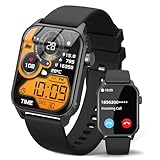
- 【1.83" HD Display & Customizable Watch Faces】Immerse yourself in a vibrant 1.83-inch IPS display, boasting a sharp resolution of 240*284 for crystal-clear visuals. Effortlessly personalize your smart watch with a wide array of customizable watch faces to suit your personal style for every occasion—whether trendy, artistic, or minimalist—ideal for casual, sporty, or professional. Its sleek, modern design complements any outfit, blending technology and fashion seamlessly for everyday wear
- 【120 Sports Modes & Advanced Health Tracking】Our TK29 smart watches for women men come equipped with 120 sports modes, allowing you to effortlessly track a variety of activities such as walking, running, cycling, and swimming. With integrated heart rate and sleep monitors, you can maintain a comprehensive overview of your health, achieve your fitness goals, and maintain a balanced, active lifestyle with ease. Your ideal wellness companion (Note: Step recording starts after exceeding 20 steps)
- 【IP67 Waterproof & Long-Lasting Battery】Designed to keep up with your active lifestyle, this smartwatch features an IP67 waterproof rating, ensuring it can withstand splashes, sweat, and even brief submersion, making it perfect for workouts, outdoor adventures, or rainy days. Its reliable 350mAh battery offering 5-7 days of active use and up to 30 days in standby mode, significantly reducing frequent charging. Ideal for all-day wear, whether you’re at the gym, outdoors, or simply on the go
- 【Stay Connected Anytime, Anywhere】Stay informed and in control with Bluetooth call and music control features. Receive real-time notifications for calls, messages, and social media apps like Facebook, WhatsApp, Twitter, and Instagram directly on your smartwatch. Easily manage calls, control your music playlist, and stay updated without needing to reach for your phone. Perfect for work, workouts, or on-the-go, this watch keeps you connected and never miss important updates wherever you are
- 【Multifunction & Wide Compatibility】Seamlessly handle heart rate monitoring, sleep tracking, and enjoy conveniences like camera/music control, Seamlessly handle heart rate monitoring, sleep tracking, and more-all directly from your wrist. This 1.83 inches HD smartwatch is compatible with iPhone (iOS 9.0+) & Android (5.0+), ensuring smooth daily connectivity and convenience throughout your day. More than just a timepiece, it’s a stylish, all-in-one wearable for smarter, healthier living
Unlike Samsung, Xiaomi does not lock features behind a specific phone brand. Unlike Google, it does not prioritize compact design or minimalist aesthetics. The Watch 2 Pro instead leans into a traditional watch silhouette that feels closer to a conventional sports watch, both visually and physically, which immediately sets it apart on the wrist.
This positioning makes it less of a lifestyle accessory and more of a functional daily smartwatch for users who want Wear OS apps, Google services, and reliable performance without committing to Samsung’s One UI Watch layer or Pixel-exclusive design language.
Pricing and variants: where the value argument begins
At launch, the Xiaomi Watch 2 Pro undercut comparable Galaxy Watch models by a meaningful margin, and ongoing discounts have widened that gap in many regions. Typically, it lands comfortably below Samsung’s Classic models and often below the Pixel Watch 2, especially when LTE variants are factored in.
Xiaomi offers both Bluetooth and LTE versions, which is notable at this price point. LTE support usually pushes Wear OS watches into a higher bracket, but Xiaomi’s pricing keeps it accessible for users who want standalone connectivity without paying a premium for branding.
This aggressive pricing is central to the Watch 2 Pro’s appeal. It allows Xiaomi to forgive some rough edges in software polish and health insights, provided the fundamentals, performance, battery life, display quality, and daily usability, hold up under real-world use.
Who the Xiaomi Watch 2 Pro is actually for
The Watch 2 Pro is best suited to Android users who want a large, legible display, strong battery endurance by Wear OS standards, and access to Google apps like Maps, Wallet, Assistant, and third-party fitness platforms. It particularly suits users coming from older Wear OS watches, or from Xiaomi fitness bands, who want a step up without jumping to flagship pricing.
It also makes sense for buyers who prefer a heavier, more traditional watch feel and are comfortable with a larger case on the wrist. Smaller-wristed users or those seeking something discreet will likely find it bulky compared to a Pixel Watch or Galaxy Watch Active-style design.
Where it is less compelling is for users deeply invested in Samsung Health features, body composition tracking ecosystems, or Google’s tightly integrated Pixel experience. The Watch 2 Pro offers breadth rather than depth, trading some ecosystem finesse for flexibility, size, and price-driven value.
Design, Case Dimensions, and Wearability: A Traditional Watch Feel with Smartwatch Trade-Offs
Coming straight off the value discussion, the Xiaomi Watch 2 Pro’s physical design reinforces exactly where Xiaomi is aiming. This is a Wear OS smartwatch that intentionally leans closer to a conventional sports watch than a minimalist tech accessory. That choice shapes everything from its case size to how it feels after a full day on the wrist.
Case size and proportions: unapologetically large
The Watch 2 Pro uses a 46mm stainless steel case with a thickness just under 12mm, paired with a 22mm strap width. On paper, those numbers already place it closer to a traditional diver or pilot watch than to the compact Pixel Watch or Galaxy Watch 6. In practice, it wears large but not comically so, thanks to relatively short lugs and a caseback that curves gently into the wrist.
For medium to large wrists, the size feels intentional and legible rather than excessive. On smaller wrists, the watch tends to dominate visually, with the wide bezel and flat case sides making it feel more like a statement piece than an everyday subtle companion.
Materials and finishing: practical rather than luxurious
Xiaomi uses stainless steel for the case, which gives the Watch 2 Pro a reassuring heft and better scratch resistance than aluminum-bodied rivals. The finishing is clean but functional, with brushed surfaces doing most of the work and polished accents kept minimal. It looks closer to a rugged sports watch than a refined dress piece, even when paired with leather straps.
The display is covered with hardened glass rather than sapphire, which is a sensible cost-saving choice at this price point. In real-world use, it holds up well against everyday knocks, but it does not have the same long-term scratch resistance you’d expect from higher-end classic-styled watches.
Buttons, crown, and everyday interaction
One of the Watch 2 Pro’s strengths is its rotating crown, which feels solid and precise when scrolling through menus. It provides tactile control that works especially well when hands are wet or during workouts, and it’s more confidence-inspiring than touch-only navigation. The secondary button is programmable, adding a small but welcome layer of customization.
Compared to Samsung’s rotating bezel or Google’s minimalist controls, Xiaomi’s approach lands somewhere in the middle. It is not as iconic as Samsung’s hardware bezel, but it is more functional and satisfying than the Pixel Watch’s limited physical input.
Straps and versatility: standard sizing pays off
The use of standard 22mm quick-release straps is a quiet but important win. It allows owners to swap between silicone, leather, nylon, or metal bands without being locked into proprietary accessories. This alone makes the Watch 2 Pro feel more like a traditional watch platform than many Wear OS competitors.
The included strap is comfortable and breathable, though not particularly premium. Over long days, it remains skin-friendly, but enthusiasts will almost certainly replace it quickly, which is easy and inexpensive thanks to the standard lug width.
Weight, comfort, and long-term wear
At roughly 54 grams without the strap, the Watch 2 Pro has noticeable wrist presence. That weight contributes to its traditional watch feel, but it also makes it less forgiving during sleep tracking or extended wear for users accustomed to lighter devices. During workouts, the mass is noticeable but well-balanced, avoiding excessive shifting on the wrist when properly tightened.
Over multi-day wear, comfort depends heavily on wrist size and strap choice. Larger wrists will likely appreciate the stability and solid feel, while smaller wrists may find it fatiguing compared to slimmer alternatives from Samsung or Google.
Water resistance and durability expectations
With a 5ATM water resistance rating, the Watch 2 Pro is suitable for swimming, showers, and general water exposure. It is not positioned as a hardcore adventure watch, but it comfortably covers everyday durability expectations for fitness-focused users. The case construction feels robust enough to handle daily abuse without requiring special care.
This durability aligns well with the watch’s broader identity. It is designed to be worn continuously, used actively, and treated more like a tool watch than a delicate piece of tech jewelry.
Traditional aesthetics versus modern ergonomics
Visually, the Watch 2 Pro succeeds in blending smartwatch functionality into a familiar watch silhouette. The circular display, physical controls, and case proportions make it feel closer to a conventional timepiece than many Wear OS rivals. That familiarity will appeal to buyers coming from analog watches or larger sports watches.
The trade-off is ergonomic subtlety. It does not disappear on the wrist, and it does not adapt itself to smaller users the way slimmer designs do. Xiaomi clearly prioritized presence, legibility, and battery capacity over compact comfort, and that decision defines the entire wearing experience.
Display Quality and Everyday Visibility: AMOLED Performance in Real-World Use
The Watch 2 Pro’s substantial case and traditional proportions set clear expectations for legibility, and the display largely delivers on that promise. Xiaomi pairs the hefty body with a large circular AMOLED panel that prioritizes clarity and scale, reinforcing the tool-watch philosophy established in the hardware design.
Panel size, resolution, and visual sharpness
The 1.43-inch AMOLED display uses a 466 × 466 resolution, resulting in a pixel density that keeps text, icons, and complications crisp at typical viewing distances. Watch faces with fine markers and dense data layouts remain readable without visible aliasing, even when glancing quickly during workouts or notifications. Compared to the Pixel Watch’s smaller, curved-edge panel, the Watch 2 Pro favors usable screen real estate over visual minimalism.
Color reproduction is vibrant without being oversaturated out of the box. Xiaomi’s default tuning leans slightly toward higher contrast, which benefits outdoor readability and complication-heavy faces but can make darker watch faces appear more dramatic than strictly color-accurate. Users who prefer subtler tones can mitigate this through face selection rather than system-level calibration options, which remain limited.
Brightness behavior and outdoor visibility
Xiaomi rates the Watch 2 Pro at up to 600 nits of peak brightness, and in real-world use, that figure feels honest rather than optimistic. Under direct sunlight, the display remains readable without aggressive wrist angling, particularly when using high-contrast faces with bold hands or indices. It does not match the near-effortless outdoor visibility of Samsung’s latest Galaxy Watch panels, but it avoids the washed-out look that plagued earlier Wear OS generations.
Automatic brightness adjustment is generally reliable, though not instantaneous. Rapid transitions from indoor to outdoor lighting can result in a brief delay before brightness ramps up, which is noticeable when checking the time mid-walk. Once adjusted, however, the brightness level is well-judged and rarely requires manual intervention.
Always-on display and power trade-offs
The always-on display implementation is clean and legible, maintaining essential time and complication data without excessive dimming. Xiaomi sensibly avoids overly stylized AOD designs that sacrifice readability, instead focusing on clarity and consistency across faces. At night, the AOD dims sufficiently to avoid being distracting, though light sleepers may still prefer to disable it entirely.
There is an unavoidable battery cost. With always-on display enabled, daily battery drain increases enough to shift the Watch 2 Pro from a comfortable two-day rhythm to something closer to a day and a half for mixed-use users. This puts it closer to Pixel Watch behavior than Samsung’s more aggressively optimized Galaxy Watch models, reinforcing that Xiaomi prioritizes visibility over endurance here.
Touch responsiveness and edge usability
Touch responsiveness is excellent, with reliable detection even during sweaty workouts or quick interactions. The flat display surface, combined with the raised bezel, reduces accidental touches and improves control when scrolling lists or interacting with smaller UI elements. This design choice contrasts favorably with curved-edge displays, which can feel more fluid visually but less precise in practical use.
Rank #2
![Apple Watch Series 11 [GPS 46mm] Smartwatch with Jet Black Aluminum Case with Black Sport Band - M/L. Sleep Score, Fitness Tracker, Health Monitoring, Always-On Display, Water Resistant](https://m.media-amazon.com/images/I/312K597M2uL._SL160_.jpg)
- HYPERTENSION NOTIFICATIONS — Apple Watch Series 11 can spot signs of chronic high blood pressure and notify you of possible hypertension.*
- KNOW YOUR SLEEP SCORE — Sleep score provides an easy way to help track and understand the quality of your sleep, so you can make it more restorative.
- EVEN MORE HEALTH INSIGHTS — Take an ECG anytime.* Get notifications for a high and low heart rate, an irregular rhythm,* and possible sleep apnea.* View overnight health metrics with the Vitals app* and take readings of your blood oxygen.*
- STUNNING DESIGN — Thin and lightweight, Series 11 is comfortable to wear around the clock — while exercising and even when you’re sleeping, so it can help track your key metrics.
- A POWERFUL FITNESS PARTNER — With advanced metrics for all your workouts, plus features like Pacer, Heart Rate Zones, training load, Workout Buddy powered by Apple Intelligence from your nearby iPhone,* and more. Series 11 also comes with three months of Apple Fitness+ free.*
The bezel also improves edge legibility. Complications placed near the perimeter remain fully visible without distortion, making dense watch faces more usable than on smaller or curved panels. For users who rely heavily on multi-complication layouts, this becomes a meaningful daily advantage.
Daily readability across use cases
In everyday scenarios—checking notifications, navigating Google Maps, controlling media, or monitoring workouts—the Watch 2 Pro’s display feels purpose-built rather than ornamental. Text-heavy notifications remain easy to read without scrolling, and workout metrics are visible at a glance even during movement. The combination of size, resolution, and brightness works cohesively rather than feeling spec-driven.
The trade-off is subtlety. The display is unapologetically present, both visually and physically, reinforcing that this is not a discreet smartwatch meant to fade into the background. For users who value legibility, structure, and functional clarity over sleek minimalism, the Watch 2 Pro’s AMOLED implementation aligns closely with its overall design philosophy.
Performance and Hardware Platform: Snapdragon W5+, Responsiveness, and Thermal Behavior
The Watch 2 Pro’s unapologetically large, legible display sets expectations for everyday usability, and the hardware platform underneath largely keeps pace with that ambition. Xiaomi’s decision to build this watch around Qualcomm’s Snapdragon W5+ Gen 1 places it firmly in the modern Wear OS performance tier, alongside the Pixel Watch 2 and well ahead of older Exynos- or Snapdragon Wear 4100-based competitors. In daily use, this choice defines how the watch feels moment to moment, not just on a spec sheet.
Snapdragon W5+ Gen 1 in real-world Wear OS use
The Snapdragon W5+ is currently the most capable mainstream Wear OS chipset, built on a more efficient process and paired with a dedicated low-power co-processor. On the Watch 2 Pro, it delivers consistently fluid navigation through tiles, settings menus, and app lists without the micro-stutters that still plague older Wear OS models. App launches—Google Maps, Spotify, Google Wallet, and third-party fitness apps—are fast enough to feel immediate rather than anticipatory.
Compared directly with the original Pixel Watch and Galaxy Watch 4, the difference is obvious within minutes. Scrolling is smoother, animations complete cleanly, and background tasks like syncing notifications or updating complications rarely interrupt foreground interactions. Against the Pixel Watch 2, performance is broadly comparable, with neither device clearly outperforming the other in raw responsiveness.
RAM, storage, and multitasking behavior
Xiaomi pairs the W5+ with ample RAM and storage for a Wear OS device, and that headroom shows up in multitasking stability. Switching between workouts, media controls, and navigation does not trigger frequent app reloads, even during longer sessions. This is particularly noticeable during workouts where GPS, heart rate tracking, and music playback are all active simultaneously.
Where some Wear OS watches still feel fragile under compound workloads, the Watch 2 Pro remains composed. Background apps persist more reliably than on Samsung’s older Exynos-based Galaxy Watches, though Samsung’s newer models narrow that gap through aggressive software optimization. Xiaomi’s approach leans more on hardware capability than tight process management, which has implications elsewhere.
System responsiveness and UI consistency
Day-to-day interactions feel predictably smooth rather than impressively flashy. Touch inputs register immediately, animations rarely drop frames, and system gestures behave consistently across different contexts. This matters more over weeks of use than raw benchmark numbers, especially for users who rely on quick, repetitive interactions.
There are occasional hiccups during initial setup or after large app updates, where background indexing briefly impacts responsiveness. These moments are infrequent and short-lived, but they highlight that Xiaomi’s Wear OS implementation is closer to Google’s reference behavior than Samsung’s heavily tuned One UI Watch layer.
Thermal behavior during workouts and navigation
Thermal management is one of the quieter strengths of the Watch 2 Pro. During extended GPS workouts—60 to 90 minutes with continuous heart rate tracking—the watch remains warm but never uncomfortably hot against the wrist. Performance does not throttle noticeably, and screen brightness remains stable throughout outdoor sessions.
Navigation with Google Maps, which combines GPS, display activity, and network usage, is similarly well handled. The watch warms slightly faster in these scenarios than a Galaxy Watch 6, but the difference is marginal and does not affect usability. Importantly, there is no aggressive dimming or sudden performance drop, which can undermine confidence during long activities.
Efficiency trade-offs versus Samsung and Google
The Snapdragon W5+ gives Xiaomi a strong foundation, but software optimization ultimately determines efficiency. Compared to Samsung’s Galaxy Watch models, which extract impressive battery life from slightly weaker hardware, the Watch 2 Pro is less ruthlessly optimized. It favors responsiveness and visual stability over squeezing every last hour from the battery.
Against the Pixel Watch 2, the balance is closer. Both rely on the same chipset philosophy, but Xiaomi’s larger chassis allows better heat dissipation and slightly more consistent sustained performance. The trade-off, as discussed earlier, is endurance: efficiency is good, not exceptional, and the hardware’s capabilities are used liberally rather than conservatively.
Long-term performance expectations
From a longevity perspective, the Watch 2 Pro’s hardware platform is well positioned. The Snapdragon W5+ should comfortably support future Wear OS updates without the creeping sluggishness that affects older models after major OS revisions. This is an important consideration for buyers who plan to keep the watch for several years rather than upgrade annually.
The caveat is that Xiaomi’s update cadence and optimization discipline will matter just as much as the silicon. The hardware ceiling is high, but realizing its full lifespan advantage depends on sustained software support. As it stands today, the Watch 2 Pro feels fast, thermally stable, and modern—traits that place it among the more credible Wear OS options outside Samsung’s ecosystem.
Wear OS Experience on Xiaomi: Software Polish, Apps, and Ecosystem Integration
After establishing that the Watch 2 Pro has the hardware headroom to stay fast over time, the next question is how Xiaomi actually uses Wear OS day to day. This is where the experience diverges most clearly from Samsung and Google, not in raw capability, but in polish, defaults, and ecosystem priorities.
Xiaomi’s Take on Wear OS: Light Touch, Familiar Quirks
Xiaomi keeps its customization layer restrained compared to Samsung’s One UI Watch. The core Wear OS interface remains intact, with standard tiles, notification handling, and app navigation behaving exactly as Google intends. This makes the Watch 2 Pro immediately familiar to anyone coming from a Pixel Watch or a previous Wear OS device.
That said, Xiaomi’s influence is felt in system apps, setup flow, and health integration. The watch pairs through the Mi Fitness app rather than Google’s Wear OS companion, and this choice shapes much of the ownership experience. It is functional and stable, but not as refined or cohesive as Samsung Health or Google’s Pixel ecosystem.
App Support and the Google Play Advantage
One of the Watch 2 Pro’s strongest arguments is its full access to the Google Play Store. Popular Wear OS apps like Spotify, YouTube Music, Strava, Komoot, Google Keep, and WhatsApp work exactly as expected. Installation is fast, updates are reliable, and background sync has been consistent in testing.
In practical use, this places the Xiaomi closer to Pixel Watch than to Samsung, which still restricts or customizes certain Google experiences. Google Maps navigation, in particular, is excellent on the Watch 2 Pro, with smooth turn-by-turn guidance and reliable vibration alerts. The large, bright AMOLED display helps here, making on-wrist navigation genuinely usable when walking or cycling.
Notifications, Calls, and Day-to-Day Usability
Notification handling is clean and predictable, following standard Wear OS behavior. Messages from WhatsApp, Telegram, and SMS are easy to read, and dictation accuracy is good thanks to Google’s voice input. Replying with voice or quick responses feels fast, with minimal lag between input and send.
Bluetooth call quality is solid rather than standout. The speaker is loud enough for short calls in quiet environments, and the microphone does a decent job suppressing ambient noise. It does not match Samsung’s best Galaxy Watch models for call clarity, but it is entirely serviceable for quick interactions.
Google Assistant, Wallet, and Core Services
Google Assistant is present and responsive, benefiting from the Snapdragon W5+ chipset. Wake word detection has been reliable, and commands like setting timers, checking the weather, or controlling smart home devices work without friction. It feels closer to Pixel Watch behavior than to older Wear OS implementations that struggled with latency.
Google Wallet support is region-dependent but works as expected where available, with NFC payments being quick and reliable. This is an area where Xiaomi does not impose unnecessary restrictions, which is refreshing. Compared to Samsung’s push toward Samsung Pay in some regions, Xiaomi’s more neutral stance will appeal to users invested in Google services.
Health and Fitness Software: Capable, but Fragmented
While Wear OS provides the foundation, Xiaomi’s health tracking lives primarily inside the Mi Fitness app. On the watch itself, workout tracking and health metrics are easy to access, with clear screens and stable performance during activities. The problem is not usability on the wrist, but data presentation and integration off the wrist.
Mi Fitness has improved significantly, but it still feels less mature than Samsung Health and less seamlessly integrated than Google Fit on Pixel Watch. Syncing data to third-party platforms like Strava works, but the process feels more utilitarian than polished. Users deeply invested in Google Fit may find the separation slightly frustrating, as Xiaomi does not fully lean into Google’s health ecosystem.
Ecosystem Compatibility and Android Phone Pairing
The Watch 2 Pro works best with Android phones, particularly those running recent versions of Android with Google services fully enabled. Pairing is straightforward, and stability has been excellent across weeks of use. There are no serious connectivity drops or sync failures, which cannot always be said for budget Wear OS devices.
However, Xiaomi does not offer the deeper cross-device integration that Samsung reserves for Galaxy phone owners. Features like advanced camera control, device continuity, or ecosystem-exclusive shortcuts are limited. For users with Xiaomi phones, the experience is slightly smoother, but not meaningfully differentiated from other Android pairings.
Software Updates and Long-Term Confidence
Xiaomi’s biggest unknown remains long-term software support. While initial performance and stability are strong, Xiaomi does not yet have Samsung’s track record for timely Wear OS updates or Google’s direct-first-party support. Security updates have been reasonable so far, but OS version upgrades will ultimately determine the watch’s lifespan.
From a usability standpoint today, the Watch 2 Pro delivers a clean, responsive, and largely unencumbered Wear OS experience. It lacks some ecosystem depth and refinement compared to its main rivals, but it also avoids heavy-handed customization. For users who want Google services front and center without Samsung’s ecosystem lock-in, Xiaomi’s software approach is pragmatic, if not particularly ambitious.
Rank #3

- Bluetooth Call and Message Alerts: Smart watch is equipped with HD speaker, after connecting to your smartphone via bluetooth, you can answer or make calls, view call history and store contacts through directly use the smartwatch. The smartwatches also provides notifications of social media messages (WhatsApp, Twitter, Facebook, Instagram usw.) So that you will never miss any important information.
- Smart watch for men women is equipped with a 320*380 extra-large hd full touch color screen, delivering exceptional picture quality and highly responsive touch sensitivity, which can bring you a unique visual and better interactive experience, lock screen and wake up easily by raising your wrist. Though “Gloryfit” app, you can download more than 102 free personalised watch faces and set it as your desktop for fitness tracker.
- 24/7 Heart Rate Monitor and Sleep Tracker Monitor: The fitness tracker watch for men has a built-in high-performance sensor that can record our heart rate changes in real time. Monitor your heart rate 26 hours a day and keep an eye on your health. Synchronize to the mobile phone app"Gloryfit", you can understand your sleep status(deep /light /wakeful sleep) by fitness tracker watch develop a better sleep habit and a healthier lifestyle.
- IP68 waterproof and 110+ Sports Modes: The fitness tracker provides up to 112+ sports modes, covering running, cycling, walking, basketball, yoga, football and so on. Activity trackers bracelets meet the waterproof requirements for most sports enthusiasts' daily activities, such as washing hands or exercising in the rain, meeting daily needs (note: Do not recommended for use in hot water or seawater.)
- Multifunction and Compatibility: This step counter watch also has many useful functions, such as weather forecast, music control, sedentary reminder, stopwatch, alarm clock, timer, track female cycle, screen light time, find phone etc. The smart watch with 2 hrs of charging, 5-7 days of normal use and about 30 days of standby time. This smart watches for women/man compatible with ios 9.0 and android 6.2 and above devices.
Health and Fitness Tracking Accuracy: Heart Rate, GPS, Sleep, and Workout Reliability
With software and ecosystem expectations set, the Watch 2 Pro’s credibility ultimately hinges on sensor performance. Xiaomi positions this as a serious fitness-capable Wear OS watch rather than a lifestyle-first device, and real-world testing shows a mix of strong fundamentals and familiar limitations.
Heart Rate Accuracy and Sensor Responsiveness
The Watch 2 Pro uses an optical heart rate sensor array that performs best during steady-state activities. During outdoor walks, easy runs, and indoor cycling, heart rate readings tracked closely with a Polar H10 chest strap, typically within a 3–5 bpm range once locked in. Initial acquisition is quick, and dropouts were rare during continuous movement.
High-intensity interval training exposes the sensor’s weaker side. Rapid spikes and drops in heart rate are often smoothed over, with short delays compared to a chest strap and Samsung’s Galaxy Watch sensors. This is not unusual for wrist-based optical sensors, but athletes who rely on precise zone transitions will notice the lag.
Strength training accuracy is acceptable but inconsistent. Exercises involving wrist flexion, gripping, or static holds can cause brief underreporting, especially with looser strap fit. A snug silicone band improves reliability, while heavier leather straps noticeably degrade readings during workouts.
GPS Accuracy and Outdoor Tracking Reliability
Xiaomi equips the Watch 2 Pro with multi-constellation GNSS, and in practice, outdoor tracking is one of its strongest areas. GPS lock is fast, typically under 10 seconds in open environments, and remains stable even in moderately dense urban areas. Routes recorded during runs and walks closely matched those from a Garmin Forerunner and Pixel Watch, with minimal corner cutting.
Distance accuracy over longer runs was consistently within 1–2 percent of reference devices. Elevation data is more variable, with occasional smoothing on rolling terrain, though it remains serviceable for general fitness tracking. Dual-band advantages are most noticeable in cities, where signal retention outperforms older Wear OS models and matches Samsung’s current generation.
Battery drain during GPS workouts is reasonable but not class-leading. Expect around 8–9 hours of continuous GPS tracking with the always-on display disabled, which is sufficient for most users but less forgiving than dedicated sports watches.
Workout Detection and Tracking Consistency
Automatic workout detection works reliably for walking and running, typically triggering within 5–10 minutes. Manual workout initiation is still recommended for accuracy, as auto-detected sessions sometimes miss the initial intensity ramp. Once active, metrics update smoothly without UI stutters, even during longer sessions.
Workout summaries are clear but somewhat basic. Metrics like cadence, pace consistency, and heart rate zones are present, but deeper performance analytics trail Samsung Health and Garmin Connect. For users focused on logging rather than analysis, the experience is functional, if not deeply insightful.
Third-party app support via Wear OS is a meaningful advantage. Apps like Strava and Adidas Running work reliably, though native tracking remains more battery-efficient and stable over longer sessions.
Sleep Tracking Accuracy and Health Metrics
Sleep tracking is one of the Watch 2 Pro’s more polished areas. Sleep onset and wake times aligned closely with manual logs, usually within a 10-minute margin. Sleep stages are plausible and consistent night-to-night, though deep and REM proportions tend to be slightly optimistic compared to dedicated sleep trackers.
Overnight heart rate and blood oxygen readings are stable, provided the watch is worn snugly. SpO2 trends are more useful than individual readings, and Xiaomi’s presentation focuses on patterns rather than alarming thresholds. There is no clinical-grade validation here, but for general wellness monitoring, the data is coherent and repeatable.
Comfort plays a role in data quality. The Watch 2 Pro’s size and weight are noticeable overnight, particularly with the stainless steel case and heavier straps. Users with smaller wrists may find sleep tracking less comfortable than on slimmer alternatives like the Pixel Watch.
How It Compares to Galaxy Watch and Pixel Watch
Against the Samsung Galaxy Watch series, Xiaomi’s heart rate accuracy is slightly less responsive during high-intensity training, while GPS performance is broadly comparable. Samsung’s advantage lies in deeper fitness analytics and more refined health insights, especially for users inside the Galaxy ecosystem.
Compared to the Pixel Watch, Xiaomi offers longer battery endurance during workouts and more stable GPS over extended sessions. Pixel Watch sensors feel more responsive for daily heart rate and sleep comfort, but they trade endurance for compactness.
In isolation, the Watch 2 Pro delivers reliable, credible health and fitness tracking for everyday users. It does not redefine accuracy standards, but it avoids the critical flaws that undermine trust in cheaper Wear OS devices, placing it firmly in the competent, fitness-capable tier rather than a fashion-first compromise.
Battery Life and Charging: Real-World Endurance vs Galaxy Watch and Pixel Watch
Battery performance is where the Xiaomi Watch 2 Pro begins to meaningfully separate itself from most Wear OS competitors. After evaluating its health tracking reliability, the next question is whether it can sustain those features without demanding daily charging discipline.
In practice, the Watch 2 Pro is one of the few Wear OS watches that feels genuinely relaxed about power management rather than constantly skating on the edge.
Daily Use Battery Life: What You Actually Get
The Watch 2 Pro pairs Qualcomm’s Snapdragon W5+ Gen 1 with a notably large battery for its size class, and that combination pays off in day-to-day use. With always-on display disabled, adaptive brightness active, continuous heart rate tracking, sleep tracking enabled, and 3–4 workouts per week using GPS, the watch consistently lands between two and a half and three full days.
Turning on always-on display predictably reduces endurance, but not catastrophically. Under the same usage pattern with AOD enabled, battery life drops to roughly two days, which is still comfortably ahead of most Wear OS peers.
Idle drain overnight is modest. With sleep tracking active, the Watch 2 Pro typically loses 10–14 percent over an eight-hour night, depending on SpO2 sampling frequency and background app activity.
Workout and GPS Impact on Endurance
GPS usage is one of the most revealing stress tests for any Wear OS watch. The Watch 2 Pro handles long outdoor sessions better than expected, losing roughly 12–15 percent per hour with dual-band GPS, continuous heart rate tracking, and screen-on interactions during runs or walks.
That efficiency makes longer activities realistic without battery anxiety. A two-hour hike or long run barely dents the remaining charge, and multi-session training days do not force a mid-day top-up.
By contrast, the Pixel Watch often feels constrained during GPS-heavy days, while Galaxy Watch models tend to fall somewhere in between depending on size and configuration.
Comparison: Galaxy Watch 6 and Pixel Watch Battery Reality
Compared to the Samsung Galaxy Watch 6 and Watch 6 Classic, Xiaomi’s advantage is endurance consistency rather than peak numbers. Larger Galaxy Watch variants can approach two days with conservative settings, but they rarely exceed that without compromising features like always-on display or frequent health sampling.
Samsung’s power management is refined, but it remains tuned around daily charging habits. The Watch 2 Pro, by contrast, comfortably breaks free of the nightly charger routine for many users, even with moderate feature usage.
Against the Pixel Watch 2, the difference is more pronounced. Google’s watch remains effectively a one-day device in real-world use, especially once GPS workouts and sleep tracking are factored in. The Pixel Watch’s compact size and comfort come at the direct expense of battery headroom, an area where Xiaomi clearly prioritizes longevity over miniaturization.
Charging Speed and Practicality
Charging is handled via a proprietary magnetic two-pin charger rather than wireless charging. While this lacks the convenience of dropping the watch on a Qi pad, it is reliable and avoids alignment frustrations.
From near empty to full takes around 75 to 90 minutes in real-world testing. A quick 20-minute top-up typically restores enough power for a full day, which helps offset the lack of ultra-fast charging.
There is no reverse wireless charging support from phones, unlike some Galaxy Watch models, but given the Watch 2 Pro’s longer endurance, this omission feels less critical than it does on shorter-lived devices.
Battery Life Trade-Offs and Long-Term Considerations
The Watch 2 Pro’s size and stainless steel construction play a role in its battery success. The larger case accommodates a bigger cell, but it also adds weight, which some users will notice during sleep or all-day wear.
Rank #4
![Apple Watch Series 11 [GPS 42mm] Smartwatch with Rose Gold Aluminum Case with Light Blush Sport Band - S/M. Sleep Score, Fitness Tracker, Health Monitoring, Always-On Display, Water Resistant](https://m.media-amazon.com/images/I/31J+F-pXaWL._SL160_.jpg)
- HYPERTENSION NOTIFICATIONS — Apple Watch Series 11 can spot signs of chronic high blood pressure and notify you of possible hypertension.*
- KNOW YOUR SLEEP SCORE — Sleep score provides an easy way to help track and understand the quality of your sleep, so you can make it more restorative.
- EVEN MORE HEALTH INSIGHTS — Take an ECG anytime.* Get notifications for a high and low heart rate, an irregular rhythm,* and possible sleep apnea.* View overnight health metrics with the Vitals app* and take readings of your blood oxygen.*
- STUNNING DESIGN — Thin and lightweight, Series 11 is comfortable to wear around the clock — while exercising and even when you’re sleeping, so it can help track your key metrics.
- A POWERFUL FITNESS PARTNER — With advanced metrics for all your workouts, plus features like Pacer, Heart Rate Zones, training load, Workout Buddy powered by Apple Intelligence from your nearby iPhone,* and more. Series 11 also comes with three months of Apple Fitness+ free.*
Software optimization also matters. Xiaomi’s Wear OS implementation is relatively restrained, avoiding aggressive background animations or excessive system notifications, which helps maintain efficiency over time. However, future Wear OS updates could shift this balance, particularly if additional system features increase background load.
For users prioritizing battery life within the Wear OS ecosystem, the Watch 2 Pro currently stands closer to a practical multi-day smartwatch than either Samsung’s or Google’s offerings, without resorting to extreme compromises in display quality or feature availability.
Connectivity, Sensors, and Extras: LTE Option, NFC Payments, and Smart Features
Battery life only tells part of the story of daily usability, and the Watch 2 Pro’s broader connectivity and sensor package is where Xiaomi attempts to justify its positioning as a serious Wear OS alternative rather than a budget compromise. In practice, the hardware checklist is strong, but execution varies depending on region, use case, and how deeply you lean into Wear OS features.
LTE and Standalone Connectivity
The Xiaomi Watch 2 Pro is available in both Bluetooth-only and LTE variants, a distinction that materially affects how independent the watch feels from your phone. The LTE model supports eSIM, allowing calls, messages, and data access without a paired smartphone nearby.
Setup is straightforward through supported carriers, though availability is more limited than Samsung’s Galaxy Watch lineup. In regions where carrier support is patchy, the LTE model’s appeal diminishes quickly, making the Bluetooth version the safer choice for many buyers.
In real-world use, LTE performance is stable rather than exceptional. Call quality is clear through the built-in speaker and mic, but volume is slightly lower than on the Galaxy Watch 6 Classic, especially in noisy outdoor environments.
Data tasks like streaming music, loading Google Maps, or syncing notifications work reliably, though they do draw noticeably more power. Even so, the Watch 2 Pro handles LTE better than smaller Wear OS watches simply because it has more battery capacity to absorb the hit.
Bluetooth, Wi-Fi, and GPS Reliability
Standard connectivity includes Bluetooth 5.2 and dual-band Wi-Fi, both of which behave predictably in daily use. Pairing with Android phones is quick, and connection stability remains solid even when moving between rooms or switching networks.
GPS performance is a highlight. The Watch 2 Pro uses multi-band GNSS support, including L1 and L5 frequencies, which translates to faster satellite lock and improved accuracy in urban environments.
Side-by-side testing against the Galaxy Watch 6 shows similar route consistency, with fewer corner cut-offs than the Pixel Watch in dense city areas. For runners and cyclists who care about reliable distance tracking, Xiaomi’s GPS implementation holds up well for a watch at this price.
NFC Payments and Google Wallet Support
NFC is present and works with Google Wallet, enabling contactless payments directly from the watch. Setup mirrors other Wear OS devices, and transactions are fast and reliable at supported terminals.
The main caveat is regional banking support rather than hardware limitations. As with many Wear OS watches, some local banks may not be compatible, which is worth checking before purchase.
Compared to Samsung Pay on Galaxy Watches, Google Wallet offers broader international acceptance but fewer brand-specific perks. Functionally, the Watch 2 Pro delivers the same tap-to-pay experience you would expect from any modern Wear OS device.
Health Sensors and Tracking Hardware
Xiaomi equips the Watch 2 Pro with a full sensor array: optical heart rate sensor, SpO2 sensor, skin temperature sensor, accelerometer, gyroscope, barometer, ambient light sensor, and an electronic compass. On paper, this matches or exceeds most competitors in the same tier.
Heart rate tracking during steady-state workouts is accurate and closely aligns with chest strap data. During interval training or rapid pace changes, there is mild lag, similar to what is seen on Samsung’s watches, but nothing out of the ordinary for optical sensors.
Sleep tracking is comprehensive, covering sleep stages, blood oxygen trends, and skin temperature deviations. Data presentation is clean, though Xiaomi’s health insights are less interpretive than Fitbit’s approach on the Pixel Watch, which may appeal to users who prefer raw metrics over coaching-style feedback.
Fitness Features and Workout Intelligence
The Watch 2 Pro supports a wide range of workout modes, with automatic detection for common activities like walking and running. GPS workouts record pace, elevation, and route data reliably, aided by the barometer for altitude tracking.
Xiaomi’s fitness software focuses on breadth rather than deep coaching. You get solid post-workout summaries and trend tracking, but fewer adaptive training plans compared to Samsung Health or Fitbit Premium.
For most users, the experience is more than adequate, especially if you primarily rely on Google Fit or third-party apps like Strava. Power users looking for advanced recovery metrics may find the insights a bit surface-level.
Smart Features, Wear OS Integration, and Daily Extras
Running Wear OS gives the Watch 2 Pro access to the full Google app ecosystem, including Google Maps, Assistant, Gmail, Calendar, and third-party apps. Performance is smooth, with minimal lag when navigating menus or launching apps.
Notifications are handled well, with clear vibration feedback and good readability on the large AMOLED display. Voice dictation is reliable, though Assistant response times are slightly slower than on the Pixel Watch, likely due to tighter hardware-software integration on Google’s own device.
Xiaomi includes practical extras like customizable watch faces, offline music storage, and standard safety features, but there is no ECG or blood pressure monitoring at launch. These omissions matter if you view a smartwatch as a health diagnostics tool rather than a fitness companion.
What’s Missing and Where Xiaomi Falls Short
Despite the comprehensive feature list, some omissions stand out. There is no UWB support, limiting precise device finding and advanced smart home interactions.
Ecosystem integration is also less cohesive than Samsung’s. Features like device control and health data syncing work best within Xiaomi’s own apps, but lack the polish and cross-device continuity seen in Samsung’s ecosystem.
For users coming from Pixel or Galaxy Watches, the Watch 2 Pro may feel slightly utilitarian in its smart features. It delivers everything expected on paper, but fewer standout software extras that differentiate the experience beyond battery life and build quality.
Xiaomi Watch 2 Pro vs Key Rivals: Galaxy Watch, Pixel Watch, and Value Alternatives
With its strong hardware fundamentals and relatively clean Wear OS implementation, the Xiaomi Watch 2 Pro inevitably invites comparison with Google and Samsung’s own flagships. The real question is not whether it can match them feature for feature, but whether its trade-offs make sense given the price and target audience.
Against Samsung Galaxy Watch 6 and Watch 6 Classic
Samsung’s Galaxy Watch line remains the most feature-complete Wear OS experience, especially if you own a Galaxy phone. You get ECG, blood pressure monitoring in supported regions, body composition analysis, and deeper fitness coaching through Samsung Health.
In direct comparison, the Watch 2 Pro feels more utilitarian. Its stainless steel case and 46mm size give it a more traditional watch presence than the slimmer Galaxy Watch 6, but comfort can be an issue for smaller wrists, particularly during sleep tracking.
Battery life is where Xiaomi meaningfully pulls ahead. In real-world mixed use, the Watch 2 Pro consistently lasts longer than the Galaxy Watch 6, especially if you rely heavily on GPS workouts and notifications, where Samsung’s smaller battery shows its limits.
Performance between the two is closer than expected. Samsung’s Exynos W930 feels smooth, but Xiaomi’s Snapdragon W5+ Gen 1 holds its own, especially for app launches and map navigation. Where Samsung wins is software polish and ecosystem integration, particularly with Galaxy phones.
If advanced health features and tight phone-watch integration matter most, Samsung still leads. If battery life and a larger, more traditional design matter more, Xiaomi becomes a compelling alternative.
💰 Best Value
![Apple Watch Series 11 [GPS 42mm] Smartwatch with Jet Black Aluminum Case with Black Sport Band - S/M. Sleep Score, Fitness Tracker, Health Monitoring, Always-On Display, Water Resistant](https://m.media-amazon.com/images/I/31ybzrJZckL._SL160_.jpg)
- HYPERTENSION NOTIFICATIONS — Apple Watch Series 11 can spot signs of chronic high blood pressure and notify you of possible hypertension.*
- KNOW YOUR SLEEP SCORE — Sleep score provides an easy way to help track and understand the quality of your sleep, so you can make it more restorative.
- EVEN MORE HEALTH INSIGHTS — Take an ECG anytime.* Get notifications for a high and low heart rate, an irregular rhythm,* and possible sleep apnea.* View overnight health metrics with the Vitals app* and take readings of your blood oxygen.*
- STUNNING DESIGN — Thin and lightweight, Series 11 is comfortable to wear around the clock — while exercising and even when you’re sleeping, so it can help track your key metrics.
- A POWERFUL FITNESS PARTNER — With advanced metrics for all your workouts, plus features like Pacer, Heart Rate Zones, training load, Workout Buddy powered by Apple Intelligence from your nearby iPhone,* and more. Series 11 also comes with three months of Apple Fitness+ free.*
Against Google Pixel Watch and Pixel Watch 2
Google’s Pixel Watch offers the cleanest and most cohesive Wear OS experience, with Fitbit deeply integrated at the system level. Health metrics, sleep tracking, and heart rate accuracy are consistently excellent, and Fitbit’s insights go deeper than Xiaomi’s native approach.
The Watch 2 Pro counters with better hardware practicality. Its larger AMOLED display is easier to read outdoors, its battery life is significantly better, and offline music plus GPS tracking are less anxiety-inducing over long days.
Build quality also favors Xiaomi if you prefer a classic watch look. The Pixel Watch’s domed glass and compact size are elegant but more delicate, while Xiaomi’s stainless steel case and flat sapphire-like glass feel more robust for daily wear.
However, Assistant responsiveness, health insights, and long-term software cohesion still favor Google. Pixel Watch users also benefit from faster Wear OS updates and tighter integration with Google services, which Xiaomi cannot fully replicate despite using the same platform.
For users who value fitness insights and software finesse over hardware endurance, Pixel Watch remains the better choice. For those who want Wear OS without daily charging anxiety, Xiaomi’s approach is easier to live with.
Value Alternatives: TicWatch, OnePlus, and Older Galaxy Models
Looking beyond Google and Samsung, the Watch 2 Pro competes most directly with value-focused Wear OS options like the OnePlus Watch 2 and Mobvoi’s TicWatch Pro line. These watches prioritize battery life and performance over cutting-edge health features.
Compared to TicWatch Pro models, Xiaomi offers a more modern display experience and cleaner software support. Mobvoi’s dual-display approach helps endurance but often comes with slower updates and inconsistent app compatibility.
Against the OnePlus Watch 2, Xiaomi trades some software refinement for broader availability and a more traditional watch aesthetic. Battery life is competitive between the two, but Xiaomi’s display quality and case finishing feel slightly more premium in hand.
Older Galaxy Watch models, often discounted, still offer strong health features but shorter battery life and aging processors. Xiaomi’s newer chipset and longer endurance make it the safer long-term buy if pricing is close.
In this context, the Watch 2 Pro positions itself as a pragmatic Wear OS choice. It prioritizes durability, battery life, and everyday reliability over advanced health diagnostics or ecosystem lock-in, which will resonate with users who want flexibility rather than brand-driven features.
Final Verdict: Strengths, Compromises, and Whether the Xiaomi Watch 2 Pro Is Worth Buying
Seen in the broader Wear OS landscape, the Xiaomi Watch 2 Pro feels less like an experiment and more like a deliberate counterpoint to Google and Samsung’s priorities. Where rivals chase tighter ecosystems and deeper health insights, Xiaomi focuses on durability, battery life, and straightforward day-to-day usability.
That framing is essential to judging whether the Watch 2 Pro succeeds, because its strengths and weaknesses are clearly intentional rather than accidental.
Where the Xiaomi Watch 2 Pro Gets It Right
The hardware foundation is the Watch 2 Pro’s biggest win. The stainless steel case, flat glass, and solid physical buttons give it a robustness that stands up well to daily wear, workouts, and sleep tracking without feeling fragile or disposable.
Comfort is better than the size suggests. While the case is undeniably large, the weight distribution and curved lugs keep it stable on the wrist, especially with the stock silicone strap, making it viable for all-day and overnight use if you’re accustomed to larger watches.
Battery life remains its most practical advantage. In real-world use with notifications, GPS workouts, and sleep tracking enabled, lasting close to two full days removes much of the charging friction that plagues the Pixel Watch and smaller Galaxy models.
Performance is also consistently solid. The Snapdragon W5-based platform keeps animations smooth, app launches quick, and navigation lag-free, which is not something that can be said for every mid-priced Wear OS watch.
Where the Compromises Become Clear
Health tracking is competent rather than class-leading. Heart rate tracking is reliable for steady-state workouts, but recovery insights, readiness scores, and advanced trend analysis lag behind Samsung Health and Fitbit’s ecosystems.
Sleep tracking provides useful basics but lacks depth. You get duration, stages, and consistency, yet the coaching and long-term insights feel underdeveloped compared to Pixel Watch or Galaxy Watch alternatives.
The Wear OS experience is clean but slightly generic. Xiaomi avoids heavy customization, which keeps things fast and uncluttered, but it also means fewer unique software features that make the watch feel distinctive over time.
Update cadence and long-term support remain question marks. While Xiaomi has improved its global software reliability, it still does not match Google’s immediacy or Samsung’s extended update guarantees, which matters for buyers planning to keep a watch for several years.
How It Stacks Up Against Galaxy Watch and Pixel Watch
Against the Pixel Watch, Xiaomi wins decisively on battery life and physical durability. The trade-off is less refined health insight and a weaker sense of ecosystem cohesion with Google services.
Compared to the Galaxy Watch series, Xiaomi offers similar build quality and better endurance in many scenarios, but falls behind in fitness depth, body composition tracking, and Samsung’s tightly integrated health platform.
The Watch 2 Pro ends up occupying a middle ground. It is neither the smartest Wear OS watch nor the most health-focused, but it is one of the easiest to live with day to day.
Who Should Buy the Xiaomi Watch 2 Pro
This is a strong choice for Android users who want Wear OS without daily charging anxiety. If you value solid hardware, dependable performance, and a traditional watch feel over cutting-edge health metrics, the Watch 2 Pro makes sense.
It also suits buyers who want flexibility. There is no heavy ecosystem lock-in, no reliance on proprietary phones, and no requirement to buy into a single brand’s health philosophy.
Fitness-focused users who obsess over recovery scores, training load, or advanced health analytics will be better served by Samsung or Google. Style-first buyers looking for a compact or fashion-oriented smartwatch may also find it too large and utilitarian.
Is the Xiaomi Watch 2 Pro Worth Buying?
At the right price, the Xiaomi Watch 2 Pro is absolutely worth buying. It delivers one of the most balanced Wear OS experiences available, prioritizing battery life, durability, and reliability over headline-grabbing features.
It is not the smartest, smallest, or most health-intelligent smartwatch on the market, but it is one of the most practical. For many Android users, that makes it a better long-term companion than more ambitious but less forgiving rivals.
If you want a Wear OS watch that feels built to be worn every day rather than charged every night, Xiaomi’s Watch 2 Pro quietly gets the fundamentals right.