Some links on this page are affiliate links: if you buy through them we may earn a commission, at no extra cost to you.
The XREAL Eye’s biggest upgrade is not its camera: it is native 6DoF spatial anchoring for XREAL One and One Pro glasses. The detachable 12MP module also takes photos and short first-person videos, but its two-minute recording limit and the Beam Pro requirement for mixed-reality video make it a specialized add-on, not a replacement for a phone or action camera.
The XREAL One remains primarily a wearable display connected to another device. Add the Eye if you want a screen that stays anchored in the room as you move, or value occasional hands-free capture. If you only want a private screen for gaming, movies, or a laptop, the camera is optional.
What the XREAL One and One Pro are
The XREAL One Series is a pair of display glasses, not a self-contained headset. Connect the glasses to a compatible device with video output—such as a supported phone, computer, or handheld console—and they show a large virtual screen. XREAL’s X1 chip handles spatial display features in the glasses, so ordinary screen positioning does not require a separate processing accessory. See XREAL’s One product page for the company’s current product information.
Quick wins for a faster PC:
Clear out junk files and repair common Windows errorsFree Scan →Fix the driver behind crashes, sound loss and screen glitchesFind Drivers →Repair Windows errors before they cause bigger problemsFix Now →The One Pro is the higher-end display option. GamesBeat’s June 2025 coverage describes its 57-degree field of view, thinner lenses, and redesigned optics compared with the One. Those differences concern the viewing experience; the Eye works with both One-series models. The same article listed the One Pro at $649 for general availability and $599 during a limited preorder period, but those are historical prices, not current quotes. GamesBeat’s original coverage is useful launch context, not a live price guide.
#1 Best Overall

- XREAL's Self-Developed X1 Spatial Computing Chip: Delivers Native 3DoF tracking with ultra-low 3ms M2P latency, ensuring stable visuals even during rapid movements. With the optional XREAL Eye, full 6DoF spatial anchoring. It delivers high processing power, seamless compatibility with devices, and distortion-free visuals through advanced stabilization.
- The New Optic Engine-X-Prism Optics: XREAL’s advanced lens and projection system—ultra-slim, precision-engineered optics that project a large, sharp virtual screen right in front of your eyes, while still letting you see your real surroundings clearly. With a best-in-class 57° FOV, Optic Engine 4.0 recreates the feeling of watching a massive 171-inch screen from four meters away—all in lightweight, compact design. Its advanced anti-glare design minimizes reflections and light interference, enhancing clarity and immersion.
- Experience True AR with 6 DoF, Spatial Anchor Anytime: Pairing with XREAL Eye, anchor your screen anywhere in your room, so it stays perfectly fixed in place—even as you walk around, lean in, or change your position. Unlike 3DoF, which keeps the screen at a constant distance relative to your head movements, 6DoF keeps your virtual screen locked to a real spot in your space for true spatial freedom and a more natural, immersive AR experience.
- REAL 3D – Turn everything you watch into an immersive 3D experience: REAL 3D Now Available on All One Series Glasses, instantly transforming all your content—from games and movies to apps and photos—into true 3D with a single switch. Experience richer depth and lifelike visuals across everything you watch or play.
- 57°FOV, 171'' Spatial Screen – More Immersive Visual Experience: Experience a virtual screen starting at 171 inches wide, filling your view with blockbuster visuals, thanks to XREAL’s advanced optics and industry-leading 57° FOV. Powered by Sony’s 0.55' Micro-OLED display technology and a smooth 120Hz refresh rate, get swept into your games or movies with immersion that rivals traditional home theaters—without the size, setup, or space concerns.
What the modular Eye camera changes
The XREAL Eye is a 1.35-gram detachable module that fits at the glasses’ nose bridge, beneath a removable cap. Attach it when you want its camera or spatial tracking; leave it off when you want a display without a camera mounted on your face. That modularity offers a practical privacy choice, though it also means the feature is not seamless: you must fit the module before using it.
The Eye’s more consequential contribution is Spatial Anchor, XREAL’s native 6DoF mode for the One Series. Without it, a spatial display can be stabilized relative to head movement, but it does not fully track the wearer’s position in the room. With 6DoF tracking, the virtual screen can stay in a location as you lean, shift position, or walk around it. XREAL says users can view the anchored screen from different positions, including from behind, and claims 3ms motion-to-photon latency; that number is a manufacturer claim, not an independent measurement. The module adds room-relative screen placement, not the complete room-mapped, interactive mixed reality of a headset such as Apple Vision Pro or Meta Quest.
For someone who watches a film or plays a game while seated, the Eye may add little. It matters more if you want the virtual screen to stay put while you move—for example, while pacing or shifting around a workspace. XREAL’s Eye guide describes the feature and notes that additional capabilities may arrive through glasses firmware updates.
Rank #2
- XREAL's Self-Developed X1 Spatial Computing Chip: Delivers Native 3DoF tracking with ultra-low 3ms M2P latency, ensuring stable visuals even during rapid movements. With the optional XREAL Eye, full 6DoF spatial anchoring. It delivers high processing power, seamless compatibility with devices, and distortion-free visuals through advanced stabilization.
- The New Optic Engine-X-Prism Optics: XREAL’s advanced lens and projection system—ultra-slim, precision-engineered optics that project a large, sharp virtual screen right in front of your eyes, while still letting you see your real surroundings clearly. With a best-in-class 57° FOV, Optic Engine 4.0 recreates the feeling of watching a massive 171-inch screen from four meters away—all in lightweight, compact design. Its advanced anti-glare design minimizes reflections and light interference, enhancing clarity and immersion.
- Experience True AR with 6 DoF, Spatial Anchor Anytime: Pairing with XREAL Eye, anchor your screen anywhere in your room, so it stays perfectly fixed in place—even as you walk around, lean in, or change your position. Unlike 3DoF, which keeps the screen at a constant distance relative to your head movements, 6DoF keeps your virtual screen locked to a real spot in your space for true spatial freedom and a more natural, immersive AR experience.
- REAL 3D – Turn everything you watch into an immersive 3D experience: REAL 3D Now Available on All One Series Glasses, instantly transforming all your content—from games and movies to apps and photos—into true 3D with a single switch. Experience richer depth and lifelike visuals across everything you watch or play.
- 57°FOV, 171'' Spatial Screen – More Immersive Visual Experience: Experience a virtual screen starting at 171 inches wide, filling your view with blockbuster visuals, thanks to XREAL’s advanced optics and industry-leading 57° FOV. Powered by Sony’s 0.55' Micro-OLED display technology and a smooth 120Hz refresh rate, get swept into your games or movies with immersion that rivals traditional home theaters—without the size, setup, or space concerns.
Camera capture: useful for short clips, not long recording
The Eye has a 12MP camera with an f/2.25 aperture and electronic image stabilization. XREAL’s FAQ lists 1080p recording at 30 or 60 frames per second for the One-connected capture workflow, as well as a 1600 × 1200 mode with 30fps as the default and 60fps available in the relevant workflow. Photos are saved as JPG and video as MP4. These specifications describe available modes; megapixels and frame rates alone do not establish how footage looks in low light, how well it handles fast movement, or whether the camera’s framing matches what the wearer sees. Check XREAL’s FAQ for its listed modes and limits.
The practical limit is more definite: XREAL says recordings can be no longer than two minutes. That makes the Eye better suited to a quick point-of-view clip or snapshot than a continuous walk, full event, or long vlog. It should not be treated as an unrestricted action camera. The lens sits at the bridge of the nose rather than at the eye itself, so captured framing will not necessarily match the wearer’s exact viewpoint.
GamesBeat’s hands-on account describes using a temple button for capture: a short press takes a photo, a long press starts video, and another press stops it. Controls can change with firmware, so consult the current guide if the sequence differs on your glasses. The detachable camera also raises ordinary public-recording questions: do not assume bystanders can tell when it is recording, and follow applicable venue rules and local law.
Rank #3

- Giant Virtual Screen – Immersive Theater Anywhere: Step into a breathtaking virtual screen up to 500 inches, transforming movies, games, and apps into larger‑than‑life experiences. Whether you’re commuting, flying, or unwinding at home, your personal cinema travels with you—bringing immersive entertainment wherever life goes.
- Premium Display Quality – Smooth, Sharp, and True-to-Life: XREAL 1S delivers ultra‑smooth viewing with a 120Hz refresh rate in 3DoF mode and a 90Hz global refresh that eliminates flicker and blur. Every unit is individually color‑tuned for precise, natural hues. The redesigned optical engine boosts clarity by 9%, delivering crisp detail from center to edge. Advanced optical alignment ensures each image point locks perfectly to your eye, keeping visuals sharp, vivid, and lifelike.
- Spatial Viewing Modes – Work, Watch, and Play on Your Terms: Shape your environment with XREAL 1S. Effortlessly switch between 0DoF follow mode, 3DoF anchor mode, Ultrawide Mode (32:9 or 21:9), Real 3D Mode, and Side-View Mode — ideal for both deep focus and entertainment. Pair with XREAL Eye to unlock 6DoF spatial anchoring, allowing for total freedom of movement while your screen stays pinned.
- Native 3DoF Spatial Screen – Plug & Play Freedom: XREAL 1S brings your AR experience to life with native 3DoF spatial viewing powered by the X1 chip. No apps, no setup — simply connect to any USB‑C DP‑enabled device and step straight into expansive spatial content. With rock‑solid stability and smooth head tracking, every session feels natural and comfortable, free from motion sickness and distractions, keeping you fully immersed.
- REAL 3D – Instant Spatial Depth for Everything You Watch: XREAL 1S debuts the world’s first on‑glasses REAL 3D spatial technology, instantly transforming all your content—from games and movies to apps and photos—into true 3D with a single switch. Experience richer depth and lifelike visuals across everything you watch or play, supported at up to 30fps with just 90–100ms latency for smooth, natural viewing.
Beam Pro: only essential for mixed-reality video
Beam Pro is not required just to use the glasses as a display, and XREAL does not make it a universal prerequisite for Eye capture. The glasses can take photos, and supported workflows include first-person video capture. But XREAL says Beam Pro is required for mixed-reality video—recording that combines the real-world camera view with the virtual AR display. That distinction matters if you are considering the Eye because you want to record what you see on screen alongside your surroundings. XREAL’s Eye listing specifies the Beam Pro requirement for this capture mode.
Recommended Free Tools
For a buyer who only wants spatial anchoring or ordinary photos, adding Beam Pro may be unnecessary. For mixed-reality video, it is part of the required workflow, so consider its added cost and another device to manage before treating the Eye’s listed $99 US price as the whole purchase. The official shop listing showed $99 but also a notify-when-available state in the research snapshot; check the live listing for current price and stock.
Independent reader supportYour contribution helps us test, update, and keep practical guides available for everyone.Setup, compatibility, and getting files off the glasses
The Eye is designed for the XREAL One Series, not older XREAL glasses. For the display itself, the key question is not whether a device has a USB-C port, but whether it can send video over that connection or works with an appropriate adapter or accessory. USB-C ports differ: some support DisplayPort output and others do not. XREAL lists devices across phones, tablets, computers, consoles, and handhelds, but compatibility depends on the particular model and connection path. Check the manufacturer’s compatibility information and your device’s video-output support before buying.
Rank #4
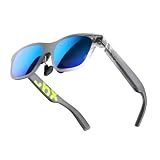
- YOUR PRIVATE 147” BIG SCREEN, ANYWHERE — Plug the a01+ into your phone, tablet, handheld, or laptop and a giant 147” screen appears in front of you—for movies, gaming, or getting work done on the couch, on a flight, or in bed. A true portable display you wear, in a soda-can-sized 210g case that drops in your pocket.
- ALWAYS RIGHT IN FRONT OF YOU — The screen follows your view with smooth, stabilized tracking and stays centered as you look around—nothing to anchor or set up, and no drift to reset. Press play and your big screen is simply there.
- 62G — LIGHT ENOUGH TO FORGET — At just 62g, with three nose-pad sizes and flexible temples, the a01+ stays comfortable through a long movie or flight, even lying down.
- LOOKS LIKE SUNGLASSES, NOT A GADGET — A slim, sunglasses-style frame with a signature semi-transparent chassis and neon logo—light and low-profile enough to actually wear out.
- WORKS WITH YOUR USB-C GEAR — No Battery to Charge — Connects and powers over a single USB-C DisplayPort cable: iPhone 15/16/17, iPad, DP-capable Android phones, Steam Deck, ROG Ally, Mac and PC. Nintendo Switch/Switch 2 and older (Lightning) iPhones need an adapter. For long phone sessions, add the XREAL Hub to charge and watch at once.
To export Eye captures, XREAL’s guide gives this menu path: My → XREAL Eye → Export Photos/Videos, then enable Transmission Mode. The confirmed guide identifies the path and JPG/MP4 formats; it does not establish that every phone or connection uses the same transfer process. If Spatial Anchor loses the display while Follow mode still works, XREAL’s troubleshooting guide recommends checking the Eye connection: switch to Follow, disconnect and reseat the module, confirm it is secure, then try Spatial Anchor again. If the problem persists, check the current support guidance and firmware-update workflow. See the file-management guide and troubleshooting guide.
Available features versus announced possibilities
| Status | What to expect |
|---|---|
| Available in supported One Series workflows | Spatial Anchor with the Eye attached, photos, supported first-person video capture, and file export. |
| Requires Beam Pro | Mixed-reality video that combines the real-world camera view and virtual AR display. |
| Announced or planned, not safe to assume today | Features such as gesture control, livestreaming, multimodal AI, and view stitching. Launch coverage discussed these as future possibilities; verify current firmware and support information before relying on them. |
Who should buy the Eye?
- Consider it if you already own an XREAL One or One Pro and want room-anchored screens, short hands-free clips, or occasional snapshots. Its tracking function may matter more than its camera.
- Skip it if you mainly want a wearable screen for games, films, travel, or laptop mirroring. The One Series can serve that purpose without the Eye.
- Skip it for long-form recording or demanding footage. The two-minute cap is restrictive, and the listed specifications do not prove phone- or action-camera-level image quality.
- Plan for Beam Pro if mixed-reality video is the goal. Ordinary capture and the display itself do not make Beam Pro universally necessary.
- Compare alternatives by use, not by the word “smart.” Ray-Ban Meta glasses are positioned more around conventional smart-glasses capture and voice/AI workflows, while a phone or action camera is a better fit for longer recording. A portable monitor is simpler for desk work; a full headset offers a different, more capable but bulkier mixed-reality experience.
For a new buyer, choose between the One and One Pro based first on display fit, field of view, and price; the Eye is compatible with either. The One Pro’s wider view may be appealing, but the camera accessory does not itself make the Pro the better choice. Current One-series and accessory prices and availability can change, so check the official shop rather than relying on June 2025 launch pricing.
Verdict
The XREAL Eye is a meaningful expansion of the XREAL One Series because it brings native 6DoF room anchoring to glasses that are otherwise best understood as wearable displays. Its camera is a secondary benefit: handy for snapshots and brief POV clips, but constrained by a two-minute maximum and a Beam Pro requirement for mixed-reality video. Existing One owners who want spatial anchoring have the clearest reason to consider it; everyone else should buy the glasses for their display first and treat the Eye as an optional upgrade.
Quick Recap
Product prices and availability are accurate as of the date/time indicated and are subject to change. Any price and availability information displayed on Amazon at the time of purchase will apply.

