The Tool Desk
Outbyte PC Repair FREEClear out junk files and repair common Windows errorsFree Scan →Outbyte Driver Updater FREEFix the driver behind crashes, sound loss and screen glitchesFind Drivers →For anyone already invested in Garmin’s ecosystem, the quatix line has always been less about novelty and more about intent. The quatix 5 sits at the intersection of two worlds Garmin knows well: the Fēnix multisport platform and the company’s deep marine electronics catalog. Understanding where it fits requires zooming out across Garmin’s range, because this is not just another rugged smartwatch with a nautical face slapped on.
If you are coming from a Fēnix, Forerunner, or even an Instinct, the quatix 5 will feel immediately familiar in hardware, interface logic, and daily usability. What changes is priority. This watch is designed for people whose training, navigation, and decision‑making routinely happen on the water, not just around it.
Built on the Fēnix foundation, tuned for saltwater
At its core, the quatix 5 shares its DNA with the Fēnix 5 generation. You get the same 47 mm case size, five‑button layout that works with wet hands, and a reinforced polymer body with stainless steel bezel options depending on configuration. The transflective memory‑in‑pixel display is optimized for bright sunlight, which matters far more offshore than AMOLED flash ever will.
This shared platform means full multisport coverage remains intact. Running, cycling, hiking, strength training, open‑water swimming, and VO2 max metrics are all present, making the quatix 5 viable as a daily training watch even when you’re off the boat for weeks at a time. Comfort is very much Fēnix‑like: substantial but balanced, wearable all day, and secure enough for line handling or grinding winches without feeling top‑heavy.
What’s actually slowing this PC down?
Pick the symptom - the matching free tool is one click away.
#1 Best Overall
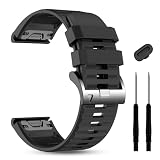
- Compatible Models:This watch band has a width of 22mm.The Band compatible with Garmin Fenix 8 pro 47mm/quatix 8 47mm/Tactix 8 AMOLED-47mm/Fenix E/Fenix 8 AMOLED-47mm/Fenix 7 Pro/Fenix7/Fenix 6 pro/Fenix 6/Fenix 5 Plus/Fenix 5/Epix/Epix Pro 47MM/Descent G2/DescentG1/Descent G1 Solar/quatix 7 Pro/quatix 7 6 5/MARO Commander/MAROAthlete/MARQ Adventurer (Gen 2)/Forerunner 970 965 955 945 935/Approach S70 47mm/S60 S62/ Tactix Bravo.Please confirm the watch model and lug width before placing an order
- Premium Material:Made of soft silicone material, they are flexible, lightweight, and water resistant.Very suitable for sports such as mountaineering, surfing, rock climbing, hiking,running, etc
- Easy Installation and Removal:No other tools needed,easy to install and remove,safe and firm, not easy to fall
- Applicable Wrist Size: Silicone band is suitable for 160mm-230mm (6.3in-9.06in)wrist, Please measure your wrist and make sure the size before you purchase
- Must Read Before Purchase:In order to save your time and effort, please choose the correct size for your watch. Accuracy to the millimeter is very important
Where quatix separates itself from Fēnix
The difference begins the moment you step aboard a Garmin‑equipped vessel. The quatix 5 is not simply “marine themed”; it is designed to act as a remote, data repeater, and situational awareness tool for compatible Garmin chartplotters and onboard systems. Speed, depth, wind, heading, water temperature, and engine data can be displayed directly on the wrist without pulling out a phone or leaving the helm.
Control is the other half of the equation. The watch allows remote autopilot engagement, waypoint marking, and chartplotter interaction from your wrist, which is especially valuable when single‑handing or moving around the deck. This is the point where a standard Fēnix stops being enough, because no amount of activity profiles can replace true MFD integration.
Positioned below MARQ, above general‑purpose Garmins
Within Garmin’s marine lineup, the quatix 5 sits well below the MARQ Captain in price, materials, and luxury intent. You do not get a titanium case, sapphire crystal by default, or the same boutique finishing. What you do get is nearly all of the functional marine capability at a far more approachable cost, and in a watch you are less afraid to bang against a stainless rail.
Compared to non‑marine models like the Forerunner series, the quatix 5 is heavier and less runner‑optimized, but dramatically more versatile for anyone whose outdoor life includes real navigation, weather exposure, and marine electronics. Against the Instinct, it offers far richer data, mapping support via connected systems, and a more refined daily‑wear experience.
Free tools Windows power users keep installed
One-click scans. No signup required.
Battery life and real‑world endurance expectations
Battery performance mirrors the Fēnix 5 rather than newer solar‑assisted models. Expect roughly two weeks in smartwatch mode with conservative use, around 24 hours in GPS mode, and shorter runtimes if you are actively interacting with onboard systems throughout the day. For weekend sailors and cruising owners, this is more than sufficient, but expedition sailors may still pack a charging plan.
Importantly, battery drain remains predictable even when connected to marine systems. The watch is not constantly polling like a phone app would, which helps preserve endurance during long days under sail.
Who the Quatix 5 is actually for
The quatix 5 makes the most sense for boat owners, racers, and serious cruisers who already run Garmin electronics and want that data untethered from the helm. It is also a strong upgrade path for Fēnix users who have discovered that “outdoor” does not always mean “on land.” If your time is split between training ashore and managing systems afloat, this watch bridges that gap cleanly.
If, however, your boating is occasional and your primary focus is running metrics or gym training, a standard Fēnix or Forerunner will be better value. The quatix 5 justifies itself when marine integration is not a novelty but a daily tool, and that context is exactly where it earns its place in Garmin’s lineup.
Built for the Boat: Design, Case, Controls, and On‑Deck Wearability
If the quatix 5 earns its keep anywhere, it is on deck, where design choices matter more than spec sheets. Garmin has clearly prioritized visibility, tactile control, and durability in conditions that are wet, unstable, and often hostile to touchscreens.
Case construction and marine‑first materials
The quatix 5 uses a reinforced polymer case with a stainless steel bezel, closely mirroring the construction of the Fēnix 5 rather than the lighter Forerunner line. At roughly 47 mm, it has real presence on the wrist, but that size translates directly into legibility and glove‑friendly usability rather than unnecessary bulk.
Water resistance is rated to 10 ATM, which comfortably covers offshore sailing, racing, and repeated immersion. This is not a dive watch replacement, but for surface and deck use, washdowns, and heavy spray, it inspires confidence in a way slimmer lifestyle wearables do not.
Bezel, buttons, and control logic at sea
Where the quatix 5 immediately separates itself from touchscreen‑heavy competitors is its five‑button control layout. Physical buttons remain reliable when your hands are wet, cold, or gloved, and Garmin’s menu logic is consistent across marine and outdoor functions.
Crashes, No Sound, or Screen Glitches?
Random freezes, missing sound and display glitches usually trace back to one bad driver. Find and replace yours safely.Free scan · under a minutePC Slower Than It Used to Be?
A free scan shows the junk files, broken settings and background clutter dragging Windows down - then fixes them in one click.Free scan · Windows 10 & 11On deck, this matters more than it sounds. Adjusting wind data, acknowledging alarms, or triggering a man‑overboard function without needing visual precision is a real safety and usability advantage, not just a preference.
Display visibility under sun and spray
The transflective MIP display favors readability over visual flair, and that tradeoff is deliberate. In bright sun, especially on open water where glare is unavoidable, the screen remains legible without backlight intervention.
Resolution and color depth are modest by modern AMOLED standards, but the payoff is clarity at odd angles and lower power draw. For navigation prompts, data fields, and marine metrics, it is the right tool rather than the prettiest one.
Weight, balance, and long‑day comfort
On paper, the quatix 5 is heavier than many general‑purpose smartwatches, but on the wrist it wears more balanced than expected. The mass is evenly distributed, avoiding the top‑heavy feel that can cause rotation during active work on deck.
During full sailing days that include grinding, line handling, and helm time, the watch remains unobtrusive. You are aware it is there, but it does not catch, pinch, or fatigue the wrist, which is critical when wearing it from pre‑departure checks through to docking.
Strap choice and saltwater practicality
Garmin ships the quatix 5 with a silicone strap that is clearly intended for saltwater use. It dries quickly, resists odor, and does not stiffen after repeated exposure to sun and spray the way cheaper rubbers can.
The standard quick‑release system also allows easy swapping to nylon or aftermarket straps, though it is worth noting that fabric options will retain salt and moisture. For most boaters, the stock strap is the right choice, even if it lacks the premium feel of metal bracelets or leather.
Everyday wear versus dedicated boat use
Off the boat, the quatix 5 walks a careful line between tool watch and daily wearable. It is more rugged and utilitarian than lifestyle‑oriented smartwatches, but less aggressive than Garmin’s Instinct line, making it acceptable in casual and even office settings.
The stainless bezel adds just enough refinement to avoid looking purely tactical, while still communicating its purpose. For owners who move seamlessly between marina, workshop, and everyday life, that balance makes the quatix 5 easier to live with than a watch that feels strictly single‑purpose.
How design reinforces the marine value proposition
Taken as a whole, the physical design of the quatix 5 reinforces that it is meant to be used, not protected. Scratches on the bezel feel earned rather than tragic, and the watch never gives the impression that you should take it off before real work begins.
This is ultimately what separates it from standard Garmin smartwatches. The quatix 5 is shaped, weighted, and controlled for the reality of boating, where conditions are unpredictable and convenience is secondary to reliability.
True Marine Intelligence: Sailing, Boating, and Offshore‑Specific Features Explained
All of that physical robustness only matters if the software justifies it, and this is where the quatix 5 clearly separates itself from land‑focused Garmin watches. Rather than simply surviving the marine environment, it actively participates in the way you operate a boat, acting as a wrist‑level extension of Garmin’s marine ecosystem.
Do these 3 things before closing this tab:
1Repair Windows errors before they cause bigger problems2Fix the driver behind crashes, sound loss and screen glitches3Clear out junk files and repair common Windows errorsThis is not a generic multisport watch with a sailing profile bolted on. The quatix 5 is built around marine decision‑making, situational awareness, and hands‑free control when leaving the helm or chartplotter is not an option.
Sailing‑specific tools that go beyond basic tracking
For sailors, the quatix 5 includes a dedicated suite of sailing features that feel genuinely purposeful rather than checkbox additions. The regatta timer is configurable, syncs cleanly with race starts, and can be reset or adjusted without fumbling through menus, which matters when you are counting down while trimming sails.
During a race or passage, the watch displays speed over ground, heading, and tack assist data in a clear, high‑contrast layout. It will not replace onboard instruments, but it works exceptionally well as a secondary reference when you are forward on deck or moving between stations.
The tack assist function is particularly useful for newer racers or shorthanded crews. By showing whether you are lifting or heading relative to the wind, it provides quick confirmation without needing to interpret multiple data points under pressure.
Quick wins for a faster PC:
Clear out junk files and repair common Windows errorsFree Scan →Fix the driver behind crashes, sound loss and screen glitchesFind Drivers →Repair Windows errors before they cause bigger problemsFix Now →Autopilot and helm control from the wrist
One of the quatix 5’s most underrated strengths is its ability to control compatible Garmin autopilots directly from the watch. You can engage or disengage autopilot, adjust heading, and initiate turns without returning to the helm.
In real‑world use, this is far more valuable than it sounds. When single‑handing or managing a small crew, being able to make fine heading changes while handling lines or moving around the cockpit reduces workload and increases safety.
This wrist‑based control also shines during docking or tight maneuvers. A quick glance and adjustment is often faster and calmer than shouting instructions or scrambling back to the helm display.
Chart awareness, waypoints, and navigation support
While the quatix 5 does not replace a chartplotter, it provides meaningful navigational context when you are away from the main screens. Waypoints, routes, and distance‑to‑destination data are all accessible on the watch, making it easier to stay oriented during deck work or tender runs.
The Tool Desk
Outbyte Driver Updater FREEScan for outdated or missing drivers - takes under a minuteDriver Scan →Outbyte PC Repair FREERepair Windows errors before they cause bigger problemsFix Now →Paired with compatible Garmin chartplotters and BlueChart maps, the watch mirrors key navigational alerts and waypoint information. This reduces the need to constantly check the main display, particularly useful on larger boats or in rough conditions.
For coastal cruising and day boating, the onboard GPS is accurate enough to track routes, mark fishing spots, or log anchor locations independently. That flexibility is valuable if you move between boats or want redundancy without relying entirely on the vessel’s electronics.
Anchor drag, tide data, and situational alerts
The anchor drag alert is a small feature that becomes indispensable once you rely on it. After setting anchor, the watch monitors your position and alerts you if the boat begins to drift beyond a defined radius.
This is especially useful overnight or when visibility is limited. Having the alert on your wrist rather than only on the chartplotter increases the chances you will notice it quickly.
Rank #2

- Personalized Your Fenix 3/Fenix 3 HR/Fenix 3 Sapphire/Fenix 7X/Fenix 7X pro/Tactix7/Tactix DELTA/Enduro2/Enduro/Fenix 6X GPS/Fenix 6X PRO/Fenix 6X Sapphire GPS/Fenix 5X/Fenix 5X Plus/D2 Bravo/D2 Delta PX/D2 Charlie/Tactix Bravo/Tactix Charlie/Descent Mk1/mk2/mk2i/Quatix 3 Smart Watch with this refined replacement wrist band. (Note: NOT fit for Fenix 5/5 Plus/5S/5S Plus/6/6 Pro/6S/6S Pro/6X 6X Pro.)
- Band can be installed onto Garmin Watch Lugs(not included) on both ends precisely and securely.Come with two screw drivers, made it easier to replace the Garmin Fenix3 band.
- An innovative pin-and-tuck closure ensures a clean fit. Metal parts made with hypoallergenic nickel free stainless steel.
- Soft silicone with smooth finish for a sporty look. Comfortable and durable.
- Fits 5.70"-8.26" (145mm-210mm) wrist.
Tide and current data are also built into the marine profiles, allowing you to check conditions without pulling out a phone or heading below deck. For inshore cruising and fishing, these quick checks often influence decisions more than formal route planning.
Man overboard and safety‑focused functions
Safety is baked into the quatix 5’s marine feature set rather than treated as an afterthought. The man overboard function allows you to mark a MOB location instantly from the watch, logging GPS coordinates and triggering navigation back to that point.
In an emergency, seconds matter, and the ability to trigger this without reaching the helm can be critical. Even during drills, the immediacy of the function reinforces better safety habits onboard.
The watch also benefits from Garmin’s broader alert system, delivering alarms and notifications from connected marine electronics directly to your wrist. This keeps you informed without forcing constant visual attention on fixed displays.
Recommended Free Tools
Fusion audio and onboard system integration
Beyond navigation and sailing, the quatix 5 integrates with Fusion marine audio systems, allowing you to control volume, tracks, and zones from the watch. While this may sound like a convenience feature, it proves surprisingly practical when moving around the boat.
Rather than climbing back to a control panel with wet hands or sandy fingers, a quick adjustment from the wrist keeps the focus on what you are doing. It is a small example of how the quatix 5 reduces friction in everyday onboard tasks.
This level of integration highlights a key difference between the quatix line and standard Garmin watches. The emphasis is not just on tracking activity, but on interacting with the boat itself.
How it differs from standard Garmin smartwatches
Compared to models like the fēnix series, the quatix 5 shares core hardware and performance but diverges sharply in priorities. Marine controls, sailing data fields, and direct integration with Garmin marine electronics are front and center, rather than buried or absent.
Standard Garmin watches can track boating activities, but they do not offer the same depth of vessel interaction. If your primary environment is on the water, those missing layers become noticeable very quickly.
The quatix 5 is less about versatility across dozens of sports and more about doing fewer things exceptionally well in a marine context. That focus is what gives it credibility among serious boaters rather than just outdoor generalists.
Who the quatix 5 is really for
The quatix 5 makes the most sense for boat owners, sailors, and frequent crew who already operate within the Garmin marine ecosystem. If you run a compatible chartplotter, autopilot, or Fusion system, the watch’s value increases dramatically.
For casual boaters who only go out a few times a year, the marine features may feel excessive compared to a standard multisport smartwatch. But for anyone spending long days on deck, managing systems, and making real‑time decisions, the integration quickly justifies its price.
What’s actually slowing this PC down?
Pick the symptom - the matching free tool is one click away.
Ultimately, the quatix 5 earns its place by becoming part of how you run the boat, not just something you wear while doing it. That distinction is what defines its true marine intelligence.
The Big Differentiator: Deep Integration with Garmin Chartplotters, Autopilots, and Marine Systems
What truly separates the quatix 5 from every other Garmin wearable is that it does not stop at displaying data. It actively becomes a remote interface for the boat itself, tying your wrist into the same Garmin marine ecosystem that runs the helm.
This is not a loose software connection or a mirrored notification layer. It is a purpose-built extension of Garmin chartplotters, autopilots, and onboard systems, designed for moments when stepping away from the helm is inconvenient or unsafe.
Chartplotter control from the wrist
Paired with compatible Garmin chartplotters, the quatix 5 allows basic remote control directly from the watch. You can mark waypoints, initiate navigation to a selected point, and monitor key navigational data without touching the main display.
Recommended Free Tools
In practice, this matters when you are handling lines at the bow, moving aft during docking, or keeping watch while someone else is at the helm. Instead of shouting instructions or running back and forth, the watch keeps situational awareness intact.
The watch also mirrors essential chartplotter alerts and alarms. Depth warnings, anchor drag alerts, and arrival notifications come straight to your wrist, which is far more effective on a windy deck than relying on an audible alert alone.
Autopilot interaction without leaving your position
Autopilot control is one of the most confidence-inspiring features for sailors and powerboat operators alike. From the quatix 5, you can engage or disengage a compatible Garmin autopilot and make heading adjustments in small increments.
This is especially useful when trimming sails, managing fenders, or navigating narrow channels where constant course corrections are needed. The ability to nudge heading by a degree or two without returning to the helm reduces workload and keeps operations smoother.
Quick wins for a faster PC:
Clear out junk files and repair common Windows errorsFree Scan →Scan for outdated or missing drivers - takes under a minuteDriver Scan →Repair Windows errors before they cause bigger problemsFix Now →Importantly, the watch does not try to replace proper helm controls. It functions as a supplementary interface, designed for brief interactions rather than long-term steering, which aligns with safe boating practices.
Live boat data streamed to your wrist
Beyond control, the quatix 5 excels at displaying live vessel data pulled directly from the network. Speed over ground, depth, water temperature, wind data, engine information, and heading can all be shown in glanceable watch screens.
For sailors, this means wind shifts, true wind angle, and velocity made good are always visible during maneuvers. For powerboaters, it can be fuel data, RPMs, and speed without needing to stay glued to a multifunction display.
Because the data comes from the same sensors feeding the chartplotter, accuracy is not compromised. You are seeing real instrument readings, not approximations generated by the watch itself.
What’s actually slowing this PC down?
Pick the symptom - the matching free tool is one click away.
Fusion audio control that actually makes sense onboard
The quatix 5 integrates directly with compatible Fusion marine audio systems via Fusion-Link. From the watch, you can adjust volume, change tracks, switch zones, and power the system on or off.
On a moving boat, this becomes far more practical than using a phone with wet hands or walking back to the head unit. It is one of those features that sounds minor on paper but quickly becomes habitual once you live with it.
Unlike generic media controls, this is tuned specifically for marine audio behavior. Zone control and system-wide adjustments feel intentional rather than adapted from a fitness watch template.
Designed around the Garmin Marine Network
All of this integration works because the quatix 5 is designed to live inside the Garmin Marine Network and NMEA 2000 environment, rather than sitting alongside it. When paired correctly, the watch becomes another node in the system, not an isolated accessory.
The Tool Desk
Outbyte PC Repair FREERepair Windows errors before they cause bigger problemsFix Now →Outbyte Driver Updater FREEFix the driver behind crashes, sound loss and screen glitchesFind Drivers →This also means the value of the quatix 5 scales with your boat’s electronics. Owners running Garmin GPSMAP chartplotters, Garmin autopilots, and Fusion systems will unlock far more functionality than those with mixed-brand setups.
It is worth noting that compatibility matters, and not every older chartplotter or third-party system will support every feature. Garmin’s approach rewards ecosystem loyalty, which is both its greatest strength and its clearest limitation.
Why this integration changes day-to-day boating
The practical benefit of this deep integration is reduced friction during critical moments. You spend less time moving between stations and more time focused on seamanship, safety, and situational awareness.
Unlike standard Garmin smartwatches that simply log boating activity after the fact, the quatix 5 is involved while decisions are being made. That real-time interaction is what elevates it from a marine-themed watch to a true onboard tool.
For boaters already invested in Garmin marine electronics, this level of integration is not a novelty. It becomes one of those features that quietly reshapes how you operate the boat, until going without it feels like a step backward.
Navigation, Sensors, and Offshore Confidence: GPS Accuracy, Heading, and Situational Awareness at Sea
Once the quatix 5 is acting as a live extension of your helm, navigation accuracy and sensor reliability stop being abstract specifications and start becoming trust factors. This is where Garmin’s marine DNA shows most clearly, because the watch is designed to complement real navigation, not replace it.
On land, minor GPS drift is an annoyance. Offshore, especially when visibility drops or traffic density increases, it directly affects decision-making.
Multi-GNSS positioning tuned for open water use
The quatix 5 uses multi-GNSS support, drawing from GPS and GLONASS to improve position fixes in open environments where reflections from water and superstructure can confuse weaker receivers. In practice, track lines are cleaner than those from older fitness-first Garmin models, with fewer jagged corrections when underway.
Free tools Windows power users keep installed
One-click scans. No signup required.
Rank #3

- COMPATIBLE WATCH MODELS: Quickfit 22mm easy release silicone watch replacement band only for Garmin Fenix 7, Fenix 6, Fenix 6 Pro, Fenix 5, Fenix 8 47mm, Fenix E 47mm,Fenix 7 Pro Fenix 5 Plus, Forerunner 935, Forerunner 945, Forerunner 745, Approach S60, Approach S62, Quatix 5, Qatix 6, epix smartwatch. NOT fit Fenix 5X/ Fenix 5S/ Fenix 5X Plus/ Fenix 3/ 3 hr.
- DURABLE AND SOFTER SILICONE: This replacement bands made of flexible silicone, comfortable for all day wear. Slots in band to adjust length, fit wrist 6.7''- 8.85'' (170mm - 225mm), please kindly measure your wrist before purchase and adjust wristband to fit your wrist. The silicone strap keepers will also help your watch band stay in place.
- QUICKFIT BAND DESIGN: Really amazing design watchband and you can not believe how easy it is to pop on and off super-quick, super easy to switch different color bands. There's virtually no risk of these popping off in an open water swim or the like, because the lever is below the band against your wrist.
- VARIOUS COLORS OPTION: Various colors for your choice, feel free to choose all the colors you like to dress up your watch. Just like a fashion show.
- WARRENTY AND CUSTOMER SUPPORT: ZEROFIRE provide a wonderful shopping experience, if there is any problems, just contact us and then we will offer a solution immediately.
On deck, position lock is fast and stable, even when moving between shaded cockpit areas and open flybridges. During coastal passages, the watch maintains consistent tracking without the frequent signal reacquisition pauses that can plague phone-based navigation apps.
This matters when you are using the watch as a reference point while moving around the vessel. Whether you are checking distance to waypoint, bearing changes, or course over ground while trimming sails or managing lines, the data stays reliable without constant manual refresh.
Heading, compass, and confidence when the boat is moving
A critical difference between the quatix 5 and standard Garmin outdoor watches is how it treats heading information at sea. The built-in 3-axis compass is optimized to remain readable under motion, reducing the lag and erratic swings you often see when waves and yaw are introduced.
When paired to onboard sensors via the Garmin Marine Network, heading information can reflect true vessel data rather than relying solely on wrist-based calculations. This creates a much tighter feedback loop between what the boat is doing and what the watch displays.
For sailors, this is especially useful when monitoring heading changes during tacks or while balancing sail trim. For powerboat operators, it adds confidence when maneuvering in tight channels or during slow-speed docking where visual cues can be deceptive.
Situational awareness beyond simple navigation
Situational awareness at sea is not just about where you are, but what is happening around you. Through its integration with compatible Garmin chartplotters, the quatix 5 can mirror key navigational data like distance to waypoint, ETA, and course information directly on the wrist.
This becomes valuable when you are away from the helm, standing watch at night, or managing deck tasks during a passage. A quick glance replaces repeated trips back to the chartplotter, reducing fatigue and keeping your attention outside the cockpit.
In real-world use, this feels less like a smartwatch notification and more like a remote instrument repeater. The information density is carefully limited so it remains readable in bright sun and low light, which is something many general-purpose smartwatches struggle to balance.
Sensor suite designed for marine conditions
Beyond GPS and compass, the quatix 5 includes barometric altitude and weather trend monitoring that actually makes sense on the water. Pressure trend alerts can provide early indications of changing conditions, which is still relevant even with full onboard weather systems.
The watch’s sensors are housed in a case designed to withstand repeated exposure to saltwater, spray, and temperature swings. Physical buttons remain usable with wet hands, which is a small but crucial distinction compared to touch-heavy smartwatch designs that feel compromised offshore.
Comfort also plays a role here. The case size and weight are balanced well enough that the watch can be worn continuously during long passages without becoming distracting, even when layered under foul-weather gear.
How this differs from standard Garmin smartwatches
Many Garmin watches can record a boating activity. The quatix 5 actively participates in navigation and situational awareness while underway.
Crashes, No Sound, or Screen Glitches?
Random freezes, missing sound and display glitches usually trace back to one bad driver. Find and replace yours safely.Free scan · under a minutePC Slower Than It Used to Be?
A free scan shows the junk files, broken settings and background clutter dragging Windows down - then fixes them in one click.Free scan · Windows 10 & 11Standard models rely almost entirely on wrist-based sensors and post-activity analysis. The quatix 5, by contrast, is designed to ingest and display live vessel data, making it a functional tool during navigation rather than a passive tracker afterward.
For experienced boaters, this distinction is immediately noticeable. The watch feels purpose-built, not adapted, and that difference becomes more pronounced the farther offshore you operate and the more complex your onboard electronics become.
Life Afloat: Battery Life, Charging, and Reliability on Multi‑Day Voyages
All of the onboard integration in the world is meaningless if a watch can’t stay alive between ports. The quatix 5 approaches power and reliability with the assumption that charging opportunities may be irregular, conditions may be hostile, and failure is not an option when you are days from shore.
This is where it separates itself not just from lifestyle smartwatches, but from many land‑focused Garmin models that quietly assume daily charging access.
Battery endurance that matches real offshore routines
In smartwatch mode, the quatix 5 delivers up to roughly two weeks of battery life, depending on backlight usage, sensor polling, and notification volume. In practice, that means it can comfortably cover a multi‑day passage without becoming another power management problem to solve.
When used actively for GPS-based activities like sailing or boating tracks, battery life drops significantly, but that is expected. Most skippers will rely on the watch primarily as a repeater and situational tool underway, not as a continuous GPS logger, which preserves endurance where it matters.
The always-on marine data use case is actually quite efficient. Displaying heading, depth, wind, or autopilot status via paired Garmin systems consumes far less power than standalone GPS navigation, making the quatix 5 surprisingly well suited to long passages when used intelligently.
Charging realities aboard sailboats and powerboats
Garmin’s proprietary charging cradle is not glamorous, but it is reliable. The contact-based clip locks securely to the case and tolerates vibration far better than many magnetic puck designs, which matters when charging off a 12‑volt USB adapter in a rolling anchorage.
Charging speed is reasonable rather than fast. A partial top-up during engine runs, generator time, or solar surplus is often enough to keep the watch going indefinitely during a cruise.
The key advantage here is predictability. There is no wireless charging inefficiency, no alignment sensitivity, and no drama when the boat is moving. As long as you keep the contacts clean and dry, charging remains consistent even in damp marine environments.
Power management features that actually help at sea
The quatix 5 offers granular control over backlight behavior, vibration alerts, and sensor usage. On the water, these settings matter more than step counts or sleep scores.
Reducing backlight timeout, relying on button activation, and disabling nonessential notifications can dramatically extend battery life without compromising core marine functionality. Night mode color shifts also reduce both glare and power draw during overnight passages.
Do these 3 things before closing this tab:
1Fix the driver behind crashes, sound loss and screen glitches2Clear out junk files and repair common Windows errors3Scan for outdated or missing drivers - takes under a minuteUnlike general-purpose smartwatches that bury these controls, Garmin exposes them clearly. This makes it easy to adjust behavior mid-voyage based on changing conditions, rather than being locked into a one-size-fits-all profile.
Built for salt, spray, and long-term exposure
Reliability offshore is as much about materials and sealing as it is about software stability. The quatix 5’s case construction and water resistance are designed for repeated saltwater exposure, not occasional swims.
Physical buttons remain consistent after prolonged use in wet conditions, and they continue to register presses when hands are cold, gloved, or slick with spray. This alone makes the watch far more trustworthy than touch-dependent designs when conditions deteriorate.
Over time, the watch’s durability becomes evident. It tolerates sun, salt, and temperature swings without the gradual degradation that plagues more delicate consumer electronics, making it a viable long-term companion rather than a disposable gadget.
Software stability when you need it most
Marine environments are unforgiving of crashes, freezes, or forced reboots. Garmin’s marine-focused firmware on the quatix 5 prioritizes stability over flashy interface tricks.
Data fields load quickly, connections to chartplotters remain persistent, and the watch does not bog down when multiple data streams are active. This is especially noticeable when compared to general smartwatches that struggle once Bluetooth traffic increases.
For multi-day voyages, this reliability compounds. The watch fades into the background as a dependable instrument rather than demanding attention, which is exactly what you want when fatigue management and situational awareness are already stretched thin.
Beyond the Helm: Health, Fitness, and Everyday Smartwatch Capabilities
The quatix 5’s offshore reliability naturally invites the question of how it performs once you step away from the helm. Garmin’s answer is a watch that doesn’t try to be a lifestyle gadget first, but still delivers enough health and fitness capability to justify wearing it full-time between passages.
Rather than bolting marine features onto a generic smartwatch, Garmin built the quatix 5 on the same platform as the fenix 5. That lineage shows clearly in how well it balances daily wear with serious outdoor tracking.
All-day health tracking without unnecessary fluff
At its core, the quatix 5 offers continuous wrist-based heart rate monitoring, step tracking, calorie estimation, and basic sleep analysis. These metrics aren’t dressed up with wellness scores or trend coaching, but they are consistent, stable, and easy to review in Garmin Connect.
For sailors, this simplicity is a strength. Long watches, disrupted sleep cycles, and cumulative fatigue are easier to spot when the data is reliable rather than aggressively interpreted.
Sleep tracking is functional rather than granular. It captures total duration and general restfulness, which is usually sufficient for understanding recovery during multi-day trips, even if it lacks the deeper sleep-stage breakdowns found on newer Garmin models.
Recommended Free Tools
Rank #4

- 【Wide Compatibility】This 20mm watch band compatible with Garmin Forerunner 55, Forerunner 245, Forerunner 645, Vivoactive 5, Vivoactive 3, Vivomove HR.
- 【Adjustable to Fits】The forerunner 55 band fits wrists 5.9"-8.1", adjustable length stretches to accommodate, fit for the most of wrist size, the soft silicone provides a comfortable wearing experience.
- 【Multiple Colors】Providing multiple colors to meet your different fashion outfit, the forerunner 245 band fearless of sweat accumulation and stimulation, makes your sport watch look more fashionable.
- 【Security Loop】The Vivoactive 5 band with double band loop/keeper securely lock the strap in place, prevent smart watch from falling from the wrist and ensure its safety.
- 【Packing List】1 x watch band for Forerunner 55/245/645, Vivoactive 5/3, Vivomove HR (Note: the watch is not included!!!). If any problem, please contact us online. Thank you for your purchase!
Fitness profiles that extend beyond the marina
When you leave the boat behind, the quatix 5 transitions smoothly into a capable multisport watch. Running, cycling, hiking, gym workouts, and open-water swimming profiles are all present, with customizable data fields and alerts.
GPS performance is particularly strong, drawing on Garmin’s proven satellite accuracy rather than power-hungry map visuals. For coastal trail runs or unfamiliar ports of call, it delivers dependable distance and pace tracking without unnecessary battery drain.
Strength training and indoor activities are supported, though they lack the guided animations seen on newer watches. For users who value recording effort rather than being coached mid-workout, this feels refreshingly straightforward.
Comfort and wearability for 24/7 use
The quatix 5’s 47mm case sits firmly in tool-watch territory, but careful weight distribution keeps it comfortable for all-day wear. The reinforced polymer case with stainless steel bezel strikes a balance between durability and manageable mass.
Free tools Windows power users keep installed
One-click scans. No signup required.
On the wrist, it feels closer to a traditional sports watch than a piece of consumer tech. The silicone strap is flexible enough for sleeping, secure under load, and resistant to sweat and salt buildup.
This matters more than it sounds. A watch you remove at night or during workouts quickly loses its value as a continuous health and activity tracker.
Battery life that supports daily life, not just voyages
In smartwatch mode, the quatix 5 routinely delivers close to two weeks of battery life with heart rate tracking enabled. GPS activities shorten that window, but even regular workouts barely dent its endurance compared to touchscreen-driven alternatives.
This longevity reinforces a key theme of the watch. You don’t have to manage charging around your life, whether you’re anchored out for several days or simply rotating between work, gym, and weekend sailing.
Windows Errors? Fix Them Before They Spread
Repair common Windows errors and clear accumulated junk for a smoother, more stable PC - no reinstall needed.Free scan · no reinstallOutdated Drivers Are Slowing You Down
One free scan finds every outdated or missing driver and matches the right update for your exact hardware.Free scan · exact hardware matchCharging is infrequent enough that it becomes routine rather than a concern, aligning with the watch’s broader philosophy of low-maintenance ownership.
Smart features, intentionally restrained
Notifications for calls, texts, and app alerts are present, readable, and easy to filter. Garmin wisely avoids overwhelming the user with interaction-heavy features that would compromise stability or battery life.
There’s no onboard music storage, voice assistant, or contactless payment support. For some buyers, that will feel like a limitation, but for many boaters it’s a conscious and welcome trade-off.
The quatix 5 behaves like a watch first and a companion device second. It keeps you informed without pulling attention away from the real world, which is often exactly what sailors want.
Who the quatix 5 makes sense for on land
If you’re looking for a marine watch that seamlessly becomes a capable everyday fitness companion, the quatix 5 delivers. It won’t replace a phone-centric smartwatch, but it also won’t distract, drain, or degrade under daily wear.
For Garmin users already familiar with the ecosystem, the transition is effortless. Data syncs cleanly, profiles are customizable, and the learning curve is minimal.
Ultimately, its everyday capabilities reinforce the same message as its offshore performance. The quatix 5 is designed for people who live around the water, not just on it, and want a single watch that respects both worlds without compromise.
Independent reader supportYour contribution helps us test, update, and keep practical guides available for everyone.Quatix 5 vs Standard Garmin Watches: What You Gain Over Fenix, Epix, and Forerunner
If the previous sections established the quatix 5 as a low-maintenance daily watch with serious offshore credibility, the real question becomes where it meaningfully separates itself from Garmin’s mainstream lineup. On paper, a Fenix or Epix may look similar, but the differences become obvious the moment you step aboard.
What’s actually slowing this PC down?
Pick the symptom - the matching free tool is one click away.
The quatix 5 is not a Fenix with a nautical watch face. It is a marine instrument that happens to share a familiar Garmin chassis.
Marine-first software, not optional apps
The biggest distinction is software priority. While Fenix, Epix, and Forerunner watches can record sailing activities, the quatix 5 is built around them.
Dedicated sailing profiles include tack assist, race countdown timers, virtual starting line, and real-time wind data when paired with compatible onboard instruments. These are deeply integrated system functions, not Connect IQ add-ons or simplified sport modes.
Man Overboard is another example. On quatix 5, it’s instantly accessible, drops a GPS waypoint, and can trigger connected chartplotter actions, turning the watch into an active safety device rather than a passive tracker.
Direct integration with Garmin marine electronics
This is where the quatix 5 clearly pulls ahead of Fenix and Forerunner models. Paired with compatible Garmin chartplotters, the watch becomes a remote control and data repeater for your helm.
You can mark waypoints, zoom charts, control autopilot heading, and access key navigation data directly from your wrist. That level of integration simply does not exist on standard Garmin outdoor or fitness watches.
For boaters already invested in Garmin Marine, this tight ecosystem fit is not a convenience feature, it’s a workflow upgrade that reduces time at the helm screen and keeps your attention on the water.
Fusion-Link audio control built in
Quatix 5 includes native Fusion-Link support, allowing direct control of compatible Fusion marine stereos. Volume, source selection, and zone control are all accessible without leaving the cockpit or reaching for a phone.
Quick wins for a faster PC:
Fix the driver behind crashes, sound loss and screen glitchesFind Drivers →Repair Windows errors before they cause bigger problemsFix Now →Scan for outdated or missing drivers - takes under a minuteDriver Scan →Fenix and Epix users can sometimes approximate this through music controls, but it lacks the marine-specific integration and reliability that Fusion-Link provides. On a moving boat with wet hands, that difference matters.
It’s a small feature on land, but offshore it reinforces the idea that the quatix 5 understands boating environments in ways generalist watches do not.
Navigation tuned for water, not trails
Standard Garmin watches are excellent for hiking, running, and multi-sport navigation. The quatix 5 shifts that emphasis toward waterways.
It supports marine charts, tide data, and nautical navigation fields that are either absent or secondary on Fenix and Forerunner models. The interface prioritizes heading, speed over ground, bearing, and wind-related data rather than elevation or trail metrics.
For sailors, that means fewer screens to configure and less mental translation between land-based data and marine decision-making.
Hardware similarities, usage differences
Physically, the quatix 5 shares much of its DNA with the Fenix family. The case dimensions, button-driven interface, and reinforced construction feel immediately familiar to Garmin users.
Where it diverges is intent. The watch assumes saltwater exposure, frequent rinsing, glove use, and long periods away from charging infrastructure as normal use cases rather than edge cases.
Comfort remains excellent for all-day wear, with a silicone strap that handles sweat and seawater equally well. It wears like a sports watch, but behaves like a tool.
The Tool Desk
Outbyte PC Repair FREERepair Windows errors before they cause bigger problemsFix Now →Outbyte Driver Updater FREEFix the driver behind crashes, sound loss and screen glitchesFind Drivers →What you give up compared to Epix and newer Fenix models
Choosing quatix 5 does involve trade-offs. Compared to Epix, you’re giving up an AMOLED display, higher-resolution mapping visuals, and some newer wellness metrics.
You also won’t get the bleeding-edge training analytics found on the latest Forerunner models, especially for competitive runners and triathletes. If your primary focus is structured athletic performance rather than boating, those omissions may matter.
Garmin has clearly prioritized reliability, battery life, and marine utility over visual flair or fitness maximalism.
Who should choose quatix 5 over a standard Garmin
If your time on the water is occasional and your Garmin Marine setup is minimal or nonexistent, a Fenix may still make more sense. It offers broader sport versatility and a more neutral identity.
Do these 3 things before closing this tab:
1Fix the driver behind crashes, sound loss and screen glitches2Repair Windows errors before they cause bigger problems3Scan for outdated or missing drivers - takes under a minuteBest Value

- Applicable Model: The soft 22MM silicone quickfit watch band compatible with Fenix 7/Fenix 7 Pro/Fenix 6/Fenix 6 Pro/Fenix 5/Fenix 5 Plus/Fenix 8 47mm/Fenix E 47mm/Forerunner 935/Forerunner 945/Approach S60/Quatix 5.(Not fit for Fenix 5X/6X/7X or Fenix 5S/6S/7S). Please check the model on the back of the watch before purchase!
- Wrist Size: This adjustable band for Fenix 7 fits wrists from 6.96 to 9.05 inches(177mm-230mm), offering customized comfort for all wearers
- Soft and Durable Silicone: Crafted from premium silicone, this soft yet sturdy watch band for fenix 6 offers exceptional comfort against your skin and outstanding durability. It withstands daily wear, workouts, and rigorous activities for long-lasting performance
- Style and Color: Choose from a range of vibrant colors to match your unique style. Find the perfect band to personalize your watch and express your individuality
- Quality Service: If you have any questions or comments about the watch band you received, please feel free to contact us and we will find the best solution for you
If boating, sailing, or yachting is central to your lifestyle, the quatix 5 earns its place quickly. The integration with onboard systems, marine-native features, and thoughtful compromises all point to a watch designed around real maritime use.
For existing Garmin Marine users, it feels less like buying another smartwatch and more like extending your boat’s control system onto your wrist.
Real‑World Use Cases: Who the Quatix 5 Is Actually For (and Who Should Skip It)
By this point, it should be clear that quatix 5 isn’t trying to be everything to everyone. It’s a purpose-built instrument, and its value only really clicks when you map it onto specific lifestyles on and around the water.
The easiest way to understand it is to look at who actually benefits from wearing one day after day, and who is better served elsewhere in Garmin’s lineup.
Free tools Windows power users keep installed
One-click scans. No signup required.
The serious sailor who wants data without distraction
For sailors who spend long hours offshore, quatix 5 makes the most sense as a situational awareness tool rather than a navigation replacement. Wind data, tide information, anchor alarms, and waypoint guidance are always one wrist flick away, which reduces trips below deck or back to the helm.
The physical button interface matters here. Wet hands, gloves, and spray don’t interfere with operation, and the screen remains legible in harsh sunlight where AMOLED panels can struggle.
Battery life also aligns with this use case. Multi-day passages without reliable charging are realistic, and the watch’s conservative power draw prioritizes endurance over eye candy.
Powerboat and motor yacht owners invested in the Garmin ecosystem
Quatix 5 shines brightest when paired with Garmin chartplotters and onboard electronics. Remote control of compatible MFDs, autopilot adjustments, and Fusion audio control turn the watch into a functional extension of the helm.
For yacht owners, this isn’t about novelty. Being able to manage systems from the foredeck, flybridge, or cabin adds convenience and, in some scenarios, safety.
If your boat already runs Garmin Marine hardware, quatix 5 integrates seamlessly. If it doesn’t, a large part of the watch’s value proposition disappears.
Anglers and coastal cruisers who mix boating with outdoor use
Quatix 5 is well suited to boaters who split time between the water and the shore. Fishing features, waypoint marking, and tide awareness carry over naturally into hiking, coastal exploration, and general outdoor use.
It wears comfortably enough for all-day use, and the materials handle salt, sun, and abrasion without feeling disposable. You can rinse it at the dock, wear it to dinner, and head back out at dawn without thinking about it.
What’s actually slowing this PC down?
Pick the symptom - the matching free tool is one click away.
This versatility is where quatix 5 differentiates itself from dedicated sailing instruments. It’s not just a boat tool you tolerate wearing, but a watch you live with.
Who should look elsewhere
If your boating is occasional and your primary activities are running, cycling, or gym training, quatix 5 is likely overkill. A Fenix or Forerunner will give you more sport-specific analytics and often better value.
Likewise, if you’re drawn to high-resolution mapping, AMOLED displays, or smartwatch-first experiences, Epix or newer lifestyle-focused models will feel more modern. Quatix 5’s display prioritizes clarity and efficiency, not visual drama.
Finally, if you don’t use Garmin Marine systems at all, you’re paying for integration you’ll never touch. In that case, the marine branding doesn’t justify the premium.
Do these 3 things before closing this tab:
1Fix the driver behind crashes, sound loss and screen glitches2Clear out junk files and repair common Windows errors3Scan for outdated or missing drivers - takes under a minuteThe bottom line on fit
Quatix 5 is for people whose time on the water isn’t incidental. It’s for owners, skippers, and crew who want their watch to behave like a dependable onboard instrument rather than a miniature smartphone.
If that description fits your lifestyle, quatix 5 feels less like a niche purchase and more like the missing link between your wrist and your vessel.
Price, Alternatives, and Verdict: Does the Quatix 5 Justify Its Marine‑First Premium?
All of that context brings us to the unavoidable question: what does quatix 5 cost, and does it earn its place in Garmin’s lineup once price enters the conversation?
Pricing and what you’re really paying for
Quatix 5 typically sits above Garmin’s mainstream multisport watches, landing closer to the upper tier of the Fenix family than to lifestyle-oriented models. Depending on market and configuration, pricing usually hovers in the upper hundreds rather than the mid-range most outdoor users expect.
The Tool Desk
Outbyte Driver Updater FREEFix the driver behind crashes, sound loss and screen glitchesFind Drivers →Outbyte PC Repair FREEClear out junk files and repair common Windows errorsFree Scan →That premium isn’t about flashier materials or a higher-resolution display. You’re paying for purpose-built marine software, certified integration with Garmin chartplotters and onboard systems, and a level of reliability that assumes exposure to saltwater, vibration, and long days offshore.
If you already own Garmin Marine hardware, the value equation shifts dramatically. Quatix 5 effectively becomes a wireless extension of your helm, capable of controlling autopilot, marking waypoints, managing Fusion audio, and displaying critical data without leaving your position on deck.
Quatix 5 vs Fenix, Epix, and other Garmin options
The most obvious internal alternative is Garmin’s Fenix series. A Fenix will give you comparable build quality, similar battery life, and often broader sport and training metrics for less money.
What it won’t give you is native marine control. You lose helm-level integration, marine-specific data pages, and the confidence that every feature has been designed with boating workflows in mind rather than adapted after the fact.
Quick wins for a faster PC:
Repair Windows errors before they cause bigger problemsFix Now →Fix the driver behind crashes, sound loss and screen glitchesFind Drivers →Clear out junk files and repair common Windows errorsFree Scan →Epix models add stunning AMOLED displays and a more smartwatch-forward feel, but that comes at the cost of battery efficiency and always-on readability in harsh sunlight. On open water, quatix 5’s more conservative display choices make practical sense, even if they look less exciting on a spec sheet.
Alternatives outside the Garmin ecosystem
Outside Garmin, true marine smartwatches are surprisingly rare. Most competitors focus either on fitness-first wearables or traditional sailing instruments that lack everyday usability.
Apple Watch Ultra deserves mention for its build quality and general outdoor performance, but it remains heavily phone-dependent and lacks deep, native marine system integration. For serious boaters, that distinction matters far more than app ecosystems or display polish.
Dedicated sailing watches and deck instruments offer excellent legibility and purpose, but they’re tools you put on for a race or passage, not something you wear from dock to dinner. Quatix 5 occupies the middle ground that few others even attempt.
Long-term ownership and real-world value
Over time, quatix 5 tends to justify itself through consistency rather than novelty. Battery life remains predictable, buttons work with wet hands, and the watch doesn’t become obsolete the moment you step away from Wi‑Fi or cellular coverage.
The materials and construction are built for years, not seasons. Sapphire glass, corrosion-resistant metals, and a comfortable silicone strap mean it holds up both physically and cosmetically in a way cheaper watches rarely do.
For owners who log serious hours on the water, that durability and reliability quietly amortize the upfront cost.
The verdict: who should buy it, and who shouldn’t
Quatix 5 absolutely justifies its marine-first premium for boaters already invested in the Garmin Marine ecosystem. For them, it’s not an accessory but a functional extension of their vessel, one that improves situational awareness and reduces friction during real-world use.
For outdoor athletes who boat occasionally, the math is less convincing. You’ll get more features per dollar from a Fenix, Epix, or Forerunner, and you won’t feel like you’re paying for unused capability.
Viewed in isolation, quatix 5 looks expensive. Viewed as part of a connected onboard system, it makes far more sense.
If your time on the water is central to your lifestyle and not just a weekend diversion, quatix 5 feels less like a luxury and more like the watch Garmin should have been making all along for serious marine life.
Quick Recap
Product prices and availability are accurate as of the date/time indicated and are subject to change. Any price and availability information displayed on Amazon at the time of purchase will apply.