Recommended Free Tools
In recent years, advancements in technology are being quickly integrated into timepieces. From the traditional analog watches, we now have smartwatches that keep on packing more features than ever. From merely showing the current time (and date), timepieces now have the capability to show your messages and other notifications, track your steps and other activities, even monitor your health! Don’t worry, we won’t aim to discuss all those in this post. In fact, we already have a separate post on that.
Rather, this particular post intends to help you understand the technology integrated into various smartwatches and fitness trackers that enables them to monitor your heart rate. How does your heart rate is measured in these wearables? Can you rely on their readings? Find out the answers to these questions and many more in the succeeding sections of this post.
As an Amazon Associate I earn from qualifying purchases.
How Smartwatches & Fitness Trackers Measure Your Heart Rate:
Optical Heart Rate Monitoring (OHRM)
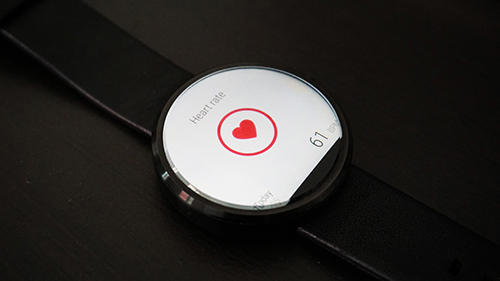
What smartwatches and fitness trackers do essentially is called Optical Heart Rate Monitoring. For most brands, this is being done using the technology called Photoplethysmography (PPG). [Although, a few brands boast of using a different technology which we’ll discuss later.]
Basically, smartwatches and fitness trackers that utilize PPG are characterized by the green and red lights that you may see at the back of their cases. Optical heart rate monitoring utilizes these LED lights to determine how much red or green light is being detected from the skin of your wrist. Mainly, the blood beneath the skin reflects the red light and absorbs green light. As such, each heartbeat allows for more green light absorption; between heartbeats, there’s less absorption of the said green light.
#1 Best Overall

- WORKS WITH EVERYTHING: Polar HRM works with ALL HRM compatible Equipment.
- SUPREME ACCURACY: Widely recognized for its top precision by many sources, Polar H10 is the most accurate heart rate sensor in Polar's history. Polar H10 provides top quality measurement.
- CONNECTIVITY: Bluetooth, ANT plus and 5 kHz provide an excellent variety of connection options. You can use Bluetooth and ANT plus connections simultaneously as well as two Bluetooth connections simultaneously.
- POLAR PRO CHEST STRAP: With improved electrodes, an easy-to-use buckle and silicone dots, the strap is comfortable and interference-free.
- VERSATILITY: Polar H10 is fully waterproof and it has internal memory for multiple hours.
If you are thinking that such a way of monitoring one’s heart rate is new, then you are mistaken. The use of light to see the flow of blood and to monitor heart rate actually started in the late 1800s. What people of those days did was to hold their hands up near a candle in a dark room. This way, they were able to see the blood flow in their veins.
Later on, around the 1980s, hospitals were introduced to the first pulse oximeters. These devices are similar to the finger or ear clip devices that measure pulse and blood oxygen levels being used nowadays.
Components of PPG technology
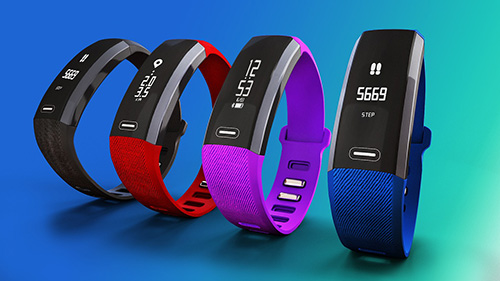
To enable the smartwatches and fitness trackers to monitor the wearer’s heart rate using the PPG technology, they must have the following components:
Quick wins for a faster PC:
Repair Windows errors before they cause bigger problemsFix Now →Scan for outdated or missing drivers - takes under a minuteDriver Scan →1. Optical emitter
This is usually composed of at least two LEDs intended to send light waves unto the wearer’s skin. Some devices even utilize varied multiple wavelengths in consideration with the differences in skin tone, thickness, and morphology of its wearers. The different wavelengths allow for interaction with various levels of skin and tissue.
2. Digital Signal Processor (DSP)
This component is responsible for capturing the light refracted from the wearer and for translating those signals into the binary language (one’s and zero’s) that can then be translated into the heart rate data.
Rank #2

- The HRM 200 heart rate monitor transmits accurate real-time heart rate and heart rate variability data to compatible Garmin smartwatches and cycling computers, fitness equipment, and apps
- Comfortable strap is available in two sizes (XS–S and M–XL) for the most ideal fit for your body type
- Up to 1 year of battery life with a user-replaceable battery
- Durable and built to last with a 3 ATM water rating
- Machine washable for easy cleaning
3. Accelerometer
It measures motion; then, the data gathered is being integrated with the DSP signal and together they serve as input data into PPG algorithms.
4. Algorithms
Basically, they process the inputs from the DSP and the accelerometer to acquire the motion-tolerant heart rate data. Although depending on the capability of the device, they may also be used to calculate VO2, calories burned, R-R interval, heart rate variability, blood metabolite concentrations, blood oxygen levels, and even blood pressure.
What’s actually slowing this PC down?
Pick the symptom - the matching free tool is one click away.
Obstacles to an accurate reading
However, since OHRM mainly relies on the data coming from the amount of light refracted from your skin, there are many factors that may affect the accuracy of data gathered. Here are the top four obstacles that we found.
1. Optical noise
This is considered the largest technical hurdle. Despite the close proximity of the smartwatch or fitness tracker with the skin, only a very tiny amount of light returns and is being collected by the sensor. And from this tiny amount of collected light, only about ~1/1000th of it actually indicates blood flow caused by the pumping of the heart. Other signals sent by the optical emitter are then scattered by various materials such as muscles, bones, tendons, etc.
2. Skin tone
The wearer’s skin tone may also a significant factor since different shades tend to absorb light differently from one another. Darker skin, for one, tends to absorb more green light. In relation to this is are wearers with tattoos, especially when a tattoo is located on that part of the skin where the PPG is supposed to gather data. This has caused some wearables, including some Apple watches to prevent HR monitoring from working. This resulted in a few Twitter storms and the hashtag #tattoogate.
Rank #3

- Sends accurate real-time heart rate and HRV data to compatible Garmin smartwatches and cycling computers, fitness equipment, and apps
- Comfortable machine-washable strap is available in two sizes (XS–S and M–XL) for the most ideal fit for your body type
- Understand how much you slow down when your foot hits the ground with step speed loss, and improve your running form with additional running dynamics, including stride length, vertical oscillation and ground contact time balance (requires compatible smartwatch)
- During activities where you can’t wear a watch, such as team sports, HRM 600 will record the workout and sync data, including heart rate, calories, speed, distance and more, directly to the Garmin Connect smartphone app
- Tracks daily metrics, including estimated steps, heart rate, calories burned and more, and syncs that data directly to the Garmin Connect smartphone app
3. Crossover problem
This particular obstacle usually tends to happen when you are performing a particular repetitive motion that may be at the same rate as your heart rate. One common example of this is the step rate. The algorithms of the smartwatch or fitness tracker may record the data from your step rate as your heart rate.
Quick wins for a faster PC:
Repair Windows errors before they cause bigger problemsFix Now →Scan for outdated or missing drivers - takes under a minuteDriver Scan →Clear out junk files and repair common Windows errorsFree Scan →4. Sensor location
In relation to the first obstacle mentioned above – optical noise, it was found that (ironically,) the wrist is actually one of the worst places for OHRM because there is so much optical noise in that area – such as the muscles, tendons, bones, etc. – and because the vascular structure therein is also quite varied.
The recommended area, in fact, is the forearm because the blood vessels in this area are very near to the skin and they are of higher density.
Other Heart Rate Technologies
For the previous sections, we mainly focused on PPG technology as a means of optical heart rate monitoring. However, since there is already a wide variety of smartwatches and fitness trackers, a few mention that their OHRM capability is not through PPG. Fitbit and Jawbone, for example, use rather a different kinds of technology.
Fitbit
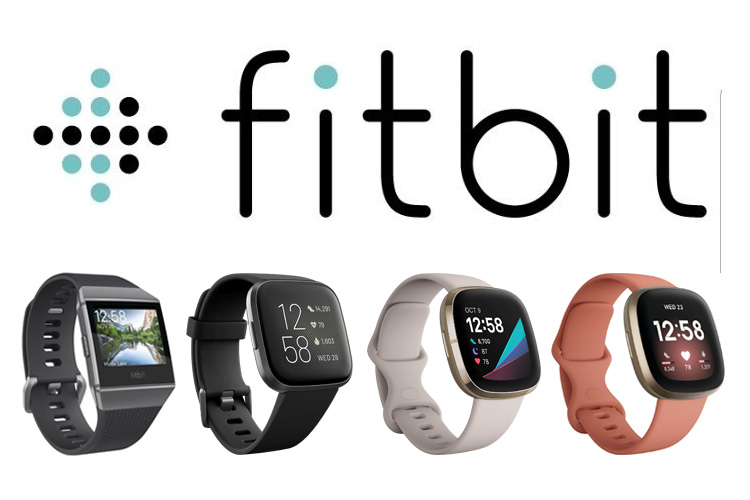
In the specifications of Fitbit smartwatches, PPG technology is not mentioned. Rather, they said to be using “optical heart rate sensors that still maintain extended battery life.”
Rank #4
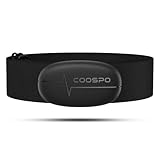
- ±1BPM HEART RATE DATA - The H6 HR sensor can monitor high-performance real-time heart rate data while exercising, offering a professional experience for your training and fitness.
- WIRELESS DUAL MODE CONNECTION - With Bluetooth & ANT+ 2 transmission methods, the Coospo heart rate chest monitor ensures you can connect to multiple devices stably, and enjoy multiple use experiences.
- THIRD-PARTY APP SUPPORT -The H6 heart rate monitor chest strap works well with most fitness apps, like Strava, Wahoo Fitness, Polar Beat, DDP yoga, HR monitor, Openrider, Zwift, Runtastic, Coosporide.
- COMPATIBLE with BIKE COMPUTER - Works well with Garmin/CooSpo and other GPS bike computers, Provides the most accurate heart rate data for your riding, and helps you improve your riding experience.
- COMPATIBLE with SPORTS WATCHES - Works well with most BLE / ANT+ sports watches, and provides more accurate heart rate data to you.
Fitbit has what they call the PurePulse. This technology can automatically and continuously track heart rate from the wrist making it beneficial for monitoring health data and workout intensity throughout the day.
Jawbone UP3 and UP4
These smartwatches boast of their Bioimpedance. This technology measures the resistance of body tissue to tiny electric currents. Such enables the capture of a wide range of physiological signals including one’s heart rate.
Meaning, instead of light waves (as used in PPG), bioimpedance sends electrical currents to the body tissues. This method is said to require less power compared to PPG and other light-based methods hence allow for an extended battery life of the smartwatch. The downside, however, is that this technology can only measure one’s resting and passive heart rate. It does not have yet the capability to track the wearer’s heart rate during workouts or activities.
Independent reader supportYour contribution helps us test, update, and keep practical guides available for everyone.Which Smartwatch or Fitness Tracker Is Most Accurate in Monitoring Heart Rate?
In this simple experiment conducted by Tom’s Guide, the accuracy of heart rate monitoring of a number of smartwatches fitness trackers was tested in comparison with the Polar H10 chest strap. The wearables tested are the Apple Watch Series 3, Apple Watch Series 4, Fitbit Ionic, Fitbit Charge 2, Fitbit Versa, Samsung Galaxy Watch, Samsung Gear Sport, Garmin Fenix 5, Garmin Forerunner 35, Garmin Vivoactive 3 Music, and Garmin Vivomove HR.
Do these 3 things before closing this tab:
1Repair Windows errors before they cause bigger problems2Fix the driver behind crashes, sound loss and screen glitches3Clear out junk files and repair common Windows errorsBased on the said experiment, the general conclusion is that the average heart rate gathered by these smartwatches was within a few beats compared to the Polar chest strap. However, once the heart rate slows or fastens, the smartwatches tend to lag in their heart rate monitoring.
Best Value
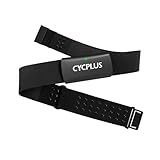
- Precise Heart Rate Tracking: H2Pro uses an ECG algorithm combined with its proprietary technology to reduce interference from movement, breathing, muscle tension/discomfort, and sweat. It delivers stable, accurate heart rate data in real time, ensuring you stay connected to your heart's rhythm with every beat.
- Comfortable Wear: Weighing just 𝟐𝟏𝐠 (𝟑𝟒𝐠 𝐰𝐢𝐭𝐡 𝐜𝐡𝐞𝐬𝐭 𝐬𝐭𝐫𝐚𝐩), the heart rate monitor features soft, breathable materials and an adjustable strap. This ensures a secure, comfortable fit for all body types.
- Seamless Connection: H2Pro seamlessly syncs with your favorite fitness apps and devices via Bluetooth or ANT+. Enjoy real-time monitoring and smooth data transfer on smartphones, smartwatches, or cycling computers – all with zero hassle.
- 500h Battery Life: Powered by a built-in CR2032 coin-cell battery, H2Pro delivers up to 𝟓𝟎𝟎 𝐡𝐨𝐮𝐫𝐬 of operation. For most fitness enthusiasts exercising 3 times weekly (≈1 hour per session), this covers nearly 3 years of workout demands.
- Heart Rate Variability: Utilizing ECG monitoring algorithms to accurately identify R-wave peaks and capture instantaneous heartbeat changes, it is particularly suitable for users requiring high precision and scientific training. This enables training load adjustment based on HRV to prevent overtraining.
The newer devices at the time the list was compiled, i.e. Apple Watch Series 4 and the Samsung Galaxy Watch, took just a few seconds to reflect heart rate similar to the chest strap. The Fitbit Versa, on the other hand, wasn’t very responsive.
The Garmin Forerunner 35 and Fenix 5, however, were able to track the heart rate accurately during workouts. They then became inaccurate when the wearer is resting or walking. Such inaccuracy was then resolved when these smartwatches were put into workout mode.
Read about the Pros & Cons of the Apple Watch here (besides tracking HR).
Closing Words
The capabilities and technologies we find in smartwatches and fitness trackers get more interesting and complex with each new model. We hope that with this informative post, you were enlightened on how a small wearable device (especially those green lights in them) can monitor your heart rate at any given moment.
We intend to give you more useful information about your watches with our succeeding posts so watch out for them on this website!
Quick Recap
Product prices and availability are accurate as of the date/time indicated and are subject to change. Any price and availability information displayed on Amazon at the time of purchase will apply.