Most hybrid watches ask you to compromise before you even put them on: accept a digital dial masquerading as analog, tolerate awkward thickness, or buy into a brand ecosystem you never cared about. Sony’s Wena Wrist Pro approached the problem from the opposite direction, starting with the assumption that the watch head itself should remain sacred. The idea was not to build another smartwatch, but to disappear smart functionality entirely into the one component enthusiasts already replace without guilt: the strap.
If you’ve ever loved a mechanical or quartz watch yet felt nudged toward an Apple Watch or Galaxy Watch purely for notifications, payments, or step tracking, Wena was speaking directly to you. This section explains what Sony was trying to solve with the hybrid strap concept, why it was genuinely different from other hybrids of its era, and why its ambitions were both ahead of the market and constrained by it.
A Strap, Not a Watch, as the Smart Core
At its core, the Wena Wrist Pro inverted the traditional smartwatch architecture. Instead of embedding screens, processors, and sensors into the case, Sony integrated nearly all electronics into a metal bracelet or silicone strap module that sat under the wrist. The watch head above it could be anything, as long as it accepted standard spring bars.
This was a radical departure from hybrids like Withings or Fossil, which still required you to buy a specific watch. With Wena, Sony treated the strap as a self-contained wearable platform, complete with processor, vibration motor, NFC, sensors, and battery. Your watch remained a watch, mechanically and aesthetically unchanged.
🏆 #1 Best Overall
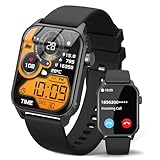
- 【1.83" HD Display & Customizable Watch Faces】Immerse yourself in a vibrant 1.83-inch IPS display, boasting a sharp resolution of 240*284 for crystal-clear visuals. Effortlessly personalize your smart watch with a wide array of customizable watch faces to suit your personal style for every occasion—whether trendy, artistic, or minimalist—ideal for casual, sporty, or professional. Its sleek, modern design complements any outfit, blending technology and fashion seamlessly for everyday wear
- 【120 Sports Modes & Advanced Health Tracking】Our TK29 smart watches for women men come equipped with 120 sports modes, allowing you to effortlessly track a variety of activities such as walking, running, cycling, and swimming. With integrated heart rate and sleep monitors, you can maintain a comprehensive overview of your health, achieve your fitness goals, and maintain a balanced, active lifestyle with ease. Your ideal wellness companion (Note: Step recording starts after exceeding 20 steps)
- 【IP67 Waterproof & Long-Lasting Battery】Designed to keep up with your active lifestyle, this smartwatch features an IP67 waterproof rating, ensuring it can withstand splashes, sweat, and even brief submersion, making it perfect for workouts, outdoor adventures, or rainy days. Its reliable 350mAh battery offering 5-7 days of active use and up to 30 days in standby mode, significantly reducing frequent charging. Ideal for all-day wear, whether you’re at the gym, outdoors, or simply on the go
- 【Stay Connected Anytime, Anywhere】Stay informed and in control with Bluetooth call and music control features. Receive real-time notifications for calls, messages, and social media apps like Facebook, WhatsApp, Twitter, and Instagram directly on your smartwatch. Easily manage calls, control your music playlist, and stay updated without needing to reach for your phone. Perfect for work, workouts, or on-the-go, this watch keeps you connected and never miss important updates wherever you are
- 【Multifunction & Wide Compatibility】Seamlessly handle heart rate monitoring, sleep tracking, and enjoy conveniences like camera/music control, Seamlessly handle heart rate monitoring, sleep tracking, and more-all directly from your wrist. This 1.83 inches HD smartwatch is compatible with iPhone (iOS 9.0+) & Android (5.0+), ensuring smooth daily connectivity and convenience throughout your day. More than just a timepiece, it’s a stylish, all-in-one wearable for smarter, healthier living
Respecting Traditional Watch Design and Proportions
One of the biggest pain points for watch enthusiasts dabbling in smartwatches is visual compromise. Smartwatches tend to be thick, glossy, and instantly recognizable as computers, while even many hybrids add subdials or display cutouts that betray their purpose. Sony’s solution preserved case thickness, lug width, dial layout, and movement choice entirely.
Whether paired with a minimalist quartz piece or a full mechanical automatic, the Wena strap didn’t alter the watch’s proportions on the wrist. The smart hardware lived where bracelets already carry mass, allowing even slim watches to remain slim and visually honest.
Why the Bracelet Was the Only Viable Place
Sony’s engineers clearly understood something many wearable brands still struggle with: comfort and balance matter more than raw specs. By placing the battery and electronics under the wrist, the Wena shifted weight away from the case, improving stability and reducing top-heaviness. This was especially noticeable with lighter mechanical watches that would otherwise feel awkward paired with a bulky smart module.
The underside placement also allowed for better skin contact for sensors like heart rate monitoring, while keeping the dial side uncluttered. It was a solution born out of ergonomics as much as aesthetics, even if it came with its own trade-offs.
Modularity Over Ecosystem Lock-In
Another problem Wena attempted to solve was brand loyalty fatigue. Traditional watch collectors often rotate pieces daily, while smartwatches demand consistency to maintain data continuity. By making the strap the smart device, Sony theoretically allowed users to swap watch heads without losing their wearable experience.
In practice, this meant you could wear a dress watch one day, a diver the next, and keep the same notifications, step tracking, and NFC payments running in the background. It was an unusually collector-friendly idea in a category dominated by closed systems.
Smart Features Without Visual Distraction
The Wena Wrist Pro deliberately avoided adding any form of display. Notifications were delivered via discreet vibration patterns and small LED indicators hidden inside the bracelet links. This preserved the analog purity of the watch while still offering call alerts, app notifications, and calendar nudges.
For some users, this was liberating, removing the compulsion to glance at a screen every few minutes. For others, it was limiting, requiring memorization of vibration codes and frequent phone checks. Sony clearly prioritized discretion over immediacy, aligning more with traditional watch culture than smartwatch culture.
Bridging Japanese Consumer Electronics and Watchmaking Culture
It’s impossible to understand Wena without recognizing Sony’s position. Unlike Swiss brands dabbling in tech or tech companies dabbling in watches, Sony approached the problem as a consumer electronics giant deeply aware of Japan’s reverence for horology. The Wena project was less about disrupting watches and more about coexisting with them.
That philosophy explains both its elegance and its constraints. The Wena Wrist Pro was never meant to replace a smartwatch outright, nor to compete on app ecosystems or displays. It was trying to answer a narrower, more nuanced question: how much smart functionality can you add to a traditional watch before it stops feeling like one?
Design, Materials, and Mechanical Integration with Traditional Watches
If the Wena Wrist Pro succeeds anywhere, it’s in how convincingly it tries to disappear. Rather than asking collectors to accept a visible tech module bolted onto a case, Sony embedded nearly all of the electronics into what looks, at first glance, like a conventional metal bracelet and clasp.
This design choice directly follows from the philosophy outlined earlier. If the strap is the smart device, then it has to meet the aesthetic and tactile expectations of people used to well-made bracelets, not rubber smartwatch bands.
Bracelet Architecture and Overall Proportions
The Wena Wrist Pro is fundamentally a three-link metal bracelet with a dramatically thickened clasp section. Sony used the clasp to house the battery, NFC chip, vibration motor, sensors, and logic board, keeping the rest of the bracelet visually orthodox.
On wrist, the thickness is immediately noticeable when viewed from the side, but less so from the top-down perspective that dominates everyday wear. The bulk sits under the wrist rather than alongside the case, which helps preserve the visual balance of traditional watches.
Weight distribution is surprisingly competent. While the clasp is heavy, the titanium construction keeps the total mass reasonable, and the bracelet doesn’t feel tail-heavy once properly sized.
Materials, Finishing, and Build Quality
Sony opted for titanium rather than stainless steel, a decision that speaks to both comfort and intent. Titanium reduces fatigue during all-day wear and aligns with the premium-adjacent positioning Sony was aiming for, even if it never quite crossed into luxury territory.
The finishing is functional rather than decorative. Brushing dominates, with minimal polishing, and the links have a slightly industrial feel that pairs best with modern sports watches, tool watches, and contemporary Japanese designs.
Compared to Swiss or German bracelet finishing at similar price points, the Wena is competent but not exceptional. Tolerances are solid, edges are mostly well-controlled, but there’s a subtle consumer-electronics character to the metalwork that seasoned collectors will notice.
Clasp Design and Wearability
The clasp is the heart of the Wena Wrist Pro and also its most divisive element. It is significantly thicker than a standard deployant, closer in height to some dive watch clasps with extension systems.
Sony integrated a small monochrome OLED screen on the inside of the clasp, invisible during normal wear. This display is used for step counts, battery status, and mode changes, reinforcing the idea that the tech exists only when you deliberately seek it out.
Comfort depends heavily on wrist shape. Flat-wristed wearers tend to find the clasp unobtrusive, while those with more pronounced wrist curvature may feel pressure during desk work or typing sessions.
Mechanical Integration with Traditional Watch Heads
Unlike conventional straps, the Wena Wrist Pro relies on proprietary end-link adapters. Sony offered versions designed to mate with standard 20mm and 22mm lug widths, but compatibility was never truly universal.
Case shape, lug curvature, and lug hole placement all affect how cleanly the bracelet integrates. With straight-lug sports watches, the fit can look nearly factory-correct. With vintage cases or aggressively curved lugs, gaps and awkward angles are common.
This is not a strap you casually swap between watches in seconds. Fitting often requires patience, careful sizing, and acceptance that some watches simply won’t look right on it.
Impact on Watch Balance and Case Presence
Once installed, the Wena changes how a watch wears. The added mass beneath the wrist can stabilize top-heavy cases, particularly larger divers or chronographs, making them feel more planted during movement.
Conversely, smaller dress watches can feel slightly overwhelmed by the bracelet’s visual and physical presence. A slim 36–38mm piece may look mismatched paired with a bracelet clearly designed around modern proportions.
This reinforces that the Wena Wrist Pro is best matched with contemporary tool watches rather than delicate vintage or formal designs.
Sensors, Durability, and Daily Practicalities
All sensors sit on the underside of the clasp, in direct contact with the skin. Step counting and activity tracking benefit from this centralized placement, but accuracy depends on consistent fit and clasp alignment.
Water resistance is rated at 5 ATM, making it suitable for hand washing and rain but not ideal for swimming with watches that might otherwise encourage it. This creates an unusual scenario where the strap, not the watch head, becomes the limiting factor.
Over long-term use, the bracelet shows wear similarly to standard titanium links, with light scuffing and surface marks that blend into the brushed finish. The electronics housing itself feels robust, with no creaking or flex even after extended daily wear.
Design Philosophy Versus Practical Reality
The Wena Wrist Pro’s design is a clear expression of restraint. Sony prioritized visual discretion and cultural compatibility over modular flexibility or slimness.
That restraint is also where compromises emerge. Integration is elegant when it works, frustrating when it doesn’t, and the physical presence of the clasp will never fully disappear no matter how well it’s engineered.
For collectors willing to curate which watches live on the Wena, the design feels thoughtful and respectful. For those who expect effortless interoperability across an entire watch box, the mechanical realities quickly assert themselves.
Display, Controls, and Day-to-Day Interaction on the Wrist
After understanding how the Wena Wrist Pro physically integrates with a traditional watch head, the next question is how it communicates back to the wearer. Sony’s answer is deliberately understated, prioritizing invisibility from the top of the wrist and keeping all interaction confined to the clasp itself.
This is not a smartwatch that competes for attention with your dial. Instead, it operates as a secondary information layer, one you consult intentionally rather than glance at reflexively.
OLED Display: Hidden, Functional, and Purpose-Built
The Wena Wrist Pro uses a narrow monochrome OLED display embedded into the underside of the clasp. It remains completely invisible during normal wear, preserving the integrity of the analog watch above it.
When activated, the screen is crisp and high-contrast, with excellent legibility in low light and adequate visibility in brighter conditions once your wrist is angled correctly. It is not designed for quick glances while walking, but for deliberate checks that mirror the act of discreetly checking the time during a meeting.
Information density is intentionally limited. Notifications appear as short text snippets, caller IDs, step counts, heart rate data, and battery status, all presented in a single-column layout that prioritizes clarity over flair.
Touch and Button Controls: Minimalism with a Learning Curve
Interaction relies on a combination of a small physical side button on the clasp and touch-sensitive swipe gestures on the OLED panel. The button wakes the display and acts as a confirm or back input depending on context.
Swipes are used to cycle through information screens, with vertical gestures scrolling content and horizontal swipes navigating between modes. The system works reliably once learned, but it is not immediately intuitive, particularly because there is no visual cue when the display is off.
Rank #2
![Apple Watch Series 11 [GPS 46mm] Smartwatch with Jet Black Aluminum Case with Black Sport Band - M/L. Sleep Score, Fitness Tracker, Health Monitoring, Always-On Display, Water Resistant](https://m.media-amazon.com/images/I/312K597M2uL._SL160_.jpg)
- HYPERTENSION NOTIFICATIONS — Apple Watch Series 11 can spot signs of chronic high blood pressure and notify you of possible hypertension.*
- KNOW YOUR SLEEP SCORE — Sleep score provides an easy way to help track and understand the quality of your sleep, so you can make it more restorative.
- EVEN MORE HEALTH INSIGHTS — Take an ECG anytime.* Get notifications for a high and low heart rate, an irregular rhythm,* and possible sleep apnea.* View overnight health metrics with the Vitals app* and take readings of your blood oxygen.*
- STUNNING DESIGN — Thin and lightweight, Series 11 is comfortable to wear around the clock — while exercising and even when you’re sleeping, so it can help track your key metrics.
- A POWERFUL FITNESS PARTNER — With advanced metrics for all your workouts, plus features like Pacer, Heart Rate Zones, training load, Workout Buddy powered by Apple Intelligence from your nearby iPhone,* and more. Series 11 also comes with three months of Apple Fitness+ free.*
In daily use, this creates a subtle friction point. You need to remember where the display sits and how to angle your wrist to interact with it, which can feel awkward compared to the instant responsiveness of a conventional smartwatch screen.
Notification Handling: Discreet by Design
Notifications are delivered via vibration and brief text display. There is no color coding, icons are minimal, and long messages are truncated rather than scrollable in full.
This limitation is intentional. Sony clearly aimed to reduce notification overload, turning the Wena into a filter rather than a mirror of your phone. For calls and messages, this works well; for app-heavy workflows, it can feel overly constrained.
Haptic feedback is precise and subdued, with vibration patterns that are easy to distinguish without becoming intrusive. Over time, the restraint becomes a strength, especially for wearers who want awareness without constant interruption.
Day-to-Day Wearability and Real-World Habits
Because all interaction happens under the wrist, using the Wena becomes a learned habit rather than an instinctive glance. This subtly changes how often you check notifications and health data.
In practice, this leads to fewer, more intentional interactions. You check steps at the end of a walk, glance at heart rate after activity, and acknowledge notifications when vibration prompts you to do so, not when the screen demands attention.
This behavioral shift aligns well with the Wena’s core audience. Watch enthusiasts who value mechanical or quartz dials will appreciate that the bracelet never competes visually or emotionally with the watch itself.
Limitations in Motion and Ergonomics
The underside display location introduces unavoidable ergonomic compromises. Accessing the screen while standing or walking requires a wrist rotation that feels unnatural compared to raising your arm.
For users accustomed to glancing at a smartwatch mid-stride, this can be frustrating. For seated work, meetings, or commuting, it feels far more natural and socially discreet.
The clasp’s size also means the display can press more firmly against the wrist during desk work, particularly on hard surfaces. This is not uncomfortable, but it does remind you that the bracelet is more than passive hardware.
Software Responsiveness and Stability
Screen transitions are smooth, and input latency is minimal. The interface never feels sluggish, even when cycling quickly between data screens.
Crashes or freezes are rare, and the display reliably wakes with a button press or wrist movement when configured. That reliability matters more here than visual sophistication, and Sony largely delivers on that front.
However, customization is limited. You cannot deeply rearrange screen order or create context-aware shortcuts, reinforcing the Wena’s identity as a fixed-function tool rather than an adaptable platform.
Living with an Invisible Interface
Over weeks of wear, the Wena Wrist Pro fades into the background in a way few smart devices manage. You stop thinking about the display and start responding only when it calls for attention.
This is either its greatest strength or its biggest weakness, depending on expectations. If you want rich interaction, visual feedback, and frequent engagement, the Wena will feel constrained.
If your goal is to preserve the ritual of wearing a traditional watch while quietly gaining essential smart functionality, the display and control philosophy makes a compelling, if uncompromising, case.
Core Smart Features: Notifications, Payments, and Everyday Utility
The Wena Wrist Pro’s smart feature set follows the same philosophy as its hardware and interface: deliver the essentials, stay out of the way, and never upstage the mechanical or quartz watch above it. Coming directly from the intentionally minimal interaction model discussed earlier, these features are designed to be glanced at, acted upon, and then forgotten.
Notification Handling: Selective, Discreet, and Purposefully Limited
Notifications are the Wena Wrist Pro’s most frequently used smart function, and they reflect Sony’s bias toward discretion over richness. Alerts arrive via a subtle vibration and a monochrome text preview on the underside OLED display.
You can choose which apps are allowed to push notifications, but interaction stops there. You cannot reply, dismiss from the bracelet in any meaningful way, or expand messages beyond the initial preview.
In daily use, this proves less restrictive than it sounds. Calendar reminders, incoming calls, authentication prompts, and short message previews are handled reliably, and the vibration motor is well judged—firm enough to notice, restrained enough not to feel intrusive during meetings.
What you do lose is context. Long messages are truncated, grouped notifications can feel opaque, and there is no visual hierarchy beyond simple icons and text. Compared to modern Wear OS or Apple Watch implementations, this feels spartan, but compared to other hybrids, it is still one of the more legible executions.
Importantly, notifications never hijack the wearing experience. Because the display is hidden and requires intent to view, alerts feel optional rather than demanding, reinforcing the Wena’s role as a passive assistant rather than an attention magnet.
Payments and FeliCa: The Most Compelling Everyday Feature
Where the Wena Wrist Pro meaningfully distinguishes itself from most hybrid wearables is contactless payment. In supported regions, Sony’s FeliCa implementation turns the bracelet into a transit card and payment device that works without the phone present.
For users in Japan, this is transformative. Commuting, convenience store payments, and access control can all be handled by simply tapping the wrist, with no display interaction required and no need to wake or authenticate mid-gesture.
Outside Japan, the value proposition narrows considerably. NFC payment support is limited, and there is no broad Google Pay or Apple Pay equivalent. For international users, this feature ranges from situationally useful to entirely irrelevant.
That regional dependency is the Wena’s biggest practical weakness. Where it works, it is arguably the most seamless implementation of payments on any hybrid device. Where it doesn’t, it becomes a reminder of how tightly Sony designed this product around a domestic ecosystem.
Music, Alarms, and Utility Controls
Beyond notifications and payments, the Wena Wrist Pro offers a modest selection of utility functions. Music controls allow basic play, pause, and track skipping when paired with a smartphone, but without album art, playlists, or volume control.
This works best during commuting or desk work, where subtle control without pulling out a phone feels genuinely useful. During workouts or movement-heavy scenarios, the underside display orientation again makes interaction awkward.
Alarms, timers, and reminders are dependable and vibration-based. The bracelet’s vibration motor shines here, delivering alerts that are far less jarring than audible alarms and more reliable than phone notifications buried in a bag or pocket.
There is also basic step tracking and activity logging, but this remains clearly secondary to the Wena’s identity. Data presentation is functional rather than motivational, and there is little attempt to gamify or coach behavior.
Battery Life and Feature Trade-Offs
All of these features draw from a battery that is refreshingly long-lived by smartwatch standards. With notifications enabled, periodic screen checks, and daily payments, the Wena Wrist Pro comfortably lasts several days between charges.
This endurance is not accidental. The limited interaction model, monochrome display, and restrained background processes all contribute to a device that prioritizes longevity over capability.
Charging is handled via a proprietary connector, and while the process is straightforward, it does reinforce the sense that the bracelet is a closed system. There is no wireless charging, no rapid top-up, and no meaningful battery health data exposed to the user.
Still, in daily ownership, battery anxiety all but disappears. The Wena behaves more like a quartz watch with smart benefits than a device that needs constant energy management.
Everyday Utility in Context
Taken together, the Wena Wrist Pro’s core smart features make the most sense when viewed as enhancements to a traditional watch, not replacements for a smartwatch. Notifications inform without interrupting, payments streamline routine tasks, and utilities quietly support daily rhythms.
What it will not do is adapt to changing habits, expand with new apps, or evolve alongside broader wearable platforms. Its usefulness is defined at purchase and remains largely static over time.
For some users, that fixed-function nature is a limitation. For others, especially watch enthusiasts who value consistency, restraint, and longevity, it is precisely the point.
Fitness Tracking, Sensors, and Health Accuracy in Real-World Use
Viewed through the same restrained lens as its notifications and utilities, the Wena Wrist Pro’s approach to fitness and health tracking is deliberately conservative. It offers just enough sensing to log activity and provide basic physiological context, without attempting to compete with purpose-built sports watches or health-centric smartwatches.
This positioning matters, because expectations largely determine satisfaction here. If you approach the Wena as a subtle augmentation to a mechanical or quartz watch, its fitness capabilities feel appropriate. If you expect deep analytics or training guidance, its limits appear quickly.
Sensor Suite and What It’s Designed to Measure
The Wena Wrist Pro integrates an accelerometer, optical heart rate sensor, and built-in GPS, all housed within the clasp module. This architecture keeps the watch head untouched, preserving the proportions, weight distribution, and wearing experience of the paired analog watch.
Rank #3

- Bluetooth Call and Message Alerts: Smart watch is equipped with HD speaker, after connecting to your smartphone via bluetooth, you can answer or make calls, view call history and store contacts through directly use the smartwatch. The smartwatches also provides notifications of social media messages (WhatsApp, Twitter, Facebook, Instagram usw.) So that you will never miss any important information.
- Smart watch for men women is equipped with a 320*380 extra-large hd full touch color screen, delivering exceptional picture quality and highly responsive touch sensitivity, which can bring you a unique visual and better interactive experience, lock screen and wake up easily by raising your wrist. Though “Gloryfit” app, you can download more than 102 free personalised watch faces and set it as your desktop for fitness tracker.
- 24/7 Heart Rate Monitor and Sleep Tracker Monitor: The fitness tracker watch for men has a built-in high-performance sensor that can record our heart rate changes in real time. Monitor your heart rate 26 hours a day and keep an eye on your health. Synchronize to the mobile phone app"Gloryfit", you can understand your sleep status(deep /light /wakeful sleep) by fitness tracker watch develop a better sleep habit and a healthier lifestyle.
- IP68 waterproof and 110+ Sports Modes: The fitness tracker provides up to 112+ sports modes, covering running, cycling, walking, basketball, yoga, football and so on. Activity trackers bracelets meet the waterproof requirements for most sports enthusiasts' daily activities, such as washing hands or exercising in the rain, meeting daily needs (note: Do not recommended for use in hot water or seawater.)
- Multifunction and Compatibility: This step counter watch also has many useful functions, such as weather forecast, music control, sedentary reminder, stopwatch, alarm clock, timer, track female cycle, screen light time, find phone etc. The smart watch with 2 hrs of charging, 5-7 days of normal use and about 30 days of standby time. This smart watches for women/man compatible with ios 9.0 and android 6.2 and above devices.
In practice, the sensor placement has both benefits and drawbacks. The clasp sits flatter against the underside of the wrist than many caseback-mounted sensors, which can help with contact consistency during everyday movement. At the same time, it is more susceptible to micro-shifts during vigorous arm motion, particularly if the bracelet fit is on the loose side.
GPS is used exclusively for activity tracking rather than continuous location services. It activates only during supported workouts, minimizing battery impact but also limiting passive data collection.
Step Counting and Everyday Activity Tracking
Step tracking is always on and forms the backbone of the Wena’s activity data. Over several weeks of wear, step counts generally tracked within an acceptable margin compared to an Apple Watch and a Garmin Forerunner, typically undercounting slightly during short, stop-start movements and indoor activity.
This behavior is consistent with an accelerometer tuned to avoid false positives. The Wena is less likely to inflate numbers through hand gestures, but it can miss steps during light household movement or slow walking.
Daily activity summaries focus on totals rather than trends. There is no concept of move streaks, recovery days, or adaptive goals, reinforcing the idea that this is passive logging rather than behavioral coaching.
Heart Rate Monitoring: Useful Context, Not Clinical Precision
The inclusion of optical heart rate monitoring is one of the defining upgrades of the Pro model, but it remains firmly in the realm of general wellness tracking. Resting heart rate readings were broadly consistent with reference devices when worn snugly, though occasional spikes and dropouts appeared during arm-intensive movement.
During steady-state activities like walking or casual cycling, heart rate curves were believable and directionally accurate. During interval-style exertion or weight training, the sensor struggled to keep pace with rapid changes, often lagging behind chest-strap data.
There is no advanced heart rate variability analysis, stress scoring, or health alert system. What you get is a snapshot of effort and baseline trends, not a diagnostic tool or training companion.
GPS Performance in Real-World Workouts
GPS tracking is available for outdoor activities such as running and walking, activated manually through the app. Lock-on times were reasonable in open areas, typically under a minute, but could stretch longer in dense urban environments.
Route accuracy was acceptable for recreational tracking, with minor smoothing on corners and occasional drift near tall buildings. Distance measurements were generally close to reference devices, though not precise enough for interval pacing or race training.
The key limitation is frequency of use. Because GPS draws more power, it encourages selective tracking rather than always-on monitoring, aligning with the Wena’s broader philosophy of intentional engagement.
Health Data Presentation and Long-Term Usefulness
All fitness and health data is viewed through the Wena companion app, which favors clarity over depth. Graphs are simple, historical comparisons are limited, and there is little in the way of interpretive insight.
This simplicity makes the data easy to check and ignore, depending on your interest level. For watch enthusiasts who want occasional confirmation of daily movement and exertion, this is often enough.
What the platform lacks is progression. There are no meaningful updates that expand metrics over time, and no ecosystem integration with third-party health platforms beyond basic exports, reinforcing the sense of a static, closed system.
Comfort, Wearability, and Sensor Reliability Over Time
Because the sensors are integrated into the bracelet rather than the case, comfort depends heavily on bracelet sizing and balance. When properly fitted, the clasp sits unobtrusively and avoids the top-heavy feel common to smartwatch cases.
Extended wear revealed minimal skin irritation and good thermal comfort, helped by the stainless steel construction and modest thickness. However, users who prefer looser bracelets may see reduced heart rate accuracy due to inconsistent skin contact.
Importantly, the Wena does not demand constant interaction or calibration. Once set up, it fades into the background, collecting data quietly without prompting behavior changes or drawing attention to missed goals.
Battery Life, Charging System, and Long-Term Ownership Realities
If the Wena’s health tracking and GPS encourage intentional, selective use, battery life is the practical reason that philosophy exists. Power management is not an afterthought here; it actively shapes how the Wena fits into daily ownership compared to always-on smartwatches.
Real-World Battery Longevity
In mixed real-world use—notifications enabled, continuous heart rate monitoring, sleep tracking, and occasional GPS sessions—the Wena Wrist Pro typically delivers around four to six days per charge. Light users who disable GPS entirely and keep notifications selective can stretch closer to a full week.
GPS is the single largest drain. A one-hour outdoor activity can consume a noticeable chunk of the battery, reinforcing the idea that location tracking is meant for planned workouts rather than passive, all-day logging.
What’s notable is consistency. Battery behavior remains predictable over time, with no dramatic overnight drops or erratic drain patterns, which contributes to trust in daily wear.
Charging Method and Daily Practicality
Charging is handled via a proprietary cradle that interfaces with contacts on the underside of the clasp. The bracelet must be removed from the wrist, but not disassembled, making the process less disruptive than some modular hybrids and more involved than magnetic puck systems.
A full charge typically takes around 90 minutes. There is no fast charging, but given the multi-day endurance, this rarely feels limiting.
The downside is portability. The cradle is compact but essential, and losing it introduces friction that USB-C or Qi-based solutions would avoid. This feels especially dated in a market increasingly moving toward standardized charging.
Battery Degradation and Service Expectations
Over extended ownership, battery degradation follows typical lithium-ion patterns rather than accelerated decline. After long-term use, capacity loss is gradual rather than dramatic, and the Wena remains usable without devolving into daily charging dependency.
However, the battery is not user-replaceable, and service options are limited. This places an upper boundary on lifespan that traditional watches simply do not have, even if the bracelet’s stainless steel construction remains physically durable.
For collectors accustomed to decades-long service intervals and mechanical longevity, this is a conceptual adjustment rather than a flaw—but it is one that should be acknowledged upfront.
Software Support, Platform Stagnation, and Ownership Risk
Battery longevity cannot be separated from software viability. The Wena platform has seen minimal evolution, with no major feature expansions or ecosystem deepening over time.
While the companion app remains functional, its static nature raises long-term questions. As smartphone operating systems evolve, continued compatibility becomes a concern, particularly given Sony’s retreat from aggressive development in this category.
This does not make the Wena unreliable today, but it does frame ownership as finite. The hardware will likely outlast the pace of software innovation, not the other way around.
Living With a Hybrid Battery Reality
Viewed through a watch-enthusiast lens, the Wena’s battery life feels like a compromise carefully calibrated rather than inadequately engineered. It avoids the daily charging ritual of full smartwatches while delivering meaningfully more functionality than passive fitness bands or quartz hybrids.
The trade-off is acceptance. You charge it weekly, you plan GPS use, and you understand that this is not a forever device in the way a mechanical bracelet might be.
For the right owner—someone who values discretion, analog aesthetics, and restrained digital augmentation—the battery system aligns cleanly with the Wena’s broader identity. For those expecting longevity measured in decades rather than years, it remains the clearest reminder that this is technology first, watchmaking adjacent second.
Companion App, Software Experience, and Ecosystem Limitations
The finite nature of the battery inevitably leads into the software conversation, because with Wena, hardware usefulness is inseparable from app stability. Unlike a mechanical watch that can outlive its manufacturer, the Wena Wrist Pro remains tethered to Sony’s companion software for setup, syncing, and long-term usability.
This is where the product’s identity as “technology wearing a watch” becomes most apparent.
The Wena App: Functional, Restrained, and Frozen in Time
The Wena companion app is available for iOS and Android and handles device pairing, notification management, activity tracking, and firmware updates. Its design is clean and legible, prioritizing clarity over visual flourish, much like the bracelet itself.
Navigation is straightforward, with logical separation between notifications, activity metrics, device settings, and battery status. There is very little learning curve, which aligns with the Wena philosophy of minimal friction rather than deep customization.
That simplicity, however, is also its limitation. The app feels largely unchanged from earlier Wena generations, and feature expansion has been conservative to the point of stagnation.
Notification Handling: Practical but Narrowly Scoped
Notifications are one of the Wena Wrist Pro’s strongest day-to-day functions, provided expectations are properly set. The bracelet’s OLED display presents message previews, caller ID, and app alerts clearly, aided by sharp contrast and restrained animations.
Customization is limited to enabling or disabling notifications on a per-app basis. There is no granular control over notification categories, priority filtering, or contextual behavior based on time or location.
Rank #4
![Apple Watch Series 11 [GPS 42mm] Smartwatch with Rose Gold Aluminum Case with Light Blush Sport Band - S/M. Sleep Score, Fitness Tracker, Health Monitoring, Always-On Display, Water Resistant](https://m.media-amazon.com/images/I/31J+F-pXaWL._SL160_.jpg)
- HYPERTENSION NOTIFICATIONS — Apple Watch Series 11 can spot signs of chronic high blood pressure and notify you of possible hypertension.*
- KNOW YOUR SLEEP SCORE — Sleep score provides an easy way to help track and understand the quality of your sleep, so you can make it more restorative.
- EVEN MORE HEALTH INSIGHTS — Take an ECG anytime.* Get notifications for a high and low heart rate, an irregular rhythm,* and possible sleep apnea.* View overnight health metrics with the Vitals app* and take readings of your blood oxygen.*
- STUNNING DESIGN — Thin and lightweight, Series 11 is comfortable to wear around the clock — while exercising and even when you’re sleeping, so it can help track your key metrics.
- A POWERFUL FITNESS PARTNER — With advanced metrics for all your workouts, plus features like Pacer, Heart Rate Zones, training load, Workout Buddy powered by Apple Intelligence from your nearby iPhone,* and more. Series 11 also comes with three months of Apple Fitness+ free.*
For enthusiasts accustomed to Apple Watch or Wear OS flexibility, this will feel rudimentary. For traditional watch wearers who simply want awareness without interaction, it may be exactly enough.
Fitness, Health Data, and App-Level Analysis
Activity tracking data is presented cleanly but without interpretive depth. Steps, heart rate, calories, sleep, and GPS activities are logged reliably, but the app offers minimal coaching, trend analysis, or longitudinal insight.
Charts are basic, focusing on daily and weekly summaries rather than deeper performance metrics. There is no serious attempt to position Wena as a training tool, and that restraint feels intentional rather than negligent.
For casual fitness tracking layered onto an analog watch, this is acceptable. For users seeking data-driven progression or health analytics, the Wena ecosystem will feel shallow.
Platform Compatibility and OS Dependency
The Wena app currently functions on modern versions of iOS and Android, but compatibility feels more maintained than actively evolved. Updates tend to focus on bug fixes and OS compliance rather than new capabilities.
This creates an underlying ownership risk that is difficult to ignore. As mobile operating systems evolve and hardware APIs change, the burden is on Sony to keep pace, despite the company no longer actively pushing Wena as a flagship ecosystem.
Unlike Apple, Garmin, or Samsung, Wena does not benefit from platform-level lock-in or ecosystem leverage. Continued support exists, but confidence in long-term compatibility is measured rather than absolute.
Data Portability and Ecosystem Isolation
One of the Wena platform’s clearest limitations is its isolation. There is no native integration with major health platforms like Apple Health, Google Fit, or Strava that matches the depth of dedicated fitness wearables.
Exporting data is possible but inelegant, and automation is limited. This reinforces the idea that Wena data lives primarily within the Wena app, not as part of a broader health or productivity ecosystem.
For collectors and enthusiasts who treat fitness tracking as secondary, this may not matter. For users trying to unify data across devices, it is a meaningful drawback.
Firmware Updates and Feature Ceiling
Firmware updates arrive infrequently and rarely introduce new features. Improvements tend to focus on stability, sensor calibration, and connectivity rather than expanding what the bracelet can do.
This reinforces the sense that the Wena Wrist Pro shipped close to its final form. What it does today is likely what it will do for the remainder of its supported life.
From a watch-centric perspective, this predictability can be reassuring. From a technology perspective, it underscores the product’s limited growth runway.
Ecosystem Reality: A Closed Loop by Design
Wena is not an ecosystem in the modern smartwatch sense; it is a closed loop with clearly defined boundaries. There are no third-party apps, no modular expansions, and no ambition to become a wrist-based computing platform.
That limitation is philosophical as much as technical. Sony positioned Wena as an accessory to traditional watches, not a replacement for them.
For owners who value discretion, aesthetic continuity, and minimal digital intrusion, this approach feels coherent. For users expecting software evolution and ecosystem depth, it is the clearest sign that Wena exists on the margins of the smartwatch world rather than at its center.
Living with the Wena Wrist Pro Long Term: Reliability, Comfort, and Quirks
If the closed nature of the Wena ecosystem defines its philosophical limits, long-term ownership is where those boundaries either fade into the background or become daily friction points. Living with the Wena Wrist Pro over months rather than weeks reveals a product that is remarkably stable, occasionally idiosyncratic, and deeply shaped by its role as a bracelet-first device rather than a screen-first wearable.
Long-Term Reliability and Hardware Durability
From a reliability standpoint, the Wena Wrist Pro has proven refreshingly consistent. The core functions—notifications, step tracking, heart rate sampling, and NFC payments—continue to operate as expected without the creeping instability that often affects aging smartwatches.
The stainless steel construction plays a major role here. The bracelet resists desk-diving scuffs better than most coated aluminum smartwatch cases, and minor hairline scratches blend naturally into the brushed finish over time rather than standing out as damage.
Water resistance has also held up well in daily use. Showering, handwashing, and incidental exposure to rain have caused no issues, though the Pro is still best treated as a watch bracelet rather than a sports tracker designed for aggressive aquatic use.
Comfort Over Long Wear Periods
Comfort is one of the Wena Wrist Pro’s strongest long-term attributes, particularly for wearers accustomed to metal bracelets. Weight is noticeable at first, especially when paired with a heavier mechanical head, but it distributes evenly across the wrist and fades from awareness after a few days.
The bracelet’s articulation is excellent, with tight tolerances that avoid pinching while still feeling solid. Once sized correctly, it wears more like a traditional integrated bracelet than a tech product, which is precisely the point.
For smaller wrists, thickness is more of a factor than weight. The clasp module sits taller than a conventional folding clasp, and while it rarely causes discomfort, it can make the bracelet feel bulkier under a shirt cuff compared to a standard deployant.
Battery Longevity in Real Use
Battery life remains one of the Wena Wrist Pro’s most practical advantages over full smartwatches. In real-world use with notifications enabled, passive heart rate tracking active, and NFC used occasionally, five to six days is a realistic expectation even after extended ownership.
Importantly, battery degradation over time appears modest. After months of use, charging frequency has not meaningfully increased, suggesting conservative power management and a battery sized appropriately for its workload.
Charging, however, remains slightly inelegant. The proprietary charging dock works reliably, but it reinforces the sense that Wena ownership requires committing to a parallel routine rather than integrating seamlessly into an existing smartwatch ecosystem.
Daily Usability and Interface Quirks
The OLED display, hidden beneath the clasp surface, continues to feel clever rather than gimmicky. It is legible indoors and adequately bright outdoors, though interaction remains limited to swipes and taps that prioritize simplicity over speed.
Notifications are reliable but intentionally constrained. You read, acknowledge, and move on, with no temptation to interact further, which aligns with the Wena philosophy but can feel limiting for users coming from richer smartwatch interfaces.
Haptic feedback remains subtle and well-tuned. It is strong enough to register without being intrusive, though vibration patterns are not customizable in any meaningful way.
Pairing with Traditional Watches Over Time
One of the more understated long-term benefits of the Wena Wrist Pro is how easily it fades into different watch rotations. Swapping between mechanical and quartz heads does not require reconfiguration, recalibration, or aesthetic compromise.
That said, lug compatibility and visual balance matter. The bracelet works best with watches that have a contemporary case profile and sufficient visual weight to match the clasp’s presence, typically in the 38–42mm range with standard lug widths.
On ultra-thin dress watches or vintage pieces, the contrast can feel slightly off. This is less a flaw than a reminder that Wena is designed to modernize everyday watches rather than disappear entirely.
Aging Software and the Passage of Time
As the broader smartwatch market accelerates, the Wena Wrist Pro’s software has remained largely frozen in time. Over the long term, this stasis is both a strength and a limitation.
There are no surprise UI changes, no shifting feature priorities, and no new dependencies introduced through updates. At the same time, features like sleep tracking depth, workout analytics, and data visualization now feel dated compared to even entry-level fitness wearables.
What emerges after extended use is a clear picture of intent. The Wena Wrist Pro does not try to grow with you as a technology platform; it simply continues to do its narrow set of tasks with minimal drama, asking only that you accept its boundaries and appreciate its restraint.
Alternatives and Context: How the Wena Wrist Pro Compares to Modern Hybrids and Smartwatches
By this point, the Wena Wrist Pro’s philosophical position should be clear. To understand whether that position still makes sense today, it needs to be viewed alongside the broader hybrid and smartwatch landscape that has evolved rapidly while Wena largely stood still.
Against Traditional Hybrid Watches: Fossil, Withings, and the Disappearing Middle
Most mainstream hybrid watches from Fossil, Skagen, Garmin, or Withings integrate smart features directly into the case. Hands, sub-dials, or e-ink displays are part of a single product, not a modular system.
The advantage of those hybrids is cohesion. The movement, sensors, battery, and software are designed together, resulting in slimmer cases, longer battery life measured in weeks or months, and fewer compromises around fit and balance.
The trade-off is permanence. You are committing to a specific watch design, case size, and aesthetic for the life of the electronics, and once the smart component becomes obsolete, the entire watch follows it.
The Wena Wrist Pro sits outside that equation. It offers none of the battery longevity of a Withings ScanWatch, none of the subtle mechanical mimicry of Fossil’s Hybrid HR, and none of Garmin’s health analytics depth.
💰 Best Value
![Apple Watch Series 11 [GPS 42mm] Smartwatch with Jet Black Aluminum Case with Black Sport Band - S/M. Sleep Score, Fitness Tracker, Health Monitoring, Always-On Display, Water Resistant](https://m.media-amazon.com/images/I/31ybzrJZckL._SL160_.jpg)
- HYPERTENSION NOTIFICATIONS — Apple Watch Series 11 can spot signs of chronic high blood pressure and notify you of possible hypertension.*
- KNOW YOUR SLEEP SCORE — Sleep score provides an easy way to help track and understand the quality of your sleep, so you can make it more restorative.
- EVEN MORE HEALTH INSIGHTS — Take an ECG anytime.* Get notifications for a high and low heart rate, an irregular rhythm,* and possible sleep apnea.* View overnight health metrics with the Vitals app* and take readings of your blood oxygen.*
- STUNNING DESIGN — Thin and lightweight, Series 11 is comfortable to wear around the clock — while exercising and even when you’re sleeping, so it can help track your key metrics.
- A POWERFUL FITNESS PARTNER — With advanced metrics for all your workouts, plus features like Pacer, Heart Rate Zones, training load, Workout Buddy powered by Apple Intelligence from your nearby iPhone,* and more. Series 11 also comes with three months of Apple Fitness+ free.*
What it does offer is continuity. Your watch head remains relevant regardless of the electronics underneath, and your collection does not need to bend around a single tech-forward design language.
Compared to Full Smartwatches: Apple, Samsung, and the Feature Ceiling
Against full smartwatches, the comparison is deliberately unfair on paper. An Apple Watch or Galaxy Watch delivers rich notifications, deep app ecosystems, LTE options, advanced health metrics, and tight platform integration.
In daily use, though, that power comes with cost. Battery life typically demands daily charging, physical presence on the wrist is visually dominant, and the device increasingly defines how you interact with time itself.
The Wena Wrist Pro avoids that dominance entirely. It never competes for attention with the watch head, never interrupts with glowing screens, and never nudges you toward engagement loops.
However, the gap in health tracking is impossible to ignore. Heart rate data is basic, sleep analysis lacks nuance, and workout tracking feels closer to early-generation fitness bands than modern wearables.
For users accustomed to closing activity rings, reviewing VO2 max trends, or relying on smartwatch navigation, the Wena experience will feel functionally incomplete.
Bracelet-Based Alternatives and the Absence of True Rivals
Few products have attempted what Wena did, and fewer still remain available. Past experiments like Intel’s Basis Peak or early smart jewelry never solved the balance between comfort, battery life, and data relevance.
More recent smart rings focus on health metrics rather than notifications, while fitness bands prioritize affordability and visibility over integration with traditional watches.
Wena’s clasp-based architecture remains largely unmatched. By housing sensors, display, and battery in the bracelet rather than the case, it preserved the mechanical watch as the visual and emotional centerpiece.
That uniqueness also created constraints. Bracelet thickness, weight distribution, and clasp length limit compatibility, and leather strap users are excluded entirely unless they switch materials.
Longevity, Ecosystem Risk, and the Reality of Aging Tech
One unavoidable consideration today is ecosystem viability. Sony’s commitment to the Wena platform has faded, and the lack of meaningful software evolution reinforces that uncertainty.
In contrast, Apple, Google, and Garmin continue to iterate aggressively, while even hybrid brands receive incremental updates to health algorithms and app experiences.
The Wena Wrist Pro’s saving grace is that it does not rely on growth. If notifications, basic fitness tracking, and time-adjacent convenience are all you require, its stagnation is less damaging than it would be on a feature-driven smartwatch.
Still, long-term buyers must accept that compatibility risks will increase, data insights will lag behind industry norms, and replacement or repair options may narrow over time.
Where the Wena Wrist Pro Still Makes Sense
Viewed in context, the Wena Wrist Pro is not a competitor to modern smartwatches or even contemporary hybrids. It is a parallel solution aimed at a specific type of enthusiast.
It makes sense for collectors who rotate mechanical and quartz watches frequently, value bracelet quality and finishing, and want notifications and light tracking without visual intrusion.
It makes less sense for users seeking health optimization, software richness, or future-proof platforms.
The Wena Wrist Pro ultimately represents a path the industry chose not to pursue. In doing so, it remains both uniquely appealing and increasingly isolated, a reminder that sometimes the most interesting wearable ideas are also the hardest to sustain.
Verdict: Who the Sony Wena Wrist Pro Was For—and Whether It Still Makes Sense Today
The Wena Wrist Pro closes this review the same way it lived its life: as a deliberate outlier. It was never designed to chase feature parity with mainstream smartwatches, and judging it by that metric misses the point entirely.
Instead, its value hinges on a very specific philosophy—one that prioritized preserving the integrity of a traditional watch while quietly adding just enough modern utility to matter in daily life.
Who the Wena Wrist Pro Was Really Designed For
At its core, the Wena Wrist Pro was built for watch enthusiasts first, not fitness obsessives or app power users. It assumed the wearer already owned mechanical or quartz watches they cared about, and it treated the watch head as sacred.
By relocating the display, sensors, battery, and electronics into a stainless steel bracelet, Sony avoided the aesthetic compromises that define most hybrids. Your watch still looked, felt, and wore like a real watch—same dial, same movement, same emotional connection.
That made the Wena Wrist Pro especially compelling for collectors who rotate watches frequently. One bracelet could theoretically serve multiple heads, turning notification delivery and basic activity tracking into a background utility rather than the main attraction.
Where It Succeeded—and Why It Still Feels Thoughtful Today
From a hardware perspective, the Wena Wrist Pro remains impressive even now. The bracelet finishing, clasp mechanism, and overall build quality are closer to mid-tier mechanical watch bracelets than consumer tech accessories.
Comfort was better than expected given the integrated electronics. Weight distribution favored the underside of the wrist, and once sized correctly, the bracelet disappeared during long wear more effectively than many case-heavy smartwatches.
Battery life, stretching into several days with notifications and light tracking enabled, still compares favorably to modern full smartwatches. The low-power OLED display in the clasp remains discreet, readable, and contextually appropriate rather than attention-seeking.
Most importantly, the Wena never tried to replace your watch. It complemented it, and that restraint is arguably its most enduring achievement.
Where Time Has Not Been Kind
The flip side of that restraint is that the Wena Wrist Pro now feels frozen in time. Fitness tracking is rudimentary by current standards, lacking depth, actionable insights, or algorithmic refinement.
Health features never progressed beyond basics, and software updates slowed to the point of near dormancy. The companion app does its job but lacks the polish, analytics, and long-term data confidence offered by modern platforms.
Compatibility is another growing concern. As mobile operating systems evolve, the risk of degraded functionality or outright incompatibility increases, and Sony’s reduced engagement with the platform offers little reassurance.
This is not aging gracefully in the way a mechanical watch does. It is aging like consumer electronics inevitably do—quietly and irreversibly.
Who Should Still Consider One Today
The Wena Wrist Pro still makes sense for a narrow but legitimate audience. If your priority is wearing traditional watches without compromise, and your smart needs stop at notifications, step counting, and occasional heart-rate checks, it remains uniquely positioned.
It also appeals to those who value industrial design and engineering novelty. Even years later, there is nothing else quite like it, and that alone carries a certain enthusiast appeal.
For buyers willing to accept ecosystem risk and limited future support, especially on the secondary market at reduced pricing, it can still function as an elegant, quietly capable accessory rather than a central device.
Who Should Look Elsewhere
If you want health optimization, sleep analytics, workout coaching, or deep software integration, the Wena Wrist Pro will frustrate you. Even modern hybrids from Withings or Garmin offer far more insight and platform stability.
If you prefer leather straps, fabric, or frequent strap changes, the bracelet-only architecture becomes a deal-breaker rather than a benefit. Likewise, those seeking future-proof tech should look elsewhere.
This is not a smartwatch replacement, and it never was. Expecting it to behave like one guarantees disappointment.
Final Assessment
The Sony Wena Wrist Pro represents one of the most intellectually honest attempts at blending traditional horology with modern connectivity. It succeeded not by adding more, but by subtracting everything that threatened the watch itself.
Today, it stands as a fascinating artifact of an alternative wearable future—one that prioritized discretion, modularity, and respect for mechanical watches over growth and feature accumulation.
It no longer makes sense for most buyers, but for the right enthusiast, with the right expectations, it remains quietly brilliant. Not because it does everything, but because it knew exactly what it should never try to be.