The Tool Desk
Outbyte PC Repair FREERepair Windows errors before they cause bigger problemsFix Now →Outbyte Driver Updater FREEScan for outdated or missing drivers - takes under a minuteDriver Scan →Fitbit heart-rate readings are most useful for trends, resting measurements, sleep-related metrics, and many steady aerobic workouts; they are not uniformly accurate in every situation and are not a substitute for an ECG or medical monitor. Accuracy depends on the device, fit, activity, and individual, so use the numbers as context—not as a diagnosis or the sole guide to hard training.
As of August 10, 2026, the Fitbit app has been redesigned and renamed the Google Health app; some devices and help pages may still use “Fitbit app.” Feature availability and labels vary by model, software, country, and account. Google’s transition notice says the app transition began May 19, 2026.
What Fitbit heart rate measures
Ordinary Fitbit heart-rate tracking estimates your pulse optically; it does not directly measure the heart’s electrical activity. Green LEDs illuminate the skin, photodiodes detect changes in blood volume near the wrist, and software estimates beats per minute from that signal. Fitbit also uses an infrared sensor to help determine whether the device is being worn. This optical method is called photoplethysmography, or PPG. Google Health’s heart-rate explanation describes the method.
Movement, wrist angle, fit, skin blood flow, and activity type can interfere with the optical signal. Research identifies skin characteristics, motion artifacts, and signal crossover as potential sources of wearable PPG error. A pulse estimate is therefore not the same thing as an ECG reading. Peer-reviewed wearable-sensor research discusses these error sources.
#1 Best Overall

- 【All-day Activity Tracker】: ENGERWALL IP68 Waterproof fitness tracker can record and track your daily steps, calories burned, exercise distance and time. It can also monitor your Body Temp, Heart Rate, Blood Oxygen and Blood Pressure. IP68 waterproof ensures that you don't need to take it off for daily hand washing and swimming, but don't soak it in water for a long time or wear it for hot baths, saunas.
- 【Slim and simple band design】The design concept of this tracker’s band is slim and unique, offering a comfortable and lightweight wearing experience. Suitable for men, women and the elderly.
- 【Heart Rate Monitor and Sleep Tracker】: Smart tracker can detect heart rate, blood pressure, blood oxygen, and body temperature in daily life. Monitor your sleep and analyze your sleep quality through Fall Sleep, Deep Sleep, Light Sleep, REM Sleep. You can view daily, weekly, and monthly data in the APP "Runmefit" to help you better understand your health status and lead a healthy lifestyle. [IMPORTANT] The blood pressure measurement feature must be downloaded and enabled within the app.
- 【Call and message notifications】: You can receive text messages and SNS notifications (including Facebook, Twitter, WhatsApp and Instagram) directly on your wrist. When your phone's Bluetooth is turned on, if you receive a message, the watch will vibrate to remind you and you can view the specific message. This function is very practical whether in work or life.
- 【Working Time】: Smart Fitness Watch is the best partner at work, you can set it on the mobile APP ‘Runmefit’: up to 5 sets of alarms, you don’t have to worry about being late for appointments or forgetting important things. You can set drinking Water Reminders and Sedentary Reminders to establish a healthy way of working.
| Metric | What it means | Important limitation |
|---|---|---|
| Current heart rate | Estimated beats per minute at that time | May lag or lose signal during movement. |
| Resting heart rate | Daily estimate while you are still and well-rested | It is not necessarily the lowest rate of the day; trends are more useful than one reading. |
| Sleeping heart rate | Heart-rate data collected during sleep | Movement or poor sensor contact can create gaps or unusual readings. |
| Heart-rate zones | Intensity bands calculated from maximum heart rate and, on supported devices, heart-rate reserve | Boundaries depend on the device’s method and your profile data. |
| HRV | Variation in timing between beats; Fitbit reports RMSSD | A personal trend, not a diagnosis. |
| ECG | A short electrical recording on compatible devices | Not available on every Fitbit; it is not a full clinical assessment. |
| Irregular Rhythm Notifications | Background optical analysis for patterns that may be consistent with atrial fibrillation | Not continuous real-time monitoring and not a diagnosis. |
How accurate is Fitbit heart rate?
There is no defensible single accuracy percentage for every Fitbit and activity. Fitbit can be useful for resting and sleeping trends and steady aerobic exercise when it fits correctly. Readings are more vulnerable to error during rapid heart-rate changes, HIIT, weightlifting, boxing, racket sports, soccer, and cycling with a bent or gripping wrist. Cold skin, loose placement, and irregular rhythms can also affect the signal.
In a 2025 ecological study of the Fitbit Charge 4, researchers reported a bias of 0.1 bpm and mean absolute percentage error of 1.2% during running, compared with bias of –16.5 bpm and error of 16.2% during badminton, and bias of –16.5 bpm and error of 17.5% during soccer. The study found more artifacts with random, sharp arm movements. These results apply to the Charge 4 and the tested activities, not every current Fitbit. The Journal of Medical Internet Research study provides the findings.
A 2024 American College of Cardiology summary of a treadmill study involving 81 participants reported mean absolute differences from ECG of 4.6 bpm at rest in sinus rhythm and 7.0 bpm at rest in atrial fibrillation; at peak exercise, the differences were 13.8 bpm and 28.7 bpm, respectively. That study used older Fitbit Charge HR and Blaze devices, so it illustrates wrist-PPG limitations rather than proving current-model performance. The ACC summary describes the study.
| Activity | Expected reliability | Why readings may vary |
|---|---|---|
| Walking | Generally better | Movement and intensity are often relatively predictable. |
| Steady running | Often good with a secure fit | Repetitive movement helps, but rapid changes can still lag. |
| Steady cycling | Variable | Handlebar grip and bent-wrist posture can interfere. |
| HIIT | Variable, especially during rapid changes | The optical estimate may not keep up with quick rises and falls. |
| Weightlifting or boxing | Often less dependable | Gripping, wrist flexion, pressure, and irregular movement affect the signal. |
| Badminton, tennis, or soccer | Can be poor | Sharp, unpredictable arm movements can create artifacts. |
| Swimming | Special case | Fitbit says it does not track heart rate during a swim workout; it credits one Active Zone Minute per minute of swimming. |
Google says the Charge 6’s exercise heart-rate tracking is up to 60% more accurate than the previous generation during vigorous activities such as HIIT, spinning, and rowing. This is a manufacturer claim, not an independent universal accuracy result. Google’s Charge 6 announcement states the claim.
Rank #2
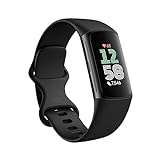
- Fitbit Charge 6 tracks key metrics from calories and Active Zone Minutes to Daily Readiness and sleep; move more with 40+ exercise modes, built-in GPS, all-day activity tracking, 24/7 heart rate, automatic exercising tracking, and more[1]
- See your heart rate in real time: Just link your Charge 6 to compatible exercise machines, like treadmills, ellipticals, and more[2]; and stay connected with YouTube Music controls[3]
- Tune into your body: Track your response to stress with a stress management score; learn about the quality of your sleep with a personalized nightly Sleep Score; and wake up more naturally with the Smart Wake alarm
- Run your routine with Google essentials: Find your way seamlessly during runs or rides with turn-by-turn directions from Google Maps on Fitbit Charge 6; and when you need a snack break on the go, just tap to pay with Google Wallet[1,4]
- Unlock more with Google Health Premium: With a premium membership, get personalized coaching that’s built with Gemini and adapts to your life[7]; get a 3-month trial at no cost to you[5] (Google Health Premium subscription sold separately)
How Fitbit heart-rate zones work
Fitbit uses different zone calculations across devices. Google says supported newer devices use heart-rate reserve (HRR), while other devices use percentages of maximum heart rate. This can make zone boundaries differ between devices for the same person. The label “Fat burn” is a zone name, not a promise that the zone is best for losing body fat.
For HRR-based zones, the calculation is:
- Estimate maximum heart rate: 220 minus age.
- Calculate heart-rate reserve: maximum heart rate minus resting heart rate.
- Calculate a target: zone percentage multiplied by heart-rate reserve, then add resting heart rate.
Google’s example is a 45-year-old with a resting heart rate of 74 bpm: estimated maximum heart rate is 175 bpm and HRR is 101 bpm. The example’s moderate zone is 114–134 bpm, vigorous is 135–159 bpm, and peak is 160 bpm or higher.
| Zone label | HRR method on supported devices | Maximum-heart-rate method on other devices |
|---|---|---|
| Light / Below | Below 40% HRR | Below 50% maximum heart rate |
| Moderate / Fat burn | 40%–59% HRR | 50%–69% maximum heart rate |
| Vigorous / Cardio | 60%–84% HRR | 70%–84% maximum heart rate |
| Peak | 85% HRR or higher | Above 85% maximum heart rate |
These labels and thresholds are from Google Health’s zone guidance. Use perceived effort as well as the display: moderate activity makes you breathe harder while still allowing conversation, while vigorous activity makes speaking more than a few words difficult. The CDC’s activity guidance explains this talk test.
Zones can look wrong if your age or resting heart rate is inaccurate, if the device uses a different algorithm than the chart you are comparing it with, or if the reading itself is poor. The default maximum-heart-rate estimate is based on 220 minus age and may not match an individual’s actual maximum. Current help documents the calculations, but app labels and options can vary. If your app exposes a custom maximum-heart-rate setting, changing it recalculates zones; do not assume you can independently set every zone boundary. Google Health Community guidance describes the setting, which may vary after the app redesign.
Quick wins for a faster PC:
Scan for outdated or missing drivers - takes under a minuteDriver Scan →Clear out junk files and repair common Windows errorsFree Scan →Rank #3

- Google Fitbit Air is the unbelievably comfortable, exceptionally smart way to transform your health[1]; and Google Health brings together effortless tracking and adaptive coaching to help make the most of your everyday[2]
- Unlock more with Google Health Premium: With a premium membership, get personalized coaching that’s built with Gemini and adapts to your life[2]; get a 3-month trial at no cost to you[5] (Google Health Premium subscription sold separately)
- Comfortable fit - One Size Tracker (130-210 mm): The lightweight, micro-adjustable fit sits comfortably and quietly, so you can wear Google Fitbit Air through work, play, and sleep; advanced sensors and new algorithms power more accurate, precise health tracking, 24/7[1]
- Designed for every occasion: With no screen to distract you or disrupt your style, your tracker moves seamlessly from bracelet to workout band to sleep band, and you can change looks in seconds – just press the pebble in, click, and go
- Long battery life: Google Fitbit Air’s battery lasts up to a week, and fast charging gets you one day of battery life in just five minutes[6,7]
Active Zone Minutes and other heart-rate features
Active Zone Minutes (AZM) are an activity tally, not another name for zones or calories. Fitbit awards one AZM for each minute in the moderate/fat-burn zone and two for each minute in the vigorous/cardio or peak zone. The starting weekly goal is 150 AZM. For example, 10 moderate minutes plus 10 vigorous minutes yield 30 AZM. Fitbit says it does not track heart rate during swim workouts and instead credits one AZM per swimming minute. Google’s Active Zone Minutes guidance gives the rules.
Resting heart rate is an estimate gathered while you are still and well-rested. Stress, illness, fever, alcohol, caffeine, medication, temperature, and training can affect it, so compare your own pattern over time rather than treating one change as a diagnosis. Fitbit’s HRV uses RMSSD; its latest measurement comes from the longest sleep period in the previous 24 hours, with sleep periods longer than three hours considered. HRV varies substantially between people and is best compared with your own baseline. Google’s heart-rate and HRV information describes these metrics.
High- and low-heart-rate notifications are available only on certain listed devices, including Google Fitbit Air, Pixel Watch series, Charge 6, Versa 4, Sense 2, Inspire 3, Charge 5, Versa 3, and Sense. Google says the device must detect the threshold while you appear inactive for at least 10 minutes; thresholds are based on age and typical resting heart rate, and can be customized. Availability and setup can vary. These notifications and Irregular Rhythm Notifications are screening features, not real-time emergency monitoring or diagnoses. Check Google’s current device and feature guidance before relying on a feature.
How to improve Fitbit heart-rate readings
- Wear the device on top of your wrist with the sensor in continuous contact with skin.
- At rest, position it about one finger-width above the wrist bone. During exercise, wear it slightly higher and a little tighter, without restricting circulation.
- Make sure it cannot slide, rotate, or lift off your skin; remove bracelets or other objects that interfere with sensor contact.
- In cold weather, warm your wrist before judging an exercise reading. Sweat, water, or dirt and wrist flexion can also affect contact or signal quality.
- If a reading freezes or spikes, relax and hold your wrist still for up to about 10 seconds while the device reacquires the signal.
Google’s advice includes model-specific fit guidance; for Fitbit Air, it recommends a snug fit that does not slide or rotate. Consult the instructions for your device rather than assuming every model fits identically. Google’s fit guidance and Fitbit Air instructions provide details. Evidence about skin tone and optical accuracy is mixed and limited: a systematic review did not find a statistically significant difference in the available studies, while other research identifies skin characteristics as a possible error source. Avoid treating skin tone alone as a guaranteed cause of bad readings. The systematic review explains the evidence limits.
Recommended Free Tools
Rank #4
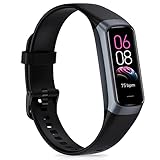
- 【All-day Health Monitor】The fitness tracker watch will automatically track your real-time heart rate, blood pressure and blood oxygen throughout the day to help you better understand your health. Equipped with a high-performance chipset, the fitness tracker automatically analyzes your overall sleep quality (deep/light/wake time) at night and gives you a nightly sleep score in the app to help you adjust your lifestyle and make you healthier.
- 【Smart Notification Remider】 With Bluetooth connection to your phone, it can support incoming calls/text alerts/APP message notifications (WhatsApp/Facebook/Instagram etc.), you will never miss your important messages. With the fitness watch, you can also perform sedentary reminder, water reminder, alarm clock, stopwatch, remote control photo, find devices, etc. to make your life healthier and smarter.
- 【25 Sports Modes】 Fitness tracker supports 25 professional sports modes, you can choose any number of sports modes as your exclusive sports modes in the app, such as walking, running, dancing, yoga, etc. and track your steps, heart rate, distance and calories to help you stay motivated, accomplish your sports goals, record your sports data, and make your sports more scientific.
- 【Long Battery Life】The fitness watch uses magnetic fast charging to provide a better battery life experience. It takes 1-2 hours to fully charge and can be used for up to 7 days of regular use and 15 days of standby. Compatible mobile phone system: android5.0 (inclusive) and IOS9.0 (inclusive) or above.
- 【1.1" AMOLED Touch Color Screen】AMOLED HD touch color screen is designed with clear and bright display, providing you with high quality touch and visual experience. This smartwatch includes a large number of original dials and supports custom dials.
When to rely on another tool or seek medical advice
A Fitbit is not a medical monitor. Do not use it alone to diagnose an arrhythmia, adjust medication, decide whether symptoms are dangerous, or precisely control high-intensity training. A chest strap may be preferable when a training plan depends on responsive heart-rate data during intervals, but a strap is not a substitute for clinical assessment. Google’s support guidance also warns that accuracy depends on physiology, placement, and activity, and notes that activities involving wrist bending can interfere.
If a reading is unexpected, check fit and context, pause and let the signal settle, and compare with your usual trend. Persistent unusual readings—especially alongside symptoms—are a reason to contact a healthcare professional rather than self-diagnose from the app.
FAQ
Is Fitbit heart rate accurate?
It can be useful for resting trends and many steady activities, but accuracy varies by model, fit, person, and activity. Wrist-based readings are more vulnerable during rapid changes and irregular or high-motion exercise.
Why does my Fitbit show a different zone than an online heart-rate chart?
Supported devices may calculate zones using heart-rate reserve, while other devices use percentages of maximum heart rate. Age, resting heart rate, and the device’s settings also affect the boundaries.
Best Value

- Inspire 3 is the tracker that helps you find your energy, do what you love and feel your best – all you have to do is wear it;
- Compatible with Apple iOS 16.4 or higher and Android OS 11.0 or higher
- Move more: Stay motivated with a Daily Readiness Score, Active Zone Minutes, all-day activity tracking and 24/7 heart rate, 40+ exercise modes, automatic exercise tracking, and reminders to move
- Stress less: Keep an eye on your well-being with a daily Stress Management Score, mindfulness sessions, relax breathing sessions, irregular heart rhythm notifications, SpO2, menstrual health tracking, resting heart rate, and more[1,2]
- Sleep better: Automatic sleep tracking, a daily detailed Sleep Score, smart wake vibrating alarm, and sleep mode help you improve your sleep quality[3]
Does the Fitbit Fat burn zone mean I will lose more fat?
No. “Fat burn” is a zone label, not a guarantee about fat loss or a recommendation that this is the only useful intensity. Overall activity and sustainable habits matter more than chasing one label.
Why is my Fitbit heart rate wrong during weightlifting or cycling?
Gripping, wrist flexion, pressure, or a bent wrist can disrupt the optical signal. Secure placement may help, but the reading can still be less dependable than during steady walking or running.
Can Fitbit detect an irregular heartbeat?
Some supported devices and regions offer Irregular Rhythm Notifications that screen for patterns that may be consistent with atrial fibrillation. The feature is not continuous real-time monitoring and cannot diagnose a condition; consult a clinician about concerns or symptoms.
Should I trust one unusually high or low reading?
First check fit and wait for the signal to settle; then consider your activity and compare with your usual pattern. A persistent unusual reading or one accompanied by symptoms should be discussed with a healthcare professional.
Quick Recap
Product prices and availability are accurate as of the date/time indicated and are subject to change. Any price and availability information displayed on Amazon at the time of purchase will apply.