Recommended Free Tools
When broadcast cameras panned across the players’ wrists at the Australian Open, something was conspicuously absent. Whoop bands, once a quiet but visible fixture on tour during training blocks and warm-ups, had effectively vanished from match play, prompting questions from athletes, fans, and the sports-tech industry alike.
The absence wasn’t a commercial snub or a last-minute sponsorship fallout. It was the result of a regulatory intervention that cut to the heart of how real-time biometric data is handled in elite sport, and whether wearable platforms like Whoop can coexist with strict rules designed to protect competitive integrity.
Understanding why Whoop was sidelined at Melbourne Park requires unpacking how tennis governs in-play technology, what distinguishes passive wearables from connected performance tools, and why tournament officials ultimately drew a hard line.
Real-time data crossed a regulatory line
At the core of the issue was Whoop’s ability to transmit physiological data in real time. Heart rate, strain, and recovery metrics are continuously captured by the sensor and synced via Bluetooth to a paired device, typically a smartphone or tablet, where coaches and support staff can monitor an athlete’s condition live.
#1 Best Overall

- What You Get - A 12-month membership, WHOOP 5.0 device, a SuperKnit band, and a waterproof* Wireless PowerPack. Choose from a range of band and accessory combinations, and add a waterproof Wireless PowerPack for on-the-go charging.
- HSA/FSA Eligible - All 12-month WHOOP memberships and battery packs qualify for HSA/FSA reimbursement.
- Screenless, Distraction-Free - No screen, no buzzing notifications. WHOOP focuses entirely on your health and performance, with up to 14+ day battery life so you can wear it around the clock.
- Healthspan with Pace of Aging - Understand how your daily habits shape long-term health. Healthspan measures your WHOOP Age and Pace of Aging so you can take science-backed action to slow biological aging and extend your prime years.
- 24/7 Health Insights - WHOOP monitors your heart rate every second of every day, delivering personalized Sleep, Strain, Recovery, VO2 max, Menstrual Cycle, and Heart Rate insights along with a Real-time Stress Monitor that pinpoints your stressors and shows how your body responds in the moment, so you can make better decisions about training, rest, and daily performance.
Under Grand Slam rules, players are prohibited from receiving any form of coaching or performance feedback during matches. While those rules were originally written with verbal instruction in mind, tournament officials determined that live biometric dashboards effectively function as coaching aids, offering actionable insights mid-match.
Unlike a traditional watch that displays limited information directly to the athlete, Whoop’s value proposition centers on cloud-based analytics. That distinction made it difficult to argue that the device was merely passive when worn during competition.
Why other wearables weren’t affected in the same way
The decision raised immediate questions about inconsistency, especially given the presence of other wearables in tennis training environments. The difference lies in data accessibility and transmission.
Most GPS watches or basic heart-rate monitors used by players are either disabled during matches or restricted to on-device display without external access. Whoop’s system, by contrast, is designed for continuous off-body data consumption, which regulators viewed as incompatible with match conditions, regardless of whether coaches were actively using the information.
It wasn’t the sensor itself that triggered concern, but the ecosystem around it: wireless syncing, real-time dashboards, and the potential for rapid decision-making based on physiological stress signals.
A late clarification, not a sudden crackdown
Importantly, the Australian Open’s stance did not emerge overnight. Tennis Australia clarified that existing rules already prohibited connected performance technology during matches, and that enforcement was being tightened as wearables became more sophisticated.
Players who had worn Whoop in prior tournaments were asked to remove the bands for match play, even if they continued to use them during training and recovery sessions. The timing made the absence more visible, but the reasoning reflected a broader recalibration rather than a single-brand ban.
From the tournament’s perspective, allowing one platform to stream live biometric data risked setting a precedent that would be difficult to control as wearables expand into blood oxygen, hydration, and neuromuscular fatigue tracking.
Immediate impact on athletes and partners
For athletes accustomed to longitudinal data continuity, the restriction was disruptive. Whoop’s strap is designed for 24/7 wear, with lightweight materials, high comfort, and multi-day battery life that encourage uninterrupted tracking. Removing it during matches creates gaps in strain and recovery models, slightly reducing the accuracy of long-term insights.
For Whoop, the optics were equally challenging. Being absent from one of tennis’s most visible stages risked signaling regulatory friction at a time when the company has been pushing deeper into elite sport partnerships.
That tension set the stage for Whoop’s next move: outlining how it intends to adapt its platform to meet competition rules without abandoning its core data-driven philosophy, a strategy with implications well beyond tennis.
The Rulebook Behind the Decision: Tennis Australia, ITF Regulations, and In-Competition Wearables
To understand why Whoop was sidelined at the Australian Open, you have to follow the regulatory chain upward. The decision wasn’t made in isolation by a sponsor-shy tournament director, but flowed from how Tennis Australia applies the International Tennis Federation’s in-competition technology rules.
Outdated Drivers Are Slowing You Down
One free scan finds every outdated or missing driver and matches the right update for your exact hardware.Free scan · exact hardware matchWindows Errors? Fix Them Before They Spread
Repair common Windows errors and clear accumulated junk for a smoother, more stable PC - no reinstall needed.Free scan · no reinstallAt Grand Slams, Tennis Australia operates as the event organizer, but it enforces a rulebook shaped by the ITF, the Grand Slam Committee, and long-standing anti-coaching and fair play provisions. Wearables sit at the intersection of all three.
The ITF’s core principle: no real-time performance assistance
The ITF Rules of Tennis do not name specific brands or devices, but they are explicit about intent. Players may not receive coaching or any form of assistance during a match, whether verbal, visual, or electronic.
That language predates modern wearables, yet it has been repeatedly interpreted to include electronic devices that collect, transmit, or display performance data in real time. The concern is not passive data capture, but actionable insight during points, games, or changeovers.
Whoop’s platform, by design, blurs that line. The strap itself is lightweight, screenless, and comfortable enough for elite competition, but it continuously syncs to nearby devices, updating strain scores, heart rate trends, and physiological stress markers that can be interpreted instantly.
What’s actually slowing this PC down?
Pick the symptom - the matching free tool is one click away.
Tennis Australia’s enforcement lens: connectivity, not comfort
From Tennis Australia’s perspective, the issue was never whether the Whoop band was physically disruptive. At roughly the size of a slim fabric bracelet, with soft materials and no hard edges, it posed no safety risk and was arguably less intrusive than traditional chest-strap heart rate monitors.
The problem was connectivity. Any wearable capable of wireless data transmission during match play falls into a high-risk category, even if the athlete claims they are not actively checking the data.
Officials are tasked with enforcing rules based on capability, not intent. If a device can stream live biometrics to a coach, analyst, or cloud dashboard, it introduces an enforcement burden that tennis has historically avoided.
Why training wearables are treated differently from match-day tech
This distinction explains why players were still permitted to wear Whoop during warm-ups, practice sessions, and recovery periods on-site. Outside official match play, data collection is largely unregulated, and teams routinely use GPS vests, heart rate straps, and force-measurement tools.
Recommended Free Tools
Once a match begins, however, the regulatory threshold changes. The same sensor that is acceptable on a practice court becomes prohibited once scoring starts, because the context shifts from performance development to competitive integrity.
This is also why Hawk-Eye, line-calling systems, and broadcast analytics are allowed. Those systems are controlled by the tournament, not the athlete, and their data is not selectively accessible to one competitor.
Coaching rules quietly shape wearable policy
The wearable debate cannot be separated from tennis’s evolving stance on coaching. Although limited on-court coaching has been legalized in some tours, the rules still restrict electronic communication and data-driven decision-making during play.
Live physiological data, even when viewed only by the athlete, can function as a form of self-coaching. Knowing when heart rate spikes, recovery lags, or strain thresholds are exceeded could influence pacing, shot selection, or between-point routines.
Crashes, No Sound, or Screen Glitches?
Random freezes, missing sound and display glitches usually trace back to one bad driver. Find and replace yours safely.Free scan · under a minutePC Slower Than It Used to Be?
A free scan shows the junk files, broken settings and background clutter dragging Windows down - then fixes them in one click.Free scan · Windows 10 & 11Tennis Australia has been wary of opening that door, particularly at a Grand Slam where enforcement consistency across hundreds of matches is critical.
The gray zone: passive recording versus active insight
What makes Whoop’s case particularly instructive is that it highlights a regulatory gray zone the sport has not fully resolved. A device that records data locally for later analysis poses far fewer concerns than one that updates dashboards in real time.
Current rules are not granular enough to differentiate between those modes. As a result, tournament officials tend to default to the strictest interpretation: if a device is capable of live transmission, it is treated as live assistance.
This conservative stance protects competitive integrity, but it also lags behind how modern wearables are actually used by elite athletes, where post-match analysis and long-term trend modeling matter far more than in-the-moment alerts.
Do these 3 things before closing this tab:
1Clear out junk files and repair common Windows errors2Fix the driver behind crashes, sound loss and screen glitches3Repair Windows errors before they cause bigger problemsWhy enforcement tightened now, not earlier
Whoop’s absence felt abrupt to fans because athletes had previously worn similar devices with little scrutiny. What changed was not the rulebook, but the sophistication and visibility of wearable ecosystems.
Multi-day battery life, automatic syncing, cloud-based analytics, and team dashboards have transformed wearables from personal logs into networked performance systems. Tennis Australia’s clarification reflected a recognition that older, informal enforcement was no longer sustainable.
As wearables edge toward hydration sensing, glucose monitoring, and neuromuscular fatigue estimation, regulators are drawing firmer lines earlier rather than reacting after competitive disputes arise.
Setting precedent beyond the Australian Open
Because Grand Slams often set de facto standards for the rest of the sport, Tennis Australia’s interpretation carries weight beyond Melbourne. Other tournaments now have a clearer template for how to treat connected wearables during match play.
What’s actually slowing this PC down?
Pick the symptom - the matching free tool is one click away.
Rank #2
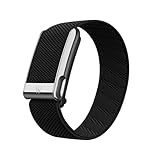
- What You Get - A 12-month membership, WHOOP MG device, a SuperKnit Luxe band, and a waterproof* Wireless PowerPack. Choose from a range of band and accessory combinations, and add a waterproof Wireless PowerPack for on-the-go charging.
- HSA/FSA Eligible - All 12-month WHOOP memberships and battery packs qualify for HSA/FSA reimbursement.
- Screenless, Distraction-Free - No screen, no buzzing notifications. WHOOP focuses entirely on your health and performance, with up to 14+ day battery life so you can wear it around the clock.
- Heart Screener with On-Demand ECG - Take an ECG reading from your wrist in seconds to check for signs of atrial fibrillation. Heart Screener gives you a medical-grade view of your heart rhythm whenever you need it.
- 24/7 Health Insights - WHOOP monitors your heart rate every second of every day, delivering personalized Sleep, Strain, Recovery, VO2 max, Menstrual Cycle, and Heart Rate insights along with a Real-time Stress Monitor that pinpoints your stressors and shows how your body responds in the moment, so you can make better decisions about training, rest, and daily performance.
For athletes and sponsors, the message is equally clear: comfort, battery life, and passive form factor are no longer enough to guarantee acceptance. How data moves, who can see it, and when it becomes accessible matter just as much as what the sensor measures.
This regulatory backdrop explains not only why Whoop was sidelined, but why the company’s response has focused less on disputing the decision and more on redesigning how its data is handled in competition settings.
Why Whoop Triggered Red Flags: Live Data, Coaching Concerns, and Competitive Integrity
Against that tightening regulatory backdrop, Whoop sat at the uncomfortable intersection of what wearables can technically do and how sports rules are written to prevent even the perception of unfair advantage.
Unlike a traditional watch or heart-rate strap that passively records data for later review, Whoop is designed as a continuous, connected performance system. That distinction—subtle to consumers—became central to why officials viewed it differently once enforcement sharpened.
The Tool Desk
Outbyte PC Repair FREEClear out junk files and repair common Windows errorsFree Scan →Outbyte Driver Updater FREEFix the driver behind crashes, sound loss and screen glitchesFind Drivers →Live physiological data, even without a screen
Whoop’s core proposition is 24/7 physiological monitoring, capturing heart rate, heart rate variability, respiratory rate, skin temperature trends, and strain metrics across the entire day. The strap itself has no display, which initially led some athletes to assume it would be treated as inert during match play.
From a governance standpoint, however, the absence of a screen is not decisive. Whoop transmits data via Bluetooth to nearby devices and can sync automatically to the cloud, where it is immediately visible on smartphones, tablets, and team dashboards.
Tournament officials are less concerned with whether an athlete can see the data mid-point than with whether someone else can. If a coach, physio, or analyst has real-time access to fatigue or stress signals, that information could theoretically inform tactical advice—even if delivered later in the match under the guise of permitted communication.
The coaching loophole regulators want closed
Tennis has long prohibited coaching during match play, with only limited exceptions at certain events. Wearables complicate that rule because physiological data can act as proxy coaching, offering insights into an athlete’s endurance, recovery state, or mounting fatigue.
Quick wins for a faster PC:
Scan for outdated or missing drivers - takes under a minuteDriver Scan →Repair Windows errors before they cause bigger problemsFix Now →Fix the driver behind crashes, sound loss and screen glitchesFind Drivers →A Whoop strain spike during a long rally, or a sustained elevation in heart rate between games, could influence decisions about tempo, shot selection, or when to extend rallies. Even if that data is interpreted off-court, officials worry it undermines the spirit of solo competition.
This concern is amplified by Whoop’s software ecosystem, which is built for teams as much as individuals. Its analytics platform allows aggregated views, trend comparisons, and alerting—features prized in training environments but problematic in live competition where isolation is part of the challenge.
Always-on connectivity as the real issue
Battery life, often a selling point for consumers, became a regulatory liability here. Whoop’s multi-day battery and hot-swap charging system mean the device is never truly “off,” and its data pipeline is continuous by design.
From an enforcement perspective, that creates ambiguity. Officials cannot easily verify when syncing occurs, whether background transmission is paused, or who has access to incoming data at any given moment.
Free tools Windows power users keep installed
One-click scans. No signup required.
Faced with that uncertainty, regulators defaulted to the strictest interpretation: if live transmission is technically possible, it is treated as live assistance. This is why Whoop, despite being lightweight, comfortable, and unobtrusive on-wrist or on-arm, was flagged more aggressively than simpler sensors.
Competitive integrity outweighs marginal performance gains
Importantly, there is little evidence that Whoop provides a decisive in-match advantage on its own. Most of its insights—recovery scores, sleep quality, long-term strain trends—are far more valuable over weeks than within a single set.
But sports governance is not solely about measurable gains. It is about maintaining trust that outcomes are determined by skill, preparation, and resilience, not by who has the most sophisticated data pipeline operating behind the scenes.
Allowing one class of connected wearables while banning another would invite disputes, sponsor pressure, and inconsistent enforcement. By sidelining Whoop, Tennis Australia signaled that clarity and consistency now take precedence over accommodating rapidly evolving sports technology.
Why Whoop became the test case
Whoop’s prominence among elite athletes made it an easy focal point. Its brand positioning, visible straps, and association with high-performance analytics drew attention in a way that less conspicuous sensors did not.
In many respects, Whoop did not break new rules so much as expose their limitations. Its removal highlighted how governing bodies are increasingly regulating data flows rather than hardware form factors, a shift that has implications far beyond one tournament.
This is the context in which Whoop’s response strategy must be understood—not as a protest against outdated rules, but as an attempt to redesign how, when, and for whom physiological data exists during competition.
How Other Wearables Slip Through: Why Some Devices Are Allowed While Whoop Isn’t
Once Whoop was sidelined, a natural question followed from players and fans alike: if connected wearables are such a concern, why are some athletes still allowed to wear sensors during matches?
The answer sits in a nuanced mix of technical capability, data directionality, and regulatory comfort. Tennis authorities are not banning physiology tracking outright; they are drawing a line around what kind of data can exist, and when.
Passive sensors versus connected platforms
Many wearables that remain permitted at the Australian Open are effectively passive during competition. Chest-strap heart rate monitors, patch-based biosensors, and some tape-integrated trackers collect raw physiological data locally without transmitting it in real time.
Crucially, these devices do not provide feedback to the athlete mid-match. There is no screen, no vibration, no app interaction, and no opportunity to adjust tactics based on incoming metrics while play is ongoing.
From a governance perspective, this makes them far easier to regulate. Data that is only reviewed after the match does not raise the same concerns about live assistance or covert coaching.
Transmission capability is the real fault line
What separates Whoop from simpler sensors is not the metric set, but the communications stack sitting behind it. Whoop is designed as a continuously connected system, with Bluetooth syncing, cloud-based processing, and real-time readiness calculations baked into its software model.
Even if those features are not actively used during a match, their availability creates enforcement ambiguity. Officials cannot easily verify whether syncing is paused, whether background transmission is occurring, or whether data is being accessed courtside by support staff.
In contrast, devices that require physical docking, manual downloads, or post-event syncing offer a clearer compliance story. Their limitations are structural, not dependent on user behavior or software settings.
Why some smartwatches still appear on court
The presence of occasional smartwatches during warm-ups or non-competitive sessions adds to the confusion. In most cases, these are worn under strict conditions: airplane mode enabled, no third-party apps running, and removal once official match play begins.
Smartwatches also differ in how their data is used. While they may track heart rate or movement, they are not typically integrated into a centralized performance analytics pipeline in the way Whoop is for elite athletes.
That distinction matters. A consumer smartwatch worn for basic logging is treated differently from a dedicated performance platform designed to feed coaches, analysts, and sports scientists in near real time.
Visibility and intent shape enforcement
Another factor is how clearly a device signals its purpose. A thin chest strap or medical-style patch reads as a sensor. Whoop’s fabric strap, worn on the wrist or upper arm, is visibly associated with performance optimization and recovery scoring.
This does not mean visibility alone triggers bans, but it does influence scrutiny. When a device is strongly identified with elite performance analytics, regulators are more likely to question not just what it records, but how that data might be used.
Rank #3
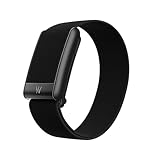
- What You Get - A 12-month membership, WHOOP 5.0 device, a CoreKnit performance band, and a Basic Charger. Choose from a range of band and accessory combinations, and add a waterproof Wireless PowerPack for on-the-go charging.
- HSA/FSA Eligible - All 12-month WHOOP memberships and battery packs qualify for HSA/FSA reimbursement.
- Screenless, Distraction-Free - No screen, no buzzing notifications. WHOOP focuses entirely on your health and performance, with up to 14+ day battery life on WHOOP 5.0 so you can wear it around the clock.
- 24/7 Health Insights - WHOOP monitors your heart rate every second of every day, delivering personalized Sleep, Strain, Recovery, VO2 max, Menstrual Cycle, and Heart Rate insights along with a Real-time Stress Monitor that pinpoints your stressors and shows how your body responds in the moment, so you can make better decisions about training, rest, and daily performance.
- Understand the Impact of Your Habits - Capture 300+ daily behaviors like training, diet, consistent wake time, stress levels, and more with the WHOOP Journal to understand how habits help or hurt your Recovery.
In a sport already sensitive to coaching violations and off-court signaling, perceived intent can matter almost as much as technical reality.
Regulators prefer hard limits over conditional trust
Tennis authorities have shown a clear preference for rules that are simple to enforce. Allowing devices only if certain settings are disabled, or only if athletes promise not to access data, creates enforcement risk and potential disputes.
By contrast, allowing devices that physically cannot transmit or provide feedback during play removes the need for constant oversight. It is a blunt instrument, but one that scales across hundreds of matches without individualized monitoring.
Whoop fell on the wrong side of that line. Its sophistication, which is precisely why athletes value it, made it incompatible with a regulatory framework built around minimizing gray areas rather than accommodating advanced technology.
A window into how sports view data, not hardware
The uneven treatment of wearables at the Australian Open underscores a broader shift in sports governance. Rules are no longer focused on what athletes wear, but on where data flows, who can see it, and when it becomes actionable.
In that sense, Whoop is less an outlier than an early warning. As more wearables move toward continuous connectivity, cloud processing, and AI-driven insights, the gap between permitted sensors and banned platforms may widen unless regulations evolve in parallel.
For now, simpler devices slip through not because they are harmless, but because their constraints align more comfortably with a system that prioritizes competitive integrity over technological nuance.
Impact on Players: Performance Tracking, Recovery Insights, and Athlete Autonomy
From the athlete’s perspective, the Australian Open decision is less about brand preference and more about losing a familiar layer of physiological context during one of the most demanding tournaments on the calendar. For players already managing extreme heat, compressed match schedules, and transcontinental travel, the absence of continuous recovery data alters how they interpret readiness day to day.
Quick wins for a faster PC:
Fix the driver behind crashes, sound loss and screen glitchesFind Drivers →Repair Windows errors before they cause bigger problemsFix Now →Scan for outdated or missing drivers - takes under a minuteDriver Scan →The ban does not stop players from collecting data altogether, but it changes the timing, depth, and immediacy of insights in ways that ripple through preparation and recovery routines.
What players lose when continuous recovery data disappears
Whoop’s core value to elite athletes lies in longitudinal tracking rather than in-match feedback. Metrics like heart rate variability trends, overnight resting heart rate, respiratory rate, and sleep consistency are used to flag accumulating fatigue before it manifests as performance drop or injury risk.
During a two-week Grand Slam, those signals help players and support staff decide when to prioritize sleep over media, when to modify warm-ups, or when to push recovery modalities harder. Without that rolling baseline, decisions rely more heavily on subjective feel, morning heart rate checks, or intermittent testing, which can lag behind physiological stress.
The impact is not catastrophic, but it removes a layer of early-warning intelligence at a time when margins are thin and recovery windows are short.
What’s actually slowing this PC down?
Pick the symptom - the matching free tool is one click away.
Why simpler wearables are not a like-for-like substitute
Players are still allowed to wear basic watches or fitness bands that lack live connectivity or advanced analytics. These devices may record heart rate or steps, but they typically store data locally and offer limited recovery modeling once synced post-match.
Battery life, sensor quality, and software depth matter here. A traditional sports watch may last days on a charge and feel unobtrusive on wrist, but its recovery insights are often generalized and less responsive to acute stress. Whoop’s fabric strap, minimal hardware profile, and multi-day battery design are built for continuous wear, including sleep, which is central to its recovery scoring.
In practical terms, athletes are forced to choose between compliance and continuity, rather than simply switching to an equivalent tool.
Recovery data as a form of athlete autonomy
One under-discussed dimension of the ban is control. Wearables like Whoop allow athletes to privately monitor their own physiological state without relying entirely on coaches, tournament staff, or mandated testing protocols.
PC Slower Than It Used to Be?
A free scan shows the junk files, broken settings and background clutter dragging Windows down - then fixes them in one click.Free scan · Windows 10 & 11Outdated Drivers Are Slowing You Down
One free scan finds every outdated or missing driver and matches the right update for your exact hardware.Free scan · exact hardware matchThat autonomy matters, particularly for lower-ranked players who may not travel with full-time performance teams. Access to personal recovery data can help them self-regulate workloads, manage niggles, and make informed decisions about practice intensity between matches.
Removing that tool during competition shifts informational power away from the athlete and toward a standardized regulatory framework, even if the intent is competitive fairness rather than oversight.
The mental cost of disrupted routines
Elite performance is built on repeatability. Athletes structure sleep, nutrition, and recovery around feedback loops they trust, and sudden changes to those loops introduce friction, even if subtle.
For long-term Whoop users, the absence of recovery scores during competition can create uncertainty rather than freedom. Players know the data will resume once the tournament ends, but the gap itself becomes a blind spot in what is otherwise a continuous physiological narrative.
In a sport where confidence and rhythm matter, that disruption is not trivial, even if it does not show up on a stat sheet.
A preview of future athlete-regulator tension
The Australian Open ruling highlights a growing disconnect between how athletes use data and how regulators perceive it. From a player’s standpoint, recovery metrics are retrospective and preventive, not tactical or communicative.
From a governance standpoint, the same data stream represents a potential vector for real-time influence, regardless of how it is actually used. Until rules evolve to distinguish more clearly between data collection and data intervention, athletes will continue to be caught between personal optimization and institutional caution.
Whoop’s sidelining is therefore not just about one device, but about how much agency athletes will be allowed to retain over their own bodies in an era of always-on measurement.
Do these 3 things before closing this tab:
1Fix the driver behind crashes, sound loss and screen glitches2Repair Windows errors before they cause bigger problems3Scan for outdated or missing drivers - takes under a minuteWhoop’s Official Response: The Company’s Rationale and Public Position on the Ban
In the days following confirmation that Whoop devices would be barred from use during Australian Open matches, the company moved quickly to frame the decision as a regulatory mismatch rather than a competitive violation.
Rather than challenging Tennis Australia directly, Whoop’s public position has emphasized cooperation, technical clarification, and a longer-term path toward compliance within elite sport’s evolving ruleset.
Positioning Whoop as a passive data collector
Central to Whoop’s response is a clear distinction between data collection and real-time intervention. The company has reiterated that its strap does not deliver actionable alerts, prompts, or coaching feedback during activity.
Unlike smartwatches or in-ear devices, Whoop has no screen, no haptics, and no audible cues. During a match, it passively records physiological signals such as heart rate variability, resting heart rate trends, and strain load, with insights only surfaced post-session.
Free tools Windows power users keep installed
One-click scans. No signup required.
From Whoop’s perspective, that makes it fundamentally different from wearables that could be used to relay tactical information or influence decision-making mid-play.
Why the Australian Open ruling still caught Whoop
Despite that design philosophy, Whoop acknowledged that tournament officials were applying a broad interpretation of “electronic devices capable of data transmission.”
The strap’s Bluetooth connectivity, required for syncing to a phone after play, places it within the same regulatory bucket as more interactive wearables, even if the functionality during competition is inert.
Whoop has stopped short of calling the ban unfair, but its language suggests frustration with what it sees as an outdated, hardware-focused rule that does not reflect how modern performance wearables actually operate.
Recommended Free Tools
Rank #4

- BUILT FOR HIGH PERFORMANCE – SportFlex is designed with waterproof, sweatproof, and dirtproof silicone. It’s highly durable and designed to withstand your most intense workouts and adventures.
- MADE WITH SOFT-TOUCH SILICONE – SportFlex is ultra-smooth, hygienic, and easy to clean. Small scuffs can be wiped off, or you can deep-clean the band with isopropyl alcohol and a lint-free cloth followed by a water rinse.
- ADJUSTABLE AND BREATHABLE – SportFlex is made with an adjustable closure system to ensure a snug, secure fit—no matter how intense your workout. The band includes ventilation details, making it extra breathable and comfortable.
- 100% WATERPROOF – SportFlex is completely waterproof, making it an essential accessory for everything from swimming laps and surfing to high-sweat, high-intensity workouts.
- COMPATIBILITY – This is not compatible with the WHOOP 4.0
Public emphasis on athlete autonomy and welfare
In its statements, Whoop has leaned heavily into athlete welfare rather than competitive advantage. The company frames recovery and strain data as tools for injury prevention, load management, and long-term health, not match-day optimization.
This aligns with Whoop’s broader brand positioning as a 24/7 health monitor rather than a sports gadget, with battery life measured in days, a lightweight fabric strap designed for continuous wear, and software built around longitudinal trends instead of moment-to-moment metrics.
By stressing continuity of data rather than in-match insight, Whoop is implicitly arguing that removing the device during competition undermines, rather than protects, athlete wellbeing.
The workaround: disabling live connectivity without losing data
Perhaps the most consequential part of Whoop’s response is its outline of a technical workaround designed to satisfy regulators without abandoning elite sport.
The company has indicated it is exploring a competition-specific mode in which Bluetooth transmission would be disabled entirely during matches, effectively turning the strap into an offline data logger.
In this configuration, no data could be accessed, synced, or shared until the device reconnects post-match, addressing concerns about real-time communication while preserving the integrity of continuous physiological tracking.
Why this matters beyond tennis
Whoop’s handling of the Australian Open ban appears calibrated for a broader audience than tennis alone. The company already works with athletes across endurance sports, team sports, and Olympic disciplines, many of which operate under similarly strict device rules.
By proposing software-level compliance rather than hardware bans, Whoop is positioning itself as a cooperative partner to federations that are struggling to regulate increasingly invisible technology.
The Tool Desk
Outbyte Driver Updater FREEScan for outdated or missing drivers - takes under a minuteDriver Scan →Outbyte PC Repair FREEClear out junk files and repair common Windows errorsFree Scan →If accepted, this model could become a template not just for Whoop, but for the wider wearable industry, particularly for screenless trackers and sensor-first devices that prioritize data depth over user interaction.
A careful balance between deference and pressure
Notably, Whoop has avoided legal threats or public confrontation. Its tone suggests deference to governing bodies, while quietly applying pressure through technical solutions and athlete advocacy.
That approach reflects an understanding of sports governance realities: rule changes move slowly, but precedent matters. If one major tournament accepts an offline mode as compliant, others may follow.
For now, Whoop remains sidelined on court in Melbourne. But its response makes clear that the company views this not as a setback, but as an early test case in defining how much personal data athletes are allowed to carry with them into competition.
Whoop’s Workaround Strategy Explained: Delayed Data, Compliance Modes, and Off-Court Use
Against that backdrop, Whoop’s proposed workaround is less about confrontation and more about architectural restraint. Rather than arguing for unrestricted use, the company is effectively offering to narrow its own functionality in competition settings, while preserving the longitudinal data athletes and teams value.
This is a notable shift for a wearable brand whose differentiation is built on continuous insight rather than moment-to-moment feedback.
Delayed data as a regulatory safety valve
At the core of Whoop’s proposal is delayed data access. In a tournament-approved configuration, the strap would continue collecting heart rate variability, heart rate, respiratory rate, and strain metrics, but none of that information would be visible to the athlete, coach, or support staff until after play concludes.
From a governance standpoint, this directly addresses fears of real-time performance optimization or covert signaling. If no one can see the data during a match, it cannot meaningfully influence tactical decisions or pacing strategies.
Technically, this is feasible because Whoop already operates as a screenless device with limited on-device processing. Most interpretation happens in the cloud, meaning the strap can function as a passive sensor until synchronization is allowed.
Competition-specific compliance modes
More interesting is Whoop’s suggestion of a formal competition mode that federations could audit or certify. This would likely include disabled Bluetooth transmission, locked firmware states, and potentially visible indicators confirming that the device is operating offline.
Such a mode would mirror approaches already used in other regulated technologies, from airplane flight modes to anti-cheating configurations in esports hardware. For sports bodies, it creates a clearer compliance framework than ad hoc exemptions or outright bans.
For Whoop, it also creates a scalable solution. A single software pathway could be deployed across tennis, football, cycling, or Olympic sports, rather than renegotiating device legality event by event.
Do these 3 things before closing this tab:
1Repair Windows errors before they cause bigger problems2Scan for outdated or missing drivers - takes under a minute3Clear out junk files and repair common Windows errorsWhy screenless design works in Whoop’s favor
Ironically, the very features that once made Whoop controversial now strengthen its case. With no display, no buttons, and no haptic prompts tied to performance thresholds, the strap is inherently less interactive than a smartwatch or fitness watch.
During play, it behaves more like a medical-grade data recorder than a coaching aid. That distinction matters when regulators are drawing lines between passive monitoring and active assistance.
Comfort also plays a role. The lightweight fabric strap and low-profile sensor housing reduce concerns about safety or distraction, which have historically been part of wearable bans in contact or high-movement sports.
Off-court use remains unaffected
Crucially, Whoop’s workaround does not dilute its value outside competition. Training sessions, recovery days, sleep tracking, and travel monitoring would all function as normal, preserving the data continuity that underpins its subscription model.
The Tool Desk
Outbyte Driver Updater FREEFix the driver behind crashes, sound loss and screen glitchesFind Drivers →Outbyte PC Repair FREERepair Windows errors before they cause bigger problemsFix Now →For elite athletes, this is where Whoop’s insights are most actionable anyway. Load management, injury risk assessment, and long-term recovery trends are typically addressed between matches, not during them.
From a practical standpoint, this keeps Whoop embedded in an athlete’s daily routine, even if match-day usage is restricted or delayed.
Implications for athletes and teams
For players, delayed data access may require an adjustment in expectations rather than behavior. Those accustomed to post-session reports will see little change, while anyone hoping for in-match physiological cues was never supposed to have them under existing rules.
Teams and coaches, meanwhile, gain reassurance that adopting Whoop does not jeopardize regulatory compliance. That lowers the risk of investing in a platform that could suddenly be deemed illegal at major events.
It also reinforces a separation between preparation and performance, a distinction sports authorities are keen to preserve as wearable technology becomes more sophisticated.
A template with broader industry consequences
If governing bodies accept Whoop’s approach, it could set a precedent that extends well beyond this single brand. Other sensor-first wearables, including rings, patches, and next-generation biometric fabrics, may follow similar compliance-by-design strategies.
That would mark a shift in how sports regulate technology, focusing less on banning hardware outright and more on controlling data access and timing. For the wearables industry, it suggests that software governance may become as important as sensor accuracy or battery life.
In that sense, Whoop’s sidelining at the Australian Open may prove less about exclusion, and more about negotiating the rules of engagement for the next era of athlete monitoring.
Free tools Windows power users keep installed
One-click scans. No signup required.
Best Value

- Simple & Screen-Free Design – Easy to use and ultra-lightweight, comfortable for all-day wear without the distraction of a screen
- Powerful Health Monitoring – Accurately tracks heart rate, blood pressure, blood oxygen, HRV, sleep quality, and stress levels to help you better understand your body
- 100+ Sports Modes – Supports a wide range of fitness activities with precise tracking, making it your reliable companion for workouts and daily movement
- Ultra-Long Battery Life – Just 2 hours of charging powers up to 47 days of standby, so you can focus on your goals without constant recharging
- No Subscription Required – Enjoy all features with the free app, fast syncing, and easy Bluetooth connection—no hidden costs
Broader Implications for Sports-Tech: Where Governing Bodies Are Drawing the Line
The Australian Open decision sits within a broader recalibration underway across professional sport. Rather than treating all wearables as inherently suspect, regulators are increasingly distinguishing between passive data capture and active, real-time influence.
This shift matters because modern wearables like Whoop are no longer simple heart-rate straps. They are software-driven analytics platforms whose real power lies in interpretation, timing, and distribution of data rather than the sensor hardware itself.
From hardware bans to data-governance rules
Historically, sports bodies focused on what an athlete was physically wearing during competition. If a device was visible, networked, or perceived to offer a competitive edge, it was often banned outright.
That approach is becoming harder to sustain as sensors shrink, integrate into clothing, or disappear under tape and uniforms. Rings, biometric patches, smart fabrics, and even mouthguards challenge enforcement models built around obvious, removable devices.
The Australian Open’s stance suggests a pivot toward controlling when data can be accessed and by whom, rather than attempting to police every form factor. In that framework, a wrist-worn tracker with days-long battery life and no screen may be acceptable, while a device that surfaces insights mid-match is not.
Integrity, coaching boundaries, and live analytics
At the heart of these decisions is competitive integrity. Tennis, like many individual sports, tightly restricts coaching during play, and real-time physiological feedback risks becoming a proxy for sideline instruction.
Live metrics such as strain, recovery status, or cardiovascular load could influence pacing, shot selection, or tactical decisions in ways that blur the line between athlete autonomy and external guidance. Even if the athlete alone sees the data, regulators worry about downstream communication and enforcement gaps.
By contrast, post-session analytics align more cleanly with existing norms. Reviewing sleep quality, HRV trends, or cumulative load hours after a match fits within established recovery and training workflows, making delayed access a more palatable compromise.
Betting, broadcasting, and data asymmetry
Another layer shaping regulatory caution is the expanding sports betting ecosystem. Real-time biometric data, even if unofficial, raises concerns about data leakage, integrity risks, and asymmetric access for insiders versus the public.
Governing bodies are acutely sensitive to scenarios where physiological stress markers could hint at injury, fatigue, or withdrawal risk before it becomes visible on court. Limiting live data reduces the risk of that information influencing betting markets or media narratives.
This is why software controls matter as much as device design. A wearable with strong encryption, offline-first operation, and delayed syncing can be viewed very differently from one optimized for live dashboards and cloud-connected analytics.
What this means for wearable design and roadmaps
For sports-tech companies, the message is clear: compliance is becoming a product feature. Battery life, comfort, and durability still matter, but so do firmware-level restrictions, configurable data embargoes, and transparent audit trails.
Recommended Free Tools
Whoop’s screenless design, fabric strap comfort, and multi-day battery already align with low-distraction use. Its challenge now is proving that its software experience can adapt dynamically to competition rules without undermining the value athletes expect from continuous tracking.
Other players in the wearable space are watching closely. Device makers that can offer modular data access, competition modes, or federation-specific compliance profiles may find themselves favored partners as leagues seek tighter control without stifling innovation.
A line that will keep moving
The Australian Open case underscores that this is not a settled boundary. As sensors improve and analytics grow more predictive, governing bodies will continue refining where preparation ends and prohibited assistance begins.
What is changing is the tone of the conversation. Instead of blanket rejection, there is growing willingness to negotiate frameworks that preserve fairness while acknowledging that wearable data is now foundational to elite performance management.
What’s actually slowing this PC down?
Pick the symptom - the matching free tool is one click away.
In that environment, sidelining a device does not necessarily signal exclusion. It may simply be the mechanism by which sports authorities define, test, and redraw the line between acceptable monitoring and impermissible advantage.
What This Means for Wearable Users and the Industry: Precedent, Innovation, and the Future of Pro Sport Integration
The Australian Open decision does more than sideline a single brand. It crystallizes how professional sport is beginning to treat wearables not as neutral accessories, but as potential performance infrastructure that must be governed with the same rigor as equipment, coaching, and analytics.
For everyday users, this moment clarifies why elite sport often moves slower than consumer tech. The features that make wearables compelling in daily training—real-time insights, predictive metrics, cloud-based dashboards—are precisely what raise red flags when competitive integrity is at stake.
A new compliance layer for consumer-grade wearables
The most immediate industry takeaway is that compliance is no longer just about hardware safety or data privacy. It now includes how, when, and to whom physiological data is made visible, especially in live competition environments.
For wearable makers, this pushes roadmaps toward competition-aware software modes. Expect more emphasis on delayed syncing, local-only storage, locked-down firmware profiles, and clear separation between training data and in-competition use.
This shift favors companies that treat software governance as a core competency rather than an afterthought. The winners will be those that can demonstrate not just what their devices measure, but how responsibly that information is handled under regulatory scrutiny.
What Whoop’s response signals to the market
Whoop’s outlined plan to work within tournament constraints—rather than challenge the ban outright—signals a strategic pivot that others will likely follow. By emphasizing offline operation, delayed data access, and federation-specific controls, Whoop is positioning itself as adaptable rather than adversarial.
This approach preserves its core value proposition for athletes: continuous, comfortable tracking with long battery life and minimal distraction. The trade-off is that some insights may arrive after play, reinforcing a distinction between performance monitoring and real-time decision support.
Quick wins for a faster PC:
Scan for outdated or missing drivers - takes under a minuteDriver Scan →Repair Windows errors before they cause bigger problemsFix Now →Fix the driver behind crashes, sound loss and screen glitchesFind Drivers →If successful, this strategy could become a template for how consumer wearables integrate into regulated sport without forcing athletes onto bespoke, single-purpose hardware.
Implications for athletes and serious users
For professional athletes, the ruling reinforces that wearable use is conditional, not guaranteed. Device choice may increasingly hinge on whether a platform can be configured to meet competition rules, not just on sensor accuracy or analytics depth.
Serious amateur users should also take note. Features marketed as cutting-edge today may be restricted tomorrow in certain contexts, particularly as predictive metrics around fatigue, injury risk, or readiness become more sophisticated.
The upside is greater transparency. As governing bodies articulate clearer standards, athletes and users alike gain a better understanding of where data helps preparation and where it crosses into prohibited assistance.
A precedent that extends beyond tennis
While tennis provided the test case, the implications stretch across endurance sports, team leagues, and even motorsport. Any environment where live physiological data could influence tactics, substitutions, or betting markets will face similar scrutiny.
This creates an incentive for leagues to collaborate earlier with technology partners. Rather than reactive bans, future integrations may involve pre-approved device profiles, audited data flows, and shared oversight between federations and manufacturers.
In that sense, exclusion becomes less about punishment and more about calibration—setting boundaries that can evolve as technology and norms mature.
The long view: integration, not exclusion
Stepping back, the Australian Open decision suggests a maturing relationship between sport and wearable technology. The question is no longer whether athletes will use wearables, but under what conditions their data can intersect with competition.
Windows Errors? Fix Them Before They Spread
Repair common Windows errors and clear accumulated junk for a smoother, more stable PC - no reinstall needed.Free scan · no reinstallCrashes, No Sound, or Screen Glitches?
Random freezes, missing sound and display glitches usually trace back to one bad driver. Find and replace yours safely.Free scan · under a minuteFor consumers, this ultimately strengthens trust. Devices that pass the test of elite sport governance signal robustness in design, data handling, and long-term platform thinking.
Whoop’s temporary sidelining is not a rejection of wearable insight, but a reminder that innovation now happens within constraints. How well companies navigate those constraints will shape the next decade of pro sport integration—and determine which wearables earn a place both on the wrist and on the world’s biggest stages.
Quick Recap
Product prices and availability are accurate as of the date/time indicated and are subject to change. Any price and availability information displayed on Amazon at the time of purchase will apply.