Brilliant Labs announced a $3 million seed round on October 24, 2023, alongside a new name for its AI app—Noa, formerly arGPT—and an integration with Stability AI for its Monocle wearable. The company said the financing brought its total seed funding to more than $6 million. This is a 2023 funding announcement, not a new 2026 round.
What Brilliant Labs announced
The additional $3 million was a seed round for Brilliant Labs’ open-source augmented-reality hardware and AI software. At the same time, the company rebranded arGPT as Noa and announced that Monocle users could access Stability AI image-generation features through the app. GamesBeat reported the round, product announcements and cumulative funding figure.
The company said the October round was backed by Wayfarer Foundation, Steve Sarowitz, Paylocity’s former founder, and Coho VC. Earlier reported investors included Oculus cofounder Brendan Iribe, Siri cofounder Adam Cheyer, Pebble founder Eric Migicovsky, Nirav Patel, Francisco Tolmasky, Plug and Play Ventures, Moveon Technologies and others. Those earlier backers should not be conflated with investors named for the October round.
GamesBeat described Brilliant Labs as founded in 2019 by former Apple employee Bobak Tavangar with Raj Nakarja and Ben Heald. The company’s open-source positioning was aimed particularly at developers, hackers and experimental use—not simply at selling a conventional consumer gadget.
Quick wins for a faster PC:
Clear out junk files and repair common Windows errorsFree Scan →Fix the driver behind crashes, sound loss and screen glitchesFind Drivers →#1 Best Overall
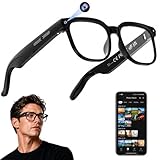
- 【AI Real-Time Translation & ChatGPT Assistant】AI glasses break language barriers instantly with AI real-time translation. The built-in ChatGPT voice assistant helps you communicate, learn, and handle travel or business conversations smoothly—ideal for conferences, overseas trips, and daily use.
- 【4K Ultra HD】 Smart glasses feature 4K resolution for clear, detailed visuals, making them suitable for travel, outdoor activities, everyday moments, and daily use.
- 【Bluetooth Music & Hands-Free Calls 】Smart glasses provide Bluetooth music and crystal-clear hands-free calls with an open-ear design. Stay aware of your surroundings while listening—comfortable for long wear and safer for commuting, cycling, and outdoor use.
- 【IP65 Waterproof & Long Battery Life】 AI glasses are designed for daily wear with IP65 waterproof protection against sweat, rain, and dust. The built-in 290mAh battery provides reliable performance for workdays and travel—no anxiety when you’re on the go.
- 【Smart App Control & Object Recognition】Smart glasses connect to the companion app for easy setup, file management, and feature control. They support AI object recognition to help identify items and improve your daily efficiency—perfect for travel exploration and a smart lifestyle.
What Monocle was—and was not
Monocle was a compact display that clipped onto existing eyewear. It was not a conventional pair of binocular AR glasses: it put a monocular heads-up display in front of one eye. The distinction matters because the device was closer to an experimental wearable display than an immersive headset.
Brilliant Labs’ hardware documentation lists a 640×400 color OLED display, an approximately 20-degree field of view, a 5-megapixel camera, microphone, touch controls, Bluetooth 5.2, a 70mAh rechargeable battery and an FPGA. The FPGA was intended to support graphics, computer-vision and machine-learning experimentation. Monocle used open-source software, supported MicroPython development and connected to a phone over Bluetooth.
That combination made the device interesting to people who wanted to build or modify wearable applications. It did not, by itself, mean that complex AI models ran on the clip-on hardware.
Rank #2

- 【AI Smart Translation Glasses】 - These smart glasses(No Camera) with built-in ChatGPT voice assistant, support real-time translation over 160 languages, simultaneous interpretation, meeting audio recording transcription. Helps you to suit any scenario and effortlessly break language barriers. Note: This model has no camera, all functions run via audio.
- 【Bluetooth Audio & Hands-Free Calling 】 - With Bluetooth 5.4 stable connection and open-ear design, our AI smart glasses features 3D surround sound music, delivering immersive audio directly to your ears. Built-in HD microphone ensures crystal-clear hands-free calls.
- 【Ultra-Lightweight Design with Gradient Lenses】 - Our smart glasses using medical-grade skin-friendly material, featured ergonomic design, 3D facial fitting, C-shaped wrap-around temples, and apple-arc nose pads that reduce pressure by 50% for all-day comfort up to 8 hours. The lenses will turn gray when exposed to sunlight, instantly transforming into stylish sunglasses, shielding eyes from harsh light and keeping us comfortable at all times.
- 【Extra-long Battery Life】 - AI bluetooth audio glasses equipped with 220mAh high-quality battery that takes only 1 hour to fully charge and can play continuously for up to 11 hours, solving battery anxiety. IP65 waterproof protection against sweat, rain, and dust, ideal for daily use and travel.
- 【Practical Flashlight & All-in-one Button】 - The integrated flashlight in AI glasses provides hands-free illumination, supports long-time walking and reading in dark. While the all-in-one button enables seamless control of power/flashlight/answering/hanging up/playing/pausing and wake-up the voice assistant —all with intuitive presses.
How Noa and Stability AI fit together
Noa was the software layer connecting Monocle to AI services. The 2023 coverage described earlier arGPT functions such as translation and conversation through ChatGPT, and said Noa was available for iOS and Android. In the announced image workflow, the wearable captured a view and the user supplied a spoken instruction; the app and external services handled the AI interaction.
- Connect Monocle to Noa on a smartphone.
- Use Monocle’s camera to capture an image.
- Tap or long-press the wearable’s touch sensor, then speak an instruction describing the desired image transformation.
- Noa routes the request through AI services, including Stability AI models for image generation or modification.
GamesBeat described a workflow combining Whisper, Stability AI and ChatGPT. It was a phone-connected, cloud-assisted experience, not evidence that the entire generative process happened locally on Monocle. The announcement established an intended capability, not independent results for latency, reliability or image quality.
Coverage also described a “truth from fiction” use case. That should be understood as an advertised or reported application, not as proof that Noa could reliably fact-check claims. AI assistants can misidentify what a camera sees, mistranslate speech or confidently produce incorrect answers.
Rank #3

- 【Built‑in AI Voice Assistant – Activate via "Hey Cyan"】 Get instant hands‑free replies without picking up your phone. Zigtik smart glasses feature embedded AI assistant for voice Q&A and object identification to assist with daily work and outdoor trips.
Why the round mattered—and what it did not prove
The financing gave Brilliant Labs additional capital to pursue open-source AR hardware and AI-enabled wearable computing. Its approach offered a contrast with more closed consumer ecosystems: developers could explore the hardware and software rather than treating the glasses solely as a finished appliance. The announcement arrived as Meta’s Ray-Ban smart glasses were drawing attention to camera-equipped eyewear, making the competition for the future of everyday wearables more visible.
That is a strategic comparison, not evidence that the products were direct technical equivalents. Monocle was a developer-oriented clip-on display with a camera and phone-linked AI workflow. Funding alone does not demonstrate mass-market demand, technical superiority over Meta, or a sustainable business model.
Free tools Windows power users keep installed
One-click scans. No signup required.
Open hardware brings benefits and trade-offs
- More room to experiment: Open software and developer access suit prototyping, custom applications and hardware learning.
- Less turnkey convenience: Pairing, app compatibility, firmware and custom development can bring support burdens that buyers of a polished consumer device may not want.
- Cloud capability depends on connections: A phone link and external AI services can enable more capable features, but failures in Bluetooth pairing, connectivity, the app or the service can interrupt them.
- Wearable cameras raise consent questions: A camera and microphone can capture bystanders as well as the wearer’s intended subject. Generative image features also bring privacy and copyright considerations.
- Experimental hardware needs care: Brilliant’s Monocle documentation includes a safety warning about bright flashing content. Developers should also account for the risks of modifying hardware or software.
For Halo, Brilliant’s later materials emphasize encrypted memory handling and say rich media is not retained; these are company claims, not independent verification. Brilliant’s privacy discussion explains its stated approach. Anyone considering a camera-and-microphone wearable should check current privacy terms and understand which functions rely on cloud services.
Rank #4
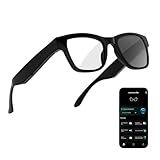
- 3-in-1 AI Glasses: Enjoy ① AI Voice Assistant (Powered by ChatGPT, Gemini & Deepseek), ② Stylish Photochromic Lenses Glasses, and ③ Bluetooth Open-Back Headphones, all in one.
- Free Talk Translation: Automatically detects and translates over 160 languages in real-time, allowing seamless work and translation without touching your phone or glasses.
- Voice, Video & Photo Translation: Supports over 98% of global languages, offering fast and accurate translations—ideal for international travel, business meetings, or cross-cultural communication.
- AI Meeting Assistant: Converts recordings from smart glasses into text and generates mind maps, making it easier to capture and organize meeting insights.
- Long Battery Life, Bluetooth 5.4 & Eye Protection: Up to 10 hours of music and 8 hours of talk time, with easy Type-C charging. Bluetooth 5.4 ensures stronger, stable connections, while photochromic lenses block UV rays and blue light, protecting your eyes in any environment.
From Monocle to Frame and Halo
Monocle was the clip-on version of Brilliant Labs’ open wearable thesis. The company later moved that idea into Frame, a glasses-format developer device. Its documentation lists a 640×400 color OLED display, 20-degree field of view, 720p camera, microphone, Bluetooth 5.3, FPGA acceleration and Lua-based software. Frame’s hardware documentation also warns that some low-level customization involves destructive disassembly and that incorrect settings can damage components.
The company’s more recent commercial emphasis is Halo, presented as an open-source AI-glasses platform with Noa integrated. Brilliant describes a color display, bone-conduction speakers, microphones, optical sensing, an AI processor, Bluetooth 5.3 and a cloud-based AI agent. The company’s homepage and Halo development account present this as a later step in its product direction; they do not establish that the 2023 round directly financed every Halo feature.
The indexed official Halo product page listed the glasses at $349 and Noa+ at $19.99 per month, alongside a free Noa tier with daily usage caps. The page also stated Q1 2026 shipping. These are page-listed terms and a shipping claim, not confirmation of live stock or current delivery status as of September 2026. Check the current listing, regional availability, taxes and subscription conditions before buying.
The Tool Desk
Outbyte Driver Updater FREEFix the driver behind crashes, sound loss and screen glitchesFind Drivers →Outbyte PC Repair FREERepair Windows errors before they cause bigger problemsFix Now →The same product page lists a 58–72mm IPD range, a weight just over 40g and display-optic support from +2 to −6 diopters, with prescription options through a partner. Buyers should confirm prescription availability in their country and assess fit, bridge height and field of view rather than choosing on AI features alone.
Who should pay attention to Brilliant Labs?
- Developers and hardware tinkerers: Monocle and Frame are the more relevant platforms for open-source experimentation and custom wearable projects.
- Creative technologists: Noa’s camera-and-voice workflow and image generation may be useful to explore, with the caveat that announced features are not proof of dependable performance.
- Buyers seeking a ready-made mainstream wearable: Compare the product’s phone and cloud dependence, app support, privacy terms and fit with more established consumer options. Meta’s Ray-Ban smart glasses are a more mainstream eyewear category, while XREAL focuses more on personal spatial displays and media. Vuzix is more oriented toward enterprise and industrial uses.
For a Brilliant glasses-format developer alternative, see the company’s Frame documentation. For Monocle’s software and developer workflow, see its official documentation. Neither is interchangeable with an immersive binocular AR headset.
Quick Recap
Product prices and availability are accurate as of the date/time indicated and are subject to change. Any price and availability information displayed on Amazon at the time of purchase will apply.