No. Rokid Glasses did not use micro-OLED displays according to Rokid’s product descriptions. At CES 2025, the company showed two different products: the camera-and-AI-focused Rokid Glasses, later identified as using a Micro-LED waveguide display, and the display-focused Rokid Max 2 in the Rokid AR Spatial system, which uses Sony micro-OLED panels.
This distinction matters because these are different kinds of wearable devices: Rokid Glasses put small, see-through information overlays in your view, while Max 2 is designed to create a large virtual screen.
What Rokid showed at CES 2025
Rokid’s CES lineup was a two-track presentation rather than one “Rokid Glasses” model with a micro-OLED screen. The company’s retrospective separates the products clearly in its CES 2025 coverage.
| Feature | Rokid Glasses | Rokid Max 2 / AR Spatial |
|---|---|---|
| Primary role | AI smart glasses with visual overlays | Large virtual display and spatial computing |
| Display description | Micro-LED integrated into a waveguide, according to Rokid | Sony micro-OLED panels |
| Weight | 49 grams, according to Rokid | Model-specific weight not established here |
| Camera | 12-megapixel first-person camera | Do not assume the same camera feature set |
| Main uses | Translation, navigation, notifications, transcription and AI assistance | Gaming, movies, multitasking and virtual-monitor work |
| Computing arrangement | AI glasses connected to supporting devices and services | Max 2 paired with the Rokid Station 2 hub |
Did Rokid Glasses use micro-OLED?
Rokid’s answer is no. Its later launch announcement describes the standalone glasses as having Micro-LED waveguide displays, while the company’s CES retrospective assigns the Sony micro-OLED specification to Max 2. The launch announcement also lists a 49-gram design, a 12MP first-person camera, integrated audio and functions such as translation, object recognition, navigation, transcription and notifications: Rokid Glasses launch announcement.
Windows Errors? Fix Them Before They Spread
Repair common Windows errors and clear accumulated junk for a smoother, more stable PC - no reinstall needed.Free scan · no reinstallCrashes, No Sound, or Screen Glitches?
Random freezes, missing sound and display glitches usually trace back to one bad driver. Find and replace yours safely.Free scan · under a minute#1 Best Overall

- Experience a stunning 215" virtual screen at a 6-meter distance, delivering sharp, high-contrast visuals powered by advanced Micro OLED displays.
- Break free from visual constraints with a 50° wide field of view (FOV) for a immersive perspective. Enjoy visuals with a 120Hz refresh rate, while the adjustable 600 nits brightness ensures vivid, lifelike imagery for a captivating experience.
- The Rokid Max 2 nose pad with an airy cushioning design. This innovative element prevents the glasses from slipping during wear and reduces feelings of fatigue.
- The adjustment dial on the top of the glasses makes it easy to fine-tune the amount of myopia up to 600 diopters; astigmatism and presbyopia are not supported at this time. Users with myopia greater than 600 diopters will need to purchase prescription lenses separately.
- The Rokid Max 2 AR Glasses do not require internal charging or batteries. Instead, they are powered directly via USB-C from a compatible with e.g., mobile, iphone 15 series iOS and future Type C models most Android phones, Windows laptops, Ipad since 2020, Mac,for specific brands and models of compatible devices, please refer to the Flagship Store.
The confusion is understandable because both products were discussed in CES coverage and both can be described broadly as AR glasses. They are not the same product, display architecture or user experience.
Micro-LED waveguide versus micro-OLED
Rokid Glasses: Micro-LED in a see-through waveguide
A waveguide injects projected light into an optical element that directs the image toward your eye. The result is an optical see-through overlay rather than an opaque screen covering your entire view. That architecture suits subtitles during translation, turn prompts, notifications, short teleprompter passages and contextual AI information while you continue looking at the real world.
Rokid identifies the light source in these glasses as Micro-LED. The important point is not that Micro-LED is universally superior to OLED; it is that the source is paired with a compact waveguide for glanceable information. The glasses are intended to complement a phone and voice assistant, not to behave like a cinema display.
Max 2: micro-OLED for a virtual screen
Max 2 uses Sony micro-OLED displays in the Rokid AR Spatial package. Rokid says the system can present a virtual screen equivalent to 300 inches, with 100,000:1 contrast and brightness up to 600 nits. Those are manufacturer claims, not independent measurements, and the 300-inch figure describes an equivalent perceived screen rather than a physical panel.
Quick wins for a faster PC:
Repair Windows errors before they cause bigger problemsFix Now →Fix the driver behind crashes, sound loss and screen glitchesFind Drivers →Clear out junk files and repair common Windows errorsFree Scan →Rank #2
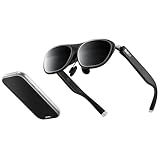
- 3-Screen Multitasking: Rokid AR Spatial features a unique 3-screen display, allowing simultaneous use of 3 apps for boosted productivity, gaming, or immersive entertainment.Note: When connecting with Android phones, the 3-screen display is only supported via DLNA protocol (Miracast and ChromeCast connections are limited to single-screen mode).
- 4 Smart Modes + 3 Screen Sizes: Switch between Reading, Giant Screen, Sports, and Multi-Screen modes, each adjustable to Wide (16:9), Narrow (3:4), or Ultra-Wide (21:9) ratios(Some apps,e.g., File Assistant,don`t support). In Giant Screen Mode, the aspect ratio can expand up to 32:9, delivering a more immersive viewing experience for movies and videos.
- 3DoF (Three Degrees of Freedom) Functionality: Giant Screen Mode and Multi-Screen Mode support 3DoF, allowing the display to remain fixed in space without following head movements. Sports Mode and Reading Mode only support 0DoF, meaning the screen moves along with your head. (Is a versatile AR solution for work and play)
- Myopia & IPD Adjustment: Supports up to 600 degrees(currently, astigmatism is not supported). Effortlessly fine-tune the adjustment dials on top of the glasses to achieve optimal comfort and clarity, elevating your movie and gaming adventures to a new level. Users with myopia greater than 600° will need to purchase separate prescription lenses. Auto IPD adjustment (55–72mm) when paired with Station2.
- Cinematic Visuals: Max2 AR glasses boast a 50% larger Micro OLED display vs. Max, with 1920×1200 resolution, 120Hz refresh rate, 600 nits brightness, and 108% sRGB for vivid, lag-free visuals. (Causes enhanced immersion in movies/games)
Micro-OLED is well suited to the high-contrast video-display role Rokid assigns to Max 2. With the Station 2 computing hub, the package is aimed at games, movies, remote collaboration, field work and multi-window or virtual-monitor tasks. More information appears in Rokid’s AR Spatial launch article.
What Rokid Glasses are designed to do
- Translation: Rokid demonstrates real-time language assistance with text presented in the wearer’s view. Language coverage and online requirements can vary by region and software version.
- Object recognition: The camera and AI services can identify or describe objects, subject to the service’s supported languages, account status and connectivity.
- Navigation: Directions and notifications can appear as overlays. They should not replace road signs, normal navigation judgment or safety awareness.
- Meeting transcription and teleprompting: The display can surface short text prompts or transcribed information rather than acting as a large monitor.
- First-person capture and audio: The glasses combine a 12MP camera with integrated audio speakers for hands-free capture and voice interaction.
- Prescription support: Rokid says customizable lenses are available for nearsightedness and astigmatism. Check the current prescription range, fitting method and service availability in your market.
A camera on a wearable also creates privacy obligations. Look for the recording indicator, ask bystanders where consent is required, and follow local privacy law. There is no single worldwide rule that makes camera-equipped glasses acceptable in every setting.
Independent reader supportYour contribution helps us test, update, and keep practical guides available for everyone.What Max 2 and AR Spatial are designed to do
AR Spatial combines the Max 2 glasses with Station 2. Its focus is a stable, large virtual display: watching video, playing games, using a portable monitor, collaborating remotely or arranging multiple work windows. It should not be treated as the camera-and-AI product described for Rokid Glasses, and the 49-gram figure for Rokid Glasses should not be applied to Max 2 or the complete kit.
Brightness numbers also cannot be compared casually between the products. Optical efficiency, measurement method and viewing conditions affect how bright a waveguide overlay or a micro-OLED virtual screen appears.
Rank #3
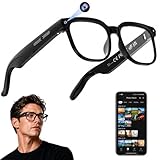
- 【AI Real-Time Translation & ChatGPT Assistant】AI glasses break language barriers instantly with AI real-time translation. The built-in ChatGPT voice assistant helps you communicate, learn, and handle travel or business conversations smoothly—ideal for conferences, overseas trips, and daily use.
- 【4K Ultra HD】 Smart glasses feature 4K resolution for clear, detailed visuals, making them suitable for travel, outdoor activities, everyday moments, and daily use.
- 【Bluetooth Music & Hands-Free Calls 】Smart glasses provide Bluetooth music and crystal-clear hands-free calls with an open-ear design. Stay aware of your surroundings while listening—comfortable for long wear and safer for commuting, cycling, and outdoor use.
- 【IP65 Waterproof & Long Battery Life】 AI glasses are designed for daily wear with IP65 waterproof protection against sweat, rain, and dust. The built-in 290mAh battery provides reliable performance for workdays and travel—no anxiety when you’re on the go.
- 【Smart App Control & Object Recognition】Smart glasses connect to the companion app for easy setup, file management, and feature control. They support AI object recognition to help identify items and improve your daily efficiency—perfect for travel exploration and a smart lifestyle.
CES demonstration, launch and availability
CES 2025 showed demonstrations and product announcements; it did not mean every feature was immediately available for retail purchase in January 2025. Rokid published formal launch information later, and availability, software support, languages, warranty terms and prescription services can differ by country.
Rokid’s global site displayed a $499 price signal for Rokid Glasses in August 2026. Treat that as a dated site indication, not a universal delivered price: confirm region, stock, tax, shipping, accessories and AI-service terms at Rokid’s official store.
The AR Spatial launch article listed $648 for the Max 2 and Station 2 package and mentioned a $598 launch promotion. That promotion is historical and should not be assumed to remain active. Check the current regional listing before buying.
Which product fits your needs?
Choose Rokid Glasses when you want
- Hands-free translation, contextual assistance and notifications.
- A relatively lightweight, conventional glasses form with a 49-gram stated weight.
- A first-person camera, integrated audio and voice interaction.
- See-through prompts rather than a large entertainment screen.
Choose Max 2 with AR Spatial when you want
- A large virtual screen for films, games or productivity.
- The high-contrast viewing experience Rokid associates with Sony micro-OLED.
- A separate Station 2 hub for spatial or multi-window workflows.
- Display immersion rather than primarily camera-based AI assistance.
Neither display technology is automatically “better.” The choice follows the optical job: Micro-LED waveguide overlays for lightweight, see-through information, or micro-OLED panels for a personal virtual screen.
Bottom line on the CES 2025 micro-OLED claim
The accurate description is: Rokid showed Micro-LED waveguide AI glasses and separate micro-OLED Max 2 display glasses at CES 2025. Calling the standalone Rokid Glasses “micro-OLED glasses” combines two products and gives buyers the wrong expectation about screen size, camera features and intended use.
Quick Recap
Product prices and availability are accurate as of the date/time indicated and are subject to change. Any price and availability information displayed on Amazon at the time of purchase will apply.