Outdated Drivers Are Slowing You Down
One free scan finds every outdated or missing driver and matches the right update for your exact hardware.Free scan · exact hardware matchPC Slower Than It Used to Be?
A free scan shows the junk files, broken settings and background clutter dragging Windows down - then fixes them in one click.Free scan · Windows 10 & 11Leaks around Huawei’s Watch D line tend to land differently because this isn’t a fashion-first smartwatch family; it’s where Huawei experiments with medical-grade sensing under real regulatory pressure. The Watch D3 leak cycle is no exception, pointing to a Q2 launch window and, more provocatively, an attempt at wrist-based blood glucose tracking that would push well beyond today’s mainstream health metrics.
For readers tracking smartwatch innovation rather than just refresh cycles, this leak matters because it sits at the intersection of hardware ambition, medical validation, and real-world usability. Below is a clear-eyed breakdown of what’s surfaced so far, separating what appears solid from what remains aspirational, and why each detail could influence whether the Watch D3 is a genuine upgrade or a wait-and-see device.
Q2 launch timing and positioning
Multiple supply-chain and certification-adjacent leaks point toward a Q2 unveiling, likely aligning with Huawei’s typical late-spring product cadence in China before broader regional rollouts. This timing fits the Watch D lineage, which historically launches separately from Huawei’s lifestyle-focused Watch GT models to emphasize clinical intent over mass appeal.
The Watch D3 is expected to remain a niche flagship rather than a volume seller, positioned above the Watch GT and Watch Fit lines in both pricing and regulatory complexity. That framing matters, because it suggests Huawei is prioritizing validation and differentiation over rapid iteration.
Quick wins for a faster PC:
Fix the driver behind crashes, sound loss and screen glitchesFind Drivers →Repair Windows errors before they cause bigger problemsFix Now →Scan for outdated or missing drivers - takes under a minuteDriver Scan →#1 Best Overall

- The Blood pressure monitor watch is equipped with an inflatable micro air pump that detects fluctuations in blood pressure by oscillometric measurement, use a unique fine algorithm. Blood Pressure Mornitor Watch use oscillometric method with micro air bag, clinically validated accuracy and provide reliable blood pressure measurements comparable to traditional arm cuff mornitors.The medical blood pressure watch meets regulatory standards use in healthcare setting, FDA(510K), CE and NMPA Class II Medical device registration certificate in 2018.
- Timing Blood Pressure Monitoring (TBPM) Setting: Medical Blood Pressure Watch scheduled blood pressure readings provide a more accurate refection of you daily fluctuations, maximum 48 times measuments per day, tracks systolic and diastolic pressure automatically throughout the day and night, without manual intervention. Blood Pressure Watch meets Heart rate, Blood oxygen, Sleeping time and Activity measurment automatically.
- The wearable blood pressure monitor watch adopts bluetooth 5.3 technology, enabling faster connections and stable data transmission. Smart watch function supports answering and making calls, captures all health data and manage them by app, not only for home use,also hospital and integrated system
- The blood pressure monitor wrist can support family data sharing, you can add families and private physician to share your health data by mobile App setting.
- Portable blood pressure wrist watch in ultra-lightweight design with silicone belt and micro Air-cuff meachanism, wear it while sleeping, working,or exercising without discomfort.
Blood glucose tracking: what’s actually being claimed
The headline leak claim is non-invasive blood glucose monitoring, using optical or multi-sensor analysis rather than needle-based measurement. Importantly, sources do not suggest continuous glucose monitoring (CGM) in the medical sense, but rather trend-based or spot-check insights similar to early-stage glucose estimation research seen across the industry.
This distinction is critical for expectations. Even optimistic interpretations imply indicative glucose ranges or risk alerts, not diagnostic-grade readings suitable for insulin dosing or clinical decision-making.
Regulatory signals and why they matter more than specs
Huawei’s Watch D series has already navigated medical device classification for blood pressure monitoring in certain markets, making regulatory approval a central part of its identity. Leaks suggest the glucose feature, if present at launch, may be region-locked, software-gated, or framed as a wellness indicator pending further approvals.
For users, this means availability could vary dramatically by country, and early units may ship with dormant hardware awaiting clearance. This is not unusual in health wearables, but it directly affects the Watch D3’s value proposition at launch versus six to twelve months later.
Free tools Windows power users keep installed
One-click scans. No signup required.
Expected hardware and comfort trade-offs
Based on the Watch D2 and early component chatter, the D3 is likely to retain a relatively thick case profile to accommodate advanced sensors and, potentially, an inflatable cuff or pressure-based system for blood pressure accuracy. Materials are expected to skew functional rather than luxurious, with a focus on durability, skin compatibility, and stable sensor contact.
Comfort remains a known compromise in this line. The Watch D3 is unlikely to match the slim elegance of Huawei’s GT models, instead prioritizing consistent wear during rest and structured measurement sessions.
Software, ecosystem, and daily usability
The Watch D3 is expected to run the latest version of HarmonyOS for wearables, maintaining compatibility with both Android and iOS via Huawei Health, though feature parity may vary by platform. Battery life is rumored to land in the 5–7 day range with advanced health features active, shorter than fitness-focused watches but competitive for a medically oriented device.
Early leaks also hint at expanded health reporting, combining glucose trends with blood pressure, heart rate variability, and sleep metrics. If executed well, this integrated view could be the Watch D3’s real differentiator, even if glucose tracking remains conservative at launch.
Recommended Free Tools
How this compares to competitors right now
No mainstream smartwatch brand has delivered regulator-approved, non-invasive glucose monitoring as of today, making Huawei’s attempt notable even if imperfect. Apple, Samsung, and Garmin remain focused on indirect metabolic indicators rather than glucose estimation, largely due to regulatory and accuracy hurdles.
That context reframes the Watch D3 leak not as a guaranteed breakthrough, but as a calculated step forward. For users evaluating future upgrades, the question isn’t whether Huawei has “solved” glucose tracking, but whether the Watch D3 meaningfully advances wrist-based metabolic insight without overpromising clinical certainty.
Q2 Launch Window Explained: Why the Timing Makes Sense for Huawei
Given the technical ambition hinted at in the Watch D3 leaks, the rumored Q2 launch window looks less like coincidence and more like careful choreography. Huawei is operating at the intersection of consumer wearables and regulated health technology, and that reality heavily influences when a product like this can realistically come to market.
Regulatory pacing, not marketing hype
If the Watch D3 is indeed introducing any form of blood glucose trend tracking, even in a limited or advisory capacity, Huawei would need additional time for validation, documentation, and regional compliance. A Q2 release aligns with the cadence seen in previous Watch D models, where Huawei staggered announcements to allow health features to roll out gradually across markets rather than globally on day one.
This window also gives Huawei flexibility to position glucose tracking as a wellness indicator rather than a diagnostic tool, reducing regulatory friction while still making a meaningful headline feature. That distinction matters, especially in Europe and parts of Asia where medical claims around glucose monitoring face tighter scrutiny than heart rate or SpO2.
Component maturity and sensor calibration cycles
Non-invasive glucose estimation, assuming the leaks are directionally accurate, is not a switch you flip at the factory. Optical sensors, pressure-based systems, and algorithmic models require extended calibration across diverse skin tones, wrist sizes, and daily use patterns.
A Q2 launch suggests Huawei is working through late-stage tuning rather than early experimentation. It implies the hardware platform is locked, but the software and sensor fusion models are still being refined, which fits with reports of conservative initial glucose features focused on trends, variability, or risk signals rather than absolute readings.
Strategic distance from mainstream smartwatch launches
Timing also matters in the broader smartwatch calendar. Apple and Samsung typically dominate Q3 with mass-market launches, while Q1 is often crowded with fitness-focused updates and CES-driven noise. A Q2 debut gives Huawei space to control the narrative around a health-first device without being drowned out by incremental flagship updates.
For a watch that is thicker, more clinical in design, and unapologetically focused on structured measurements, that breathing room is crucial. Huawei needs time to educate users on what the Watch D3 is for, and just as importantly, what it is not.
Software readiness and ecosystem signaling
HarmonyOS updates tend to stabilize in the first half of the year, and a Q2 launch allows Huawei to ship the Watch D3 with a mature software baseline rather than relying on post-launch fixes. This is particularly important for health reporting, where data continuity, historical context, and clear visualizations directly impact trust.
It also gives Huawei a window to update Huawei Health on both Android and iOS with the frameworks needed to support glucose-related insights, even if those features are gated or region-locked at launch. From a user perspective, that reduces the risk of buying into a device whose headline capability feels half-finished.
Why Q2 matters for buyers watching from the sidelines
For consumers considering an upgrade, a Q2 launch positions the Watch D3 as a mid-cycle alternative rather than a rushed experiment. It suggests Huawei believes the feature set is stable enough to stand scrutiny, even if glucose tracking arrives with caveats, disclaimers, and gradual enablement.
In that sense, the timing reinforces the broader story emerging from the leaks. The Watch D3 is not about winning a spec race, but about methodically expanding what a wrist-worn health device can responsibly attempt, and Q2 may be the earliest moment Huawei is comfortable making that bet in public.
Blood Glucose Tracking Claims: What the Leak Actually Suggests
If the Q2 timing frames when Huawei feels ready to talk, the glucose claims define why the Watch D3 exists at all. This is the part of the leak that demands the most restraint, because blood glucose monitoring is still one of the most misunderstood and over-marketed ideas in wearables.
What the leak suggests is not a sudden breakthrough, but a carefully worded expansion of Huawei’s health ambitions, likely built around trends, estimates, and structured reporting rather than clinically actionable readings.
What the leak actually says, and what it very carefully avoids
The most telling detail is language. Leaked marketing references point to “blood glucose insights” or “glucose trend tracking,” not real-time blood glucose measurements in mg/dL or mmol/L.
Do these 3 things before closing this tab:
1Fix the driver behind crashes, sound loss and screen glitches2Repair Windows errors before they cause bigger problems3Scan for outdated or missing drivers - takes under a minuteThat distinction matters. Across the wearable industry, no consumer smartwatch has regulatory approval for true non-invasive blood glucose measurement, and Huawei has been notably cautious about overpromising in this area. The Watch D3 leaks follow that pattern.
What appears more likely is periodic, user-initiated estimation tied to resting conditions, similar to how early blood pressure features evolved before medical certification.
Non-invasive glucose tracking: where the technology realistically sits
From a hardware perspective, the Watch D3 is rumored to rely on an expanded optical sensor array, potentially combining multi-wavelength PPG with temperature and heart rate variability data. This approach aligns with what multiple research groups are exploring, but it does not equate to direct glucose sensing.
In practice, this means inferred glucose trends based on correlations rather than measurements. These systems can sometimes detect relative changes over time, but they are sensitive to skin tone, hydration, movement, and ambient temperature.
For everyday users, that translates to directional insight rather than numbers you would dose insulin from, which is precisely why Huawei’s wording matters so much.
Rank #2
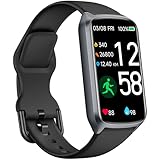
- 【24H Accurate Health Monitoring】Measure your Heart Rate, Blood Oxygen, Blood Pressure and Stress with this Fitness Tracker. Understand your physical state, especially for high-intensity or outdoor work such as high temperature, brainstorming, stay-up and get professional analysis on how to relax in a healthier and better way. Amzhero Fitness Tracker also analyzes sleep quality and score your sleep quality to help you adjust your sleep habits more tools
- 【25 Sports Modes & Fitness Tracker】Amzhero Fitness Tracker supports 14 sports such as walking, running, mountaineering, swimming, yoga, hiking, cycling, treadmill, etc . Accurately record all-day activities like steps, distance, calories burned, miles walked, active minutes and give professional analysis on improving your sports and daily habit
- 【Smart Life Partner with You】Check daily workout clearly on a 1.47'' HD bright color display. Create customized fitness schedules and goals, Get vibration alerts for all notifications, including phone calls, texts, and social media app alerts. Never miss a message with smart notifications delivered right to your wrist. You also can check real-time weather and change your music on the smartwatch
- 【15 Day Battery Life& 5ATM Waterproof】Fully charge for 2 hours, support 15 days standby time. Large capacity and low power consumption design offers longer endurance. Amzhero fitness watch is designed with 5ATM waterproof, you can wear it when washing hands, in the rain and swimming
- 【1-Year Warranty Promised & Wide Compatibility】Compatible with iPhone, Samsung etc., built-in BLE5.0 and 300mAh lithium-ion battery. Our free APP "Gloryfit" supports iOS 9.0 / Android 6.0 or above smartphones. If you have any questions, please don’t hesitate to contact us with any problem
Why Huawei’s medical track record changes the interpretation
The Watch D line already carries regulatory baggage. The original Watch D used an inflatable cuff system for blood pressure, which allowed Huawei to pursue medical device classification in certain markets.
That history makes it unlikely Huawei would casually imply medical-grade glucose tracking without groundwork. Instead, the Watch D3 appears to be positioning glucose alongside stress, SpO2, and ECG as a structured health signal rather than a diagnostic tool.
This also explains the thicker, more utilitarian case design seen in leaks. Comfort and wearability matter, but sensor stability matters more when the data is this sensitive.
What’s actually slowing this PC down?
Pick the symptom - the matching free tool is one click away.
Software, disclaimers, and likely feature gating
On the software side, Huawei Health already supports longitudinal reporting with clear disclaimers, and glucose would almost certainly follow that model. Expect charts showing trends, baseline deviations, and correlations with sleep or activity, not alerts telling you to seek medical intervention.
Region locking is also highly probable. Regulatory environments differ dramatically between China, the EU, and other markets, and Huawei has a history of enabling advanced health features selectively.
For users, this means the feature may exist on paper at launch but arrive gradually, or remain informational-only depending on location.
How this compares to competitors quietly circling the same idea
Apple, Samsung, and Google are all researching non-invasive glucose monitoring, but none have shipped it. The difference is that Huawei appears willing to surface early-stage insights under heavy caveats, while others are holding back until accuracy improves.
That approach carries risk, but it also gives Huawei a narrative advantage among health-focused users who understand limitations and want more data, not miracle claims.
For smartwatch buyers watching this space, the Watch D3 leak suggests Huawei is trying to normalize glucose awareness at the wrist before anyone else, even if the technology itself remains a work in progress.
Why this matters for upgrade decisions right now
For prospective buyers, the key takeaway is expectation management. The Watch D3 is unlikely to replace finger-prick testing or continuous glucose monitors, and it is not positioned to do so.
What it may offer is something more subtle: an early-warning framework, helping users notice patterns and prompting more informed conversations with healthcare professionals.
In that context, the glucose claims are less about disruption and more about direction. They signal where Huawei believes health-focused smartwatches are headed, even if the destination is still a few product generations away.
Non-Invasive Glucose Monitoring Reality Check: Science, Limits, and Regulation
If Huawei does surface glucose-related insights on the Watch D3 in Q2, the most important thing to understand is what kind of “monitoring” this actually represents. Non-invasive glucose sensing has been a research goal for decades, but translating lab-grade signal detection into a wrist-worn device is still one of the hardest problems in consumer health tech.
The leaks point toward trend-level estimation rather than absolute glucose values, and that distinction shapes everything from accuracy expectations to regulatory treatment.
The science Huawei is likely leaning on
Most non-invasive approaches combine optical spectroscopy, electrical impedance, and algorithmic modeling rather than a single sensor breakthrough. In practice, this means analyzing how glucose indirectly affects light absorption, skin properties, and blood composition, then correlating those signals against large training datasets.
The Tool Desk
Outbyte PC Repair FREERepair Windows errors before they cause bigger problemsFix Now →Outbyte Driver Updater FREEFix the driver behind crashes, sound loss and screen glitchesFind Drivers →The Watch D line already uses a more complex sensor stack than typical smartwatches, including pressure-based hardware for blood pressure, so the D3’s thicker case and medical-first design make it a more plausible platform than Huawei’s slimmer Watch GT models.
Even so, these systems are highly sensitive to skin tone, temperature, hydration, movement, and strap tightness, which is why output tends to be probabilistic rather than definitive.
Why accuracy remains the limiting factor
Unlike heart rate or SpO2, glucose does not produce a clean, dominant signal that can be isolated at the wrist. Small errors compound quickly, and even a modest deviation can make a reading meaningless for clinical decision-making.
That is why every major player, including Apple and Samsung, has stopped short of shipping glucose features despite years of internal testing. The risk is not that the data is useless, but that users misinterpret it without proper framing.
What’s actually slowing this PC down?
Pick the symptom - the matching free tool is one click away.
Huawei’s software history suggests it will present glucose as a reference range or deviation-from-baseline metric, which is useful for spotting trends over weeks but not for managing diabetes day to day.
Regulatory reality: wellness insight, not medical diagnosis
This is where regulation becomes the hard boundary, not just technology. In China, Huawei has more latitude to introduce health features labeled as lifestyle or wellness tools, especially when paired with explicit disclaimers.
In the EU, any glucose-related functionality would almost certainly be classified as non-diagnostic unless Huawei pursues medical device certification, a slow and expensive process that would delay rollout well beyond a Q2 hardware launch.
As a result, region-specific feature gating is likely, with glucose insights either disabled, limited, or framed differently depending on local regulatory approval.
Crashes, No Sound, or Screen Glitches?
Random freezes, missing sound and display glitches usually trace back to one bad driver. Find and replace yours safely.Free scan · under a minuteWindows Errors? Fix Them Before They Spread
Repair common Windows errors and clear accumulated junk for a smoother, more stable PC - no reinstall needed.Free scan · no reinstallHow this fits with the Watch D3’s hardware and daily usability
The Watch D series has always traded elegance for function, with a bulkier case, stiffer strap options, and a fit designed to keep sensors stable rather than disappear on the wrist. That matters, because non-invasive glucose estimation depends heavily on consistent skin contact over long periods.
Battery life is another constraint, as optical and impedance-based measurements are power-hungry. Expect glucose tracking to run intermittently or during specific windows, not as a continuous background metric like heart rate.
For users already comfortable with the Watch D’s medical-instrument feel, this trade-off makes sense; for style-first smartwatch buyers, it reinforces that the D3 is a niche device with a specific health focus.
What this means for credibility and expectations
Seen in context, the Watch D3 leak does not suggest a sudden leap past established glucose monitoring tools. It suggests Huawei is willing to expose early-stage insights to users who understand they are directional, not definitive.
That approach will resonate with data-driven, health-curious users who value pattern recognition over precision, but it will frustrate anyone expecting clinical-grade readings.
The reality check, then, is not about whether non-invasive glucose monitoring is “real,” but about how carefully its limits are communicated when it finally reaches the wrist.
Rank #3

- WHY GALAXY WATCH8: Advanced health and sleep tracking features.* A lighter, more snug design for all day comfort.* Improved user interface.* Personal AI assistant for hands free help.⁴* 2-Year Warranty.
- SLEEP SMARTER. LIVE BETTER: Energize your days with a great night’s rest using Advanced Sleep Coaching¹ - improved with even more ways to keep your nights on track. Plus, Bedtime Guidance² helps you find your optimal bedtime.
- YOUR RUN, YOUR COACH: Step up your running routine with a Running Coach³ that analyzes your performance and gives you real-time feedback. Training for an event? Try specific programs built for 5Ks, marathons and more.
- NEW DESIGN. LIGHTWEIGHT FEEL: Maximize your days with a minimalist design. The sleek, thinner-than-ever silhouette makes Galaxy Watch8 look as good as it functions. With a snug fit and sporty style, it gives you readings without getting in your way.
- A PERSONAL ASSISTANT, RIGHT ON YOUR WRIST: Your Watch just became your personal assistant.⁴ Stay one step ahead of your day with a watch that helps you navigate your tasks and to-do lists.
How Watch D3 Could Build on Huawei’s Health Stack (BP, ECG, SpO₂, TruSeen)
If glucose estimation does arrive on the Watch D3, it would not exist in isolation. Huawei’s strategy with the D series has always been additive, layering new metrics onto an already dense health stack rather than reinventing the platform each generation.
Blood pressure as the foundation, not a side feature
The defining trait of the Watch D line is still its inflatable blood pressure cuff built into the strap, and that hardware choice shapes everything else. Unlike wrist-only BP estimates, Huawei’s approach has already crossed regulatory thresholds in select markets, giving the D series more medical credibility than most consumer wearables.
Quick wins for a faster PC:
Fix the driver behind crashes, sound loss and screen glitchesFind Drivers →Clear out junk files and repair common Windows errorsFree Scan →For glucose tracking, that matters because BP data provides useful context. Long-term blood pressure trends, arterial stiffness, and vascular response are all variables that can help refine algorithmic glucose estimates, even if the readings remain non-diagnostic.
ECG and vascular signals working in tandem
Huawei’s ECG implementation has matured quietly, focusing less on flashy alerts and more on signal consistency. On the Watch D models, ECG readings benefit from a firmer, more medical-style fit, which reduces noise compared to lighter lifestyle watches.
In a Watch D3 scenario, ECG-derived heart rhythm data could help filter glucose-related insights, flagging periods where stress, irregular rhythm, or recovery states may distort metabolic signals. This kind of cross-metric validation is where Huawei tends to invest, even if it rarely markets it aggressively.
SpO₂ trends as a metabolic context layer
SpO₂ on Huawei wearables is already positioned as a trend metric rather than a spot-check party trick. Continuous or sleep-based oxygen saturation tracking provides indirect insight into respiratory efficiency and nighttime recovery, both of which influence glucose regulation.
On the D3, SpO₂ is likely to remain unchanged at the sensor level, but more tightly integrated at the software layer. Expect correlations rather than causation, with glucose insights framed alongside oxygen dips, sleep stages, and overnight heart rate variability.
TruSeen as the quiet enabler
Huawei’s TruSeen optical system underpins heart rate, SpO₂, and stress tracking, and it is the most plausible technical bridge to glucose estimation. While leaks do not suggest a radical new sensor array, incremental improvements in LED wavelengths, sampling cadence, and skin-temperature compensation would align with Huawei’s typical generational updates.
The key is not raw accuracy but stability. TruSeen’s strength has always been consistency over long wear periods, which is exactly what non-invasive glucose models depend on to surface meaningful patterns.
Software synthesis inside Huawei Health
Where the Watch D3 could meaningfully advance is not the sensor list, but how Huawei Health presents overlapping data streams. Rather than showing glucose as a standalone tile, the app is likely to contextualize it alongside BP trends, meal timing, activity load, and sleep quality.
Do these 3 things before closing this tab:
1Scan for outdated or missing drivers - takes under a minute2Repair Windows errors before they cause bigger problems3Fix the driver behind crashes, sound loss and screen glitchesThis approach reduces the risk of misinterpretation while reinforcing Huawei’s preferred framing: lifestyle insight, not medical decision-making. Expect disclaimers, confidence ranges, and delayed trend visualization rather than real-time numbers.
Battery life, comfort, and the cost of doing more
Stacking BP measurements, ECG sessions, SpO₂ tracking, and intermittent glucose estimation is demanding, both electrically and physically. The Watch D’s thicker case and stiffer straps already signal that comfort has been partially sacrificed for sensor stability.
On the D3, battery life is likely to remain measured in days rather than weeks, especially if users enable multiple advanced health features. This reinforces the Watch D identity as a purpose-built health instrument, not an all-day fashion smartwatch, and that distinction becomes sharper as the health stack grows deeper.
Design, Hardware, and Wearability Expectations: What a D-Series Watch Likely Looks Like
If the health stack is becoming denser, the industrial design has little choice but to follow. Every leak so far suggests the Watch D3 will double down on the D-series identity rather than retreat toward the sleeker Watch GT line, prioritizing sensor stability and cuff mechanics over minimalism.
Huawei has already made its design intentions clear with the Watch D and D2: this is a medical-adjacent instrument first, a smartwatch second. There is little reason to expect that philosophy to change with a model that adds even more physiological ambition.
Case shape, thickness, and materials
Expect a familiar rectangular case with softened corners, likely hovering in the 48–50mm lug-to-lug range and remaining noticeably thicker than mainstream fitness watches. The integrated micro-pump and air bladder required for blood pressure measurement are non-negotiable hardware elements, and any glucose-related optical refinements would only reinforce the need for internal volume.
Materials will almost certainly remain conservative and durable rather than luxurious. An aluminum alloy chassis with a reinforced polymer backplate is the most likely combination, chosen to balance weight, radio transparency, and long-term skin contact rather than to chase premium watchmaking cues.
Finishing will likely stay matte or lightly brushed to minimize visual bulk on the wrist. This is not a watch designed to disappear under a cuff, and Huawei seems comfortable leaning into that reality.
Free tools Windows power users keep installed
One-click scans. No signup required.
Display expectations and interface compromises
The AMOLED panel is unlikely to change dramatically in size or resolution, with something in the 1.6–1.7-inch range remaining the sweet spot for readability during health workflows. Blood pressure and ECG interfaces demand large, legible UI elements, and glucose trend visualization will only increase the need for clear charts rather than dense complication layouts.
Always-on display support should return, but with conservative refresh behavior. Given the cumulative battery demands discussed earlier, Huawei is more likely to optimize glanceability than visual flourish.
Touch responsiveness and haptics matter more here than animation fluidity. The D-series experience is about deliberate interaction, not rapid-fire notifications.
Straps, cuffs, and long-term comfort
The strap system will again be central to the D3’s wearability story, and also its biggest trade-off. Expect proprietary straps with integrated inflatable bladders, likely offered in multiple sizes to accommodate accurate blood pressure readings across wrist diameters.
Recommended Free Tools
Leaks suggest incremental refinements rather than a reinvention. Softer inner lining materials, improved ventilation channels, and quieter pump operation would all materially improve daily comfort without altering the fundamental design.
This remains a watch that users may consciously put on for health monitoring sessions rather than forget they are wearing. That distinction matters, especially for overnight use where bulk and rigidity can disrupt sleep despite the richness of the data collected.
Buttons, sensors, and physical interaction
A dual-button layout is the most plausible configuration, with one dedicated to health measurements and the other handling navigation. Huawei has consistently favored physical controls for critical functions like BP and ECG, and that approach aligns with regulatory expectations around intentional measurement initiation.
On the underside, the sensor array will likely look familiar at a glance. Optical modules for heart rate, SpO₂, and skin temperature will sit alongside ECG electrodes and the air pressure interfaces required for cuff inflation.
Outdated Drivers Are Slowing You Down
One free scan finds every outdated or missing driver and matches the right update for your exact hardware.Free scan · exact hardware matchPC Slower Than It Used to Be?
A free scan shows the junk files, broken settings and background clutter dragging Windows down - then fixes them in one click.Free scan · Windows 10 & 11Any glucose-related capability is expected to be invisible to the user from a hardware perspective. If it exists, it will be embedded within optical and thermal refinements rather than exposed as a new, clearly labeled sensor.
Weight, balance, and real-world wearability
Weight distribution will remain one of the D3’s quiet engineering challenges. The pump, battery, and sensor stack all concentrate mass at the center of the case, making strap tension and curvature critical to preventing wrist fatigue.
Huawei has historically managed this better than expected, but the Watch D line is still heavier and stiffer than most health-focused competitors. For users accustomed to slim fitness bands or circular lifestyle watches, the adjustment period should not be underestimated.
Rank #4

- 【2.06" AMOLED Full Touchscreen with Superior Design】 This blood pressure watch features a stunning 2.06" 410×502 AMOLED full touchscreen display, offering vibrant colors, smooth operation, and clear information at a glance. Choose from a variety of online watch faces to perfectly match your style. Compatible with Android 8.0+ and iOS 13.0+. This fitness watch also features health features such as a flashlight, alarm clock, always-on display, weather, camera, music, and sedentary reminder.
- 【High-Performance Micro-Pump Cuff & Upgraded Sensors】 As a new-generation upgraded blood pressure monitor watch, it features an innovative soft pressurized airbag with a refined cuff design that is now even softer, more flexible, and more comfortable to wear. Built with an ergonomic structure and eco-friendly rubber airbag, it can straighten or bend to perfectly fit your wrist. Combined with a high-precision sensor and an upgraded algorithm, helping achieve more accurate readings, allowing you to monitor blood pressure anytime, anywhere.
- 【Comprehensive Health Tracking & Analysis Report:】This blood pressure smart watch is equipped with high-precision sensors that monitor heart rate, blood oxygen, body temperature, blood pressure, and HRV 24/7. The sleep monitor monitors sleep quality 24/7 and provides comprehensive sleep analysis. The health tracking watch also includes fatigue detection, mood monitoring, menstrual cycle tracking for women, breathing training and so on.
- 【Bluetooth Calling and Smart Assistant】 Enjoy bluetooth calling watch with a noise-canceling microphone. Easily make and receive clear calls, set contacts, view call history, and stay connected with wrist-mounted messages and app notifications. Equipped with an SOS emergency contact feature, dial with one click in emergencies. The built-in AI voice assistant allows easy control of music playback, weather information, and more.
- 【Multiple sports modes, long-lasting battery life】 This fitness tracker supports running, cycling, skiing, and other sports modes. Its three clear energy rings display your steps, distance traveled, and calories burned. Sports watches equipped with a 300mAh battery, it lasts 3-7 days on a single charge and has a standby time of 15+ days, ensuring long-lasting companionship and all-day protection.
This reinforces the idea that the Watch D3 is not trying to win everyone over. It is designed for users who value depth of health insight enough to accept a more instrument-like presence on the wrist.
Durability and daily practicality
Expect standard water resistance suitable for hand washing and rain, but not swimming. The cuff-based BP system limits sealing options, and there is no indication that Huawei plans to reposition the D-series as a sports watch.
Scratch resistance will likely rely on chemically strengthened glass rather than sapphire, keeping costs and weight in check. This is a pragmatic choice, even if it places the D3 closer to medical devices than luxury wearables in tactile feel.
In daily use, the Watch D3 will likely feel purpose-built and slightly uncompromising. That is consistent with every design decision Huawei has made in this line so far, and with the broader story emerging from the leaks.
As glucose tracking enters the conversation, the physical form of the Watch D3 becomes part of the credibility equation. A watch that looks and feels like a serious health tool makes it easier for Huawei to frame advanced metrics as guidance rather than gadgetry, and that framing may be just as important as the technology itself.
Battery Life, Sensors, and Daily Usability: The Trade-Offs of Advanced Health Tracking
If the Watch D3 succeeds in making glucose tracking feel credible rather than gimmicky, it will be because Huawei is willing to accept compromises elsewhere. Battery life, sensor duty cycles, and everyday convenience all sit in tension with the kind of continuous or semi-continuous monitoring implied by the leaks.
This is where the Watch D3’s identity as a health instrument, not a lifestyle smartwatch, becomes most apparent.
Battery life under sensor-heavy workloads
Leaks suggest Huawei is targeting multi-day battery life, but expectations should be tempered. The existing Watch D typically lands around five to seven days with intermittent blood pressure use, and that is without the added computational and sensing demands implied by glucose estimation.
Non-invasive glucose tracking, even in an assistive or trend-based form, likely relies on frequent optical sampling, temperature baselining, and algorithmic cross-referencing rather than a single low-power sensor. Each of those processes draws power, especially if the watch is designed to surface insights passively rather than only during manual checks.
Do these 3 things before closing this tab:
1Scan for outdated or missing drivers - takes under a minute2Repair Windows errors before they cause bigger problems3Fix the driver behind crashes, sound loss and screen glitchesIn practical terms, the Watch D3 may still outperform Wear OS devices, but it is unlikely to match Huawei’s lighter GT-series watches. Expect battery life to shrink meaningfully if glucose features are enabled continuously, with more conservative users opting for scheduled measurements to preserve longevity.
The expanding sensor stack and what it actually measures
Huawei already operates one of the densest sensor arrays in the smartwatch market, combining optical heart rate, SpO₂, skin temperature, ECG electrodes, and the mechanical blood pressure system. The Watch D3 is expected to refine rather than radically expand this stack, with glucose tracking emerging from sensor fusion rather than a dedicated, visible module.
That distinction matters. Leaks consistently point to glucose insights being derived from correlations across optical signals, thermal changes, and possibly vascular response patterns, not direct blood glucose readings. This aligns with how other manufacturers are approaching the problem, but it also places strict limits on accuracy and medical claims.
For users, the implication is subtle but important. The Watch D3 would not replace finger-prick testing or continuous glucose monitors for diagnosed diabetics, but it could offer trend awareness, anomaly detection, and longer-term pattern recognition for at-risk or health-curious users.
Regulatory constraints shape daily experience
Battery and sensor behavior cannot be separated from regulation. If Huawei intends to ship the Watch D3 globally in Q2, glucose-related features will almost certainly be framed as wellness indicators rather than diagnostic tools in most markets.
That framing influences how often measurements run, how results are displayed, and how alerts are delivered. Instead of real-time glucose numbers, users may see ranges, trend arrows, or contextual nudges tied to sleep, stress, or meals.
This approach reduces regulatory friction but also reshapes expectations. The Watch D3 would function more like a health compass than a meter, guiding behavior without claiming clinical authority.
Comfort, charging, and everyday routines
All of this feeds back into daily usability. A heavier case, a thicker profile, and more frequent charging cycles demand a certain level of commitment from the wearer. Overnight charging becomes more complicated when sleep, temperature, and recovery data are central to the health narrative.
Huawei may mitigate this with fast charging or partial-day top-ups, but the reality remains that advanced health tracking works best when the watch is worn consistently. The Watch D3’s comfort, strap ergonomics, and skin contact stability will matter as much as its sensor accuracy.
For users willing to adapt their routines, the payoff could be unmatched health depth in a wrist-worn form. For others, the trade-offs may feel intrusive compared to slimmer, longer-lasting alternatives.
Why these compromises may be the point
Seen in context, the Watch D3’s battery and usability constraints are not design failures but philosophical choices. Huawei appears to be betting that a subset of users will prioritize insight over elegance, and actionable health data over seamless invisibility.
If glucose tracking arrives as the leaks suggest, it will amplify that bet. The Watch D3 would not be the easiest smartwatch to live with, but it could become one of the most informative, provided users understand what it can and cannot realistically deliver.
Free tools Windows power users keep installed
One-click scans. No signup required.
Competitive Context: How Watch D3 Would Compare to Apple, Samsung, and Specialized Health Wearables
Taken together, the Watch D3’s compromises only make sense when viewed against the broader smartwatch landscape. Huawei is not trying to out-Apple Apple or out-Galaxy Samsung on polish or ecosystem breadth; it is attempting to push the boundary of what a mainstream wrist-worn device can sense, even if that narrows its audience.
If the glucose-related leaks hold, the Watch D3 would sit in a category that most major brands are deliberately avoiding for now. That positioning creates a very different competitive profile than a typical flagship smartwatch.
Apple Watch: ecosystem depth versus sensor ambition
Apple remains the benchmark for smartwatch usability, software cohesion, and third-party support. The Apple Watch Series 9 and Ultra 2 deliver industry-leading heart rate accuracy, mature ECG and AFib detection, and a refined health app that contextualizes data without overwhelming users.
Where Apple clearly diverges from Huawei is caution. Despite years of rumors, Apple has yet to ship any form of blood glucose sensing, non-invasive or otherwise, largely due to regulatory exposure and the reputational risk of getting it wrong. Apple’s health features tend to launch only when accuracy, validation, and regulatory pathways are firmly established.
The Tool Desk
Outbyte PC Repair FREEClear out junk files and repair common Windows errorsFree Scan →Outbyte Driver Updater FREEScan for outdated or missing drivers - takes under a minuteDriver Scan →If Huawei introduces glucose trend tracking first, even in a limited wellness framing, it would claim a technical milestone Apple has publicly resisted. The trade-off is that Apple Watch users benefit from longer-term software support, tighter iPhone integration, smoother app performance, and generally lighter, thinner hardware that is easier to wear 24/7.
In practical terms, the Apple Watch remains a better everyday smartwatch for most users. The Watch D3, by contrast, would appeal to those willing to accept bulkier hardware and narrower app ecosystems in exchange for earlier access to experimental health insights.
Samsung Galaxy Watch: breadth of features, fewer medical extremes
Samsung’s Galaxy Watch line occupies a middle ground between Apple’s conservatism and Huawei’s health-first ambition. Features like blood pressure estimation, ECG, sleep coaching, and skin temperature trends are already present, though many remain region-locked or require periodic calibration with external equipment.
Notably, Samsung has also avoided glucose monitoring, despite significant investment in health sensors. That absence underscores how challenging non-invasive glucose tracking remains, even for companies with strong medical partnerships and regulatory experience.
Best Value

- Inflatable Cuff Designed Specifically for Blood Pressure: The smartwatch is equipped with an inflatable airbag strap and combines a blood pressure detection module with a high-precision PPG sensor that detects fluctuations in blood pressure by oscillometric measurement. The blood pressure watch then generates blood pressure measurement data through a self-developed chip and a unique fine algorithm. The Watch not only measures BP manually at any time, but also sets monitoring reminders.
- Incoming Call Display and Message Notification: The BP smart watch for men women can also receive message notifications and display the content (Facebook, WhatsApp, Instagram, Twitter, etc.) All notifications are alerted by vibration. Once the smartwatch is connected to the APP, the watch can directly prompt you incoming calls. If you need to answer or hang up, you need to do it on your cell phone. So you won't miss any important calls or messages even if you keep your phone in your pocket.
- Reminder Monitoring and Share Health Data: BP Doctor blood pressure monitor watch can support family data sharing, you can add families to view your health data on the APP (blood pressure, heart rate etc), so that care is always with you. Besides, when the wearer's blood pressure and heart rate data are abnormal, his family members can receive messages remotely to alert them and we can view health analysis and exception alerts in the health watch's app “BP Doctor” to help us monitor health.
- Automatically Sleep Monitor and Activity Tracker: The sleep monitor watch can monitor sleep quality (18:00-12:00) accurately and provides a comprehensive sleep quality analysis. Take use of sleep monitors to detect quality of your nocturnal sleep, helping you improve your sleeping habits and qualityassess the stages of your daily sleep cycle to create a more wholesome routine. Blood pressure smartwatch automatically records daily steps, distance counter, calories burned, active minutes.
- 1.95'' Full Touch Screen and Customizable Dials: This mens smart watch is equipped with a 1.95‘’ ultra-clear full-touch color screen, which can provide excellent picture quality. The smart watch blood pressure monitor comes with brightness options that makes it easy to display data even in the sun. You can also use your favorite photos such as those of your family, pets, and selfies as the desktop background of your smartwatch in the app that comes with the watch.
Compared to a Galaxy Watch 6 or Watch 6 Classic, a leaked Watch D3 would likely be thicker, heavier, and more specialized. Samsung’s watches emphasize daily versatility, rotating-bezel ergonomics, Wear OS app support, and strong Android integration, making them easier to recommend as general-purpose smartwatches.
Huawei’s advantage, if real, would be depth rather than breadth. Glucose trends, advanced vascular metrics, and potentially more aggressive sensor fusion would position the Watch D3 as a focused health instrument rather than an all-rounder.
Against specialized health wearables and medical-adjacent devices
The most interesting comparison may not be Apple or Samsung, but specialized health wearables like continuous glucose monitors, chest straps, and FDA-cleared blood pressure devices. Products from Dexcom or Abbott provide real-time glucose data with clinical relevance, but they require skin penetration, frequent sensor replacement, and ongoing consumable costs.
The Watch D3 would not replace those devices, and Huawei is unlikely to suggest it should. Instead, it would occupy a softer layer of insight, offering trend awareness and behavioral feedback without needles, subscriptions, or medical claims.
Recommended Free Tools
That distinction matters. For non-diabetic or pre-diabetic users, or those simply curious about how sleep, stress, and meals affect their metabolism, a wrist-based solution could be more approachable. The trade-off is precision, as trend indicators cannot match the accuracy or immediacy of invasive CGMs.
In this context, the Watch D3 looks less like a smartwatch competing for notifications and more like a bridge between consumer wearables and medical hardware.
Fit, finish, and wearability in a crowded field
From a physical perspective, Huawei’s health-focused watches have historically leaned toward thicker cases, firmer straps, and a more instrument-like feel. Expect materials and finishing to be solid, but comfort over long wear sessions will be a decisive factor, especially if glucose and blood pressure sensing require consistent skin contact.
Apple and Samsung have refined case ergonomics, strap ecosystems, and weight distribution over multiple generations. Huawei will need to balance sensor housing, battery size, and wrist comfort carefully, or risk alienating users who want advanced health data without feeling like they are wearing a medical device.
What’s actually slowing this PC down?
Pick the symptom - the matching free tool is one click away.
Battery life could become a quiet differentiator. If the Watch D3 can sustain multi-day use with intermittent glucose trend sampling, it may outlast Apple’s daily charging routine, though likely at the cost of size and thickness.
Who the Watch D3 would actually compete for
In the end, the Watch D3 would not directly compete for the same buyer as an Apple Watch Series 9 or a Galaxy Watch 6. Its real audience is narrower and more intentional: users who are already tracking health aggressively, who understand regulatory caveats, and who are willing to trade elegance and ecosystem depth for experimental insight.
For those users, Huawei’s willingness to ship early, even with constraints, may feel refreshing. For everyone else, the safer, more polished alternatives from Apple and Samsung will remain easier recommendations.
That divergence is not a weakness so much as a statement of purpose. If the leaks are accurate, the Watch D3 would compete less on popularity and more on how far a smartwatch can push into metabolic health without crossing into regulated medical territory.
Quick wins for a faster PC:
Fix the driver behind crashes, sound loss and screen glitchesFind Drivers →Repair Windows errors before they cause bigger problemsFix Now →What’s Confirmed vs What’s Rumored—and Why Watch D3 Matters for Buyers Waiting to Upgrade
Against that backdrop, the distinction between what Huawei has effectively confirmed and what remains speculative becomes more than academic. For buyers sitting on an aging smartwatch and watching the health-sensor arms race closely, those lines determine whether the Watch D3 is a reason to wait—or a reason to buy something else now.
What’s effectively confirmed by the leak trail
Multiple supply-chain and regulatory database sightings now point to a Huawei Watch D3 arriving in Q2, most likely as a standalone health-focused model rather than a cosmetic refresh of the Watch GT line. The timing aligns with Huawei’s recent cadence for medically adjacent wearables, where hardware is finalized well before software features are gradually unlocked.
Blood pressure monitoring, using an updated inflatable cuff system similar in principle to the Watch D and Watch D2, appears all but certain. That hardware approach has already cleared regulatory hurdles in select markets, making it one of Huawei’s strongest differentiators versus Apple and Samsung, which still rely on calibration-dependent estimates.
Design-wise, leaks suggest an evolution rather than a rethink: a rectangular case, thicker midsection, and an emphasis on stability and sensor contact over slimness. Expect durability-focused materials, a utilitarian finish, and straps designed for long, consistent wear rather than fashion-first appeal.
Recommended Free Tools
What remains firmly in the rumored category
Non-invasive blood glucose tracking is the headline claim, but it remains unverified in real-world use. Current leaks suggest trend-based glucose insights rather than absolute readings, likely using optical or multi-sensor fusion rather than any breakthrough equivalent to clinical CGMs.
There is also no indication that glucose data, if present, will be positioned as a diagnostic or treatment-grade metric. Expect heavy disclaimers, limited regional availability, and a framing that emphasizes wellness trends over medical decision-making.
Battery life projections are another gray area. While Huawei traditionally excels here, adding continuous or semi-continuous metabolic sensing could materially impact endurance, especially if the watch is expected to maintain frequent optical measurements alongside blood pressure hardware.
Why glucose tracking, even in a limited form, still matters
Even imperfect glucose trend data would represent a meaningful shift in what mainstream wearables attempt to measure. Apple, Samsung, and Google have all signaled long-term interest in glucose monitoring, but none have shipped anything user-facing, largely due to regulatory and accuracy concerns.
Quick wins for a faster PC:
Repair Windows errors before they cause bigger problemsFix Now →Fix the driver behind crashes, sound loss and screen glitchesFind Drivers →Clear out junk files and repair common Windows errorsFree Scan →Huawei’s willingness to ship early, with constraints, could give users directional insight into how sleep, stress, meals, and activity affect their metabolism. For health-literate users, trends can still be actionable without replacing finger sticks or CGMs.
That said, this approach places more responsibility on the user. Interpreting non-invasive glucose data without overreacting requires education, restraint, and an understanding of the watch’s limitations.
What buyers waiting to upgrade should actually consider
If your current smartwatch already handles notifications, workouts, and basic health metrics well, the Watch D3 is not a must-upgrade on general usability alone. Its software ecosystem, app support, and smartwatch polish will almost certainly lag behind Apple Watch and Galaxy Watch offerings.
Where it becomes compelling is for users explicitly prioritizing cardiometabolic insight over convenience. Those managing blood pressure, monitoring long-term health trends, or simply curious about how close consumer wearables are getting to metabolic sensing will find the Watch D3 uniquely positioned.
What’s actually slowing this PC down?
Pick the symptom - the matching free tool is one click away.
Conversely, users seeking a lighter, slimmer watch with seamless phone integration and broad third-party app support may find the trade-offs hard to justify, regardless of how ambitious the sensors appear on paper.
The bigger picture for the smartwatch market
The Watch D3 matters even if its glucose tracking proves conservative or limited at launch. It signals a continued push toward medical-adjacent hardware in consumer form factors, at a time when most competitors are still refining lifestyle features.
For buyers on the fence, the decision is less about whether Huawei will “solve” glucose monitoring, and more about whether you want early access to where the category is heading. If the idea of experimental health data excites you more than a polished smartwatch experience, waiting for the Watch D3 could make sense.
If not, the safer upgrades remain exactly where they have been. The Watch D3 is unlikely to replace them—but it may quietly redefine what future upgrades are expected to deliver.
Windows Errors? Fix Them Before They Spread
Repair common Windows errors and clear accumulated junk for a smoother, more stable PC - no reinstall needed.Free scan · no reinstallOutdated Drivers Are Slowing You Down
One free scan finds every outdated or missing driver and matches the right update for your exact hardware.Free scan · exact hardware matchQuick Recap
Product prices and availability are accurate as of the date/time indicated and are subject to change. Any price and availability information displayed on Amazon at the time of purchase will apply.