Chances are, right now, you’re wearing a watch. It’s possibly a prized possession or a gift from a loved one. The wristwatch has gone from status symbol to practical necessity and back to status symbol over its illustrious career. Even as mobile phones challenge the need for a watch, people still love them.
No matter how much you cherish your watch, though, it isn’t perfect. Every hour, every second, your watch is losing time. Mechanical watches may lose several seconds a day.
- If your quartz watch is losing time it could need cleaning or oiling. If you see the minute hand kicking backward slightly before moving forward it’s an indication the gears may be slipping or worn. For mechanical watches, the same applies. If it hasn’t been cleaned or serviced in years this could be the problem.
- Older watches also may need to be balanced (shaft pivots, springs, jewels). A worn battery could also be the cause.
- Atomic watches that are synced to Atomic clocks are the most precise and have nearly no clock drift. If your atomic watch is losing time, it most likely needs to be taking in for servicing.
No, you won’t notice it from day to day, maybe not even month to month, but it’s happening. Precious seconds are vanishing. Even the most accurate timepieces that have ever been created will still lose fractions of a second given enough time.
Why must watches lose time and will we ever invent the perfect timekeeper?

As an Amazon Associate I earn from qualifying purchases.
A Short History of Timekeeping
One could argue that the clock was the most transformative invention humanity has ever created. Reaching back to the sundial, mankind found a way to harness time itself and bend it to our needs. Now, with each passing year, our timepieces get more sophisticated and more accurate, and our grasp on time gets firmer. Or so it seems.
In truth, our hold on the fourth dimension has always been tenuous. Time, as the saying goes, marches on, and all we can hope to do is measure it.
The first mechanical pocket watch appeared in 1505, a seminal event in history that, through great strides and inspired developments, has led to this moment: you can now play Candy Crush on your smartwatch. Truly, we are living in the future. We never would have gotten here without the creation of the mechanical watch.
How Does a Mechanical Watch Work?
Mechanical clocks have existed for a thousand years, but it took centuries for inventors to figure out how to miniaturize the process so a clock could fit in your pocket or on your wrist. Though the innards of a wristwatch and a grandfather clock look very different, they are fundamentally the same. The key to timekeeping is oscillation.
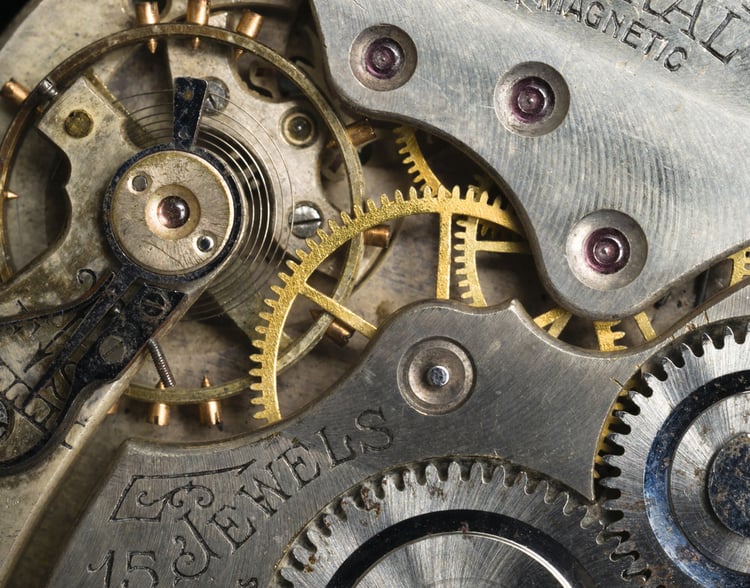
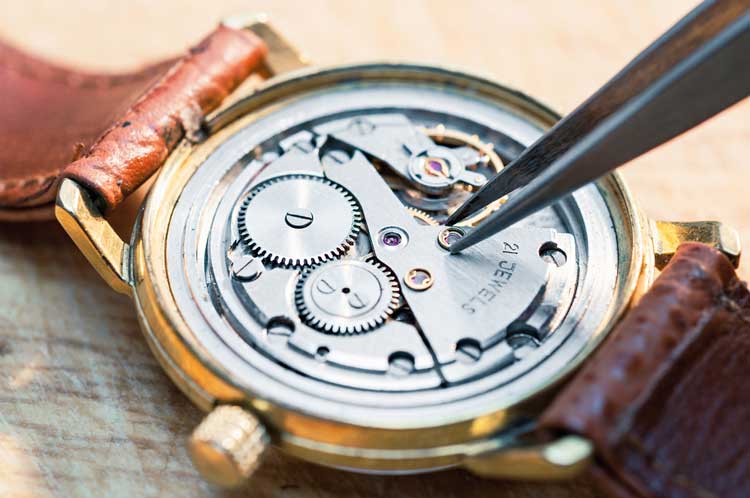
Inside a mechanical watch, you will find a few essential components: the mainspring (energy), gears (or wheels), escapement, and oscillator.
Depending on whether the watch is a manual or automatic winding watch, it will either have an external winding stem (manual) or an internal oscillating weight (automatic).
The mainspring is wound by the stem or oscillating weight, which is how energy is generated, which is then transmitted through the gears. These gears serve multiple purposes.
They transmit energy to the other parts of the watch and they also turn the hour, minute, and second hands of the face.
The oscillator and escapement work together to regulate the energy and provide balance to the timekeeping function (the oscillator is also referred to as the balance wheel or balance spring).
The escapement transfers the rotating energy of the gears into back-and-forth energy that allows for efficient and accurate timekeeping. (This process can be hard to visualize, so here is a helpful video:
#1 Best Overall
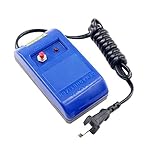
- 【 RESTORE WATCH ACCURACY INSTANTLY】Mechanical watches can easily become magnetized by phones, speakers, or computers, causing them to run fast or inaccurately. This professional degaussing tool effectively eliminates magnetic fields in seconds, restoring your cherished timepiece's precision without the need to open the case back.
- 【 SAVE TIME & MONEY ON REPAIRS】Stop paying expensive fees at jewelry stores just for simple demagnetization. With the QEES watch demagnetizer, you can perform professional-grade maintenance at home. It pays for itself after just one use—this Watch tools a smart investment for any watch collector or enthusiast.
- 【 USER-FRIENDLY & FAST OPERATION】Designed for simplicity. Just plug into a standard 110V outlet, place your watch or tool slightly above the flux area, hold the red button, and slowly move the object away for 5-10 seconds. No complex training required to achieve professional results. (Note: Please read instructions carefully before use).
- 【VERSATILE 2-IN-1 TOOL】Beyond watches, this Watch magnetizer is essential for demagnetizing watchmaker tools like tweezers and screwdrivers, ensuring they don't attract small s crews during intricate repairs. It can also serve as a magnetizer for screwdriver tips when magnetic grip is needed.
- 【 COMPACT & DURABLE GIFT CHOICE】Built with sturdy, impact-resistant ABS plastic for long service life. demagnetizer tool is lightweight, portable design (4.5" x 2.2" x 2.4") makes it easy to store. An ideal, practical gift for Father’s Day, birthdays, or anniversaries for the man who loves mechanical watches.
How Does a Quartz Watch Work?
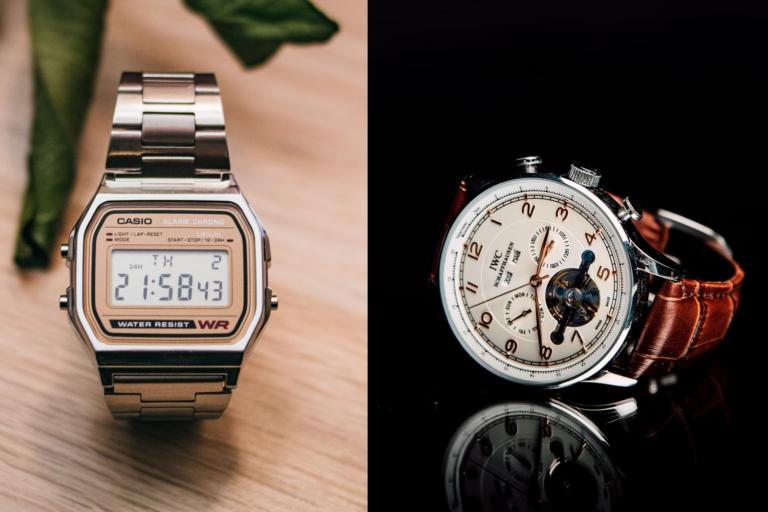
Mechanical timekeeping was the only game in town until the 20th century when a Bell Telephone Lab scientist named Warren Marrison developed the first quartz clock in 1927. A quartz clock (or electronic clock) relies on something called crystal oscillation.
Quartz is a naturally occurring mineral that is filled with piezoelectricity, an electric charge. This charge within quartz creates an electric signal that is harnessed for the same sort of oscillation that is created by the oscillator and escapement in a mechanical watch (or a pendulum in a grandfather clock).
By manipulating this intrinsic energy within quartz, an electronic watch can keep accurate time for years.
The Quartz Crisis
The first quartz wristwatch available to the public came out in 1969 and was created by Seiko. It was an immediate game-changer.
The 1970s threw the watchmaking industry into chaos, with the sudden deluge of cheaper and more accurate quartz timepieces making mechanical watches seemingly obsolete. It was called the “quartz crisis,” especially in Switzerland where the making of exceptional mechanical timepieces was national pride.
As you can tell, the crisis didn’t last forever. Mechanical watches (and Switzerland) made a comeback in the 1980s, partly due to the emergence of Swatch and their more affordable analog watches.
Eventually, the industry found equilibrium, with high-end watchmakers coexisting alongside their cheaper, factory-line brethren.
Rank #2

- ESSENTIAL DEMAGNETIZER FOR ACCURATE TIMEKEEPING - Mechanical watches can become magnetized, causing fast running, erratic timekeeping, or even stoppage. The TICFROG watch demagnetizer quickly restores accuracy without a costly trip to a watchmaker. Even if your watch isn’t magnetized, it’s a must‑have degausser tool for watchmakers and daily wearers.
- HIGH‑QUALITY & SAFE CONSTRUCTION - Made from sturdy ABS plastic, this mechanical watch demagnetizer safely and quickly demagnetizes watches, tweezers, screwdrivers, and other small steel tools. The protective packaging prevents damage or scratches, ensuring your degausser arrives ready to use. FOR SAFETY, ALWAYS UNPLUG AFTER USE AND DO NOT LEAVE IT CONNECTED WHEN NOT IN OPERATION.
- COMPLETE DEMAGNETIZING KIT - Includes a compass (1.73" diameter) to check whether your watch is magnetized before or after demagnetizing. The compact design makes it easy to carry and store—a practical household repair tool for watch lovers. It also makes a thoughtful gift for birthdays, Father’s Day, Mother’s Day, Christmas, anniversaries, and more.
- EASY TO USE & PORTABLE - Simply hold your watch above the demagnetizer pad, press the button, and slowly lift the watch straight up and away. Release the button at the top of the travel and repeat until magnetism is minimized. Lightweight and compact, this watch repair degaussing demagnetizer tool makes watch maintenance accessible to everyone.
- TICFROG CUSTOMER SERVICE - All TICFROG products carry a full satisfaction guarantee within the 18 months of purchase. If for any reason you are unsatisfied , you can contact us directly, we'll respond within 24hrs. Customer satisfaction is our top priority and we aim to make every TICFROG customer a customer for life.
Why Are Quartz Watches More Accurate?

The key to quartz accuracy is the reason that all watches lose at least some amount of time. No matter how much money you spend on your Rolex, it can’t escape a fundamental principle of the universe: friction.
All of those winding wheels and gears within a mechanical watch are bound by the laws of physics. Energy is lost with each turn, with each bit of contact of the teeth. Furthermore, those internal mechanics are affected by other external factors, like gravity and the weather.
The main way that quartz watches avoid these problems is by eliminating most of the moving parts that can be hampered by physical reality. Additionally, the quartz oscillation occurs without the need for an outside power source, so it doesn’t need to be constantly rewound.
Even some of the best mechanical watches will lose or gain two seconds a day, whereas a cheap quartz watch loses only one second every 30 years.
Quartz watches are still made up of physical parts, though, so even at their most accurate, they are losing time. Modern watches are made with features that can help prevent the effects of temperature and gravity, but the Laws of Thermodynamics are not so easily bypassed.
Some high-end quartz watches do have jeweled movements that reduce friction and make for smoother functioning of the watch, it also causes the watch to lose less time making them more accurate.
The Tool Desk
Outbyte Driver Updater FREEScan for outdated or missing drivers - takes under a minuteDriver Scan →Outbyte PC Repair FREERepair Windows errors before they cause bigger problemsFix Now →Are There Any Completely Accurate Watches?
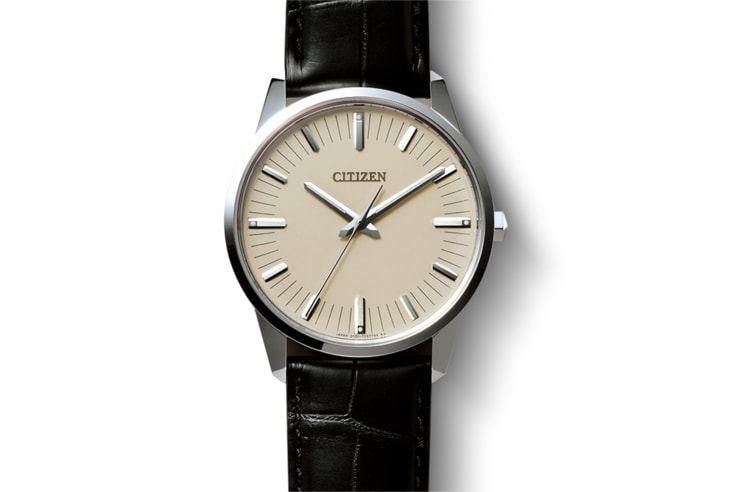
The short answer is, no. The slightly longer answer is, not yet. Timepieces are getting more accurate, though, and the highwater mark right now has been set by atomic clocks and watches.
Atomic watches are still quartz-powered, but the time is regulated by a signal received from an atomic clock. Some examples of this are Casio’s Multi-Band 6 Atomic Timekeeping technology, Seiko’s Astron GPS line, or Citizen’s Atomic Timekeeping (AT) line of radio-controlled watches.
As of 2021, many consider the Citizen Caliber 0100 to be the most accurate watch available with annual accuracy of ±1 second! The surprising thing is that Citizen achieved this without using synchronized data radio-controlled atomic clocks or satellites
Every day, an atomic watch is reset by this signal, not that you would notice if it missed a day: an atomic watch loses one second every 100 million years.
Knowing that quartz watches are far more accurate than mechanical watches might make you wonder why anyone would ever buy the latter. Well, the loss of a few seconds in a day isn’t going to affect most people’s lives much, especially if you take the time to rewind your watch every couple of days or so.
If absolute accuracy is what you demand from your timepieces, think atomic, otherwise, don’t waste another second worrying about lost seconds.
Quick Recap
Best Value
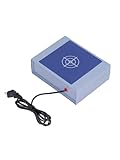
- PORTABLE DESIGN: The demagnetizer features a lightweight ABS housing with compact structure, easily carried by technicians and stored neatly in workstations
- FUNCTIONALITY: Designed to solve timing inaccuracies in mechanical watches, this watch repair kit efficiently removes magnetism from movements to restore normal function
- SAFE USE: When using these watch tools, maintain proper distance between movement and tool to prevent direct interaction during the automatic demagnetizing process
- PROFESSIONAL APPLICATION: The tool demagnetizer works with most mechanical watch movements, requiring no special skills for either repair shops or personal use
- VOLTAGE COMPATIBILITY: Supporting 110-220V input, always check local voltage standards before using this degausser to avoid equipment damage
Rank #4

- DURABLE Demagnetizer Made of quality material, which is durable for long time use.
- DEGAUSS Used for demagnetizing mechanical watches so as to adjust watch time.
- SUITABLE FOR VARIOUS SIZES OF WATCHES Most sizes of watch can be put in the demagnetizer of its larger hole.
- LIGHTWEIGHT AND PORTABLE Lightweight and compact, very convenient for carrying and storage.
- APPLICABLE Professional tool, suitable for watchmakers and watch repairing workers to use.
Rank #3

- 【Easy to Use】Simply place the object in the flux area and press and hold the green button for 5 seconds . Our demagnetizer is designed to be user friendly and hassle for free .
- and Long Lasting】Made of plastic , our demagnetizer is built to last . You won't have to worry about frequent repairs or replacements , saving you time and money .
- 【Essential Tool for Watch Repair】Our demagnetizer is a must have tool for watch repairers . Mechanical watches are prone to magnetization , which can to inaccurate timekeeping . Our demagnetizer solves this problem quickly and effectively .
- 【Portable and Convenient】Our demagnetizer is lightweight and compact , making it easy to carry and store . Whether you're a professional watchmaker or a watch enthusiast , our demagnetizer is a must have tool for your collection .
- 【Versatile and Multi Functional】Our demagnetizer is not just for watches . It can be used to demagnetize any small metal object , making it a versatile tool for a variety of applications . Whether you're a enthusiast or a professional repairer , our demagnetizer is an essential tool for your toolkit .
Product prices and availability are accurate as of the date/time indicated and are subject to change. Any price and availability information displayed on Amazon at the time of purchase will apply.
Independent reader supportYour contribution helps us test, update, and keep practical guides available for everyone.