The original Fitbit Charge and Fitbit Charge HR are first-generation wrist trackers announced in 2014 and released around late 2014 and early 2015. The Charge HR adds continuous optical heart-rate tracking to the Charge’s basic activity features, but both are now legacy devices with no assured app compatibility or current security support.
If you are considering one secondhand, treat it as a very cheap backup or historical device—not a dependable modern tracker. Check pairing and battery health before keeping it, and follow Fitbit’s original manual: these models are splash-proof, not for showering or submersion.
Fitbit Charge and Charge HR at a glance
These closely related trackers built on Fitbit’s wristband approach. Both record everyday activity; the Charge HR adds wrist-based heart-rate readings and has a somewhat bulkier design. Neither has built-in GPS, swimming support, a color touchscreen, contactless payments, or modern app notifications.
| Feature | Fitbit Charge | Fitbit Charge HR |
|---|---|---|
| Steps, distance, calories, floors, active minutes | Yes | Yes |
| Sleep tracking | Yes | Yes |
| Continuous optical heart rate | No | Yes |
| OLED display and caller ID | Yes | Yes |
| Built-in GPS or swimming support | No | No |
| Advertised battery life when new | Up to 7 days | Up to 5 days |
| Modern text and app notifications | No | No |
What the original Charge models track
Both devices track steps, estimated distance and calories, floors climbed, active minutes, and sleep. They also include silent alarms and caller ID on the OLED display when connected to a compatible phone. The historical Fitbit platform offered goals, badges, food logging, and social challenges, but do not assume every old device can still sync or expose its data in the same way today.
#1 Best Overall

- PurePulse continuous, automatic wrist based heart rate tracking to better measure calorie burn all day
- Maximize your workouts using simplified heart rate zones (Fat Burn, Cardio and Peak). Splash proof. Do not shower with the device or submerge it in water
- See call, text and calendar notifications on the OLED display; Automatically track how long and how well you sleep and wake with a silent vibrating alarm. Reminders to move
- Get a better understanding of your fitness level and see how you can improve over time with a personalized Cardio Fitness Score; Use Connected GPS during run mode to see real time stats like pace and distance on your wrist
- Track all day activity like steps, distance, calories burned, floors climbed and active minutes; Find moments of calm throughout your day with personalized guided breathing sessions based on your heart rate, Like all heart rate tracking technologies, accuracy is affected by physiology, location of device, and different movements
Distance is not GPS-based: neither tracker records satellite routes or provides independent pace and distance for a phone-free run. They are basic activity bands, not sports watches or smartwatches.
What the Charge HR adds
The Charge HR uses optical LEDs to estimate heart rate during the day and provide resting-heart-rate trends. That information can add context to activity and calorie estimates, but it is not medical measurement or a substitute for a chest strap. Wrist readings can be affected by fit, movement, skin contact, sweat, cold, tattoos, and vigorous or irregular exercise.
The standard Charge has no heart-rate sensor. It estimates activity and calorie expenditure from movement and profile information instead. Choose the HR only if heart-rate trends matter enough to justify its extra bulk and shorter original battery rating.
Design, display, and sizing
Both use a flexible elastomer band, stainless-steel hardware, and a small OLED display for time, activity information, and caller ID. The Charge HR is somewhat bulkier to accommodate its sensor. The original Charge came in small, large, and extra-large sizes; Fitbit’s manual lists wrist ranges of 5.5–6.7 inches, 6.3–7.9 inches, and 7.8–9.1 inches respectively, and a band width of about 21 mm.
Do these 3 things before closing this tab:
1Repair Windows errors before they cause bigger problems2Scan for outdated or missing drivers - takes under a minute3Clear out junk files and repair common Windows errorsThese are not modern modular bands with easy strap swaps. On a used unit, inspect the band and fastening hardware closely for cracks, splitting, or deterioration.
Water resistance: follow the manual
Fitbit’s original Charge manual describes the device as splash-proof and says not to shower with it or submerge it. Treat the Charge and Charge HR as suitable only for incidental splashes or rain. Do not swim or shower with either model; later Charge models’ water ratings do not apply to these first-generation devices.
Battery life and charging
When new, Fitbit advertised up to seven days for the Charge and up to five days for the Charge HR. Historical coverage estimated a full charge at about one to two hours. These are original ratings, not expectations for a decade-old secondhand unit: lithium-polymer batteries degrade, and actual runtime may be much shorter or the battery may have failed.
Rank #2
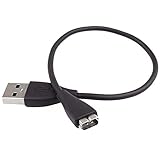
- ▶Compatibility: This charger compatible with Fitbit Charge HR only【NOT compatible with Fitbit Charge/Charge 2/Charge 3/Charge 4/Charge 5/Charge 6】
- ▶Premium & Speedy: The Charge HR charging cable is made of high quality wire, provides a stable performance and a fast charging, about an hour a full charge.
- ▶Safe Protection: The Charge HR charger build-in smart chips, provides a stable charging performance, protecting watch from over-current, over-voltage or short-circuit
- ▶Convenient and Easy to Use: To get a charging just plug it into USB port on your PC, laptop, notebook or use the recommended USB adapter (5V 1A).
- ▶Package includes: 1 x for Charge HR charger cable (wristband is not included). with sincerely after-sales service, if have any question we will deal with it for you within 24 hours.
Both require their own proprietary charging cable. Confirm that the seller includes the correct cable and that the device charges reliably. Battery replacement is not a routine consumer repair and may damage the tracker or its casing.
App compatibility and support in 2026
Some existing units may still be recognized by Fitbit’s current app experience, but that does not guarantee that a particular tracker can pair, sync, or receive support with your phone and account. Windows Phone compatibility is historical, not a current option. Google’s documentation still lists Charge and Charge HR among legacy devices associated with Fitbit-account data, while its legacy-device policy warns that older products may eventually lose updates, support, or app pairing.
Google’s security-support table lists guaranteed security support through July 2018 for Charge and September 2018 for Charge HR. Neither should be treated as a currently supported or security-maintained device. Check current setup requirements before buying rather than assuming a phone or app will work.
Charge model timeline: avoid confusing the names
| Model | How it relates |
|---|---|
| Charge | First-generation tracker without heart-rate sensing. |
| Charge HR | First-generation Charge variant with optical heart-rate tracking. |
| Charge 2 and later Charge models | Later generations, with different hardware and features; specifications do not carry over to the original Charge or Charge HR. |
| Charge 6 | Current-generation successor in the broader tracker line, with GPS, water resistance, color touchscreen, payments, and app notifications. |
Charge 2 was the direct successor to the Charge HR, and heart-rate monitoring became standard in that line. Do not mistake a listing for Charge HR as a listing for a Charge 2, 5, or 6.
Independent reader supportYour contribution helps us test, update, and keep practical guides available for everyone.Should you buy a Fitbit Charge or Charge HR used?
Consider one only if it is extremely cheap, you want basic step and sleep tracking, and you can test the specific device before the return period ends. Avoid both if you need dependable app support, GPS, swimming, current notifications, payments, security updates, warranty service, or reliable high-intensity workout data. A used device with a failed battery or inability to pair can be false economy.
Used-device checks
- Confirm whether the device is a Charge or Charge HR.
- Inspect the band, clasp, screen, charging contacts, and back label for damage or corrosion.
- Charge it with the correct proprietary cable and check for overheating, swelling, or spontaneous shutdown.
- Watch battery drain for several hours; an initial charge indicator alone does not establish battery health.
- Pair it through the Fitbit app’s device-setup flow with the phone and account you intend to use.
- Complete a sync and verify that newly recorded steps appear in the account.
- Do not swim or shower with it, and prefer a seller offering a return period.
If it will not pair or charge
For pairing trouble, charge the tracker, toggle Bluetooth, restart the phone, and use the app’s setup flow rather than generic Bluetooth settings. Confirm current setup requirements. If pairing still fails, return the device; a reset is not guaranteed to fix legacy compatibility problems.
For charging trouble, check that the cable is the correct model, contacts are clean, and the cable is properly aligned. Corrosion, persistent charging failure, overheating, or swelling are reasons to stop using the device.
Rank #3
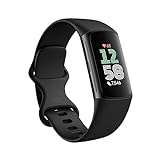
- Fitbit Charge 6 tracks key metrics from calories and Active Zone Minutes to Daily Readiness and sleep; move more with 40+ exercise modes, built-in GPS, all-day activity tracking, 24/7 heart rate, automatic exercising tracking, and more[1]
- See your heart rate in real time: Just link your Charge 6 to compatible exercise machines, like treadmills, ellipticals, and more[2]; and stay connected with YouTube Music controls[3]
- Tune into your body: Track your response to stress with a stress management score; learn about the quality of your sleep with a personalized nightly Sleep Score; and wake up more naturally with the Smart Wake alarm
- Run your routine with Google essentials: Find your way seamlessly during runs or rides with turn-by-turn directions from Google Maps on Fitbit Charge 6; and when you need a snack break on the go, just tap to pay with Google Wallet[1,4]
- Unlock more with Google Health Premium: With a premium membership, get personalized coaching that’s built with Gemini and adapts to your life[7]; get a 3-month trial at no cost to you[5] (Google Health Premium subscription sold separately)
A modern alternative
For a current Fitbit-style tracker, Google’s Charge 6 is the closest official successor in the product family. When checked on August 18, 2026, Google listed it at $159.95 in the United States, with advertised battery life of up to seven days and 50-meter water resistance. It also has built-in/dynamic GPS, a color touchscreen, Google Wallet, app notifications, and more than 40 exercise modes. Those are Charge 6 specifications, not features of the original Charge or Charge HR.
FAQ
What is the difference between Fitbit Charge and Charge HR?
The Charge HR adds continuous optical heart-rate tracking and has a somewhat bulkier design. The standard Charge has no heart-rate sensor. Both track basic activity and sleep.
Does the original Fitbit Charge HR have GPS?
No. Neither the Charge nor the Charge HR has built-in GPS or independent satellite route tracking.
Can I swim or shower with a Fitbit Charge or Charge HR?
No. Fitbit’s original Charge manual says the device is splash-proof and instructs users not to shower with it or submerge it.
Will a Charge HR still sync with my phone?
Possibly, but compatibility is not assured. Test pairing and a full sync with your intended phone and account before keeping a secondhand unit.
How long does the battery last?
When new, the advertised maximum was up to five days for Charge HR and up to seven days for Charge. A decade-old battery may last much less or may no longer work.
What’s actually slowing this PC down?
Pick the symptom - the matching free tool is one click away.
Is the Fitbit Charge HR still worth buying?
Only as a very cheap, tested device for basic tracking or historical interest. It is not a good choice if you need reliable current support, GPS, swimming, modern notifications, or a healthy battery.
Quick Recap
Product prices and availability are accurate as of the date/time indicated and are subject to change. Any price and availability information displayed on Amazon at the time of purchase will apply.