Recommended Free Tools
Sensor-embedded clothing can give athletes and coaches more detailed information about movement, muscle activity and physiological response. Its clearest role in Olympic sport is currently in training, recovery, rehabilitation and research—not routine wear during medal events. A smart garment can collect useful data, but better performance depends on whether the measurements are reliable and lead to a sound training decision.
What counts as smart apparel?
“Smart apparel” describes several different things. The distinction matters: a shirt holding a sensor pod is not the same technology as fabric that senses movement or muscle activity.
- Sensor-carrier clothing: Technical garments with pockets or attachment points for a separate device. WHOOP Body, for example, is designed to position a WHOOP sensor at different body locations; the sensor is not replaced by sensing fabric. WHOOP’s description of Body lists shorts, sports bras, leggings and compression tops, and says the garments are designed for WHOOP 4.0 and 5.0 sensors.
- Textile-integrated sensing garments: Conductive yarns, fabric electrodes, printed sensors or other sensing elements are built into the garment. Here, the textile itself is part of the measurement system.
- Research prototypes: Experimental garments made for studies, rehabilitation or specialist use. A working prototype does not establish that a garment is durable, washable, accurate or available as a consumer product.
A ring, watch or chest strap may monitor an athlete, but it is not smart apparel. ŌURA’s Team USA and LA28 partnership is a prominent Olympic-linked wearable example, but the product is a ring. LA28’s announcement describes a focus on sleep, readiness, recovery and wellbeing.
How a smart garment turns body signals into coaching information
The basic chain is: body signal → textile sensor → electronics → transmitted data → software interpretation → a decision by the athlete, coach or clinician. Each link can limit the result. A sensor may capture a signal, but that signal still needs to be clean enough to interpret, relevant to the sport and connected to an appropriate action.
What’s actually slowing this PC down?
Pick the symptom - the matching free tool is one click away.
#1 Best Overall
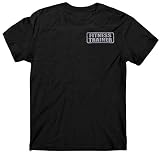
- Imported
- 100% ring spun cotton, 30/1 fine jersey fabric.
- Fitted T-Shirts with soft fabric.
- All unique designs are screen printed, NOT heat transfered.
- Designed and screen printed in USA.
Textile systems can distribute sensing across a garment rather than relying on one wrist or chest location. Research into distributed sensing along fibers explores how to capture strain and movement through textiles; it also highlights the challenge of maintaining reliable connections as fabric stretches, moves and is washed. The study on distributed sensing along fibres describes this as an engineering problem, not a solved feature of everyday clothing.
What can the clothing measure?
| Signal | What it may help assess | Important limitation |
|---|---|---|
| ECG or heart rate | Cardiovascular response to exercise and recovery trends. | Movement and inconsistent textile-to-skin contact can degrade signal quality. |
| EMG | Muscle activation patterns, left-right differences and rehabilitation progress. | Electrode placement and interpretation matter; activation is not, by itself, a direct measure of strength or fatigue. |
| Inertial motion | Acceleration, rotation, repetitions and aspects of workload. | A movement count does not establish that a movement was technically sound. |
| Textile strain | Changes in posture, joint movement, breathing or fabric stretch. | Fabric deformation, fit and sensor drift can change the reading. |
| Pressure | Contact timing, load distribution or posture, depending on sensor placement. | Fit and compression can affect readings. |
| Skin temperature | Local heat-response trends and recovery context. | Skin temperature is not the same as core body temperature. |
| Sweat or skin chemistry | Potential physiological context, depending on the sensor and the substance measured. | Sweat readings do not automatically reveal whole-body hydration, and many approaches remain experimental. |
| SpO₂ | Oxygen-saturation estimates or trends in systems designed to measure them. | Motion, fit, skin contact and ambient conditions can affect reliability. |
Two research examples show the range of work underway, not proven Olympic performance gains. A 2025 paper describes sportswear using screen-printed graphene strain sensors and machine learning to classify exercise execution (the paper). The SIXTH project describes a biosensing vest intended to track heart rate, oxygen saturation, temperature, sweat moisture and sweat pH, with haptic, thermal or audio feedback; it is an award-listed prototype, not evidence of a mass-market product (project description).
Where smart clothing may help athletic performance
Managing training load
Repeated measurements can help a team compare the demands of a session with an athlete’s response. If a familiar workout produces an unusual physiological response, that may prompt a coach to review workload, recovery or other relevant context. The useful signal is usually a trend against an individual baseline, not a single score that declares an athlete ready or unready.
Rank #2
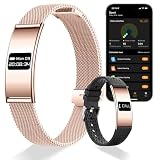
- 【24/7 Health & Women's Wellness Monitoring】-Stay proactive about your health with automatic health detection. The advanced optical sensor continuously tracks heart rate, blood oxygen, and sleep quality without manual setup. Thoughtfully designed for women, it includes a dedicated menstrual cycle tracker to predict periods and fertile windows—making this slim smart watch the perfect wellness companion for both him and her
- 【2.8mm Ultra-Thin & Stainless Steel Design】-Redefining wearable elegance—our smart watch features an incredible 2.8mm ultra-thin profile paired with a premium stainless steel mesh band. Despite the sophisticated metal build, it weighs just 41.2g, creating a barely-there feel that slides effortlessly under shirt cuffs. Perfect for those who demand both minimalist style and all-day comfort at the office or beyond.
- 【100m Waterproof & Shake to Take Photo】-Dive deeper with true 100m waterproof capability and advanced potting process design. Unlike basic splash-proof trackers, this smart watch handles swimming, snorkeling, and water sports with absolute confidence. Plus, the innovative shake to take photo feature lets you capture memories instantly—just shake your wrist to trigger your phone's camera, perfect for underwater shots or group photos without a timer.
- 【Smart Activity Tracking & Bluetooth Connectivity】--Hit your daily goals effortlessly. The built-in pedometer automatically logs steps, distance, and calories burned throughout the day. Stay seamlessly connected with call and message notifications delivered straight to your wrist, plus app alerts from social media. Compatible with both Android and iOS, it keeps you informed while your phone stays safely in your pocket or bag
- 【Long Battery Life & Ultra-Light Design】-Power your adventures longer with an extended battery life, offering 5-7 days of heavy use and an impressive 30 days of standby. Despite the long-lasting power, we've engineered this smart watch to weigh only 41.2g— The ultra-slim profile and lightweight stainless steel design ensure comfortable 24/7 wear—through sleep, swims, workouts, and workdays
Understanding technique and movement
Sensors placed at several body locations may help identify changes in range of motion, asymmetry, compensatory movement or technique under fatigue. These measurements can add detail to video or a coach’s observation, particularly when comparing repeated sessions. They do not automatically explain why a movement changed or prove that a change will improve results.
Free tools Windows power users keep installed
One-click scans. No signup required.
Supporting rehabilitation and return to play
Clinicians may use more frequent movement or muscle-activation observations to track rehabilitation and inform discussions about an athlete’s progress. Smart clothing may support assessment and feedback; it should not be presented as an injury-prevention guarantee or as a substitute for clinical judgment.
Planning recovery
Recovery monitoring is a visible elite-sport use of wearables, although the device may be a ring, watch or other sensor rather than a smart garment. The LA28 announcement describes ŌURA’s planned role around sleep, readiness, activity, recovery and wellbeing, and says LA28 will work with Team USA medical staff on health research into athletes’ adaptation to training and recovery. ŌURA also markets an athlete-performance platform for collegiate and professional organizations.
Rank #3
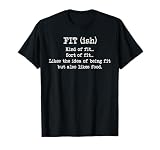
- Funny design.
- Lightweight, Classic fit, Double-needle sleeve and bottom hem
Monitoring heat and delivering feedback
Temperature, sweat or physiological-strain measurements could contribute to heat-risk decisions, especially in outdoor or hot-weather training. They are not diagnoses: skin temperature is not core temperature, and sweat data alone do not establish hydration status. Some prototypes aim to give immediate vibration, thermal or audio cues. Such alerts may be useful when a screen is impractical, but noisy readings or frequent prompts can distract an athlete.
Why clothing instead of a watch or chest strap?
A garment can place sensors at several locations, maintain broad contact with the body or be designed around a specific movement. That makes clothing a potential complement to watches and straps, not an automatic replacement. A wrist device can be convenient for general activity trends; a specialist garment may offer more targeted movement or muscle data. The right tool depends on the question being asked and whether the measurement has been validated for that task.
Windows Errors? Fix Them Before They Spread
Repair common Windows errors and clear accumulated junk for a smoother, more stable PC - no reinstall needed.Free scan · no reinstallOutdated Drivers Are Slowing You Down
One free scan finds every outdated or missing driver and matches the right update for your exact hardware.Free scan · exact hardware matchMore sensors do not necessarily produce better decisions. A garment must fit consistently, keep contact during movement and provide outputs that a qualified person can interpret. If it generates a separate dashboard that the coaching or medical team cannot incorporate into its workflow, extra data may simply add workload.
Rank #4

- Fitness Training design. Perfect for a fitness influencer, personal trainer or online accountability coach for home workout exercise.
- Health & Fitness Coach design for health and fitness coaches, personal trainers and fitness influencers that have inspired you!
- Lightweight, Classic fit, Double-needle sleeve and bottom hem
What Olympic use actually means
“Used in the Olympics” can refer to quite different settings. The public evidence described in the GSSI Sports Science Exchange review is stronger for elite-sport monitoring, preparation and pilot work than for sensor-embedded garments being routinely worn in Olympic medal events.
- Training and national-team preparation: A practical setting to test a device over repeated sessions and build individual baselines.
- Medical, rehabilitation and recovery work: Wearables can contribute to monitoring, but not every wearable used for this purpose is clothing.
- Research and pilot programs: Elite sport can provide demanding conditions for evaluating sensors, but a pilot does not establish broad adoption or improved results.
- Competition day: Use depends on sport-specific equipment rules, event regulations, safety, identification and other restrictions. A Tokyo 2020-era IOC identification document allowed product-technology identification on clothing within defined limits while noting that federation rules could be stricter. It is not a universal current rule for every sport or Games; consult the applicable edition and federation regulations. IOC/Tokyo 2020 identification guidelines
ŌURA being named an official Team USA and LA28 wearable is evidence of an Olympic-linked partnership, not proof that sensor clothing is standard competition kit. The ring’s stated emphasis is recovery and wellbeing rather than textile sensing.
What products and projects illustrate the market?
| Example | What it is | What the evidence supports |
|---|---|---|
| WHOOP Body | Garments that position a separate WHOOP 4.0 or 5.0 sensor at different body locations. | A consumer-facing sensor-carrier apparel example, not textile-integrated EMG or a standalone sensing garment. The cited WHOOP page does not establish a garment price. |
| Coreimpact Performance | Vendor-described compression apparel with integrated EMG sensors and associated software. | The vendor listed a $699 price and preorder with expected delivery in Fall 2026 when observed; these are vendor listing details, not independent validation or confirmation of current stock. Its page listed team discounts of 15% for five suits and 20% for ten or more. Coreimpact product page |
| Torq Labs | Multi-sensor clothing marketed for movement analysis, coaching, rehabilitation and team use. | The company describes dashboards and multi-location sensing; those are vendor claims, not independent evidence of performance outcomes. Public pricing was not stated on the cited page. Torq Labs |
| SIXTH | A biosensing vest prototype. | An illustration of experimental sensing and feedback ambitions, not an established consumer or Olympic product. Project details |
| ŌURA Ring | A ring-based wearable associated with Team USA and LA28. | Relevant to Olympic athlete monitoring and recovery, but it is not apparel and does not provide distributed textile sensing. LA28 announcement |
How to judge whether the data are trustworthy
Before treating a garment’s output as actionable, ask how it was tested and what its number represents. “AI-powered,” “real-time” and “medical-grade” are not substitutes for a validation method or outcome evidence.
Best Value

- Funny design. Hilarious Irony Smart Ass Donkey Gag T Shirt for Men and Women
- Awesome Funny Pun Saying I'd Rather be a Smart Ass Than be a Dumb Ass Cool Sarcasm on Tee Shirt for School, Party and Bar
- Lightweight, Classic fit, Double-needle sleeve and bottom hem
- Was the sensor compared with an appropriate reference, such as ECG, motion capture, force plates or laboratory EMG?
- Was it tested during the movements and conditions where the athlete will use it, not only at rest?
- Were enough athletes and garment sizes included to understand how fit and body differences affect the output?
- Does accuracy persist with sweat, repeated movement and laundering? Can the sensor drift as the fabric stretches or ages?
- Is the result a direct signal, an algorithmic estimate or a proprietary readiness score?
- Has the measure been shown to change a coaching or clinical decision, or improve an outcome?
For buyers, fit, wash instructions, removable electronics, battery life, offline data storage, export options and dashboard access are practical parts of reliability. A garment that works only in a narrow fit or requires an inaccessible software ecosystem may be unsuitable even if its sensor performs well in a demonstration.
Who controls an athlete’s data?
Physiological and biometric information can reveal more than workout volume: sleep disruption, stress, fatigue, illness, injury status, and potentially reproductive-health information. In a team setting, access to those signals can affect selection, contracts or an athlete’s sense of privacy. Paris 2024 integrity guidance treats health-related and biometric data as sensitive information, while IOC materials address risks from monitoring technologies and AI. Paris 2024 integrity best-practice guide; IOC Olympic AI Agenda; IOC ethics publication.
Before adopting a system, athletes and organizations should establish who can see raw measurements and summaries, how long data are retained, whether vendors can reuse or share them, how deletion works, and whether information crosses borders. They should also address whether an athlete can decline participation without losing selection opportunities or support. Technical access controls matter, but consent is not meaningfully voluntary if refusal carries an undisclosed penalty.
What can everyday athletes realistically expect?
For consumers, the more accessible category is often clothing that carries an existing sensor, such as WHOOP Body, rather than a fully sensing textile. That can offer a different sensor position or a more comfortable way to wear a device, but it remains tied to the compatible sensor and its software ecosystem. People seeking muscle-specific activation, joint mechanics or custom team dashboards are more likely to encounter specialist, early-access or vendor-led systems than a simple retail garment.
Continuous sweat chemistry, dependable muscle-specific fatigue estimates and fully washable embedded electronics remain less mature than basic activity or recovery tracking. A useful buying decision starts with one defined question—such as sleep trends, training response or rehabilitation movement—then checks validation, fit, maintenance, data access and total cost for that use. A sensor count alone is not a reason to buy.
What smart apparel can—and cannot—change
Sensor clothing can make it easier to collect movement and physiological information in training, recovery and rehabilitation. Its Olympic significance is therefore more about the preparation behind performance than a visible change to competition equipment. Whether it helps an athlete depends on a full chain: a reliable signal, a meaningful interpretation and a good decision. The garment supplies data; it does not guarantee faster times, fewer injuries or medals.
Quick Recap
Product prices and availability are accurate as of the date/time indicated and are subject to change. Any price and availability information displayed on Amazon at the time of purchase will apply.