Recommended Free Tools
Wearable sweat sensors can detect inflammatory proteins in perspiration, but they remain experimental monitoring technologies rather than consumer diagnostic watches or patches. Research systems have measured C-reactive protein (CRP), interleukin-6 (IL-6), tumor necrosis factor-alpha (TNF-α), interleukin-1 beta (IL-1β) and calprotectin. Early studies show that some sweat readings track blood or stool reference measurements, yet the studies are small, use different devices and sampling methods, and do not establish that anyone should change treatment from a sweat result alone.
What a sweat inflammation sensor measures
Inflammation is not one molecule. It is a biological response involving many signaling proteins, and different diseases produce different patterns. Sweat-sensor studies have therefore targeted several markers rather than a single universal “inflammation level.”


| Marker | What the studies investigated | Important qualification |
|---|---|---|
| CRP | Sweat-to-serum agreement and inflammatory bowel disease (IBD) classification | The strongest consistency in a 2026 review, but correlation does not establish a treatment threshold. |
| IL-6 | Relationship between sweat and serum concentrations | Reported correlations were moderate, with limited diagnostic discrimination. |
| TNF-α | Longitudinal monitoring in an early study | A high area-under-the-curve result came from one study and is not validated clinical performance. |
| IL-1β | Continuous on-body measurement in a proof-of-feasibility study | The work was an early step toward IBD monitoring, not a clinical decision tool. |
| Calprotectin | Sweat measurements compared with serum and stool measurements in an IBD cohort | The 2026 report was a conference abstract rather than a complete peer-reviewed trial report. |
How the wearable systems collect and read sweat
Passive sweat sampling
Some research patches rely on eccrine sweat that reaches the skin naturally. This approach avoids electrical stimulation but depends on the wearer producing enough sweat, and the amount and composition of sweat can vary with heat, exercise, hydration and skin conditions.
Iontophoresis and microfluidics
The Nature Biomedical Engineering patch used iontophoresis to stimulate localized sweat extraction. Microfluidic channels moved the sample through the patch, while a graphene-based sensor array and reagents produced the measurement. This is a specific research architecture, not a standard shared by every sweat wearable.
The Tool Desk
Outbyte Driver Updater FREEScan for outdated or missing drivers - takes under a minuteDriver Scan →Outbyte PC Repair FREERepair Windows errors before they cause bigger problemsFix Now →#1 Best Overall
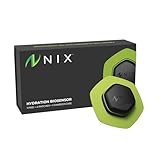
- Real-Time Hydration Data & Alerts - Stay optimally hydrated with real-time, personalized data and notifications sent directly to your phone, watch, or bike computer. Nix's hydration monitor analyzes your sweat as you train, quantifying exactly when, what, and how much to drink for peak performance. The perfect fitness tracker for endurance athletes training for their next marathon, Ironman or triathlon.
- Sweat-Powered, Science-Backed Performance - Nix is the first biosensor to scientifically analyze sweat and deliver real-time hydration insights. Track your fluid, electrolyte, and sodium losses using your own biomarkers - no needles, no pricks, just a single-use adhesive patch that works only when you’re actively sweating. It requires as little as 4.5 microliters of sweat to obtain a reading.
- Advanced App Features & Hydration Calculators - The free Nix Solo app connects via Bluetooth and gives you deep hydration analytics: sweat composition, environmental conditions, activity tracking, and custom drink inputs. Plus, use five in-app calculators (Custom Drink, Recovery, Race Day, Predictive, and Priming) for pre workout and post workout tailored hydration guidance. Available in multiple languages, including Spanish, French, and Portuguese. Compatible with iOS and Android devices.
- Designed for Serious Training & Race Prep - Perfect for endurance sessions 45+ minutes long runs, cycling (indoor or outdoor), brick workouts, or race training. The rechargeable Nix Pod clips onto a new single-use patch each session. With up to 36 hours of battery life, over 70% of Nix users rely on it for endurance prep. Seamlessly integrates with Garmin smartwatches, Apple Watch, and Garmin bike computers.
- Complete Starter Kit & Athlete-Trusted Tech - The Nix Hydration Biosensor Starter Pack includes 1 rechargeable Pod, 1 Sweat Patch Refill (4 patches), 1 charger case, and 1 USB-A to USB-C cable. Used by elite athletes across the NBA, NFL, NHL, MLB, PGA, Olympians, and Ironman competitors.
Aptamer-based sensing
A separate platform used aptamers—engineered binding molecules—to sense TNF-α and IL-6. Its chemistry and calibration cannot be assumed equivalent to the graphene-array patch or to systems that measure other proteins.
When comparing platforms, check the biomarker, whether sweat was passive or induced, the reference assay, and whether the work was laboratory validation or testing on people. A similar-looking patch can generate fundamentally different evidence.
What the published evidence actually shows
Scale and consistency of the literature
Alsharidah and colleagues’ 2026 review in Biosensors identified 13 studies published from 2020 through 2025, with 5 to 80 participants per study; the search covered literature through April 2026. The review described the evidence as limited by small, heterogeneous studies and called for standardized protocols and larger prospective clinical validation.
CRP results
Across the reviewed work, sweat and serum CRP showed a correlation of r = 0.844. That is evidence that the two measurements moved together in the studied conditions, not proof that a sweat value can diagnose a disease or replace a blood test. In one IBD cohort, CRP produced an AUC of 0.845. That estimate applies to that cohort and disease setting; it should not be generalized to other populations.
What’s actually slowing this PC down?
Pick the symptom - the matching free tool is one click away.
IL-6 and TNF-α results
Reported sweat-serum IL-6 relationships had R² values of 0.60–0.72, alongside limited diagnostic discrimination. A single longitudinal study reported an AUC of 0.962 for TNF-α. Because that figure came from one study, it is not an established performance claim for all TNF-α sweat sensors.
Continuous IL-1β monitoring
Jagannath and colleagues’ 2020 proof-of-feasibility study used 26 healthy subjects for sweat collection and 20 subjects for on-body continuous monitoring. The researchers reported stable IL-1β measurement for 30 hours and characterized the work as an early step toward monitoring IBD. The participant numbers and study design do not establish effectiveness in routine patient care.
CRP and calprotectin in IBD
A 2026 conference abstract by Shahub and colleagues enrolled 33 people with IBD and compared perspiration CRP and calprotectin with serum and stool measurements. Because it is an abstract rather than a full peer-reviewed trial report, details needed to judge reproducibility and clinical usefulness remain limited.
Panel accuracy claims
A 2021 SWEATSENSER study reported more than 90% accuracy and more than 95% specificity for a cytokine panel over an analytical range of 0.2–200 pg/mL. Those figures describe that early study’s assay and conditions. They are not validated clinical diagnostic accuracy for a consumer wearable.
Quick wins for a faster PC:
Scan for outdated or missing drivers - takes under a minuteDriver Scan →Repair Windows errors before they cause bigger problemsFix Now →Why a promising correlation is not yet a medical diagnosis
- Sweat is not serum. Proteins can enter sweat at different concentrations and with different timing than they appear in blood.
- Collection changes the sample. Exercise, temperature, hydration, stimulation method, skin contamination and sweat rate can all affect a reading.
- Studies used different endpoints. Some compared values numerically; others assessed classification, analytical ranges or time-series behavior.
- Small cohorts inflate uncertainty. Results from 5–80 participants, often in a single disease group, cannot define universal cutoffs.
- Inflammation is disease-specific. A marker useful in an IBD cohort may not identify infection, arthritis, cardiovascular inflammation or an individual flare.
A clinically useful device would need prospectively tested thresholds, repeatability across skin tones and sweat conditions, comparison with accepted reference tests, and evidence that using the result improves decisions or outcomes.
Rank #4

- Compatible Sensors: This replacement chest strap works seamlessly with most heart rate monitors, Compatible with Polar H10 H9 H7, Wahoo Tickr, XOSS, Coospo etc, ensuring a stable and accurate heart rate reading for your workouts
- Comfortable and Elastic: Crafted from high-quality waterproof and sweat-resistant fabric, this chest strap provides a secure fit while maintaining comfort, allowing you to focus on your exercise without irritation or slipping
- Largely Adjustable: With an adjustable wearable size from 25.59 inches to 37.4 inches, this chest strap is designed to accommodate a wide range of body shapes, ensuring a snug and reliable fit through different training intensities
- Easy to Use: Simply adjust the strap to the correct size, ensuring the electrode area sits firmly against your skin for optimal performance Check the connector position before use to guarantee seamless heart rate tracking
- Enhanced Stability: Upgraded with a reinforced buckle design, this chest strap offers improved security and durability, preventing loosening or shifting even during intense workouts
Can you buy a consumer sweat inflammation monitor?
No broadly available, verified consumer product is established by the cited evidence. The published systems are research platforms, and the evidence does not establish regulatory clearance, a consumer sales channel or a treatment decision based on sweat alone. A home CRP test, where available, uses a different sample—usually blood—and is not equivalent to continuous sweat monitoring.
EnLiSense and the SWEATSENSER/AWARE platforms appear in relevant research contexts, but their current sales status, licensing, consumer use and referral arrangements are not established here. They should not be treated as recommended products. Generic fitness watches, “inflammation” scores and laboratory sensor components are not substitutes for a validated sweat cytokine monitor.
Independent reader supportYour contribution helps us test, update, and keep practical guides available for everyone.How to evaluate a research claim or future product
- Identify the marker. Ask whether the device measures CRP, IL-6, TNF-α, IL-1β, calprotectin or a panel.
- Check the sample method. Determine whether sweat is collected passively or induced with iontophoresis.
- Read the comparator. Look for serum, stool or another reference assay, and confirm that the comparator was collected at an appropriate time.
- Inspect the population. Note participant count, disease, age range and whether healthy volunteers were mixed with patients.
- Separate analytical from clinical evidence. A detection range or laboratory accuracy does not prove diagnosis in daily life.
- Look for prospective validation. Reliable clinical use requires testing in new patients, predefined thresholds and an assessment of false positives and false negatives.
- Ask what action is supported. Unless clinical guidance and regulatory status say otherwise, never start, stop or alter treatment from a sweat reading alone.
What this means for watches and other wearables
A wristwatch can provide a convenient body-worn interface, but the watch itself does not automatically measure inflammatory proteins. A true sweat inflammation system would need a sampling interface, biochemical recognition chemistry, calibration, contamination controls and a way to interpret changing concentrations. Heart rate, temperature or activity data may complement such a system, but they do not turn a conventional smartwatch into a cytokine diagnostic.
Best Value

- The Hykso app allows you to view your punch output in real time and measure your daily, weekly, and monthly progression. The app works for both iPhones and Android phones.
- Hykso's punch trackers track your hand movement 1000 times per second to detect the number, the type, and the velocity of all your punches.
- Sweat Proof
- 6000 data points per punch will give you top quality data on your punch speed, type and intensity.
- Install the trackers on the top of your wrists, underneath two or more wraps of your wrist wraps. Then, you're good to go!
The near-term value of these technologies is repeated research measurement with less reliance on blood draws. Whether that becomes dependable home monitoring depends on larger, standardized prospective studies and proof that the readings add value beyond established clinical tests.
Frequently Asked Questions
Can a sweat sensor diagnose an inflammatory disease?
Not on the available evidence. Research devices can detect inflammatory proteins, but no cited study establishes a broadly validated diagnostic threshold or supports changing treatment from a sweat result alone.
Is a sweat CRP reading the same as a blood CRP test?
No. Studies have found agreement or correlation in particular cohorts, but sweat and blood are different samples and the relationship does not make their values interchangeable.
Do smartwatches currently measure inflammation from sweat?
The cited evidence does not establish a commercially available smartwatch with validated sweat cytokine monitoring. The reported systems are research platforms with different patches, sensors and collection methods.
Quick Recap
Product prices and availability are accurate as of the date/time indicated and are subject to change. Any price and availability information displayed on Amazon at the time of purchase will apply.