Free tools Windows power users keep installed
One-click scans. No signup required.
Jewel bearings are tiny, hard bearing surfaces—usually drilled and polished synthetic ruby—that support pivots and other high-wear contacts inside a mechanical watch. They reduce friction and wear where moving parts meet, helping the movement run reliably over time. They are functional engineering components, not decorative gemstones, and they do not eliminate the need for correct lubrication or regular servicing.
What a jewel bearing does
Mechanical movements contain many rotating shafts. The narrow ends of those shafts, called pivots, must be held accurately in the movement’s plates and bridges while still turning freely. A jewel forms a hard, smooth bearing surface at a selected contact point.


Instead of allowing a steel pivot to turn directly in a softer metal hole, the pivot turns in the polished jewel. This limits friction at the contact and greatly reduces wear on both the bearing surface and the pivot. Seiko Museum Ginza describes gear-wheel and balance-wheel shafts being secured between the movement’s bottom plate and upper bridge in this way.
Jewels are also used in the escapement, where repeated impacts and sliding contacts make wear especially important. Typical examples include pallet jewels and the impulse-pin jewel associated with the balance assembly.
#1 Best Overall

- [Versatile Usage] With different types of oil to meet various watch movement needs, this set is suitable for a range of watch brands and , making it a must-have for watch enthusiasts.]
- [Suitable for All Bearing Types] Ideal for balancing bearings, lever pallets, and all jewel bearings, ensuring smooth for all gear areas.
- [Enhanced Watch Movement] Reducing friction and wear, this synthetic oil enhances the efficiency of the movement, prolonging the life of your timepiece.
- [ and Efficient] The synthetic oil prevents resin buildup and spreading, precisely lubricating critical watch parts for improved performance and reduced wear.
- [Portable and Compact] Lightweight and easily portable, this oil set is for watchmakers, fitting conveniently in toolboxes or bags for on-the- repairs.
Why watches use synthetic ruby
In watchmaking, “jewel” is technical shorthand. It does not usually mean a valuable natural gemstone. Modern horological jewels are generally made from synthetic ruby, a manufactured form of corundum. Ruby is hard, can be polished very smoothly, and is suitable for producing small, consistent bearing surfaces.
The Fondation Haute Horlogerie describes modern synthetic rubies being drilled and polished for pivot bearings. Seiko Museum Ginza also notes that synthetic sapphire and other hard stones can serve in bearing roles. ISO 6426-2:2026 defines a horological jewel as a non-metallic movement component above a specified hardness threshold and states that synthetic ruby is generally used in manufacturing horological jewels.
Rank #2
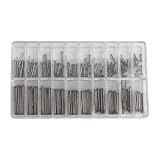
- Premium 304 stainless steel: Crafted from durable 304 stainless steel for superior strength and long lasting performance ensuring your watch repairs withstand daily wear
- Wide size compatibility: Features 20 sizes from 8 millimeter to 27 millimeter to fit a vast range of watch bands and models for versatile repair applications
- Complete 300 piece set: Includes 300 friction bars with 15 pieces of each size providing ample supply for multiple repairs and future replacements
- Effortless home repair: Enables convenient at home watch maintenance saving you time and costly professional service fees for band replacements
- Organized storage solution: Comes in a clear plastic storage box for easy size identification and neat organization of all 300 pieces
Where the jewels are placed
A jewel count is meaningful only when you know what the jewels are doing. Functional locations commonly include:
| Location or function | Why a jewel is used |
|---|---|
| Gear-train pivots | Supports rotating wheels while limiting friction and wear at the pivot contacts. |
| Balance-wheel pivots | Provides a low-wear bearing for the movement’s fastest and most delicate oscillating assembly. |
| Pallet jewels | Creates durable contact surfaces where the pallet interacts repeatedly with the escape wheel. |
| Impulse-pin jewel | Transfers motion between the balance and escapement at a wear-prone contact. |
The exact arrangement depends on the movement architecture. A jewel may be pressed into a plate or bridge, and some designs use shock-protection settings around the balance pivots.
What’s actually slowing this PC down?
Pick the symptom - the matching free tool is one click away.
Rank #3
Jewels reduce friction; they do not make a movement frictionless
A jewel is one part of a bearing system. Correct lubrication, clean surfaces, accurate alignment, suitable tolerances and a healthy steel pivot all matter. Oil reduces friction at the intended contact and prevents damaging wear; too much, too little or degraded oil can impair performance even when the movement has a normal jewel count.
ISO’s functional definition describes a jewel as serving to reduce friction and the wear rate of contacting moving surfaces. The Fondation Haute Horlogerie similarly explains that jewels reduce friction to a minimum, not to zero. A watch with worn pivots, contaminated oil or poor adjustment cannot be restored simply by adding jewels.
What does a watch’s jewel count mean?
The number printed in a specification tells you how many jewels the movement contains, but it is not a complete quality rating. The useful question is whether the jewels correspond to functional bearing and escapement positions in that movement.
As a general rule, the Fondation Haute Horlogerie and the Federation of the Swiss Watch Industry state that a simple mechanical watch displaying hours, minutes and seconds should have at least 15 jewels at locations most exposed to frictional wear. This is guidance for that type of movement, not a universal minimum for every mechanical or quartz watch.
Recommended Free Tools
Best Value
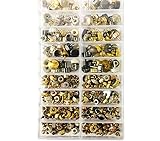
- Description Report Item Description: It is a combination of various color, meeting your needs definitely. Coming with a plastic storage box for well place.
- With the watch crown, many watches can be repaired or upgraded. Easy to carry, portable and compact in size with you wherever you go. Perfect for watch makers and watch repairing workers.
- Specification: Item Type: Repair Tools & Kits Material: Copper Size: 3.0-7.0mm
- Package Includes: 1 Box Watch Crown Parts(150-160pcs)
- Note: Conversion: 1inch=2.54cm, 1cm=0.393inch Please allow slightly 0-1cm difference due to manual measurement. Colors can appear different depending on light and how the listing is viewed. Thanks for your understanding and attention. Wish you a pleasant shopping experience!
Why a higher number is not automatically better
- Complications can require additional functional bearing points, so a higher count may reflect more parts rather than superior materials or finishing.
- Some movements have jewels in specialized locations whose value depends on the design, not on the headline number.
- Non-functional or redundant jewels would not improve a movement merely by increasing its count; interpretation should focus on placement and purpose.
- Service condition matters more than a specification alone. Properly lubricated, correctly fitted bearings are essential.
When comparing movements, examine where the jewels are placed, what functions they serve, how the movement is designed, and whether it has been maintained. Do not rank watches by jewel count alone.
Independent reader supportYour contribution helps us test, update, and keep practical guides available for everyone.Jewel bearings in mechanical versus quartz watches
The classic jewel-count discussion concerns mechanical movements because they contain a large gear train, escapement and balance assembly with many continuously moving contacts. Quartz watches vary widely: an electronic watch may use few or no mechanical jewels, while an analog quartz movement with a small gear train may use jewels at selected pivots. The count therefore cannot be interpreted without knowing the movement type.
What happens when a jewel or pivot is damaged?
A cracked, displaced or worn jewel can affect amplitude, accuracy, power transmission or the ability of a wheel to turn freely. A damaged steel pivot can be just as serious, because the jewel is only the bearing surface and cannot compensate for incorrect pivot geometry.
Replacement is movement-specific. The required jewel’s outside diameter, hole diameter, thickness, shape and setting must match the plate, bridge and pivot. Those dimensions are not universal across watches, so an ordinary owner should not buy loose jewels or attempt a replacement based only on the advertised jewel count. Diagnosis and fitting belong with a qualified watchmaker using the movement’s specifications and appropriate measuring tools.
How to read a jewel specification
- Identify the movement type. Determine whether the watch is mechanical, automatic, manual-wind or quartz.
- Confirm the stated count. Treat the number as a description of the movement, not a standalone grade.
- Ask what is functional. Look for information about pivot bearings, pallet jewels, impulse jewels and any complications.
- Consider service history. Lubrication, cleanliness, alignment and pivot condition determine whether the bearing system is working properly.
- Use a specialist for faults. Unusual noise, poor winding, erratic accuracy or a stopped movement requires diagnosis rather than a higher jewel count.
The practical takeaway
Watch jewels are miniature, hard bearing components that protect the movement’s most important moving contacts. Synthetic ruby is common because it provides a durable, polishable surface for pivots and escapement parts. Their job is to reduce friction and wear, while lubrication and maintenance keep the complete bearing system functioning. A jewel count—15 as a general reference for a simple hours-minutes-seconds mechanical watch—offers context, but placement, movement design and service condition tell you far more than the number by itself.
Quick Recap
Product prices and availability are accurate as of the date/time indicated and are subject to change. Any price and availability information displayed on Amazon at the time of purchase will apply.