Short answer: The Oura Ring 4 was the strongest sleep-first wearable recommendation for the U.S. market in December 2024. But it is not the best choice for everyone. iPhone owners may get more value from an Apple Watch Series 10, athletes may prefer WHOOP 4.0 or Garmin, Samsung users should look at the Galaxy Watch7 or Galaxy Watch Ultra, and people who do not want to wear anything should consider Withings Sleep.
The important qualification is that consumer trackers estimate sleep. They are useful for sleep duration, timing, regularity, heart-rate trends, and changes in breathing or recovery. They are not a replacement for polysomnography, a clinician’s evaluation, or a diagnosis of sleep apnea. The right purchase depends more on comfort, phone compatibility, charging, subscription cost, and the metric you actually need than on a single claim of being the most accurate.
Quick comparison
These are category winners, not the results of one universal head-to-head test. The evidence is mixed: some devices have peer-reviewed polysomnography comparisons, some have manufacturer testing, and others are supported mainly by expert hands-on evaluation. Prices below preserve the 2024 frame; configuration, sales, bands, cellular service, and regional availability can change the total.
Recommended Free Tools
| Product | Form factor | Best for | Phone compatibility | Subscription | Battery or power | Core metrics | Medical-feature caveat | 2024 U.S. price | Estimated two-year cost |
|---|---|---|---|---|---|---|---|---|---|
| Oura Ring 4 | Ring | Best overall sleep-focused wearable | iOS and Android | $5.99 monthly or $69.99 annually for advanced insights | Up to eight days, manufacturer estimate | Duration, efficiency, stages, naps, HR, HRV, respiration, SpO₂, temperature trends | Sleep and recovery estimates; not a diagnosis | $349 starting price | $488.98 before tax for the ring plus two annual memberships |
| Apple Watch Series 10 | Smartwatch | iPhone owners; possible sleep-apnea signs | iPhone required | No separate Oura-style sleep membership for the built-in tracking described here | Must be charged around overnight wear | Sleep timing and stages, heart rate, health trends, breathing-disturbance analysis on supported models | Sleep-apnea notifications are not a diagnosis | Varies by case, band, and GPS or cellular configuration | Device price plus any accessories; no universal total |
| WHOOP 4.0 | Screenless wrist or body-worn sensor | Athletes and recovery coaching | App-centered; check phone requirements before purchase | Membership required | About five days for the 2024-era hardware | Sleep need, sufficiency, consistency, strain, recovery, HRV, and heart-rate trends | Coaching and estimates are not clinical testing | Plan and hardware dependent | Membership-dependent; calculate 24 months of the chosen plan |
| Garmin Venu 3 and compatible Garmin watches | Sports smartwatch | Athletes who want sleep and training without a dedicated sleep membership | Broad phone compatibility; features vary by model | No dedicated sleep subscription for the features described here | Model dependent; generally built for longer use between charges | Stages, naps, Pulse Ox, HRV status, Sleep Coach, Body Battery, training data | Model-specific estimates; Pulse Ox and sleep data are not a diagnosis | Varies by model | Usually device and accessory cost, without a dedicated sleep membership |
| Withings Sleep | Under-mattress sensor | People who do not want to wear a device | iOS and Android | No dedicated overnight wearable membership stated for the U.S. product | Requires a power outlet | Sleep cycles, duration, heart rate, snoring, breathing disturbances | U.S. Sleep is not the same medical product as European Sleep Analyzer | Varies by U.S. retailer and sale | Hardware and replacement or setup costs; no universal total |
| Eight Sleep Pod 3 | Mattress cover and temperature system | Hot sleepers and couples with different temperature preferences | App dependent | Advanced features and Autopilot require a subscription | Powered bedside system | Sleep estimates plus active heating and cooling | Tracking does not diagnose a sleep disorder | System and plan dependent; substantially more expensive than a wearable | Hardware plus any required 24-month service plan |
| Muse S Gen 2 | EEG headband | EEG-style experimentation and meditation | App and Bluetooth workflow; verify device support | App terms and optional features vary | Rechargeable; overnight fit determines usable data | EEG, heart rate, breathing, movement, sleep, meditation | Consumer EEG is not equivalent to a clinical polysomnogram | Varies by configuration and retailer | Hardware plus any app plan or replacement costs |
| Samsung Galaxy Watch7 or Galaxy Watch Ultra | Smartwatch | Samsung and Android users | Best health-feature support with a compatible Galaxy phone | No separate sleep membership for basic Samsung Health tracking | Model and settings dependent | Stages, activity, heart rate, snoring-related features, breathing-disturbance screening | Authorized feature screens for possible signs of moderate-to-severe obstructive sleep apnea in eligible users; it does not diagnose it | Varies by model, size, and connectivity | Device and accessory cost; no universal total |
Cost note: The Oura total is calculated from the verified 2024 starting price of $349 plus two annual memberships at $69.99. For the other products, a single number would be misleading because the 2024 total depends on watch configuration, mattress size, plan, cellular service, or retailer. Compare the hardware price, required service for 24 months, bands or chargers, and what remains available if you stop paying.
#1 Best Overall

- What You Get - A 12-month membership, WHOOP 5.0 device, a SuperKnit band, and a waterproof* Wireless PowerPack. Choose from a range of band and accessory combinations, and add a waterproof Wireless PowerPack for on-the-go charging.
- HSA/FSA Eligible - All 12-month WHOOP memberships and battery packs qualify for HSA/FSA reimbursement.
- Screenless, Distraction-Free - No screen, no buzzing notifications. WHOOP focuses entirely on your health and performance, with up to 14+ day battery life so you can wear it around the clock.
- Healthspan with Pace of Aging - Understand how your daily habits shape long-term health. Healthspan measures your WHOOP Age and Pace of Aging so you can take science-backed action to slow biological aging and extend your prime years.
- 24/7 Health Insights - WHOOP monitors your heart rate every second of every day, delivering personalized Sleep, Strain, Recovery, VO2 max, Menstrual Cycle, and Heart Rate insights along with a Real-time Stress Monitor that pinpoints your stressors and shows how your body responds in the moment, so you can make better decisions about training, rest, and daily performance.
How to choose the best sleep tracker for you
- Start with nightly adherence. A theoretically better sensor is useless if you remove it at 2 a.m., forget to charge it, or dislike sleeping with it. Comfort and automatic detection usually matter more than a small difference in a laboratory statistic.
- Check the phone ecosystem. Apple Watch requires an iPhone. Samsung’s strongest health features generally require a compatible Galaxy phone. Oura works with iOS and Android. Garmin has broad phone compatibility, but individual features vary by model. WHOOP, Muse, and most contactless products depend heavily on their companion apps.
- Calculate two-year ownership cost. A low upfront price can conceal a membership. Conversely, an expensive bed system may be worthwhile to someone who needs active temperature control, not merely a sleep score.
- Choose the metric, not the marketing phrase. If you need bedtime consistency, almost any dependable tracker or diary can help. If you want training recovery, Garmin or WHOOP makes more sense. If you want to monitor possible breathing disturbances, look for the exact authorized feature and eligibility rules rather than a vague apnea claim.
- Plan for charging. A watch that is charging during your normal sleep window creates missing nights. Rings and screenless bands usually make overnight wear easier, while an under-mattress device avoids charging on the body but needs continuous power.
- Consider your relationship with data. Sleep scores can help identify patterns, but they can also create anxiety or perfectionism. If you already worry about sleep, a simple diary may be a better first step.
The eight best sleep trackers of 2024
1. Oura Ring 4: best overall sleep-focused wearable
What it is: A small ring designed around sleep, recovery, and long-term health trends rather than smartwatch notifications. Oura announced the Ring 4 in October 2024. The U.S. starting price was $349, with membership priced at $5.99 per month or $69.99 per year. Oura advertised up to eight days of battery life, depending on size and use. The ring works with iOS and Android.
Its optical sensors, temperature sensing, and accelerometer are used to estimate sleep duration, time in bed, sleep efficiency, naps, sleep stages, heart rate, HRV, respiration, blood oxygen, and temperature trends. The official Ring 4 announcement and specifications page describe the hardware and battery qualifications.
Why buy it: Oura is unusually sleep-first. The ring is discreet, generally easier to wear overnight than a large sports watch, and its app emphasizes baselines and trends instead of only presenting raw measurements. It is the clearest choice for someone whose primary goal is understanding sleep rather than receiving notifications or tracking GPS workouts.
Do these 3 things before closing this tab:
1Clear out junk files and repair common Windows errors2Fix the driver behind crashes, sound loss and screen glitches3Repair Windows errors before they cause bigger problemsIt also has comparatively strong independent validation among consumer wearables. In a 2024 polysomnography study of 35 healthy adults, an earlier Oura Ring Gen 3 produced the highest four-stage agreement of the three tested devices. That result is useful but does not directly validate Ring 4, and it does not make Oura universally accurate. The study was small, used a controlled inpatient night, and was funded by Oura; one author disclosed an Oura advisory-board relationship. Those qualifications matter.
Skip it if: You do not want a recurring membership, work with your hands, have finger swelling, dislike jewelry, or want a full smartwatch. Advanced insights depend on the membership, and the ring still estimates rather than directly measures most sleep stages.
Verdict: The best all-around recommendation when sleep is the main reason to buy, provided you accept the subscription and can comfortably wear a ring every night.
2. Apple Watch Series 10: best for iPhone owners
What it is: A full smartwatch whose sleep features sit inside Apple Health. It is the natural starting point for an iPhone owner who already has, or is considering, an Apple Watch for activity, heart-rate data, alarms, and general health tracking.
Quick wins for a faster PC:
Clear out junk files and repair common Windows errorsFree Scan →Fix the driver behind crashes, sound loss and screen glitchesFind Drivers →Repair Windows errors before they cause bigger problemsFix Now →watchOS 11 added sleep-apnea notifications for Apple Watch Series 9, Series 10, and Ultra 2. Apple says the feature analyzes wrist movement associated with breathing disturbances and reviews data over a 30-day period. Apple also states that the feature received FDA clearance and additional authorizations in more than 150 countries and regions, including the United States, the European Union, and Japan. The Apple announcement contains the model and software qualifications.
Why buy it: It provides a good balance between sleep tracking and a useful daytime watch. The independent 2024 comparison with polysomnography included an Apple Watch and found better four-stage agreement than the tested Fitbit, although the result still represented classification rather than direct EEG measurement. Apple’s ecosystem also makes it easy to compare sleep with activity and other health data.
Trade-offs: An Apple Watch requires an iPhone, so it is not an Android recommendation. A smartwatch is larger and more distracting than a ring, and charging is a practical issue: if the watch is on its charger during the night, the missing data may matter more than its sensor quality. The sleep-apnea feature is a notification about possible signs, not a diagnosis, and availability depends on model, region, age, software, and phone compatibility.
Skip it if: You want a sleep-only device, dislike overnight charging, use Android, or want a deeply specialized sleep-coaching experience.
Verdict: The best sleep-tracking purchase for many iPhone owners, especially those who want a smartwatch anyway. Before buying another sensor, check whether the Apple Watch you already own supports the sleep features you need.
3. WHOOP 4.0: best for athletes and recovery
What it is: A screenless wearable built around strain, recovery, sleep need, and coaching. WHOOP 4.0 can be worn on the wrist or with compatible body-worn clothing accessories, and the phone app is central to the experience. The 2024-era hardware offered roughly five days of battery life according to WHOOP’s battery documentation.
Why buy it: WHOOP is most useful when sleep is part of a training system. It connects sleep need and sleep sufficiency with activity strain, recovery, consistency, HRV, and coaching. For a runner, cyclist, triathlete, or other serious athlete, that context can be more useful than a standalone REM percentage.
The screenless design also removes the temptation to check a watch during the night, although you must use the app to review information. Battery life and charging accessories are designed to reduce gaps in wear, but the best results still depend on keeping the sensor on.
Trade-offs: WHOOP is a subscription-only ecosystem: the membership is not an optional add-on to a normal standalone tracker. That makes the two-year cost fundamentally different from Garmin or a watch you already own. Its sleep recommendations can also be unrealistic for people with fixed work schedules, young children, caregiving responsibilities, or other constraints. A recommendation to sleep longer is not the same as a practical treatment plan.
Skip it if: You only want bedtime and wake-time information, need a display, refuse recurring fees, or are likely to ignore the training and recovery features.
Verdict: The best choice for athletes who will use the entire recovery ecosystem—not the best value for someone who wants a basic sleep log.
Rank #2

- 【24H Health Monitoring】Fitness Tracker With the function of monitoring heart rate and blood oxygen, you can track your health data 24/7 and help adjust your overall condition.The sleep tracker also analyzes your sleep quality, tracks your deep sleep, light sleep, and awake periods, rates your sleep quality, and helps you adjust your sleep habits.
- 【All Day Activity Tracking】The fitness tracker can automatically tracks your steps, distance and calories burned.Accurately record all-day activities and give professional analysis on improving your sports and daily habit.
- 【1.1" AMOLED Color Touchscreen】The fitness tracker showcases a sleek curved design and boasts a 1.1" AMOLED color touchscreen, enhancing your visual and operational experience. Choose from our extensive collection of 70+ cloud-based watch faces to personalize your device according to your preferences, mood, or outfit. Moreover, you can customize your favorite photos in the album as a unique dial to show your unique style and theme every day.
- 【25 Sport Modes】The digital watch offers over 20 sports modes, covering almost all your daily physical activities.Inclued walking, running, cycling, indoor running, free training, etc. Store the last 5 exercise records,helping you exercise and train more effectively.
- 【Smart Message Notification】The watch can receive Social software message notifications from mobile phones, including SMS, QQ, WeChat, WhatsApp, Facebook and Twitter, etc. Also can receive incoming call notifications and reject calls. so you never miss an important call or message.
4. Garmin Venu 3 and compatible Garmin watches: best for athletes without another sleep subscription
What it is: A Garmin sports watch that combines sleep estimates with training, GPS, recovery, and long battery life. The Venu 3 is the named 2024 recommendation, but Garmin’s sleep features are model- and software-specific rather than identical across every watch.
The Tool Desk
Outbyte PC Repair FREERepair Windows errors before they cause bigger problemsFix Now →Outbyte Driver Updater FREEFix the driver behind crashes, sound loss and screen glitchesFind Drivers →In March 2024, Garmin added Sleep Coach and related features to select watches across the epix, fēnix, Forerunner, vívoactive, and Venu families. Compatible models can track sleep stages, naps, Pulse Ox, heart rate, and HRV status. Sleep Coach uses factors including age, activity, recent sleep, naps, and HRV-related information to estimate sleep need. Garmin’s feature-release announcement lists the rollout and compatible categories.
Why buy it: Garmin is a strong fit for people who already live in Garmin Connect and want sleep to inform training load, Body Battery, recovery, and workouts without adding a dedicated sleep membership. It is also a better daytime sports tool than a ring or under-mattress sensor.
Evidence and limitations: Garmin’s sleep features have less direct independent validation than the best-known Oura, Fitbit, and Apple comparisons in the supplied research. WIRED’s hands-on testing found that a Garmin Epix Pro could report substantially more sleep than the reviewer believed she had obtained when compared with Oura and WHOOP. That is one tester’s experience, not a universal error rate, but it illustrates why a sleep score should be checked against your actual experience.
Skip it if: You find large sports watches uncomfortable in bed, want the most sleep-focused app, or need a feature that your specific Garmin model does not support.
Free tools Windows power users keep installed
One-click scans. No signup required.
Verdict: The best no-dedicated-subscription route for athletes who want one watch to handle training and sleep. Confirm the exact model and software support before purchase.
5. Withings Sleep: best no-wear option
What it is: A thin sensor placed under the mattress. In the United States it is generally marketed as Withings Sleep; Sleep Analyzer refers to the European version and its separate medical-device positioning. The U.S. device connects to power and tracks the person lying over the sensor without requiring a wristband, ring, or headband.
Withings says the U.S. product tracks sleep cycles, sleep duration, heart rate, snoring, and breathing disturbances. Its U.S. product page and support information describe the placement and measurements.
Why buy it: It solves the biggest adherence problem: there is nothing to remember to put on your body. It can suit people who dislike jewelry, cannot sleep comfortably in a watch, or want a passive sensor that stays in place.
Trade-offs: Under-mattress sensing is not automatically more accurate. Withings can classify quiet wakefulness in bed as light sleep, particularly when someone is reading, watching television, or lying still. Correct placement under the sleeper’s chest area, a suitable mattress, power, and the correct account and network setup all matter. It tracks the person over the sensor; it is not a whole-bed monitor, and a partner or pet can complicate the signal.
Do not confuse the U.S. product with the European Sleep Analyzer. Withings describes Sleep Analyzer as CE-cleared in Europe for sleep-apnea detection, but that status must not be generalized to U.S. FDA clearance for Withings Sleep. Regional availability and regulatory claims should be checked on the local product page.
Skip it if: You share a bed and cannot place the sensor under the correct sleeper, frequently change beds, or need a portable tracker.
Verdict: The best adherence choice for a person who will not wear a device, with the understanding that quiet wakefulness and bedroom conditions can distort the result.
Outdated Drivers Are Slowing You Down
One free scan finds every outdated or missing driver and matches the right update for your exact hardware.Free scan · exact hardware matchPC Slower Than It Used to Be?
A free scan shows the junk files, broken settings and background clutter dragging Windows down - then fixes them in one click.Free scan · Windows 10 & 116. Eight Sleep Pod 3: best for hot sleepers and temperature control
Date qualification: For a guide dated December 6, 2024, the historically appropriate product is the Eight Sleep Pod 3. WIRED’s Pod 4 review was published on December 30, 2024, after this article’s reference date. The relevant historical coverage is the Pod 3 review, not a later product backdated into the 2024 list.
What it is: A powered mattress cover and temperature-control system that combines sleep tracking with active heating and cooling. It is particularly relevant to hot sleepers and couples who prefer different temperatures.
Why buy it: Eight Sleep is an intervention as well as a tracker. Its main value may be changing the sleep environment, not producing the most precise sleep-stage chart. Someone who wakes because of overheating may gain more from a cooler bed than from another estimate of REM sleep.
Trade-offs: The system is dramatically more expensive than a ring or watch, is not portable, and advanced features such as Autopilot require a subscription. It also needs power and a compatible mattress setup. Contactless sleep-stage estimates should not be assumed to equal either a wearable’s measurements or EEG-scored polysomnography.
What’s actually slowing this PC down?
Pick the symptom - the matching free tool is one click away.
Skip it if: You only want sleep duration, travel frequently, have a limited budget, or are evaluating it solely on the accuracy of its sleep-stage estimates.
Rank #3

- Google Fitbit Air is the unbelievably comfortable, exceptionally smart way to transform your health[1]; and Google Health brings together effortless tracking and adaptive coaching to help make the most of your everyday[2]
- Unlock more with Google Health Premium: With a premium membership, get personalized coaching that’s built with Gemini and adapts to your life[2]; get a 3-month trial at no cost to you[5] (Google Health Premium subscription sold separately)
- Comfortable fit - One Size Tracker (130-210 mm): The lightweight, micro-adjustable fit sits comfortably and quietly, so you can wear Google Fitbit Air through work, play, and sleep; advanced sensors and new algorithms power more accurate, precise health tracking, 24/7[1]
- Designed for every occasion: With no screen to distract you or disrupt your style, your tracker moves seamlessly from bracelet to workout band to sleep band, and you can change looks in seconds – just press the pebble in, click, and go
- Long battery life: Google Fitbit Air’s battery lasts up to a week, and fast charging gets you one day of battery life in just five minutes[6,7]
Verdict: The best choice when temperature control is the problem to solve. Treat its tracking as useful context, not the reason to pay a mattress-system price by itself.
7. Muse S Gen 2: best for EEG-style sleep experimentation
What it is: A consumer headband that Muse says measures brain activity through EEG alongside heart rate, breathing, and body movement. It also supports meditation, guided audio, and brain-training features. Muse describes its sensing approach on its how-it-works page.
Why buy it: EEG is conceptually closer to the brain signals used to score sleep stages than a wrist tracker that primarily combines movement and cardiovascular signals. For a technically curious user, the headband offers a different kind of experiment and integrates sleep with meditation.
Important limitation: An EEG sensor does not automatically make a retail headband equivalent to a clinical polysomnogram. Clinical PSG combines EEG with eye movements, muscle activity, breathing, oxygenation, and heart activity, while a consumer headband has fewer channels and depends heavily on fit and uninterrupted wear.
Comfort is decisive. WIRED reported that the headband was uncomfortable and that tracking failed on nights when the reviewer removed it during sleep. Hair, sleep position, fit, and involuntary removal can all produce missing or incomplete data. Muse’s own statements about research validation or sleep improvement should be distinguished from independent validation of the retail product.
Skip it if: You are a light sleeper, dislike headwear, move substantially in sleep, or need dependable passive monitoring with little setup.
Verdict: The most interesting option for EEG-style experimentation, but not the safest recommendation for ordinary nightly adherence.
Crashes, No Sound, or Screen Glitches?
Random freezes, missing sound and display glitches usually trace back to one bad driver. Find and replace yours safely.Free scan · under a minuteWindows Errors? Fix Them Before They Spread
Repair common Windows errors and clear accumulated junk for a smoother, more stable PC - no reinstall needed.Free scan · no reinstall8. Samsung Galaxy Watch7 or Galaxy Watch Ultra: best Samsung ecosystem choice
What it is: A Samsung smartwatch with sleep, activity, heart-rate, and Samsung Health integration. It is the logical choice for Samsung owners who want a watch rather than a ring and are willing to use the Galaxy ecosystem.
Samsung announced in February 2024 that its Galaxy Watch sleep-apnea feature received FDA De Novo authorization. Samsung described a two-night monitoring process for users over age 22 who had not previously been diagnosed with sleep apnea, using a compatible Galaxy Watch and Samsung Galaxy phone to detect signs of moderate-to-severe obstructive sleep apnea. The Samsung announcement contains the eligibility and device qualifications.
Why buy it: It brings sleep stages, heart rate, activity, snoring-related features, and possible breathing-disturbance screening into a familiar Android watch. For a Samsung user who wants one device for daytime notifications and nighttime data, the integration is compelling.
Trade-offs: The feature set is strongest with a compatible Galaxy phone, and the apnea feature has specific age, diagnosis, hardware, software, and regional requirements. The feature detects signs or screens for possible apnea; it does not diagnose the condition. A watch can also be less comfortable overnight than a ring, and its battery routine must be compatible with sleep wear.
Free tools Windows power users keep installed
One-click scans. No signup required.
Skip it if: You use an iPhone, want a phone-agnostic sleep-first device, dislike watches in bed, or are buying it solely as a substitute for a clinical sleep evaluation.
Verdict: The best Samsung-centered option, particularly for users who will use Samsung Health beyond sleep.
Honorable mentions and the use-what-you-own option
Google Nest Hub 2nd Gen
The Nest Hub 2nd Gen is a contactless bedside option for people who do not want to wear anything. It uses the environment around the bed rather than a wrist or finger sensor. WIRED’s testing found that it overestimated REM and missed periods of wakefulness compared with other trackers, so its convenience comes with a meaningful accuracy trade-off.
Withings ScanWatch 2
The ScanWatch 2 is worth considering if you want a traditional-looking hybrid watch rather than a prominent smartwatch. It is not the strongest recommendation for someone whose only goal is detailed sleep research, but its familiar watch form may improve adherence.
Sleep Routine, Pillow, and other phone-centered apps
A phone app is the lowest-friction way to begin tracking. The prospective 11-device study included SleepRoutine and Pillow alongside several watches, a mat, and bedside sensors. Apps vary in how much they infer from movement, sound, or manual input, and a phone-based result should not be mistaken for a physiological measurement. For a budget-conscious reader, recording bedtime, wake time, naps, caffeine, alcohol, illness, exercise, and daytime alertness in a simple diary may be more useful than buying another device.
If you already own an Apple Watch, Garmin, Fitbit, or Samsung watch, use it for one or two weeks before shopping. Buying a second tracker rarely resolves disagreement between two algorithms. It usually produces two different estimates that need to be interpreted against your own diary and how rested you actually feel.
What sleep trackers actually measure
Most rings and watches do not observe sleep directly. They combine movement, heart rate, heart-rate variability, respiration, blood oxygen, temperature, and proprietary algorithms to infer when you are asleep and which stage you may be in. The Sleep Research Society state-of-the-science review explains both the promise and the limitations of consumer sleep technology.
Rank #4

- 【Superb Visual Experience & Effortless Operation】Diving into the latest 1.58'' ultra high resolution display technology, every interaction on the fitness watch is a visual delight with vibrant colors and crisp clarity. Its always on display clock makes the time conveniently visible. Experience convenience like never before with the intuitive full touch controls and the side button, switch between apps, and customize settings with seamless precision.
- 【Comprehensive 24/7 Health Monitoring】The fitness watches for women and men packs 24/7 heart rate, 24/7 blood pressure and blood oxygen monitors. You could check those real-time health metrics anytime, anywhere on your wrist and view the data record in the App. The heart rate monitor watch also tracks different sleep stages for light and deep sleep,and the time when you wake up, helps you to get a better understanding of your sleep quality.
- 【120+ exercise modes & All-Day Activity Tracking】There are more than 120 exercise modes available in the activity trackers and smartwatches, covering almost all daily sports activities you can imagine, gives you new ways to train and advanced metrics for more information about your workout performance. The all-day activity tracking feature monitors your steps, distance, and calories burned all the day, so you can see how much progress you've made towards your fitness goals.
- 【Messages & Incoming Calls Notification】With this smart watch fitness trackers for iPhone and android phones, you can receive notifications for incoming calls and read messages directly from your wrist without taking out your phone. Never miss a beat, stay in touch with loved ones, and stay informed of important updates wherever you are.
- 【Essential Assistant for Daily Life】The fitness watches for women and men provide you with more features including drinking water and sedentary reminder, women's menstrual period reminder, breath training, real-time weather display, remote camera shooting, music control,timer, stopwatch, finding phone, alarm clock, making it a considerate life assistant. With the GPS connectivity, you could get a map of your workout route in the app for outdoor activity by connecting to your phone GPS.
| Metric | What it means | How to use it |
|---|---|---|
| Total sleep time | Estimated time asleep, which is different from time in bed | Usually the most actionable consumer metric. Look for persistent short nights or changes from your baseline. |
| Time in bed | Time between estimated bedtime and final wake time | Do not treat it as equivalent to sleep. Quiet wakefulness can inflate it. |
| Sleep latency | Estimated time required to fall asleep | Useful as a trend, especially alongside a diary, but difficult to verify when you are motionless and awake. |
| Wake after sleep onset | Estimated awake time after initially falling asleep | Helpful for spotting fragmented nights, but many trackers miss quiet awakenings. |
| Sleep efficiency | Sleep time divided by time in bed | A useful summary of how much of your bed period was probably spent asleep; it is still algorithm-dependent. |
| Sleep regularity | Consistency of bedtime and wake time | Often more useful than chasing a precise nightly stage target. Review weekly patterns. |
| Sleep stages | Estimated wake, light or core, deep, and REM periods | Use broad trends only. Do not treat one night’s REM or deep-sleep number as a clinical result. |
| Resting heart rate | Heart-rate trend during rest or sleep | A change can accompany illness, alcohol, stress, poor recovery, or training load; it is not specific to one cause. |
| HRV | Variation in time between heartbeats | Highly individual. Compare the same device and measurement conditions over time rather than comparing your number with someone else’s. |
| Respiratory rate and breathing disturbances | Estimated breaths per minute or changes in breathing patterns | Unexpected changes may be worth investigating, but they are not automatically sleep apnea. |
| SpO₂ | Estimated blood-oxygen saturation | Interpret cautiously because fit, movement, skin contact, circulation, and algorithm limitations can affect readings. |
| Snoring | Detected sound or vibration patterns | Can indicate that sound occurred, not why it occurred or whether apnea caused it. |
| Temperature | Usually a deviation from your personal baseline | Useful for trends, but not a clinical body-temperature measurement. |
How accurate are sleep stages?
Sleep-versus-wake detection is generally more dependable than separating light, deep, and REM sleep. The stages are scored clinically from brain, eye, and muscle signals. A watch or ring usually infers them from indirect signals, and being still while awake can look a lot like sleep.
Quick wins for a faster PC:
Fix the driver behind crashes, sound loss and screen glitchesFind Drivers →Clear out junk files and repair common Windows errorsFree Scan →Scan for outdated or missing drivers - takes under a minuteDriver Scan →A 2024 study in Sensors compared the Oura Ring Gen 3, Fitbit Sense, and an Apple Watch with polysomnography in 35 healthy adults. Four-stage agreement, expressed as Cohen’s kappa, was:
- Oura Ring Gen 3: κ = 0.65
- Apple Watch: κ = 0.60
- Fitbit Sense: κ = 0.55
The devices performed much better at classifying sleep versus wake than at distinguishing light, deep, and REM sleep. Concordance for deep and REM sleep was generally poor. These figures describe the devices, generations, participants, and analysis used in that study; they do not prove that the Oura Ring 4 is the most accurate tracker for every person or metric. The study also involved one controlled inpatient night, 35 healthy adults, Oura funding, and an author advisory relationship with Oura. Read the full peer-reviewed study before treating the kappa values as a universal ranking.
A separate prospective multicenter study examined 11 consumer sleep trackers, including Apple Watch 8, Oura Ring 3, Fitbit Sense 2, Galaxy Watch 5, Pixel Watch, Withings Sleep Tracking Mat, Google Nest Hub 2, Amazon Halo Rise, SleepRoutine, SleepScore, and Pillow. Its results reinforce that performance varies substantially by device and metric. A device can be relatively good at detecting sleep while still producing unreliable stage boundaries or wake estimates. See the 11-device validation study.
Independent reader supportYour contribution helps us test, update, and keep practical guides available for everyone.Polysomnography remains the clinical reference standard
Polysomnography, or PSG, records several signals during a sleep study, commonly including electroencephalography for brain activity, eye movements, muscle activity, breathing, oxygenation, and heart activity. A trained scorer uses those signals to classify sleep and investigate disorders.
What’s actually slowing this PC down?
Pick the symptom - the matching free tool is one click away.
PSG is more burdensome and is not designed for effortless, year-long trend tracking. A consumer device makes the opposite trade: it collects less direct physiological information but is convenient enough to wear or use repeatedly at home. That convenience can make a tracker valuable for noticing patterns, but it does not turn the device into a diagnostic instrument.
The American Academy of Sleep Medicine says consumer sleep technology should be interpreted in the context of a comprehensive medical evaluation and should not replace validated diagnostic testing. The AASM position statement is the appropriate standard for medical interpretation.
Wearables versus contactless trackers
Neither category wins for every sleeper.
Wearables
Rings, watches, bands, and headbands can obtain a stronger person-specific heart-rate signal and are less likely than a bedside sensor to confuse quiet bedroom activity with sleep. Their weaknesses are comfort, fit, battery management, skin contact, and the possibility that you remove or forget them.
Contactless and under-mattress devices
They eliminate overnight-wear problems, which can improve adherence. Their weakness is that lying still while reading, watching television, meditating, or experiencing insomnia can be classified as sleep. Under-mattress sensors work best under the correct person’s chest area and may not distinguish two sleepers without separate sensors. Bedside radar or sound-based systems can be affected by room layout, distance, blankets, pets, partners, and other movement or noise.
Recommended Free Tools
WIRED’s testing illustrates the trade-off. The Google Nest Hub 2nd Gen overestimated REM and missed periods of wakefulness. The Withings mat sometimes classified quiet wakefulness in bed as light sleep. These are reasons to use contactless data as a trend rather than as an exact overnight record.
How to use a tracker without being misled
- Establish a baseline for one to two weeks. Do not interpret the first score as a diagnosis. Let the device learn your normal pattern.
- Keep a short parallel diary. Record bedtime, estimated time asleep, wake time, naps, caffeine, alcohol, illness, exercise, and how rested you felt. Your conscious experience is useful evidence, especially when the tracker says you slept through a period you remember being awake.
- Prioritize duration, timing, and regularity. These are usually more actionable than trying to increase a particular percentage of deep or REM sleep.
- Compare weekly patterns. Look for changes after alcohol, illness, stress, a training block, or a schedule change. Do not make health decisions based on a single low score.
- Change one habit at a time. If you move bedtime, reduce evening alcohol, or alter exercise, give the change roughly two weeks before judging the trend.
- Use the same device for comparisons. Different algorithms can produce different results. A change from your own baseline is generally more interpretable than comparing your number with a friend’s or another brand’s score.
- Stop or simplify tracking if it increases anxiety. You can track only bedtime, wake time, and daytime alertness, or stop for a while. Better sleep is the goal, not a perfect graph.
- Bring patterns to a clinician. Save relevant trends and symptoms, but do not present a tracker screenshot as proof of a diagnosis.
Medical safety: what a tracker cannot diagnose
Consumer sleep trackers cannot diagnose insomnia, obstructive sleep apnea, narcolepsy, parasomnias, or other sleep disorders. A notification about a possible breathing disturbance is a reason to seek appropriate follow-up, not a reason to self-treat.
Discuss persistent loud snoring, witnessed breathing pauses, gasping or choking during sleep, severe daytime sleepiness, morning headaches, or ongoing insomnia with a healthcare professional. The clinician may recommend a validated home sleep-apnea test or polysomnography depending on your symptoms and medical history.
Apple and Samsung have authorized features related to possible sleep-apnea signs, but those features have defined model, region, software, and user eligibility requirements. Apple’s notification reviews data over 30 days; Samsung’s described feature uses two nights and was intended for users over 22 without a previous diagnosis. Neither statement means the watch diagnoses apnea. Withings’ European Sleep Analyzer designation likewise must not be generalized to the U.S. Withings Sleep product.
Do these 3 things before closing this tab:
1Clear out junk files and repair common Windows errors2Scan for outdated or missing drivers - takes under a minute3Repair Windows errors before they cause bigger problemsCommon failure modes and fixes
Quiet wakefulness is recorded as sleep
This is one of the most common limitations. Reading in bed, watching television, scrolling, meditation, and insomnia with little movement can all look like sleep to an accelerometer or contactless sensor. If you remember being awake for a long period but the device reports eight hours asleep, treat the device’s total as an estimate rather than dismissing your experience.
Naps or split sleep are missing
Naps are not handled consistently. Some trackers detect them automatically, some require manual logging, and some exclude them from the main sleep score. Shift workers, parents, caregivers, and people who sleep in multiple blocks should review individual sleep episodes and not judge themselves by a single overnight score.
There is no data or the result is implausible
- Charge the device before bed or confirm that its battery will cover the full sleep window.
- Check that a ring, watch, band, or headband is snug but comfortable and has not shifted.
- Confirm that sleep tracking, motion, heart, Bluetooth, and health permissions are enabled as required by the product.
- Make sure the device is paired with the correct phone and account.
- Sync after waking while the phone has an internet connection if the service requires cloud processing.
- For an under-mattress sensor, check power, Wi-Fi, placement, mattress thickness, and whether the sensor is beneath the sleeper’s chest.
- Do not infer a health event from one missing or implausible night.
- Compare the device with a written diary for at least one to two weeks before deciding that it is consistently wrong.
Results vary between people
Many validation studies use young, healthy adults in controlled laboratory conditions. The Sleep Research Society review notes limited evidence for minorities, people with obesity, chronic illness, or diagnosed sleep disorders. Performance can vary with person-specific factors such as skin color, body composition, circulation, sensor fit, and movement. That is why a universal claim such as the most accurate sleep tracker for everyone goes beyond the evidence.
Which tracker should you buy?
You already own an Apple Watch and an iPhone: Start with Apple’s built-in sleep tracking. Buy an Oura only if you want a more sleep-focused experience and are willing to pay for its advanced membership.
The Tool Desk
Outbyte PC Repair FREERepair Windows errors before they cause bigger problemsFix Now →Outbyte Driver Updater FREEScan for outdated or missing drivers - takes under a minuteDriver Scan →You train seriously: Choose WHOOP 4.0 if recovery coaching and sleep need justify a mandatory membership. Choose Garmin if you want GPS, training features, and sleep data without a dedicated sleep subscription.
Best Value
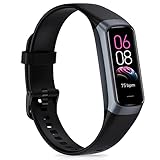
- 【All-day Health Monitor】The fitness tracker watch will automatically track your real-time heart rate, blood pressure and blood oxygen throughout the day to help you better understand your health. Equipped with a high-performance chipset, the fitness tracker automatically analyzes your overall sleep quality (deep/light/wake time) at night and gives you a nightly sleep score in the app to help you adjust your lifestyle and make you healthier.
- 【Smart Notification Remider】 With Bluetooth connection to your phone, it can support incoming calls/text alerts/APP message notifications (WhatsApp/Facebook/Instagram etc.), you will never miss your important messages. With the fitness watch, you can also perform sedentary reminder, water reminder, alarm clock, stopwatch, remote control photo, find devices, etc. to make your life healthier and smarter.
- 【25 Sports Modes】 Fitness tracker supports 25 professional sports modes, you can choose any number of sports modes as your exclusive sports modes in the app, such as walking, running, dancing, yoga, etc. and track your steps, heart rate, distance and calories to help you stay motivated, accomplish your sports goals, record your sports data, and make your sports more scientific.
- 【Long Battery Life】The fitness watch uses magnetic fast charging to provide a better battery life experience. It takes 1-2 hours to fully charge and can be used for up to 7 days of regular use and 15 days of standby. Compatible mobile phone system: android5.0 (inclusive) and IOS9.0 (inclusive) or above.
- 【1.1" AMOLED Touch Color Screen】AMOLED HD touch color screen is designed with clear and bright display, providing you with high quality touch and visual experience. This smartwatch includes a large number of original dials and supports custom dials.
You use a Samsung phone: Choose the Galaxy Watch7 or Galaxy Watch Ultra if Samsung Health integration and the eligible breathing-disturbance feature matter to you.
You use Android but not Samsung: Oura, Garmin, or a compatible Fitbit-style device may be more practical than a Galaxy Watch feature set that depends on a Galaxy phone. Confirm compatibility before buying.
You refuse overnight wear: Choose Withings Sleep. Accept that quiet wakefulness, a partner, a pet, and sensor placement can affect the estimates.
You sleep hot or share a bed with a temperature-sensitive partner: Consider Eight Sleep Pod 3 for its active heating and cooling. Evaluate it as a sleep-environment purchase first and a sleep-stage tracker second.
You want EEG-style data: Muse S Gen 2 is the experimental choice, provided you can tolerate a headband and understand that consumer EEG is not PSG.
You want the lowest-cost useful option: Use the sleep features on a device you already own or keep a simple diary. A consistent record of bedtime, wake time, and daytime alertness is often more useful than an expensive tracker you stop wearing.
You are worried about breathing: A compatible Apple or Samsung feature may flag possible signs under its authorization and eligibility rules, but symptoms or a notification should lead to medical evaluation rather than self-diagnosis.
Why the word best needs qualification
Sleep trackers report different things with different sensors. Calling a device the most accurate without naming the metric, generation, population, and reference standard is incomplete. The 2024 Oura, Apple Watch, and Fitbit study is valuable evidence, but it is not an all-device ranking and was not an independent test of every model in this guide.
Likewise, phrases such as clinical-grade, detects sleep apnea, tracks REM, and improves sleep need careful wording. Use estimates or classifications for consumer sleep stages. Use screens for possible signs when describing regulated breathing features. Do not imply that buying a tracker improves sleep: some people notice helpful habits, while others develop what sleep clinicians call orthosomnia-like anxiety around achieving a perfect score.
Warning signs that tracking is becoming counterproductive include distress after a low score despite feeling rested, repeatedly checking the app, changing behavior to chase a target amount of REM or deep sleep, sleeping worse because of the device, or distrusting your own alertness whenever it disagrees with the score. In that situation, pause tracking or limit it to broad weekly trends.
Frequently Asked Questions
Are consumer sleep trackers accurate enough to trust?
They are usually most useful for trends in sleep timing, approximate duration, regularity, resting heart rate, and changes from your own baseline. Sleep-stage estimates and quiet-wake detection are less dependable. A 2024 study of 35 healthy adults found four-stage agreement of κ = 0.65 for Oura Ring Gen 3, 0.60 for Apple Watch, and 0.55 for Fitbit Sense, while deep- and REM-sleep agreement was generally poor. Those results do not establish a universal winner or replace polysomnography.
Can an Apple Watch, Galaxy Watch, or sleep tracker diagnose sleep apnea?
No. Supported Apple and Samsung watches can provide notifications or screening for possible breathing-related signs under specific model, software, region, and eligibility rules. Apple reviews data over 30 days, while Samsung described a two-night feature for eligible users. A notification should prompt appropriate medical follow-up, not self-treatment or a diagnosis.
Do I need to wear a device to track sleep?
No. Withings Sleep sits under the mattress, and bedside products such as Google Nest Hub 2nd Gen use contactless sensing. These options improve comfort and adherence but can mistake lying still while awake for sleep and can be affected by partners, pets, blankets, room layout, and placement.
Is Oura better than Apple Watch for sleep?
Oura is more sleep-focused, works with both iOS and Android, and has long overnight battery life, but advanced insights require a membership. Apple Watch is a better fit for an iPhone owner who also wants a full smartwatch and Apple Health integration. The better choice is the one you will wear consistently and whose ecosystem and cost you accept.
Which sleep tracker does not require a subscription?
For athletes, Garmin is the clearest 2024 recommendation without a dedicated recurring sleep membership. Basic sleep tracking on a compatible Apple or Samsung watch also does not use an Oura- or WHOOP-style sleep membership. Withings Sleep avoids overnight wear and has no dedicated wearable membership described for the U.S. product, while WHOOP and advanced Oura features require ongoing payment.
What should I do if my tracker says I slept well but I felt awake all night?
Treat the result as an estimate. Track bedtime, wake time, remembered awakenings, naps, caffeine, alcohol, illness, and daytime alertness for one to two weeks. Quiet wakefulness is commonly misclassified as sleep. If insomnia or daytime impairment persists, discuss the symptoms with a clinician rather than trying to correct the tracker score.
The Bottom Line
Bottom line: Buy the Oura Ring 4 if you want the most sleep-focused 2024 wearable and accept its membership. Choose Apple Watch Series 10 for an iPhone-centered smartwatch, WHOOP 4.0 for athlete recovery coaching, Garmin for sports training without a dedicated sleep subscription, Withings Sleep if you will not wear anything, Eight Sleep Pod 3 if temperature is the real problem, Muse S Gen 2 for EEG-style experimentation, or Samsung Galaxy Watch7 or Ultra for the Samsung ecosystem. Whatever you buy, use it to identify trends—not to diagnose a sleep disorder or grade yourself on one night’s REM score.
Quick Recap
Product prices and availability are accurate as of the date/time indicated and are subject to change. Any price and availability information displayed on Amazon at the time of purchase will apply.