The Tool Desk
Outbyte PC Repair FREERepair Windows errors before they cause bigger problemsFix Now →Outbyte Driver Updater FREEScan for outdated or missing drivers - takes under a minuteDriver Scan →If your wearable feels hot, causes a burning sensation, smells unusual, swells, leaks, melts, smokes, sparks, or shows battery damage, remove it immediately if you can do so safely and stop using or charging it. That is a product-safety problem—not an ordinary rash to solve by loosening the band.
Most smartwatch rashes are more consistent with irritant contact dermatitis, allergic contact dermatitis, friction, pressure, or sweat and moisture trapped against the skin than with a true thermal burn. Sweat, soap, sunscreen, lotions, dirt, band materials, nickel, adhesives, and prolonged wear can all contribute. The steps below explain how to prevent irritation, identify the likely source, choose a replacement band, and know when to seek medical or product-safety help.
Rash or burn? Start with the safety check
People often use the word burn for any smartwatch reaction that stings. A hot device can cause a genuine thermal injury, but stinging, itching, peeling, or a red patch after sweating is more often an irritation or allergy. The appearance and timing can suggest a cause, but they cannot diagnose one.
| What you notice | More suggestive of | What to do |
|---|---|---|
| Itchy, dry, scaly, red or discolored skin in the outline of the band | Irritant or allergic contact dermatitis, friction, or moisture | Remove the wearable, gently clean and dry the skin, and do not put it back on until the area clears. |
| Burning or stinging after exercise, sweating, tight wear, soap, or lotion, but the device itself is not hot | Irritant dermatitis or friction | Remove it, rinse away residue, dry the area, and correct the fit or band material after the skin heals. |
| A geometric patch directly below the watch case, sensor area, charging contacts, or backplate | A reaction to the case, metal, adhesive, coating, sensor area, or trapped moisture | Do not assume the band is responsible. Stop using the device until you have investigated the watch body. |
| Sudden intense heat, a hot watch, burning while wearing or charging, swelling, leaking, melting, smoke, sparks, or visible battery damage | Possible battery, electrical, or thermal hazard | Stop use and charging immediately. Contact the manufacturer and seek urgent help for a significant burn, fire, smoke, or explosion. |
| Pus, rapidly increasing pain, spreading redness, fever, chills, or feeling unwell | Possible infection | Arrange prompt medical evaluation. Do not seal the area beneath tape or the wearable. |
| Hives, facial swelling, trouble breathing, or widespread allergic symptoms | Potentially serious allergic reaction | Seek emergency medical care. |
For specific overheating symptoms, Fitbit’s safety guidance says to remove a device that feels warm or hot or produces a burning sensation, and to stop using one that is swollen, leaking, melting, smoking, sparking, or visibly damaged.
Free tools Windows power users keep installed
One-click scans. No signup required.
#1 Best Overall

- 【Compatible Models】This TPU smart watch bands compatible with CARBINOX Vortex/Blaze S/Blaze R watch, compatible with AMAZTIM M2/T2, compatible with SUNKTA K-52, compatible with FOXBOX K-52, WalkerFit M6 Ultra, A1 PRO, A1 MAX, compatible with KOSPET Tank M2/T2, compatible with ESFOE K-52, compatible with LIGE K-52, compatible with PODOEIL K-52, compatible with PUREROYI C20Pro, compatible with meoonley C20Pro, and compatible with other smartwatches with a bandwidth of 22mm/0.87 in. Note: Not compatible with 20 mm/0.78 in band width smartwatches.
- 【Color and Size】2 colors: black smart watch band and camouflage smart watch band, Smart Watch Band width: 22mm/0.87in, band long end length: 125mm/4.92in, band short end length: 80mm/3.15in.
- 【High Quality Materials】Crafted with high-quality Silicone and paired with a metal buckle, this smart watch band offers unparalleled durability and comfort.
- 【Easy Installation】Easily install and remove your watch band with replacement strap. Simply insert the pins into the appropriate holes and secure with ease. Plus, adjust the strap length to fit your personal needs and preferences.
- 【Package and Service】Two pairs of replacement smart watch band, two pairs of pins/plugs. Should you have any questions or suggestions, our customer service team is always ready to provide you with a prompt and satisfactory solution.
What a smartwatch rash can actually mean
A smartwatch rash is a description, not a diagnosis. Possible explanations include:
- Irritant contact dermatitis: sweat, salt, soap, detergent, sunscreen, lotions, disinfectants, or repeated rubbing damage the skin barrier.
- Allergic contact dermatitis: the immune system reacts to nickel, acrylates, methacrylates, adhesives, colophonium or rosin, latex, rubber additives, dyes, or another component.
- Moisture-associated breakdown: prolonged occlusion leaves sweat or water against the skin and softens it, making friction and irritation worse.
- Pressure or friction injury: a tight band compresses the skin, while a loose or rough band repeatedly rubs as the watch moves.
- Folliculitis or infection: inflamed hair follicles or broken skin can become infected, particularly if there is pus, worsening pain, spreading redness, or fever.
- A true thermal burn: unusual device heat or battery failure can injure the skin.
- An unrelated skin condition: eczema, psoriasis, or another rash may happen to appear under the watch.
Contact dermatitis may appear immediately or may be delayed. Something that touched the skin hours or days earlier can be responsible, so a rash that appears after removing the watch does not automatically rule out the wearable or a product trapped beneath it. The American Academy of Dermatology’s symptom guide and NHS guidance describe the range of possible symptoms and warning signs.
1. Get the fit snug, stable, and not tight
The watch needs reliable contact for optical, electrical, temperature, ECG, or blood-oxygen sensors, but tightening the band is not a safe solution for every poor reading. Excessive tightness increases pressure, heat, friction, and moisture retention. Excessive looseness lets the device slide and abrade the skin.
A good fit keeps the sensor stable without numbness, tingling, stiffness, soreness, deep pressure marks, or a feeling of constriction.
- Wear the watch above the wrist bone rather than directly on the joint. Apple recommends positioning it toward the elbow when needed for sensor contact; Fitbit recommends moving it higher during exercise.
- Tighten only enough to prevent the sensor from losing contact during the activity.
- Loosen the band when you finish exercising or when you are resting.
- Remove it if your hand or wrist becomes numb, tingly, stiff, sore, or visibly compressed.
- If readings are poor, first correct the position and follow the model’s fit instructions instead of continually tightening the strap.
Apple describes the target as snug but comfortable, with the back maintaining skin contact. Fitbit says its band should be loose enough to move back and forth during normal wear and recommends positioning the device about 2–3 finger widths above the wrist bone during exercise, then loosening it afterward. See the Apple fit and skin-sensitivity guidance and Fitbit product-care guidance for model-specific instructions.
Fit trade-off: A looser band may be more comfortable but can reduce sensor reliability. A sleeve, tape, tissue, or other barrier can also affect readings. The manufacturer’s instructions take priority, especially for medical or safety-related measurements.
2. Keep the wrist and wearable clean and completely dry
Sweat, salt, skin oils, dirt, soap, shampoo, sunscreen, lotions, and detergent can collect beneath a watch. They can irritate the skin directly or make a band more abrasive. Moisture also encourages prolonged occlusion, which weakens the skin barrier.
- Remove the watch after a sweaty workout or exposure to water and soap.
- Wash the wrist gently. Do not scrub, exfoliate, or use harsh cleansers on already irritated skin.
- Clean the band and watch body according to the model’s instructions and the band’s material.
- Dry the underside, band, clasp, charging contacts, and wrist completely.
- Put the device back on only when no moisture remains between it and your skin.
Do not assume that alcohol, bleach, hydrogen peroxide, vinegar, disinfectant spray, or ordinary soap is safe for every material. For example, Apple’s cleaning guidance permits certain 70% isopropyl or 75% ethyl alcohol wipes on specified exterior surfaces but says not to use them on fabric or leather bands and not to use bleach or hydrogen peroxide. Fitbit generally recommends fresh water and, when needed, hypoallergenic soap for many bands, with different care for leather. Follow the exact manual for your watch and band.
Recommended Free Tools
A small 2023 study found bacteria on 19 of 20 tested smartwatch bands. That supports regular cleaning, but the study was small and does not establish that bacteria cause most smartwatch rashes. Cleaning is sensible; assuming every rash is an infection is not.
3. Take regular breaks instead of wearing it continuously
Continuous contact gives skin less opportunity to dry and recover. This matters particularly for people with eczema, allergies, asthma, or sensitive skin; Fitbit notes that these users may be more likely to experience irritation.
- Remove the device while showering and while cleaning it.
- Take it off after extended wear. Fitbit specifically suggests a rest period of approximately one hour after prolonged use.
- If sleep tracking is not essential, leave it off overnight or use another monitoring arrangement.
- Do not put it back on merely because the rash looks slightly better. Wait until the skin has returned to normal.
- Alternate wrists only after removing the watch from the affected wrist and only if the device is not hot, damaged, or suspected of causing a material allergy.
If you depend on a wearable for glucose monitoring, heart-rhythm alerts, fall detection, sleep-apnea monitoring, or another medical purpose, do not silently abandon necessary monitoring. Stop a suspected hazardous device and ask your clinician about another wear location, device, or temporary monitoring plan.
4. Change the band—or investigate the watch body—when a component is the likely trigger
Location is useful evidence. A rash confined to the strap outline points first toward fit, friction, sweat, the clasp, buckle, coating, or band material. A geometric rash directly under the watch body points toward the case back, sensor area, charging contacts, metal, adhesive, or moisture trapped under the case.
Changing the band will not solve a reaction caused by the watch body. If both the band and watch area react, consider occlusion, sweat, cleanser residue, or a broader sensitivity.
Rank #2

- ☀ New arrived silicone water resistant band for Xiaomi Watch S4/S3/S2/S2 Pro/S1 Active/S1 Sport smart watch, perfect match for your original for Xiaomi Watch S3/ S4 Sport strap at a better price. Bring you a smart, fashion and casual look. ***NOTE: The Smart Watch is NOT included.
- ☀ Soft silicone material: Made from eco-friendly silicone and covered with anti-dust surface oil makes it as soft as baby skin. No harm to body. Perfect for daily and nightly wear. Secure great with the double strap holders. The silicone band fits well and is solidly mounted to the watch.
- ☀ Band's Length: fit wrists from 5.5-9.0inch. Alternative holes and metal buckle available for you to adjust the length.The band is extremely soft and wraps around your wrist smoothly. Sweat and water resistant material, it's skin-friendly and hypoallergenic, give you a excellent experience.
- ☀ Easy to install: The silicone band is very easy to install.The part that connect to your watch face fits well and it's durable enough to hold your watch in safe. Come with installation tools for free. locks onto for Xiaomi Watch S4/S3/S2/S2 Pro/S1 Active/S1 Sport interface precisely and securely.The band is very easy to install and remove in the same way as the original Smart Watch bands. Durable enough to avoid the slipping-off problem, good for exercise or daily movement, super easy to switch bands.
- ☀ Delighted varied color dress up your for Xiaomi Watch S3 watch. FitTurn 6-Pack Bands Compatible for Xiaomi Watch S3 Watch Flexible Washable & Durable Classic Silicone Sport Wristbands Replacement Strap for Xiaomi Watch S3 Smartwatch
Wearable manufacturers disclose that some products may contain nickel and acrylates or methacrylates. Apple identifies nickel in some cases, buttons, band components, and magnets and discloses trace acrylates or methacrylates from adhesives in the case and some bands. Samsung states that some Galaxy Watch and Galaxy Fit bodies and buckles may use stainless steel containing nickel and that the main body and band include acrylate. Fitbit and Google also publish material and skin-sensitivity warnings. Review the Apple materials guidance, Samsung material disclosure, and Fitbit’s product documentation for the exact model.
Terms such as stainless steel, surgical steel, medical grade, nickel-free, and hypoallergenic are not guarantees that a particular wearer will tolerate the product. If nickel is a known problem, ask whether the claim covers the case back, buckle, magnets, buttons, charging contacts, and coatings—not just the visible band.
A 2020 review of wearable health-device reactions identified acrylates, methacrylates, and colophonium among common patch-test findings. A 2017 case report linked localized fitness-sensor dermatitis to methyl methacrylate and ethyl acrylate rather than nickel, while a 2024 case report described nickel allergic contact dermatitis associated with an Apple Watch. These are individual reports, not evidence that a particular brand causes reactions in most users. See the wearable-device dermatitis review, acrylate case report, and nickel case report.
Crashes, No Sound, or Screen Glitches?
Random freezes, missing sound and display glitches usually trace back to one bad driver. Find and replace yours safely.Free scan · under a minuteWindows Errors? Fix Them Before They Spread
Repair common Windows errors and clear accumulated junk for a smoother, more stable PC - no reinstall needed.Free scan · no reinstall5. Choose a breathable, activity-appropriate band
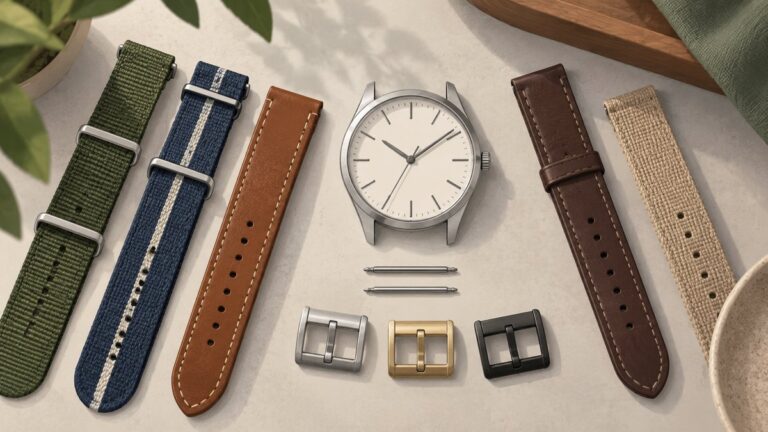
Band materials involve trade-offs rather than a single universally safe choice:
- Silicone, rubber, fluoroelastomer, and other nonporous materials: durable and easy to wipe clean, but they can trap sweat and heat. Additives, coatings, or the clasp may be the irritant.
- Fabric or nylon: may feel more breathable, but it absorbs sweat and must be washed and dried thoroughly.
- Metal: does not absorb sweat in the same way, but it can contain nickel, create pressure points, have sharp or rough edges, or irritate skin when sweat accumulates.
- Leather: may be comfortable for everyday wear, but it can absorb moisture and may not be suitable for swimming, showering, or intense workouts.
Choose a band with full material disclosure, smooth edges, no cracked or peeling surfaces, a clasp that does not press on the affected area, and a construction appropriate for your activity. Perforated sport bands may improve airflow but do not eliminate material sensitivity.
Check the water and workout restrictions for that particular band. Apple identifies leather, FineWoven, some stainless-steel Milanese or link bands, and some knit bands as unsuitable for water or workouts. Fitbit likewise says some leather, metal, and woven accessories are intended only for normal daily activity. A band that is not designed for heavy sweat or water can deteriorate, retain residue, or become harder to clean.
Do not treat silicone or hypoallergenic as a universal safety answer. The U.S. FDA notes that there is no federal definition or standard governing the cosmetic marketing term hypoallergenic; similar language on consumer bands should be treated as a marketing description rather than a guarantee. See the FDA explanation.
What’s actually slowing this PC down?
Pick the symptom - the matching free tool is one click away.
6. Keep soaps, lotions, sunscreen, and repellents from collecting underneath
The watch does not necessarily contain the allergen. Products applied to the skin can remain trapped beneath the band and become irritants after hours of contact.
- Remove the watch before showering if soap, shampoo, or conditioner can collect underneath.
- Take it off while applying sunscreen or insect-repellent spray. Let the product dry fully before putting the wearable back on.
- If you need moisturizer for dry skin, choose a fragrance-free product you already tolerate and allow it to absorb completely.
- Rinse away soap or chemical residue and dry the wrist before replacing the device.
- While troubleshooting, avoid introducing new fragranced, medicated, or disinfecting products beneath the wearable.
Apple specifically lists sweat, soap, sunscreen, and lotions as possible sources of irritation. Fitbit also advises removing the device when applying sunscreen or insect repellent and minimizing exposure to harsh soaps and shampoos. Its water and skin-exposure guidance is useful alongside the model-specific care instructions.
7. Treat heat, battery damage, and electrical symptoms as a product-safety issue
Do not try to solve a hot watch by loosening the strap, switching wrists, placing tape over the back, or wearing it only at night. A device that becomes unusually hot can injure skin or indicate a battery problem.
If the watch feels hot, burns while charging or wearing, shocks or tingles, smells unusual, swells, leaks, melts, smokes, sparks, or has a cracked or otherwise damaged battery:
- Remove it immediately if you can do so safely.
- Stop wearing and charging it.
- If safe, place it away from flammable materials and do not cover it with bedding, clothing, or other items.
- Do not resume use just because it cools down.
- Contact the manufacturer and check the exact model against the relevant recall or product-safety database.
- Seek urgent medical care for a significant burn, severe pain, blistering burn, or worsening injury. Contact emergency services for fire, smoke, explosion, or immediate danger.
Use the supplied or manufacturer-approved charger. Never charge a wet device. Keep the watch and charger ventilated, keep charging contacts clean, and do not charge in direct sunlight or immediately after exposure to extreme temperatures. Fitbit lists 32–104°F (0–40°C) as its recommended operating range and −4–113°F (−20–45°C) for storage, but limits vary by model, so consult the device manual.
Why recall checking matters
Real battery-related burns have occurred, but historical recalls are model-specific and do not mean normal smartwatch use routinely causes thermal burns. In March 2022, the U.S. Consumer Product Safety Commission recalled Fitbit Ionic model FB503 because its lithium-ion battery could overheat. The CPSC reported approximately one million units sold in the United States and 693,000 internationally, at least 115 U.S. overheating reports, and 78 U.S. burn injuries, including second- and third-degree burns. Those figures total approximately 1.693 million units—not nearly two billion. The CPSC recall notice contains the model details.
Rank #3

- Perfect Compatibility: Specifically designed for Fitpolo/Quican/Aeac/Tensky/WMK/Hingso ID208 Plus Smart Watch, ensuring a seamless and secure fit.
- Premium Silicone Material: Made of high-quality, skin-friendly silicone that is soft, durable, and comfortable to wear all day long, even during intense workouts.
- 10 Vibrant Colors: Comes with 10 different colors, allowing you to match your daily outfits or moods effortlessly and add a stylish touch to your smartwatch.
- Easy Installation & Removal: Equipped with quick-release pins, making it super easy to install and remove the bands without any tools, saving you time and hassle.
- Versatile for All Occasions: Whether you're going for a run, attending a business meeting, or just relaxing at home, these bands are suitable for various activities and occasions.
On January 23, 2025, the CPSC announced a $12.25 million civil-penalty settlement concerning Fitbit’s delayed reporting of the Ionic burn hazard. That enforcement history reinforces the importance of reporting and checking a specific model, but it is not evidence that every Fitbit or every wearable has the same defect.
A U.K. product-safety report published on November 14, 2025 described a battery-overheating risk in certain Fitbit Sense and Versa 3 watches and referred to a January 2025 firmware corrective action. This report concerns the affected products and the U.K. product-safety system; do not generalize it to every Sense or Versa 3 unit in every country. Consult the U.K. report, the manufacturer, and your country’s product-safety authority.
8. Stop at the first sign of irritation and investigate recurring reactions
Do not wear through redness, itching, peeling, swelling, soreness, burning, or blisters. Continuing exposure can prolong irritant dermatitis and intensify allergic contact dermatitis.
At the first sign of a reaction:
- Remove the device and do not put it on the other wrist while the cause is uncertain.
- Wash the area gently with lukewarm water and dry it without rubbing.
- Use a cool, damp compress for 10–15 minutes several times a day if it is itchy or inflamed.
- Apply a fragrance-free moisturizer or barrier-repair cream only if the skin is intact and you have previously tolerated the product.
- Do not scratch or seal the area beneath tape, tissue, clear nail polish, a new adhesive, or the wearable.
- Photograph the rash and record the band, watch model, activities, skin products, cleaning products, and timing.
- Wait until the skin is fully clear before testing any change—and do not test a device that was hot or damaged.
The AAD lists cool compresses, fragrance-free moisturizers, colloidal oatmeal, calamine, and sometimes 1% hydrocortisone among possible contact-dermatitis measures. Hydrocortisone is not appropriate for every rash, open wound, suspected burn, or infection, so ask a clinician or pharmacist if you are unsure. Use the AAD self-care guidance rather than treating an unexplained or severe injury indefinitely at home.
If the rash returns each time you wear the watch or a replacement band, stop buying bands at random and arrange a dermatology evaluation. Patch testing can assess suspected allergens such as nickel, acrylates, methacrylates, colophonium, preservatives, rubber additives, and adhesives. In the test, possible allergens are usually left on the skin for two to three days before the clinician assesses the reaction. The appropriate panel depends on the device materials and your history; see Mayo Clinic’s patch-testing explanation.
Troubleshoot the likely source by location and timing
| Pattern | What to investigate first | Next step |
|---|---|---|
| Only beneath the band | Fit, friction, sweat, clasp, buckle, coating, or band material | Stop until healed, then try a compatible band made from a different disclosed material and improve drying. |
| Only beneath the watch body | Case back, sensor area, charging contacts, magnets, metal, adhesives, coating, or trapped moisture | Changing the strap alone is unlikely to solve it. Contact the manufacturer and consider dermatology evaluation. |
| Under both band and case | General occlusion, sweat, soap or lotion residue, or broader sensitivity | Take longer breaks, clean and dry both surfaces, and stop if it recurs. |
| Only after a workout | Sweat, salt, heat, movement, or a band tightened for exercise | Move the watch higher as directed, loosen it afterward, remove it promptly, and clean and dry it. |
| After showering or handwashing | Trapped water, soap, shampoo, or conditioner | Remove it before washing and do not reattach it until the wrist, band, case, and contacts are dry. |
| After changing bands | New polymer, dye, adhesive, clasp, coating, or cleaning product | Stop using the new band and review its complete material disclosure. |
| Delayed, itchy, geometric rash | Allergic contact dermatitis is possible, but timing does not identify the allergen | Stop exposure and seek patch testing if it recurs. |
| Immediate intense heat or burning | Device or battery failure | Stop using and charging it immediately; do not switch wrists. |
How to choose a replacement band intelligently
Before buying another strap, make a component checklist:
Quick wins for a faster PC:
Repair Windows errors before they cause bigger problemsFix Now →Fix the driver behind crashes, sound loss and screen glitchesFind Drivers →Clear out junk files and repair common Windows errorsFree Scan →- Band base material and any lining, dye, coating, or adhesive.
- Case-back and sensor materials.
- Buckle, clasp, pins, magnets, buttons, and charging contacts.
- Whether the manufacturer discloses nickel, acrylates, methacrylates, latex, rubber additives, or colophonium.
- Whether the band is approved for water, showering, swimming, or high-intensity exercise.
- How it should be cleaned and how quickly it dries.
- Whether it is manufacturer-compatible and preserves sensor contact, charging, water resistance, and safety features.
- Whether the edges are smooth and the surface is free from cracks, peeling, or rough areas.
A different brand may use the same nickel, acrylate, rubber, adhesive, or metal components, so switching brands is not a guaranteed fix. Conversely, a band swap is reasonable when the rash is clearly confined to the old strap and the watch body is comfortable on its own. Ask the manufacturer for a complete material disclosure when the published list is incomplete.
Independent reader supportYour contribution helps us test, update, and keep practical guides available for everyone.Do not rely on improvised barriers
Putting clear nail polish, tape, tissue, protective film, or a layer of moisturizer between the watch and your skin is not a standard or universally safe solution.
- Tape, nail polish, and film can introduce a new adhesive or chemical allergen.
- A barrier can trap more sweat and water.
- It can change the fit or interfere with optical and electrical sensors.
- It may affect charging, water resistance, or device integrity.
- It can conceal a damaged or overheating backplate.
A manufacturer-compatible band or a different device is safer than an improvised barrier. Apple warns that unsuitable third-party bands may fit improperly, interfere with features such as Wrist Detect, contain problematic materials, or damage the watch. Never use a barrier to continue wearing a device that feels hot or has battery damage.
When to see a doctor or dermatologist
Arrange medical evaluation if the rash is blistering, painful, extensive, recurrent, unexplained, or not clearing after you stop wearing the device. Also seek care if it involves the face, eyes, mouth, or genitals, or if you have eczema, diabetes, immune suppression, a known allergy, or another condition that raises the risk of complications.
What’s actually slowing this PC down?
Pick the symptom - the matching free tool is one click away.
Seek prompt care for oozing, pus, increasing pain, rapidly spreading redness, fever, chills, or feeling unwell. Mayo Clinic advises medical attention for severe or widespread rashes, symptoms that interfere with daily life, rashes involving the eyes, mouth, face, or genitals, and rashes that do not improve within three weeks. Immediate attention is appropriate when you cannot tell whether the injury is a rash or a burn. See Mayo Clinic’s symptom guidance and the AAD treatment guidance.
Special cases: eczema, children, sleep, and medical monitoring
Eczema and sensitive skin
Start with shorter wear periods, frequent breaks, careful drying, and early removal at the first sign of itching or redness. Do not use a new band, cleaner, or skin product at the same time; changing one factor at a time makes the trigger easier to identify.
Children
Do not apply an adult’s band-size or skin-care routine to a child without checking the device manual and caregiver guidance. Children may be less able to recognize overheating, pressure, numbness, or early skin damage. Check the wrist regularly rather than relying on the child to report a problem.
Rank #4

- 【18mm Compatible Models】Getino 18mm watch bands are compatible with Garmin Venu 4 41mm/Venu 3S/Venu 2S/Vivoactive 4S/Vicomove 3S/Active S, Forerunner 255S/Forerunner 255S Music/Forerunner 265S; Compatible with Fossil Women's Gen 6 (42mm)/5E (42mm)/Gen 4 Venture HR/Charter HR, Fossil Q Gen 3/Venture HR/Gen 4 Women’s Sport/Scarlette; For Huawei Watch GT5 Pro (42mm)/GT 4 (41mm), Huawei Talkband B5, Huawei Watch/Huawei Women’s/Huawei Fit;Also fit nearly all other watches with a 18 mm lug width
- 【Premium Hypoallergenic Material】Getino soft sport smart watch band for women men is made of high-quality pure silicone, specifically designed for sensitive skin. PFAS-free and allergy-tested, it provides gentler, safer wear with a soft-touch finish. An innovative pin-and-tuck closure ensures a clean fit, comfortable to wear for day long
- 【Breathable & Waterproof】These Garmin Watch band features air holes that enhance airflow for quick drying, effectively preventing moisture buildup. Even during intense workouts, it keeps your wrist cool and free from sticky discomfort - making it perfect for gym, yoga, running, swimming, daily wear or business work. An ideal pretty Samsung galaxy watch band smartwatch accessories for active lifestyles
- Multiple Colors to Fit Your Daily Mood:Getino offers a variety of colors compatible with Samsung Garmin smartwatch, allowing you to not only accessorize your watch but also match your daily mood. Keep your watch and daily style fresh at all times. Watch band fits wrists from 5.7"to 7.9" (145mm-200mm)
- 【Buy This Strap with Confidence】Our fancy correa para garmin venu 3 watch band blend fashion, classic, youthfulness and sporty charm - a thoughtfully crafted present guaranteed to delight. Ideal for Christmas, New Year's, Valentine's Day, Mother's Day and birthdays, they create unforgettable surprises for parents, loved ones and friends. Backed by 24/7 friendly customer support
Overnight wear
Sleep tracking is optional for many users. If overnight wear repeatedly causes moisture, pressure, or itching, leave the device off while sleeping or discuss another monitoring approach. Anyone who needs continuous monitoring should ask a clinician before changing the schedule.
Free tools Windows power users keep installed
One-click scans. No signup required.
Medical-monitoring devices
If a wearable is part of a medical monitoring plan, do not simply tolerate a rash or keep using a hot device because the data seem important. Stop a suspected hazardous product and contact the clinician and manufacturer promptly for an alternative device, wear location, or monitoring plan.
Recall and support checklist
- Write down the exact brand, model number, serial number, and purchase region.
- Check the manufacturer’s safety and recall page.
- In the United States, search the CPSC recall database; elsewhere, use the relevant national product-safety authority.
- Save photographs of any rash, burn, swelling, melting, or battery damage.
- Do not send a swollen, leaking, smoking, or otherwise dangerous battery through ordinary mail unless the manufacturer or safety authority gives specific instructions.
- Keep the device out of service until the manufacturer confirms it is safe or replaces it.
Frequently Asked Questions
Can a smartwatch cause a real burn?
Yes, but a true thermal burn is different from the more common pattern of itching, scaling, redness, friction, or moisture irritation. A watch that becomes hot, burns while charging, swells, leaks, melts, smokes, or sparks should be removed and taken out of service immediately.
Is silicone or rubber the safest smartwatch-band material?
Not for everyone. Silicone, rubber, and fluoroelastomer bands can trap sweat, and reactions may involve additives, coatings, adhesives, friction, or the clasp. Choose a disclosed material that you have previously tolerated and keep it clean and dry.
Should I put tape or clear nail polish on the back of my watch?
It is not recommended as a routine workaround. Tape or nail polish may introduce an allergen, trap moisture, interfere with sensors or charging, affect water resistance, or conceal overheating. A compatible replacement band or different device is safer.
Can I wear my smartwatch through a rash?
No. Remove it and wait until the skin is clear. Continuing exposure can prolong irritant dermatitis or worsen an allergic reaction. Do not switch it to the other wrist if the device itself is hot, damaged, or a material allergy is suspected.
How can I tell whether the band or watch body is causing the rash?
A rash only in the band outline points first toward fit, friction, sweat, the clasp, or band material. A geometric rash under the case or sensor area points toward the case back, metal, adhesive, coating, contacts, or trapped moisture. Location helps prioritize investigation but does not prove the cause.
Should I stop wearing a smartwatch while sleeping?
If overnight wear causes irritation, pressure, or moisture, take a break or leave it off overnight unless continuous monitoring is medically necessary. If monitoring is necessary, ask a clinician about another device or schedule rather than tolerating a rash.
Can patch testing identify the material causing a wearable rash?
Often, a dermatologist can use patch testing to investigate nickel, acrylates, methacrylates, colophonium, rubber additives, preservatives, adhesives, or other allergens. Potential allergens are commonly left on the skin for two to three days, and the panel should reflect the device’s materials and your history.
The Tool Desk
Outbyte Driver Updater FREEScan for outdated or missing drivers - takes under a minuteDriver Scan →Outbyte PC Repair FREERepair Windows errors before they cause bigger problemsFix Now →When does a smartwatch rash require medical care?
Seek care for blistering, severe or spreading pain, extensive or recurrent rash, persistent symptoms, pus, rapidly worsening redness, fever, facial swelling, breathing difficulty, or uncertainty about whether it is a burn. People with eczema, diabetes, immune suppression, or known allergies should seek advice sooner.
The Bottom Line
Preventing smartwatch irritation is mostly about controlling contact: keep the fit stable but not tight, keep the wrist and device clean and dry, take breaks, and remove the watch before sweat, soap, sunscreen, or repellent becomes trapped underneath. If the reaction follows a band, investigate its materials; if it follows the case, a strap change may not help.
Never treat unusual heat, burning, swelling, leaking, smoke, sparks, melting, or battery damage as an ordinary rash. Stop using and charging the device, check the exact model for safety notices, and get medical help for a significant burn or serious skin symptoms.
Quick Recap
Product prices and availability are accurate as of the date/time indicated and are subject to change. Any price and availability information displayed on Amazon at the time of purchase will apply.