Quick wins for a faster PC:
Scan for outdated or missing drivers - takes under a minuteDriver Scan →Clear out junk files and repair common Windows errorsFree Scan →The Omega Speedmaster helped Apollo 13’s crew time a critical maneuver, but it did not save them on its own. After an oxygen-tank failure ended the planned Moon landing, the astronauts and mission control relied on the lunar module, careful navigation and coordinated procedures to bring the spacecraft home. Omega says a Speedmaster timed a 14-second course-setting burn; NASA’s account describes a separate, later five-minute return burn.
What happened on Apollo 13?
Apollo 13 launched on April 11, 1970, with commander James A. Lovell Jr., command module pilot John “Jack” Swigert Jr. and lunar module pilot Fred W. Haise Jr. Their planned destination was the Fra Mauro region of the Moon. A failure involving a service-module oxygen tank forced the crew to abandon the landing and use the lunar module as a lifeboat for the return to Earth.
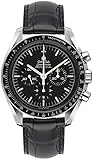
![[Omega] OMEGA Watch [2021 Omega 310.30.42.50.01.002 Speedmaster Moon Watch Professional Hand Winding See Through Back Chronograph Black 5 ATM Waterproof [Parallel Import], Black, Bracelet Type](https://m.media-amazon.com/images/I/41w4a0vIS+S._SL160_.jpg)
The crew splashed down safely in the Pacific on April 17, 1970. NASA calls Apollo 13 a “successful failure”: the landing objective was lost, but the astronauts returned and the emergency produced important operational lessons. NASA’s mission account records a total duration of five days, 22 hours, 54 minutes and 41 seconds, and a distance of 622,268 miles. NASA’s Apollo 13 mission page links to the mission report; its mission-details account describes the flight and return.
How did the Speedmaster help?
Omega says each Apollo 13 crew member had a Speedmaster Professional chronograph and that a Speedmaster was used to time a 14-second burn to set the spacecraft on a return course while electrical power and other spacecraft resources were being conserved. A chronograph gives the crew a way to measure elapsed time, making it useful when a maneuver must be timed precisely.
#1 Best Overall

- First Man On The Moon Watch Model 31130423001005
- Famous Manual-winding Chronograph Movement that was Worn on the Moon
- Omega Mechanical Caliber 1861
- Black Dial, 42mm Stainless Steel Case and Stainless Steel Bracelet
- Presentation Box Includes NATO Strap, Velcro Strap and Strap Changing Tools
That was a significant contribution, not a standalone rescue. The crew had to operate the spacecraft under emergency conditions, and mission control helped develop and coordinate the return plan. The watch supplied timing; it did not provide navigation, repair the damaged oxygen system or make the spacecraft’s systems work by itself. Omega’s account of the episode is available in “OMEGA and Apollo 13: 50 Years Later.”
Why do accounts mention both 14 seconds and five minutes?
They refer to different burns in the return sequence, not competing timings for a single maneuver. Omega’s history describes a 14-second course-setting burn timed with a Speedmaster. NASA’s mission narrative separately describes a five-minute return burn, performed after the crew aligned the lunar module’s guidance platform using the Sun.
Rank #2

- Model 310.32.42.50.01.001
| Account | Timing | What it describes |
|---|---|---|
| Omega | 14 seconds | A course-setting burn timed with a Speedmaster, according to Omega’s Apollo 13 history. |
| NASA | Five minutes | A later return burn after Sun-based alignment of the lunar module guidance platform, according to NASA’s mission-details account. |
Keep the timings attached to their sources and events: the 14-second figure is Omega’s account, while NASA’s five-minute figure belongs to a distinct later maneuver. NASA’s mission-details account and Omega’s Apollo 13 history describe them separately.
What was the Silver Snoopy Award?
Omega says NASA recognized the brand with the Silver Snoopy Award for the Speedmaster’s role in Apollo 13. The award is part of the watch’s spaceflight legacy; it should not be read as evidence that the watch alone brought the crew home. Omega’s broader space-legacy page presents its account of the Speedmaster’s place in space history.
Is today’s Moonwatch the Apollo 13 watch?
No. Omega currently presents a Speedmaster Moonwatch collection, including reference 310.30.42.50.01.001, as a modern continuation of the Moonwatch line. The collection is relevant to the Apollo 13 story, but the current model should not be described as the specific watch flown on that mission. Omega’s space-legacy page shows the current collection.
Quick Recap
Best Value

- Model 310.30.42.50.01.002
Rank #4
Product prices and availability are accurate as of the date/time indicated and are subject to change. Any price and availability information displayed on Amazon at the time of purchase will apply.