What’s actually slowing this PC down?
Pick the symptom - the matching free tool is one click away.
The best smart glasses in 2026 depend on what you want them to do. Ray-Ban Meta Gen 2 is the best mainstream choice for hands-free photos, calls, music and voice AI. Even Realities G2 is the best discreet, camera-free heads-up display. VITURE Beast and XREAL One Pro are better choices for a private gaming, movie or laptop screen, while RayNeo X3 Pro is the clearest current option for standalone AI-assisted augmented reality.
Those products are not interchangeable. Some smart glasses have cameras and speakers but no display. Some show text and prompts on a small transparent screen. Others are essentially wearable USB-C monitors. A few attempt genuine spatial AR, with cameras and tracking that anchor digital objects in the world.
This guide separates those categories and compares their price, display, camera, phone dependence, prescription support, battery claims, privacy implications and real limitations. Prices and availability are for the United States where stated, with the market checked against the position on August 10, 2026. Manufacturer prices, regional features and shipping dates can change.
Quick verdict: which smart glasses should you buy?
| Best for | Product | US price or status | Display | Camera | Phone or accessory dependence | Main drawback |
|---|---|---|---|---|---|---|
| Most people | Ray-Ban Meta Gen 2 | From $379 | No | 12MP; up to 3K video | Phone and Meta AI app required | Cannot show text, directions or translations in the lens |
| Lower-cost Meta platform | Meta Glasses | From $299 | No | Details vary by model | Phone and Meta AI app required | Newer collection has a less complete published specification record |
| Running, cycling and action sports | Oakley Meta Vanguard | From $499 | No | Centered ultra-wide 12MP | Phone, Meta app and compatible fitness services | Bulky sports frame; no visual display |
| Camera-free HUD | Even Realities G2 | From $599 before prescription options | Yes; monochrome | No camera on the glasses | Phone-based processing; optional R1 ring | Small monochrome field of view rather than full AR |
| Glanceable AI display | Meta Ray-Ban Display | From $799, including Neural Band | Yes | Camera-equipped | Phone, Meta app and Neural Band | Expensive and not a room-anchored spatial computer |
| Private screen for gaming and movies | VITURE Beast | From $549 | Yes; virtual screen | No general-purpose camera | Compatible USB-C video source or accessory | Does not work as an independent AI assistant when disconnected |
| Spatial virtual monitor | XREAL One Pro | $599 | Yes; micro-OLED | No general-purpose camera built in | USB-C video source; extra hardware for 6DoF | Primarily a host-dependent display, not standalone AR |
| Standalone AI-plus-AR | RayNeo X3 Pro | $1,299 list price | Yes; color AR | Onboard cameras | More independent, but cloud and phone-linked functions still vary | Expensive, 76g and short battery life under demanding use |
| Lightweight display-free alternative | Rokid Style | $349 current store listing | No | 12MP; manufacturer claims up to 4K video | Phone and regional AI services | Software and AI availability differ by market |
| Endurance-sports metrics | Engo3 | $399.95; $449.95 photochromic | Yes; metrics HUD | No | Garmin or Apple Watch and companion setup | Specialist training display, not general-purpose smart glasses |
The simple buying rule: buy display-free Meta or Oakley glasses if you want an audio camera assistant; buy Even or Meta Ray-Ban Display if you need information in front of your eyes; buy VITURE or XREAL if your priority is a private screen; and buy RayNeo X3 Pro only if you specifically want a current standalone AR experiment and accept its cost and compromises.
The Tool Desk
Outbyte Driver Updater FREEFix the driver behind crashes, sound loss and screen glitchesFind Drivers →Outbyte PC Repair FREEClear out junk files and repair common Windows errorsFree Scan →What counts as smart glasses in 2026?
Smart glasses is now an umbrella term rather than a meaningful product category. Before comparing models, identify which of these four devices you are actually considering:
| Category | What the hardware does | Typical use | Representative products |
|---|---|---|---|
| Display-free AI or camera glasses | Cameras, microphones, open-ear speakers, touch controls and a phone connection, but no lens display | Photos, video, calls, music, voice commands and visual questions answered through audio | Ray-Ban Meta Gen 2, Meta Glasses, Oakley Meta, Rokid Style |
| HUD or display AI glasses | A small transparent display shows text, icons or prompts while the wearer continues to see the real world | Captions, translations, notifications, navigation prompts and teleprompting | Even G2, Meta Ray-Ban Display, Halliday G2 |
| XR display glasses | Micro-OLED panels act as a large virtual screen fed by a phone, laptop, console or handheld | Movies, gaming, remote work and a private multi-screen setup | VITURE Beast, XREAL One Pro, RayNeo Air 4 Pro |
| Standalone spatial AR glasses | Onboard computing, cameras, tracking and a display place digital information or 3D content into the environment | Spatial apps, anchored navigation, visual AI and augmented-reality interaction | RayNeo X3 Pro; upcoming XREAL AURA and Snap SPECS |
An optical display does not automatically make a product true augmented reality. A pair of glasses that mirrors a flat video screen is a wearable display. Spatial AR requires tracking so that content can remain in a meaningful position as your head or body moves.
#1 Best Overall

- #1 SELLING AI GLASSES - Tap into iconic style for men and women, and advanced technology with the newest generation of Ray-Ban Meta smart AI glasses. Capture photos and video recordings, listen to music, make hands-free calls or ask Meta AI questions on-the-go.
- UP TO 8 HOURS OF BATTERY LIFE - On a full charge, these smart AI glasses can last 2x longer than previous generations, up to 8 hours with moderate use. Plus, each pair comes with a charging case that provides up to 48 hours of charging on-the-go.
- 3K ULTRA HD: RECORD SHARP VIDEOS WITH RICH DETAIL — Hands-free video recording with an ultra-wide 12 MP camera in up to 3K resolution. Record clips up to 3 minutes per session. Capture sharp, vibrant memories while staying in the moment.
- LISTEN WITH OPEN-EAR AUDIO — Listen to music and more with discreet open-ear speakers that deliver rich, quality audio without blocking out conversations or the ambient noises around you.
- ASK YOUR GLASSES ANYTHING WITH META AI — Get real-time suggestions, answers, object identification, and reminders hands-free. Requires Bluetooth connection to your smartphone and the Meta AI app. Ensure your phone has internet connectivity.
3DoF tracks the direction of your head turning, such as looking left, right, up or down. 6DoF also tracks movement through space, so the system can understand that you have physically moved forward, backward or sideways. That distinction is important when comparing a screen that stays in front of your face with an object that appears anchored to a table or wall. For a useful terminology overview, see WIRED’s smart-glasses guide.
Best smart glasses overall: Ray-Ban Meta Gen 2
Ray-Ban Meta Gen 2 is the safest recommendation for the largest group of buyers. It looks and behaves more like ordinary Ray-Ban eyewear with built-in open-ear audio and a camera than like a headset. That makes it useful for short, repeated interactions: ask a question, take a first-person photograph, call someone, hear a message or record a moment without reaching for a phone.
What Ray-Ban Meta Gen 2 does well
- Camera: a 12MP camera and video capture up to 3K, according to Meta’s announcement and Ray-Ban’s product information.
- Audio: open-ear speakers and microphones handle calls, music, voice commands and spoken AI responses.
- AI: Meta AI can answer voice questions and use the camera for multimodal requests where the feature is available. The service, languages and capabilities vary by country, account, phone and software rollout.
- Battery: up to eight hours of moderate use is the headline claim. Ray-Ban’s FAQ gives a more useful continuous-use figure of up to five hours with audio and voice assistance. The charging case provides up to 48 additional hours.
- Prescription support: Ray-Ban’s US FAQ lists an eligible range of -6.00 to +6.00 total power. Verify the precise frame, lens and progressive-lens options before ordering.
- Everyday design: familiar Ray-Ban styles and a less conspicuous appearance than most display or standalone AR products make it more likely to be worn in public.
What it cannot do
There is no display. You will not see a translation, notification, navigation arrow, text message or AI answer in the lens. Results appear in the companion phone app or arrive through the speakers. It also is not a standalone computer: Ray-Ban says a phone and the Meta AI app are required for operation, with Bluetooth, permissions and internet connectivity affecting cloud AI and media transfer. The official Ray-Ban Meta FAQ covers pairing and troubleshooting.
Choose Gen 2 if your ideal interaction is auditory and photographic. Do not buy it expecting augmented-reality overlays.
Lower-cost Meta option: Meta Glasses
Meta Glasses start at $299 in the United States and Canada and use the same general Meta AI glasses platform. Meta says the collection launches with 26 style and color combinations, prescription compatibility, more than eight hours of battery life and up to 40 hours from the case. In the United States and Canada, Meta says the glasses launch with Meta AI powered by Muse Spark.
The important qualification is that Meta has not published the same complete camera and video specification set for this Meta-branded collection as it has for Ray-Ban Meta Gen 2. The lower price and wider style access are the main reasons to choose it; Ray-Ban Meta Gen 2 remains the easier recommendation if you want the clearest published specification record, established frame choices and stronger brand familiarity.
Neither model has a lens display. Meta Glasses are therefore a lower-cost display-free AI and camera option, not a cheaper AR product.
Best sports smart glasses: Oakley Meta Vanguard
Oakley Meta Vanguard is the best fit for cyclists, runners, skiers and other athletes who want hands-free video, audio and spoken AI rather than a conventional visual HUD. It starts at $499 and uses a centered ultra-wide 12MP camera that is better positioned for first-person action capture than a casual lifestyle frame.
- Durability: Oakley lists an IP67 rating for dust and water resistance. That is materially more reassuring for sweat and rain than the IPX4 rating listed for Oakley Meta HSTN, but IP67 is not a guarantee for every water sport, salt-water exposure or prolonged submersion.
- Fitness integration: Garmin and Strava integration lets the product fit into an existing sports workflow rather than treating the glasses as a separate activity tracker.
- Battery: up to nine hours of daily use, up to six hours of continuous audio and 36 additional hours from the charging case are Oakley’s published figures.
- Audio: open-ear speakers leave environmental sound audible, which is useful on roads but can be difficult to hear in wind or traffic.
The compromise is physical. Vanguard is larger and more overtly athletic than Ray-Ban Meta, and it still has no visual display. If your priority is live pace, heart rate or power in your field of view, choose Engo3 instead. If you want a camera, audio, Garmin or Strava integration and Meta AI in a sports frame, Vanguard is the stronger choice.
Best camera-free HUD: Even Realities G2
Even Realities G2 is the most compelling current choice for someone who wants information in the lens without putting a camera on their face. The glasses themselves have no camera and no speakers. They use dual monochrome micro-LED displays, four microphones, touch controls and Bluetooth Low Energy, while the phone performs much of the processing.
Even’s current official specification page lists:
- 640 × 350 display resolution
- 27.5-degree field of view
- 60Hz refresh rate
- 1,200-nit brightness
- IP65 resistance
- Two days of regular use
- A charging case supporting up to seven charges
The G2 can show prompts, translations, notifications, navigation information and teleprompter-style content. It is a glanceable interface rather than a giant virtual screen: expect short lines of monochrome information, not a 100-inch movie image or full-color 3D world.
Phone dependence and privacy
Even’s architecture places the phone at the center. The glasses act mainly as display and input hardware, and the phone app handles software and processing. Some phone-based plugins can access the phone’s camera if the user grants permission, so camera-free should be understood as no camera installed on the glasses, not as a guarantee that no camera can be used anywhere in the system.
The G2 starts at $599 before prescription-lens options. It is particularly attractive for meetings, classrooms and workplaces where a visible camera would be unwelcome, although its microphones, phone connection and cloud services still deserve consideration.
The Tool Desk
Outbyte Driver Updater FREEFix the driver behind crashes, sound loss and screen glitchesFind Drivers →Outbyte PC Repair FREERepair Windows errors before they cause bigger problemsFix Now →Rank #2

- #1 SELLING AI GLASSES - Tap into iconic style for men and women, and advanced technology with the newest generation of Ray-Ban Meta smart AI glasses. Capture photos and video recordings, listen to music, make hands-free calls or ask Meta AI questions on-the-go.
- UP TO 8 HOURS OF BATTERY LIFE - On a full charge, these smart AI glasses can last 2x longer than previous generations, up to 8 hours with moderate use. Plus, each pair comes with a charging case that provides up to 48 hours of charging on-the-go.
- TRANSITIONS — Experience ultimate adaptability with Transitions lenses on Ray-Ban Meta. Enjoy continuous visual performance in changing light environments, with lenses that darken with sunlight and fade to clear indoors, you'll be ready for whatever your day brings.
- 3K ULTRA HD: RECORD SHARP VIDEOS WITH RICH DETAIL — Hands-free video recording with an ultra-wide 12 MP camera in up to 3K resolution. Record clips up to 3 minutes per session. Capture sharp, vibrant memories while staying in the moment.
- LISTEN WITH OPEN-EAR AUDIO — Listen to music and more with discreet open-ear speakers that deliver rich, quality audio without blocking out conversations or the ambient noises around you.
One specification warning is worth noting: older third-party coverage has listed different G2 resolution and refresh figures. Even’s updated official documentation lists 640 × 350, 60Hz and 1,200 nits, so use the current manufacturer specification page when comparing it with earlier reviews.
Best glanceable display AI glasses: Meta Ray-Ban Display
Meta Ray-Ban Display adds an in-lens display to Meta’s camera, microphone, speaker and AI platform. It starts at $799 and includes the glasses and Meta Neural Band.
The display is intended for notifications, message previews, guided walking navigation, visual translation and live captions. The Neural Band provides an alternative control method using wrist signals rather than relying entirely on voice or temple controls. Battery life is rated at up to six hours of mixed use, with up to 30 additional hours from the charging case.
This is a major step beyond display-free Ray-Ban Meta, but the category label matters. Meta Ray-Ban Display is display AI eyewear, not a replacement for a full spatial-AR headset. Its strength is discreet, glanceable information. It is not designed primarily as a large room-anchored 3D workspace like a future Android XR product.
Quick wins for a faster PC:
Repair Windows errors before they cause bigger problemsFix Now →Fix the driver behind crashes, sound loss and screen glitchesFind Drivers →At $799, it makes sense only if seeing captions, translations, notifications or directions without looking at a phone is worth the premium. If you only want calls, photos and music, Ray-Ban Meta Gen 2 is the more economical system.
Best private screen for gaming, movies and laptop work
VITURE Beast and XREAL One Pro are often called AR glasses, but their most useful description is wearable XR display. They receive video from another device and place a large virtual image in front of your eyes. They are excellent for travel, handheld gaming, movies and private laptop work; they are not replacements for display-free AI glasses.
VITURE Beast
VITURE Beast starts at $549. VITURE lists a 58-degree field of view, up to 1200p resolution, approximately 1,250 nits, built-in 3DoF tracking, dynamic dimming and a virtual screen marketed at up to 174 inches.
Its appeal is the scale and immersion of the image. A compatible USB-C video source is required, and some phones, laptops, handhelds or consoles may need a VITURE accessory or adapter. The glasses do not independently become a camera-and-AI assistant when disconnected from that host.
Do these 3 things before closing this tab:
1Clear out junk files and repair common Windows errors2Fix the driver behind crashes, sound loss and screen glitches3Repair Windows errors before they cause bigger problemsCheck the exact output requirements of your device before buying. USB-C charging is not automatically USB-C DisplayPort video output, and a phone that works with one adapter may not work with another.
XREAL One Pro
XREAL One Pro costs $599 and uses 1920 × 1080-per-eye micro-OLED panels, a 57-degree field of view, 120Hz refresh and the XREAL X1 spatial-computing chip. It has built-in 3DoF, weighs 87g and can gain 6DoF through additional hardware such as Beam Pro or XREAL Eye.
Choose One Pro over VITURE Beast if XREAL’s spatial-display ecosystem and head-anchored virtual-screen features matter more than the absolute advertised screen size. It remains a host-dependent display product: the glasses are not a standalone Android XR computer with onboard world understanding.
Other entertainment displays
RayNeo Air 4 Pro is another option for buyers primarily interested in a private entertainment screen. It belongs in the XR-display category rather than the AI-camera category. Compare current price, regional stock, included accessories and prescription-insert cost on RayNeo’s current product collection, because these details change by market.
Recommended Free Tools
| VITURE Beast | XREAL One Pro | |
|---|---|---|
| Primary job | Large private XR screen | Spatial virtual monitor and XR screen |
| Published display figures | Up to 1200p; 58-degree field of view; approximately 1,250 nits | 1920 × 1080 per eye; 57-degree field of view; 120Hz |
| Tracking | Built-in 3DoF | Built-in 3DoF; optional 6DoF hardware |
| Host required | Compatible USB-C video source or accessory | Compatible video source; Beam Pro and other hardware expand capability |
| Best fit | Gaming, movies and large-screen immersion | Head-anchored work and XREAL spatial features |
| What neither is | A normal-looking, standalone AI assistant with a camera and cloud voice service | |
Best standalone AI-plus-AR glasses: RayNeo X3 Pro
RayNeo X3 Pro is the clearest current example of consumer glasses attempting genuine standalone AI-assisted AR rather than simply playing a flat video feed. It has onboard cameras, a built-in color display, Gemini-powered AI, real-time translation, navigation, Android-based apps and spatial interaction.
RayNeo lists a 76g weight, peak brightness up to 6,000 nits, 12MP photos and 4K/3K video modes. Its published usage figures include roughly five hours of recording, three hours of music and only about 36 minutes of video under the most demanding stated mode. The list price is $1,299.
The X3 Pro is the right choice for an early adopter who specifically wants full-color spatial overlays and more onboard capability. It is not the right default recommendation. It is heavier and more conspicuous than camera-only glasses, costs more than a phone-plus-display system, and its battery life changes sharply depending on whether you are recording, listening or driving the display and cameras continuously.
Rank #3
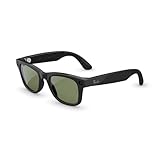
- #1 SELLING AI GLASSES - Tap into iconic style for men and women, and advanced technology with the newest generation of Ray-Ban Meta smart AI glasses. Capture photos and video recordings, listen to music, make hands-free calls or ask Meta AI questions on-the-go.
- UP TO 8 HOURS OF BATTERY LIFE - On a full charge, these smart AI glasses can last 2x longer than previous generations, up to 8 hours with moderate use. Plus, each pair comes with a charging case that provides up to 48 hours of charging on-the-go.
- 3K ULTRA HD: RECORD SHARP VIDEOS WITH RICH DETAIL — Hands-free video recording with an ultra-wide 12 MP camera in up to 3K resolution. Record clips up to 3 minutes per session. Capture sharp, vibrant memories while staying in the moment.
- LISTEN WITH OPEN-EAR AUDIO — Listen to music and more with discreet open-ear speakers that deliver rich, quality audio without blocking out conversations or the ambient noises around you.
- ASK YOUR GLASSES ANYTHING WITH META AI — Get real-time suggestions, answers, object identification, and reminders hands-free. Requires Bluetooth connection to your smartphone and the Meta AI app. Ensure your phone has internet connectivity.
It also should not be treated as an offline authority. AI, translation, navigation and app functions can depend on network access, accounts and regional software support. Its spatial capability is more substantial than a virtual monitor, but the software ecosystem is less mature than that of a smartphone or established gaming display.
Best lightweight display-free AI alternative: Rokid Style
Rokid Style is a lightweight camera-and-AI product with no display. Rokid lists a 38.5g weight, 12MP camera, up to 4K video, prescription support and compatibility with several AI services. The current official store lists it at $349; an earlier launch announcement advertised a starting price of approximately $299. Treat those as current list price versus launch pricing, not as a guaranteed permanent discount.
Rokid’s advertised battery claim of up to 12 hours is attractive, but it should not be compared directly with Ray-Ban’s eight-hour moderate-use claim without knowing the recording, audio, AI and standby mix. Rokid also advertises access to services including GPT and Gemini, but models, languages, features and availability in the United States should be verified at purchase time.
| Feature | Ray-Ban Meta Gen 2 | Rokid Style |
|---|---|---|
| Display | No | No |
| Camera | 12MP | 12MP |
| Video claim | Up to 3K | Manufacturer claims up to 4K |
| Weight | Verify frame-specific figure | 38.5g claimed |
| AI ecosystem | Meta AI | Several AI services advertised; regional support varies |
| Battery claim | Up to eight hours moderate use | Up to 12 hours claimed |
| Current listed price | From $379 | $349 on the cited current store page |
Rokid Style is worth considering if low weight and a more open advertised AI lineup matter more to you than Meta’s established app, frame and social ecosystem. The decision should be based on the exact services available in your country, not on the model names alone.
Specialist choices
Engo3 for endurance-athlete metrics
Engo3 is for runners and cyclists who want training data in view. It displays pace, heart rate, power and other workout metrics, and connects to Garmin and Apple Watch. At 38.5g, it is far lighter than a camera-equipped standalone AR product. Engo claims up to 20 hours of continuous use. The standard tinted version is listed at $399.95 and the photochromic version at $449.95.
Free tools Windows power users keep installed
One-click scans. No signup required.
Engo3 is not a general-purpose AI assistant, camera or movie screen. It is the better purchase when a training metric HUD is the job, not when you want calls, visual search or first-person video.
Mentra Live for developers and field work
Mentra Live is aimed at developers and enterprise users rather than buyers seeking the most polished consumer eyewear. Published specifications include a camera, stereo speakers, three microphones, MentraOS, 4K photos, HD video, more than eight hours of normal use and a $299 price after the introductory period.
Its value is the platform: SDK access, streaming support, an open development direction and the ability to build field-work or enterprise workflows. Evaluate the software ecosystem, documentation, support and data handling separately from camera quality and industrial design. A more open platform can also mean more setup and less predictable everyday support.
Solos AirGo V2 for experimentation
Solos AirGo V2 is another display-free, prescription-compatible AI-glasses option, with a 16MP camera and an open AI platform advertised by the manufacturer. It can make sense for buyers who want to experiment with a different software ecosystem, but availability and retailer stock can vary. Confirm the current bundle, lens option, supported AI services and return policy before ordering.
Upcoming and reservation-only glasses: buy now or wait?
Several of the most interesting products are not ordinary retail purchases on August 10, 2026. They should not be mixed into a buy-now ranking.
Snap SPECS
Snap SPECS are available for pre-order at $2,195 with a $200 refundable deposit. Snap expects shipments in fall 2026 in the United States, United Kingdom and France. The company lists up to four hours of mixed use and up to 20 hours from four additional case charges. Snap also emphasizes a recording LED and on-device processing priorities.
They are a high-priced early-adopter purchase, not a confirmed buy-now recommendation. Wait for ordinary retail shipping, independent testing, comfort feedback, field-of-view evaluation and battery testing before treating SPECS as a mainstream winner.
XREAL AURA
XREAL AURA is scheduled for fall 2026. XREAL describes it as wired optical-see-through Android XR glasses with a 70-degree display and Gemini AI assistance. Reservations are open, but the final retail price and completed consumer availability were not confirmed in the cited announcement. It is a product to watch if you want Android XR and optical see-through AR, not a product to count as shipped until that happens.
What’s actually slowing this PC down?
Pick the symptom - the matching free tool is one click away.
Samsung and Google intelligent eyewear
Samsung and Google previewed intelligent eyewear with Gentle Monster and Warby Parker in May 2026, then Samsung provided additional designs and specifications in July. Samsung says the glasses use Android XR, Qualcomm Snapdragon AR1 Gen 1, cameras and Gemini-related AI features, with up to nine hours of use claimed and a launch planned within 2026. No final US retail price or precise release date was confirmed in the cited announcements. Details are available from Samsung’s initial preview and its later announcement.
Rank #4

- #1 SELLING AI GLASSES - Tap into iconic style for men and women, and advanced technology with the newest generation of Ray-Ban Meta smart AI glasses. Capture photos and video recordings, listen to music, make hands-free calls or ask Meta AI questions on-the-go.
- UP TO 8 HOURS OF BATTERY LIFE - On a full charge, these smart AI glasses can last 2x longer than previous generations, up to 8 hours with moderate use. Plus, each pair comes with a charging case that provides up to 48 hours of charging on-the-go.
- 3K ULTRA HD: RECORD SHARP VIDEOS WITH RICH DETAIL — Hands-free video recording with an ultra-wide 12 MP camera in up to 3K resolution. Record clips up to 3 minutes per session. Capture sharp, vibrant memories while staying in the moment.
- LISTEN WITH OPEN-EAR AUDIO — Listen to music and more with discreet open-ear speakers that deliver rich, quality audio without blocking out conversations or the ambient noises around you.
- ASK YOUR GLASSES ANYTHING WITH META AI — Get real-time suggestions, answers, object identification, and reminders hands-free. Requires Bluetooth connection to your smartphone and the Meta AI app. Ensure your phone has internet connectivity.
Halliday G2
Halliday G2 is not yet a normal buy-now product as of the comparison date. The official reservation page says pre-orders begin in late August, with a $599 MSRP, a $10 refundable Priority Access payment, a $100 discount code and first-batch shipments expected in September.
Halliday G2 has no built-in camera, a binocular green waveguide display, 600 × 300 pixels per eye, a 25.2-degree field of view, 1,600-nit peak brightness and 12 hours of regular-use battery life. Halliday’s published plans also describe monthly credits for Meeting Flow and post-meeting summaries. That subscription structure changes its total cost of ownership, so do not compare the $599 hardware price with a one-time purchase until you know whether you need those features.
Meta’s Orion glasses remain a prototype rather than a consumer product. Meta itself separates its portfolio into camera AI glasses, display AI glasses and true augmented-reality glasses; Orion belongs to the last category but is not a retail alternative. See Meta’s category explanation.
PC Slower Than It Used to Be?
A free scan shows the junk files, broken settings and background clutter dragging Windows down - then fixes them in one click.Free scan · Windows 10 & 11Crashes, No Sound, or Screen Glitches?
Random freezes, missing sound and display glitches usually trace back to one bad driver. Find and replace yours safely.Free scan · under a minutePrescription glasses: what supports your lenses?
Prescription compatibility is not a yes-or-no specification. It can mean custom lenses from the manufacturer, replaceable lenses from an optician, a clip-in insert, or support for only a narrow range of single-vision prescriptions.
| Product or category | What is documented | What to verify before ordering |
|---|---|---|
| Ray-Ban Meta Gen 2 | Ray-Ban’s US FAQ lists an eligible -6.00 to +6.00 total-power range | Exact frame, progressive support, transitions, polarization and whether your prescription falls within the selected lens type |
| Meta Glasses | Meta says the collection supports prescription lenses | Exact prescription range and regional lens availability for the chosen style |
| Even G2 | Prescription lenses are offered, with a broad range described in Even’s documentation | Exact regional range, lens type, progressive support and custom fitting process |
| Halliday G2 | SPH -8.00 to +2.00 and CYL -2.00 to 0.00 are listed | Halliday’s custom waveguide lenses cannot simply be replaced by a local optician |
| XREAL One Pro | Two IPD sizes cover 57–75mm; prescription lenses are an accessory | Correct IPD, insert cost, astigmatism compatibility and field-of-view impact |
| VITURE Beast | Separate size ranges and prescription accessories are offered | Whether you need an insert, which size fits, and whether the insert works with your prescription |
| Rokid Style | Prescription support is advertised | Country-specific lens ordering and whether a local optician can replace the lenses |
Progressive lenses, strong astigmatism, photochromic lenses and polarized lenses deserve special attention. A lens that fits physically may still make a small HUD difficult to read or alter the optical alignment of an XR display. Measure your pupillary distance or IPD as the product requires, and check the return policy before committing to custom lenses.
Phone, computer and accessory requirements
The word standalone is frequently overused. Ask whether the glasses can boot, display content, process AI and save media without a phone, rather than assuming that an onboard battery makes them independent.
| Product type | What happens without the phone or host? | Important connection detail |
|---|---|---|
| Ray-Ban Meta and Oakley Meta | Core operation depends on a paired phone and Meta AI app; cloud AI and media transfer are especially dependent on the phone and network | Bluetooth, app permissions, background access and account setup matter |
| Even G2 | The glasses are primarily display and input hardware; software and phone-based processing are central | iOS or Android phone connection over Bluetooth LE; optional R1 ring adds control rather than replacing the phone |
| Meta Ray-Ban Display | The display system includes the Neural Band but remains part of the phone and Meta ecosystem | $799 package includes the band; verify regional feature support |
| VITURE Beast and XREAL One Pro | They are primarily displays and need a compatible video source or accessory | USB-C must support DisplayPort video; charging-only ports are not enough |
| Halliday G2 | Phone pairing is central to the software experience | Halliday lists iOS and Android pairing over Bluetooth 5.4 and OTA updates over Wi-Fi |
| RayNeo X3 Pro | More processing is onboard, but AI, translation, navigation and services can still depend on connectivity and accounts | Check the Android, app and regional-service requirements |
Failure checks to make before you buy
- Disable Bluetooth and see which functions remain. Do not assume the camera or display will continue to work.
- Force-close the companion app and check whether audio controls, media capture and notifications continue.
- Test the phone with no cellular data or Wi-Fi. Cloud AI, translation and navigation may stop or become delayed.
- Confirm that your phone’s USB-C port supports DisplayPort if you are buying VITURE or XREAL.
- Check whether the glasses can coexist with another Bluetooth headset and whether two pairs can be managed from one account.
- Test a phone change, low-power mode and background-app restrictions before relying on the glasses for work.
- Confirm how photos and videos are imported if the app cannot connect. A camera that cannot reliably transfer files is less useful than its resolution suggests.
Ray-Ban’s official FAQ includes re-pairing and troubleshooting guidance. For every other brand, read the current support documentation before buying rather than relying on a retailer’s short compatibility label.
Battery life: compare usage, not marketing numbers
Battery claims are not standardized. A pair may last eight hours while playing occasional audio, but only a fraction of that while recording video, driving a bright display, using microphones continuously or sending AI requests over a network. Charging-case capacity is also separate from the time the glasses can run on one charge.
| Product | Published usage claim | Case or charging detail | How to interpret it |
|---|---|---|---|
| Ray-Ban Meta Gen 2 | Up to eight hours moderate use; up to five hours continuous audio and voice assistance | Up to 48 additional hours from case | Good for a day of intermittent interactions, not necessarily a full day of constant audio and AI |
| Oakley Meta Vanguard | Up to nine hours daily use; six hours continuous audio | 36 additional hours from case | Strongest stated endurance among Meta’s sports-oriented options, subject to camera and GPS-linked use |
| Meta Ray-Ban Display | Up to six hours mixed use | 30 hours from case | Display use reduces the advantage of the display-free models |
| Even G2 | Two days of regular use | Case supports up to seven charges | Regular-use wording matters; frequent display and microphone use can shorten it |
| RayNeo X3 Pro | Approximately five hours recording, three hours music and 36 minutes video in listed modes | Demanding display and camera modes are much shorter than light use | Plan for charging during intensive AR sessions |
| Rokid Style | Up to 12 hours claimed | Confirm case and charging details by region | Manufacturer claim; compare only after defining audio, camera and AI workload |
| Engo3 | Up to 20 hours continuous use claimed | Designed for training sessions | Long endurance reflects a simple metrics HUD, not a camera or full-color AR workload |
| Snap SPECS | Up to four hours mixed use | Up to 20 hours from four additional case charges | Pre-order claim, not yet an independently verified retail result |
For a realistic estimate, write down how many minutes per day you will record video, listen to audio, use visual AI, keep a display active and wear the glasses in standby. That estimate is more useful than choosing the largest number in a product description.
Independent reader supportYour contribution helps us test, update, and keep practical guides available for everyone.AI features: assistant, display and cloud service are different things
AI glasses marketing often combines several unrelated functions. Separate them before deciding what you are paying for:
- Voice assistant: asks and answers spoken questions, starts calls or controls media.
- Visual question answering: uses a camera to identify or describe objects, text, scenes or landmarks.
- Live translation: translates speech or text, sometimes displaying results and sometimes speaking them.
- Live captions: transcribes nearby speech into a lens display.
- Navigation: gives spoken directions, simple prompts or visual arrows. These are not equivalent experiences.
- Meeting transcription: records or processes conversations and may produce summaries, often with account, cloud and consent implications.
- Proactive AI: attempts to surface reminders or context without an explicit question. This can be useful, but it raises greater privacy and battery questions.
AI may run on the glasses, on the phone or in the cloud. A product with an onboard processor can still need internet access for the model, maps, translation or account services. Meta AI features are available only in selected countries and languages, and Meta’s capabilities vary by device, account, firmware and rollout. Rokid advertises access to multiple services including GPT and Gemini, but verify the exact US functions and languages at purchase time. Halliday’s Meeting Flow and post-meeting summaries use published monthly credits, so they are not simply free features attached to the hardware.
Outdated Drivers Are Slowing You Down
One free scan finds every outdated or missing driver and matches the right update for your exact hardware.Free scan · exact hardware matchPC Slower Than It Used to Be?
A free scan shows the junk files, broken settings and background clutter dragging Windows down - then fixes them in one click.Free scan · Windows 10 & 11None of these systems should be trusted as an authority for medical, legal, emergency or accessibility-critical decisions. Visual AI can misidentify objects, food, text, people and landmarks. Translations can omit context. Navigation can be stale or incomplete. Meeting summaries can miss a sentence or attribute a comment to the wrong speaker.
Privacy, recording and social acceptability
Camera glasses are not automatically unlawful, and a recording light is not automatic proof that recording is acceptable. There are three separate questions: whether the device is technically recording, whether local law permits the recording, and whether the people or venue consent to it.
What to check
- Is there a visible capture LED, and is it hardware-enforced?
- Can visual AI inspect a scene without saving a conventional photo or video?
- Are audio, photographs or video uploaded to a cloud service?
- Can voice activity, images and AI history be reviewed or deleted?
- Can third-party applications access the camera feed?
- Does the product have a hardware privacy switch or only software controls?
- Are the glasses prohibited in your workplace, school, healthcare facility, court, casino, changing room or secure building?
Meta says its AI glasses have a capture LED and privacy controls. Separately, the Texas attorney general opened an investigation into Meta glasses, alleging concerns about always-enabled video processing and the possibility of hiding the indicator. The investigation is an allegation and does not establish wrongdoing, but it illustrates why a manufacturer’s privacy explanation should not be the only part of a buyer’s decision. Read Meta’s privacy FAQ alongside the Texas attorney general’s announcement.
Best Value

- #1 SELLING AI GLASSES - Move effortlessly through life with Ray-Ban Meta glasses. Capture photos and videos, listen to music, make hands-free calls or ask Meta AI* questions on-the-go. Ray-Ban Meta glasses deliver a slim, comfortable fit for both men and women.
- CAPTURE WHAT YOU SEE AND HEAR HANDS-FREE - Capture exactly what you see and hear with an ultra-wide 12 MP camera and a five-mic system. Livestream it on Facebook and Instagram.
- LISTEN WITH OPEN-EAR AUDIO — Listen to music and more with discreet open-ear speakers that deliver rich, quality audio without blocking conversations or the ambient noises around you.
- GET REAL-TIME ANSWERS FROM META AI — The Meta AI* built into Ray-Ban Meta’s wearable technology helps you flow through your day. When activated, it can analyze your surroundings and provide context-rich suggestions - all from your smart AI glasses.
- CONNECT LIKE A LOCAL WITH REAL-TIME TRANSLATION - With live translation, you can hear translations in real-time between French, Italian, Spanish, and English, German, Portuguese, and counting - no wifi needed.
Even G2 and Halliday G2 are the most privacy-conscious options in this comparison because they do not put a camera on the eyewear. That does not mean they are data-free: they have microphones, connect to phones, may use cloud AI and, in Even’s case, a permitted plugin can use the phone’s camera.
A conservative etiquette policy
- Tell people when you are recording in a private or professional setting.
- Do not use camera glasses in bathrooms, changing rooms, medical settings or confidential meetings unless explicitly permitted.
- Do not use facial recognition or identity lookup on strangers.
- Do not assume that a recording LED satisfies consent requirements under local law.
- Check venue policy before entering a school, court, casino, government building or secure workplace.
- When in doubt, use camera-free glasses or remove the device.
Weather, fit and everyday wearability
IP ratings describe defined test conditions, not every real-world hazard. IPX4 generally means resistance to splashing; it does not mean submersion. IP67 indicates dust-tight protection and temporary immersion under the relevant test conditions, but does not make a product suitable for every water sport.
Oakley Meta Vanguard is listed at IP67, while Oakley Meta HSTN is listed at IPX4. Even G2 is listed at IP65 and Halliday G2 at IP54. Do not infer a rating for a different model in the same product family. Sweat, salt water, sunscreen, rain, heat, cold and moisture inside the charging case can all cause problems even when the headline IP rating looks reassuring.
Social usability is equally important. Ask whether the camera is obvious, whether the recording LED is visible, whether open-ear audio leaks in a quiet meeting, whether the frame fits under a helmet, whether the temples interfere with a hat or hair, and whether you are comfortable wearing it around strangers. A technically impressive pair left at home has no practical value.
Open-ear speakers preserve awareness of traffic and conversation, but they can leak sound in quiet rooms and become difficult to hear around wind or traffic. They are not hearing protection. AI prompts can also distract a cyclist, runner or pedestrian, so do not rely on a spoken or visual assistant while crossing a road or operating equipment.
Recommended Free Tools
How to choose: a use-case decision tree
- Want photos, calls, music and spoken AI? Start with Ray-Ban Meta Gen 2. Choose Meta Glasses if the lower price or broader styles matter more, or Rokid Style if the lighter frame and advertised multi-service AI are more appealing.
- Want sports metrics? Choose Engo3 for pace, heart rate and power in view. Choose Oakley Meta Vanguard if you also need first-person video, open-ear audio and Meta AI.
- Want text, captions, translation or prompts in your view? Choose Even G2 for a camera-free monochrome HUD, Meta Ray-Ban Display for Meta’s richer display AI interface, or RayNeo X3 Pro for full-color spatial AR.
- Want a private screen for games, films or a laptop? Choose VITURE Beast or XREAL One Pro. Confirm USB-C DisplayPort compatibility and budget for inserts, adapters or a compute accessory.
- Want full-color standalone AR? RayNeo X3 Pro is the clearest current retail example. If you can wait, watch XREAL AURA and Snap SPECS, but do not treat reservations as shipped products.
- Do not want a camera on your face? Choose Even G2 now, or evaluate Halliday G2 after it ships. Remember that camera-free glasses can still contain microphones and use phone or cloud data.
Buyer checklist before placing an order
- Display: Do you need to see information, or is audio enough?
- Camera: Is first-person capture or visual AI worth the privacy and venue restrictions?
- Phone: What happens when Bluetooth, the companion app, mobile data or background permissions are unavailable?
- Computer: If buying XR display glasses, does your USB-C port output DisplayPort video?
- Prescription: Does your exact sphere, cylinder, axis, progressive design and pupillary distance fit the manufacturer’s range?
- Lens options: Are transitions, polarization, tint and local lens replacement supported?
- Battery: What is the estimate for your actual mix of recording, display, audio and AI, not just standby?
- Weather: Is the IP rating appropriate for rain and sweat, and what about salt water and the charging case?
- Accounts: Are you comfortable with a Meta, Google, Rokid, Even, Halliday or other vendor account?
- Subscriptions: Do meeting summaries, AI credits or premium models require a recurring plan?
- Privacy: Is the product permitted at work, school, in healthcare settings or at venues you visit?
- Total cost: Add prescription lenses, inserts, charging cases, adapters, compute pucks, rings, wristbands, docks, subscriptions, shipping and taxes.
- Returns: Can you return custom prescription glasses if the HUD alignment, fit or brightness does not work for you?
How to read smart-glasses specifications without being misled
Do not rank unlike products by megapixels. A camera matters to Meta and Rokid, but is irrelevant if your goal is a private laptop display. Likewise, a 120Hz micro-OLED screen is not automatically better than a low-power HUD if you need subtle navigation while walking.
Do not treat every screen as AR. VITURE, XREAL and RayNeo Air products can be excellent displays while still being fundamentally different from transparent, world-locked overlays. Look for tracking type, host requirements and whether content responds to movement through space.
Attribute company superlatives. Terms such as world’s lightest, best, fastest, most advanced, 4K-like and 150-inch screen are claims, not standardized test results. Manufacturer brightness figures also are not directly comparable: nits, optical efficiency and ambient contrast may be measured differently.
Separate launch price from current price. Rokid Style was announced around a $299 starting price but the cited current store page lists $349. Snap SPECS has a $2,195 pre-order price plus a refundable deposit. Halliday G2’s reservation payment is not the same as the full retail price. Label whether a figure is US MSRP, current sale price, launch price, reservation price or a bundle price.
Use current official specifications when they conflict with reviews. Pre-release hardware, early firmware and regional versions can produce different figures. Even’s current documentation, for example, lists G2 at 640 × 350 and 60Hz, while older coverage has listed other values.
Price the complete system. A pair of display glasses may need a $199-class compute device, mobile dock, prescription insert or special adapter. A meeting-focused pair may require monthly credits. The glasses price alone is not the usable price.
Final recommendations
- Most people: Ray-Ban Meta Gen 2.
- Lower-cost display-free Meta option: Meta Glasses.
- Sports camera, audio and AI: Oakley Meta Vanguard.
- Camera-free HUD: Even Realities G2.
- Glanceable AI display with captions and notifications: Meta Ray-Ban Display.
- Private gaming or movie screen: VITURE Beast.
- Spatial virtual monitor: XREAL One Pro.
- Standalone color AR: RayNeo X3 Pro.
- Lightweight display-free AI alternative: Rokid Style.
- Endurance-training metrics: Engo3.
- Developer and field-work platform: Mentra Live.
- Worth waiting for: XREAL AURA, Snap SPECS and Samsung/Google intelligent eyewear, provided you are comfortable waiting for final prices, shipping and independent testing.
Frequently Asked Questions
Are Ray-Ban Meta Gen 2 glasses augmented reality glasses?
No. Ray-Ban Meta Gen 2 has cameras, microphones, open-ear speakers and Meta AI, but no lens display. It cannot show navigation arrows, captions, translations or notifications in front of your eyes.
Can smart glasses work without a phone?
Some standalone AR glasses include more onboard computing, but phone and internet dependence remains common. Ray-Ban Meta requires a phone and Meta AI app. Even G2 relies heavily on phone-based processing. VITURE Beast and XREAL One Pro primarily need a compatible USB-C video source. Always check what remains functional when Bluetooth, the companion app or mobile data is unavailable.
Which smart glasses do not have a camera?
Even Realities G2 and the upcoming Halliday G2 do not have cameras built into the glasses. They can still use microphones, phone connections and cloud services. Even plugins may access a phone camera when permission is granted, so camera-free does not mean data-free.
Can prescription lenses be fitted to smart glasses?
Many can, but support varies by model, prescription range and lens type. Ray-Ban’s US FAQ lists -6.00 to +6.00 total power for eligible Ray-Ban Meta lenses. Halliday G2 lists SPH -8.00 to +2.00 and CYL -2.00 to 0.00, with custom waveguide lenses that cannot simply be replaced locally. XR display products commonly use prescription inserts and may require a measured IPD.
Should I wait for Snap SPECS or XREAL AURA?
Wait if you specifically want newer full-AR or Android XR hardware and can accept uncertain shipping, price and first-generation software. Snap SPECS is a $2,195 pre-order expected to ship in fall 2026, while XREAL AURA is scheduled for fall 2026 with final retail pricing not confirmed in the cited announcement. For a product you can buy now, choose according to your category rather than waiting for every announcement.
The Bottom Line
There is no single best smart-glasses design in 2026. Buy Ray-Ban Meta Gen 2 for the most practical camera, audio and voice-AI experience; Even Realities G2 for a camera-free HUD; Oakley Meta Vanguard for sports; VITURE Beast or XREAL One Pro for a private screen; and RayNeo X3 Pro for current standalone color AR. The biggest mistake is buying one category while expecting another.
Do these 3 things before closing this tab:
1Clear out junk files and repair common Windows errors2Scan for outdated or missing drivers - takes under a minute3Repair Windows errors before they cause bigger problemsQuick Recap
Product prices and availability are accurate as of the date/time indicated and are subject to change. Any price and availability information displayed on Amazon at the time of purchase will apply.