Recommended Free Tools
The best first-day setup for a Samsung Galaxy Watch6 or Galaxy Watch6 Classic is not choosing a fancy watch face. First charge and update it, pair it with the right Android phone, secure it, filter notifications, configure health and sleep tracking, and set up emergency recovery tools. Then personalize the face, Tiles, apps, workouts, music, and water controls.
This guide is written primarily for U.S. owners and covers both Bluetooth/Wi-Fi and LTE models. Menu names can move or change with the watch software, phone, carrier, and region. Updated Watch6 devices may run Wear OS 6 with One UI 8 Watch, although the exact release depends on the model, country, and carrier; Samsung’s update database shows those differences clearly in its Watch6 firmware history.
Before you start: check the phone and model
The Galaxy Watch6 and Watch6 Classic require an Android phone running Android 10 or later with at least 2GB of RAM, according to Samsung’s current compatibility guidance. A non-Samsung Android phone can use the core Wear OS experience, notifications, watch faces, apps, workouts, and much of Samsung Health, but Samsung-specific features are restricted.

Galaxy Watch models using Wear OS, including the Watch6 series, do not work with an iPhone. Installing an older Galaxy Watch app on iOS does not make a Watch4, Watch5, or Watch6 compatible with an iPhone. Samsung explains the limitation in its iPhone compatibility article.
If you have an LTE Watch6, it can provide more independent calling, messaging, and mobile data, but only after activation with a compatible carrier and plan. LTE does not make every phone function independent, and emergency features still depend on signal, battery, permissions, and configuration. A Bluetooth/Wi-Fi model is usually the simpler choice if you carry your phone everywhere.
Quick-start checklist
- Charge the watch and update the watch, phone, and apps.
- Pair it with Galaxy Wearable and check compatibility.
- Set a PIN or pattern before adding payment cards.
- Filter notifications so only useful alerts reach your wrist.
- Choose a readable watch face and set display behavior.
- Learn navigation, bezel gestures, and button shortcuts.
- Reorder Tiles and install only the apps you will use.
- Enable the health measurements that fit your priorities.
- Configure sleep tracking before the first night.
- Set up workouts, GPS, and heart-rate zones.
- Prepare offline music, maps, and Water Lock.
- Set up SOS, fall detection, Find, and backup.
1. Charge the watch, then update everything
Do the software work before customizing the watch. Updates can change menus, improve sensors, fix pairing problems, and add features. They can also reset expectations about where a setting lives.
Update the watch through the phone
- Open Galaxy Wearable.
- Tap Watch settings.
- Tap Watch software update.
- Choose Download and install.
You can also update directly on the watch through Settings → Software update → Download and install. Samsung says the watch needs a network connection and a Bluetooth connection to the phone for updates. Keep it charged while the installation runs.
Also update Galaxy Wearable, the Galaxy Watch device plug-in, Samsung Health, Samsung Health Monitor where available, and watch apps through the relevant app store. Samsung’s update troubleshooting guide notes that the watch may disconnect and show a progress percentage or warning symbol during installation. That does not necessarily mean the update failed.
Samsung’s Watch6 firmware database now includes Wear OS 6 and One UI 8 Watch releases, including a representative R940XXS2CZF5 build released July 6, 2026 with a July 5, 2026 security patch. Do not expect that exact build: Watch size, model number, country, and carrier affect release timing.
If no update appears
- Connect the watch to the phone by Bluetooth.
- Put the watch on its charger or charge it adequately.
- Update Galaxy Wearable and the watch plug-in.
- Restart both the phone and watch.
- Check again in Galaxy Wearable.
Do not factory-reset the watch as your first update fix. Back up before using a reset as a last resort.
2. Pair it correctly and decide whether to activate LTE
Pairing steps
- Turn on the watch by holding the Home/Power button.
- Install or open Galaxy Wearable on the Android phone.
- Select the Watch6 from the device list.
- Confirm that the pairing code matches on both devices.
- Sign in to the requested Samsung and Google accounts.
- Allow the permissions needed for notifications, health, contacts, calls, and location.
Permissions are not incidental. Refusing notification or contact access can make the watch appear to be malfunctioning later. You can review permissions in the phone’s app settings if a feature does not work.
Free tools Windows power users keep installed
One-click scans. No signup required.
Bluetooth/Wi-Fi or LTE?
| Model | Best for | What to expect |
|---|---|---|
| Bluetooth/Wi-Fi | People who normally carry a phone | Calls, messages, syncing, and connected services generally rely on the phone or a known Wi-Fi network when the phone is away. |
| LTE | Runners, travelers, or anyone who wants more phone-free connectivity | Requires carrier support, a compatible plan, activation, adequate signal, and additional battery use. Some services still require the phone. |
You can skip LTE activation during initial setup and use Bluetooth/Wi-Fi first. If you activate it, follow the carrier prompts in Galaxy Wearable. When moving an LTE watch to another phone, the carrier may require reactivation or a new QR code. Samsung’s LTE troubleshooting guidance covers those limitations.
3. Set a security lock before adding cards
A Watch6 can hold payment cards, messages, contacts, health data, and location information. Protect it before treating it like a wallet.
- On the watch, open Settings → Security and privacy → Lock type.
- Choose a PIN or Pattern.
- Leave Wrist detection enabled unless you have a specific reason to disable it.
Wrist detection normally keeps the watch unlocked while it recognizes that you are wearing it and locks it when removed. A loose fit can cause repeated unlock requests. Samsung says a screen lock is required for Samsung Wallet on the watch; see its security-lock guidance.
Add Samsung Wallet if you need payments
- Open Galaxy Wearable → Watch settings → Pay on the phone.
- Follow the prompts to add a supported card.
- Create or confirm the Wallet PIN.
- On the watch, hold the Back button to open Wallet.
NFC payments depend on supported countries, banks, cards, accounts, and software. Check Samsung’s Wallet support page if a card cannot be added.
4. Stop notification overload
A smartwatch becomes useful when it filters your phone instead of duplicating it. Start with a strict list and add apps later.
Rank #2
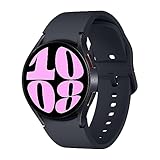
- Larger Super AMOLED Display: Expanded screen area with slimmer bezels for improved visibility and usability.
- Open Galaxy Wearable → Watch settings → Notifications.
- Tap App notifications.
- Turn off apps that do not deserve wrist-level alerts.
- Review Advanced notification settings, including Show with details, Turn on screen, Notification indicator, and Read notifications aloud when headphones are connected.
Keep calls, direct messages, calendar events, reminders, authentication alerts, and genuinely useful delivery or travel notifications. Disable shopping promotions, social-media likes, games, news headlines, marketing, and duplicate fitness alerts.
If notifications never arrive, check the Bluetooth connection, phone notification permission, Do Not Disturb, Bedtime or Sleep mode, battery restrictions on Galaxy Wearable, and whether notifications are set to show only while you are wearing the watch. Samsung documents the notification path in its notification support guide.
Outdated Drivers Are Slowing You Down
One free scan finds every outdated or missing driver and matches the right update for your exact hardware.Free scan · exact hardware matchWindows Errors? Fix Them Before They Spread
Repair common Windows errors and clear accumulated junk for a smoother, more stable PC - no reinstall needed.Free scan · no reinstall5. Choose a useful watch face and tune the display
Use the watch face for information you actually check. A battery percentage, weather, next calendar event, alarm, workout shortcut, or timer is usually more useful than filling every available slot with tiny complications.
Choose and customize a face
- On the phone: Galaxy Wearable → Watch faces.
- On the watch: touch and hold the current face, then tap Add watch face.
- Tap Customize when that option is available.
Samsung says faces can be downloaded from Galaxy Wearable or directly from the Watch6 through the Play Store, but customization options vary by face. Samsung’s watch-face guide explains the current process.
Balance readability and battery
Open Settings → Display on the watch or Galaxy Wearable → Watch settings → Display on the phone. Review brightness, auto brightness, Always On Display, Raise wrist to wake, touch-to-wake, screen timeout, font size, touch sensitivity, and—on the Classic—turn bezel to wake. On the standard Watch6, the touch-sensitive bezel is still available even though it has no physical rotating bezel.
Always On Display, higher brightness, longer screen timeouts, and frequent wake gestures use more battery. The Watch6 battery capacities are 300mAh for the 40mm model and 425mAh for the 44mm model; those figures do not translate into a universal runtime because LTE, GPS, screen behavior, music, and health tracking vary. Samsung’s display guide lists the relevant controls.
The Tool Desk
Outbyte PC Repair FREERepair Windows errors before they cause bigger problemsFix Now →Outbyte Driver Updater FREEFix the driver behind crashes, sound loss and screen glitchesFind Drivers →6. Learn navigation and customize the buttons
Spend two minutes learning the basic gestures:
- Swipe down: Quick settings.
- Swipe up: Apps.
- Swipe left: Tiles.
- Swipe right: Notifications.
- Touch and hold the watch face: Face selection and customization.
- Classic: Rotate the physical bezel.
- Standard Watch6: Use the touch-sensitive bezel.
Samsung’s navigation guide covers these controls and current interface behavior.
Make the buttons do something useful
Look for Settings → Advanced features → Customize buttons. Depending on software, you may be able to set the Home button’s double-press and press-and-hold actions, as well as Back-button behavior. A practical arrangement is a double press for the last app and a long press for an assistant or another action you use frequently.
Do not assume the best assistant is always Google Assistant. Current Samsung support discusses multiple assistants, including Bixby, Gemini, and Alexa, and availability depends on watch software, phone, language, account, and region. Check the assistant settings and Play Store on your own watch rather than following an old universal instruction to replace Bixby. See Samsung’s current assistant guidance.
Updated Watch6 software may also provide a double-pinch gesture for actions such as scrolling notifications, controlling music, or taking pictures. Exact controls depend on the installed One UI Watch version and paired phone; Samsung describes the feature in the Watch6 release notes.
Do these 3 things before closing this tab:
1Clear out junk files and repair common Windows errors2Scan for outdated or missing drivers - takes under a minute3Repair Windows errors before they cause bigger problems7. Reorder Tiles and install only the apps you need
Set up Tiles
Swipe left to the end of the Tiles and tap Add tiles, or manage them through Galaxy Wearable → Tiles. Add battery, weather, calendar, timer, alarm, workout, sleep, heart rate, music, Google Maps, and other tools you use regularly. Recent Galaxy watches support up to 15 Tiles, although the available list depends on installed apps and watch software. Samsung explains the process in its Tiles guide.
Install and organize apps
Use the Play Store on the watch or through Galaxy Wearable. Start with a map or navigation app, music service, weather app, calendar or task app, timer, and any travel or transit app you genuinely need. Reorder apps through Galaxy Wearable when the current app provides that option; the phone is easier than dragging icons on the watch.
The Watch6 has 16GB of internal storage, but the operating system and preinstalled apps use some of it. Leave room for offline music, map data, updates, and health apps. The official specification sheet lists the storage and memory figures.
Rank #3

- Rotating Bezel Design: Classic rotating bezel enables precise control and smooth navigation.
8. Turn on the health tracking you will actually use
Open Samsung Health on the watch and review heart-rate measurement, stress measurement, blood oxygen during sleep, snore detection, skin temperature during sleep, activity goals, exercise auto-detection, and your personal profile. Do not turn on every continuous sensor automatically: more frequent measurements can mean more useful trends, but also more battery use.
Use body composition as a trend, not a verdict
- Open Samsung Health → Body composition → Measure.
- Enter your sex, height, and weight.
- Touch the Home and Back buttons with the middle and index fingers.
- Raise both arms and remain still until the measurement finishes.
The Watch6 uses bioelectrical impedance analysis to estimate weight, skeletal muscle, fat mass, body fat, BMI, body water, and BMR. Samsung says not to use this feature with an implanted pacemaker or other implanted medical device, or during pregnancy. Results are for general personal information, not diagnosis; see Samsung’s body-composition guidance.
ECG and irregular-heart-rhythm notifications
ECG and irregular-heart-rhythm notifications are Samsung Health Monitor features, not ordinary Samsung Health measurements. They require a compatible Samsung Galaxy phone, the Health Monitor app, current software, a supported country or region, and applicable age and safety eligibility. They are not generally available when the Watch6 is paired with a non-Samsung Android phone.
For an ECG, rest an opposite-hand finger lightly on the watch’s Home button for about 30 seconds without pressing it. Movement, cold skin, poor contact, or an improperly fitted watch can produce a poor or inconclusive result. Samsung’s ECG troubleshooting instructions explain how to improve contact. Samsung does not present this as a way to detect a heart attack or diagnose a condition.
What’s actually slowing this PC down?
Pick the symptom - the matching free tool is one click away.
Blood pressure is particularly region-dependent
Where supported, Samsung’s blood-pressure feature requires calibration with an upper-arm cuff and recalibration every 28 days. Samsung’s current U.S. support pages are inconsistent: one provides setup instructions, while another says the feature cannot be used in the United States. Do not assume it is available because you see the menu or because the watch has the sensor. Check whether Samsung Health Monitor presents the feature for your exact phone, watch, account, and location, and follow the calibration guidance and availability notice.
9. Configure sleep tracking before your first night
Sleep tracking is more useful when the watch fits snugly and you wear it consistently. Before bed:
- Open Samsung Health on the watch.
- Open Sleep or the sleep settings.
- Enable blood oxygen during sleep if you want that measurement.
- Enable snore detection if you can keep the phone near your head.
- Enable skin temperature during sleep where the option is available.
- Wear the watch securely but comfortably overnight.
The Sleep Tile can show sleep time, stages, sleep score, blood oxygen, snoring, and sleep consistency. Snore detection requires the watch to remain connected through Galaxy Wearable, with the phone near the user’s head; it is not simply a microphone function performed by the watch alone. Samsung’s sleep support page describes the setup.
Sleep Coaching does not appear immediately. Samsung says it needs at least seven days and nights of wear before it becomes available, and its settings are configured from the phone.
Quick wins for a faster PC:
Fix the driver behind crashes, sound loss and screen glitchesFind Drivers →Clear out junk files and repair common Windows errorsFree Scan →Do not confuse sleep tracking with sleep-apnea detection
Samsung’s Sleep Apnea feature is a separate Samsung Health Monitor function with Samsung Galaxy phone, software, age, regional, and medical-use restrictions. It is intended to identify signs that may warrant attention, not to diagnose sleep apnea or replace a clinical sleep evaluation. The availability and medical qualifications are described in Samsung’s feature announcement and Health Monitor support information.
Sleep oxygen, skin temperature, continuous sensors, and an Always On Display all draw from the same battery. Establish a charging routine—during a shower, breakfast, or desk time—rather than disabling every useful feature after one short night.
10. Configure workouts, GPS, and heart-rate zones
Open the Exercise Tile and review the workout types you use. For outdoor workouts, start outside and wait for the GPS lock before beginning. Wear the watch snugly above the wrist bone and limit workout screens to metrics you can read safely while moving.
Set personalized heart-rate zones for running
- Open the Exercise Tile.
- Choose Running.
- Open workout Settings.
- Choose HR Zone guide.
- Enable it and select the target zone or goal.
Samsung says personalized heart-rate zones for running require an initial period of outdoor running with GPS. The Watch6 specification sheet describes an initial 10-minute outside run with GPS enabled. See Samsung’s heart-rate-zone instructions and the specification sheet.
Windows Errors? Fix Them Before They Spread
Repair common Windows errors and clear accumulated junk for a smoother, more stable PC - no reinstall needed.Free scan · no reinstallOutdated Drivers Are Slowing You Down
One free scan finds every outdated or missing driver and matches the right update for your exact hardware.Free scan · exact hardware matchRank #4

- Rotating Bezel Design: Classic rotating bezel enables precise control and smooth navigation.
Do not turn your first day into a maximal-effort experiment. Older Watch6 advice sometimes recommends a hard track workout as a so-called VO₂ max stress test. That is not a sensible generic onboarding step, may be inappropriate for people with health conditions or little training experience, and should not be casually labeled a clinical VO₂-max test. Use the watch’s normal GPS and personalized-zone setup; consult a qualified professional before deliberately exercising at maximum effort.
11. Prepare music, maps, and Water Lock
Make music available without the phone
The Watch6 can play manually transferred files and support offline downloads in compatible Wear OS music apps. These are different scenarios:
- Transferred files: compatible music copied from the phone through Galaxy Wearable.
- Streaming-app downloads: playlists saved inside a supported music app, often requiring a subscription.
- Streaming: music played over Wi-Fi or LTE when connectivity is available.
- Direct headphones: Bluetooth headphones paired to the watch rather than the phone.
For compatible phone-stored files, the documented path is Galaxy Wearable → Watch settings → Manage content → Add tracks. Downloads consume the watch’s storage, so leave room for updates and other apps.
Install maps before you need them
Install Google Maps or another compatible navigation app from the Play Store and sign in before a trip. Downloaded or cached content, turn-by-turn behavior, and phone-free navigation vary by app and connectivity. Wear OS gives the Watch6 Play Store access and Google Maps support, but LTE is not a guarantee that every map feature works without the phone.
Free tools Windows power users keep installed
One-click scans. No signup required.
Use Water Lock correctly
Before swimming or another wet activity:
- Swipe down to open Quick settings.
- Tap the water-droplet Water lock icon.
- When finished, press and hold the Home/Power button to exit.
Water Lock prevents accidental taps and wake gestures. It does not improve the watch’s water resistance. It may also activate automatically when a swim workout begins. When Water Lock turns off, the watch may run a speaker water-ejection routine. Samsung explains this in its Water Lock guide.
The Watch6 is rated 5ATM/IP68 and MIL-STD-810H, but it is not waterproof. Avoid high-pressure water, dramatic temperature changes, chemicals, and prolonged salt-water exposure. Rinse with fresh water and dry the watch after salt-water use. Water resistance can deteriorate through wear or impact. Samsung’s water and speaker cautions and the specification sheet provide the limitations.
12. Finish with SOS, fall detection, Find, and backup
Set up emergency information
- Open Galaxy Wearable → Watch settings → Safety and emergency.
- Add medical information.
- Add emergency contacts.
- Configure SOS message recipients and emergency-call options.
- Review and enable Hard fall detection.
Samsung says hard-fall detection is not enabled by default. Depending on the interface, you can configure it for always, physical activity, or workouts. SOS alerts, emergency calls, location sharing, and hard-fall behavior depend on the phone connection, an active LTE plan where needed, carrier support, region, permissions, location services, battery, and signal. A Bluetooth-only Watch6 should not be treated as an independent emergency phone when it is away from the phone. Read Samsung’s SOS guidance and fall-detection guidance, and do not trigger a test emergency call unless your local instructions provide a safe test method.
Enable ways to find a lost watch
Set this up before the watch disappears. In Galaxy Wearable, look for Find My Watch, or use Samsung Find/SmartThings Find. Enable appropriate remote and offline-finding options, then test the Ring function while the watch is nearby. Samsung Find may let you view the watch’s location, ring it, lock it, or erase it remotely, subject to account, battery, and connectivity requirements. See Samsung’s guides for finding a watch and remote device tools.
Back up before changing phones or resetting
- Open Galaxy Wearable → Watch settings → Account and backup.
- Tap Back up data.
- Confirm that the backup completes before changing phones, factory-resetting, or troubleshooting repeated pairing failures.
Backups can include app data, app lists, watch-face settings, and system settings. Music stored locally on the watch is not backed up. Data transferred from older Tizen watches to a Wear OS Watch6 may also be incomplete. Samsung lists these limitations in its backup and restore guide. LTE service may require separate carrier reactivation after a phone change.
Independent reader supportYour contribution helps us test, update, and keep practical guides available for everyone.Battery settings: what to change first
There is no single battery-life number that applies to every Watch6. The 40mm and 44mm models have different battery capacities, and actual use changes substantially with LTE, GPS, screen brightness, Always On Display, music playback, notifications, and continuous health measurements.
| If you want… | Prefer these settings | Trade-off |
|---|---|---|
| Maximum battery life | Turn off Always On Display, shorten screen timeout, reduce brightness, limit continuous sensors, and use GPS/LTE only when needed. | Less glanceability, less health data, and fewer phone-free functions. |
| Better overnight data | Keep sleep oxygen, skin temperature, and the desired heart-rate measurements enabled; charge before bed. | More battery use and a charging routine becomes essential. |
| Phone-free workouts | Use LTE or downloaded music and maps; pair headphones directly to the watch. | LTE, GPS, music, and screen use can drain the battery quickly. |
| Fewer interruptions | Filter notifications and disable unnecessary wake-on-notification behavior. | You may not see every incoming alert immediately. |
If battery drain becomes extreme immediately after an update, restart both devices, update all watch apps, check whether a stuck download or newly installed app is active, and give the watch time to finish post-update indexing. If the problem persists, back up first and use Samsung’s official troubleshooting steps before resetting.
Troubleshooting the common first-day problems
The watch does not appear in Galaxy Wearable
- Confirm that the phone meets Android 10 and 2GB RAM requirements.
- Turn Bluetooth off and on, then restart both devices.
- Update Galaxy Wearable and the Galaxy Watch plug-in.
- Keep the watch near the phone and charged.
- If the watch was previously owned, have the former owner remove it from their account and reset it properly.
- Reset only after backing up what is possible.
Pairing is stuck or fails after a phone change
Do not repeatedly attempt to pair while the watch remains registered to the old phone. Back up on the old phone if possible, use the watch’s transfer-to-new-phone option when offered, and expect to restore settings. LTE service may need a carrier reactivation or new QR code. A factory reset is a last resort because it erases the watch.
Recommended Free Tools
Notifications are missing
Check Galaxy Wearable notification permissions, the individual app list, the phone’s notification settings, Bluetooth, Do Not Disturb, Sleep mode, battery optimization, and any setting that limits alerts to when the watch is worn. Also check whether the phone itself is suppressing the alert.
Best Value

- Smart watch with Wear OS by Samsung, Made of aluminum in Gold color Frame (Cream Band).
- Offers Bluetooth 5.3, Wi-Fi 2.4GHz and 5GHz, GPS and NFC. Ultra-durable sapphire crystal glass makes for a resilient and sturdy watch display, while IP68 and 5ATM ratings mean your watch is tough enough to stay with you on your adventures.
- Understand your nights to make the most of your days; wear your Galaxy Watch6 to bed and monitor your nightly sleep stage, sleep score and sleep consistency to improve your sleep.
- Sync your Galaxy Watch with your Galaxy smartphone, Tab, and Buds for a completely connected experience.
The update is unavailable or appears frozen
Charge the watch, connect it by Bluetooth, update Galaxy Wearable and its plug-in, restart both devices, and retry. During installation, a disconnect or progress warning can be normal. Do not interrupt the process unless the watch remains genuinely unresponsive for an extended period and Samsung’s instructions direct recovery.
There is no sleep data
Wear the watch snugly overnight, make sure it has enough battery, confirm Samsung Health permissions, and check that the watch is actually recording sleep. For snore detection, keep the phone near your head and maintain the Galaxy Wearable connection. Sleep Coaching will not appear until at least seven days and nights of data have been collected.
Snore detection records nothing
Confirm that snore detection is enabled in Samsung Health, the phone is close enough to hear you, Galaxy Wearable remains connected, and the phone is not in a mode that blocks the required recording behavior. Snore detection is not performed solely by the watch.
An ECG is poor or inconclusive
Use a compatible Samsung Galaxy phone with Samsung Health Monitor, update the app and watch, sit still, warm cold hands, clean and dry the contact points, fit the watch securely, and touch the Home button lightly with the opposite finger for approximately 30 seconds. Do not press down. Repeated inconclusive readings or concerning symptoms warrant medical advice, not repeated attempts to make the watch produce a preferred result.
LTE stopped working after changing phones
Check that the watch is still registered to the correct Samsung account, that the carrier plan is active, and that the watch has signal. Follow the carrier’s activation flow; a new QR code or reactivation may be required. Bluetooth pairing alone does not guarantee that the cellular profile moved to the new phone.
The speaker sounds muffled after swimming
Exit Water Lock using the Home/Power button. Let the speaker drain and dry naturally, and follow Samsung’s water and speaker-care instructions. Do not use high-pressure air, sharp objects, or heat to force water out.
What to leave for later
Developer options, Smart Lock-style convenience features, exhaustive third-party watch-face testing, and assistant experimentation can wait. Smart Lock or similar nearby-device unlocking can make the phone easier to access but weakens the security consequences of losing the watch, so it is not a core first-day recommendation. The priorities are updates, compatibility, a lock, useful alerts, health and sleep setup, emergency recovery, and backup.
Frequently Asked Questions
Can I use a Samsung Galaxy Watch6 with an iPhone?
No. The Galaxy Watch6 and Watch6 Classic use Wear OS and are not compatible with iPhones. You need a compatible Android phone, generally Android 10 or later with at least 2GB of RAM.
Do I need a Samsung phone to use the Galaxy Watch6?
No for the core smartwatch experience. A compatible non-Samsung Android phone can use notifications, watch faces, apps, workouts, and many Samsung Health features. Samsung Health Monitor features such as ECG, irregular-heart-rhythm notifications, and supported sleep-apnea functions generally require a compatible Samsung Galaxy phone, plus the required region, software, and eligibility.
Is the LTE Galaxy Watch6 usable without a phone?
It can provide more independent calling, messaging, and mobile data, but only with a compatible activated carrier plan and sufficient signal. LTE does not make every feature independent, and emergency functions depend on connectivity, battery, permissions, and regional support.
How long does the Galaxy Watch6 battery last?
There is no universal runtime. Battery use depends on model size, LTE, GPS, Always On Display, brightness, music, notifications, and continuous health tracking. The 40mm model has a 300mAh battery and the 44mm model has a 425mAh battery.
Does Water Lock make the Galaxy Watch6 waterproof?
No. Water Lock blocks accidental touches and helps with speaker water ejection; it does not improve water resistance. The Watch6 is water-resistant with a 5ATM/IP68 rating, but high-pressure water, chemicals, salt water, temperature changes, and impact can still cause damage.
Why is ECG or blood pressure unavailable on my Watch6?
These are Samsung Health Monitor features with phone, software, country, age, regulatory, and medical-use restrictions. ECG generally requires a compatible Samsung Galaxy phone. Blood-pressure availability is especially region-dependent; Samsung’s current U.S. support pages are not consistent, so check the feature inside Samsung Health Monitor for your exact setup.
The Bottom Line
For the best first-day result, update before customizing, pair the Watch6 with a compatible Android phone, use a PIN, reduce notifications, establish a sustainable charging routine, and configure sleep, health, workouts, emergency contacts, Find, and backup. Treat ECG, blood pressure, body composition, sleep apnea, and heart-rhythm results as limited wellness or screening information—not diagnoses—and remember that LTE, medical features, and menu names vary by carrier, region, phone, and software version.
Quick Recap
Product prices and availability are accurate as of the date/time indicated and are subject to change. Any price and availability information displayed on Amazon at the time of purchase will apply.