The Tool Desk
Outbyte PC Repair FREERepair Windows errors before they cause bigger problemsFix Now →Outbyte Driver Updater FREEScan for outdated or missing drivers - takes under a minuteDriver Scan →Some links on this page are affiliate links: if you buy through them we may earn a commission, at no extra cost to you.
Quartz is the practical winner for accuracy and low maintenance; a futuristic mechanical watch is the choice for mechanical craft, a battery-free movement, and long-term serviceability; a smartwatch is the clear winner for notifications, health data, apps, and communications. A sculptural case, exposed gears, or unusual display does not change the physics of the movement inside. A mechanical calibre remains sensitive to winding state, position, temperature, shock, magnetism, lubrication, and ageing seals. The right choice depends on whether your priority is dependable timekeeping, tactile ownership, or connected information.
What counts as a futuristic mechanical watch?
“Futuristic mechanical watch” is an appearance and design description, not a regulated technical category. In this comparison it means a watch that uses a conventional mainspring-and-gear mechanical movement but presents it in an unconventional way: an open-work or skeletonised dial, a sculptural case, an unusual time display, visible bridges and wheels, or an advanced mechanical complication. The underlying movement can be hand-wound or automatic.
As an Amazon Associate I earn from qualifying purchases.
Free tools Windows power users keep installed
One-click scans. No signup required.
The visual treatment may make the watch look like an instrument from the future, but it does not make the oscillator more precise. A futuristic automatic mechanical watch still needs its mainspring wound, either by hand or by the motion of an automatic winding system. Its rate still changes with position, temperature, shock, magnetism, winding level, and wear. Treat the design as a reason to enjoy the object, not as evidence of smartwatch-like performance.
Which technology keeps time most accurately?
Quartz normally keeps the most accurate time, mechanical watches show the widest day-to-day variation, and smartwatches can display software-synchronised time but depend on electronics and connected devices. The figures below are category guidance, not a promise for every model.
Popular on Amazon

- Stainless steel case 40mm diameter x 14.1mm thick; Exhibition case back; Black dial; Luminous hands.Band Length: 205mm
- NH35A Japanese Automatic movement, 24 jewel; Assembled in Malaysia; Watch weight 155 grams
- Includes gift box, instructions and 3 year limited manufacturer warranty; Invicta Customer Service can be reached at 1-800-327-7682 for questions (re: Additional links, band replacement, band adjustment, warranty questions, etc.)
| Technology or standard | Published accuracy figure | How to interpret it |
|---|---|---|
| Quartz, 32 kHz oscillator | Less than 1 second per day (Federation of the Swiss Watch Industry) | A stated oscillator-level variation; the finished watch can also be affected by its electronics, battery condition, and environment. |
| General quartz watches | Approximately ±20 seconds per month (Japan Clock & Watch Association) | A broad industry comparison figure, equivalent to roughly 0.7 second per day when averaged over a month. |
| Common mechanical movements, 3–4 Hz | Less than 10 seconds per day (Federation of the Swiss Watch Industry) | A general category statement; individual calibres and positions can perform better or worse. |
| General mechanical watches | Several seconds to several tens of seconds per day (Japan Clock & Watch Association) | Rate is influenced by winding, position, temperature, shock, and magnetism. |
| Many Grand Seiko 9S mechanical calibres | −1 to +10 seconds per day in normal use (Grand Seiko) | A manufacturer target for specified calibres, with narrower targets listed for some individual movements. |
| Victorinox mechanical movements | −2 to +20 seconds per day (Victorinox) | The brand’s stated range for its mechanical movements, not a universal mechanical-watch limit. |
These numbers are reported over different periods. Mechanical accuracy is normally expressed as a mean daily rate measured over several days and positions. Quartz figures are often stated per month or per year. A one-day check can therefore give a misleading impression of a mechanical watch, especially if it spent that day in one position or near the end of its power reserve.
Smartwatches take a different approach. Their displayed time is generated by software and may be corrected from a paired phone, a network, GPS, or another reference, depending on the device. That can make the screen appear exceptionally precise, but the result is part of an electronic system rather than the independent rate of a wheel-and-balance oscillator.
Is quartz better if I only care about timekeeping?
Yes. If your only criterion is the correct time with minimal intervention, choose quartz. The Japan Clock & Watch Association calls high time accuracy quartz’s greatest virtue, and the Federation of the Swiss Watch Industry’s figures show why: a 32 kHz quartz oscillator is specified at less than one second of variation per day, while ordinary mechanical categories are specified in seconds per day.
Quartz also avoids the regular regulation and lubrication cycle of a mechanical movement. Routine ownership is usually limited to replacing the battery when it stops or signals end of life and checking the water-resistant seals when the case is opened. That does not make quartz maintenance-free: an opened case needs a properly renewed or inspected seal, and a chronograph or light-powered function can consume energy at a different rate.
Victorinox gives approximately 24 months of battery life for its quartz watches, while noting that chronographs and functions that use illumination can shorten that period. Battery life is therefore a model specification, not a universal promise. If you need a watch to sit ready for months and remain close to reference time, quartz is generally the least demanding option.
Also popular on Amazon
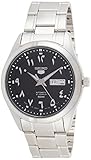
- Seiko 5 Automatic Black Arabic Dial Men's Watch SNKP21J1
How accurate is a futuristic mechanical watch in daily wear?
A well-adjusted mechanical watch can be accurate enough for everyday use, but “accurate enough” is different from quartz accuracy. The watch may gain time in one position and lose it in another, with the combined average depending on how you wear and store it. Temperature changes, a knock, magnetic exposure, and a partially wound mainspring can all move the rate.
Quick wins for a faster PC:
Clear out junk files and repair common Windows errorsFree Scan →Scan for outdated or missing drivers - takes under a minuteDriver Scan →Repair Windows errors before they cause bigger problemsFix Now →Why the same watch changes rate
- Position: Gravity affects the balance and pivots differently when the watch is dial-up, dial-down, crown-up, or on its side.
- Winding state: Torque from the mainspring is not identical throughout the power reserve. An automatic that has not been worn enough may need manual winding before it can be judged.
- Temperature: Lubricants and metal components respond to temperature changes, altering the balance’s effective rate.
- Shock: A hard impact can disturb regulation or damage a component even when the case looks untouched.
- Magnetism: Magnetic fields can affect the hairspring and produce a sudden, persistent rate change.
- Wear and lubrication: As oils age or migrate, friction changes and the watch may lose time or stop.
How to judge the rate fairly
Set the watch against a reliable reference, wind it consistently according to the manufacturer’s instructions, and record the difference at the same time each day for several days. Calculate the average daily gain or loss rather than reacting to one reading. If the rate changes abruptly, becomes erratic, or moves outside the maker’s stated range, arrange an inspection instead of trying to correct it by repeatedly resetting the hands.
How often does a mechanical watch need service?
Plan on a professional inspection and cleaning about every three to five years, with the exact interval set by the calibre, climate, use, and service history. Seiko recommends service about every three years. The Federation of the Swiss Watch Industry recommends inspection and cleaning every three to five years, while Citizen recommends a two-to-three-year overhaul for its Calibre 0200. These are manufacturer or industry recommendations, not a guarantee that every watch needs identical work on the same date.
What a mechanical service includes
- Inspection for worn, damaged, or out-of-specification parts.
- Disassembly of the movement.
- Cleaning of components.
- Application of fresh lubricants at the specified points.
- Reassembly and regulation of the rate.
- Inspection or replacement of case and crystal seals, followed by appropriate water-resistance checks.
Seiko warns that aged oils can cause a watch to lose time or stop and that water resistance declines as gaskets age or parts are shocked. A watch used in humid conditions, exposed to perspiration, worn during water activities, or subjected to impacts may need attention sooner than a lightly worn dress watch. A service interval is also not permission to ignore obvious symptoms: condensation under the crystal, a loose crown, grinding during winding, or a sudden rate change should be investigated promptly.
What happens between services?
Keep the crown fully pushed in or screwed down when the design requires it, avoid operating the crown under water, and follow the maker’s winding instructions. An automatic watch that has not been worn enough to stay wound may stop; manual winding can restart it if the calibre permits that procedure. Store it away from strong magnetic sources and extreme heat, and do not assume a water-resistance rating remains unchanged for the life of the watch.
Also popular on Amazon

- [Luxurious Mechanical Watch] High quality hollow mechanical watch appearance retro gorgeous, exquisite carving and design of the golden appearance of the European nobility more highlight your noble identity extraordinary taste, to bring you a pleasant luxury experience
- [Mechanical Movement] This watch has manual self-winding. Please consider that mechanical watches that require manual winding can only keep time for a short time after winding. To prevent running or inaccurate time, it is advised that you verify the time periodically and wind up the chain 15–20 times.
- [Waterproof] Water resistant to 50m (165ft) -suitable for short periods of recreational swimming and showering, but not diving or snorkeling
- [Ideal as a Gift] This beautiful retro-style watch can be worn on any occasion or given as a gift to your father, brother, partner, or boyfriend. At weddings and any holiday gatherings, it can be a really appreciated and elegant gift.
- [Professional After-Sale Service] Please contact us if you need any additional details about our watches. We will be happy to answer and help you anytime.
What maintenance does a quartz watch require?
Quartz watches remove the mechanical movement’s routine lubrication and regulation burden, so ownership is usually simpler. Replace the battery when the watch stops or indicates end of life, and have the seals checked whenever the case is opened. Leaving a depleted battery in a watch for an extended period is poor practice because a leaking cell can damage the movement.
Battery replacement should be treated as a water-resistance event. The technician needs the correct cell, an intact gasket, a clean caseback interface, and a water-resistance check appropriate to the model. Solar or other rechargeable quartz designs replace frequent cell changes with attention to charging exposure and eventual accumulator service; their exact requirements are model-specific.
What does a smartwatch add that a mechanical or quartz watch cannot?
A smartwatch is a small computer on the wrist. In addition to timekeeping, current devices can provide notifications, health and fitness measurements, communications, music controls, apps, and—in cellular versions—calls and data without the phone nearby. Apple’s support documentation describes these capabilities and makes clear that full functionality depends on a compatible paired iPhone, software versions, and connectivity settings.
Phone, software, and cellular dependencies
Check the manufacturer’s current compatibility table for the exact watch model, iPhone generation, iOS release, and watchOS release before buying. Requirements change as software evolves, so a watch that works with a phone today may lose features or update eligibility later. Apple states that Wi-Fi and Bluetooth should be enabled on the paired iPhone to enjoy every feature.
What’s actually slowing this PC down?
Pick the symptom - the matching free tool is one click away.
A GPS + Cellular model can use cellular service for calls, data, and apps when the phone is absent, but it still requires an eligible carrier plan and adequate network coverage. Cellular capability does not make the watch independent of charging, software support, or the vendor’s ecosystem. A non-cellular model generally provides its richest functions when the paired phone or a known Wi-Fi network is available.
Also popular on Amazon
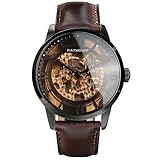
- [Luxurious Mechanical Watch] High quality hollow mechanical watch appearance retro gorgeous, exquisite carving and design of the golden appearance of the European nobility more highlight your noble identity extraordinary taste, to bring you a pleasant luxury experience
- [Mechanical Movement] There's no need to worry if the battery is dead because this watch has manual self-winding. Please consider that mechanical watches that require manual winding can only keep time for a short time after winding. To prevent running or inaccurate time, it is advised that you verify the time periodically and wind up the chain 15–20 times.
- [Waterproof] Water resistant to 30m (98FT) -suitable for daily water resistance, withstands splashes and light rain. Not for swimming, showering or diving
- [Ideal as a Gift] This beautiful retro-style watch can be worn on any occasion or given as a gift to your father, brother, partner, or boyfriend. At weddings and any holiday gatherings, it can be a really appreciated and elegant gift.
- [Professional After-Sale Service] Please contact us if you need any additional details about our watches. We will be happy to answer and help you anytime.
Charging is part of smartwatch ownership
Smartwatches use rechargeable batteries, so charging becomes a recurring task rather than an occasional battery replacement. Battery capacity declines with age, and eventual service or replacement depends on the manufacturer’s support policy and the model’s construction. A smartwatch can be the best tool for an active day yet the least suitable option if you want an object that can sit unused for a long period and restart without a charger or software pairing.
How do the three types compare for features and ownership?
| Decision axis | Futuristic mechanical | Quartz | Smartwatch |
|---|---|---|---|
| Timekeeping | Least consistent of the three; sensitive to use and environment. | Highest ordinary accuracy. | Software-synchronised display, with accuracy and availability tied to the electronic system. |
| Power source | Mainspring; no battery replacement. | Replaceable battery; some variants use light or another charging system. | Rechargeable electronic battery; charging is part of daily or weekly ownership, depending on model and use. |
| Maintenance | Periodic regulation, lubrication, overhaul, and seal checks. | Battery replacement and seal checks; little routine movement care. | Charging, software updates, compatibility, connectivity, and eventual battery or service support. |
| Typical functions | Time, date, and complications determined by the calibre. | Time/date plus optional chronograph or other electronic functions. | Health and fitness tracking, notifications, calls, music, apps, and cellular options. |
| Resilience concerns | Position, shock, temperature, magnetism, lubrication, and water-resistance ageing. | Battery condition, electronics, seals, and shock or water exposure. | Battery depletion, software support, connectivity, screen damage, and water-resistance limits. |
| Best fit | Craft, mechanical autonomy, and tactile ownership. | Dependable timekeeping with low intervention. | Connected information, health data, and active-use features. |
Which watch should you choose for your priorities?
Choose a futuristic mechanical watch when the object matters
Select mechanical if you value visible engineering, the feel of winding or an automatic rotor, a movement that can be repaired rather than discarded, and freedom from disposable batteries. Accept that service is part of ownership and that the watch may need occasional correction. The futuristic styling is a design reason to buy; it is not a precision upgrade.
Choose quartz when “set it and forget it” matters
Quartz suits work schedules, travel, and anyone who dislikes resetting a watch. It normally offers the smallest timekeeping error with the lightest maintenance schedule. Confirm the battery-life estimate, chronograph or illumination demands, and the service arrangements for seals in the exact model you select.
Choose a smartwatch when information is the priority
Choose a smartwatch if notifications, workouts, health metrics, music, calls, apps, or cellular access are worth charging and maintaining an electronic ecosystem. Verify phone compatibility, required operating-system versions, carrier support for cellular service, and the manufacturer’s battery-service policy before purchase.
Independent reader supportYour contribution helps us test, update, and keep practical guides available for everyone.Does a futuristic case make a mechanical watch more fragile?
Not automatically, but unusual architecture can change what is exposed and how the watch is handled. A skeletonised dial may leave more of the movement visible, while a complex display can make impact, dust, or moisture more consequential to repair. Water resistance belongs to the complete case, crown, crystal, and gasket system—not to the futuristic styling—and it declines as seals age or suffer shock.
Also popular on Amazon

- Sleek & Functional Design: This sophisticated titanium men's watch showcases a distinctive dial layout with dedicated markers for minutes, 12-hour, and 24-hour time displays. Arabic numerals ensure optimal legibility, while the bold red-tipped second hand injects a subtle yet striking accent. The inclusion of a practical date window further elevates its everyday versatility.
- Lightweight & Durable Titanium Construction: Crafted from premium titanium, the case combines brushed and polished finishes for a refined yet rugged aesthetic. Renowned for its featherlight weight and exceptional resilience, titanium offers superior corrosion resistance. The screw-down case back enhances durability.
- Clear AR Coated Sapphire Lens & Super Luminous: Fitted with an anti-reflective sapphire crystal, this automatic watch delivers unmatched clarity and scratch resistance. The watch hands coated with super-luminous material for easy readability even in low-light conditions.
- Precision Japanese Movement & 10ATM Water-Resistant: Powered by a precise Miyota 8215 automatic movement, this timepiece ensures accurate timekeeping and long-term reliability. With a 10ATM water resistance rating, it’s built to accompany you on outdoor adventures without compromise.
- Quick-Release Nylon Strap for Comfort: The lightweight nylon strap prioritizes comfort for all-day wear, while the quick-release mechanism allows for effortless strap changes to suit any occasion. Low-maintenance and durable, it’s designed for convenience.
Read the maker’s water-resistance instructions rather than treating a rating as a permanent license for swimming. Avoid magnetic accessories and forceful impacts, and have condensation or a loose crown checked immediately. The same environmental precautions matter more than the visual language of the case.
What is the long-term ownership trade-off?
Mechanical and quartz watches can remain usable for many years when parts and service are available. Mechanical ownership concentrates cost and inconvenience into periodic servicing; quartz ownership concentrates it into batteries, seals, and eventual electronic or movement repairs. A smartwatch adds the risk of software obsolescence: compatibility, update support, and battery service can determine useful life even when the case still looks new.
PC Slower Than It Used to Be?
A free scan shows the junk files, broken settings and background clutter dragging Windows down - then fixes them in one click.Free scan · Windows 10 & 11Outdated Drivers Are Slowing You Down
One free scan finds every outdated or missing driver and matches the right update for your exact hardware.Free scan · exact hardware matchAt category level, there is no honest single price for any of the three. Mechanical and quartz prices vary with brand, calibre, case, finishing, and complications. Smartwatch prices vary with model, case size, cellular option, and accessory bundle. Compare specific models only after deciding which accuracy, service, ecosystem, and feature requirements you actually need.
How can you make a fair buying decision?
- Set the primary requirement: accuracy, craftsmanship, or connected functions.
- Check the operating burden: service every few years for mechanical, battery and seals for quartz, or charging and software support for a smartwatch.
- Match the environment: consider magnetic exposure, impacts, temperature changes, water use, and whether you can charge regularly.
- Verify compatibility: for a smartwatch, confirm the current phone, operating-system, carrier, and app requirements for the exact model.
- Budget for ownership: include professional mechanical servicing, recurring batteries or seal work, or future smartwatch battery and support costs—not just the purchase price.
- Buy the design for what it is: choose a futuristic mechanical watch for its engineering and character, not because its appearance promises quartz-level accuracy.
Frequently Asked Questions
How do I measure a mechanical watch’s daily gain or loss at home?
Use a reliable reference time, fully wind the watch as directed, and record the difference at the same time each day for several days. Divide the total change by the number of days to estimate a mean daily rate; record the watch’s position overnight because that can materially affect the result.
Can an automatic watch stop while it is in good condition?
Yes. If it has not been worn enough to keep the mainspring wound, it can stop without a fault. Follow the calibre’s instructions for restarting and manual winding, then monitor whether it maintains power during normal wear.
Will a cellular smartwatch work if my phone is switched off?
A cellular model may still handle supported calls, data, and apps when the phone is absent, provided the watch has an active eligible plan and network coverage. Features that depend on the phone, its apps, or Bluetooth will remain unavailable until the connection is restored.
Are skeleton or open-work watches harder to read?
Often, yes. Exposed bridges, hands, and markers can reduce contrast, especially in low light or against a busy background. Examine the exact dial and hands in the lighting where you normally wear the watch rather than assuming a futuristic display will be equally legible.
What should I do if a mechanical watch suddenly starts gaining minutes?
Stop treating the rate as normal variation and arrange an inspection. A sudden large change can follow magnetism, shock, or a regulation problem; continuing to wear it without diagnosis can make it harder to identify the cause.
Quick Recap
Product prices and availability are accurate as of the date/time indicated and are subject to change. Any price and availability information displayed on Amazon at the time of purchase will apply.

