Some links on this page are affiliate links: if you buy through them we may earn a commission, at no extra cost to you.
The Garmin Forerunner 965 is the better choice for most runners and triathletes who want a light watch, a sharp AMOLED map and long everyday smartwatch life. The standard Garmin fēnix 7 is better for long hikes, adventure travel and extended GPS activities because its larger battery envelope, 10 ATM water rating and rugged design are built for endurance. Garmin rates the Forerunner 965 for up to 23 days in smartwatch mode and 31 hours in GPS-only mode, while the standard fēnix 7 is rated for up to 18 days and 57 hours respectively.
Both watches have built-in maps, touchscreen controls, training-readiness features and GPS options that include all-systems plus multi-band tracking. The deciding factors are therefore display technology, weight, water resistance, storage and the length of your longest activity—not whether either watch can navigate outdoors.
As an Amazon Associate I earn from qualifying purchases.
Which is better, the Forerunner 965 or the standard fēnix 7?
Choose the Forerunner 965 when running performance, triathlon training, low weight and map legibility are your priorities. Choose the standard fēnix 7 when maximum GPS endurance, tougher water resistance and expedition-oriented durability matter more.
The comparison below uses the standard fēnix 7, not the 7S, 7X, Solar or Sapphire editions. Those versions can have different dimensions, materials, display protection and battery ratings.
Popular on Amazon
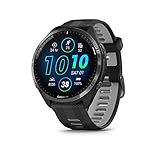
- Brilliant AMOLED touchscreen display with traditional button controls and lightweight titanium bezel
- Battery life: up to 23 days of battery life in smartwatch mode, up to 31 hours in GPS mode
- Confidently run any route using full-color, built-in maps and multi-band GPS
- Training readiness score is based on sleep quality, recovery, training load and HRV status to determine if you’re primed to go hard and reap the rewards (data presented is intended to be a close estimation of metrics tracked)
- Plan race strategy with personalized daily suggested workouts based on the race and course that you input into the Garmin Connect app and then view the race widget on your watch; daily suggested workouts adapt after every run to match performance and recovery
| Specification | Forerunner 965 | fēnix 7 standard edition | Practical consequence |
|---|---|---|---|
| Display | 1.4-inch AMOLED, 454×454, touchscreen | 1.3-inch sunlight-visible transflective MIP, 260×260, touchscreen | AMOLED gives more detail and color; MIP prioritizes low power and outdoor visibility. |
| Listed weight | 53 g | 79 g case-only listing | The Forerunner is noticeably easier to forget during runs and races. |
| Smartwatch battery | Up to 23 days | Up to 18 days | The 965 has the longer ordinary-use estimate. |
| GPS-only battery | Up to 31 hours | Up to 57 hours | The fēnix 7 is the safer choice for ultra-long GPS sessions. |
| All-systems plus multi-band | Up to 19 hours | Up to 23 hours | High-accuracy tracking lasts longer on the fēnix 7. |
| Water rating | 5 ATM | 10 ATM | The fēnix 7 has the stronger published water-resistance specification. |
| Maps | Built-in | Built-in | Both can provide route guidance without a phone during an activity. |
| Onboard storage | 32 GB | 16 GB | The 965 leaves more room for map regions and music. |
| Band connection | 22 mm QuickFit | 22 mm QuickFit | Both accept the same 22 mm QuickFit accessory size. |
These are Garmin-published specifications and estimates. Actual results vary with satellite mode, sensors, notifications, music, screen settings and other enabled functions.
How do the Forerunner 965 and fēnix 7 displays differ outdoors?
The Forerunner 965 uses a 1.4-inch AMOLED panel with 454×454 resolution. That higher pixel count makes trail lines, labels and elevation information easier to distinguish when you stop to inspect a map, and it produces stronger color and contrast for everyday smartwatch use.
The fēnix 7 uses a 1.3-inch, 260×260 transflective MIP display designed to remain readable in sunlight while consuming less power. It does not render maps with the same sharpness or color saturation as the AMOLED panel, but its low-power behavior supports the fēnix 7’s much longer GPS estimates. The fēnix screen is also intended to be legible when you glance at it outside rather than study it like a phone.
Both displays are touchscreens. Touch is useful for panning or zooming a map at a rest stop, while physical controls remain important when rain, gloves or fast movement make precise taps difficult. If map inspection and a modern phone-like interface are central to your routine, the 965’s panel is the more persuasive feature. If you would rather conserve energy on a multi-day route, the MIP approach is the rational trade.
Does the fēnix 7 last longer than the Forerunner 965?
It depends on the activity. The Forerunner 965 lasts longer in Garmin’s ordinary smartwatch estimate, but the fēnix 7 lasts substantially longer while recording GPS.
| Garmin-rated mode | Forerunner 965 | fēnix 7 standard |
|---|---|---|
| Smartwatch mode | Up to 23 days | Up to 18 days |
| GPS-only | Up to 31 hours | Up to 57 hours |
| Auto Select/SatIQ | Up to 22 hours | Not stated for the standard model in the cited manual figures |
| All-satellite | Not stated as a separate figure | Up to 40 hours |
| All-systems plus multi-band | Up to 19 hours | Up to 23 hours |
| GPS with music | Up to 10.5 hours | Not stated in the cited standard-model figures |
| Max Battery GPS | Not stated | Up to 136 hours |
| Expedition GPS | Not stated | Up to 40 days |
Garmin’s estimates are not promises of calendar life. A runner who records short workouts and receives few notifications may approach the smartwatch figure, while someone using multi-band positioning, an optical sensor, music and frequent map interaction will see a shorter result. The fēnix 7’s advantage appears when one continuous activity lasts longer than a normal race or day hike.
Also popular on Amazon

- Brilliant AMOLED touchscreen display with traditional button controls and lightweight titanium bezel
- Battery life: up to 23 days of battery life in smartwatch mode, up to 31 hours in GPS mode; Physical size: 47.2 x 47.2 x 13.2 (mm) Fits wrists with a circumference of 135-205 mm
- Confidently run any route using full-color, built-in maps and multi-band GPS
- Training readiness score is based on sleep quality, recovery, training load and HRV status to determine if you’re primed to go hard and reap the rewards (data presented is intended to be a close estimation of metrics tracked)
- Plan race strategy with personalized daily suggested workouts based on the race and course that you input into the Garmin Connect app and then view the race widget on your watch; daily suggested workouts adapt after every run to match performance and recovery
Solar fēnix 7 variants publish higher numbers than the standard model. Garmin’s manual figures show up to 22 days in smartwatch mode and up to 73 hours of GPS-only use for the standard-size solar figures. Those values depend on the solar edition and its stated exposure assumptions, so they should not be applied to every fēnix 7.
Which watch has better GPS and outdoor tracking?
Neither watch has an exclusive satellite advantage in Garmin’s support matrix. Both the fēnix 7 family and Forerunner 965 support GPS-only, all-systems, all-systems plus multi-band and UltraTrac modes.
The practical difference is how long each mode can run and how information is presented. Multi-band and all-systems settings can improve positioning in difficult environments such as urban canyons, dense forest or steep terrain, but they consume more energy. GPS-only is less demanding and is adequate when battery duration matters more than maximum signal refinement. UltraTrac and Max Battery options trade recording frequency or precision for much longer operation; Garmin’s published fēnix figures show why that matters on an expedition.
Forerunner 965 tracking strengths
- The lighter 53 g body is less intrusive during high-mileage running and racing.
- The AMOLED screen makes a route, turn and data field easier to inspect quickly.
- Garmin rates all-systems plus multi-band use at up to 19 hours, enough for many long races but not the longest continuous treks.
- Up to 32 GB of storage provides more capacity for map data and music than the standard fēnix 7.
fēnix 7 tracking strengths
- The standard model is rated for up to 57 hours of GPS-only recording and up to 23 hours with all-systems plus multi-band.
- Max Battery GPS is rated up to 136 hours, and Expedition GPS up to 40 days, for activities where returning to a charger is impractical.
- The MIP display and larger battery envelope are better suited to long periods outside than a power-hungry high-resolution panel.
Are maps equally useful on both watches?
Both watches have built-in maps, so each can serve as a self-contained navigation device during an activity. You do not have to choose the fēnix 7 merely to obtain mapping.
The Forerunner 965’s 454×454 AMOLED screen shows finer map detail and more legible labels. That is valuable when checking a junction, confirming a narrow trail or studying a route profile. Its 32 GB storage also gives it twice the listed capacity of the standard fēnix 7.
The fēnix 7’s 260×260 MIP screen is less detailed, but the watch’s endurance reduces the need to ration map use on multi-day outings. Zooming in, pausing to orient yourself and keeping a route visible all consume some power on either model; the fēnix simply gives you a larger energy margin.
Also popular on Amazon
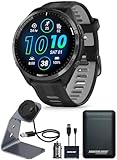
- This Bundle Contains: 1 Garmin Forerunner 965 GPS Running Smartwatch with AMOLED Display, Carbon Gray DLC Titanium Bezel with Black Case and Black/Powder Gray Silicone Band + 1 Signature Series Watch Stand with Charging Cable + 1 Signature Series 5000mAh Portable Power Bank with Wall Charger and Car Plug Adapter
- Training Readiness: Whether you’re running on city streets or riding densely covered trails, Forerunner 965 provides, full-color, built-in mapping to keep you on track. From the moment you wake up, get a readiness score based on your sleep quality, recovery, training load and more, so you can determine whether it’s a good day to go hard - or take it easy.
- Triathlon and Multisport Profiles: Switch between sports with one press by using built-in profiles for triathlons, duathlons, brick workouts and swimruns. Or, create your own custom multisport profiles. Get ready for your next race, including marathons, with training tips, personalized daily suggested workouts and completion time predictions based on course details, weather and performance.
- Daily Suggested Workouts: Get workouts made for you. They adapt after every run to match your performance and recovery and take into account the races coming up in your Garmin Connect smartphone app calendar. Using indicators such as HRV status, your recent exercise history and performance, get an easy insight into your overall effort - and whether you’re training productively, peaking or strained.
- Garmin Connect App: On mobile or web, Garmin Connect is the tool for tracking, analyzing and sharing health and fitness activities recorded by your paired Garmin device. It isn’t just about data. Digital insights give helpful hints tailored to you. There’s no such thing as too many health stats. Not in this app. We’ve got the numbers you want to see. Track more performance metrics than ever. Know where to go. Download courses with turn-by-turn guidance for your next run or ride.
Before a trip, load the required map regions and route while you have a reliable connection, then verify that the route appears on the watch. Built-in mapping does not remove the need for basic navigation preparation, a charged device and an offline contingency when conditions are remote.
Which is tougher for hiking, swimming and adventure travel?
The standard fēnix 7 has the stronger published durability specification for water exposure: 10 ATM versus 5 ATM for the Forerunner 965. That makes it the more conservative choice for frequent water contact and rugged outdoor use.
The water rating does not describe every environmental hazard, and it does not make either watch indestructible. Rinse salt or chlorine after exposure, keep charging contacts clean and follow Garmin’s care instructions for the specific model. The 965’s lower weight is an advantage when hiking with a light kit, but the fēnix 7’s heavier case is aligned with its outdoor positioning.
Is the Forerunner 965 better for triathlon and structured training?
For a triathlete who values a light watch and a bright, information-dense screen, the Forerunner 965 is the more natural fit. Its 53 g listed weight reduces wrist bulk during repeated running, cycling and swimming sessions, and its AMOLED display is easier to read when reviewing a dense training screen.
The standard fēnix 7 remains a capable triathlon choice when training includes long adventures, overnight events or extensive travel. Garmin’s comparison data lists training-readiness features and built-in mapping for both models, so the decision is about endurance and physical design rather than a lack of core outdoor training tools.
Consider your longest uninterrupted session. If it is normally a marathon-distance workout or a day of racing, the Forerunner’s GPS estimate may be sufficient and its lower weight may matter every minute. If you routinely spend two or more days away from a charger, the fēnix 7’s GPS reserve is more consequential than its additional mass.
Windows Errors? Fix Them Before They Spread
Repair common Windows errors and clear accumulated junk for a smoother, more stable PC - no reinstall needed.Free scan · no reinstallOutdated Drivers Are Slowing You Down
One free scan finds every outdated or missing driver and matches the right update for your exact hardware.Free scan · exact hardware matchAlso popular on Amazon

- IN THE BOX: 1x Garmin Forerunner 965 GPS Running Smartwatch, Carbon Gray DLC Titanium Bezel with Black Case and Black/Powder Gray Silicone Band, 1x charging/data cable, 1x Wearable4U Black Earbuds (TWS X7/X7-1), 1x microUSB cable
- BUILT FOR THE LONG RUN: features AMOLED touchscreen display with traditional button controls and lightweight titanium bezel. Battery life: up to 23 days of battery life in smartwatch mode, up to 31 hours in GPS mode. Multi-band GNSS with SatIQ technology provides superior accuracy in challenging environments while also optimizing the device’s battery life.
- TRAIN BRILLIANTLY: Training readiness score is based on sleep quality, recovery, training load and HRV status to determine if you’re primed to go hard and reap the rewards. Using indicators such as HRV status, recent exercise history and performance, get insight into overall effort with training status — and k whether you’re training productively, peaking or strained (data presented is intended to be a close estimation of metrics tracked).
- PLAN FOR THE PODIUM: Plan race strategy with personalized daily suggested workouts based on the race and course that you input into the Garmin Connect app and then view the race widget on your watch; daily suggested workouts adapt after every run to match performance and recovery. As soon as you wake up, get your morning report with an overview of sleep, recovery and training outlook alongside HRV status, training readiness and weather.
- Wearable4U E-BANK: Wearable4U USB E-Bank 2200 mAh. Keep your watches Wearable4U ULTIMATE EARBUDS + POWER PACK: Wearable4U 2 in 1 EarBuds + Power Pack contains Wearable4U Power Case1500 mAh, Wearable4U Bluetooth EarBuds Pro. Keep your device charged at all times and enjoy your music during sports activities with our Wearable4U 2in1 Earbuds Pro!charged at all times with our Wearable4U E-Bank (keeps at least one charge!)
What do weight, storage and bands change in daily use?
At 53 g, the Forerunner 965 is 26 g lighter than the fēnix 7’s 79 g case-only listing. That difference is modest on paper but noticeable for runners who dislike a substantial watch, sleep in their watch or wear it under a snug sleeve.
The 965’s 32 GB storage versus 16 GB on the standard fēnix 7 matters if you keep several map regions, playlists and other downloadable content onboard. Storage does not alter GPS accuracy or battery chemistry; it changes how much content you can leave on the watch without removing older files.
Both models use 22 mm QuickFit bands. A replacement band should match that width and connection system, but check the exact watch and band clearance before ordering an accessory. The shared size makes the accessory path simpler than choosing between unrelated mounting standards.
How should you choose between the different fēnix 7 versions?
Do not treat “fēnix 7” as one universal hardware configuration. The 7S, 7X, Solar and Sapphire versions can change case size, materials, lens protection, display behavior and battery estimates.
Free tools Windows power users keep installed
One-click scans. No signup required.
- Standard fēnix 7: the figures in this article—1.3-inch MIP display, 79 g case-only listing, 10 ATM rating and up to 57 hours GPS-only—refer to this edition.
- Solar editions: publish different battery estimates, including the cited standard-size solar figures of up to 22 days smartwatch and 73 hours GPS-only under Garmin’s stated assumptions.
- 7S and 7X: are different case-size options; do not transfer the standard model’s weight or battery numbers to them.
- Sapphire versions: can use different materials and protection, so confirm the exact product specification before comparing price or endurance.
When a retailer omits the suffix, verify the model number and edition on the case or product listing. A seemingly small label difference can change the result of a battery or weight comparison.
Independent reader supportYour contribution helps us test, update, and keep practical guides available for everyone.Which watch should you buy for specific activities?
Road running and daily training
Select the Forerunner 965 if low weight, an AMOLED interface and longer smartwatch-mode life are your top criteria. Its maps and multi-band option also cover runners who train in cities, parks and unfamiliar routes.
Also popular on Amazon

- Our brightest AMOLED touchscreen display with button controls, a lightweight titanium bezel and sapphire lens, plus a built-in LED flashlight for greater awareness in the dark during early morning or late-night runs
- Up to 15 days of battery life in smartwatch mode and up to 26 hours in GPS mode for a more complete picture of your training and recovery
- Understand your overall energy efficiency with running economy, and see how much you’re slowing down when your foot hits the ground with step speed loss (HRM 600 monitor required; sold separately); running tolerance helps you understand the real impact running has on your body so you can adjust your training to avoid overload and improve
- Train for an event, achieve a milestone, or improve your fitness with Garmin Coach training plans; these running and triathlon plans are personalized to you and adapt based on your performance and recovery
- Built-in microphone and speaker let you make and take phone calls from your wrist when your watch is paired to your smartphone — and you can even use your smartphone’s voice assistant to respond to text messages and more
Day hiking and weekend backpacking
Either model can navigate with built-in maps. The 965 is preferable when you want a clearer map and a lighter wrist; the fēnix 7 is preferable when the hike may become a very long GPS day or when tougher water resistance is important.
Ultras, stage events and expeditions
The fēnix 7 is the safer endurance choice. Its 57-hour GPS-only estimate, 136-hour Max Battery estimate and 40-day Expedition estimate provide operating modes that the 965 does not publish.
The Tool Desk
Outbyte PC Repair FREEClear out junk files and repair common Windows errorsFree Scan →Outbyte Driver Updater FREEFix the driver behind crashes, sound loss and screen glitchesFind Drivers →Triathlon
The Forerunner 965 generally wins for athletes who prioritize race weight and screen clarity. Pick the fēnix 7 when triathlon is only one part of a broader adventure schedule that includes long hikes, remote travel and heavy water exposure.
How can you get closer to Garmin’s battery estimates?
Garmin’s figures are maximum estimates under defined conditions, not a guarantee for every configuration. To extend runtime, choose the least demanding satellite mode that still meets your accuracy needs, reduce unnecessary notifications, limit music playback and avoid leaving the brightest display setting enabled continuously.
- Charge the watch fully before a long activity and confirm that the intended GPS mode is selected.
- Use all-systems plus multi-band only where its added positioning capability is worth the energy cost.
- Keep music playback and frequent map panning for the moments they are needed rather than running them continuously.
- Carry a charging solution for trips that exceed the published estimate, especially when sensors and phone notifications remain active.
- Record the model suffix in your trip plan so that you use the correct battery table for a Solar, 7S, 7X or Sapphire edition.
These steps cannot turn one model into the other. They simply reduce avoidable drain and make Garmin’s mode-specific estimates easier to interpret.
Frequently Asked Questions
What is the fēnix 7 Expedition GPS battery estimate?
Garmin lists up to 40 days for Expedition GPS on the standard fēnix 7 figures. That is a specialized low-power estimate, not the expected runtime for normal multi-band navigation, music playback or frequent map use.
Recommended Free Tools
Does a solar fēnix 7 have the same battery life as the regular fēnix 7?
No. Garmin’s standard-size solar figures reach up to 22 days in smartwatch mode and 73 hours in GPS-only mode, compared with up to 18 days and 57 hours for the standard non-solar model. Solar performance depends on the edition and Garmin’s stated light-exposure assumptions.
Which satellite mode should I use on a wooded trail?
Start with the mode that matches the accuracy you need: GPS-only conserves the most power, while all-systems plus multi-band is the high-accuracy option listed for both watches. Dense trees, tall buildings and steep terrain can justify the higher-power setting, but Garmin’s estimates are correspondingly shorter.
Can I replace the strap on either watch without changing the watch body?
Both models are documented with a 22 mm QuickFit band connection. Replacement straps should match that width and system; confirm compatibility with the exact edition before purchasing because case sizes and clearances vary across the fēnix family.




