PC Slower Than It Used to Be?
A free scan shows the junk files, broken settings and background clutter dragging Windows down - then fixes them in one click.Free scan · Windows 10 & 11Crashes, No Sound, or Screen Glitches?
Random freezes, missing sound and display glitches usually trace back to one bad driver. Find and replace yours safely.Free scan · under a minuteSome links on this page are affiliate links: if you buy through them we may earn a commission, at no extra cost to you.
A GMT watch can appear to “drift” for two very different reasons. The entire movement may be gaining or losing seconds each day, or the 24-hour hand may simply be set to the wrong reference hour, read against a rotated bezel, or knocked out of alignment. If the error is a fixed whole hour while the minutes and seconds remain synchronized, suspect the setting, bezel position, or hand alignment first. If all hands accumulate the same number of seconds per day, investigate the movement’s rate, winding state, temperature, position, magnetism, shock, and service condition.
The safest fix is to separate those symptoms, measure the watch over about seven to 10 days, then follow the model’s own operating manual or use an authorized service center when alignment, magnetism, impact, or regulation is suspected.
As an Amazon Associate I earn from qualifying purchases.
Recommended Free Tools
What does “GMT hand drifting” actually mean?
“Drift” describes a change over time, but owners often use it for two unrelated faults:
- Rate error: the movement gains or loses a number of seconds per day. Because the 24-hour hand is driven by the movement, its displayed time gradually moves ahead or behind along with the ordinary hour, minute, and seconds hands.
- Display or setting error: the 24-hour hand is consistently one or more hours away from the intended reference zone, or its pointer does not line up with the intended marker. The movement can still be keeping time normally.
Rolex describes the GMT-Master II as showing local time with the conventional hour, minute, and seconds hands while the triangle-tipped 24-hour hand indicates reference time against the bezel. Rolex also documents independent local-hour adjustment on that design: the local hour can jump without moving the 24-hour or minute hands. That makes a fixed whole-hour discrepancy, with minutes and seconds otherwise tracking correctly, more likely to be a setting, reference-zone, bezel-reading, or alignment issue than a fast movement. This is a diagnostic inference from that independent-adjustment architecture, not a rule for every GMT caliber.
Popular on Amazon
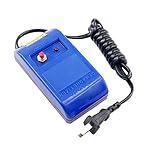
- 【 RESTORE WATCH ACCURACY INSTANTLY】Mechanical watches can easily become magnetized by phones, speakers, or computers, causing them to run fast or inaccurately. This professional degaussing tool effectively eliminates magnetic fields in seconds, restoring your cherished timepiece's precision without the need to open the case back.
- 【 SAVE TIME & MONEY ON REPAIRS】Stop paying expensive fees at jewelry stores just for simple demagnetization. With the QEES watch demagnetizer, you can perform professional-grade maintenance at home. It pays for itself after just one use—this Watch tools a smart investment for any watch collector or enthusiast.
- 【 USER-FRIENDLY & FAST OPERATION】Designed for simplicity. Just plug into a standard 110V outlet, place your watch or tool slightly above the flux area, hold the red button, and slowly move the object away for 5-10 seconds. No complex training required to achieve professional results. (Note: Please read instructions carefully before use).
- 【VERSATILE 2-IN-1 TOOL】Beyond watches, this Watch magnetizer is essential for demagnetizing watchmaker tools like tweezers and screwdrivers, ensuring they don't attract small s crews during intricate repairs. It can also serve as a magnetizer for screwdriver tips when magnetic grip is needed.
- 【 COMPACT & DURABLE GIFT CHOICE】Built with sturdy, impact-resistant ABS plastic for long service life. demagnetizer tool is lightweight, portable design (4.5" x 2.2" x 2.4") makes it easy to store. An ideal, practical gift for Father’s Day, birthdays, or anniversaries for the man who loves mechanical watches.
A steadily changing error measured in seconds per day is a different problem. It should be diagnosed as a movement-rate issue even if you first noticed it on the 24-hour hand.
Why does a mechanical GMT gain or lose time?
A mechanical watch is regulated by a balance and hairspring while energy from the mainspring runs down. Small changes in energy, temperature, gravity, magnetism, or the condition of the movement alter the rate. The Japan Clock & Watch Association (JCWA) notes that published accuracy is measured under controlled winding, positions, and temperatures, so the result on a wrist can differ.
Quick wins for a faster PC:
Scan for outdated or missing drivers - takes under a minuteDriver Scan →Clear out junk files and repair common Windows errorsFree Scan →Mainspring energy and winding
A weak or incompletely wound mainspring can make the rate less stable, especially as the reserve approaches its end. Seiko advises supplying sufficient energy and judging a mechanical watch by its mean daily rate over roughly a week to 10 days of actual wear, rather than by one short reading. Follow the winding turns and crown instructions for your caliber; automatic watches still need adequate motion or manual winding when the manual permits it.
Position and gravity
The balance experiences gravity differently when the watch is dial-up, dial-down, crown-up, crown-down, or resting on another side. Those positional differences can produce different rates during the day. A watch that is accurate in one position can therefore show a different average when worn, placed on a bedside table, or left crown-up overnight.
Temperature
Seiko’s mechanical-watch guidance says not to expose a watch for long periods to temperatures below 5 °C or above 35 °C. Its guidance also states that high temperatures normally make a mechanical watch lose time, while low temperatures make it gain time. A brief temperature change is not proof of damage, but prolonged exposure can materially change the rate.
Magnetism
Magnetic fields can magnetize the hairspring or other movement components. Seiko says a magnetized mechanical watch may gain or lose time and can remain magnetized after it has been moved away from the source. Common sources include phone or tablet speakers, magnetic clasps, hair dryers, electric razors, refrigerator magnets, and other strong magnets.
Free tools Windows power users keep installed
One-click scans. No signup required.
Shock, lubrication, and wear
A drop or impact can disturb the balance, damage a component, or allow a hand to slip on its pinion. Old or contaminated lubricants can also affect amplitude and rate. A sudden change immediately after an impact deserves inspection rather than repeated crown adjustments.
Why can the 24-hour hand look wrong when the movement is fine?
The reference time was set incorrectly
Many Rolex-style GMTs use a sequence in which reference time is set first with the 24-hour and minute hands, then local time is changed with an independently jumping hour hand. A one-hour time-zone or daylight-saving mistake leaves the watch running normally but makes the reference hand appear “slow” or “fast.” Decide whether the 24-hour hand is meant to show home time, UTC, or another zone before changing anything.
The bezel is not in its neutral position
A bidirectional 24-hour bezel can intentionally offset the time zone being read. Rolex instructs users to return the bezel triangle to 12 o’clock for the neutral reference display. If the triangle is rotated, the hand may be correctly indicating an alternate zone even though the reading differs from the printed hour.
The hand is out of alignment
Strong magnetism or impact can move the hour, minute, seconds, or 24-hour hands away from their indexed positions. Casio’s official module guidance includes a hand-alignment procedure for affected modules. That procedure is module-specific: do not apply Casio button sequences to a mechanical GMT or to another electronic caliber. Use the exact manual for your model.
The whole movement is running fast or slow
If the 24-hour hand, ordinary hour hand, and minute hand all accumulate the same seconds-per-day error, the hand is not independently drifting. The likely causes are rate variation from winding, position, temperature, magnetism, shock, lubrication, or regulation.
How do I diagnose a GMT that appears to drift?
You need the watch’s manual, a trusted reference clock, a way to record dates and times, and enough observation time to calculate an average. Do not diagnose a mechanical rate from a single afternoon.
- Give the movement sufficient energy. Fully wind it according to the manufacturer’s instructions. If the watch is automatic, wear it normally during the observation period unless the manual specifies another procedure.
- Synchronize the minute hand. Set the minute hand against a trusted reference time. Note the exact date, reference time, and whether the seconds hand was stopped by a hacking function.
- Identify the intended reference zone. Decide what the 24-hour hand should show. On a Rolex-style mechanism, set reference time first, then use the independent local-hour jump for the current location.
- Put the bezel in the reading position. For a neutral reference display on a bidirectional 24-hour bezel, return the triangle to 12 o’clock unless your manual defines another position.
- Record the watch after about seven to 10 days. Compare the same indication with the same trusted reference. Calculate the average seconds gained or lost per day rather than relying on one day’s result. Seiko recommends this sort of multi-day mean-rate approach.
- Classify the symptom. A fixed whole-hour offset with a stable seconds rate points toward setting, bezel interpretation, or alignment. A steadily changing seconds-per-day difference points toward movement rate.
- Review recent exposure. Note contact with magnets, prolonged heat or cold, water intrusion, a drop, or a change in wearing and storage position. This history helps a watchmaker choose the next inspection.
How do I fix a GMT hand that is one hour off?
Reset the reference and local time in the documented order
Use the model’s own instructions. On the Rolex GMT-Master II procedure, reference time is set with the 24-hour and minute hands, then the local hour is adjusted independently. Changing local hour does not move the 24-hour or minute hands. A different caliber may use a caller-style arrangement in which the 24-hour hand, rather than the local hour, jumps; never assume one sequence fits all GMTs.
Check the bezel before changing the hands
If the 24-hour hand is correct against the bezel but appears wrong against a dial marker or another printed scale, the bezel may be intentionally offset. Return it to its neutral position and read the hand again before resetting the watch.
Also popular on Amazon

- PORTABLE DESIGN: The demagnetizer features a lightweight ABS housing with compact structure, easily carried by technicians and stored neatly in workstations
- FUNCTIONALITY: Designed to solve timing inaccuracies in mechanical watches, this watch repair kit efficiently removes magnetism from movements to restore normal function
- SAFE USE: When using these watch tools, maintain proper distance between movement and tool to prevent direct interaction during the automatic demagnetizing process
- PROFESSIONAL APPLICATION: The tool demagnetizer works with most mechanical watch movements, requiring no special skills for either repair shops or personal use
- VOLTAGE COMPATIBILITY: Supporting 110-220V input, always check local voltage standards before using this degausser to avoid equipment damage
Use the alignment function only when your manual provides one
Some quartz and digital-analog modules provide a user-accessible hand-home or hand-alignment mode. Casio documents such a procedure for specific modules after magnetism or impact. Mechanical GMT owners generally should not force the crown or improvise a button sequence; a hand that no longer reaches 12 precisely may need inspection and mechanical correction.
Independent reader supportYour contribution helps us test, update, and keep practical guides available for everyone.How do I fix a GMT that gains or loses seconds?
Rule out magnetism
Move the watch away from suspected magnetic sources and observe it again. If the rate does not recover, Seiko recommends demagnetization by an authorized service center. A demagnetizer is a physical tool category, but an owner who cannot verify the device or procedure should leave this work to a qualified technician.
Stabilize the observation conditions
Keep the watch away from prolonged temperatures below 5 °C or above 35 °C, give it the prescribed winding energy, and record how it is positioned when off the wrist. These steps do not “regulate” the watch, but they prevent a misleading diagnosis caused by changing conditions.
Escalate after impact or persistent error
A sudden rate change after a drop, a hand that no longer aligns, or an error that remains outside the model’s stated tolerance calls for professional inspection. Rolex describes complete service as disassembly, cleaning, inspection, replacement of parts outside specification, lubrication, timing tests, and checks of water resistance, power reserve, and precision. Seiko consumer guidance recommends examination, cleaning, and oiling about every three years, although the correct interval depends on the caliber, use, and manufacturer instructions.
What accuracy should I expect from a mechanical GMT?
There is no single tolerance for every GMT watch. Certification applies only to watches that carry that certification, while an individual model may publish a different specification.
| Reference | Published accuracy range | How to interpret it |
|---|---|---|
| Typical mechanical-watch performance (JCWA) | Several seconds per day to several tens of seconds per day | A broad industry range; wrist results vary with winding, position, temperature, and wear. |
| COSC mechanical chronometer summary (TUDOR/METAS) | -4 to +6 seconds per day | Applies to watches that meet COSC mechanical chronometer requirements. |
| METAS Master Chronometer requirement (TUDOR/METAS) | 0 to +5 seconds per day | Applies to watches that achieve the METAS Master Chronometer certification. |
Use the published specification for your exact reference whenever one is available. Certification figures are not a promise that every non-certified GMT will stay within the same range, nor do they describe a fixed one-hour display offset caused by setting or bezel position.
When should a watchmaker inspect the GMT?
Arrange service when any of the following applies:
- The rate changed sharply after a drop, knock, or water exposure.
- The 24-hour hand no longer reaches its indexed position while the other hands are correctly set.
- Demagnetizing or moving away from a suspected source does not restore accuracy.
- The average gain or loss remains outside the model’s published tolerance after a properly wound, seven-to-10-day observation.
- The watch is overdue for the maker’s recommended maintenance interval or shows reduced power reserve, erratic stopping, or signs of moisture.
Professional timing equipment can separate positional, amplitude, beat, and rate faults that cannot be identified reliably by looking at the dial. Ask the service center to verify hand alignment, magnetism, timing in multiple positions, power reserve, and water resistance where applicable.
How do GMT adjustment designs affect troubleshooting?
GMT watches broadly use either an independent local-hour arrangement or a caller-style arrangement. In an independent local-hour design, the ordinary hour hand jumps when you cross time zones while the 24-hour reference hand remains fixed. In a caller-style design, the 24-hour hand is commonly the independently adjusted traveler and the ordinary hour hand remains tied to the reference time. Because the crown positions and hand behavior differ, a setting instruction from one watch can create an apparent one-hour error on another.
Do these 3 things before closing this tab:
1Repair Windows errors before they cause bigger problems2Scan for outdated or missing drivers - takes under a minute3Clear out junk files and repair common Windows errorsBefore adjusting, identify which hand is supposed to jump, whether the date is linked to local or reference time, and whether the bezel is fixed or movable. The model manual is the authoritative source for those details.
What should I avoid when correcting a drifting GMT?
- Do not keep turning the crown to chase a rate error measured over only a few hours.
- Do not set the date during the restricted changeover period specified by the manual.
- Do not force a crown, rotate a bezel against its stops, or push hands into alignment.
- Do not use a generic electronic-module alignment sequence on a mechanical watch.
- Do not assume that a certified accuracy range applies to an uncertified model.
- Do not open the case to demagnetize or regulate the movement if preserving water resistance and warranty coverage matters.
Frequently Asked Questions
Can a GMT hand be accurate if it does not point exactly at 12 when the hour hand does?
It can, depending on the watch’s design and the zone being displayed. A movable 24-hour bezel may shift the reading intentionally, while a persistent misalignment at the designated home position can indicate a slipped hand or a calibration fault that needs the model’s alignment procedure or service.
Does changing the local hour change the GMT reference time?
On the Rolex-style independent local-hour arrangement, the local hour can be changed without moving the 24-hour or minute hands. Other GMT calibers use a caller-style adjustment in which a different hand jumps, so the crown positions must be confirmed in that watch’s manual.
How long should I monitor a mechanical GMT before calling it inaccurate?
Record a properly wound watch against a trusted reference for about seven to 10 days and use the mean seconds-per-day result. A single day can be dominated by the position in which the watch rested, temperature, or the mainspring’s state of wind.
Recommended Free Tools
Can a phone magnet permanently damage a mechanical GMT?
A magnetic field can magnetize movement parts and cause the watch to gain or lose time; Seiko notes that magnetization can remain after the watch is moved away. If accuracy does not return, have an authorized service center demagnetize and inspect it rather than assuming the problem will clear by itself.
Quick Recap
Product prices and availability are accurate as of the date/time indicated and are subject to change. Any price and availability information displayed on Amazon at the time of purchase will apply.

