“Google Android XR Glasses” is not the name of one announced Google product. Android XR is a platform for headsets, wired XR glasses, audio glasses, and display glasses made by different manufacturers. As of August 8, 2026, Google’s first announced intelligent-eyewear products are expected later in fall 2026: partner-made audio glasses, with display glasses as a separate category.
These glasses are designed for phone-connected, hands-free Gemini assistance—not as a confirmed standalone Google AR-glasses product. Google has not yet published final consumer pricing, battery life, weight, camera resolution, display specifications, or a definitive retail setup process.
What are Google Android XR glasses?
Android XR glasses are wearable devices designed to connect Google’s XR platform and Gemini assistant to a pair of glasses. They are intended to look and behave more like everyday eyewear than a bulky virtual-reality headset, with a companion phone handling much of the computing and connectivity. Google’s Android XR device documentation describes two main intelligent-eyewear categories:
| Category | What it does | Display? |
|---|---|---|
| Audio glasses | Use speakers, microphones, and a camera for spoken Gemini assistance, calls, music, navigation, and other tasks. | Not necessarily |
| Display glasses | Add a small, private, glanceable display to the audio-glasses experience. | Yes |
Google’s Developer Preview 4 documentation changed the terminology from “AI glasses” to audio glasses, and from “display AI glasses” to display glasses. That distinction matters: not every Android XR glasses product will have a display.
What’s actually slowing this PC down?
Pick the symptom - the matching free tool is one click away.
#1 Best Overall

- 【8MP HD Camera & 4K Ultra HD】Experience authentic first-person perspectives with an upgraded 8MP ultra HD camera. 4K resolution delivers clear, detailed imagery, while multi-frame noise reduction and advanced anti-shake technology help enhance image clarity for travel, cycling, outdoor sports, family gatherings and everyday adventures.
- 【AI Voice Assistant & Intelligent Object Recognition】Powered by the advanced ChatGPT model, the AI assistant supports real-time Q&A, daily planning and intelligent recommendations. These smart glasses also feature AI object recognition, which can instantly identify landmarks, plants, animals and everyday items, making them an ideal smart companion for travel, shopping, learning and exploring the world.
- 【139 Languages Real-Time AI Translation】Break down language barriers effortlessly with AI translation across 139 languages. Ideal for international travel, business communication, academic exchanges and cross-border socializing, these smart glasses help make multilingual conversations more natural, convenient and efficient.
- 【Open-Ear Hi-Fi Audio & Dual-Mic ENC Noise Cancellation】Enjoy immersive premium sound while staying fully aware of your surroundings with our open-ear headphone design. These bluetooth smart glasses are built with advanced dual-microphone ENC noise reduction technology, which effectively suppresses wind and ambient noise, ensuring crystal-clear hands-free calls and stable music playback even in noisy outdoor, cycling and commuting scenarios.
- 【Photochromic Lenses, Suitable for Any Scenes】Designed for all-day comfortable wear, AI glasses feature an ultra-lightweight frame and integrated photochromic lenses. The lenses automatically darken in sunlight for UV protection and return to a clear state indoors. A built-in 290mAh battery delivers long-lasting power for full-day use, fitting perfectly with all scenes of daily life, work and outdoor adventures.
When will they be available?
As of August 8, 2026, Google describes its first intelligent-eyewear products as coming later in fall 2026. The first launch is expected to focus on audio glasses developed with Samsung, Gentle Monster, and Warby Parker, rather than a single Google-branded frame. Google’s announcement identifies display glasses as a separate category.
Google has not published final consumer pricing, battery-life figures, weight, dimensions, camera resolution, display specifications, or a definitive setup process. There is therefore no reliable answer yet to questions such as “How much do Google Android XR glasses cost?” or “Where can I buy them?”
They should also not be confused with other Android XR devices. Samsung Galaxy XR is a headset, while wired XR glasses such as XREAL’s Android XR-powered hardware belong to a different product category. Their features and requirements will not necessarily match the upcoming audio glasses.
Confirmed features
Gemini assistance from the frame
Users will be able to invoke Gemini by saying “Hey Google” or tapping the side of the frame. The camera, microphones, speakers, location, and orientation can give Gemini more context than a normal voice query made without visual information.
Google’s examples include asking about a cloud formation, interpreting a parking sign, or finding information about a nearby restaurant. This is contextual assistance: the glasses can help answer questions about what the wearer is seeing or where they are. Google’s I/O announcement describes these examples.
Turn-by-turn navigation
The glasses are designed to use the wearer’s location and facing direction for natural, turn-by-turn directions. Gemini may also add a stop to a route or find a nearby place based on a preference, such as a restaurant or shop.
For audio glasses, directions would primarily be spoken through the built-in speakers. Display glasses could provide additional glanceable visual information, but Google has not published the final display hardware or a complete navigation interface.
Rank #2

- #1 SELLING AI GLASSES - Tap into iconic style for men and women, and advanced technology with the newest generation of Ray-Ban Meta smart AI glasses. Capture photos and video recordings, listen to music, make hands-free calls or ask Meta AI questions on-the-go.
- UP TO 8 HOURS OF BATTERY LIFE - On a full charge, these smart AI glasses can last 2x longer than previous generations, up to 8 hours with moderate use. Plus, each pair comes with a charging case that provides up to 48 hours of charging on-the-go.
- 3K ULTRA HD: RECORD SHARP VIDEOS WITH RICH DETAIL — Hands-free video recording with an ultra-wide 12 MP camera in up to 3K resolution. Record clips up to 3 minutes per session. Capture sharp, vibrant memories while staying in the moment.
- LISTEN WITH OPEN-EAR AUDIO — Listen to music and more with discreet open-ear speakers that deliver rich, quality audio without blocking out conversations or the ambient noises around you.
- ASK YOUR GLASSES ANYTHING WITH META AI — Get real-time suggestions, answers, object identification, and reminders hands-free. Requires Bluetooth connection to your smartphone and the Meta AI app. Ensure your phone has internet connectivity.
Calls, messages, and summaries
Google says the glasses will support phone calls, text messages, and requests such as summarizing missed messages. The appeal is straightforward: the wearer can manage basic communication without pulling a phone out of a pocket.
The Tool Desk
Outbyte PC Repair FREEClear out junk files and repair common Windows errorsFree Scan →Outbyte Driver Updater FREEFix the driver behind crashes, sound loss and screen glitchesFind Drivers →Music and private audio
The frames include built-in speakers for music and calls. Google describes them as “crisp, clear and private over-ear speakers.” They are intended to deliver an audio-first experience without the user wearing conventional earbuds.
Photos and video
Google has shown voice-activated photo and video capture. One demonstration command was:
“Hey Google, take a picture and put everyone in funny hats.”
Google says Gemini’s image-editing tools, including Nano Banana, can then modify the captured image. This differs from Google’s 2022 AR prototypes, which explicitly did not support photography or videography; that restriction applied to those prototypes and should not be treated as a confirmed limitation of the upcoming consumer glasses. Google’s 2026 announcement describes capture, while its 2022 prototype account describes the earlier limitation.
Recommended Free Tools
Live translation
Google has demonstrated translation for spoken conversations and written text on menus and signs. Its demonstrations also showed spoken translation that can preserve aspects of the original speaker’s tone and pitch.
An optional in-lens display has been shown displaying translated subtitles. Subtitles and other visual functions belong to the display-glasses concept; audio glasses may deliver translation through speech alone. Google’s 2025 glasses demonstration showed optional in-lens subtitles.
Rank #3

- 【AI Smart Translation Glasses】 - These smart glasses(No Camera) with built-in ChatGPT voice assistant, support real-time translation over 160 languages, simultaneous interpretation, meeting audio recording transcription. Helps you to suit any scenario and effortlessly break language barriers. Note: This model has no camera, all functions run via audio.
- 【Bluetooth Audio & Hands-Free Calling 】 - With Bluetooth 5.4 stable connection and open-ear design, our AI smart glasses features 3D surround sound music, delivering immersive audio directly to your ears. Built-in HD microphone ensures crystal-clear hands-free calls.
- 【Ultra-Lightweight Design with Gradient Lenses】 - Our smart glasses using medical-grade skin-friendly material, featured ergonomic design, 3D facial fitting, C-shaped wrap-around temples, and apple-arc nose pads that reduce pressure by 50% for all-day comfort up to 8 hours. The lenses will turn gray when exposed to sunlight, instantly transforming into stylish sunglasses, shielding eyes from harsh light and keeping us comfortable at all times.
- 【Extra-long Battery Life】 - AI bluetooth audio glasses equipped with 220mAh high-quality battery that takes only 1 hour to fully charge and can play continuously for up to 11 hours, solving battery anxiety. IP65 waterproof protection against sweat, rain, and dust, ideal for daily use and travel.
- 【Practical Flashlight & All-in-one Button】 - The integrated flashlight in AI glasses provides hands-free illumination, supports long-time walking and reading in dark. While the all-in-one button enables seamless control of power/flashlight/answering/hanging up/playing/pausing and wake-up the voice assistant —all with intuitive presses.
Phone-app integration
The glasses are designed to work with a companion phone and access phone apps through voice. Google has mentioned use cases including ordering an Uber, practicing a language with Mondly, scheduling tasks, streaming music, and interacting with other applications.
Despite the Android XR name, Google says the announced glasses will work with both Android and iOS phones. Detailed differences between the Android and iPhone experiences have not yet been published.
Potential benefits
Less dependence on a phone screen
The strongest case for the glasses is convenience. Directions, messages, calls, translation, and quick answers can be delivered while the user keeps their hands free. That could be useful when walking, traveling, cooking, shopping, or carrying equipment.
More useful context than a smartwatch
A smartwatch is excellent for glanceable notifications, timers, fitness information, and discreet wrist-based controls. Glasses can add something a watch cannot easily provide: a forward-facing camera and a direct view of the user’s surroundings.
That lets Gemini respond to a sign, menu, object, or landmark in front of the wearer. For WatchRanker readers who already use a smartwatch as a phone companion, Android XR glasses would be a complementary wearable rather than an obvious replacement.
Audio-first, all-day interaction
Audio glasses do not require a visual interface for every task. Spoken directions or answers can be useful when looking down at a watch or phone would be distracting. Their everyday-glasses design also aims to make them less intrusive than a headset.
Crashes, No Sound, or Screen Glitches?
Random freezes, missing sound and display glitches usually trace back to one bad driver. Find and replace yours safely.Free scan · under a minutePC Slower Than It Used to Be?
A free scan shows the junk files, broken settings and background clutter dragging Windows down - then fixes them in one click.Free scan · Windows 10 & 11Private visual information
Display glasses could add a small, private display for subtitles, directions, or other glanceable information. That is a different proposition from a large augmented-reality view: the goal is limited information at a glance, not an immersive virtual environment.
Rank #4
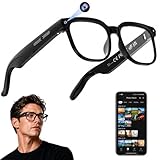
- 【AI Real-Time Translation & ChatGPT Assistant】AI glasses break language barriers instantly with AI real-time translation. The built-in ChatGPT voice assistant helps you communicate, learn, and handle travel or business conversations smoothly—ideal for conferences, overseas trips, and daily use.
- 【4K Ultra HD】 Smart glasses feature 4K resolution for clear, detailed visuals, making them suitable for travel, outdoor activities, everyday moments, and daily use.
- 【Bluetooth Music & Hands-Free Calls 】Smart glasses provide Bluetooth music and crystal-clear hands-free calls with an open-ear design. Stay aware of your surroundings while listening—comfortable for long wear and safer for commuting, cycling, and outdoor use.
- 【IP65 Waterproof & Long Battery Life】 AI glasses are designed for daily wear with IP65 waterproof protection against sweat, rain, and dust. The built-in 290mAh battery provides reliable performance for workdays and travel—no anxiety when you’re on the go.
- 【Smart App Control & Object Recognition】Smart glasses connect to the companion app for easy setup, file management, and feature control. They support AI object recognition to help identify items and improve your daily efficiency—perfect for travel exploration and a smart lifestyle.
Challenges and limitations
There is no single specification sheet
Because Android XR covers multiple manufacturers and device types, a feature shown on one prototype should not automatically be attributed to every Android XR glasses product. An audio frame may have no display, while another partner’s display glasses may have different cameras, speakers, controls, and phone requirements.
They are expected to depend on a phone
Google’s Jetpack XR SDK documentation describes intelligent-eyewear experiences as running on a companion host device, such as a phone, and projecting the experience to the glasses. These should not currently be described as fully standalone Android computers.
A phone connection may affect available features, latency, battery use, and what happens when the phone is out of range. Google has not published the final offline capabilities of the consumer models.
Do these 3 things before closing this tab:
1Repair Windows errors before they cause bigger problems2Scan for outdated or missing drivers - takes under a minute3Clear out junk files and repair common Windows errorsBattery and heat are difficult in a glasses frame
There is much less room for a battery and cooling system in glasses than in a phone or headset. Google’s developer guidance on glasses hardware access warns that camera workloads, high resolutions, and high frame rates can increase power consumption and heat. It gives these example target capture settings:
| Use case | Example target |
|---|---|
| Video communication | 1,280 × 720 at 15 frames per second |
| Computer vision | 640 × 480 at 10 frames per second |
| AI video streaming | 640 × 480 at 1 frame per second |
These are developer recommendations, not final camera or video specifications for Google’s consumer glasses. They illustrate the trade-off between useful visual processing, heat, and battery life.
Camera and microphone privacy
A camera built into ordinary-looking glasses creates obvious concerns for people nearby. Microphones raise similar questions in conversations, workplaces, and private spaces. Google says it has been testing prototypes with trusted testers and focusing on privacy for both wearers and bystanders, but practical details—recording indicators, controls, storage, and consent—will matter greatly at launch. Google’s prototype account discusses its testing and privacy focus.
Connection failures can break the experience
For developers, the projected context becomes invalid when the glasses disconnect. Applications must clean up their resources, wait for reconnection, obtain a new projected context, and reinitialize services such as the camera and microphone, according to Google’s projected-context guidance.
Free tools Windows power users keep installed
One-click scans. No signup required.
Best Value
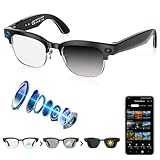
- 【4K Camera with EIS Stabilization】Smart glasses with camera feature a built-in 4K camera with EIS stabilization for clearer and steadier image performance during sports, cycling, travel, outdoor activities, and everyday use.
- 【Open-Ear Speakers & Clear Bluetooth Calling】Camera glasses feature built-in open-ear speakers for music and clear Bluetooth calls while helping you stay aware of your surroundings. Noise-reduction microphones provide clearer voice pickup and a comfortable listening experience for everyday use.
- 【AI Real-Time Translation & Voice Assistant】AI glasses support real-time translation in 139+ languages to make communication easier across different languages. The built-in AI voice assistant helps you access information and interact more efficiently—ideal for work, study, travel, and daily use.
- 【Photochromic Lenses & Lightweight Comfort】Smart sunglasses with camera feature photochromic lenses that respond to changing sunlight conditions for comfortable indoor and outdoor use while helping reduce UV exposure. The lightweight 35g frame provides a comfortable fit for extended everyday wear.
- 【IP66 Water Resistance & 290mAh Battery】AI sunglasses with camera feature IP66 water resistance for added protection against sweat, rain, and dust during active daily use. The built-in 290mAh battery provides convenient power for travel, outdoor activities, work, and everyday use.
That technical requirement points to a consumer concern too: a weak Bluetooth or network connection could interrupt navigation, voice commands, or camera features. The final reliability will depend on both Google’s software and each partner’s hardware.
The software is still changing
The Jetpack XR SDK remains in Developer Preview, and Google says its APIs are still under development. Developer Preview 4 was announced on May 19, 2026, with core libraries moving toward beta, according to Google’s preview announcement.
Permissions, emulator behavior, hardware APIs, and app requirements may change before retail products arrive. The public documentation does not provide a final consumer setup route such as Settings → Connected devices → Android XR Glasses; any guide claiming that as the final process is getting ahead of the published information.
What Google Android XR glasses are not
- Not one confirmed Google-branded product: Android XR is a platform used across categories and manufacturers.
- Not available now, as of August 8, 2026: Google’s current product page describes the first audio glasses as coming in fall 2026.
- Not automatically AR glasses: audio glasses may have no display at all.
- Not necessarily Android-only: Google has announced compatibility with Android and iOS phones.
- Not confirmed as standalone: the announced intelligent-eyewear model relies on a companion host device.
FAQ
Are Google Android XR glasses available now?
As of August 8, 2026, no. Google describes its first audio-glasses products as coming later in fall 2026. Final pricing, specifications, and retail availability have not been published in the cited official material.
Will Android XR glasses have a display?
Not all of them. Google distinguishes audio glasses, which may provide assistance through speakers, from display glasses, which add a small private display.
Do Android XR glasses require an Android phone?
Google says the announced first audio glasses will work with both Android and iOS phones. The exact feature differences between the two platforms have not yet been detailed.
Can Android XR glasses take photos and videos?
Google has announced voice-activated photo and video capture for the upcoming intelligent glasses. This should not be confused with Google’s 2022 AR prototypes, which did not support photography or videography.
The Bottom Line
Android XR glasses are best understood as phone-connected intelligent eyewear, not as one finished Google AR-glasses product. The first announced launch is expected to be partner-made audio glasses with Gemini, navigation, translation, calls, music, app actions, and camera capture. Display glasses are a separate category.
Quick wins for a faster PC:
Repair Windows errors before they cause bigger problemsFix Now →Fix the driver behind crashes, sound loss and screen glitchesFind Drivers →Clear out junk files and repair common Windows errorsFree Scan →The concept is compelling for smartwatch owners who want more hands-free, context-aware assistance, but important buying details are still missing: price, battery life, weight, camera hardware, display specifications, and the final setup process. Until Google and its partners publish those details, treat demonstrations as announced platform capabilities—not a final specification sheet for every pair of glasses.
Quick Recap
Product prices and availability are accurate as of the date/time indicated and are subject to change. Any price and availability information displayed on Amazon at the time of purchase will apply.