Quick wins for a faster PC:
Fix the driver behind crashes, sound loss and screen glitchesFind Drivers →Repair Windows errors before they cause bigger problemsFix Now →Some links on this page are affiliate links: if you buy through them we may earn a commission, at no extra cost to you.
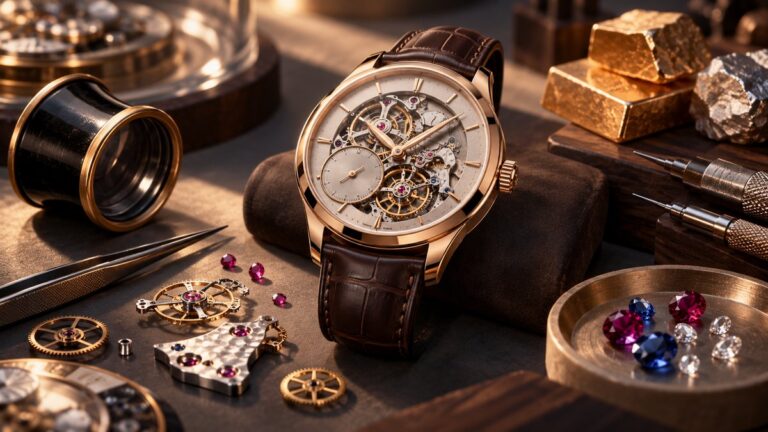
A tourbillon is a mechanical-watch regulator that places the escapement and balance wheel in a rotating cage, usually completing one revolution in about 60 seconds. As the cage turns, gravity acts on the regulating parts in changing directions, so positional rate errors can be averaged over a revolution. The mechanism does not create energy, replace the escapement, or guarantee that every watch will be more accurate.
Understanding the tourbillon means following the power from the mainspring, through the going train, to the escape wheel and balance, then seeing how the cage adds controlled rotation. Its value is therefore both technical and aesthetic: it addresses a specific positional problem while demanding unusually complex construction and adjustment.
As an Amazon Associate I earn from qualifying purchases.
Free tools Windows power users keep installed
One-click scans. No signup required.
What problem was the tourbillon designed to solve?
The tourbillon was designed to reduce gravity-related rate variation in a pocket watch whose regulating organ spent long periods in one vertical position. Abraham-Louis Breguet patented the invention on 26 June 1801. In Breguet’s historical explanation, the principle is to place the escapement and balance wheel in a mobile cage.
A fixed balance and escapement can run at slightly different rates in different positions. Gravity interacts with tiny imbalances, the pivots, the hairspring and the escapement. If a watch remains in one orientation, those small errors can accumulate as a consistent gain or loss. A rotating cage continually changes the regulator’s orientation, allowing errors in one position to be offset by errors in another.
Popular on Amazon

- This tourbillon designed by Swiss designer Etienne Ruffieux with modern architectural aesthetics, features a lightweight, comfortable, free-sprung balance flying tourbillon. It houses an independently developed architectural tourbillon movement adorned with oversized ruby bearings. The design aesthetic is expressed through the interplay of light and shadow created by its extreme skeletonization. The watch has been honored with the IAI Global Design Award for its outstanding original design.
- Independently developed CAL9001 free-sprung balance flying tourbillon movement, manual winding, 28,880 vibrations per hour, 25 ruby bearings. Features high-end finishing including satin brushing and beveled edges, engraved brand logo with gold-stamped. Dual mainspring series technology delivers 80-hour power reserve (twice that of standard tourbillon movements). This technology ensures more uniform and gradual mainspring release, resulting in enhanced timekeeping precision and stability.
- The CAL9001 tourbillon movement features the exclusive free-sprung micro-adjustment technology typically reserved for luxury timepieces. This free-sprung system eliminates the need for a balance spring regulator, thereby overcoming the timing inaccuracies caused by regulator displacement in conventional mechanical movements. This ensures the watch delivers enhanced precision and stability in timekeeping.
- This tourbillon measures 40mm in diameter and just 9.7mm in thickness, weighing a mere 67 grams. Its meticulously engineered structure and radically skeletonized tourbillon movement eliminate all superfluous metal components, allowing the mechanical artistry of the free-sprung flying tourbillon to shine in its purest form. It is an exquisite, high-end tourbillon watch that is both ultra-thin and supremely comfortable.
- The watch is water-resistant to 50 meters, featuring a double-sided sapphire crystal and an Italian leather strap with hand-stitched detailing for comfortable and durable wear. We offer a three-year worldwide warranty.
This is an averaging strategy, not a way to eliminate every source of inaccuracy. The design addresses positional effects caused by gravity; it does not automatically correct magnetism, temperature changes, shock damage, worn pivots, lubrication problems, hairspring defects or poor adjustment.
What is inside a tourbillon cage?
The cage normally carries the parts that release and regulate the movement’s energy. Audemars Piguet separates them into two functional groups: the escapement wheel and anchor distribute energy, while the balance wheel and balance spring regulate its release.
Recommended Free Tools
| Component | Role inside the mechanism |
|---|---|
| Balance wheel | Oscillates back and forth and sets the timing of the escapement. |
| Balance spring | Provides the restoring force that returns the balance through each oscillation. |
| Escape wheel | Receives energy from the going train and releases it in measured increments through the pallets. |
| Pallets or anchor | Locks and unlocks the escape wheel while transmitting impulses to the balance. |
| Tourbillon cage | Holds the regulating assembly and rotates it around its axis to vary its orientation relative to gravity. |
| Cage pinion and related gearing | Drive the cage while maintaining the relative motion needed for the escapement. |
The cage is not a second mainspring. Energy still begins in the mainspring and travels through the going train. In the common architecture described by the Fondation de la Haute Horlogerie, a fixed fourth wheel works with the cage’s pinion: the escape-wheel pinion turns around the fixed fourth wheel while the cage rotates. The exact gear layout depends on the calibre, but the essential idea is that the cage is both a carrier for the regulator and a driven part of the train.
How does a tourbillon work step by step?
A tourbillon combines ordinary mechanical-watch functions with an additional rotating assembly. The balance still oscillates, the pallets still lock and unlock the escape wheel, and the cage changes the direction in which the complete regulator experiences gravity.
- The mainspring stores energy. Winding tightens the spring, whether by a hand-winding system or an automatic winding system.
- The going train transmits torque. Wheels and pinions carry the mainspring’s torque toward the escapement.
- The train drives the cage and escapement. In a conventional tourbillon layout, the cage is driven through the relationship between the fixed fourth wheel and the cage pinion.
- The escape wheel releases energy in increments. The pallets alternately lock and unlock the escape wheel, allowing a controlled impulse to reach the balance.
- The balance and spring regulate the release. Their oscillation determines when each impulse occurs and therefore controls the movement’s rate.
- The cage rotates around its axis. In the classical architecture, one complete revolution takes about 60 seconds, although the period is calibre-specific rather than universal.
- Gravity sees changing orientations. As the cage turns, the balance, spring, escapement wheel and pallets pass through a sequence of positions. Positional rate differences are averaged over that cycle.
The balance does not spin continuously with the cage. It continues its normal oscillation while the cage makes the slower revolution around its own axis. This distinction is important: the tourbillon is a rotating carrier for an oscillating regulator, not a replacement for the regulator itself.
Why is one revolution per minute common?
A one-minute period gives the classical tourbillon a complete rotation that is easy to relate to the watch’s seconds scale. Breguet’s original concept and descriptions from Audemars Piguet and the Fondation de la Haute Horlogerie use this approximately 60-second cycle as the familiar reference.
The Tool Desk
Outbyte PC Repair FREERepair Windows errors before they cause bigger problemsFix Now →Outbyte Driver Updater FREEScan for outdated or missing drivers - takes under a minuteDriver Scan →That timing should not be applied to every tourbillon. Inclined, multi-axis and high-speed constructions can use different periods, and some designs may rotate on more than one axis at once. When a specification matters, identify the exact calibre and read its stated rotation period rather than assuming that every visible cage completes one turn per minute.
Does a tourbillon make a watch more accurate?
It can reduce one category of error—gravity-related positional variation—but it does not provide a universal accuracy improvement. A tourbillon’s objective is to average rate differences that occur when the regulating organ occupies different vertical positions. Whether a particular watch performs better depends on the whole movement and how it has been adjusted.
There is no sound universal statistic such as “a tourbillon is X percent more accurate.” The cited historical and technical descriptions explain the design purpose and common rotation period, but they do not establish a cross-calibre percentage. Actual rate depends on the calibre, adjustment, position, temperature, remaining power, shock history and service condition.
A carefully adjusted conventional movement can keep excellent time, while a poorly adjusted tourbillon can perform badly. The rotating cage is therefore a targeted engineering solution and a demonstration of craftsmanship, not an accuracy guarantee printed on the dial.
What a tourbillon can address
- Rate differences caused by gravity acting on small imbalances in the balance, spring, pivots and escapement.
- Errors that repeat when a watch spends long periods in particular vertical positions.
- Some positional variation by presenting the regulating assembly to a sequence of orientations.
What it cannot correct by itself
- Magnetic exposure that changes the behaviour of the hairspring or other steel components.
- Temperature-related changes in materials and lubrication.
- Damage from impacts, bent or worn pivots, degraded lubricants or a defective hairspring.
- Incorrect regulation, inconsistent power delivery or faults elsewhere in the going train.
What is the difference between a supported and a flying tourbillon?
The defining difference is how the cage is held. A classical supported tourbillon is carried between upper and lower structures, while a flying tourbillon is supported from one side and removes the upper bridge from the visible opening.
Also popular on Amazon

- The sporty, free-sprung balance flying tourbillon watch, crafted by Swiss chief designer Etienne Ruffieux with modern architectural aesthetics, features an independently developed architectural tourbillon movement adorned with oversized ruby bearings. Its design philosophy is expressed through the interplay of light and shadow created by extreme skeletonization. This timepiece has been honored with the European International Design Award for its outstanding original design.
- Independently developed CAL9001 free-sprung balance flying tourbillon movement, manual winding, 28,880 vibrations per hour, 25 ruby bearings. Features high-end finishing including satin brushing and beveled edges, engraved brand logo with gold-stamped. Dual mainspring series technology delivers 80-hour power reserve (twice that of standard tourbillon movements). This technology ensures more uniform and gradual mainspring release, resulting in enhanced timekeeping precision and stability.
- The CAL9001 tourbillon movement features the exclusive free-sprung micro-adjustment technology typically reserved for luxury timepieces. This free-sprung system eliminates the need for a balance spring regulator, thereby overcoming the timing inaccuracies caused by regulator displacement in conventional mechanical movements. This ensures the watch delivers enhanced precision and stability in timekeeping.
- This tourbillon features a high-tech ceramic bezel. Ceramic resists discoloration and is harder than metal, protecting the watch from scratches. Weighing half as much as stainless steel, it reduces wrist strain for enhanced comfort.
- The watch is water-resistant to 50 meters. Featuring a double-sided sapphire crystal and an aerospace-grade fluororubber strap, it offers waterproof, sweat-resistant, and corrosion-resistant properties for comfortable and durable wear. Featuring Super-LumiNova Luminous hands and hour markers. We provide a 3-year worldwide warranty.
| Architecture | Support and appearance | What the distinction does not prove |
|---|---|---|
| Classical supported tourbillon | The cage is supported between upper and lower bridges or plates. The structure is visibly framed from both sides. | It does not automatically indicate a particular accuracy level, rotation period or service interval. |
| Flying tourbillon | The cage is supported from one side, leaving the upper view open. Blancpain identifies removal of the upper bridge as the defining visual construction. | The open view is a construction and presentation choice, not proof that the mechanism regulates better. |
Both arrangements still perform the same fundamental task: they carry the escapement and balance through changing orientations. Support architecture affects the movement’s structural design, visual openness and access for adjustment, but the name alone does not establish how well a particular calibre keeps time.
How do multi-axis and inclined tourbillons differ?
A multi-axis or inclined tourbillon changes the regulator’s orientation on more than one axis. Nested cages or angled assemblies can expose the balance to a wider range of positions than a single-axis, flat cage.
That additional motion comes with engineering costs. More cages, bearings, pivots and drive relationships add components and can increase height, power demand, friction and adjustment difficulty. The practical benefit depends on the movement’s geometry and the positions it is intended to average; “multi-axis” is not a synonym for universally superior accuracy.
Windows Errors? Fix Them Before They Spread
Repair common Windows errors and clear accumulated junk for a smoother, more stable PC - no reinstall needed.Free scan · no reinstallCrashes, No Sound, or Screen Glitches?
Random freezes, missing sound and display glitches usually trace back to one bad driver. Find and replace yours safely.Free scan · under a minute| Type | Primary motion | Typical design implications |
|---|---|---|
| Single-axis tourbillon | One cage rotates around one axis. | Classical arrangement with a comparatively direct drive and one principal orientation cycle. |
| Inclined tourbillon | The cage or its axis is set at an angle. | Changes the orientations presented to gravity and may alter movement height and visual layout. |
| Multi-axis tourbillon | Nested or linked cages rotate on more than one axis. | More parts and drive relationships; potentially greater height, friction and power requirements. |
Because the exact geometry varies, a specification should state the number of axes and the named calibre. Without that information, a claim about rotation speed, thickness or energy demand is incomplete.
How is a carrousel different from a tourbillon?
A carrousel is a related rotating regulator, but it uses a different wheel-train arrangement. The Fondation de la Haute Horlogerie distinguishes the two rather than treating “carrousel” as another name for a tourbillon.
Both mechanisms can place the balance and escapement in a rotating assembly to vary their orientation, so they may look similar through an aperture. The distinction lies in how the cage and escapement receive their drive. A tourbillon’s common architecture uses the fixed fourth wheel and cage pinion relationship described above; a carrousel uses a different transmission arrangement. The model name alone is therefore not enough—read the calibre description when the mechanism’s identity matters.
What are the engineering trade-offs of a tourbillon?
Adding a rotating cage introduces parts, pivots, a cage-drive relationship and demanding adjustment work. The Fondation de la Haute Horlogerie calls the structure delicate and complex. IWC describes one current example as containing 82 parts and weighing less than 0.5 grams, illustrating how much mechanical work can be concentrated in a very small assembly.
What’s actually slowing this PC down?
Pick the symptom - the matching free tool is one click away.
- Manufacturing difficulty: Components must be made, finished and assembled to tight tolerances while remaining light enough for the cage to rotate efficiently.
- Friction and power: Additional pivots and gearing can consume energy and create more opportunities for friction, depending on the calibre.
- Thickness: Inclined and multi-axis systems can require extra vertical space.
- Adjustment: The regulating organ must be adjusted while operating within a moving cage, adding complexity to rate setting.
- Service: More parts and a delicate cage make disassembly, cleaning, lubrication and reassembly more demanding than in a simpler movement.
- Display value: A visible cage offers a moving demonstration of the mechanism, especially in an open or flying layout, but visual drama is separate from measured accuracy.
These trade-offs explain why a tourbillon can be a remarkable feat of precision engineering without guaranteeing better everyday timekeeping than a simpler, well-regulated movement.
Independent reader supportYour contribution helps us test, update, and keep practical guides available for everyone.Is a tourbillon worth the price?
There is no objective “worth it” answer independent of the buyer’s priorities. A tourbillon makes sense when you value the historical mechanism, visible kinetic architecture, hand-finishing and the challenge of building a compact rotating regulator. It is harder to justify if the only goal is the best timekeeping per unit of cost, because the tourbillon addresses one error source and adds complexity without a universal accuracy guarantee.
Evaluate the exact calibre rather than the word on the dial. Useful questions include:
- Is the cage single-axis, inclined or multi-axis?
- Is it supported or flying, and how is the cage secured?
- What rotation period does the manufacturer specify?
- Which parts are inside the cage, and how is the cage driven?
- What adjustment or accuracy information is published for this calibre?
- How accessible are qualified service and parts for the specific movement?
- Does the design’s thickness, power demand and visual opening suit the intended wear?
A transparent specification should identify these details. If a listing simply promises that a tourbillon is “more accurate” without naming the calibre, conditions or source of the figure, treat that as marketing language rather than a measured conclusion.
Also popular on Amazon

- Global warming accelerates glacial melting, causing severe ecological damage to Earth. Inspired by “Never-Melting Ice,” Agelocer's Swiss Chief Designer Etienne Ruffieux grand launch this full sapphire case free-sprung balance flying tourbillon watch, urging awareness of climate change. Honored with the 2022 German Design Award for its exceptional design, this tourbillon is globally limited to 100 pieces.
- The entire watch case is crafted from 5N (99.999%) high-purity sapphire crystal; 5N-grade sapphire crystal boasts a Mohs 9 hardness rating (second only to diamond) and exceptional transparency. Its superior hardness renders the case scratch and wear resistant, ensuring a flawless, long-lasting finish that stands the test of time. High transparency enables us to clearly appreciate the mechanical artistry of the ultimate skeletonized flying tourbillon.
- Self developed design CAL9001 free-sprung balance flying tourbillon movement, manual winding, 28,880 vibrations/hour, 25 ruby bearings. Satin brushed finish and chamfered edges with premium finishing techniques; Brand logo engraved and gold foiled. Dual mainspring series technology delivers 80-hour power reserve (twice that of standard tourbillon movements). This technology ensures more uniform and gradual mainspring release, resulting in enhanced timekeeping precision and stability.
- The CAL9001 tourbillon movement features the exclusive free-sprung micro-adjustment technology typically found only in luxury timepieces. This free-sprung system eliminates the need for a balance spring regulator, thereby overcoming the timing inaccuracies caused by regulator displacement in conventional mechanical movements. This ensures the watch delivers enhanced precision and stability in timekeeping.
- 50M water resistance for the entire watch; food-grade semi-transparent silicone strap, water/sweat/corrosion resistant, comfortable and durable to wear. Super-LumiNova luminous hands, paired with a butterfly double-press clasp. We promise a three-year global warranty service.
What should you look for when reading a tourbillon specification?
Read the specification as a description of architecture, not as a blanket performance claim. The following checklist separates facts that should be stated from claims that require qualification.
| Specification to check | Why it matters | Safe interpretation |
|---|---|---|
| Calibre name and maker | Rotation, dimensions and construction vary by movement. | Use the named calibre before quoting any technical figure. |
| Rotation period | The classical reference is about 60 seconds, but other periods exist. | Report the manufacturer’s period for that calibre. |
| Axis count | More axes alter the range of orientations and mechanical complexity. | Do not infer accuracy from axis count alone. |
| Cage support | Supported and flying designs differ structurally and visually. | Flying describes one-sided support, not guaranteed performance. |
| Power reserve and thickness | Extra gearing and cages can affect energy use and dimensions. | Use stated specifications; do not generalize across tourbillons. |
| Published accuracy data | Rate depends on adjustment, position, temperature, power and service. | Look for conditions and the named source, not an unqualified percentage. |
What are the most common tourbillon misconceptions?
“The cage replaces the escapement.”
It does not. The balance, spring, escape wheel and pallets remain the regulating and energy-release system; the cage carries them and rotates around them.
“Every tourbillon turns once a minute.”
About 60 seconds is the classical reference, not a universal rule. Inclined, multi-axis and high-speed constructions require calibre-specific specifications.
“A tourbillon cancels all accuracy errors.”
Its target is positional variation caused by gravity. Magnetism, temperature, shock, wear, lubrication and regulation remain separate concerns.
“Flying means more accurate.”
Flying identifies one-sided cage support and an open upper view. It does not, by itself, establish rate performance.
“More visible motion means more mechanical power.”
The cage is driven by the movement’s existing energy train. It does not generate energy, and extra gearing may increase the movement’s power demands.
How should the mechanism be explained in one sentence?
A tourbillon is an escapement and balance assembly mounted in a driven rotating cage; by changing the assembly’s orientation relative to gravity, it averages positional rate errors while retaining the same mainspring, going train and regulating principles as a mechanical watch.
Frequently Asked Questions
Can the cage rotate at a different speed from one tourbillon to another?
Yes. About one revolution per minute describes the classical arrangement, but inclined, multi-axis and high-speed constructions can use other periods. The reliable way to identify the speed is to check the exact calibre specification.
Do these 3 things before closing this tab:
1Repair Windows errors before they cause bigger problems2Scan for outdated or missing drivers - takes under a minute3Clear out junk files and repair common Windows errorsDoes a flying tourbillon have a different regulating principle?
No. “Flying” describes the cage’s one-sided support and the removal of the upper bridge from the view. The balance, spring, escape wheel and pallets still perform the same regulating and energy-release functions.
Why can two tourbillon watches keep different time?
A tourbillon only targets gravity-related positional variation. Rate also depends on adjustment, temperature, power state, shock history, lubrication, pivot condition and hairspring quality, so the cage design alone cannot predict performance.
What does a carrousel share with a tourbillon?
Both are rotating regulators that can change the orientation of the balance and escapement. They are not the same mechanism, however: a carrousel uses a different wheel-train arrangement to drive its rotating assembly.