Some links on this page are affiliate links: if you buy through them we may earn a commission, at no extra cost to you.
You cannot establish that a watch brand name or logo is safe to use with one quick database search. A defensible check matches your exact wording or artwork to the goods, services, sales channels and countries where you will use it, then compares similar marks, owner rights, filing status and real-world use. Start with an exact-word search in the USPTO database, expand to phonetic, spelling and meaning variants, search a logo by design characteristics, review every close record in TSDR, and check state, domain, marketplace and international sources. A clean search is evidence, not a legal guarantee. If you will put a logo on watch dials, launch a valuable product line, advertise internationally or face an ambiguous close result, have an experienced trademark attorney interpret the findings before release.
What does a trademark check tell me about using a watch brand’s name or logo?
It helps you identify registration barriers and signs of marketplace risk; it does not issue a universal permission slip. Trademark rights are territorial and tied to particular goods and services. The relevant question is whether your proposed use could create a confusingly similar commercial impression in the markets where you will operate.
As an Amazon Associate I earn from qualifying purchases.
Do these 3 things before closing this tab:
1Fix the driver behind crashes, sound loss and screen glitches2Clear out junk files and repair common Windows errors3Scan for outdated or missing drivers - takes under a minuteFor a watch project, write down the proposed word mark, the exact logo artwork, the products or services involved, how customers will encounter the mark and every country in which it will appear. “Using a brand name in a resale listing,” “printing a logo on a custom dial” and “discussing a brand in an editorial comparison” are materially different uses. A search that fits one may not answer another.
What a clearance search can establish
- Whether similar wording or designs appear in federal applications and registrations.
- Who owns a cited record, what goods or services it covers and whether the record is live.
- Whether related marks appear in state, domain, international or marketplace sources.
- Facts you can give counsel for a likelihood-of-confusion assessment.
What it cannot establish by itself
- That an unregistered mark is unused merely because no federal record appears.
- That a dead registration has no continuing relevance.
- That being in a different Nice class makes use safe.
- That a result from one country answers the question for another country.
How should I define the proposed use before searching?
Turn the idea into a written search brief before opening a database. The brief prevents a narrow search from producing false confidence and gives an attorney, if needed, a precise set of facts to evaluate.
Popular on Amazon

- ⌚ MENS WATCHES ANALOG: Mens military watches made with shock-resistant stainless steel case and anti-scratch mineral window, exquisitely crafted and durable. Men's watch strap width: 22mm / 0.86 inches, stainless steel case: 42mm / 1.65 inches.
- ⌚ MILITARY WATCHES FOR MEN: This mens field watch is very suitable for active lifestyles, with a comfortable double nylon strap, will suitable for personal use and good for anniversary, graduation, business, birthday , the father's day , Christmas .
- ⌚3 ATM WATERPROOF MILITARY WATCHES: 30M waterproof, sweat-proof, rain-proof and hand-washing for daily life, no problem. But NOT suitable for swimming, bathing, diving or touch hot water. Perfect for most of indoor / outdoor sports.
- ⌚ EASY TO READ TIME: 12 / 24 hrs military time and luminous dial. The mens watches equipped with date calendar can tell you the time quickly and accurately. Come with luminous function, easy to read the time even in the dark.
- ⌚ PURCHASE WITHOUT WORRY: Japan imported quartz analog movement and battery, long-term operation. One Year of After-Sales Service,24-hour customer service is at your service.
- Record the mark. Type the exact words, capitalization, punctuation and any slogan. For a logo, save the precise artwork, including lettering, symbols, layout and color elements that will appear on the watch, packaging, website or advertisement.
- Describe the goods and services. Specify watches, replacement parts, custom dials, repair, authentication, retail, auction, content, advertising or another activity. Include goods you will sell and services you will promote.
- List the channels. Note your own store, a marketplace listing, social media, a physical shop, a trade show, email marketing and any platform where the mark will be visible. Also say whether the mark appears on the product itself, only in text describing a used item, or in a comparison.
- List territories. Separate the United States from each other target country or region. Trademark rights do not automatically travel across borders.
- Set the timing. Record when you plan to launch and, if relevant, when you first used the mark or found a potentially earlier use. Filing, registration and first-use dates can affect the analysis.
Keep this brief with your search log. If the artwork, goods, channels or countries change, treat the change as a new clearance question rather than assuming the original search still applies.
How do I run the first exact-name search in the USPTO database?
Begin with an exact-word “knock-out” search in the USPTO trademark search system, but do not stop when the exact phrase produces no result. USPTO guidance describes the exact pass as a starting point for a broader clearance search, not a final answer.
Free tools Windows power users keep installed
One-click scans. No signup required.
- Enter the complete wording exactly as you intend to display it.
- Open each plausible result rather than relying on a list view. Note the owner, mark wording or drawing, goods and services, filing date, registration date and live or dead status.
- Repeat the search for the important words separately. A combined phrase can hide a conflict involving the dominant term.
- Search meaningful combinations, shortened forms, initials and unusual elements of the phrase.
- Test alternative spellings, spacing, punctuation, singular and plural forms, and likely pronunciation differences.
Search the wording that customers will actually perceive. A stylized spelling can still sound like an existing word mark; an abbreviation can create the same commercial impression as a longer name. Save the query and date for every material search so another person can reproduce it.
Which word variations belong in the search log?
- Phonetic equivalents and homophones.
- Translations or foreign-language terms that convey the same idea.
- Reversed word order, joined or separated words and common misspellings.
- Plural, possessive and abbreviated forms.
- Words that describe the same concept even when they are not spelled alike.
The purpose is not to treat every dictionary resemblance as a conflict. It is to surface candidates for a later comparison of appearance, sound, meaning, goods, channels and overall impression.
How do I search a watch logo or dial emblem?
A logo needs a design search in addition to a word search. In the USPTO system, identify the relevant design-search codes for the symbols, shapes, figures or lettering in the artwork, then search those codes alone and in combinations. A logo may conflict with another design even when the words are different.
- Describe the visible elements neutrally: for example, a geometric shield, a star-like figure, an animal silhouette, a crown form or stylized initials.
- Find the USPTO design-search codes associated with those elements.
- Search the most distinctive code, then combine it with lettering, shape or other prominent features.
- Run a separate word search for any readable text in the logo.
- Use WIPO’s Global Brand Database image-search capability to upload the artwork and investigate visual similarity.
Compare the design as customers will see it at the size and placement used on a dial, clasp, box, website or advertisement. A small emblem can still dominate the commercial impression if it is the only prominent identifier. Save the image version searched and note whether color, orientation or a simplified production version will change the appearance.
Windows Errors? Fix Them Before They Spread
Repair common Windows errors and clear accumulated junk for a smoother, more stable PC - no reinstall needed.Free scan · no reinstallCrashes, No Sound, or Screen Glitches?
Random freezes, missing sound and display glitches usually trace back to one bad driver. Find and replace yours safely.Free scan · under a minuteHow do I review a possible conflicting record?
Open the record’s TSDR documents and build a fact sheet for every result that could be relevant. A database hit is not automatically a conflict, and a dead record is not automatically irrelevant.
| Comparison item | What to capture | Why it matters |
|---|---|---|
| Mark identity | Exact wording, drawing, design description and any disclaimer | Shows what the owner actually claims, including elements that may be less distinctive. |
| Owner | Current owner name, assignment information and correspondence details shown in the record | Identifies the party whose rights or marketplace activity may need investigation. |
| Goods and services | The full identification, not only the international class number | Related goods can create concern even when classes differ. |
| Dates | Filing, registration and stated first-use dates | Timing helps identify earlier rights and the history of the application. |
| Status | Live, abandoned, cancelled, expired or otherwise shown in the record | Live records are the main federal registration barrier; status does not answer all marketplace questions. |
| Evidence of use | Specimens, linked marketplace presence or other indications that the mark is used | Actual use can matter even when a federal record is dead or absent. |
Read the goods-and-services wording closely. A registration for one type of product may be relevant to watches, watch parts, retail or advertising if consumers could expect the offerings to come from the same source or to be sold, promoted or used together. Do not substitute the class number for that factual analysis.
How is likelihood of confusion judged for watch marks?
The key comparison is similarity of the marks plus relatedness of the goods or services. Identical names are not required, and different Nice classes do not automatically separate uses. USPTO and related guidance focus on whether the marks look alike, sound alike, have similar meanings or create a similar overall commercial impression, considered alongside the relationship between the offerings.
Compare the marks on four dimensions
- Visual appearance: lettering, shape, arrangement, dominant symbol, typography and the way the mark appears on a dial or listing.
- Pronunciation: identical sounds, near homophones, likely spoken abbreviations and differences a buyer may overlook.
- Meaning: translations, shared concepts, references or imagery that communicate the same idea.
- Overall commercial impression: the combined message a purchaser receives, including which element stands out first.
Compare the commercial relationship
- Whether both parties sell watches, watch components, accessories, repair, authentication or retail services.
- Whether products are sold through the same websites, shops, marketplaces, trade events or advertising channels.
- Whether consumers commonly encounter the goods together or believe one business makes, licenses or sponsors the other.
- Whether your use is on the product itself, in packaging, in a store name, in a service description or in editorial text.
Record both similarities and differences in a comparison table. A reasoned explanation is more useful than a conclusion such as “different class” or “not identical.”
| Question | Your proposed use | Candidate mark | Assessment to document |
|---|---|---|---|
| What will customers see? | Word, logo, placement and size | Word, design or both | Visual similarity and dominant features |
| What will customers hear? | Spoken name or abbreviation | Likely pronunciation | Phonetic similarity |
| What does each mean? | Concept, translation or reference | Concept communicated by the record | Meaning and commercial impression |
| What is sold or promoted? | Goods, services and channels | Listed goods, services and observed channels | Relatedness and possible sponsorship assumption |
| Which market is involved? | Country or region | Record’s jurisdiction | Territorial fit |
| Which came first? | Your planned or actual timing | Filing, registration and first-use dates | Timing and priority questions |
Do dead trademark records or unregistered watch brands still matter?
Yes. USPTO guidance treats live federal records as the principal barrier to a new federal registration, but a dead record can still point to an owner that continues using the mark in commerce. An abandoned application or cancelled registration may also reveal earlier marketplace activity, a confusingly similar business or a need to investigate what happened.
Search for current use outside the federal file: the owner’s website, product pages, dealer listings, marketplace results, social accounts, event materials and industry directories. An unregistered mark can create common-law risk in the territory where it is used. Treat each live marketplace result as evidence to investigate, not as proof that the owner has nationwide rights.
Note the date and source of each use you find. Distinguish a current product listing from an old page, a reseller’s reference from the brand owner’s own use and a commentary article from an offer to sell. Those distinctions help counsel assess strength, scope and timing.
What other US sources should I search after USPTO?
A federal search is only one part of a US clearance process. USPTO’s comprehensive checklist points to several additional sources because state registrations, business names, domains, publication records and ordinary marketplace use may not appear together in the federal database.
The Tool Desk
Outbyte PC Repair FREERepair Windows errors before they cause bigger problemsFix Now →Outbyte Driver Updater FREEFix the driver behind crashes, sound loss and screen glitchesFind Drivers →- Trademark Official Gazette: look for newly published marks and related notices.
- State trademark registries: search each state where the business will operate or where relevant use is occurring.
- State business registries: check company and assumed-name records for the wording or close variants.
- Domain-name registries: investigate exact names, typographical variants and domains that suggest active commercial use.
- Internet searches: search the name, logo description, combinations and watch-related terms in ordinary search engines.
- Marketplace and industry searches: check listings, dealer pages, auction records, repair services and trade publications for actual use.
Organize findings by territory and by owner. A result that looks unrelated in a general search can become important when the same owner sells watches, parts or services through the channel you plan to use.
How do I check a watch trademark outside the United States?
Repeat the process in every target country or region. WIPO recommends searching by name, logo or image and filtering by country, class and date. Its Global Brand Database and Madrid Monitor can reveal international records, but WIPO cautions that national collections may be incomplete or updated with delay.
- Search the WIPO Global Brand Database by the exact wording and meaningful variants.
- Upload the logo or image where image searching is available, then review visually similar results.
- Filter results by the country, region, class and date relevant to your launch.
- Use TMview for participating European Union and partner offices; Ireland’s intellectual-property office describes TMview as updated daily.
- Check the national or regional trademark office directly because a collection may contain records or updates not yet visible in an international tool.
- Repeat ordinary internet, business-directory, domain and marketplace searches in the local language and local sales channels.
Do not assume that a US registration, a Madrid record or an empty international search gives the same answer everywhere. Record the office searched, the date, the filters used and any limitation stated by that office.
Independent reader supportYour contribution helps us test, update, and keep practical guides available for everyone.How should I assess common watch-brand use cases?
The way a mark appears can change the risk analysis even when the words are identical. Use the following branches to frame the facts for review.
Quick wins for a faster PC:
Repair Windows errors before they cause bigger problemsFix Now →Fix the driver behind crashes, sound loss and screen glitchesFind Drivers →Clear out junk files and repair common Windows errorsFree Scan →Using a brand name in a resale listing
Describe the item accurately, identify whether it is genuine, state your role as seller and avoid presenting yourself as the brand owner or an authorized source unless you can substantiate that relationship. Search the brand’s word and logo, then investigate current owner use and the marketplace’s own rules. The trademark question is fact-specific; a database result alone cannot classify a listing as safe.
Also popular on Amazon
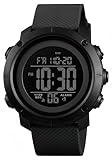
- FUNCTIONS: Countdown,Snooze,Hourly time,Date/Week,EL night-light,Stopwatch(1/100 seconds),Alarm,12/24 hour formart
- 164FT/50M WATERPROOF:Can't wear swimming and taking a hot bath. Because the general watch uses a sealing method to prevent the intrusion of sweat and harmful gases, it is not absolutely not water.only wash hands, shower, Satisfy daily use.NOTE: *Please don't press any buttons under water*
- HIGH QUALITY:Made with quality materials which enable the watch to be tough and durable.COMFORTABLE :Silicone watch band,Suitable for your wrist, Light weight and comfortable to wear.
- BACKLIGHT UPGRADE:Easy-to-read numbers can be clearly seen during the day and night.
- GIFT : It is a great gift for family and friends, especially suitable for you.
Printing a famous logo on a custom dial or replacement part
This is a product-facing use: the logo is placed on goods rather than merely mentioned in text. Search the design and words, compare the relevant watch and component goods, and treat a close live record or active marketplace use as a reason for professional review before production.
Using a name in commentary, news or comparison
Keep the use limited to identifying the subject of the discussion and make the presentation clear about who is speaking. Do not treat an editorial purpose as an automatic answer to every trademark issue; document the exact wording, placement, audience and commercial context.
Using a brand in advertising or a store name
Advertising, a domain, a social handle or a business name can make the mark appear to identify your own source or an affiliation. Search those channels specifically and compare the proposed presentation with the owner’s actual channels and goods.
What’s actually slowing this PC down?
Pick the symptom - the matching free tool is one click away.
How do I document the search so another person can verify it?
Create one folder and one index for each proposed mark. The record should allow an attorney or business partner to reproduce the search without guessing what you meant.
- Save the search brief with wording, artwork, goods, services, channels, territories and planned launch date.
- Log every database, office, query, filter and search date.
- Export or screenshot promising records and retain the record or serial number.
- For each candidate, record owner, mark description, goods and services, dates, status and evidence of current use.
- Write a short comparison covering appearance, pronunciation, meaning, overall impression, related goods, channels and territory.
- Label each result as requiring review, apparently unrelated or not located, and explain the reason without calling it “cleared.”
- Update the log if the logo, product, channel, owner, territory or launch timing changes.
Preserve the original artwork and the version searched. A redesigned emblem, shortened name or new sales channel can materially change the comparison.
What are the most common search mistakes?
Stopping after an exact phrase
Fix: Search separate terms, phonetic forms, alternate spellings, translations, concepts and combined variations.
Searching only words and ignoring the logo
Fix: Use design-search codes, combinations of codes and image searching, then search any readable lettering separately.
Treating Nice classes as boundaries
Fix: Read the actual goods and services and evaluate whether offerings are sold, advertised or used together.
Ignoring dead records and marketplace use
Fix: Investigate current use by the listed owner and unrelated users even when the federal record is no longer live.
Searching one country for an international launch
Fix: Repeat the process with WIPO, TMview where applicable and each relevant national or regional office.
Calling a clean result “safe”
Fix: Describe exactly what was searched and what remains uncertain. A database cannot capture every fact about use, priority or confusion.
When should I ask a trademark attorney to interpret the results?
Professional review is especially appropriate when a logo will be placed on watches or components, the launch has significant value, an international campaign is planned, a close result is ambiguous, or you may rely on a registration for your own brand. Counsel can weigh evidence that databases do not organize into a simple pass-or-fail answer and can advise on filing strategy, risk and alternatives.
Bring the search brief, artwork, comparison table, screenshots, record numbers, marketplace examples and your proposed launch plan. Ask the attorney to state the territorial scope, assumptions, unresolved facts and whether a narrower name, redesigned logo or different presentation would materially change the analysis.
What is the practical decision rule before publication or production?
Proceed only when the proposed use has been matched to the right territories and channels, the word and design searches are documented, close records have been compared on marks and related goods, and current marketplace use has been investigated. If any of those steps is missing, the result is incomplete rather than clear. If a close live record, active unregistered use or high-value product placement remains, pause and obtain qualified counsel instead of relying on the absence of an identical registration.
Frequently Asked Questions
Can I rely on a trademark search from several years ago?
No. Applications, ownership, status, goods, channels and marketplace use can change. Repeat the searches close to the planned launch and record the new dates and queries.
Recommended Free Tools
Does finding the same watch name in another international class make it irrelevant?
Not necessarily. Relatedness depends on what the parties actually offer and how customers encounter the goods or services, not on the class number alone. Read the identification and compare sales and advertising channels.
What evidence should I send a lawyer for a clearance opinion?
Send the exact artwork and wording, proposed goods and services, territories, channels, launch timing, search log, screenshots, record numbers and notes on current marketplace use. Include discarded variants if they explain how the final mark was chosen.
How can I tell whether a logo search is broad enough?
Describe every prominent visual element, search the corresponding design codes separately and together, run a word search for readable text, and use an image-search tool where available. If the logo will be simplified for a dial or clasp, search that production version too.

