What’s actually slowing this PC down?
Pick the symptom - the matching free tool is one click away.
Some links on this page are affiliate links: if you buy through them we may earn a commission, at no extra cost to you.
Choose a Chinese mechanical watch by matching the movement to how you will use it, then verify the individual watch’s regulation, finishing, case dimensions, and service terms. An automatic three-hand watch such as one using the Seagull ST2130 suits everyday timekeeping; the hand-wound Seagull ST19 is the specialist choice for a mechanical chronograph. Neither calibre name nor country of manufacture guarantees the quality of the finished watch.
Published specifications provide a useful starting point, but delivered accuracy and execution vary between models and units. Compare the exact reference, request movement photographs and timegrapher data when available, and make the return and warranty route part of the purchase decision.
As an Amazon Associate I earn from qualifying purchases.
Free tools Windows power users keep installed
One-click scans. No signup required.
What should you decide before comparing Chinese mechanical watches?
Start with function and fit, not decoration. Decide whether you need a simple daily watch, a chronograph, a thinner case, or a watch to study and service. Then compare the complete watch—movement, regulation, case, crystal, water-resistance terms, bracelet or strap, and after-sales support—rather than treating a movement designation as a quality score.
Define the job the watch must do
- Daily timekeeping: an automatic three-hand/date calibre is convenient because wrist motion keeps it running, provided the watch is regulated and the case fits your routine.
- Chronograph operation: a hand-wound movement adds a different interaction and requires regular winding.
- Thin-case comfort: investigate slimmer automatic options and verify the actual thickness of the finished reference, not just the calibre’s reputation.
- Learning or collecting: prioritize clear movement photographs, accessible service support, and a seller willing to identify the exact calibre revision.
Calculate the delivered value
Compare the total delivered price after shipping and taxes, then account for possible regulation, return shipping, and service. A lower ticket price is not automatically better value if the seller gives no return route or cannot identify who performs warranty work.
Popular on Amazon
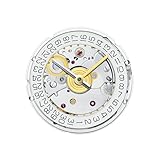
- Winding Mode: Automatic Winding
- Model Number: ST2130
- Case Diameter: Approx. 26mm
- Thickness: Approx. 4.80mm
- Frequency: 28800
Measure fit before admiring finishing
Diameter alone does not predict comfort. Record lug-to-lug length, thickness, crown position, strap width, clasp design, and the way the lugs sit on your wrist. A large dial can wear acceptably with short lugs, while a smaller diameter can feel bulky if the case is thick.
Which Chinese watch movement fits your use?
The movement path is the most important early decision. ST19 is the hand-wound chronograph route; ST2130 is an automatic three-hand/date route; Miyota 8215 is a useful Japanese baseline for a basic automatic; and Seagull ST18 is a slimmer automatic option. Their published figures describe capabilities, not a guarantee of how any particular watch will run.
| Movement or path | Primary use | Published figures | What to verify before buying |
|---|---|---|---|
| Seagull ST19 | Hand-wound mechanical chronograph | 21,600 vibrations per hour; up to 37 hours timed or 45 hours untimed reserve (Horology Planet, current technical page) | Chronograph reset and start/stop feel, winding condition, service access, and whether the seller identifies the exact variant |
| Seagull ST2130 | Automatic three-hand/date watch | 28,800 vibrations per hour; 39-hour reserve; 28 jewels on the cited Seagull model (Tianjin Seagull official product page, accessed 2026) | Regulation evidence, revision, rotor noise, bridge execution, date-change behavior, and return terms |
| Miyota 8215 | Basic automatic benchmark | 21,600 vibrations per hour; approximately 42 hours running time; 21 jewels; stated accuracy of -20 to +40 seconds per day (Miyota Movement official specification page, accessed 2026) | Whether the watchmaker regulated the movement, the actual case dimensions, and who supplies service |
| Seagull ST18 | Slim automatic watch | 28,800 vibrations per hour; up to 42 hours; Incabloc shock absorber stated by Horology Planet | Exact thickness, calibre revision, replacement-part availability, and the seller’s service route |
When does the ST2130 make sense?
The ST2130 combines a 28,800-vibrations-per-hour rate with a stated 39-hour reserve and 28 jewels in the cited Seagull model. That makes it a strong specification for an everyday automatic, but the numbers do not tell you whether the individual movement was carefully regulated or cleanly assembled. If you are considering a Seagull ST2130 automatic mechanical watch, ask for the exact reference and evidence from that watch, not a generic calibre description.
When is the ST19 the better choice?
Choose the ST19 when operating a chronograph is central to the appeal. Watchessy describes it as a hand-wound column-wheel chronograph based on Venus 175 technology, while Horology Planet lists up to 37 hours of timed reserve and 45 hours when the chronograph is not running. It is less convenient than an automatic three-hand watch because winding is part of normal use, but it offers a distinctly traditional chronograph architecture.
Why consider the ST18?
The ST18 is worth investigating when case thickness matters. Horology Planet lists a 28,800-vibrations-per-hour rate, up to 42 hours of reserve, and an Incabloc shock absorber. Confirm those details for the exact watch, because a thin movement does not ensure a thin case once the dial, crystal, gasket, and caseback are included.
How does the ST2130 compare with the Miyota 8215?
Use the two calibres as a specification benchmark, not as a national-origin contest. The ST2130 example has a faster stated beat rate and more jewels; the 8215 has a slightly longer approximate running time and publishes a broad accuracy range. Delivered regulation, cleanliness, case construction, and service support can matter more than either headline number.
Also popular on Amazon

- Water Resistance Depth: 5Bar
- Clasp Type: Buckle
- Movement: Automatic
- Movement Model: ST2130
- Dial Size: 40mm (man), 34mm(women).
| Specification | Seagull ST2130 example | Miyota 8215 | How to interpret it |
|---|---|---|---|
| Beat rate | 28,800 vibrations per hour | 21,600 vibrations per hour | A higher rate is a specification difference, not proof of superior regulation or durability. |
| Running time | 39 hours | Approximately 42 hours | The extra few hours may affect whether the watch is still running after being left off overnight; actual reserve should be checked for the watch sold. |
| Jewels | 28 jewels on the cited model | 21 jewels | Jewel count alone does not establish finishing, adjustment, or service quality. |
| Published accuracy | No universal tolerance published for every Seagull watch variant | -20 to +40 seconds per day stated by Miyota | Compare a seller’s measured timegrapher result with the manufacturer’s stated range rather than assuming either figure describes every unit. |
The practical question is not which logo wins. Ask whether the seller can document regulation, supply parts, answer a date or winding problem, and accept a return if the delivered watch performs outside the agreed terms.
Is an ST2130 reliable enough for daily wear?
It can be a sensible daily-watch calibre when the specific movement is clean, properly seated, and regulated, but available evidence points to meaningful unit-to-unit variation. A 2026 workshop article by A. Laibacher reports ST2130 examples arriving around ±20–40 seconds per day and improving to roughly ±10–15 seconds per day after regulation. Those are the author’s workshop observations, not a guaranteed population statistic or a controlled test.
What the workshop observations imply
- Budget time for regulation if the seller does not provide a measured result.
- Inspect bridge edges and decoration under magnification; the article reports rougher bridge finishing in some examples.
- Listen for excessive rotor noise and check that the rotor clears adjacent components; noisier rotors were also reported in some examples.
- Do not infer reliability from a display back, blue screws, stripes, or a skeletonized design.
What counts as abnormal?
Mechanical watches do not normally match quartz-watch accuracy, according to the San Martin Watch FAQ. Its guidance is to contact the seller when deviation is unusually large for the movement and to judge the result against the stated specification and the seller’s warranty terms. Because no universal ST2130 tolerance is published for every variant, obtain the seller’s acceptance threshold in writing before ordering.
How should you inspect movement finishing?
Finishing is best judged at the price tier of the watch and under magnification. Decoration can make a movement attractive, but it does not substitute for clean assembly, sensible adjustment, or serviceable construction.
Do these 3 things before closing this tab:
1Repair Windows errors before they cause bigger problems2Scan for outdated or missing drivers - takes under a minute3Clear out junk files and repair common Windows errorsBridge and plate surfaces
- Look for even edges rather than visibly rough or irregular cuts.
- Check that stripes, perlage, or other decoration are consistent across adjacent surfaces.
- Confirm that engravings are legible and not blurred by poor execution.
Screws, jewels, and cleanliness
- Screw heads should sit cleanly and consistently.
- Jewels should appear properly seated, without visible chips or debris.
- Ask for a clear photograph before purchase; a dark or heavily stylized image can conceal dust and alignment problems.
Rotor and display-back behavior
The rotor should clear nearby parts without excessive noise. A display back is useful only when the movement beneath it is actually well executed; a decorated rotor cannot prove regulation, shock resistance, or durability.
Which case, crystal, and fit specifications matter?
Case specifications determine whether the watch works on your wrist and in your routine. A cited official Seagull ST2130 model uses 316L stainless steel, synthetic sapphire crystal, approximately 43 mm diameter, approximately 12 mm thickness, and 100 m water resistance. Those figures describe that model, not every watch using the calibre.
Also popular on Amazon

- Movement : ST2130
- Dial diameter : Approx.38mm
- Thickness : Approx.12.5mm
- Strap circumference : 19m
- Mirror material : Synthetic Sapphire
Dimensions and ergonomics
- Diameter: compare it with watches you already wear, but do not ignore lug-to-lug length.
- Thickness: include the crystal and caseback in the measurement; a slim calibre can still produce a tall watch.
- Crown: check its position and size, especially if your wrist bends over the watch.
- Lug-to-lug: make sure the lugs do not overhang your wrist.
Crystal and water resistance
Synthetic sapphire is listed on the cited Seagull model, but crystal material and water-resistance rating must be confirmed for the exact reference. A numerical rating is not a promise that an old, opened, or poorly sealed watch can be used in every water situation; ask whether the seller states how resistance is tested and what the warranty excludes.
Strap width
Measure the lugs before ordering replacements. San Martin’s accessory information lists leather straps in 18 mm, 20 mm, and 22 mm widths, but the correct choice is the measured width of your watch, not the movement or case diameter.
Windows Errors? Fix Them Before They Spread
Repair common Windows errors and clear accumulated junk for a smoother, more stable PC - no reinstall needed.Free scan · no reinstallCrashes, No Sound, or Screen Glitches?
Random freezes, missing sound and display glitches usually trace back to one bad driver. Find and replace yours safely.Free scan · under a minuteHow can you verify regulation before buying?
A timegrapher result is useful only when it is tied to the exact watch and shows enough information to judge consistency. Use the following buying sequence.
- Request the exact calibre and revision. Ask whether the seller is installing an ST2130, ST19, ST18, or another movement, and whether the specification changes by model or production batch.
- Ask for measured timing. Request timegrapher readings in multiple positions when available, including rate, amplitude, and beat error. A single attractive number is less informative than consistent readings.
- Confirm the movement is clean and seated. Ask for clear movement photographs and confirmation that there is no visible dust, that the rotor clears the bridges, and that the movement is correctly secured in the case.
- Check winding and calendar behavior. Ask how the watch should be hand-wound, when the date changes, and what symptoms qualify for a return.
- Get the return route in writing. Record the return window, destination, shipping responsibility, and whether opening the case affects eligibility.
What warranty and service terms should you demand?
Service terms belong beside movement specifications in your comparison notes. Ask who performs warranty work, where the watch must be sent, whether the seller supplies movement parts, and how long a repair normally leaves the watch unavailable. A repairable calibre can still be inconvenient if the only service route crosses borders or the seller does not respond.
Warranty example
San Martin states that eligible watches bought from its store receive a two-year warranty for manufacturing defects and asks customers to contact support before returns or repairs. Treat that as a seller-specific policy: confirm eligibility, exclusions, shipping obligations, and the current terms for the exact purchase channel.
Questions to send before payment
- Is the watch regulated before shipment, and can you provide the dated result?
- Which calibre revision is installed in this reference?
- Who pays shipping if the watch arrives with excessive deviation, poor winding, or a date fault?
- Where is warranty work carried out, and can an independent watchmaker service the movement?
- Does opening the case for inspection or regulation void the warranty?
How should you compare total value?
Score each candidate on the same six axes so attractive decoration does not conceal weak support.
Recommended Free Tools
Also popular on Amazon

- 100M Meters Water Resistant
- Bi Directional Bezel Ring
- High quality shock protection
- Date Indicator
- 12 Months Warranty
| Axis | Evidence to record | Decision question |
|---|---|---|
| Function | Three-hand/date, chronograph, GMT, or another complication | Will you use the complication often enough to accept its winding and service demands? |
| Movement evidence | Calibre, revision, beat rate, reserve, regulation record, and parts access | Is the specification tied to this exact watch? |
| Finishing | Bridge edges, decoration, rotor clearance, engravings, cleanliness, caseback execution | Does the execution match the price tier? |
| Wearability | Diameter, lug-to-lug, thickness, crown, crystal, clasp, and strap width | Will the watch sit securely and comfortably? |
| Reliability support | Warranty length, return route, service location, seller responsiveness, water-resistance policy | What happens if the watch arrives outside expectations? |
| Value | Total delivered cost after shipping and tax, plus likely regulation or service | Is the complete ownership package worth the price? |
Choose by use case
- Everyday automatic: begin with an ST2130 or 8215 comparison, then favor the watch with stronger regulation evidence and service terms.
- Mechanical chronograph: choose an ST19 when hand-winding and chronograph operation are central, and verify the controls before accepting the watch.
- Thin wearing profile: investigate ST18-equipped watches, but compare the finished case dimensions and support rather than the calibre alone.
- Display-back collector: pay for demonstrated execution—clean jewels, even edges, legible engraving, and a quiet rotor—not decoration in isolation.
What are the most common buying mistakes?
Mistaking beat rate for accuracy
A 28,800-vibrations-per-hour specification does not guarantee better delivered timekeeping. Regulation, positional consistency, and assembly quality determine what you see on the wrist.
Assuming every watch with the same calibre is identical
Movement choice can vary by model or version. Confirm the calibre in the exact listing and ask for a photograph of the installed movement.
Buying a large case without checking lug-to-lug
Approximately 43 mm diameter and approximately 12 mm thickness on one Seagull model are not universal targets. Compare the full dimensions with your wrist and existing watches.
Treating decoration as a durability test
Blue screws, stripes, skeletonization, and an exhibition back reveal appearance, not regulation or water-resistance performance.
Ignoring the return path
If the seller cannot explain where warranty work occurs or how an abnormal rate is handled, include that risk in the price comparison before ordering.
What is established—and what remains uncertain—about reliability?
Manufacturer and retailer pages establish movement architecture and headline specifications. The cited workshop account adds useful observations about ST2130 variation, regulation gains, rougher bridge finishing, and rotor noise, but it is one watchmaker’s experience. There is no independent long-term failure-rate dataset, controlled accuracy study, or universal finishing standard covering all Chinese mechanical watches in the material available here.
Also popular on Amazon

- Type: Movements
- Model number: P903
- Item diameter: 2.5cm
That uncertainty is manageable. Buy the exact watch with documented calibre information, measured regulation when available, clear photographs, dimensions that suit you, and a return and service route you can actually use. Watchessy’s guidance that the “best” choice depends on the specific requirements of the watch project translates for consumers into one rule: choose for your intended use, then verify the individual watch.
Frequently Asked Questions
Can a Chinese mechanical watch be regulated by an independent watchmaker?
Many mechanical movements are serviceable by a competent watchmaker, but acceptance depends on the calibre, available parts, and the watchmaker’s equipment. Ask the prospective service provider whether they will work on the exact movement before buying, and confirm whether opening the case affects the seller’s warranty.
Quick wins for a faster PC:
Repair Windows errors before they cause bigger problemsFix Now →Fix the driver behind crashes, sound loss and screen glitchesFind Drivers →Clear out junk files and repair common Windows errorsFree Scan →Can I swap an ST2130 for a Miyota 8215 later?
Do not assume the movements are interchangeable. Case rings, stem height, hand dimensions, dial feet, and date-wheel position can differ even when both are automatic three-hand calibres; obtain a movement-specific assessment before planning a conversion.
How should I store a hand-wound ST19 chronograph?
Keep it in a dry, protected place and follow the seller’s winding and operating instructions. If the chronograph starts, stops, or resets inconsistently, stop using the controls and contact the seller rather than forcing the buttons.
Does a display back make a watch easier to maintain?
A display back improves visibility but does not provide access to service or prove construction quality. Maintenance still requires the correct tools, parts, and a qualified technician, so evaluate the service route separately from the caseback style.