Some links on this page are affiliate links: if you buy through them we may earn a commission, at no extra cost to you.
Measure two things before choosing a smaller watch case: your wrist circumference at the place the watch will sit, and the flat width of that area. Use circumference to establish a sensible case-diameter range, then compare the watch’s lug-to-lug length with your flat wrist width. For a wrist below about 16 cm, Longines’ published starting point is a 32–36 mm case, but lug-to-lug length, thickness, lug width, strap and cuff clearance determine whether the watch actually wears well. Goldsmiths notes that there are no absolute rules, so these figures are a practical filter rather than a pass/fail test.
What should you measure before buying a smaller watch?
A case can look small by diameter and still overhang because its lugs are long. Conversely, a larger-looking dial can wear comfortably if the lugs are short and the case is thin. Record these dimensions before comparing watches:
As an Amazon Associate I earn from qualifying purchases.
Recommended Free Tools
- Wrist circumference: the distance around your wrist where the watch will rest. This is useful for a first case-diameter range and for ordering straps.
- Flat wrist width: the straight-line width across the top of your wrist at the watch position. Compare this directly with lug-to-lug length.
- Case diameter: the width of a round case across its face, normally excluding the crown. It describes visual scale but not the full footprint.
- Lug-to-lug: the distance from the tip of the upper lug to the tip of the lower lug. It is the key measurement for spotting overhang.
- Case thickness: the height from the case back to the highest crystal or bezel point. It affects sleeve clearance and how substantial the watch feels.
- Lug width and strap width: the gap between the lugs determines the strap size. They also affect how broad the watch appears at the wrist.
A soft measuring tape, a ruler and a sheet of paper are sufficient. A credit card can substitute for a ruler, and a printable guide is another option when you cannot measure directly with a tape.
How do I measure wrist circumference accurately?
Measure at the actual wearing position, just behind the wrist bone, with the tape snug but not compressing the skin. That single number is more useful than measuring farther up the forearm or pulling the tape tight.
Popular on Amazon

- 2 Pack Soft Fashion Measuring Tape Set. Double sided, 60 inch / 150 cm, portable,durable tape measure. Small and light pocket size measuring tape.
- Easy to Read and Accurate Measurements. The tape measure has accurate, large and clear markings in both inches and centimeters, easy and convenient to read. Wide Application on Home Office School Supplies: Cloth tape measure; body tape measure, sewing tape measure, measuring tape for body, waist tape measure, tailor tape measure. Great measuring tape for body, sewing, tailoring, weight loss, ordering clothes online, waist measurement or measuring any curved surface.
- NOTE: The black tape measure is retractable. There is a retract button in the center, just press on the button when pulling the tape out or retracting the tape back into it, or there will be loud noise.
- Package includes one soft fashion pink tape measure and one retractable black tape measure. Perfect multipurpose measuring tape for body fabric sewing tailor cloth knitting craft measurements. Great gift idea for family friends coworkers seamstress. (Retractable Black Measuring Tape, Size 2 x 2 x 0.5 inches, weight 0.7oz, portable and easy to carry or put into your bag.)
- Find the position. Bend your hand slightly and identify the wrist bone on the side of the hand. The watch normally sits immediately behind that bone, rather than on the hand or several centimetres up the forearm.
- Wrap a soft tape. Keep the tape level around the wrist and bring it back to its starting point. Victorinox’s instruction is: “Wrap a soft measuring tape where the watch sits, just behind the wrist bone.”
- Set the tension. Hold the tape snugly enough that it does not sag, while leaving it comfortable enough to slide a fingertip under it. A tightly pulled measurement can make a strap or bracelet seem unnecessarily short.
- Read and record the value. Write the result in centimetres or millimetres, including one decimal place if your tool allows it. For example, record 15.8 cm and 158 mm rather than relying on memory.
- Repeat once. Take a second reading without changing the position. If the results differ, use the reading taken with the most relaxed, level wrap and note the range.
If you do not have a flexible tape, cut a narrow strip of paper, wrap it around the same position, mark where the end overlaps, then lay the strip flat and measure it with a ruler. The paper must follow the wrist without twisting; a diagonal strip produces a longer, misleading result.
How do I measure the flat width of my wrist?
Flat width is the straight distance across the top of the wrist where the case will rest. Garmin’s sizing guidance specifies measuring horizontally 2.5 cm above the wrist bone, using the dashed-line position shown in its tool. Use that location consistently when comparing a watch’s lug-to-lug dimension.
What’s actually slowing this PC down?
Pick the symptom - the matching free tool is one click away.
- Place the wrist flat. Rest your forearm on a table with the palm facing down or turned sideways, whichever leaves the watch position relaxed. Do not flex the wrist, because bending changes the apparent width.
- Locate the reference point. Starting at the wrist bone, move approximately 2.5 cm toward the forearm. This creates a repeatable point rather than measuring at the narrowest part of the joint.
- Measure straight across. Put a ruler across the flat top of the wrist, perpendicular to the forearm. Measure from one side of the skin to the other, not around the curve.
- Record the width in millimetres. Lug-to-lug specifications are usually stated in millimetres, so keeping the same unit avoids conversion mistakes.
Wrist bones and tendons are not perfectly symmetrical. Measure the side on which you normally wear a watch, and keep the ruler level. If the top of your wrist is strongly curved, take the width at the point where the case back would actually touch rather than forcing the ruler into the widest part.
What watch size is a useful starting point for a small wrist?
Longines publishes these case-diameter starting ranges by wrist circumference:
| Wrist circumference | Longines starting case diameter | How to use the range |
|---|---|---|
| Below 16 cm | 32–36 mm | Begin with smaller cases, then check lug-to-lug and thickness. |
| 16–17.8 cm | 36–42 mm | Several mid-size options may work; case shape becomes important. |
| Above 17.8 cm | 42–46 mm | Larger diameters may be proportionate, subject to lug length and comfort. |
These are published figures from Longines, and the page does not state a publication year. They are not a universal sizing law. Goldsmiths explicitly says there are no absolute rules for an ideal fit, so treat the table as a shortlist rather than a verdict. A cushion, tonneau or square case can cover the wrist differently from a round case of the same nominal diameter.
Longines also describes a balanced watch as occupying approximately two-thirds of the wrist width. That proportion is a visual guideline, not a requirement: dial size, bezel width, crystal shape and the wearer’s preference all change the impression. Measure the actual watch, especially its lug-to-lug length, before rejecting a diameter that falls slightly outside the range.
Do these 3 things before closing this tab:
1Scan for outdated or missing drivers - takes under a minute2Repair Windows errors before they cause bigger problems3Fix the driver behind crashes, sound loss and screen glitchesAlso popular on Amazon
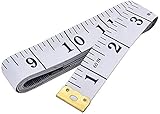
- Measuring range: 0 to 60 inches and 0 to 150 centimeters. There is a centimeter scale on the back, which is accurately printed in inches and centimeters. Both sides can be measured according to your requirements. You can put one in your pocket or backpack without taking up too much space
- Great Material: Tailor Vinyl tape measure won't stretch or deform, provides superior measurement consistence; Soft tape measure, a flexible and portable tape measure, made from soft plastic material, white color
- Operate and Read: Black markings on bright white tape is big enough for you to read, the tape has metal tabs on each end of the cloth tape measure to butt-up against the item your measuring; The metal ends also can prevent fraying
- Wide Application: Cloth tape measure; body tape measure,sewing tape measure,measuring tape tailor. Good sewing tool, accurate tape measuring for sewing, tailoring, body, waist measurement or measuring any curved surface. can provide you accurate measurements, suitable for a seamstress, a crafter, a quilter or whoever just need a flexible measuring tape
How do I know if the lugs will overhang?
Compare the watch’s lug-to-lug measurement with your flat wrist width. Victorinox’s fit guidance is that lug-to-lug should be at or below the wrist width. If the lug tips extend beyond the flat top of the wrist, they can overhang even when the case diameter matches a sizing chart.
- Find the lug-to-lug specification. Look for the full distance from the outside tip of one lug to the outside tip of the opposite lug. Do not substitute the case diameter or the distance between the lugs where the strap fits.
- Compare like units. Convert both measurements to millimetres. A 15.5 cm flat width is 155 mm, for example.
- Check the relationship. A lug-to-lug value equal to or shorter than the flat width is the safest starting point. A longer value signals a possible overhang and deserves a physical try-on or a paper mock-up.
- Inspect the lug shape. Downturned or curved lugs may follow the wrist more closely than straight, sharply extended lugs. The specification still matters, but shape changes how the ends contact the wrist.
| Comparison | Likely implication | What to check next |
|---|---|---|
| Lug-to-lug shorter than flat width | The case has room to sit within the wrist’s top surface. | Confirm that the case back and strap remain comfortable. |
| Lug-to-lug equal to flat width | The fit is close to the edge of the wrist. | Check lug curvature, movement and sleeve clearance. |
| Lug-to-lug longer than flat width | Lug tips may overhang or press at the edges. | Prefer a shorter-lug alternative or verify the fit in person. |
For a practical check before buying, draw a rectangle or outline matching the published lug-to-lug and case width on paper, cut it out and place it on the wrist at the intended position. This does not reproduce thickness or curvature, but it reveals whether the lugs reach past the wrist’s flat surface.
Is a 40 mm watch too big for a small wrist?
Not automatically. A 40 mm diameter can be comfortable on some smaller wrists if the watch has short lugs, a compact lug-to-lug measurement, a thin case and a shape that follows the wrist. The same diameter can overhang on another wrist when the lugs are long or straight.
Use your measurements instead of the diameter alone. First compare lug-to-lug with flat width; then consider thickness and the visual area occupied by the bezel and dial. A broad, bezel-less dial can look larger than a watch with the same case diameter and a wide bezel. Bracelet end links can also extend the visual footprint beyond the case.
If a 40 mm model exceeds your flat width, look for the manufacturer’s shorter-lug version or a smaller diameter. If it fits within the width but feels visually dominant, a thinner case, narrower strap or darker dial may create a less imposing appearance without changing the measured footprint. These are preference decisions, not evidence that one size is objectively correct.
How thick should a watch be on a small wrist?
Longines lists 7–9 mm as a case-thickness suggestion for small wrists. Thickness affects both comfort and perceived scale: a tall case can catch on a cuff and appear more prominent even when its diameter is modest.
Also popular on Amazon

- 𝐓𝐰𝐨 𝐓𝐚𝐩𝐞𝐬, 𝐎𝐧𝐞 𝐒𝐨𝐥𝐮𝐭𝐢𝐨𝐧: This 2pc set gives you a white classic soft tape and a black quick retractable tape — both are upgraded materials made, double sided with inches and centimeters. Tracking your fitness progress? Buying clothes online and hate returns? Doing DIY around the house? This kit handles all of it — body, clothing, curved surfaces, and everything in between. A reliable, frustration-free measuring solution for tailors, crafters, seamstresses, fitness beginners, busy parents, and anyone who wants accurate results without the hassle.
- 𝐂𝐥𝐞𝐚𝐫 𝐍𝐮𝐦𝐛𝐞𝐫𝐬, 𝐙𝐞𝐫𝐨 𝐄𝐲𝐞 𝐒𝐭𝐫𝐚𝐢𝐧: Both tapes feature large, bold, high-contrast markings, making all 60 inches/150 cm easy to read — no squinting, no mistakes, just fast and accurate measurements from any angle. Just get the result, decide, and move on.
- 𝐒𝐨𝐟𝐭, 𝐒𝐭𝐫𝐨𝐧𝐠 & 𝐀𝐥𝐰𝐚𝐲𝐬 𝐀𝐜𝐜𝐮𝐫𝐚𝐭𝐞: Made from high-quality, non-stretch, durable fiberglass to prevent warping or stretching. The tapes stay consistent and resist bending and deformation. Metal end tabs stop fraying and keep your measurements perfectly aligned.
- 𝐎𝐧𝐞-𝐏𝐫𝐞𝐬𝐬, 𝐐𝐮𝐢𝐜𝐤 𝐑𝐞𝐭𝐫𝐚𝐜𝐭: Press the center button of the black tape and it snaps back cleanly and smoothly — no tangles, no whipping, no loud noise that scares your pet. Compact enough to carry in a pocket, purse, or sewing kit. Smooth enough that you’ll probably play with it like a fidget toy.
- 𝐀𝐟𝐭𝐞𝐫 𝐒𝐚𝐥𝐞 𝐒𝐮𝐩𝐩𝐨𝐫𝐭, 𝐀𝐥𝐰𝐚𝐲𝐬: Your satisfaction means everything to us. If anything’s off, just drop us a message. No robots — just real people ready to help make it right. We’ll fix it fast — no fuss, no stress. You’ll be smiling again in no time!
- Measure the complete height. Check whether the stated thickness includes the crystal, bezel and case back. Specifications are not always presented in identical ways, so compare watches using the same source where possible.
- Consider your clothing. If the watch must slide under a fitted shirt cuff, the case’s highest point and the stiffness of the cuff matter more than diameter alone.
- Inspect the case back. A domed or protruding back can change how the watch sits, especially on a narrow or bony wrist.
- Account for movement and functions. A chronograph or other complication may require a thicker case than a simple time-only watch. Decide whether that added height is worth the comfort trade-off.
Thickness is a suggestion, not a hard limit. A rounded, well-curved case can feel more comfortable than a thinner case with sharp edges, while a very flexible strap can reduce movement from a taller watch.
What strap width works with a smaller watch case?
For small wrists, Longines suggests 16–18 mm straps. The correct size is determined by the lug width, so measure the gap between the lugs or use the manufacturer’s stated lug width before ordering a replacement.
Free tools Windows power users keep installed
One-click scans. No signup required.
| Component | Measurement or guidance | Why it matters |
|---|---|---|
| Lug width | The internal distance between the lugs, in millimetres. | Sets the strap width that will fit securely. |
| Strap width | Longines’ small-wrist suggestion: 16–18 mm. | A narrower strap can keep a compact watch from looking top-heavy. |
| Strap length | Must accommodate your measured circumference and buckle position. | Prevents excessive tail length or an inability to fasten the watch. |
| Bracelet adjustment | Check removable links, half-links and micro-adjustment holes. | Allows a closer fit when the wrist falls between standard sizes. |
Lug width and strap width should be considered together. A wide strap on a small case can make the watch look bulky, while an overly narrow strap can make a larger case appear unbalanced. The strap also changes how securely the case stays centred, which affects the perceived fit during movement.
What can I use if I do not have a tape measure or ruler?
Two alternatives are supported by published sizing tools. Garmin says a credit card can be used to measure the wrist when a ruler is unavailable. The Hour Glass offers a printable wrist guide intended for A4 paper.
Using a credit card
- Place the card’s straight edge across the flat wrist at the measurement point.
- Mark the card or note how many card widths span the wrist. Keep the card horizontal and do not bend it around the wrist.
- Use a known card dimension or compare the result with a ruler later. This is an estimate, so use it to shortlist watches rather than to order a close-fitting strap.
Using the printable guide
- Print The Hour Glass guide on A4 paper at its intended scale; do not use a printer setting that enlarges or shrinks the page.
- Cut along the dotted line and secure the strip around the wrist comfortably, at the same position used for a watch.
- Read the marker where the strip meets itself. The guide advises rounding a reading between markers up to the nearest 0.5 cm; its example is 14.3 cm rounding up to 14.5 cm.
Printable guides and improvised tools are more vulnerable to scale and alignment errors than a flexible tape. If the result is close to a case-size boundary or strap-length limit, repeat the measurement with a proper tape before purchasing.
How should I compare two watches for a small wrist?
Build a side-by-side comparison using the dimensions that affect both fit and appearance. Diameter alone is insufficient.
Also popular on Amazon

- 60 In and 150 Cm, Meet your daily usage needs
- Made from soft high quality material, Won't stretch or deform
- It is light in weight, Convenient and flexible to use and won't take up too much space for you
- Perfectly applied body, sewing, tailoring, weight loss, ordering clothes online, waist measurement or measuring any curved surface
- If you have any questions after receiving the product, We will provide 24-hour online service and 1-year replacement, Your satisfaction is our motivation to move forward
| Comparison axis | Watch A | Watch B | Decision question |
|---|---|---|---|
| Wrist-circumference range | Enter the maker’s stated range or your shortlist. | Enter the maker’s stated range or your shortlist. | Which is closer to your measured circumference without treating the range as absolute? |
| Flat wrist width versus lug-to-lug | Record both values. | Record both values. | Do the lugs stay at or inside the flat wrist width? |
| Case diameter | Record millimetres. | Record millimetres. | Which visual scale do you prefer after checking the footprint? |
| Case thickness | Record millimetres and measurement convention. | Record millimetres and measurement convention. | Will either case interfere with a cuff or feel tall? |
| Lug width and strap | Record lug width and supplied strap. | Record lug width and supplied strap. | Can the strap be replaced or adjusted to your wrist? |
| Bracelet adjustment | List links, half-links and micro-adjustment. | List links, half-links and micro-adjustment. | Can you centre the clasp and remove slack? |
When specifications are missing, ask the retailer or manufacturer for lug-to-lug and thickness rather than inferring them from diameter. If a comparable value is not stated, mark it as unknown and treat that uncertainty as a reason to seek a return option or an in-person fit check.
Independent reader supportYour contribution helps us test, update, and keep practical guides available for everyone.What is the most reliable fitting sequence?
Use the following order so a visually appealing diameter does not distract from a mechanical fit problem.
- Measure circumference at the wearing position and record it in centimetres and millimetres.
- Measure flat width horizontally about 2.5 cm above the wrist bone, following Garmin’s reference position.
- Use the Longines diameter range as an initial shortlist, especially the 32–36 mm starting range for wrists below 16 cm.
- Filter by lug-to-lug. Keep candidates whose lug-to-lug is at or below your flat wrist width, then investigate any exception with a paper outline or physical fitting.
- Filter by thickness. Compare candidates with the 7–9 mm small-wrist suggestion in mind and account for the clothing you wear.
- Confirm lug and strap width. For a small wrist, check whether a 16–18 mm strap is appropriate and whether the strap or bracelet has enough adjustment.
- Check movement comfort. Walk, bend your wrist and put on a sleeve if possible. The case should stay centred without the lugs digging into either edge.
This sequence separates objective clearance checks from personal style. It also prevents a strap that can technically be fastened from being mistaken for a case that actually fits.
What common measuring mistakes make a small watch fit badly?
- Measuring the wrong location: Measuring over the hand or far up the forearm does not represent the watch position. Repeat the circumference measurement just behind the wrist bone.
- Pulling the tape tight: Compression produces an undersized circumference and can lead to a bracelet or strap that is uncomfortable. Use snug, comfortable tension.
- Using diameter as the only filter: A case can fall inside a diameter chart while its lugs overhang. Obtain lug-to-lug and compare it with flat width.
- Measuring a curved wrist with a flat ruler at an angle: A diagonal line overstates width. Keep the ruler horizontal across the top surface.
- Ignoring case thickness: A short lug-to-lug watch may still feel awkward under a cuff if the case is tall. Check the complete thickness and case-back profile.
- Ordering the strap by circumference alone: Strap length and lug width are separate specifications. Confirm the lug gap and the adjustment range.
- Rounding down an uncertain reading: The Hour Glass recommends rounding between guide markers up to the nearest 0.5 cm. Keep the exact tape reading as well when ordering a close fit.
- Assuming a chart is a rule: Goldsmiths’ no-absolute-rules principle matters when your wrist shape, case style or preference differs from a general range.
How can I confirm the fit before committing to a watch?
Use the published dimensions to make a paper outline, then place it at the measured wearing position. Mark the lug tips and the approximate case thickness on the outline. This reveals overhang and visual scale, although it cannot reproduce the feel of a curved case back or the weight of a bracelet.
Quick wins for a faster PC:
Scan for outdated or missing drivers - takes under a minuteDriver Scan →Clear out junk files and repair common Windows errorsFree Scan →Fix the driver behind crashes, sound loss and screen glitchesFind Drivers →If the watch is available to handle, centre it on the wrist rather than letting it slide toward the hand. Check both sides of the wrist, close and open the hand, and put on the cuff or sleeve you expect to wear. A watch that only fits when held perfectly still is not adjusted for real use.
For an online purchase, save the specification page showing diameter, lug-to-lug, thickness and lug width. Confirm the seller’s return conditions before ordering when lug-to-lug is not stated or when your measurements sit at a boundary. The goal is not to satisfy a single number; it is to keep the case supported by the wrist while leaving the strap comfortable.
Also popular on Amazon

- MULTIPLE USES: Body fat measurement tape, waist measuring ruler, body wraps weight loss for women and men, sewing ruler, virtual bra fittings, kids tape measure, fabric measuring tape, shoes, dress, baby, woodworking, wardrobe, gym, rope, chin, chest, arm, bodybuilding, dog and puppy, smart measure tape, mm ruler, clothing measuring tape, body measuring tape weight loss
- Measuring Range: 60 inches/ 150cm; 0-60 in and 0-150cm. Has Centimetre Scale on Reverse Side, accurately printed in both inches and centimeters, you can measure according to your requirements, You can keep a soft tape measure in your purse, you never know when you have to measure something
- GREAT MATERIAL: Tailor vinyl fabric tape measure won't stretch or deform, gives accurate measurement consistency, waist measuring tape, a flexible and portable body tape measure, made from soft plastic material
- OPERATE & READ: Black markings on bright tape are big enough for you to read without glasses, the tape has metal tabs on each end of the cloth tape measure to attach against the item you measuring. The metal ends also can prevent wear out.
- MORE CHOICES & BETTER SERVICE: We have multiple colors for you to choose from, which are available on the product detail page. If you have any query, you can freely contact us at any time and we will serve you hearty.
How should I interpret a result that falls between sizes?
Keep the exact measurements and compare the physical footprint first. A wrist just below 16 cm does not automatically require the smallest available case, and a wrist just above a chart boundary does not automatically need a larger case. Choose the candidate whose lug-to-lug stays within the flat width, then use thickness, strap width and personal style to decide between close options.
If two watches have similar lug-to-lug but different diameters, the bezel and dial proportions may make one look larger. If two watches share a diameter but differ in lug length, the shorter-lug model is usually the safer starting point for a narrow wrist. These comparisons are more informative than treating the chart boundary as a hard cutoff.
What is the practical rule for a smaller watch case?
Start with circumference, verify the flat width, and let lug-to-lug decide whether the case physically fits. For wrists below about 16 cm, use 32–36 mm as Longines’ starting diameter range, then look for lug-to-lug no longer than your flat wrist width, roughly 7–9 mm thickness, and a lug/strap combination in the 16–18 mm area when appropriate. Treat every number as guidance and make the final choice based on clearance, comfort, clothing and your own preferred proportion.
Frequently Asked Questions
Should I measure my wrist at different times of day?
If your wrist size changes noticeably, take readings at the times you expect to wear the watch and keep the larger comfortable value for strap planning. Do not tighten the tape to force the smaller result; the watch needs enough room for normal movement.
Can a bracelet be made to fit a wrist between standard sizes?
Often, but the available adjustment depends on the bracelet. Check whether it has removable links, half-links or micro-adjustment holes, and whether the clasp can remain centred after links are removed.
Do square or rectangular watches use the same sizing checks?
Use the same circumference, flat-width and thickness measurements, but evaluate the case’s longest dimension rather than relying on a round-case diameter. Compare the full lug-to-lug or case length with your flat wrist width.
Recommended Free Tools
What should I do when a retailer does not list lug-to-lug?
Ask for the measurement directly or seek a dimensioned technical drawing. If it remains unavailable and the watch is near your wrist-width limit, use a returnable purchase or an in-person fitting rather than guessing from diameter.

