What’s actually slowing this PC down?
Pick the symptom - the matching free tool is one click away.
Some links on this page are affiliate links: if you buy through them we may earn a commission, at no extra cost to you.
A mechanical watch is powered by energy stored in a wound mainspring, not by a battery. In a manual movement, turning the crown winds that spring; in an automatic movement, a wrist-driven rotor winds it through an additional mechanism. The spring’s force then travels through gears, an escapement and a balance wheel before the hands show the time. That chain explains both the appeal and the limits of mechanical timekeeping: it can run without electronics, but its reserve and rate depend on the movement’s design and condition.
What powers a mechanical watch?
The immediate power source is a tightly coiled mainspring inside the movement’s barrel. Winding stores potential mechanical energy in the spring. As the spring gradually relaxes, it supplies torque to the wheel train, which ultimately drives the hands.
As an Amazon Associate I earn from qualifying purchases.
That answer is only the first link in the chain. A mechanical watch works because several parts transform, meter and regulate the spring’s energy:
- Winding: The crown winds a manual movement directly. In an automatic movement, a weighted rotor responds to wrist motion and winds the spring through the automatic winding system. The crown can generally still be used to wind and set an automatic watch.
- Storage: The mainspring sits in a barrel. Winding tightens the long coiled spring and stores mechanical potential energy.
- Transmission: The barrel turns the wheel train. Wheel-and-pinion ratios transmit torque and set the speeds required by the seconds, minutes and hours displays.
- Distribution: The escapement, built around the escape wheel and pallet fork, releases the train’s energy in controlled impulses instead of allowing the spring to unwind at once.
- Regulation: The balance wheel and hairspring oscillate together. Their regular rhythm determines how quickly the escapement advances and therefore how fast the watch gains or loses time.
- Display: The regulated train carries the hands and, where fitted, extra indications such as a date.
A basic mechanical movement is described by the Fondation de la Haute Horlogerie as having about 130 parts; complications add more components. The count is therefore a description of a basic architecture, not a universal total for every watch.
Popular on Amazon

- [Luxurious Mechanical Watch] High quality hollow mechanical watch appearance retro gorgeous, exquisite carving and design of the golden appearance of the European nobility more highlight your noble identity extraordinary taste, to bring you a pleasant luxury experience
- [Mechanical Movement] This watch has manual self-winding. Please consider that mechanical watches that require manual winding can only keep time for a short time after winding. To prevent running or inaccurate time, it is advised that you verify the time periodically and wind up the chain 15–20 times.
- [Waterproof] Water resistant to 50m (165ft) -suitable for short periods of recreational swimming and showering, but not diving or snorkeling
- [Ideal as a Gift] This beautiful retro-style watch can be worn on any occasion or given as a gift to your father, brother, partner, or boyfriend. At weddings and any holiday gatherings, it can be a really appreciated and elegant gift.
- [Professional After-Sale Service] Please contact us if you need any additional details about our watches. We will be happy to answer and help you anytime.
How does an automatic watch wind itself?
An automatic watch winds itself when the rotor, an oscillating weight mounted in the movement, turns as the wearer’s wrist moves. The rotor’s motion is converted by the automatic winding mechanism into tension in the mainspring.
The rotor does not create energy from nothing: it captures motion that would otherwise be lost and uses it to rewind the spring. If the watch is worn regularly, this can keep it running. If it is left still, the spring eventually unwinds and the watch stops after its available power reserve is exhausted. Most automatic movements also accept crown winding, which is useful after the watch has stopped.
Recommended Free Tools
What is the difference between manual and automatic mechanical watches?
Both types use the same basic mechanical system—mainspring, barrel, wheel train, escapement, balance and hairspring. The difference is how the mainspring receives energy.
| Feature | Manual-wind mechanical | Automatic mechanical |
|---|---|---|
| Winding method | The wearer turns the crown to tighten the mainspring. | A wrist-driven rotor winds the mainspring; the crown generally remains available for winding and setting. |
| Interaction | Requires periodic crown winding, even when worn. | Regular wear can maintain the wind, but a stopped watch must be wound or worn long enough to restart. |
| Power reserve | Depends on the specific calibre. | Depends on the specific calibre and how much energy the rotor supplies. |
| Accuracy | Depends on the calibre, adjustment and condition. | Depends on the calibre, adjustment and condition; the rotor does not inherently make it more accurate. |
| Construction considerations | No rotor or automatic winding module is required. | The rotor and winding module add components and may affect the movement’s layout and thickness; exact results are model-specific. |
Choose manual winding if direct interaction and a clear view of the movement matter more than convenience. Choose automatic winding if you prefer wrist motion to replenish the reserve between periods of wear. Neither winding method changes the fundamental fact that the watch is regulated mechanically.
Also popular on Amazon

- Material: Mechanical movement, mineral strengthened glass mirror, the case is made of stainless steel and the strap is made of High grade leathe.
- Measuare: Band length: 18.5cm/7.39inch, dial diameter: 41mm/1.6inch, dial thickness: 15mm/0.6inch.
- 30M waterproof, Daily waterproofing to prevent water splashing. But not suitable for bathing and swimming.
- Classic and fashionable desgin, PU leather strap, suitable for any occasion.
- It will be a wonderful gift for your father, husband, friends, son or brother on some special days.
How long does a mechanical watch run when fully wound?
Its power reserve is the running time available after a full winding, and it varies by calibre rather than by the word “mechanical” alone. Hamilton gives an 80-hour reserve for movements it identifies with that specification, while Orient reports an average of more than 40 hours for its watches. Those figures are examples from particular manufacturers and are not a universal rating.
Reserve also depends on the spring’s state, the movement’s friction and how completely the watch was wound. An automatic watch that is worn intermittently may stop sooner than expected if wrist motion has not supplied enough winding. Check the movement or model documentation for the authoritative reserve figure.
Why does a mechanical watch tick without a battery?
The mainspring provides the energy, and the escapement releases it in small, repeated steps. Each impulse advances the balance wheel; the balance and hairspring then return the escapement to its next position. This repeating mechanical cycle produces the familiar ticking or beat and moves the hands without a battery, plug or rechargeable cell.
As Christophe Roulet of the Fondation de la Haute Horlogerie puts it, “A mechanical watch has no need for batteries, no need to be plugged in and recharged.” It does, however, need periodic winding—by crown or rotor—and eventual mechanical maintenance.
Also popular on Amazon

- CLASSIC WHITE DIAL WITH BLUE HANDS – Clean white dial with striking blue hands and bold Arabic numerals for easy reading at a glance. Vintage-inspired design that draws compliments. A timeless aesthetic that works equally well for business or casual wear. 40mm case size offers substantial wrist presence without being overwhelming
- AUTOMATIC SELF-WINDING MOVEMENT – Powered by wrist motion during wear, no battery needed. Manual winding available as backup for occasional use. For optimal performance, wear regularly or hand-wind 15-20 turns daily. Note: Power reserve may not last overnight without regular wear or winding
- SCRATCH-RESISTANT MINERAL GLASS – Reinforced mineral crystal resists scratches and scuffs from daily wear. Clear exhibition case back lets you view the intricate mechanical movement. Durable construction for reliable everyday use
- COMFORTABLE BROWN PU LEATHER STRAP – Soft, flexible PU leather strap designed for all-day comfort. Adjustable buckle closure fits most wrist sizes. 20mm strap width complements the classic dial design. (Note: For extended durability, avoid prolonged exposure to moisture.)
- VERSATILE & EASY-TO-READ DESIGN – Bold numerals and contrasting blue hands ensure quick time reading in various lighting conditions. 13mm slim profile fits comfortably under shirt cuffs. Ideal for work, weekends, travel, or casual outings. 3ATM splash-resistant for hand-washing and light rain
How accurate is a mechanical watch?
Accuracy is a property of the specific calibre and its regulation, not a guaranteed consequence of being mechanical. The Fondation de la Haute Horlogerie identifies the COSC precision requirement for a certified mechanical movement as −4/+6 seconds per day. That is a certification requirement for movements that pass the standard, not a promise that every mechanical watch will remain within that range.
Position, temperature, winding level, shock, magnetism and wear can all influence the rate. A watch that suddenly gains or loses substantially more time than its documented tolerance should be assessed by a qualified service professional rather than corrected by repeated casual adjustments.
Do these 3 things before closing this tab:
1Repair Windows errors before they cause bigger problems2Fix the driver behind crashes, sound loss and screen glitches3Clear out junk files and repair common Windows errorsHow is a mechanical watch different from a quartz watch?
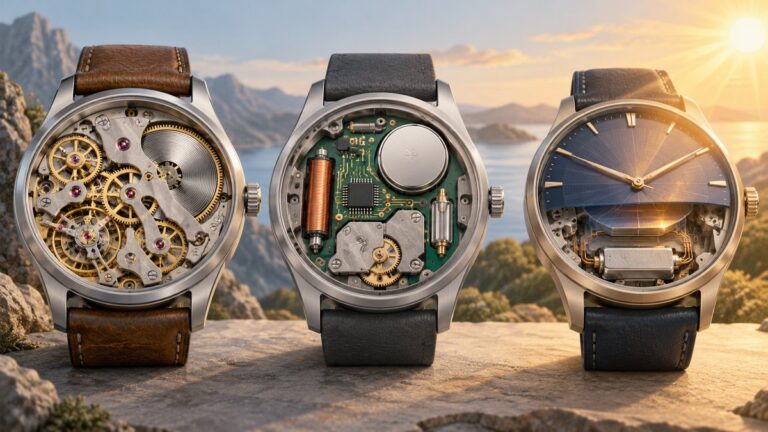
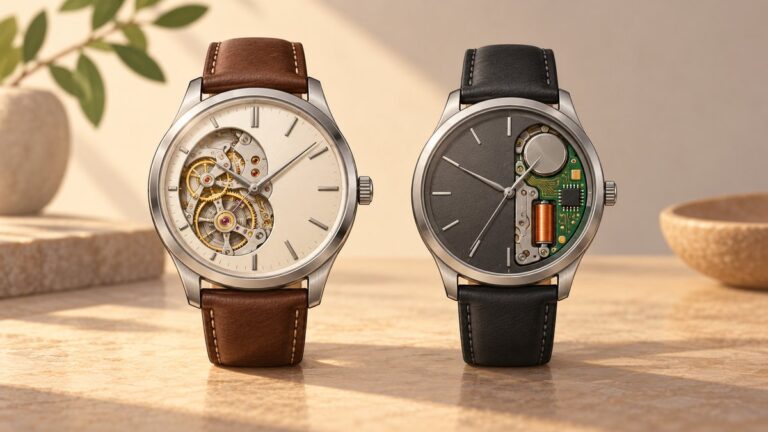
A standard mechanical watch meters stored spring energy with gears, an escapement and a balance. A quartz watch uses a battery, integrated circuit, quartz resonator, stepping motor and gear train; the circuit derives timing impulses from the quartz resonator and drives the motor.
The distinction is therefore both an energy source and a regulating system: mechanical watches regulate spring torque with oscillating components, while quartz watches use electronic timing around a vibrating quartz crystal. A quartz watch may continue running as long as its battery has charge; a mechanical watch stops when its spring has unwound.
Also popular on Amazon

- [Luxurious Mechanical Watch] High quality hollow mechanical watch appearance retro gorgeous, exquisite carving and design of the golden appearance of the European nobility more highlight your noble identity extraordinary taste, to bring you a pleasant luxury experience
What should you check before choosing a mechanical movement?
- Winding preference: Decide whether you want daily or periodic crown winding, or the convenience of a rotor.
- Documented reserve: Compare the stated hours for the exact calibre, not an average for an entire category.
- Accuracy standard: Look for a named certification such as COSC and read its stated tolerance.
- Construction: Rotor and module arrangements can influence case thickness; rely on the model’s own specifications.
- Maintenance: Service needs are movement- and condition-specific, so use the manufacturer’s documentation or an authorized watchmaker for intervals and procedures.
Frequently Asked Questions
Can an automatic watch be wound by hand?
Yes. Most automatic movements permit crown winding, so a stopped watch can usually be restarted without waiting for wrist motion. The exact winding direction and number of turns should come from the movement or model instructions.
Does a larger mainspring always give a longer power reserve?
Not necessarily. Reserve depends on spring dimensions, barrel design, gear ratios, escapement efficiency and the movement’s operating load. The published reserve for the specific calibre is more useful than judging by case or movement size.
Free tools Windows power users keep installed
One-click scans. No signup required.
What happens if I overwind a mechanical watch?
Modern movements generally include a slipping bridle that prevents the mainspring from being tightened past its practical limit during normal crown winding. Stop when you feel firm resistance and follow the maker’s instructions, particularly for vintage or unusual calibres.
Why can the same mechanical watch keep different time on different days?
Its rate can change with position, temperature, winding level, shocks and magnetic exposure. Small daily variation is inherent to mechanical regulation; a persistent large change warrants professional diagnosis.