Some links on this page are affiliate links: if you buy through them we may earn a commission, at no extra cost to you.
Power reserve is the time a mechanical watch continues running after its mainspring has been fully wound. A manual watch stores that energy when you turn the crown; an automatic watch adds a rotor that winds the spring as you wear it. If the watch remains unworn longer than its reserve, it will stop. Keeping it running accurately means following the calibre’s winding instructions, maintaining enough stored energy, and judging its rate over a week or more rather than reacting to one day.
There is no universal reserve or accuracy figure. Manufacturer guidance ranges from roughly 36 to 70 hours for many current automatic watches, while the rate also changes with position, temperature, shock, magnetism, and winding state.
As an Amazon Associate I earn from qualifying purchases.
Quick wins for a faster PC:
Fix the driver behind crashes, sound loss and screen glitchesFind Drivers →Clear out junk files and repair common Windows errorsFree Scan →What is a mechanical watch power reserve?
Power reserve is the elapsed running time between a full wind and the moment the watch stops. The mainspring is the movement’s energy store. As it unwinds inside the barrel, it drives the gear train, escapement, and balance wheel, which divide and regulate that energy into the regular motion of the hands. Longines defines reserve as the time a mechanical watch runs after it has been fully wound.
A reserve rating belongs to a specific calibre, not to mechanical watches as a category. Longines describes about 36–48 hours as typical for automatic watches and says many of its automatic models average 64 hours. Patek Philippe gives 38–48 hours in its general automatic guidance, while TAG Heuer publishes approximately 40–70 hours for its mechanical watches. Those are manufacturer figures, not a promise that every watch, even from the same brand, will run for the same time.
Popular on Amazon

- Watch Repair Helper: Mechanical watches easily get magnetized and then run inaccurately. Our demagnetizer quickly eliminates magnetism to fix timing errors. It serves as an indispensable working tool for both professional watch repair specialists
- 5 sec Demagnetization: Just put items on the flux zone and hold down the green button for 5 seconds. Our watch demagnetizer features setup with no complicated operations, letting you finish demagnetizing items effortlessly with zero hassle steps
- Durable: Constructed with premium plastic material, this demagnetizer delivers reliable long‑term performance. It avoids easy damage so you skip frequent repairs or replacements, effectively cutting your later stage costs and saving your precious time
- Compact Size: Boasting a lightweight and small sized build, this demagnetizer is simple to put away and transport anywhere. It perfectly fits your toolkit whether you are a full time watchmaker or a hobby driven watch collecting enthusiast
- Multi Purpose: This practical demagnetizer isn't limited only to watches. It removes magnetism from nearly all tiny metal pieces. Both hobby level users and professional repair workers will find it a necessary addition to tool sets
What happens when the reserve is exhausted?
The balance and hands stop because the mainspring no longer supplies sufficient energy. Nothing is necessarily broken: an automatic watch can simply have been off the wrist longer than its stored reserve. Restart it using the winding and setting procedure for its movement, then reset the time if the hands have stopped.
How do manual and automatic movements wind?
| Feature | Manual-wind movement | Automatic movement |
|---|---|---|
| How energy is added | You turn the crown to tighten the mainspring. | An oscillating rotor winds the mainspring from wrist motion; the crown can usually add energy as well, subject to the calibre’s instructions. |
| What makes it stop | It stops when the spring has unwound and the watch is not wound again. | It stops when it is left unworn beyond its reserve or when a fault prevents winding or timekeeping. |
| Typical reserve guidance | Not stated as a universal figure; consult the calibre. | Longines: about 36–48 hours typical and about 64 hours average for many models; Patek Philippe: 38–48 hours; TAG Heuer: about 40–70 hours. Each range is the named manufacturer’s guidance. |
| Daily routine | Patek Philippe says a manually wound watch should preferably be wound every morning. | Seiko recommends more than eight hours of wear to supply energy; Victorinox recommends 8–10 hours of wear for automatic winding. |
| Reserve indicator | May be fitted, but not every movement has one. | May be fitted, but the rotor and reserve indicator are separate features. |
Do not infer crown direction, winding limits, or reserve from another watch. The same brand can use several calibres with different instructions. The owner’s manual or movement documentation takes priority.
Outdated Drivers Are Slowing You Down
One free scan finds every outdated or missing driver and matches the right update for your exact hardware.Free scan · exact hardware matchWindows Errors? Fix Them Before They Spread
Repair common Windows errors and clear accumulated junk for a smoother, more stable PC - no reinstall needed.Free scan · no reinstallHow often should you wind a mechanical watch?
Manual-wind watches
Wind at a consistent time, commonly each morning. Turn the crown in the direction specified by the maker and stop when you feel the crown reach firm resistance. Never force it past that point; forcing a hand-wound crown can damage the winding system or mainspring.
A regular schedule keeps the watch near a predictable portion of its reserve and makes changes in rate easier to identify. If the watch has a power-reserve display, use it as an approximate indication rather than as a precision gauge of remaining minutes.
Automatic watches
Wear the watch regularly so arm movement turns the rotor. Seiko recommends more than eight hours of wear to supply energy, and Victorinox gives an 8–10-hour wearing recommendation for automatic winding. These are guidance figures from those manufacturers, not a universal requirement for every rotor or wearer.
If an automatic watch has stopped, remove it from your wrist before winding and follow the calibre’s manual. Baume & Mercier suggests about 20 clockwise crown turns for many of its automatic movements, but that number does not apply to every automatic watch. After restarting, wearing it normally allows the rotor to replenish the reserve.
The Tool Desk
Outbyte PC Repair FREERepair Windows errors before they cause bigger problemsFix Now →Outbyte Driver Updater FREEScan for outdated or missing drivers - takes under a minuteDriver Scan →How do I restart a stopped automatic watch?
- Check the manual. Confirm whether the crown must be unscrewed, which direction it winds, and how many turns the maker recommends.
- Remove the watch from your wrist. This keeps sideways force off the crown and winding stem while you wind.
- Add the specified initial wind. For movements covered by Baume & Mercier’s guidance, that is about 20 clockwise turns; use your own manual when it differs.
- Set the time and date carefully. Follow the movement’s restricted hours for date adjustment if the manual lists them.
- Wear it for the maker’s suggested period. Seiko’s guidance is more than eight hours and Victorinox’s is 8–10 hours for supplying energy.
If the seconds hand does not start after the stated restart procedure, or the watch stops again unusually quickly, stop repeated winding and arrange qualified service. A persistent stoppage can indicate a winding, lubrication, escapement, or impact problem rather than an empty reserve.
Also popular on Amazon
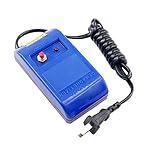
- 【 RESTORE WATCH ACCURACY INSTANTLY】Mechanical watches can easily become magnetized by phones, speakers, or computers, causing them to run fast or inaccurately. This professional degaussing tool effectively eliminates magnetic fields in seconds, restoring your cherished timepiece's precision without the need to open the case back.
- 【 SAVE TIME & MONEY ON REPAIRS】Stop paying expensive fees at jewelry stores just for simple demagnetization. With the QEES watch demagnetizer, you can perform professional-grade maintenance at home. It pays for itself after just one use—this Watch tools a smart investment for any watch collector or enthusiast.
- 【 USER-FRIENDLY & FAST OPERATION】Designed for simplicity. Just plug into a standard 110V outlet, place your watch or tool slightly above the flux area, hold the red button, and slowly move the object away for 5-10 seconds. No complex training required to achieve professional results. (Note: Please read instructions carefully before use).
- 【VERSATILE 2-IN-1 TOOL】Beyond watches, this Watch magnetizer is essential for demagnetizing watchmaker tools like tweezers and screwdrivers, ensuring they don't attract small s crews during intricate repairs. It can also serve as a magnetizer for screwdriver tips when magnetic grip is needed.
- 【 COMPACT & DURABLE GIFT CHOICE】Built with sturdy, impact-resistant ABS plastic for long service life. demagnetizer tool is lightweight, portable design (4.5" x 2.2" x 2.4") makes it easy to store. An ideal, practical gift for Father’s Day, birthdays, or anniversaries for the man who loves mechanical watches.
Does low power reserve make a mechanical watch inaccurate?
It can. A mechanical regulator is generally more stable when the mainspring supplies sufficiently strong, steady torque. Seiko says the winding state can change the daily rate, and Grand Seiko explains that a fully wound mainspring gives more stable accuracy while weaker energy near the end of unwinding is more affected by outside conditions.
That does not mean every watch becomes inaccurate at a particular reserve percentage. Rate depends on the calibre, adjustment, position, temperature, and condition of the movement. Judge the mean daily rate over a week or 10 days in normal use, not from a single morning-to-evening comparison.
What does mean daily rate mean?
Mean daily rate is the average gain or loss per 24 hours over a stated observation period. For specified Grand Seiko calibre families, an example target is −1 to +10 seconds per day; some families have narrower targets. That range applies only to the named calibres and should not be treated as a specification for every mechanical watch.
Quick wins for a faster PC:
Repair Windows errors before they cause bigger problemsFix Now →Fix the driver behind crashes, sound loss and screen glitchesFind Drivers →Which conditions change a mechanical watch’s rate?
Position and gravity
The balance, hairspring, pivots, and escapement experience gravity differently in each orientation. A watch can gain in one resting position and lose in another. To learn its positional pattern, record the rate with the watch resting in several positions for about 7–8 hours each, then compare the results. This is an observation aid, not a substitute for regulation by a watchmaker.
Temperature
Metal components expand and contract with temperature. Seiko and Grand Seiko state that high temperatures generally make a mechanical watch lose time, while low temperatures generally make it gain. Avoid leaving the watch in a hot car, against a strong heat source, or in an environment with abrupt temperature changes.
Shock and vibration
A strong impact can disturb or damage small regulating parts, even when the case shows no obvious mark. Remove the watch for impact-heavy sport and avoid placing it on vibrating equipment for long periods. A sudden rate change after a drop deserves inspection rather than repeated crown adjustments.
Magnetism
Magnetic fields can affect the hairspring. TAG Heuer explains that magnetized coils can shorten the effective spring length and cause inaccurate timekeeping. Common sources include powerful speakers, magnetic clasps, tablet covers, bags, and workshop equipment. If magnetism is suspected, Patek Philippe directs owners to an official service center or authorized retailer for demagnetization.
Also popular on Amazon

- PORTABLE DESIGN: The demagnetizer features a lightweight ABS housing with compact structure, easily carried by technicians and stored neatly in workstations
- FUNCTIONALITY: Designed to solve timing inaccuracies in mechanical watches, this watch repair kit efficiently removes magnetism from movements to restore normal function
- SAFE USE: When using these watch tools, maintain proper distance between movement and tool to prevent direct interaction during the automatic demagnetizing process
- PROFESSIONAL APPLICATION: The tool demagnetizer works with most mechanical watch movements, requiring no special skills for either repair shops or personal use
- VOLTAGE COMPATIBILITY: Supporting 110-220V input, always check local voltage standards before using this degausser to avoid equipment damage
Wearing pattern and winding state
Arm movement, hours worn, and the amount of mainspring wind all affect the result. A desk-bound day may add less energy than an active day, while a watch left dial-up overnight may show a different rate from one left on its side. Record the conditions with each rate reading so that a short-term change is not mistaken for a movement fault.
How can I tell whether my watch is gaining or losing time?
- Synchronize the watch to a reliable reference time.
- Wear it in your normal routine and keep a simple daily log of the watch time versus the reference.
- Continue for at least seven days; Seiko and Grand Seiko guidance supports averaging over a week or 10 days.
- Calculate the total seconds gained or lost and divide by the number of days.
- Repeat the observation after a full wind or consistent wearing pattern if the first result is unusual.
Record whether the watch was worn, its approximate winding state, and its overnight resting position. This context helps a watchmaker distinguish a normal positional pattern from a fault. A sudden large change, persistent error, or suspected magnetism warrants professional diagnosis.
What does a power-reserve indicator actually tell me?
A power-reserve hand is an approximate display of remaining mainspring energy. It can tell you when a manual watch needs winding or when an automatic watch may need more wear or a manual restart. It does not measure accuracy, guarantee a precise number of hours, or replace the movement’s stated reserve.
In mechanical terms, differential and epicyclic systems translate the relative motion of the barrel and winding mechanism into the indicator hand. Hodinkee describes these arrangements as ways to convert the spring’s changing state into a readable display. The indicator’s scale and behavior are calibre-specific, so consult the watch’s instructions before interpreting its end points.
Do I need an automatic watch winder?
No. An automatic watch winder is optional, not a requirement for an automatic movement. The rotor is designed to wind the watch during wear; if the watch is stored beyond its reserve, you can normally restart it with the crown according to the manual.
A winder can be convenient for an owner who rotates several watches and wants one to remain running, but its usefulness depends on the watch’s winding system and the owner’s routine. Do not apply a generic turns-per-day or rotation-direction setting without confirming the calibre’s requirements. Unnecessary continuous motion adds wear without improving a watch that is already adequately wound.
When should a mechanical watch be serviced?
Service intervals differ by manufacturer, movement, use, and symptoms. The following published schedules are examples, not a universal rule.
Also popular on Amazon

- 【Essential Tool】With this watch demagnetizer, you can effectively solve the problem of inaccurate timekeeping of your mechanical watch due to magnetization, thus avoiding the potentially high cost of going to a watch store for repairs. Even if your watch is not yet magnetized, this tool is ideal for watch enthusiasts and professionals to provide extra protection for your watch.
- 【High Quality Demagnetizer】This mechanical watch demagnetizer is made of sturdy and durable ABS plastic, which can safely and quickly demagnetize mechanical watches, tweezers, screwdrivers and other tools. In addition, its sturdy packaging design effectively protects the demagnetizer itself from damage or scratches during transportation, ensuring that every customer receives the product in perfect condition.
- [Complete Set of Accessories] This watch demagnetizer includes a compass, which not only helps users determine their direction during demagnetization but also allows them to check whether the watch is magnetized by holding it close to the compass. This multifunctional design greatly enhances ease of use.
- 【Convenient to Carry】This watch demagnetizing tool has a lightweight and compact design, which is very convenient to carry and store, making it an indispensable repair tool for every watch lover's home. It is also an ideal gift choice for birthdays, Father's Day, Mother's Day, Christmas and anniversaries.
- 【Easy to Operate】This watch demagnetizer has a simple and intuitive design, making it easy for anyone to get started and complete the demagnetization process without specialized knowledge.
| Manufacturer guidance | Published interval or check | Scope and qualification |
|---|---|---|
| Seiko | About every three years | Examination, cleaning, and oiling; the guidance is approximate. |
| TAG Heuer | About every five to six years | Overhaul; earlier attention is advised if a malfunction appears. |
| TAG Heuer | Every two years when worn in water | Water-resistance testing, separate from a mechanical overhaul. |
Service sooner if the watch develops a sudden large gain or loss, repeatedly stops before its stated reserve, shows damage after an impact, or has suspected magnetism. A qualified watchmaker or the brand’s authorized service center can demagnetize, regulate, clean, lubricate, and inspect the movement as appropriate.
Free tools Windows power users keep installed
One-click scans. No signup required.
How should I store a mechanical watch when it is not being worn?
- Keep it away from strong magnetic fields, shocks, and prolonged vibration.
- Avoid extreme heat, cold, and rapid temperature changes.
- Store it where the crown and crystal will not be pressed or struck.
- For an automatic watch, decide whether occasional manual restarting or a compatible winder better suits your rotation; neither is mandatory solely because the watch has stopped.
- Follow the maker’s water-resistance instructions; a water-resistance check is especially relevant for watches worn in water.
If the watch is stopped after storage, restart it using the documented crown procedure rather than assuming the same number of turns or direction used by another model.
What should I do if my watch suddenly gains or loses time?
- Confirm the change. Compare it with a reliable reference for several days instead of correcting the hands after one reading.
- Check the winding state. Fully wind a manual watch as instructed, or restart and wear an automatic watch for the maker’s recommended period.
- Review the environment. Note recent impacts, magnetic exposure, temperature extremes, and changes in overnight resting position.
- Measure the mean daily rate. Keep a seven- to 10-day log with wearing and storage conditions.
- Escalate persistent errors. Use an authorized service center or qualified watchmaker for demagnetization, regulation, or mechanical inspection.
Do not open the case or try to bend the hairspring yourself. The regulating parts are delicate, and an attempted home correction can turn a rate issue into a repair.
Which movement is easier to live with?
Manual and automatic watches can both be accurate and durable when maintained correctly. The practical difference is whether you prefer a brief daily winding ritual or the convenience of rotor winding during wear.
| Decision point | Manual wind | Automatic |
|---|---|---|
| Best fit | Owners who enjoy a predictable daily interaction and can wind consistently. | Owners who wear the watch regularly and want wrist motion to add energy. |
| When stored | Stops when its reserve runs out unless wound again. | Also stops after its reserve runs out; a rotor does not create energy while the watch is off the wrist. |
| Reserve expectation | Calibre-specific; no universal figure. | Published examples range from about 36 to 70 hours, depending on maker and calibre. |
| Accuracy assessment | Use the mean daily rate over a week or 10 days. Position, temperature, shock, magnetism, wearing pattern, and winding state affect both. | |
| Maintenance | Follow the maker’s service schedule and seek earlier inspection for sudden errors, repeated stoppage, or suspected magnetism. | |
| Reserve display | Optional complication. | Optional complication; not implied by the presence of a rotor. |
Power-reserve checklist
- Identify the exact calibre and read its owner’s manual.
- Use the specified crown direction and stopping point; never force a hand-wound crown.
- Wind a manual watch consistently, preferably each morning according to Patek Philippe’s guidance.
- Wear an automatic watch for the manufacturer’s suggested period; Seiko says more than eight hours and Victorinox says 8–10 hours.
- Judge accuracy from a seven- to 10-day average, not one day.
- Track position, temperature, shocks, magnetism, wearing time, and winding state.
- Use a winder only as an optional convenience for a stored automatic watch, with calibre-appropriate settings.
- Arrange qualified service for persistent rate errors, sudden changes, repeated early stoppage, or suspected magnetism.
Frequently Asked Questions
How can I measure my watch’s actual power reserve at home?
Fully wind the watch using its documented procedure, note the start time, and leave it undisturbed until it stops. Record the elapsed time and repeat the observation if the result seems inconsistent; the movement’s published reserve remains the reference because wearing and position can affect the result.
What’s actually slowing this PC down?
Pick the symptom - the matching free tool is one click away.
Why does my automatic watch stop after one night off my wrist?
Many automatic watches have reserves around two days, so an overnight stop can indicate that the watch was not fully wound before removal or that its reserve is shorter than expected. Check the calibre specification and restart procedure; repeated stopping well before the stated reserve calls for service.
Can a phone or laptop magnetize a mechanical watch?
Some devices and accessories contain magnets strong enough to affect a hairspring, especially magnetic clasps, covers, speakers, and workshop equipment. If the rate changes suddenly after contact with a magnetic source, have an authorized center or qualified watchmaker check and demagnetize it rather than attempting an improvised fix.
Is a power-reserve indicator accurate to the hour?
Usually it is an approximate gauge, not a stopwatch. Its hand is driven by a calibre-specific differential or epicyclic mechanism, and the scale shows remaining mainspring energy broadly; use the owner’s manual to interpret the display.
Should I service a watch just because its reserve is shorter than advertised?
First confirm that the watch was fully wound and that the measurement followed the maker’s procedure. If a properly wound watch repeatedly falls materially short of its stated reserve, or its rate has changed at the same time, arrange an examination because lubrication, winding, or escapement problems may be involved.