Quick wins for a faster PC:
Scan for outdated or missing drivers - takes under a minuteDriver Scan →Repair Windows errors before they cause bigger problemsFix Now →Muse’s Muse S Athena is a consumer headband that combines EEG, which records electrical brain activity, with fNIRS, which estimates oxygenation-related changes in blood flow near the frontal cortex. The “brain oxygen” feature is not a whole-brain oxygen-saturation reading or a medical test: Athena is positioned for wellness, focus, meditation and sleep, not diagnosis.
What Muse unveiled
Muse by Interaxon announced the Muse S Athena on March 18, 2025, as a new headband for cognitive-fitness and wellness use. It retains Muse’s EEG-based meditation and sleep approach and adds frontal-cortex sensing with functional near-infrared spectroscopy (fNIRS). Muse describes Athena as the first consumer wearable to combine EEG and fNIRS; that “first” claim is the company’s characterization, not an independently exhaustive comparison of every product on the market. Muse’s announcement is dated March 18, 2025. Its support page, published later, describes what is new about the Athena model. The support page is dated December 15, 2025.
The fabric headband has a front sensor module. Muse lists four EEG channels, five fNIRS optodes, and a 64-Hz fNIRS sampling rate. It also includes PPG and motion sensors. These are different measurements with different meanings; the presence of several sensors does not produce one definitive measure of “brain health.” Muse’s model comparison identifies fNIRS tracking as Athena-specific among the compared Muse headbands.
What the sensors measure
| Sensor | What it detects | How Muse uses it |
|---|---|---|
| EEG | Voltage changes associated with synchronized electrical activity in the brain | Feedback for focus, meditation and sleep-related features |
| fNIRS | Changes in near-infrared light absorption associated with oxygenated and deoxygenated hemoglobin near the cortex | Estimates frontal-cortex hemodynamic changes used in mental-effort training |
| PPG | Optical pulse-related signals from peripheral tissue | Heart-related metrics and pulse-derived oxygen-saturation measurements |
| Accelerometer and gyroscope | Movement and orientation | Movement-related metrics and context for interpreting recordings |
EEG and fNIRS are complementary, not interchangeable. EEG captures electrical activity quickly. fNIRS tracks a slower vascular response, which can change with mental effort but also with task difficulty and other physiological factors. A combined sensor suite does not by itself prove that a focus score or performance interpretation is accurate in every setting.
What’s actually slowing this PC down?
Pick the symptom - the matching free tool is one click away.
#1 Best Overall
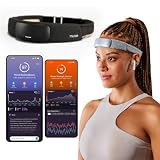
- Deep Sleep Boost – Newest feature designed to detect slow-wave sleep and sustain it longer for a more continuous deep sleep, supporting better physical and mental recovery. It complements the Sleep Assist feature that helps you fall asleep faster.
- Longer Focus, Less Stress, More Calm – Muse S Athena is a smart brain-sensing headband designed to help you better understand your brain so you can improve focus, calm your busy mind, and develop a stronger mental fitness foundation.
- Ready to use immediately — get advanced EEG + fNIRS tracking for sleep, focus, and recovery; optional Premium subscription adds AI Coach, deeper brain insights, and access to 500+ meditations.
- Wearable EEG and fNIRS Biofeedback — Put on the soft, adjustable headband and position the sensors to make skin contact. Connect to the Muse app via Bluetooth, select a meditation, sleep or brain training experience, and begin to focus, relax or unwind.
- Safe & Trusted — Built on years of scientific validation, Muse is trusted by neuroscientists, researchers and wellness professionals. Our award-winning SmartSense EEG sensors combined with new fNIRS technology brings the most advanced Muse experience yet.
What “brain oxygen” means—and what it does not
Athena’s fNIRS system shines near-infrared light into the scalp and detects changes in how that light is absorbed. Those changes are associated with shifts in oxygenated and deoxygenated hemoglobin in tissue near the surface of the brain. It is an indirect, localized estimate of cortical hemodynamics—not a direct oxygen reading, a map of the whole brain, or a pulse oximeter placed on the head. A peer-reviewed review of consumer neurofeedback devices discusses fNIRS as a method for measuring oxygenation-related changes near the cortex and explains why consumer systems are not equivalent to clinical neuroimaging equipment.
Athena also has PPG sensors. Pulse-derived peripheral oxygen saturation, where offered, is distinct from the fNIRS signal aimed at frontal-cortex hemodynamics. Neither should be treated as a way to detect brain hypoxia, stroke, sleep apnea or another medical condition. Muse presents Athena as a general-wellness product; Muse Health’s explanation says Muse is treated in the United States as a general-wellness device rather than a medical device requiring FDA clearance for consumer use. That company statement is not evidence that FDA has validated Athena’s brain-oxygen or cognitive-performance claims.
Rank #2

- Deep Sleep Boost – Newest feature designed to detect slow-wave sleep and sustain it longer for a more continuous deep sleep, supporting better physical and mental recovery. It complements the Sleep Assist feature that helps you fall asleep faster.
- Longer Focus, Less Stress, More Calm – Muse S Athena is a smart brain-sensing headband designed to help you better understand your brain so you can improve focus, calm your busy mind, and develop a stronger mental fitness foundation.
- Ready to use immediately — get advanced EEG + fNIRS tracking for sleep, focus, and recovery; optional Premium subscription adds AI Coach, deeper brain insights, and access to 500+ meditations.
- Wearable EEG and fNIRS Biofeedback — Put on the soft, adjustable headband and position the sensors to make skin contact. Connect to the Muse app via Bluetooth, select a meditation, sleep or brain training experience, and begin to focus, relax or unwind.
- Safe & Trusted — Built on years of scientific validation, Muse is trusted by neuroscientists, researchers and wellness professionals. Our award-winning SmartSense EEG sensors combined with new fNIRS technology brings the most advanced Muse experience yet.
What Athena is designed to do
Focus feedback
EEG-derived feedback can indicate when attention is drifting and provide audio or visual cues intended to help the user refocus. Treat this as guided neurofeedback, not a direct measurement of productivity or proof that concentration has improved.
Mental-effort and endurance training
Muse uses fNIRS signals in training intended to show how hard the frontal cortex is working during a task. This is a company-described wellness use. A larger oxygenation-related response is not automatically better performance: it can also reflect greater effort, task demands, movement or other factors.
Free tools Windows power users keep installed
One-click scans. No signup required.
Rank #3

- The item is not intended for people under 12 years old. Size is made for Adults. Elegant Greek Design: Exude the grace of a Greek goddess with our meticulously designed gold headband, featuring delicate gold leaf accents that add a touch of royalty to any attire.
- Versatile Accessory: Perfect for a variety of occasions, from toga to weddings, our headband is a chic addition to your costume or bridal ensemble, elevating your look with its timeless elegance.
- Quality Craftsmanship: Made from premium alloy materials, our headband ensures durability and a luxurious feel, with a gold finish that is both striking and long-lasting.
- Comfortable Fit: The gold headband is adjustable, our Greek Goddess Headpiece comfortably fits a range of head sizes, making it suitable for women alike.
- Perfect for Themed Events: Ideal for costume parties, theatrical performances, or cultural celebrations, our headband is a statement piece that will make you the center of attention.
Sleep
Athena uses EEG to estimate sleep stages and offers sleep-related insights. Muse also promotes features such as Smart Wakeup and Deep Sleep Boost, but availability can depend on the current app version and subscription tier. Muse advertises an 88–96% PSG-accuracy range for sleep tracking in its own material; that is a company claim, not a guarantee for every user or night, and sleep-stage estimation is not a substitute for diagnostic polysomnography. Muse’s sleep-device article is the source of that published range.
Meditation and relaxation
Muse’s established meditation model uses brain-signal feedback to alter an audio environment or session feedback as the user practices. The practical benefit depends on whether the guided format helps an individual build a consistent routine.
Rank #4
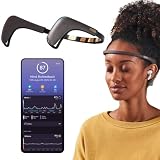
- Works great on its own — access core EEG-powered feedback and session tracking right out of the box; optional Premium subscription adds AI Coach, deeper brain insights, and access to 500+ meditations.
- Personal Meditation Coach — Meet MUSE 2, a smart headband that helps you understand your brain and live a more relaxed, present life. Begin improving your overall brain health and mental wellbeing by harnessing the calming power of meditation.
- Wearable Neurofeedback — To begin, put on the headband and position it so the sensors are in contact with your skin. Next, connect to Bluetooth through the MUSE app, select your meditation experience, take a deep breath, and begin to relax.
- Tune Into Your Body — After each session, you are provided with a calm score. Track your progress to improve your meditation practice overtime and develop an understanding of your internal cues to learn how to relax, build energy and optimize performance.
- Safe, Trusted and Certified — MUSE is backed by research from prestigious institutions and is used by neuroscience researchers around the world. Our SmartSense EEG sensors are award winning and our company is built on credibility and trust.
What is new versus earlier Muse headbands
The main hardware difference from Muse 2 and Muse S Gen 2 is Athena’s five-optode fNIRS system, which Muse says samples at 64 Hz and targets frontal-cortex hemodynamics. The support material also describes upgraded, higher-resolution EEG acquisition compared with Muse S Gen 2, along with new mental-endurance training and software features. Earlier models remain EEG-focused and do not include Athena’s brain-oxygenation feature, according to Muse’s comparison page.
Independent reader supportYour contribution helps us test, update, and keep practical guides available for everyone.Price, subscription and data access
As of August 18, 2026, Muse’s U.S. store lists Athena device-only at $249.99 and Premium at $49.99 per year. The store also displays a device-plus-one-year-Premium bundle at $539 in some storefront configurations. Other indexed storefront displays have shown different bundle prices, including $309, and a $45 bundle-upgrade figure. Because these are not consistent configurations, check the live U.S. checkout listing for the exact device, included subscription period, renewal cost and terms rather than treating any bundle figure as universal. Muse’s store says a device purchase includes free meditation and basic sleep tracking; feature access can vary by subscription tier.
Do these 3 things before closing this tab:
1Fix the driver behind crashes, sound loss and screen glitches2Repair Windows errors before they cause bigger problems3Scan for outdated or missing drivers - takes under a minuteBest Value

- Real-Time EEG Neurofeedback Headband for Brainwave Monitoring: Monitor your brain activity in real time using advanced EEG sensors. Track key brainwave patterns such as alpha, beta and theta waves to understand how your brain responds during meditation, focus sessions, relaxation and sleep preparation.
- Smart App with Guided Meditation & Brain Training – No Subscription Fees: The companion app offers guided meditation and neurofeedback exercises with real-time brainwave feedback. As your mind calms and focus sharpens, visuals and sound become clearer, helping you practice mindfulness, enhance focus, improve sleep, and train mental control.
- Track Your Brain Training Progress: The app records your sessions and brainwave data, letting you monitor meditation duration, focus levels, and training history. Download your data freely to track progress and understand your brain performance.
- Train Focus and Calmness with Real-Time Neurofeedback: Turn brain activity into meaningful feedback that guides your mind toward deeper calm and concentration. Neurofeedback training helps make meditation more effective while strengthening awareness, focus and relaxation.
- Soft Hydrogel Sensors for Better Comfort & Signal Stability: Flexible hydrogel skin-contact sensors adapt naturally to your forehead, improving comfort and maintaining stable signal transmission. The low-impedance hydrogel interface enhances EEG signal quality for more reliable brainwave analysis.
Consumer-app access should not be confused with research data access. Muse Health says its research tools provide raw EEG, optical and motion data; buying the consumer headband does not establish that a purchaser receives unrestricted access to those streams or APIs. Researchers and developers should check the terms for the separate research platform. Muse Health’s research page describes that offering.
Limitations to keep in mind
- Limited coverage: The fNIRS system targets frontal/prefrontal cortical regions; it does not image the whole brain or provide MRI-like spatial resolution.
- Indirect signals: EEG and fNIRS measure different physical signals that software interprets. They do not read thoughts or yield a single definitive brain-health number.
- Fit and movement matter: Contact, hair, sweat, movement and individual physiology can affect signal quality. Treat missing or implausible readings as a possible fit or data-quality issue, not evidence of a sudden brain change.
- Wellness, not diagnosis: Do not use Athena to decide whether you are having a stroke, experiencing oxygen deprivation or have a neurological or sleep disorder.
- Comfort and routine: A headband may be less convenient than a wrist tracker, particularly overnight; head contact, pressure, heat and charging are practical considerations.
- Research use is a separate question: If you need raw streams, a developer workflow or study-grade controls, confirm access and licensing rather than assuming the consumer app supplies them.
Who is it for?
Athena is most plausible for people who want guided EEG meditation or focus feedback, are curious about consumer neurofeedback, prefer a head-worn sleep tracker, and accept wellness-oriented estimates rather than clinical measurements. Its combination of electrical and optical sensing is unusual in a consumer headband, but the usefulness depends on fit, comfort, software and cautious interpretation—not simply on the number of sensors.
It is a poor fit for anyone seeking medical monitoring, full-brain imaging, unrestricted research data through the consumer app, or a hospital-style brain oxygen reading. Readers who want Muse’s meditation or sleep experience without fNIRS may also find an earlier Muse model more relevant, subject to current availability and support.
Quick Recap
Product prices and availability are accurate as of the date/time indicated and are subject to change. Any price and availability information displayed on Amazon at the time of purchase will apply.